
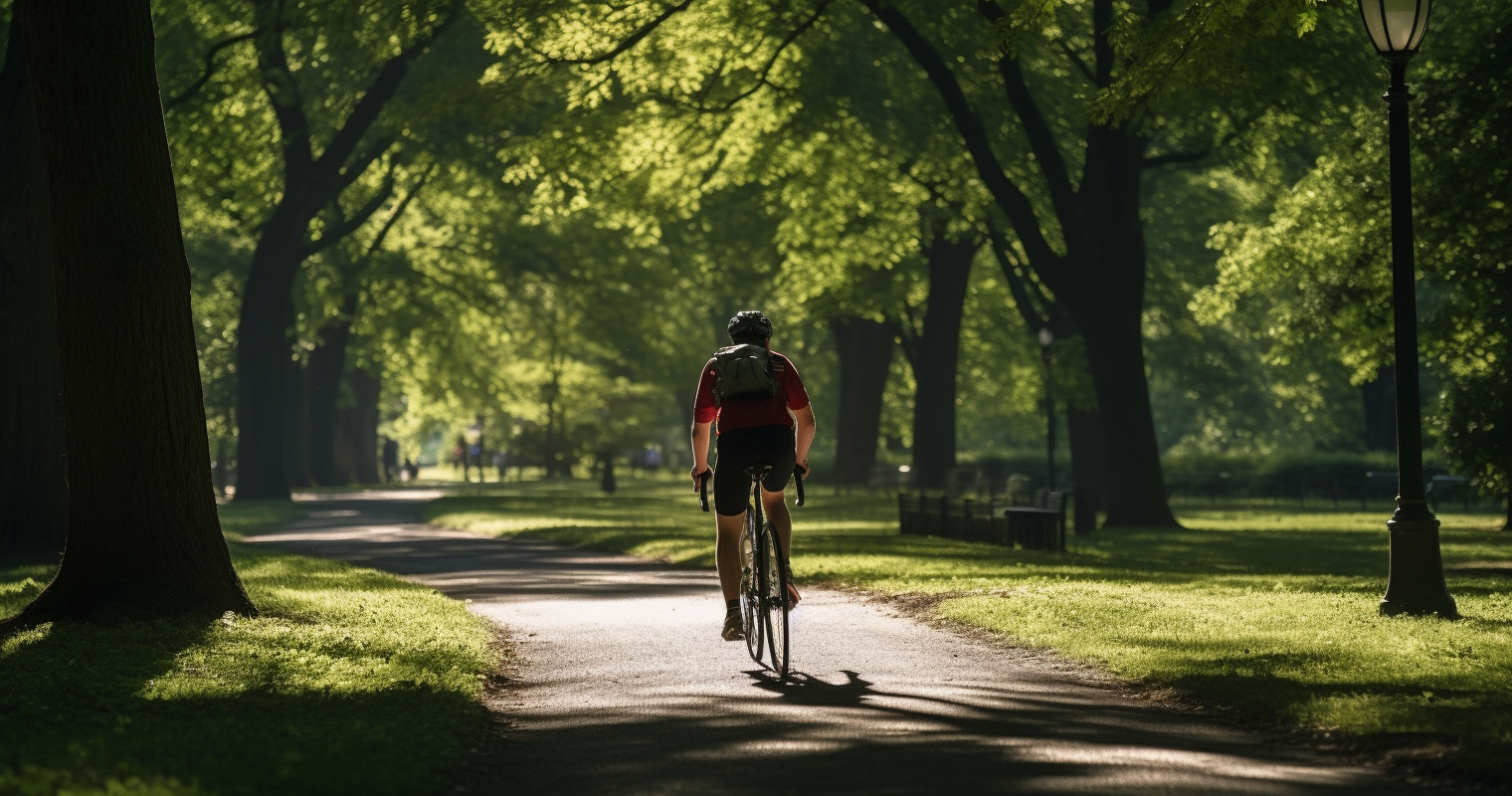
Norway offers cyclists a genuinely fulfilling experience, though it is a very different proposition to the Netherlands. Cycling is gaining ground — particularly in cities such as Oslo — and the country provides exceptional recreational and touring opportunities through some of Europe’s most breathtaking landscapes. Dedicated infrastructure is developing at a steady pace, although provision remains patchy away from urban centres. For daily commuters, cycling is a viable choice, but newcomers should be ready for the challenges posed by terrain and the changing seasons.
| Item | Details |
|---|---|
| Helmet law | Not legally required for adults; strongly recommended |
| Commuter cycling share | Approx. 7% cycle to work nationally (as of 2024) |
| National cycle routes | Nine official long-distance routes covering most of Norway |
| Bike registration | Not mandatory; voluntary registration recommended |
| Mandatory bike equipment | Front white/yellow light, rear red light, rear red reflector, pedal reflectors, two independent brakes, bell |
| Key authority for cycling rules | Statens vegvesen (Norwegian Public Roads Administration) — vegvesen.no |
How popular is cycling in Norway — is it a common way to get around?
Cycling in Norway occupies a distinctive position: it is more prevalent than in much of the world, yet it lags noticeably behind its Scandinavian neighbours Denmark and Sweden when it comes to everyday transport. Roughly 7% of Norwegians cycle to work — a figure that pales against the considerably higher rates found in Denmark and the Netherlands. Norway is still cultivating its cycling culture rather than standing alongside Copenhagen or Amsterdam as a fully established cycling nation.
When compared across the Nordic region, Danes cycle most frequently — half of all Danes get on a bike at least once a week. Among Norwegians, who are the least regular cyclists in the Nordics, only 28% ride at least once weekly. If you are relocating from a country where cycling is deeply embedded in everyday life, Norway may feel like a step back; if you are coming from somewhere where bikes are rarely seen on the roads, you will likely find the country relatively cycle-friendly.
Recorded cycle trips grew by 11% between 2018 and 2020, though with striking regional variation. Southern Norway saw a substantial rise of 23%, while Northern Norway experienced a decline of 8% over the same period — a pattern that reflects how climate, geography, and urban density combine to shape cycling habits across such a geographically diverse country.
Nationally, cycling is highly seasonal: the peak months run from May through to August, with a marked and consistent drop-off through autumn and winter. That said, a committed group of Norwegian cyclists keeps pedalling throughout the year, even when snow and darkness set in. E-bikes are reshaping this picture rapidly: the electric city bike segment accounted for approximately 82% of Norway’s e-bike market in 2024, driven by growing urbanisation and an increasing appetite for sustainable commuting options.
Across the Nordic capitals, walking and cycling have both risen since the COVID-19 pandemic, with more people choosing their legs or two wheels to reach work, school, or the shops than before. Oslo and Stockholm recorded the strongest growth in bicycle commuting among Nordic capitals, suggesting that Norway’s largest city is at the forefront of a genuine cultural shift.
What is the cycling infrastructure like in Norway?
Norway’s cycling infrastructure tells a story of ambitious plans meeting challenging geography. A reasonably developed network of cycle lanes and paths serves many communities, but the quality and extent of that provision differs enormously between city and countryside. Urban areas — Oslo above all — have the most comprehensive networks, while rural and remote regions often leave cyclists sharing the carriageway with motor vehicles.
Many Norwegian cities have put substantial investment into building bike lanes and paths that link key destinations while keeping cyclists away from heavy traffic. In Oslo, dedicated lanes run alongside major routes and allow riders to move through the city without constantly mixing with cars. Bergen and Trondheim are also expanding their urban cycling networks, though both cities grapple with hilly terrain that presents a real daily challenge for ordinary riders.
Fully separated cycle infrastructure remains comparatively rare, and in many cases cyclists share paths with pedestrians rather than having their own lane physically divided from motor traffic. This shared-path model will be familiar to those arriving from countries such as Ireland or parts of Australia, where that arrangement is the standard rather than the exception.
National infrastructure policy is set out in the National Transport Plan (NTP). Government policy directs that metropolitan areas should be developed so that more passenger journeys are made on foot, by bicycle, or by public transport, and increased spending on cycling and walking infrastructure has been proposed. The body responsible for roads and cycling infrastructure is Statens vegvesen (the Norwegian Public Roads Administration), which publishes route information and forward planning documents.
The NTP 2022–2033 introduced a subsidy scheme worth NOK 600 million over a four-year planning period for urban areas including Bodø, Ålesund, Haugesund, Vestfoldbyen, and Arendal/Grimstad, under which municipalities receive funding for smaller cycling and pedestrian infrastructure improvements. This signals active public investment in the sector, though meaningful change across all areas will take time to emerge.
Expats settling outside the major cities should expect less consistent provision. Many suburban and rural roads have no dedicated cycling space, and certain major tunnels are off-limits to cyclists entirely. Always research local conditions before committing to a regular cycling commute in an unfamiliar area.
Is cycling safe in Norway?
Norway has an excellent overall road safety record and is guided by Vision Zero — the national commitment to eliminating all serious road injuries and fatalities. The long-term vision for the Norwegian transport system, looking ahead to 2050, centres on achieving this goal of reducing fatal and seriously injurious collisions to zero. This philosophy feeds into driver training, road design, and infrastructure decisions across the country.
In practice, the safety experience for cyclists varies significantly depending on where you ride. In cities, purpose-built infrastructure and generally aware drivers help keep risks at a manageable level. On rural roads, the situation can be more uncomfortable: when there is no dedicated cycling route, riders may find themselves sharing busy main roads with heavy freight vehicles, where anxiety rather than enjoyment can dominate the experience. This is worth factoring in when planning long-distance touring on signed national routes, which sometimes divert onto high-traffic carriageways.
The majority of serious cycling accidents occur at junctions, which means extra vigilance at intersections is essential — a pattern consistent with most European countries. Winter brings additional hazards: ice, prolonged darkness, and reduced driver visibility all raise the risk considerably between October and March.
Helmets are not a legal requirement for adult cyclists in Norway — a different position to countries such as Australia and New Zealand, where wearing one is compulsory. Norwegian cyclists face no penalty for riding without a helmet; however, it is strongly advised for personal safety. In practice, helmet use is widespread, especially among commuters and those cycling for sport. Children are similarly encouraged to wear helmets at all times.
For the latest cycling accident statistics, refer to Statens vegvesen and the Transportøkonomisk institutt (TØI), Norway’s Institute of Transport Economics, which publishes annual road safety data. Always seek out the most recently published figures, as these are updated on a regular basis.
What are the rules of the road for cyclists in Norway?
Norwegian traffic legislation treats cyclists as vehicle operators, which means the majority of rules that govern car drivers also apply to those on a bicycle. When cycling, you are considered to be operating a vehicle and are therefore required to understand and follow all relevant traffic rules. This is broadly consistent with the approach taken in countries such as Germany and the Netherlands, where cyclists are fully integrated into the road traffic system.
The mandatory equipment your bicycle must carry is defined by Statens vegvesen and includes: a white or yellow light at the front; a red light at the rear; a red reflector at the rear; white or yellow reflectors on the pedals; two independently functioning brakes; and a bell. Failure to meet the requirements for lights, reflectors, and brakes can result in a fine.
Cycling while over the legal alcohol limit is illegal. Being caught cycling drunk can lead to a significant fine, the loss of your driving licence, or both. Norway’s limit is 0.2 per mille blood alcohol content — one of the strictest thresholds in Europe, mirroring the limit applied to motor vehicle drivers.
Key rules to be aware of when cycling on roads and paths:
- Keep to the right and yield to traffic approaching from your right.
- Cycling on motorways and on roads where bicycles are prohibited by signage — such as certain bridges and many tunnels — is forbidden.
- You may ride on the pavement when pedestrian traffic is light and your cycling does not create a hazard or obstruction. When passing pedestrians, do so at a safe distance and at approximately walking pace.
- You may cycle across a pedestrian crossing provided you are considerate of those on foot. However, when crossing at such a point, you are not treated as a pedestrian, and other road users are not legally obliged to give way to you.
- Parking or stopping in a cycle lane is not permitted.
- Only children under the age of 10 may be carried as passengers on a bicycle.
- Cycling against the direction of travel in a one-way street is not allowed unless signs specifically indicate this is permitted for cyclists.
E-bikes are subject to additional technical conditions. For an electric bike to be classified as a bicycle rather than a moped, its motor must function only when the rider is pedalling and must cut out when the speed reaches 25 km/h or when pedalling stops. E-bikes that exceed these specifications are classified as mopeds, requiring registration, insurance, and a valid driving licence.
For the complete and up-to-date legal framework, always consult the official Statens vegvesen traffic rules for cyclists page, as regulations are subject to change.
Do I need to register my bike or have insurance to cycle in Norway?
Standard bicycles in Norway do not need to be registered, and cyclists are not required to hold third-party liability insurance — unlike riders of e-scooters, for which liability cover is compulsory. This approach mirrors that of most European countries, where bicycle registration is a voluntary rather than a legal matter.
Although registration is not obligatory, it is strongly advisable as a precaution against theft. Bicycle theft is a genuine issue in Norwegian cities. Norway is generally a safe country, but bikes do get stolen — locking your bicycle securely, or storing it in a locked garage or storage space when not in use, is essential. Voluntarily recording your bike’s serial number on a national database can significantly improve the chances of police returning it to you if it is taken.
Personal liability arising from cycling accidents is typically covered under Norwegian household insurance (innboforsikring), which most residents maintain. This is comparable to how home contents policies in many European countries extend to personal liability claims. Coverage does vary between providers, however, so it is worth reading your policy carefully. Those who cycle regularly in traffic — or who participate in organised cycling events — may also want to consider dedicated cycling insurance covering equipment loss and personal accident scenarios.
For current requirements and guidance, consult Finanstilsynet, Norway’s Financial Supervisory Authority, and discuss the specifics of your existing household policy with your insurer.
Are there public bike-sharing or rental schemes in Norway?
City bike programmes have taken hold across Norway’s main urban centres as part of a wider push to encourage sustainable modes of transport. These schemes give residents and visitors straightforward access to bicycles for short trips, nudging more people away from cars. Oslo and Bergen have implemented bike-sharing systems to good effect, enabling users to rent bikes through dedicated mobile apps or from docking stations distributed across the city.
Oslo’s primary scheme is Oslo Bysykkel (oslobysykkel.no), run by Urban Infrastructure Partner. The service operates from April to November and provides both standard bicycles and e-bikes through a network of docking stations across the city. As of 2024, a seasonal pass costs around NOK 499, with day passes also on offer. Prices are subject to change, so check the official website for current rates before signing up.
Bergen runs its own scheme, Bergen Bysykkel, with docking stations spread across the city centre and surrounding areas. Like Oslo’s system, it operates through a mobile app and is seasonal. Trondheim also has a bike-sharing programme in place. Beyond these major cities, formal docking-station networks become less common, though e-bike hire is increasingly offered by hotels, adventure tourism companies, and local cycle shops — particularly in popular touring destinations such as the fjord regions.
For current availability, pricing, and station maps, visit the scheme operators’ websites directly or contact your local municipal transport authority (kommune). These programmes are updated regularly, especially around the opening and closing of each cycling season.
Where can I buy or service a bike in Norway?
Purchasing a bike in Norway is a fairly simple process, with options ranging from large national sports chains to dedicated independent cycle retailers. Major outlets such as XXL and Intersport carry a wide variety of bikes across different price brackets, while specialist cycling shops — found in most towns and all major cities — offer broader selections, informed advice, and full servicing capabilities. Oslo and Bergen in particular have well-developed specialist cycling retail sectors.
New bikes in Norway tend to be more expensive than in many other European countries, reflecting the country’s elevated cost of living overall. A solid entry-level commuter bike typically begins at NOK 3,000–5,000, while quality mid-range options run from NOK 7,000–15,000 (as of 2025). E-bikes command considerably higher prices. For those watching their budget, the second-hand market is lively: Finn.no — Norway’s equivalent of Gumtree or Craigslist — lists a substantial volume of used bicycles at accessible prices.
Bike repair and servicing facilities are plentiful in cities and larger towns. Many shops offer pre-season or pre-winter tune-up packages, which are well worth considering before the colder months arrive. In more remote or rural locations, specialist repair options may be limited, making it sensible to develop basic maintenance skills and carry spare inner tubes and essential tools.
Consumer protection standards in Norway are robust. Under Norwegian consumer legislation (forbrukerkjøpsloven), goods purchased from retailers must be fit for their intended purpose, and the standard warranty period for new products is typically two years. Purchasing from a private individual — for example via Finn.no — means these statutory protections do not apply, so a thorough inspection before buying is essential.
Can I bring my bike when I move to Norway, and are there any import rules?
People relocating to Norway from overseas can generally bring their bicycle as part of their personal possessions without incurring customs duty, subject to certain conditions being satisfied. Norway is not a member of the European Union, so EU customs regulations do not apply — Norway operates its own customs framework through Tolletaten (Norwegian Customs).
The principal exemption to be aware of is the moving goods relief (innbo- og løsørefritak): personal belongings — bicycles included — that you have owned and used for at least six months before your move can typically be imported free of duty when you are establishing permanent residence in Norway. This is conceptually similar to the “transfer of residence” relief available in many other countries, and it applies to goods brought in within a reasonable timeframe around the date of your move.
To take advantage of this relief, you will generally need to declare the goods to Norwegian Customs and supply supporting documentation, such as proof of your previous address and evidence of ownership. Items that are new or have not been in personal use before import may be liable for Norwegian value-added tax (MVA, currently 25% as of 2025) and any applicable customs duties. Accurate and honest declaration is important — undeclaring goods can attract fines.
For the most current import requirements, applicable thresholds, and the documentation you will need, consult the official Tolletaten website before shipping your bike. Rules may change, and your individual circumstances — including your country of origin, residency status, and the timing of your move — will determine exactly what applies to you.
What are the best cycling routes or destinations in Norway?
Norway’s landscapes rank among the most dramatic anywhere in Europe, and exploring them by bike — whether on a single day out or a multi-week expedition — is a remarkable experience. There are nine National Cycle Routes in Norway, touching on 14 of the country’s 18 Norwegian Scenic Routes and making it possible to ride from city to city on roads with relatively light traffic, along and across the length of the country. These routes form the backbone of long-distance cycling in Norway.
The national cycle routes are designed to connect cities and regions while steering riders away from heavily trafficked roads as much as possible. Along the way, you can pedal alongside fjords, through forests and valleys, and across mountain passes. The level of difficulty varies considerably — Norway is a mountainous nation, and those accustomed to flatter terrain often find the country more physically demanding than anticipated.
Among the most celebrated routes are:
- Rallarvegen: Originally built as a supply road during the construction of the Bergen and Flåm railway lines, Rallarvegen combines history with stunning natural surroundings. The national bicycle route stretches 614 kilometres from Bergen via Voss up to Finse, and from Finse — the highest point on the Bergen Line — it is broadly downhill all the way to Oslo. The 82-kilometre descent from Haugastøl down to Flåm is the single most popular cycling route in Norway.
- The Lofoten Islands: The riding here ranges from level coastal roads with sweeping sea views to more demanding climbs into the interior. The 230 km Lofoten National Tourist Route takes in all the key highlights of the archipelago, including beaches, fishing villages, and dramatic mountain backdrops.
- Sognefjord and Jotunheimen: Known as the “King of the Fjords,” Sognefjord is Norway’s deepest and longest fjord. The same region contains Sognefjellsvegen, the highest mountain pass road in Northern Europe. At 1,434 m above sea level, this demanding ascent rewards cyclists with sweeping panoramas over Jotunheimen National Park.
- Nordmarka (Oslo): For Oslo residents wanting a classic day ride without travelling far, Nordmarka delivers pristine gravel tracks, tranquil lakes, and traditional cabins — an outing that many Oslo cyclists return to season after season.
For route planning, Visit Norway’s cycling pages and Statens vegvesen’s National Cycle Routes page are the most authoritative resources. Cycle Norway publishes detailed route guides along with downloadable GPX files. Norway is also part of the pan-European EuroVelo network, most notably EuroVelo 1 (the Atlantic Coast Route), which passes through the country.
Step-by-step: how to get set up as a cyclist after moving to Norway
- Acquire a bike. Visit a local specialist cycle shop or browse Finn.no for second-hand options. If you are bringing a bike from abroad, review Tolletaten’s moving goods relief rules before arranging shipment.
- Check and equip your bike for legal compliance. Confirm that your bicycle has a front white or yellow light, a rear red light, a rear red reflector, pedal reflectors, two independently functioning brakes, and a bell — all of which are required under Norwegian law.
- Register your bike voluntarily. Record your bike’s serial number and consider adding it to a voluntary national database to improve the chances of recovery in the event of theft.
- Review your household insurance. Check whether your innboforsikring (household contents insurance) includes personal liability cover for cycling accidents and protection against bicycle theft.
- Familiarise yourself with Norwegian traffic rules for cyclists. Read the official guidance on the Statens vegvesen website before heading out on your first ride.
- Sign up for a city bike scheme if one is available. In Oslo, register with Oslo Bysykkel for convenient access to shared bikes for short urban trips throughout the April–November season.
- Plan your commute route. Use Statens vegvesen’s national cycle route maps, the cycling layer on Google Maps, or the Norwegian mapping platform Norgeskart.no to identify dedicated paths and quieter roads close to your home.
- Prepare for seasonal riding. Invest in good-quality wet-weather and cold-weather gear — a waterproof jacket, gloves, and high-visibility lights — well before autumn sets in.
Frequently asked questions about cycling in Norway
Do I legally have to wear a helmet when cycling in Norway?
Adult cyclists in Norway are under no legal obligation to wear a helmet, and there is no penalty for riding without one. That said, wearing a helmet is strongly recommended for your own protection. In practice, the majority of regular commuters and sport cyclists do wear one, particularly on roads and during winter conditions. Children are also widely encouraged to wear helmets whenever they ride.
Can I cycle on the pavement in Norway?
Pavements are intended primarily for pedestrians. You may ride on the pavement when foot traffic is sparse and your cycling does not pose a hazard or obstruction to those on foot. When passing pedestrians, maintain a safe distance and keep your speed close to walking pace. If a pavement is busy, you are expected to dismount and push your bike.
Is cycling a realistic option for commuting year-round in Norway?
Year-round cycling is possible, and a committed minority of Norwegians do it throughout the winter months. However, the pattern of cycle trips is clearly seasonal, peaking from May to August before falling away noticeably through autumn and winter. Ice, snow, extended darkness, and poor visibility make cold-weather cycling considerably more demanding. If you intend to commute by bike in winter, studded tyres, powerful lights, and appropriate cold-weather clothing are not optional extras — they are necessities.
What happens if I cycle drunk in Norway?
Cycling above the legal alcohol limit is unlawful in Norway. If you are caught, the consequences can include a substantial fine, the loss of your driving licence, or both. Norway applies a blood alcohol limit of 0.2 per mille — among the lowest in Europe — meaning that even a small amount of alcohol before cycling may put you over the threshold.
Are there bike-sharing schemes outside Oslo?
Yes. Both Bergen and Trondheim operate their own city bike programmes, and e-bike hire is increasingly available through local operators in popular tourist areas, fjord regions, and smaller towns. Coverage thins out considerably beyond the major cities, however. Contact your local municipality’s transport office or a regional tourism authority for details of what is available in your specific area.
Can I take my bike on trains and ferries in Norway?
Generally, yes. Most ferries permit cyclists to board for free or for a modest fee — cyclists typically travel under pedestrian fares, so the same ticket usually covers your bike. On trains, dedicated spaces for bicycles are available on many services, though booking ahead is advisable on popular routes. Check the national rail operator Vy for up-to-date bike-carriage policies and any applicable fees before travelling.
Are some tunnels closed to cyclists in Norway?
Yes, a number of tunnels are closed to cyclists, typically on safety grounds or because of heavy traffic volumes. Always check road signs before entering a tunnel. Google Maps does not always reliably distinguish between tunnels that are open to cyclists and those that are not, so it is worth cross-referencing with the Statens vegvesen website or dedicated cycling route resources before planning your journey.
What is the best way to find cycling routes as a new arrival?
For long-distance touring, the Statens vegvesen national cycle routes page is the authoritative official starting point. For urban riding, your local municipality’s transport section will show where dedicated cycle lanes are located. Cycle Norway provides detailed route descriptions and free GPX downloads, while the Visit Norway cycling section gives a useful overview of leisure and touring options across the country.