
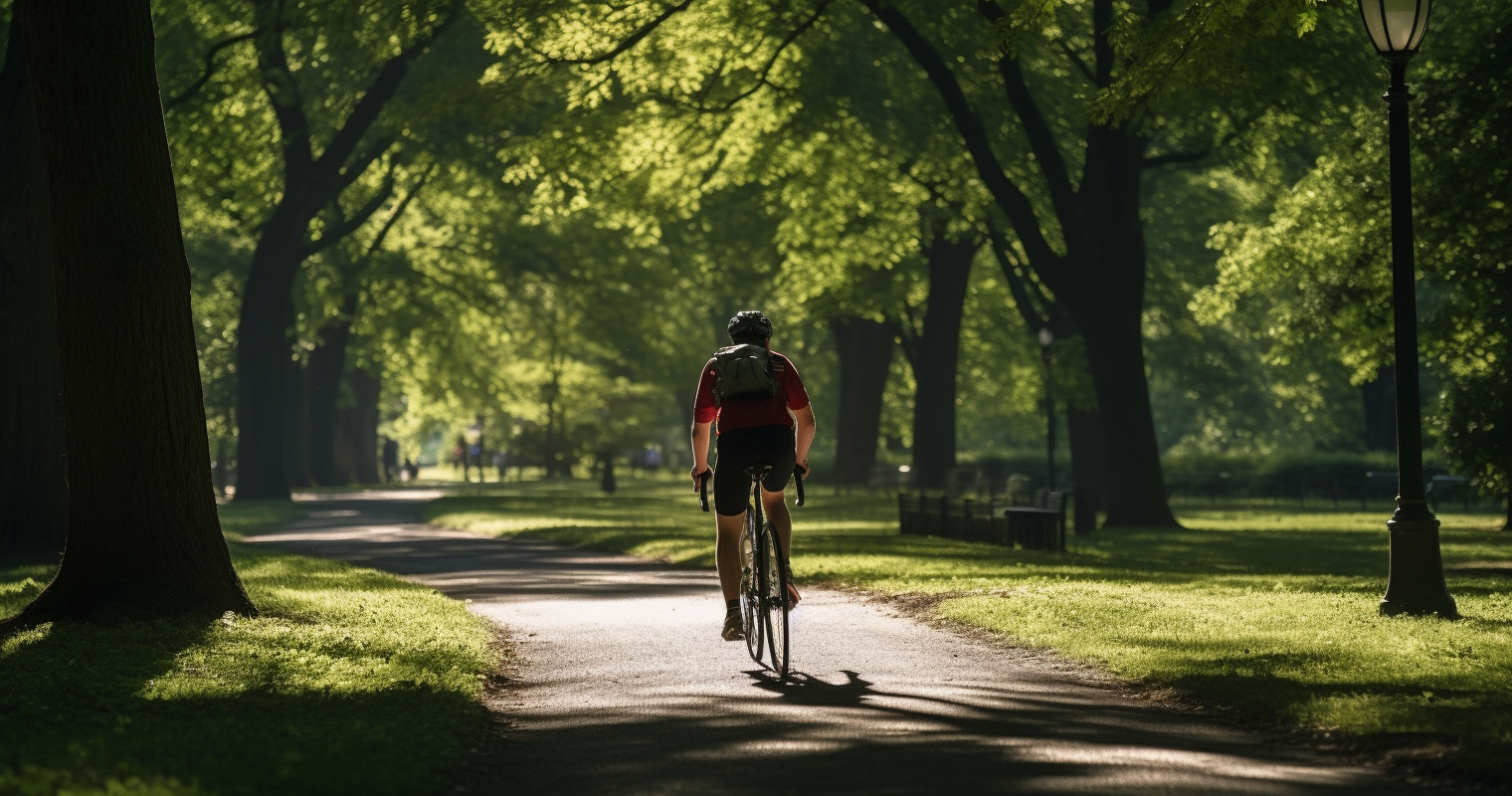
Portugal offers genuine rewards for cyclists, though it pays to arrive with well-grounded expectations. Cycling is gaining ground as a daily mode of transport — particularly in Lisbon and Porto — but for the majority of the population it remains a recreational and sporting pursuit rather than a regular commuting choice. Dedicated infrastructure is steadily expanding, yet coverage remains uneven beyond the main urban centres. The country’s temperate climate, picturesque country roads, and extensive leisure networks make it an excellent destination for sport and tourism cycling throughout the year.
| Item | Details |
|---|---|
| Helmet law (standard bikes) | Not mandatory for adults; strongly recommended (as of 2024) |
| Helmet law (e-bikes) | Mandatory for electric bicycle riders (as of 2024) |
| Minimum overtaking distance | 1.5 metres — legally required by drivers |
| Cycling on motorways | Prohibited |
| Bike registration | Not mandatory |
| Bike insurance | Not legally required; recommended |
| GIRA (Lisbon) day pass | €2/day for residents; day pass also available for visitors (check gira-bicicletasdelisboa.pt for current pricing, as of 2022–2024) |
| National cycling body | FPCUB — Federação Portuguesa de Cicloturismo e Utilizadores de Bicicleta |
How popular is cycling in Portugal — is it a common way to get around?
The bicycle’s role as a transport option in Portugal is growing, and cities across the country are working to create conditions that make cycling safer and more practical. That said, it would be inaccurate to place Portugal alongside the Netherlands or Denmark as a nation where cycling is a primary, culturally embedded form of getting around. Those countries have built their cycling culture over many decades of sustained investment and social normalisation, while Portugal is still at an earlier stage of that transition.
The 2011 national census recorded bicycle commuting at a negligible 0.5% of modal share, and while considerable progress has been made since then, cycling for everyday transport remains a minority habit in most parts of the country. One notable exception is the Aveiro region, where bicycle mode share runs between 10 and 17% — well above both the national figure and the current European average.
This is no coincidence: Portugal’s bicycle manufacturing industry is heavily concentrated in the Aveiro region, a coastal industrial zone situated between Lisbon and Porto. Aveiro is home to Portugal Bike Value, which has become Europe’s fastest-growing bicycle and accessories manufacturer — the continent’s third largest by sales and volume, and its biggest employer in the sector. That industrial heritage has given cycling a deeper cultural resonance in Aveiro than almost anywhere else in the country.
Across most of Portugal, cycling is primarily associated with leisure, sport, and tourism rather than daily commuting. It is a superb way to explore the country, especially its less urbanised corners — the quiet villages, the vineyards, the fresh seafood, the Mediterranean flavours, and roads largely free of heavy motor traffic. Newcomers hoping to cycle to work every day in a major city should be prepared for an experience that differs significantly from cycling-centric nations, though the direction of change is clearly positive.
What is the cycling infrastructure like in Portugal?
Dedicated cycling provision in Portugal has been growing steadily, but it still falls some way short of what you would find in the Netherlands or even in parts of Spain. Larger cities such as Lisbon and Porto have laid down cycle lanes in recent years, yet these routes are frequently fragmented — meaning urban cyclists often encounter gaps that push them onto roads shared with general traffic.
Portugal’s biggest cities have been making concerted efforts to expand their cycling networks. Lisbon now boasts more than 100 kilometres of designated cycle paths, with further expansion under way. Porto has similarly embraced cycling development, with routes along the Douro River providing some of the most spectacular urban riding in the country.
One of the most distinctive and practical elements of Portugal’s cycling landscape is its ecopista network — former railway corridors converted into shared cycling and walking trails. Because they follow the original rail alignment, gradients are gentle, making them ideal for families and less experienced riders. The Ecopista do Dão is among the longest, running 49 kilometres between Santa Comba Dão and Viseu.
Investment in cycling-friendly routes is particularly evident in major tourist regions. Many rural roads carry little traffic and are well surfaced, making them attractive for leisure cycling even in the absence of formal infrastructure. Cities including Porto, Lisbon, and Évora have strengthened their urban cycling networks in recent years. Beyond these centres, however, designated cycling facilities become scarce, and riders must rely on low-traffic rural roads rather than any dedicated provision.
It is worth noting that many of Portugal’s cycle paths were conceived as leisure amenities by local councils rather than as functional commuting corridors, and cycling advocates have pointed to design shortcomings — particularly at road crossings. For up-to-date route maps and planned improvements, contact Infraestruturas de Portugal (the national infrastructure authority) and your local Câmara Municipal, since the quality and ambition of investment varies considerably from one region to another.
Is cycling safe in Portugal?
Under Portuguese law, cyclists and pedestrians are classified as vulnerable road users, and drivers are legally obliged to take particular care to avoid putting them at risk. These protections are set out in the Código da Estrada (Portuguese Highway Code), which underwent significant revision in 2014. That reform removed the previous restriction confining cyclists to cycle paths and introduced a legal minimum overtaking clearance of 1.5 metres, requiring drivers to slow down when passing a cyclist.
In practice, the experience on the road varies enormously. Cycling through central Lisbon or Porto can feel demanding, especially on narrow streets or the famous calçada portuguesa cobblestones — visually striking, but uncomfortable and potentially slippery for two-wheeled travel. Away from the cities, Portugal’s rural roads see far lighter motor traffic, and areas such as Alentejo, Minho, and the Douro valley offer considerably more relaxed and enjoyable cycling conditions.
On the question of helmets: Portuguese law does not require standard bicycle riders to wear one, though it would be unwise to go without, particularly in traffic. This aligns with the approach taken in many other European countries and stands in contrast to places such as Australia and New Zealand, where helmet use is legally compulsory for all cyclists regardless of age. For riders of electric bicycles, an approved helmet is a legal requirement in Portugal.
For the most current road safety data, visit ANSR — Autoridade Nacional de Segurança Rodoviária (the National Road Safety Authority), which publishes annual reports breaking down fatalities and serious injuries by road user type. Always confirm the year of any statistics you consult, as figures are updated regularly.
What are the rules of the road for cyclists in Portugal?
The revised Portuguese Highway Code (Código da Estrada) took effect on 1 January 2014, introducing more than 60 changes relevant to both drivers and cyclists. These included new speed limits, tighter blood alcohol thresholds, updated rules for roundabout circulation, and a suite of provisions specifically addressing cycling. The reforms were broadly welcomed by cycling advocacy organisations across Europe as striking a sensible balance between cyclist freedoms and road safety.
The key rules every cyclist in Portugal should be aware of are as follows:
- Road position: Cyclists must ride on the right-hand side of the carriageway, keeping a reasonable distance from the kerb or pavement edge to avoid hazards. However, riders may move further into the lane when their safety requires it — for instance, to avoid drain covers or potholes.
- Riding two abreast: Cycling side by side is permitted, except where visibility is limited or traffic is heavy, and only when doing so does not create danger or obstruction for other road users.
- Cycle lane use: Cyclists are free to choose between a dedicated cycle lane and the road itself — the Highway Code recommends using a cycle lane where one is available, but does not make it compulsory.
- Children on pavements: Children aged up to 10 years may ride on pavements, provided they do not inconvenience or endanger pedestrians.
- Motorways and expressways: Bicycles are permitted on roads, ciclovias (dedicated cycle lanes), and shared pedestrian-cyclist paths, but are prohibited from motorways (autoestradas).
- Lighting: Cyclists are legally required to use lights when riding after dark or in conditions of poor visibility. A white front light and a red rear light, together with appropriate reflectors, are mandatory for night riding.
- Mobile phones and headphones: Holding a mobile phone while cycling is prohibited. Hands-free calls are permitted. The use of headphones or earphones while riding is not allowed.
- E-bikes: Electric bicycles with pedal-assist up to 25 km/h and a maximum motor output of 250 watts are subject to nearly identical rules as conventional bicycles, with the additional requirement of a helmet.
- Overtaking by drivers: When a motor vehicle overtakes a cyclist travelling in the same lane, the driver must maintain a minimum lateral clearance of 1.5 metres.
- Right of way at crossings: Where a crossing is properly signposted, drivers are required to yield to cyclists crossing the road.
For the full and current legal text, refer to the official Highway Code through IMT — Instituto da Mobilidade e dos Transportes (the Institute of Mobility and Transport), or consult the EuroVelo Portugal highway code summary for an accessible overview.
Do I need to register my bike or have insurance to cycle in Portugal?
There is no legal obligation in Portugal to register a standard bicycle with any authority. Unlike motor vehicles, bicycles require no licence plate or official registration document. This is the standard position throughout most of continental Europe — unlike some municipalities in the Netherlands, for example, where voluntary registration schemes exist primarily to discourage theft.
Insurance is similarly not a legal requirement for cyclists in Portugal. Nevertheless, if you cycle regularly — particularly for commuting — taking out personal liability cover and accidental damage insurance is prudent, even though neither is compulsory. Some home contents policies in Portugal can be extended to include bicycle theft; it is worth raising this with your insurer when arranging cover.
Cyclists wishing to compete in organised events or licensed races should look to the Federação Portuguesa de Ciclismo (FPC) — the national federation for competitive cycling — as membership and associated insurance may be required for participation. For cycle tourism and everyday riding, the relevant body is the FPCUB (Federação Portuguesa de Cicloturismo e Utilizadores de Bicicleta), which serves as both an advocacy organisation and a membership association. For information on insurance products and consumer protections, consult the ASF — Autoridade de Supervisão de Seguros e Fundos de Pensões (the insurance and pension funds regulator).
Are there public bike-sharing or rental schemes in Portugal?
Lisbon operates its own well-established public bike-sharing system. The Green Gira scheme, launched in 2018, currently fields around 1,600 bicycles spread across approximately 130 docking stations, with the network continuing to grow. Bikes are accessed through the Gira app at docking terminals around the city, and the fleet includes both conventional bicycles and e-bikes — a sensible provision given Lisbon’s famously hilly terrain.
The scheme charges €2 per day for tourists and €15 per month or €25 per year for residents (as of 2024). Journeys of up to 45 minutes are free; additional 45-minute increments cost €2 each. Bicycles must be returned to a docking station. Always verify the latest tariffs directly at gira-bicicletasdelisboa.pt, since pricing is subject to change.
Beyond Gira, Lisbon is also served by two dockless e-bike services — Uber’s Jump and Hive — which offer greater flexibility since they do not require a fixed docking point. However, availability can be inconsistent in quieter residential neighbourhoods.
For private hire, the options are widest in the Algarve, where numerous companies will deliver bikes directly to your accommodation at no extra cost. Lisbon and the Porto area also have reasonable private rental options, though the range thins out considerably elsewhere. Operators such as Go Cycling Portugal offer multi-location drop-off arrangements, allowing you to collect a bike in Porto or Lisbon and return it at partner locations in Santiago de Compostela, Albufeira, Faro, or Évora. Long-distance touring hire covering e-bikes, carbon road bikes, mountain bikes, and touring models is available, supporting routes from Lisbon to the Algarve, along the Camino de Santiago, and into the Alentejo interior.
Porto does not yet have a city-wide municipal bike-share scheme comparable to Lisbon’s Gira system, though private rental operators are present in the city centre. For the latest on any planned municipal cycling initiatives, check with the Câmara Municipal do Porto.
Where can I buy or service a bike in Portugal?
Finding a bicycle to buy is straightforward in Portugal’s major cities and principal tourist areas. Lisbon, Porto, Cascais, and the main towns of the Algarve all have dedicated bike shops stocking everything from everyday hybrid commuters to high-performance road and mountain bikes. Porto’s topography presents some challenges — the city is famously hilly — but the growing availability of e-bikes for both hire and purchase means you need not push yourself to your limits just to get around. Rental and retail outlets are well distributed across the city, with broadly competitive pricing and a solid range of models.
Smaller towns and rural areas are a different matter. Specialist bicycle retailers are much less common outside the urban centres, and if you live in a rural location you may find yourself travelling to the nearest city for servicing, or relying on online ordering for spare parts and accessories. Portugal’s strong domestic manufacturing base — centred on the Aveiro region — does help keep mid-range bicycle pricing competitive relative to some other European markets.
For second-hand purchases, the main platforms are OLX Portugal and CustoJusto, which function similarly to Craigslist or Gumtree in other countries. As always when buying second-hand, examine the frame carefully and, where possible, have a mechanic check the bike over before you commit. When buying new from a shop, Portuguese consumer law entitles you to a two-year warranty on goods, in line with EU-wide consumer protection standards — the same protection you would expect in France, Germany, or any other EU member state.
For skilled repairs and routine maintenance, ask locally for a oficina de bicicletas (bicycle workshop). In Lisbon, community-based repair initiatives have also taken root, with some neighbourhood projects providing access to bicycles and hands-on repair facilities — particularly beneficial for residents in areas that are less well served by commercial shops.
Can I bring my bike when I move to Portugal, and are there any import rules?
As a member of the European Union, Portugal follows EU-wide rules on the import of personal belongings — and the applicable rules depend on where you are relocating from.
Moving from within the EU: If you are coming from another EU member state, no customs duties or import taxes apply to bicycles or any other personal effects. The free movement of goods within the EU means your bike can accompany you without restriction or administrative formality.
Moving from outside the EU: Relocating from a non-EU country means your bicycle could in principle be subject to customs duty and VAT on entry. However, EU regulations provide a personal effects relief (franquia aduaneira) for individuals permanently transferring their habitual residence to an EU country. Under this relief, personal possessions — including bicycles — that have been owned and in use for at least six months prior to the move can generally be imported free of duty and VAT, provided the relocation is genuine and long-term. You will need to apply through Portugal’s customs authority and supply supporting documentation, such as evidence of your previous address, employment, or rental arrangements abroad.
Before shipping your bicycle, always confirm the current import rules and exact documentation requirements with Autoridade Tributária e Aduaneira (AT) — Portugal’s Tax and Customs Authority — since thresholds and procedures are subject to revision. If you are using a removal company, they will typically handle customs declarations as a standard part of their relocation service.
Once in Portugal, it is useful to know that bicycles are permitted on trains, buses, and ferries, though conditions vary by service. On CP (Comboios de Portugal) trains, bicycles are generally carried free of charge on regional and Intercidades services where space allows, with typically two bike spaces per second-class carriage. Folding bikes may travel on all train services. This is worth bearing in mind when planning your first journeys after arrival.
What are the best cycling routes or destinations in Portugal?
Portugal’s natural conditions are well suited to cycling tourism. Despite its modest size, the country encompasses a remarkable diversity of landscapes and is steeped in cultural heritage. Hundreds of cycling routes exist across the territory, catering to everyone from family day-trippers to serious mountain bikers.
EuroVelo 1 — Atlantic Coast Route: The Portuguese section of EuroVelo 1 initially covered 220 km along the Algarve’s southern shore; it has since been extended to 920 km of coastline, running all the way to the northern border with Galicia. The route showcases an extraordinary variety of coastal scenery — sheltered dunes, dramatic cliffs, hidden coves, and sweeping sandy beaches. Full route details are available at euroveloportugal.com.
The Douro Valley: Porto serves as the natural gateway to the Douro Valley, one of Portugal’s most visually compelling cycling areas. Roads winding along and above the river through villages such as Alijó, Pinhão, Lamego, and Régua combine smooth tarmac surfaces, moderate climbs, and vine-terraced hillsides — a satisfying blend of physical engagement and spectacular scenery.
Ecopistas — converted railway paths: These former rail corridors, repurposed as shared cycling and walking trails, offer gentle gradients that make them accessible to casual riders and families alike. The Ecovia do Rio Lima traces the Lima River between the historic towns of Ponte de Lima and Viana do Castelo, combining peaceful riverside cycling with rich cultural interest.
Peneda-Gerês National Park: Riders seeking a more demanding experience will find it in Peneda-Gerês. Portugal’s only national park offers rugged mountain terrain, remote roads, and wild landscapes that provide some of the country’s most exhilarating off-road cycling.
The Algarve: Bicycle modal share is above the national average in the Algarve, which has led the way in developing Portugal’s cycle tourism offering. The combination of flat coastal paths, reliable sunshine, and a mature tourism infrastructure makes this one of the most welcoming regions for those new to cycling in Portugal.
Rota Vicentina — Fishermen’s Trail: The Fishermen’s Trail, forming part of the Rota Vicentina long-distance route, hugs the coastline and delivers some of the most dramatic vistas in the country, taking cyclists across clifftops, sandy tracks, and rocky terrain along Portugal’s wild southwestern coast.
For comprehensive route planning, Turismo de Portugal and FPCUB are both valuable resources. FPCUB works to promote ecological cycling for leisure, fitness, and tourism — including the EuroVelo network — and operates as a nationally active non-governmental organisation and a member of the European Cyclists’ Federation (ECF).
Frequently asked questions
Is it realistic to commute by bike in Lisbon or Porto?
It is achievable, and a steadily increasing number of residents already do it — but tempered expectations are important. Cycle lanes in both cities frequently have gaps, which means sharing road space with motor vehicles for portions of any given journey. The pronounced hills of both cities also make e-bikes a highly practical choice for daily use. The Gira e-bike scheme in Lisbon lowers the barrier considerably for residents. Flat coastal corridors and riverside paths tend to offer the most comfortable commuting options, particularly where the cycle network is at its most developed.
Do I legally have to wear a helmet when cycling in Portugal?
The Portuguese Highway Code does not impose a mandatory helmet requirement on riders of standard bicycles. For electric bicycle riders, however, wearing an approved helmet is a legal obligation. Even where helmets are not compulsory, wearing one is strongly advisable — particularly when navigating city traffic — given the obvious safety benefits.
Can I use cycle lanes whenever I want, or are they compulsory?
The Highway Code recommends that cyclists use dedicated cycle lanes where they are available, but it does not compel them to do so. Cyclists retain the right to ride on the road instead. This distinction matters in practice: a number of Portugal’s cycle paths were designed for leisurely recreational use rather than efficient daily commuting, and cyclists are entirely within their rights to choose the road if the cycle lane is impractical or unsafe.
Are bikes allowed on Portuguese trains?
Yes. On CP (Comboios de Portugal) services, bicycles are generally carried at no charge on regional and Intercidades routes, subject to available space, with typically two dedicated bike spaces per second-class carriage. Folding bicycles are permitted on all train services. A reservation may be required on longer-distance routes. Check the CP website for the current policy before travelling.
Is bike theft a problem in Portugal?
Bicycle theft does occur, especially in city centres and tourist hotspots. A high-quality U-lock is the minimum; combining it with a secondary chain lock is better still. Always secure your bike to a fixed, immovable object — not just to itself — and avoid leaving it unattended overnight in poorly lit or exposed locations. How you lock your bike matters as much as the quality of the lock itself.
What is the alcohol limit for cyclists in Portugal?
The provisions of the Portuguese Highway Code apply to cyclists as well as motor vehicle operators. The general blood alcohol limit is 0.5 g/L, with a stricter threshold of 0.2 g/L applying to newly licensed drivers and professionals. While enforcement targeting cyclists is less frequent than for motorists, cycling under the influence of alcohol is an offence under Portuguese law. Refer to ANSR for the most up-to-date regulations.
How easy is it to find a quality bike shop outside major cities?
In major cities and well-visited tourist regions such as the Algarve, bicycle retailers are plentiful. The Algarve in particular has a strong concentration of shops. Venture into smaller inland towns or rural areas, however, and specialist retailers and repair facilities become increasingly hard to find. If you live outside an urban centre and cycle seriously, sourcing parts and accessories through Portuguese or EU-based online retailers — which generally offer solid delivery coverage — or making periodic trips to the nearest city for major work is the most practical approach.
Is there a national cycling organisation I can join as an expat?
FPCUB — the Federação Portuguesa de Cicloturismo e Utilizadores de Bicicleta — is the principal national body for cycle tourism and everyday cycling in Portugal. Its aims include promoting the bicycle as a sustainable form of mobility and developing ecological cycling for leisure, fitness, and tourism, encompassing the EuroVelo routes. Founded in September 1987, FPCUB is a non-governmental organisation operating at national level and is affiliated with the European Cyclists’ Federation (ECF). Membership provides access to cycling events, route resources, and advocacy. MUBi (Associação pela Mobilidade Urbana em Bicicleta) is another influential organisation with a sharper focus on urban cycling rights in Portuguese cities. Both welcome residents of any nationality.