

Portugal operates a publicly funded palliative care system through the National Health Service (SNS) and the National Network for Integrated Continuous Care (RNCCI), together delivering hospital, residential, and home-based end of life care with no direct charge to eligible patients. Expats living in Portugal also need to familiarise themselves with the legal framework governing advance directives, the procedures for registering a death, inheritance regulations, and the cultural practices surrounding death and bereavement.
| Item | Details |
|---|---|
| Palliative care law | Law No. 52/2012 enshrines palliative care as a citizen’s right under the SNS (as of 2012) |
| Cost of palliative care (RNCCI units) | No fees charged to patients in accredited RNCCI Palliative Care Units (as of 2024) |
| Advance directive (living will) | Registered via RENTEV offices; requires SNS user number; open to all legal residents including non-nationals |
| Death registration deadline | Must be registered at the civil registry; burial or cremation normally within 72 hours of death |
| Inheritance (stamp duty) | 10% stamp duty on inherited property for non-direct heirs; direct heirs (spouse, children, parents) are exempt (as of 2024) |
| Tax notification deadline | Notify the Portuguese Tax Authority (AT) within three months of death (as of 2024) |
What palliative and end of life care services are available in Portugal?
Palliative care in Portugal began taking shape in the early 1990s, and by 2012 the government had introduced dedicated legislation — the Palliative Care Law — formally recognising palliative care as a right for all residents and placing it under the authority of the Ministry of Health. This legal foundation transforms access to palliative care through the public system from a discretionary benefit into a guaranteed entitlement.
In 2006, the Portuguese government approved the establishment of the National Network for Integrated Continuous Care (RNCCI), charged with ensuring nationwide coverage of palliative and ongoing care requirements. Legislation passed in 2012 then broadened palliative care access to all Portuguese citizens, reinforcing the principle of equity within the national healthcare system.
The palliative care system is structured around several types of units within the RNCCI. Palliative Care Units (PCUs) deliver inpatient care within hospitals or adjoining facilities, generally with a view to early discharge unless the unit functions as a dedicated end of life setting where patients may remain until death. Hospital Support Palliative Care Teams (HSPCTs) offer specialist advice and assistance across hospital environments, supporting patients, families, and other care professionals.
All sectors of the health system — including primary care, pre-hospital services, hospitals, and integrated continuous care services — are expected to identify patients with palliative needs, deliver appropriate care, and in more clinically complex cases, call on specialist palliative teams to act as consultants or co-providers in a joined-up, collaborative model. This layered structure mirrors the ambitions of integrated palliative care frameworks found in France and Spain, though Portugal continues to work towards expanding home-based provision to meet increasing demand.
Primary care groupings encompass a range of services — including family medicine, at-home assistance, and home-based palliative care — all coordinated within the reformed Local Health Unit (ULS) structure introduced in 2024. This reform brought primary and hospital services together under 39 Local Health Units, with the aim of improving care coordination throughout the end of life journey and beyond.
Portugal has established comprehensive national policies for palliative care and maintains advanced integrated practices in the field, yet continues to encounter challenges in achieving consistently high-quality care — particularly at home — including difficulties with provider coordination and uncertainty about the distinct responsibilities of each healthcare professional within the network.
How does hospice care work in Portugal?
The RNCCI encompasses both public and private not-for-profit units operating under state funding. It delivers three principal forms of health and social care: institutional care services (encompassing palliative care units); hospital-based services (including intra-hospital palliative support teams); and home care services (including community palliative support teams). Rather than the standalone hospice facilities common in countries such as Canada or the United Kingdom, Portugal incorporates its hospice-equivalent provision predominantly within this RNCCI network.
The RNCCI operates under a specific financing model tied to the types of services provided, drawing on funding from both the Ministry of Health and the Ministry for Solidarity, Employment and Social Security, as well as, in some cases, contributions from users themselves. Crucially for those requiring end of life care, patients in RNCCI Palliative Care Units are not charged for their care, which is covered by the national health system. Users are expected to contribute only towards social support costs.
Access to the network requires a referral from a hospital or health centre, following an assessment by the local coordination teams (ECL) of the RNCCI and/or the hospital discharge management teams. Assessments are carried out according to criteria that take into account the degree of dependency and/or the presence of a serious illness or condition. Expats who are registered with the SNS and have an assigned family doctor (médico de família) can be referred through this pathway.
The Portuguese government has signed 90 financing contracts totalling €88 million (as of 2025) to create 3,300 new places within the national palliative care network (RNCCI). This substantial investment signals a firm commitment to expanding provision, although current capacity continues to vary considerably between regions.
Despite offering universal access, Portuguese policy-makers face ongoing challenges, including multiple funding streams, waiting times, regional disparities, and the continued prevalence of institutional over home-based care. For expats living in rural areas or the Algarve, access to specialist palliative units may be considerably more limited than in Lisbon or Porto. It is always worth checking current service availability via the SNS website or through your local health centre.
The Portuguese Association for Palliative Care (Associação Portuguesa de Cuidados Paliativos — APCP) is the leading national professional organisation in this field and publishes guidance for patients, families, and healthcare professionals alike.
What are the cultural and religious customs around death and dying in Portugal?
Portugal is a predominantly Roman Catholic country, and Catholic traditions continue to exert a significant influence on how death and dying are experienced across much of Portuguese society — though practices differ according to region, family background, and personal belief. Expats from more secular societies may encounter some unfamiliar customs, while those from other Catholic cultures will find many recognisable elements.
Death is treated in Portugal with a matter-of-fact openness, and there are no particular taboos around discussing it. Planning ahead is considered entirely normal; many people take out health insurance that includes funeral expenses specifically to reduce the practical burden on their loved ones when the time comes. This pragmatic attitude to forward planning is a cultural norm that expats would be wise to embrace.
When a person is nearing death, it is customary for family members and close friends to assemble at the bedside — whether at home or in a hospital — to offer their support and say their goodbyes. For Catholic individuals or those who request it, a priest may administer the Sacrament of the Anointing of the Sick (formerly called Last Rites). Hospitals and residential care facilities can usually arrange a pastoral visit on request.
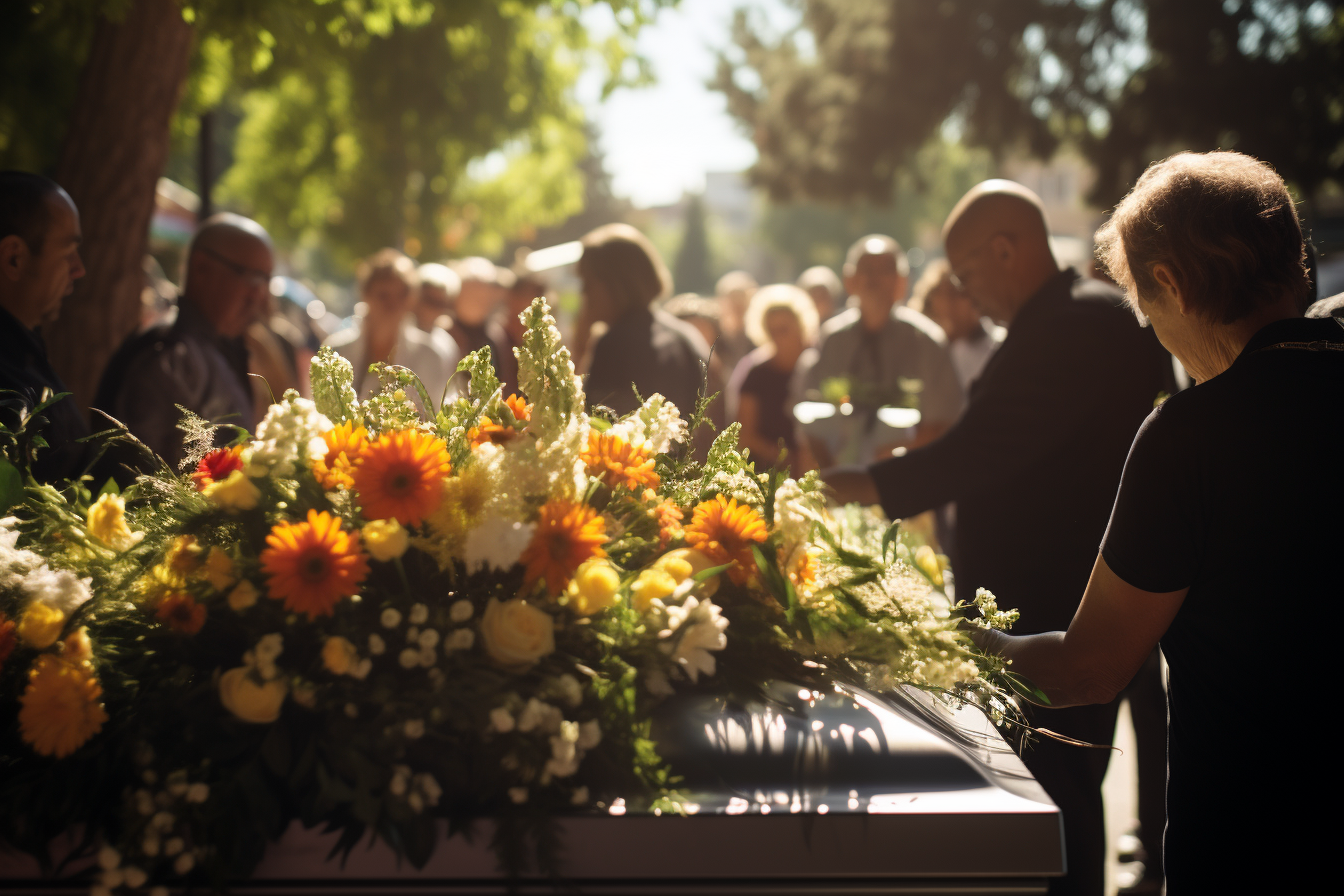
Following a death, it is traditional to hold a velório (wake), most commonly at the family home or, with increasing frequency, at a funeral parlour. The deceased may be laid out in an open coffin for mourners to pay their respects. The wake typically lasts through one night, during which prayers are offered and condolences exchanged. This practice differs notably from the customs of many Northern European countries, where the body is generally held at a funeral home and formal viewings are briefer or less common.
Funeral processions and masses (missa de corpo presente) form an important part of the farewell, with the funeral mass typically celebrated in a local church before burial. Mourners traditionally wear black or dark clothing. Sending flowers and expressing condolences (sentimentos) carry real social significance — simply showing up at the funeral or reaching out with a message of sympathy is a gesture of considerable importance.
In certain parts of the country, especially northern Portugal, older customs continue to be observed — communal mourning gatherings, the tolling of church bells to mark a death, and extended periods of formal bereavement during which bereaved relatives may withdraw from social activities. Expats encountering these traditions for the first time should approach them with sensitivity and genuine respect.
What legal and medical documents should expats prepare in advance in Portugal?
An advance directive (Diretiva Antecipada de Vontade, or DAV) — widely referred to as a living will — is a document in which an individual records their wishes regarding medical treatment they would or would not want to receive should they become unable to communicate those preferences in future. A living will also enables the appointment of one or two healthcare proxies authorised to make decisions on the person’s behalf.
A living will may be drawn up by any individual, including Portuguese citizens, foreign nationals, or stateless persons. It is entirely voluntary and may be registered at any point during the opening hours of the National Register of Living Wills (RENTEV) offices. To register, you will need an SNS user number and must complete the designated advance directive form.
Registration of a living will cannot be completed online. The document must be signed in person at a RENTEV office, or submitted by post with the signature authenticated by a notary. The form can be downloaded via the SNS 24 portal. The legal basis for this registry is Law No. 25/2012, which governs advance directives in the form of living wills and the appointment of healthcare proxies, and establishes the National Register of Living Wills (RENTEV).
Beyond a living will, expats should give serious consideration to drafting a Portuguese will (testamento) to address assets held in Portugal. In general, inheritance matters are governed by the law of the deceased’s country of nationality, which can help avoid conflicts between legal systems. Nevertheless, having a formally prepared Portuguese will registered with a notary is strongly advisable for anyone with property or financial assets in Portugal, regardless of their nationality. A qualified Portuguese notary or solicitor can advise on current requirements and fees.
A financial power of attorney (procuração) authorises a trusted individual to manage your financial affairs if you lose the capacity to do so yourself. This instrument is distinct from the healthcare proxy designated in your DAV. Both documents should be prepared with the assistance of a legal professional — the Ordem dos Notários (Portuguese Notary Chamber) or a qualified Portuguese lawyer can provide guidance on current fees and procedural requirements.
Documents originating in another country are not automatically valid in Portugal. If you hold advance directives or powers of attorney issued in your home country, a Portuguese legal professional should review them to assess whether they satisfy local requirements — and a new Portuguese document may well be necessary. As many expats have discovered in practice, medical emergencies leave little time to verify the standing of foreign instruments; having documents already registered within Portugal’s own systems is far preferable to depending on overseas paperwork that may not be immediately recognised.
What should you do immediately when someone dies in Portugal?
The procedures that must be followed after a death in Portugal are set out in law and carry specific deadlines. The process broadly resembles that found in other European countries, but contains important local requirements — particularly the 72-hour rule and the central role of the civil registry — that expats must be aware of.
- Obtain a medical death certificate. A doctor is required to certify the death by completing a medical death bulletin (boletim de óbito). When the death occurs in a hospital or care facility, the attending physician will handle this automatically. If the death happens at home, you must contact a doctor — dial 112 in an emergency, or call the SNS 24 line (808 24 24 24) for advice.
- Register the death at the civil registry. The death must be formally recorded at a Portuguese civil registry office (conservatória do registo civil). In practice, your funeral director can usually carry out this step on your behalf. You will need to supply accurate details about the deceased, including their place of birth, their parents’ names, their civil status, and their official identity document.
- Obtain the death certificate. Once the death has been registered, you will receive a death certificate (Assento de Óbito). An international version (Certidão de Óbito Internacional), with a multilingual or translated format, can be requested. It is worth noting that Portuguese death certificates do not record the cause of death.
- Obtain the burial licence. At the point of registration, you will automatically receive a free certificate that serves as the burial licence, permitting the funeral to go ahead. No separate application is required.
- Arrange the funeral within the legal timeframe. Under standard circumstances, burial or cremation must take place within 72 hours of death and may only proceed once the death has been formally reported. Your funeral director will coordinate the timing with the registry.
- Notify the relevant embassy or consulate. The embassy or consulate of the deceased’s country of nationality should be informed of the death. This step is especially important for expats, as consular staff can provide guidance on documentation, repatriation, and how to support family members based abroad.
- Notify the Portuguese Tax Authority (AT). The deadline for filing the required notification with the tax authority is within three months of death (as of 2024); failure to meet this deadline may result in a financial penalty. Current requirements are set out on the Portal das Finanças.
How are burials, cremations, and funerals handled in Portugal?
Both burial and cremation are available in Portugal, and an increasing number of families — including expat families — opt for cremation for practical or personal reasons. Both options require the involvement of a licensed funeral director, and the entire process is closely regulated under Portuguese law.
Engaging a local funeral director is a necessary step when arranging either a burial or cremation in Portugal. Physical presence in Portugal is not required to instruct a funeral director, but you must complete the relevant form and supply a copy of your passport along with that of the deceased. This ability to instruct a funeral director remotely is a practical advantage for expats whose family members are located in another country.
Funerals ordinarily take place within 72 hours of death, or 48 hours following a post-mortem examination. Where cremation is sought, permission from the public prosecutor may be required. Cremation facilities are available in major cities including Lisbon, Porto, and Coimbra. Costs vary — you should contact local funeral providers directly for current pricing, as charges are subject to regular change. As of 2024–2025, basic funeral packages typically begin at around €1,500–€2,500 for a straightforward service, with costs rising substantially for more elaborate arrangements or repatriation; always obtain up-to-date figures directly from funeral directors.
Where the remains of a deceased person need to be returned to another country, the process depends on whether insurance is in place. If the individual was covered by a relevant policy, the insurer will normally coordinate the repatriation and work with international funeral directors to return the body to the home country. In the absence of insurance, the cost of repatriation falls to the family, who must source and engage an international funeral director. Repatriation can be both expensive and logistically involved, making dedicated travel or repatriation insurance a sensible precaution.
There are no specific legal restrictions on foreign nationals or non-residents in relation to burial or cremation in Portugal — the same rules apply universally. For local burial, a plot in a municipal cemetery must be secured; perpetual burial plots are available in some cemeteries, but their availability and associated costs are governed by local authority regulations. Contact your local Câmara Municipal (town council) for current information on availability and charges. Civil registration matters in Portugal fall under the remit of the Instituto dos Registos e Notariado (IRN).
How do expats handle estate and inheritance matters after a death in Portugal?
Settling an estate after a death in Portugal involves a number of legal and administrative steps, and matters can become considerably more complex for expats who hold assets in more than one country. Seeking early advice from a qualified Portuguese lawyer is strongly recommended.
The first step is to establish whether the deceased left a will. This is done by requesting a certificate from the Portuguese authorities confirming whether any testamentary document has been registered. As of 2025, this certificate costs €25 and is typically delivered by post within approximately one month. It is important to wait for this certificate before proceeding to identify the heirs, as the existence of a will may fundamentally affect entitlements.
Once it is known whether a will exists, the next step is to obtain the “Habilitação de Herdeiros” — a formal legal declaration identifying who the heirs are. This procedure takes place at a notary’s office. Under Portuguese law, heirs fall into two categories: legitimate heirs, who have an automatic entitlement to a defined share of the estate, and testamentary heirs, who are expressly named in a will.
You are also required to notify the Portuguese Tax Authority (AT — Autoridade Tributária e Aduaneira) of the death, in order to obtain a settlement certificate for the payment of stamp duty (Imposto de Selo), which stands at 10% on inherited property (as of 2024). Direct heirs — such as a surviving spouse, children, or parents — are exempt from this charge, but are still obliged to declare all inherited assets, including bank balances, real estate, vehicles, shares, and company interests.
The deadline for filing the required notification with the tax authority is within three months of death (as of 2024), with financial penalties applicable for late submission. Always verify current thresholds and exemptions via the Portal das Finanças.
While inheritance matters are generally governed by the law of the deceased’s nationality, there are circumstances — particularly when the deceased owned property in Portugal — where Portuguese inheritance law may apply. This makes cross-border legal advice essential for expats with assets in more than one jurisdiction. EU Regulation No. 650/2012 on succession (commonly known as the “Brussels IV” Regulation) provides a framework for EU citizens to choose which country’s law will govern their estate — an area where specialist international estate planning advice is especially valuable.
What should expats consider about health insurance and end of life costs in Portugal?
Portugal’s SNS is a tax-funded public healthcare system that, in principle, extends universal coverage to all residents, including foreign nationals lawfully residing in the country. It delivers a broad range of services, from primary care at local health centres to specialised hospital treatment. Legally resident expats who register with the SNS can access palliative care within the public system on essentially the same basis as Portuguese citizens.
Care provided within RNCCI Palliative Care Units carries no charge to patients, as costs are met by the national health system. However, means-tested co-payments may apply for associated social support services, depending on the type of care and the household’s financial situation. For current information on applicable fees, contact your Local Health Unit or consult the SNS portal.
Some residents opt to supplement their public healthcare entitlements with private health insurance, which opens access to a wider range of services not available under the state system and allows treatment in private hospitals — often experienced as a more efficient and convenient option. Unlike the situation in the UK, where end of life care is predominantly delivered through the public system and charitable hospices, Portugal’s private sector plays a meaningful supporting role, particularly for those seeking quicker access to specialist palliative teams or a more comfortable care environment.
Cost is a genuine concern in Portugal: publicly funded long-term care is largely reserved for those with the lowest incomes, and Portugal has the highest share of out-of-pocket spending on long-term care among OECD member countries. This means that expats who do not meet the criteria for means-tested public support may face substantial personal costs for long-term or residential care that falls outside the funded RNCCI palliative care pathway.
When evaluating private health insurance policies, examine carefully what is specifically included for end of life care — covering palliative treatment, hospice admission, home nursing provision, and medical equipment. Check whether the policy includes repatriation of remains if you wish to be returned to your country of origin after death. Terms and conditions vary considerably between insurers, and you should clarify the scope of your coverage directly with your provider well before any need arises. Standard travel insurance typically includes repatriation as a feature but may not cover extended palliative care; a dedicated expat health insurance policy is generally more suitable for long-term residents.
Frequently Asked Questions
Can I register a living will (advance directive) in Portugal as a non-citizen?
Yes. A living will may be drawn up by any individual, including foreign nationals and stateless persons, provided they satisfy the basic eligibility conditions. The living will is voluntary and may be registered at any time at a RENTEV office. You will need an SNS user number and must complete the advance directive form. The form is available to download via the SNS 24 portal and must be submitted either in person or by post with a notarised signature.
Will advance directives or powers of attorney from another country be recognised in Portugal?
Documents issued abroad do not automatically carry legal force in Portugal. If you hold advance directives or powers of attorney from your home country, consult a Portuguese legal professional to determine whether they are enforceable under local law. In an acute medical emergency, there may be no time to verify the validity of foreign documents — registering a Portuguese DAV with RENTEV before any crisis occurs is strongly recommended for all expats living in Portugal.
How do I register a death in Portugal?
The death must be recorded at a Portuguese civil registry office (conservatória do registo civil). Your funeral director can typically carry out this registration on your behalf. You will need to supply details about the deceased person, including their place of birth, the names of their parents, their civil status, and their official identity document. Once the death is registered, a burial licence is issued automatically at no cost.
How long does it take and cost to repatriate remains from Portugal?
Where the deceased held travel or repatriation insurance, the insurer will generally take responsibility for coordinating the repatriation and liaising with international funeral directors. If no insurance cover is in place, the family must bear the repatriation costs and arrange an international funeral director independently. The process may take anywhere from several days to more than a week, depending on the destination country, the documentation required, and logistical factors. Costs vary significantly — consult an international funeral director for current estimates, and always confirm your insurance coverage well in advance of any need arising.
Is inheritance tax payable in Portugal?
Portugal imposes a 10% stamp duty on inherited property (as of 2024). Direct heirs — including spouses, children, and parents — are exempt from this charge, although they remain obliged to declare all inherited assets. Non-direct heirs, such as siblings, friends, or more distant relatives, are liable for the 10% stamp duty. Current thresholds and exemptions can be verified on the Portal das Finanças.
What is the RNCCI and does it cover expats?
The National Network of Integrated Continued Care (RNCCI), established in 2006 as a joint initiative between the Ministry of Health and the Ministry of Labour, Solidarity and Social Security, provides health and social care in a continuous and integrated manner to individuals who, regardless of age, find themselves in a situation of dependency. Legal residents of Portugal — including expats registered with the SNS — are eligible for RNCCI services, subject to referral and assessment by a local coordination team.
Are there any cultural expectations I should be aware of when a death occurs in Portugal?
The involvement of family is at the heart of Portuguese attitudes to death and dying, and it is common practice for relatives and close friends to gather at the bedside as death approaches. After death, a wake (velório) is customarily held, often with the deceased lying in an open coffin. Attending the funeral or conveying your condolences is an act of real social significance. Catholic traditions — including prayers, a funeral mass, and extended mourning customs — are widely observed across Portugal, though the precise practices vary by region and family. Expats should engage with these customs thoughtfully and respectfully.
What palliative care services can I access at home in Portugal?
The RNCCI includes home care services — specifically community teams providing palliative support — that deliver care to patients in their own homes. Wherever possible, patients are cared for in the setting of their choosing, recognising that the large majority of those nearing the end of life would prefer to be at home. However, home-based palliative care teams remain less widely available than inpatient services, particularly outside the main urban centres. Speak with your family doctor or Local Health Unit to initiate a referral, and consult the SNS website for current information on services available in your area.