

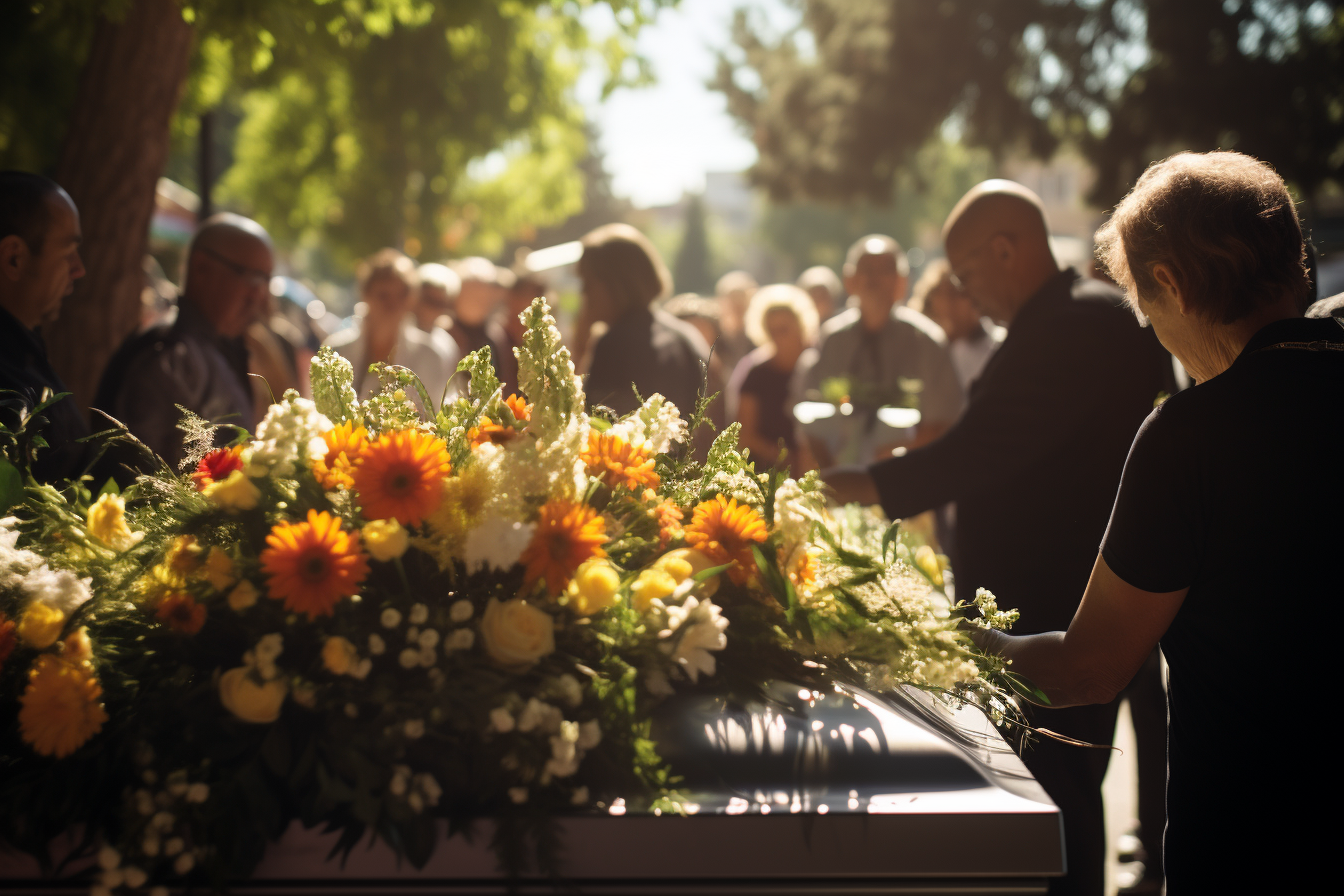
Poland maintains a well-developed network of palliative and hospice care services financed through the National Health Fund (NFZ), which means that insured residents can often access end-of-life support at minimal or no personal expense. Following a death, formal registration must take place promptly at the local civil registry office. Because Poland lacks a statutory framework for advance healthcare directives and prohibits euthanasia in all forms, expats are strongly encouraged to put key legal documents in order well ahead of time.
| Item | Details |
|---|---|
| Public palliative care coverage | Available through NFZ (National Health Fund) for insured residents; covers home hospice, inpatient hospice, and outpatient palliative clinics (as of 2024) |
| NFZ-eligible conditions for hospice | Eight specified diagnoses including cancers, HIV, multiple sclerosis, respiratory failure, and others (as of 2024) |
| Number of palliative/hospice providers | 522 medical entities across Poland as of May 2023 |
| Death registration authority | Local civil registry office (Urząd Stanu Cywilnego) — must be notified promptly after death |
| Euthanasia / assisted dying | Illegal in Poland; no legislative framework exists as of 2025 |
| Intestacy (no will): primary heirs | Spouse and children are first in line under Polish statutory inheritance law |
What end of life care options are available in Poland, and how does the system work?
Poland’s approach to end-of-life care rests on two foundations: the state-funded National Health Fund (NFZ) and a growing range of private providers operating alongside it. The Polish healthcare model blends elements of social insurance with a national health service structure; since 2003, compulsory health insurance through the NFZ has covered all Polish residents, granting them access to a defined package of guaranteed services. End-of-life care is included within this package for those who qualify.
For patients approaching the end of life, Poland offers nursing and therapeutic facilities as well as dedicated nursing and care settings, with hospice care serving as the primary vehicle for palliative support accessible to all. Services can be delivered across three distinct settings: at the patient’s home through a home hospice team, within a dedicated residential hospice facility, or via an outpatient palliative medicine clinic affiliated with a hospital.
The majority of contracts the NFZ holds with care providers are structured around the home hospice model, reflecting a national preference for supporting patients in a familiar domestic environment. Inpatient options — comprising standalone stationary hospices and palliative units embedded within hospitals — along with outpatient palliative clinics, also form an essential part of the overall system. Expats who contribute to the NFZ can, in principle, access all three settings once a qualifying referral and confirmed diagnosis are in place.
What is palliative care in Poland, and who is eligible for it?
Poland has adopted the WHO definition of palliative care, which encompasses all measures aimed at enhancing quality of life for patients and their families when confronting a life-limiting illness, chiefly through preventing and alleviating suffering and addressing pain alongside physical, psychosocial, and spiritual concerns. In day-to-day terms, this translates to a coordinated team of doctors, nurses, psychologists, and social workers offering sustained support to both the patient and those close to them.
The National Health Fund reimburses hospice services only for patients who have been diagnosed with one of eight defined conditions: HIV disease, cancers, sequelae of inflammatory diseases of the central nervous system, systemic atrophies primarily affecting the central nervous system, multiple sclerosis, cardiomyopathy, respiratory failure not elsewhere classified, and pressure ulcers. Patients whose conditions fall outside these categories may still seek palliative support through private facilities or charitable hospice organisations.
Palliative care services in Poland serve patients of all ages, from children through to elderly adults, though the greatest demand is typically found among older patients, many of whom live alone. Expats who hold NFZ enrolment and a valid PESEL number are entitled to apply for publicly funded palliative care on the same basis as Polish citizens, so long as their medical condition satisfies the eligibility criteria.
Are there hospices in Poland, and how do you access them?
As of May 2023, a total of 522 medical entities throughout Poland provide hospice and palliative care services. Of these, 84.4% serve adults exclusively, 4.9% are dedicated solely to children, and 10.1% cater to both age groups. This represents a substantial and expanding network, though its distribution across the country is not uniform.
The number of hospice and palliative care providers has been steadily increasing, particularly in the home hospice sector, yet availability still tends to be concentrated in larger urban areas. Expats residing in smaller towns or rural regions may encounter longer waiting times or a narrower choice of specialist services. Consulting the NFZ’s online portal to identify contracted providers in your specific area is a worthwhile first step.
To gain access to a hospice or palliative care service under the NFZ, a patient generally requires a referral from their general practitioner (lekarz rodzinny) or a hospital specialist, together with documentation confirming the relevant diagnosis. The referral is then reviewed by the NFZ-contracted facility. For those opting for private hospice care — offered by an increasing number of providers — a referral is not always a prerequisite, though charges will apply. The NFZ website (nfz.gov.pl) holds a searchable directory of contracted hospice and palliative care providers organised by region.
Is palliative or hospice care covered by public health insurance in Poland, or does it need to be funded privately?
Where care is delivered through the public system, palliative and hospice services are provided free of charge to both the patient and their family. This represents one of Poland’s most significant protections for seriously ill residents, and it extends to foreign nationals who are registered with the NFZ — whether through employment, self-employment, student status, or voluntary enrolment.
Since the introduction of universal compulsory insurance at the NFZ in 2003, all Polish citizens and qualifying residents have been entitled to a guaranteed package of healthcare services. Palliative care is included within this package for patients whose condition corresponds to one of the eight qualifying diagnoses. For those outside the public system, privately funded care is available, although costs vary considerably depending on the facility and the scope of services required.
Expats who are not enrolled in the NFZ — for instance, those on tourist visas or short-term visits — will need to rely on private health insurance or meet palliative care expenses personally. Emergency-only insurance plans, which are commonly required as part of visa and residence permit applications, typically provide €30,000 or more in coverage for urgent medical treatment but exclude ongoing care, prescriptions, and diagnostics — making them unlikely to fund palliative or hospice services. Expats who are not NFZ-enrolled are strongly advised to hold comprehensive private international health insurance.
What legal documents should expats have in place before the end of life in Poland?
Polish law does not establish a formal statutory mechanism for advance healthcare directives — commonly referred to as living wills in other jurisdictions — of the kind that exists in, for example, the United Kingdom under the Mental Capacity Act 2005, or in Germany through the Patientenverfügung system. Nevertheless, several important documents deserve serious consideration by expats residing in Poland.
A last will and testament sets out how a person’s estate is to be distributed following their death, whereas a living will or advance healthcare directive records medical treatment preferences in the event that the person loses the capacity to communicate them directly. In Poland, while living wills lack a dedicated statutory basis, legislation protecting patient rights does recognise the right to refuse treatment. Furthermore, Article 9 of the European Convention on Bioethics — to which Poland is a signatory — obligates those responsible for medical intervention to take account of previously expressed wishes by a patient who is no longer in a position to state them. This provides a moral and internationally recognised legal foundation for such documents, even in the absence of specific domestic legislation.
From a practical standpoint, expats should give serious thought to preparing the following documents, ideally with the assistance of a Polish notary (notariusz) or a bilingual legal adviser:
- A notarially drafted last will and testament — the most legally robust form of will under Polish law, minimising the prospect of subsequent disputes over the estate.
- A power of attorney (pełnomocnictwo) — this designates a trusted individual to manage your financial and legal affairs. A separate medical power of attorney can confer authority on a named person to make healthcare decisions on your behalf should you lose capacity.
- A written statement of medical wishes — although not formally binding in the same manner as equivalent instruments in some other countries, a clearly worded, signed, and witnessed document setting out your preferences regarding resuscitation, life-sustaining treatment, and palliative care can meaningfully guide medical teams and carries considerable weight.
- PESEL number registration — ensuring that your identity and residency are correctly recorded in Poland’s civil register is a prerequisite for accessing all public services, healthcare included.
A testator may also incorporate express instructions in their will regarding funeral arrangements and earmark funds to cover funeral expenses, which can serve as a practical means of ensuring that final wishes are honoured.
Are documents such as advance directives or powers of attorney made in another country legally recognised in Poland?
This is a nuanced area of law, and expats should obtain tailored legal advice rather than rely on general guidance. Foreign powers of attorney are broadly recognised in Poland, but they may need to be rendered into Polish by a sworn translator and, depending on their country of origin, may require an apostille or full legalisation before Polish authorities will act on them. Poland is a signatory to the Hague Apostille Convention, which simplifies authentication for documents originating in other member states.
The recognition of advance healthcare directives made abroad is more complicated. Because Poland has no domestic statutory regime for advance directives, a document prepared under, say, Irish or Australian law may be treated as a statement of wishes rather than a legally binding instrument. The European Convention on Bioethics nonetheless requires that the previously expressed wishes of a patient regarding medical intervention be taken into account when that patient is no longer able to communicate their will. This provides at least a moral and international legal grounding for foreign advance directives to be considered by Polish medical practitioners — though compliance is not guaranteed in every situation.
The most reliable course of action for expats is to prepare a Polish-language document that replicates the substance of any foreign directive, have it signed and notarised in Poland, and ensure that copies are held by your GP, any treating specialists, and a trusted family member or legal representative. Seeking advice from a bilingual Polish lawyer with experience in medical law is strongly recommended.
What are the laws around euthanasia or assisted dying in Poland?
Euthanasia and assisted dying are both unlawful in Poland. Active euthanasia — defined as the deliberate termination of a patient’s life by a healthcare professional — constitutes a criminal offence under the Polish Penal Code. Assisted suicide is equally prohibited. There is no legal mechanism through which either practice may be carried out, and unlike countries such as the Netherlands, Belgium, or Canada, Poland has not taken legislative steps toward legalisation.
Public discussion around euthanasia, overzealous medical intervention, and living wills has been ongoing in Poland, but as of 2025 no law has been passed to alter the existing prohibition. The significant influence of the Catholic Church within Polish society continues to shape both public opinion and political decision-making on these matters.
What is permitted — and indeed actively encouraged within the palliative care framework — is the limitation or withdrawal of disproportionate or medically futile treatment, sometimes termed “therapeutic obstinacy” in Polish medical ethics discourse. This practice is entirely distinct from euthanasia and is consistent with both Polish law and professional medical ethics standards. Patients retain a recognised right to decline treatment, and palliative sedation for the management of refractory distress is carried out within appropriate clinical and ethical parameters. Expats with firm views about their end-of-life treatment should communicate these clearly to their medical team and record them in writing wherever possible.
What are the local customs, traditions, and religious practices around death and dying in Poland?
Poland is among the most predominantly Catholic countries in Europe, and Catholic traditions exert a deep influence on attitudes and practices surrounding death and dying. The majority of the Polish population identifies as Catholic, and religious customs are firmly embedded in funeral culture, even among families with only a loose connection to regular worship. Expats living in Poland will inevitably encounter these traditions within hospitals, hospices, and local communities.
When someone is close to death, it is customary for a Catholic priest to be summoned to administer the Sacrament of the Anointing of the Sick — historically known as Last Rites. Hospitals and hospices across Poland generally maintain pastoral care services or can arrange for a priest to attend. Non-Catholic patients and their families should feel free to inform medical staff of their own religious or spiritual preferences; most facilities will make reasonable efforts to accommodate these.
After death, the body is traditionally prepared for viewing, either at home or more commonly at a funeral chapel (kaplica pogrzebowa). A vigil (czuwanie) is frequently held on the evening before the funeral. The funeral Mass forms the centrepiece of Catholic funerary observance. Consistent with Catholic tradition, burial has historically been the predominant choice in Poland, though cremation has grown steadily more widespread and accepted over recent decades. Funerals are typically held within three to seven days of death.
The first of November, All Saints’ Day (Wszystkich Świętych), ranks among the most significant commemorative occasions in the Polish calendar. Families travel to cemeteries to tend and adorn graves with candles and flowers, and the day carries profound cultural meaning even for those Poles who do not practise religion actively. Expats who lose family members buried in Poland should be aware of this tradition and the importance it holds within local culture.
What must you do when someone dies in Poland? Who do you notify, how quickly, and in what order?
The steps below outline the immediate administrative obligations following a death in Poland. Prompt action is important, as certain deadlines are set by law.
- Seek medical attendance immediately. If the person dies in a hospital or care facility, the treating physician will issue a medical death certificate. If the death occurs at home, a doctor must be called without delay to confirm the death and produce the necessary documentation. Dial 112 (the emergency services number) or contact the deceased’s own GP.
- Obtain the medical death certificate (karta zgonu). The doctor who certifies the death issues this document, which records the cause and time of death and is required for every subsequent step.
- Notify the local civil registry office (Urząd Stanu Cywilnego). All deaths must be registered in the country where they occur. In Poland, registration takes place at the local civil registry office (Urząd Stanu Cywilnego, Referat zgonów). Polish law requires notification within three days of the death — or within 24 hours in certain circumstances, such as death from an infectious disease. The registry office then issues the official death certificate (akt zgonu).
- Alert the police if the death was sudden, unexplained, or unattended. Polish police will inform next of kin once their details are known or can be established. Where the circumstances of death are unclear or the death was unexpected, the police and possibly the prosecutor’s office may need to be involved before the body is released.
- Contact the deceased’s embassy or consulate if they were a foreign national. This is a critical step for expats and is addressed in greater detail in the section below. Make contact within 24 to 48 hours of the death wherever possible.
- Engage a funeral director (zakład pogrzebowy). A licensed funeral director will take responsibility for the body, coordinate its transport, and guide the family through the practical arrangements. They are also well placed to assist with the associated paperwork.
- Inform relevant institutions. These include the deceased’s employer, bank, pension provider, insurance companies, and any government bodies — such as ZUS, the Social Insurance Institution — with which the person held a registration.
- Request multiple certified copies of the death certificate. The civil registry will issue multiple certified copies of the akt zgonu; these are frequently required for a range of legal processes, including banking matters, property administration, insurance claims, and dealings with consulates. It is advisable to request at least five to ten copies at the point of registration.
How is a death officially registered in Poland, and what documents are needed?
In Poland, the death of any person must be formally recorded at the local civil registry office (Urząd Stanu Cywilnego, Referat zgonów). Registration must be completed within three days of the death as a matter of Polish law. The civil registry office will then produce the official death certificate (akt zgonu), which serves as the foundational legal document underpinning all subsequent proceedings.
To register a death, you will generally need to present the following documents at the civil registry office:
- The medical death certificate (karta zgonu), issued by the certifying physician
- The deceased’s identity document — passport, residence permit, or Polish identity card
- Your own identity document, if you are registering on behalf of the family
- Any document confirming your relationship to the deceased, such as a marriage certificate or birth certificate, if you are acting as next of kin
For foreign nationals, additional documentation may be requested, and some offices may require a sworn translation of identity documents issued abroad. Registry office staff will advise on any further requirements specific to the case. The fee for an unabridged certified copy of the vital record is PLN 39 (as of the current fee schedule). It is strongly advisable to request additional certified copies at the time of registration, as several will be needed for estate, banking, and consular purposes.
What happens if a foreign national dies in Poland — what are the specific steps for notifying their home country’s embassy or consulate, and what role does the consulate play?
Where the deceased is a foreign national, the family may wish to arrange repatriation to their home country. This involves coordination between Polish authorities, the chosen funeral service providers, and the embassy or consulate representing the deceased’s country of nationality. The consulate should be contacted as early as practicable — ideally within 24 to 48 hours of the death.
The home country’s embassy or consulate can typically assist in the following ways:
- Providing a list of funeral directors with experience in international repatriation
- Advising on the documentation required for repatriation or for local burial or cremation
- Informing next of kin in the home country who have not yet been notified
- Issuing consular death certificates or endorsing Polish death certificates for recognition abroad
- Supplying contact details for legal and translation services
- Advising on how to access the deceased’s travel or life insurance policy
It is important to understand that consulates cannot meet the costs of funerals, repatriation, or legal proceedings. The Foreign, Commonwealth and Development Office, for example, is explicit that it cannot assist with any such costs — and this principle applies broadly across the consular services of most countries. The financial responsibility rests with the family or any applicable insurance policy. Contacting the deceased’s travel and life insurance provider as soon as possible is essential, since repatriation costs are typically substantial and are usually only covered under specific policy provisions.
Under Polish law, the next of kin is defined as a registered spouse or children and grandchildren. This definition may differ from that used in other legal systems, and it may affect which individuals Polish authorities and the consulate engage with. Any dispute regarding who qualifies as next of kin would be resolved through civil court proceedings.
How are funerals typically arranged in Poland, and what are the usual options for burial or cremation?
Funerals in Poland are organised through licensed funeral directors (zakłady pogrzebowe), which operate in towns and cities throughout the country. The funeral director manages every stage of the process — from collecting the body and preparing it for viewing, to coordinating the ceremony and overseeing the burial or cremation. Many funeral homes are familiar with the needs of families based abroad and may have staff who can communicate in languages other than Polish.
Burial continues to be the traditional preference, particularly among Catholic families, and Poland has an extensive network of both public and church cemeteries. A local burial in Poland is generally only possible if the deceased was officially registered as a resident there, so expats who had not completed formal registration may face additional administrative requirements. Cremation is now a widely available and broadly accepted alternative.
Foreign nationals may opt for local cremation in Poland. Most crematoria require a signed consent and data protection declaration, completed either by the deceased person before their death or by the next of kin afterwards. The scattering of ashes in public locations is not permitted in Poland; only authorised parties such as licensed funeral directors may accept, hold, or transport ashes. If you intend to take ashes to another country, specific approval from consular authorities and the Polish sanitary authorities is required — see the repatriation section below for further detail.
What are the approximate costs of a funeral in Poland, and are there any state or insurance-based funds that can help cover them?
Funeral costs in Poland depend on the type of service selected, the geographical location, and whether burial or cremation is chosen. As of 2024–2025, a basic cremation funeral in Poland typically falls in the range of PLN 3,000 to PLN 6,000 (roughly €700–€1,400), while a full burial with a traditional church funeral service can cost anywhere from PLN 6,000 to PLN 15,000 or more (approximately €1,400–€3,500), depending on the cemetery chosen, the coffin, and the extent of the ceremony. These figures are indicative — confirm current pricing directly with funeral directors, as costs change over time.
Where next of kin lack the financial means to cover funeral or cremation costs, the state may arrange a basic publicly funded burial — colloquially known as a “pauper’s funeral” (pogrzeb na koszt gminy) — organised through the local municipal authority (gmina). This option is intended as a last resort in cases where neither family resources nor other financial provision exist.
ZUS (Zakład Ubezpieczeń Społecznych — Poland’s Social Insurance Institution) offers a funeral grant (zasiłek pogrzebowy) to assist with the costs when an insured person or their family member dies. As of 2024, this grant is set at a flat rate of PLN 4,000. It is payable to whoever organised and paid for the funeral, and is not restricted to family members. Applications must be submitted within 12 months of the date of death, and require the original death certificate, evidence of insurance contributions, and receipts for funeral expenditure. Visit the ZUS website (zus.pl) for current eligibility conditions and the applicable application form. Travel and life insurance policies may also include funeral and repatriation benefits — review the relevant policy documents at the earliest opportunity.
What is the process for repatriating the remains of a foreign national from Poland to another country?
Repatriating a body or ashes from Poland is both legally and logistically demanding, and is best handled by an experienced international funeral director working closely with the relevant consulate. In uncomplicated cases, the process typically takes between one and three weeks from the date of death, though this timeframe may extend considerably if a post-mortem examination or police investigation is required.
For the repatriation of a body, the key steps and documents generally required are as follows:
- The official Polish death certificate (akt zgonu), issued by the civil registry office
- A certificate from the Polish sanitary authority (Powiatowa Inspekcja Sanitarna — District Sanitary Inspectorate) confirming that the body has been appropriately prepared for international transport
- Embalming of the body, which is ordinarily a legal requirement for international air transport
- A laissez-passer (transit permit) issued by the relevant foreign embassy or consulate
- A hermetically sealed, zinc-lined coffin, as required under the Strasbourg Agreement on the Transfer of Corpses (1973), to which Poland is a party
For the repatriation of ashes, the process is somewhat less involved. Polish cremation authorities will only release ashes — in sealed urns — to authorised funeral directors. Where a local cremation has taken place and the ashes are to be returned abroad, the consent of the local sanitary authorities (Powiatowa Inspekcja Sanitarna), who seal the urn, is required. Before this consent can be granted, both the death card and the official death certificate of the deceased must be presented.
It is not necessary to transcribe or register a foreign death certificate in the Polish civil registry solely in order to obtain a certificate authorising the repatriation of a body or ashes. This simplification eases the burden for families whose primary objective is returning their loved one to their home country. The deceased’s insurance provider — particularly any travel insurance policy — should be contacted without delay, as many policies include repatriation cover that can substantially reduce or eliminate the associated costs.
What happens to the estate of someone who dies in Poland — how does probate or estate administration work, and are there inheritance taxes?
Estate administration in Poland is conducted either through notarial proceedings or through the court system. Unlike common law jurisdictions — such as Ireland, Australia, or Canada — where a probate court formally grants authority to administer an estate, Polish law permits a more streamlined notarial route. A notary (notariusz) may issue a notarial deed of succession (akt poświadczenia dziedziczenia) where all heirs are in agreement and present in person; this can often be finalised within days and is considerably quicker than going through the courts.
Where heirs disagree or the situation is complex — for example, involving assets held in multiple countries or unverified family members — an application must be made to the district court (sąd rejonowy), which will issue a declaration of succession. This process may take several months. For foreign nationals, additional steps are likely to be required, including document translation, recognition of foreign wills, and coordination of cross-border asset distribution.
Inheritance and estate transfers in Poland may give rise to tax obligations depending on the relationship between the deceased and the beneficiaries. Under the Polish Inheritance and Gift Tax Act, heirs are divided into three tax groups according to the closeness of their relationship to the deceased. Close relatives — spouses, children, and parents — fall within Tax Group I and may be fully exempt from inheritance tax provided they notify the tax office within six months of the date on which the obligation arose. More distant relatives and unrelated beneficiaries are subject to progressive tax rates on the value of inherited assets exceeding a specified threshold. These thresholds and rates are subject to revision — confirm current figures with a Polish tax adviser or through the National Revenue Administration (podatki.gov.pl).
EU Succession Regulation No. 650/2012 is of direct relevance to expats. It permits EU residents to nominate the law of their nationality to govern the succession of their entire estate — a significant option for non-Polish nationals living in Poland who would prefer their home country’s succession law to apply rather than Polish law. This election must generally be made within a will or formal declaration. Legal advice should be sought well in advance of any such decision.
If an expat dies without a will in Poland, what happens to their assets under local intestacy laws?
Where a person dies intestate — that is, without having left a valid will — in Poland, their estate is distributed in accordance with the provisions of the Polish Civil Code. In such circumstances, assets are allocated according to the order of priority established by statute. This is known as statutory inheritance (dziedziczenie ustawowe), and the first in line to inherit are the deceased’s spouse and children.
The order of intestate succession under Polish law broadly operates as follows:
- First priority: The spouse and children inherit together. The spouse is entitled to at least one quarter of the estate regardless of how many children there are. Any remaining share is divided equally among the children.
- Second priority: Where there are no children or other descendants, the spouse inherits jointly with the deceased’s parents. If a parent has predeceased, that parent’s share passes to the deceased’s siblings.
- Third priority: If there is neither a spouse nor any descendants or parents, the estate passes to siblings and their descendants.
- Further priority: Grandparents and ultimately the State (Skarb Państwa) inherit where no closer relatives can be identified.
Wills may be drawn up by Polish nationals and equally by non-residents who own property in Poland and wish to determine how it should pass on their death. Dying without a will can create serious difficulties for expat families, particularly where the deceased held assets across more than one country or had a partner to whom they were not married — since an unmarried partner would receive nothing under Polish intestacy law. Drawing up a will — ideally a notarially executed one that is valid in Poland — is strongly recommended for all expats living in the country.
Frequently Asked Questions
Can I use foreign travel or health insurance to cover palliative or hospice care costs in Poland?
The answer depends entirely on the terms of your specific policy. Standard travel insurance very rarely extends to palliative or long-term care. Comprehensive international health insurance may include palliative care provision, but it is essential to examine the precise policy wording before a care need arises rather than after. Expats who are enrolled in the NFZ and have a qualifying diagnosis may access palliative care through the public system at no direct personal cost. Always confirm the scope of your coverage with your insurer before a situation requiring care actually occurs.
Are documents in languages other than Polish accepted by Polish authorities?
Generally, no. Polish authorities — including civil registry offices, courts, and notaries — require that documents be in Polish or accompanied by a sworn Polish translation (tłumaczenie przysięgłe). Documents originally drafted in a foreign language must be presented with an official translation prepared by a sworn translator listed on the register maintained by the Ministry of Justice. EU multilingual standard forms, issued pursuant to EU Regulation 2016/1191, are an exception to this requirement and do not need separate translation when exchanged between EU member states.
How long does repatriation of remains from Poland typically take?
In straightforward cases involving no post-mortem examination or legal complications, the repatriation of a body from Poland typically takes between one and three weeks. If a police investigation or authorisation from the prosecutor’s office is required — for instance in cases of sudden or unexplained death — the timeline can extend significantly. Repatriation of ashes is generally faster once the cremation has been completed. Engaging an experienced international funeral director and contacting the relevant consulate without delay will help to avoid unnecessary hold-ups.
What support is available to bereaved family members remaining in Poland?
Bereaved family members may be entitled to a survivor’s pension (renta rodzinna) from ZUS if the deceased was covered by the Polish social security system. This benefit is of particular relevance to spouses and dependent children. Emotional and practical support is also offered by many hospice organisations, which frequently extend bereavement counselling to families following a loved one’s death. Numerous hospitals and palliative care units have social workers and psychologists available to provide immediate assistance. The Polish Forum of Hospice Movements (Forum Hospicjów Polskich) is a useful national point of contact for broader guidance.
Does my home country’s will automatically apply to my assets in Poland?
Not automatically. Under EU Succession Regulation No. 650/2012 — which applies in Poland as an EU member state — the default position is that the law of the country in which you were habitually resident at the time of your death governs your succession. This means Polish law would ordinarily apply to your estate if Poland was your place of habitual residence. However, you may elect within your will for the law of your nationality to apply instead. Non-EU nationals should seek tailored legal advice, as bilateral treaties or private international law principles may govern their particular situation.
Can a non-married partner inherit under Polish intestacy law?
No. Polish intestacy law confers no automatic inheritance rights on unmarried partners, regardless of how long the couple lived together. Only legally married spouses are recognised as heirs under the statutory inheritance rules. If you wish your partner to benefit from your estate, it is essential to make a valid will in Poland that explicitly names them as a beneficiary. Without such a will, an unmarried partner would receive nothing and could even face difficulties accessing the deceased’s home or bank accounts.
What happens to a deceased expat’s PESEL number and Polish tax registration?
When a death is registered at the civil registry office, the corresponding record in the PESEL register — Poland’s universal electronic population register — is updated, effectively deactivating the number. The civil registry notifies the relevant state systems automatically. However, family members or legal representatives should also inform ZUS directly (if the deceased was insured), together with the relevant tax office (urząd skarbowy), and any employer or pension provider. Any outstanding tax affairs — including the filing of a final income tax return — must be settled by the heirs as part of the estate administration process.
Is there a time limit for applying for the ZUS funeral grant?
Yes. An application for the ZUS funeral grant (zasiłek pogrzebowy) must be submitted within 12 months of the date of death; claims received after this deadline will not be considered. The grant — set at PLN 4,000 as of 2024 — is paid to whoever arranged and paid for the funeral, which means it is not restricted to family members; a friend, employer, or even a funeral director who covered costs may apply. Retain all original receipts and documentary evidence of funeral expenditure, as these must accompany the application. Refer to the ZUS website for the current application procedure and any updates to eligibility requirements.