
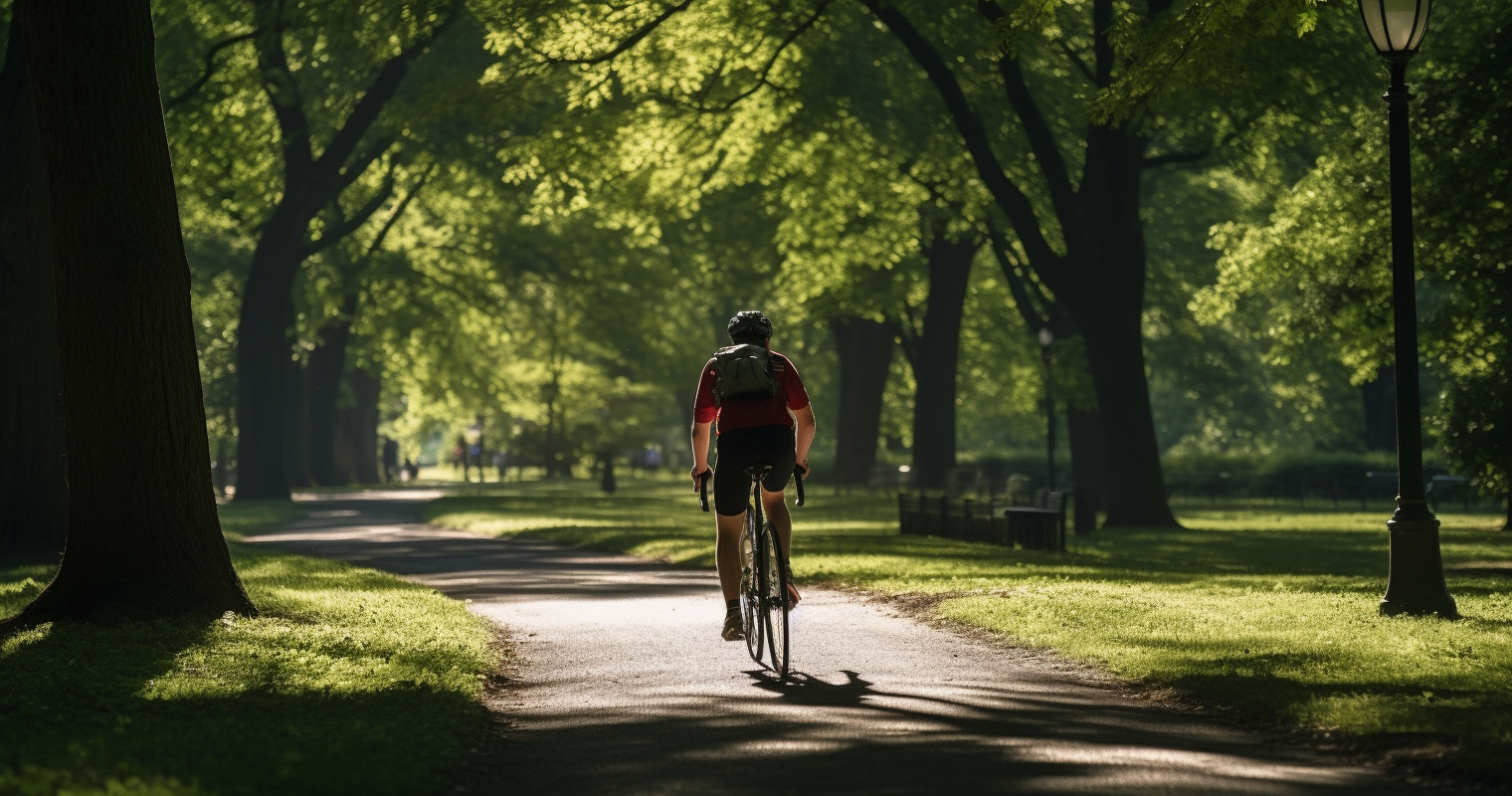
Cycling in Russia occupies an interesting but still developing space. Although Moscow and St. Petersburg have made notable strides in expanding their cycling networks in recent years, pedalling to work or school remains far less routine than in Western Europe. Brutal winters, a deeply rooted car culture, and inconsistent infrastructure beyond city centres mean that riding a bike is largely a warm-season pastime rather than a year-round mode of transport for most Russians.
| Item | Details |
|---|---|
| Cycling culture | Primarily seasonal and recreational; commuter cycling is growing but not mainstream (as of 2024) |
| Helmet law | No legal requirement for adult cyclists; strongly recommended |
| Bike registration | Not legally mandatory for standard bicycles |
| Cycling insurance | Not legally required for cyclists; personal insurance recommended |
| Moscow bike-share (Velobike) | 780+ stations, ~10,000 bikes including 4,000 e-bikes; rides under 30 minutes free on subscription (as of 2023) |
| Cycling season | Typically April/May to October in most regions; year-round in milder areas such as Sochi |
How popular is cycling in Russia — is it a common way to get around?
Unlike in many Western nations, cycling as a form of transport in Russia is only gradually finding its footing. A growing number of people who would once have defaulted to a car are now turning to bicycles and scooters during the spring and summer months. Seasonality is central to understanding cycling in Russia: the climate means that riding a bike is predominantly a warm-weather pursuit, with most cities experiencing a recognisable “cycling season” that stretches roughly from April or May through to October.
A Levada Centre survey found that 19 percent of Russians used their bicycle several times a week or more for commuting to work or school between May 2018 and May 2019, while half of respondents said they never used a bicycle for personal use during that period (as of 2019). These numbers paint a clear picture of a country where cycling has yet to become a mainstream transport choice.
In earlier decades, cycling was predominantly a weekend activity enjoyed with family or friends in the park, but it is no longer unusual to see people commuting by bicycle in Moscow. Although owning an expensive car remains a mark of prestige in Russia, smartly dressed professionals on bicycles are now a familiar sight in the capital. The cultural shift is genuine, if slow-moving.
Post-Socialist cities like Moscow inherited centralised planning traditions oriented around public transport, and this was compounded by a powerful car culture that emerged after the fall of Socialism in the 1990s. By contrast, countries such as the Netherlands and Denmark built cycling into the fabric of their urban transport systems through decades of deliberate policy. Russia is still in the early phases of that transition — closer in many respects to where Central European cities stood in the 2000s.
The cycling advocacy organisation “Let’s Bike” has established a national cycling day in partnership with the Ministry of the Interior, which now takes place across more than 100 cities. Their “Bike to Work” campaign has secured the involvement of over 500 companies. These initiatives indicate real and growing momentum, but regular commuter cycling remains an exception in most parts of the country rather than the norm.
What is the cycling infrastructure like in Russia?
Dedicated cycling lanes, bicycle signage, and purpose-built cycling infrastructure are absent across the vast majority of Russian settlements — in roughly 90 percent of localities such provision simply does not exist, and even where it is present, it tends to cover only limited areas. Experts observe that the Russian Federation faces a significant shortage of proper bike paths, which frequently leaves riders with no option but to use pavements or share the carriageway with motor traffic.
Moscow stands apart from the broader picture. The capital has seen a steady expansion of cycling lanes in its central districts, with dedicated routes, well-signed paths through parks, and riverside corridors running alongside the Moskva River. Nonetheless, this provision remains heavily concentrated in central areas and thins out considerably as you move further from the city core.
Dedicated cycling lanes offer the most comfortable and secure conditions for cyclists in Moscow. Routes also exist through parkland and green spaces, as well as alongside certain roads. The city’s cycling infrastructure map is publicly available via the Moscow city website. The Moscow Department of Transport is the authority responsible for cycling infrastructure in the capital.
Urban bike paths are marked with a distinctive blue sign, though many serve a dual purpose — where there is no adjacent pavement, pedestrians are also permitted to use them. Unlike in countries such as Germany, where respect for cycle infrastructure is well established, Russian pedestrians frequently walk on bicycle paths, often unaware that they are not supposed to do so.
One striking exception to the general lack of cycling investment is Almetyevsk, an oil town in the republic of Tatarstan. The city developed a cycling network spanning 83 kilometres, much of it physically separated from motor traffic, maintained clear of snow in winter, and equipped with cyclist-friendly amenities such as footrests and angled bins. While this example demonstrates what is achievable with genuine political commitment and adequate funding, it remains a remarkable outlier rather than a representative case.
Beyond the major cities, dedicated cycling infrastructure is effectively non-existent. Minor roads are frequently unpaved — gravel or dirt tracks — and rarely link up in a useful way, forcing cyclists onto main roads at some point. Expats who plan to cycle in suburban or rural settings should be prepared to share roads with general motor traffic and should think carefully about their route choices. For current information on cycling routes and infrastructure, consult the Moscow Department of Transport cycling page or your local municipal transport authority.
Is cycling safe in Russia?
Russia’s extreme winters mean that a significant proportion of drivers are simply not used to encountering cyclists on the road, and many are uncertain about where cyclists are actually permitted to ride. A widespread misconception among motorists is that cyclists belong on the pavement rather than the road, even though the law classifies a bicycle as a vehicle and requires cyclists to use the road wherever practicable. Many drivers do not pay close attention to cyclists or motorcyclists at all.
Main roads are frequently dominated by heavy trucks and vehicles travelling at speeds of up to 110 km/h. Cyclists often struggle to find adequate space at the road’s edge, and motor vehicles regularly pass uncomfortably close. Inter-city cycling on major routes is considered high-risk and is advisable only for experienced cycle tourists equipped with proper visibility gear. Within well-provisioned city centres, urban cycling carries significantly lower risk when dedicated lanes are available and used.
City traffic can be heavy, and in many towns tram lines present an additional hazard that cyclists must navigate carefully. Road surfaces vary widely: primary roads are often in good condition, while secondary and minor roads range from reasonable asphalt to bare mud. Tram tracks are a particular danger for cyclists riding narrow-tyred road bikes.
Under current Russian traffic regulations, adult cyclists are not legally required to wear a helmet — a contrast with countries like Australia, where helmet use is compulsory for all cyclists. Nevertheless, wearing a helmet is strongly advisable given the road conditions and the level of driver awareness. For the most current road safety statistics, the State Road Safety Inspectorate (GIBDD) publishes annual accident data. These figures are updated regularly, so always check for the latest available information.
What are the rules of the road for cyclists in Russia?
Cycling in Russia falls under the Traffic Regulations of the Russian Federation, known as the Pravila Dorozhnogo Dvizheniya or PDD. Under Russian law, a bicycle is defined as a vehicle propelled by the physical effort of the rider, and may additionally be fitted with an electric motor with a rated maximum continuous output not exceeding 0.25 kW, provided that motor disengages automatically at speeds above 25 km/h. As a result, cyclists are broadly subject to the same fundamental obligations as other road users.
The legal framework for where cyclists may ride follows a clear order of priority:
- Where a dedicated bicycle path exists — a road element structurally separated from the carriageway and pavement, designated by sign 4.4.1 — cyclists must use it.
- Where no cycle path is present, cyclists may ride along the right-hand edge of the carriageway.
- Riding on the pavement is treated as a last resort, permitted only where there is no cycle lane, where riding along the right side of the road is impractical, and where use of the road shoulder is also not feasible.
- An adult cyclist may also ride on the pavement when accompanying a child cyclist under the age of 7, or when transporting a child in a purpose-built seat fitted to the bicycle.
Cyclists aged 14 and over are permitted to ride along the right-hand edge of the road or pavement where no dedicated cycle lane exists. Every manoeuvre — pulling away, changing lanes, turning, performing a U-turn, or stopping — must be signalled. Cyclists must keep both hands on the handlebars at all times, and are not permitted to carry loads that interfere with steering or to carry passengers unless the bike is specifically designed for this purpose. Turning left or making a U-turn is not permitted on roads with tram lines or on roads with more than one lane running in each direction.
Within built-up areas, cyclists must not exceed 60 km/h; in parks or adjacent zones, the speed limit is reduced to 20 km/h. Cyclists are required to comply with all applicable road signs restricting movement.
Certain locations prohibit bicycles entirely — Red Square in Moscow being the most prominent example. In such cases, the cyclist must dismount and push the bike on foot. When crossing a road at a pedestrian crossing, cyclists are also advised to dismount for safety.
Russia’s traffic code does not specify a separate blood alcohol limit for cyclists in the same way as it does for motorists, but riding under the influence of alcohol or controlled substances is prohibited and can attract administrative penalties. For the full and up-to-date legal text, refer to the official Russian Traffic Regulations via the Consultant Plus legal database or contact your regional traffic authority (GIBDD).
Do I need to register my bike or have insurance to cycle in Russia?
Registering a bicycle is not a legal requirement in Russia for standard pedal cycles or pedelecs (e-bikes up to 0.25 kW). No national bike registration scheme comparable to motor vehicle registration exists. Cycling advocacy groups often recommend that riders voluntarily note their bike’s serial number and retain proof of purchase as a practical safeguard against theft — a sensible measure given that bicycle theft is a recognised issue in Russian cities.
Compulsory third-party liability insurance does not extend to cyclists in Russia in the way that OSAGO (compulsory motor liability insurance) applies to drivers of motor vehicles. Cyclists therefore have no legal obligation to hold any insurance. That said, since a cyclist can cause accidents involving pedestrians or damage to property, taking out personal liability cover through a private insurer is a prudent step — particularly for those who ride regularly in urban environments. Personal accident insurance covering cycling-related injuries is also readily available from both Russian and international insurers.
For the most current guidance on any regulatory changes affecting bike registration or liability obligations, consult the State Road Safety Inspectorate (GIBDD) or the Federal Tax Service for any tax considerations relating to imported or high-value bicycles.
Are there public bike-sharing or rental schemes in Russia?
Velobike is Moscow’s official municipal bicycle-sharing system. Launched in 2013, the scheme has expanded considerably over the years. By 2023, more than 780 stations were in operation across the city, with a fleet of approximately 10,000 bikes, of which 4,000 are electric. This places Velobike among the more substantial bike-share systems in Eastern Europe.
In 2023, a new generation of “2.0” e-bikes was added to the Velobike fleet. Prior to this, the scheme operated exclusively on a docking-station model, but the arrival of the “2.0” e-bikes introduced a dockless option as well. These newer e-bikes proved four times more popular with users than the conventional station-based bicycles.
Registered subscribers can take rides of up to 30 minutes at no charge, making the system a genuinely cost-effective option for short urban trips. For journeys exceeding 30 minutes, time-based charges apply: rides up to one hour cost 30 roubles, up to two hours cost 100 roubles, and up to three hours cost 450 roubles (as of the time of last update — consult the official website for current pricing).
Payment is accepted by card (Visa, Mastercard, or Mir), and subscriptions can be purchased through the Velobike website, mobile app, or station terminal. Day, week, monthly, and seasonal subscription plans offer savings on rides of up to one hour. To register or check the latest pricing, visit velobike.ru.
St. Petersburg also runs a bike-sharing scheme, and other Russian cities including Kazan and Nizhny Novgorod have launched or trialled similar systems. The scale and consistency of provision varies considerably outside Moscow — check with your local municipal transport authority for up-to-date information on availability in your area.
Tourist-facing bike rental services operate near major attractions in Moscow, St. Petersburg, and Sochi, typically offering hourly and daily hire rates. These are mostly run by private operators whose details change frequently — it is best to search locally or ask at your accommodation once you arrive.
Where can I buy or service a bike in Russia?
Moscow offers a well-established market for new and used bicycles. Specialist retailers such as Velosite carry an extensive selection covering mountain bikes, folding bikes, cruiser bikes, and BMX models, with knowledgeable staff on hand to guide buyers on the right size and fit. Accessories typically available include saddles, puncture repair kits, pumps, bags, clothing, and other cycling essentials.
Velostrana is another respected chain carrying a broad range of internationally recognised brands including Bulls, Silverback, and Specialized, with stock spanning mountain bikes, road bikes, and models aimed at women and children. Velostrana’s staff hold professional certifications and the shops operate official service centres capable of handling repairs and ongoing maintenance. The retail offer is broadly comparable to what you would expect from a specialist cycling shop in a major Western European city, though international brand availability may differ and import costs can push prices higher.
For buyers seeking a more budget-conscious option, Avito.ru hosts a large second-hand market, with over 20,000 bikes and cycling accessories listed for sale — ranging from e-bikes to components and accessories. Operating since 2009, the platform functions as a standard classified advertising site, broadly equivalent to eBay or Gumtree in other countries, and is widely used throughout Russia.
Outside Moscow and St. Petersburg, specialist bike shops become progressively harder to find. In smaller cities and towns, general sports retailers may carry basic bicycle models but are unlikely to stock specialist components or provide expert servicing. Cyclists who rely on a particular brand or type of equipment are advised to bring spare parts with them, especially for less common bike types. Consumer protections for goods purchased in Russia fall under the Law on Consumer Rights Protection — seek advice from a local consumer affairs service if you encounter problems with warranties or returns.
Can I bring my bike when I move to Russia, and are there any import rules?
Relocating to Russia with your bicycle is generally feasible, though the process depends on how the bike is transported and whether it qualifies for treatment as personal effects under Russian customs rules. Russia’s import framework is governed by the Eurasian Economic Union (EAEU) customs regulations, under which individuals relocating to Russia may be entitled to import personal belongings — including a bicycle — as part of a household goods consignment, potentially free of customs duty, subject to applicable conditions.
Ordinary bicycles imported as personal property in connection with a permanent move are generally exempt from customs duty, provided they are genuinely intended for personal use and not commercial purposes. However, high-value or electric bicycles may attract closer scrutiny from customs officers, who may ask for documentation establishing ownership and original purchase value. It is advisable to have original receipts and proof of ownership readily available.
When crossing the Russian border, you will need to complete both a migration card and a customs declaration form. Both documents are available in Russian and English. The declaration form covers the goods you are bringing into the country, and once the relevant officer has stamped your paperwork, you should retain copies of all documents alongside your passport, as they will be needed when you eventually depart Russia.
Import regulations, duty thresholds, and exemption criteria are subject to change. Before shipping a bicycle to Russia, always check the current position with the Federal Customs Service of Russia (FCS). If you are using a removal or freight company, they should be able to advise on the documentation required for your particular circumstances.
What are the best cycling routes or destinations in Russia?
Russia has not yet developed long-distance cycle trails in the way that Germany, France, or other Western European countries have built national cycling route networks. Riders generally make use of quiet streets and paths running through forests or open countryside. That said, Russia’s enormous and varied terrain presents remarkable opportunities for adventurous cyclists and those seeking off-road experiences.
Moscow offers several well-regarded urban cycling routes along its river embankments. One popular route takes in the Cathedral of Christ the Saviour, continues along the banks past Luzhniki Stadium and the New Virgin Monastery, and traces the course of the Savvinskaya waterfront in the direction of Smolenskaya and Krasnopresnenskaya metro stations before reaching the dramatic skyline of Moscow City.
A shorter alternative of around 12 km begins on the Taras Shevchenko embankment heading towards Moscow City, passes the Radisson Royal hotel, and follows the Berezhkovskaya and Vorobyovskaya embankments to reach Sparrow Hills — a rewarding stopping point that offers sweeping panoramic views of the city and the famous “Seven Sisters” high-rises.
EuroVelo 10 enters Russia near the Finnish border through the historically significant city of Vyborg, before a 130 km stretch around the Gulf of Finland leading into St. Petersburg. EuroVelo routes within Russia are still being developed, but cycle touring on public roads is already achievable. EuroVelo 2 — the Capitals Route — crosses into Russia from Belarus and heads towards Moscow. Note that EuroVelo currently advises against entering Russia at the border due to prevailing travel restrictions; check the latest official guidance before incorporating any international touring route into your plans.
Sochi, often dubbed the “Russian Riviera” and known internationally as the host city of the 2014 Winter Olympics, offers cycling against the backdrop of the Black Sea and is particularly appealing during the summer months. The region’s comparatively mild climate makes it one of the few places in Russia where cycling is possible for a substantially longer portion of the year.
For the truly adventurous, long-distance routes across Russia towards the Far East are achievable for experienced and self-sufficient cyclists — some have ridden all the way to Lake Baikal before continuing south through Mongolia and into China. Undertaking such an expedition demands careful advance planning and considerable experience. For cycle touring resources and route information, contact the Federal Agency for Tourism (Rostourism) or the Russian Cycle Touring Club, which can assist with questions about accommodation and logistics along the way.
Frequently asked questions about cycling in Russia
Is cycling practical for everyday commuting in Russia?
In major cities like Moscow, commuter cycling is possible and growing in popularity, particularly in the warmer months. However, it is far less embedded in daily life than in countries like the Netherlands or Germany. Long winters, limited infrastructure outside city centres, and a strong car culture mean most people who cycle do so seasonally and primarily for leisure. In smaller cities and rural areas, commuter cycling is very uncommon.
Do I legally need to wear a helmet when cycling in Russia?
Helmets are not legally required for adult cyclists in Russia under the current traffic regulations. However, given road conditions, driver awareness, and the risks of urban and rural traffic, wearing a helmet is very strongly recommended. Children under a certain age are advised to wear helmets, but check current regulations with the GIBDD for specific age requirements. Always prioritise safety regardless of what the law requires.
Can I cycle in Russian cities year-round?
In most Russian cities, cycling is seasonal. Moscow’s official bike-share scheme, Velobike, typically operates from spring through autumn, as harsh winters make cycling impractical and sometimes dangerous due to ice, snow, and reduced daylight. In the south of Russia — particularly Sochi and the Black Sea region — the climate is milder and cycling is possible over a longer period of the year.
Are there bike-share schemes in cities other than Moscow?
Moscow’s Velobike is the most established and largest scheme, with over 780 stations and around 10,000 bikes as of 2023. St. Petersburg has a smaller bike-share system, and other cities including Kazan and Nizhny Novgorod have introduced or piloted similar schemes. Provision outside the two main cities is less consistent — check with your local municipal transport authority for current availability.
What should I be aware of regarding road safety as a cyclist in Russia?
Road safety is a significant concern, particularly outside city centre cycle lanes. Many drivers are not accustomed to sharing the road with cyclists and may not give adequate space. Large trucks on inter-city roads pose a particular hazard. Cycling at night without lights is strongly inadvisable. Wear high-visibility clothing, use front and rear lights at all times when visibility is poor, and stick to designated cycle paths in urban areas wherever possible. Consult the GIBDD (State Road Safety Inspectorate) for the latest national road safety statistics.
Where is the best place to buy a bike after arriving in Russia?
Moscow has a well-developed bike retail market, with specialist shops such as Velosite and Velostrana offering a wide range of new bikes, accessories, and servicing. For second-hand bikes, Avito.ru is the main classified platform and offers thousands of listings across Russia. Outside Moscow and St. Petersburg, specialist retailers become scarcer, so expats relocating to smaller cities may need to plan ahead or order online.
Do I need any special documents or permits to cycle in Russia as a foreign resident?
No special cycling licence or permit is required for standard bicycles or qualifying e-bikes (under 0.25 kW and 25 km/h). You simply need to follow the Russian Traffic Regulations, as outlined in the PDD. If you are a foreign resident, you will already need a valid visa or residence permit to be in the country — cycling itself requires no additional registration. Ensure you carry your general identification when cycling, as checks are possible.
Is bike theft a problem in Russia, and how can I protect my bike?
Bike theft is a noted concern, particularly in urban areas. Secure parking infrastructure is limited, and some cyclists report difficulty finding safe places to leave bikes unattended. Use a quality D-lock or combination of locks, avoid leaving your bike in isolated or poorly lit areas, and consider registering your bike’s serial number with a local authority or cycling group. If using Velobike, the system’s built-in locking and return confirmation process provides built-in security.