
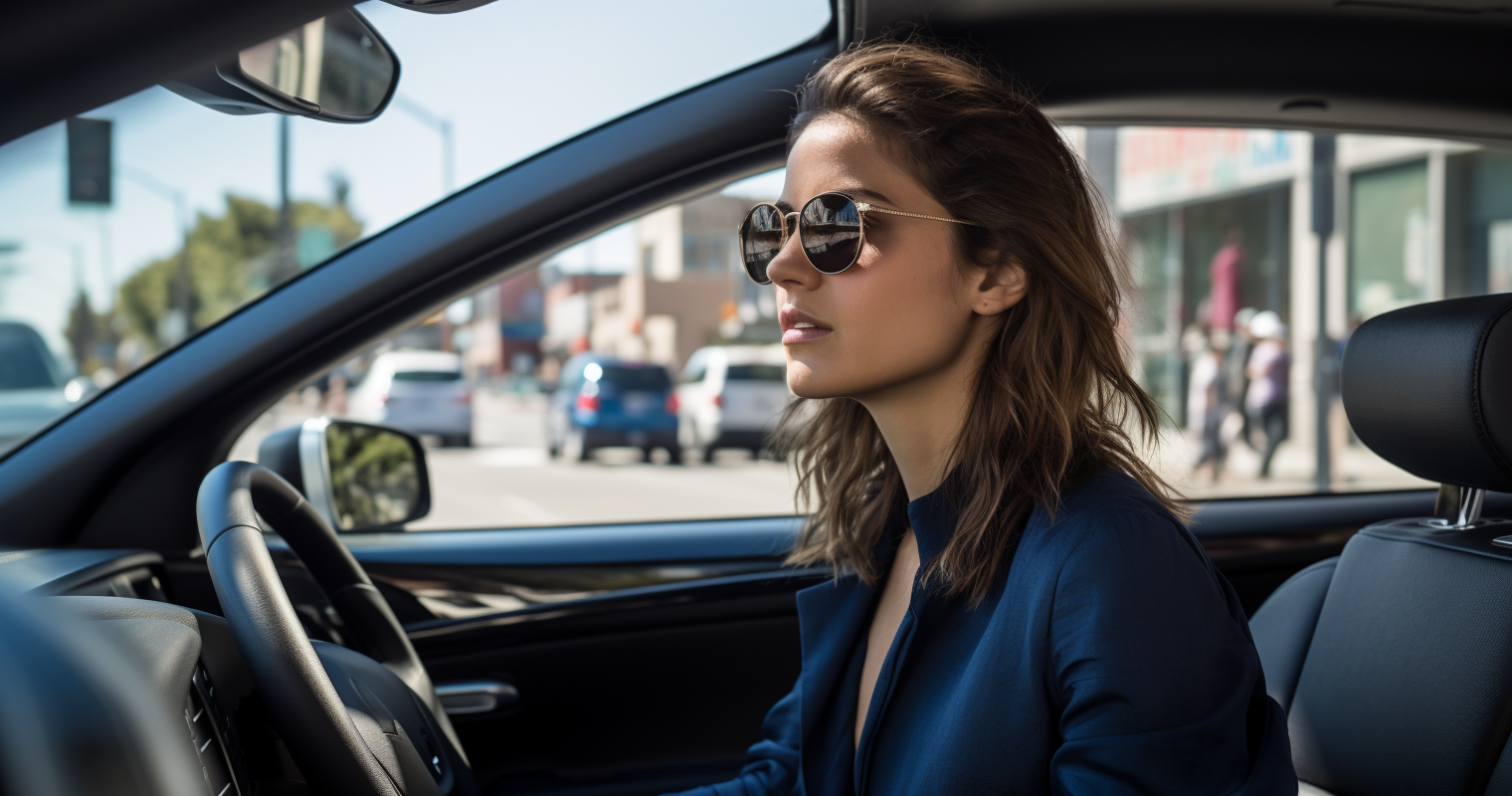
Getting behind the wheel in the Bahamas means driving on the left-hand side of the road, respecting a general speed limit of 25 mph within built-up areas and up to 45 mph on open rural roads, and keeping your licence and a valid insurance certificate in the vehicle at all times. Visitors may use their foreign licences for up to 90 days, after which a locally issued Bahamian licence becomes necessary. Road quality differs considerably from one island to the next, and a cautious, defensive approach to driving is highly recommended throughout the archipelago.
| Item | Details |
|---|---|
| Driving side | Left |
| Speed limits (as of 2025) | 25 mph in urban settlements; 30 mph outside city limits; up to 45 mph on rural roads |
| Drink-drive limit (as of 2025) | 80 mg alcohol per 100 ml blood; 30 µg per 100 ml breath |
| Foreign licence validity | Up to 90 days; IDP recommended for non-UK/US licence holders |
| Minimum driving age | 17 years old |
| Emergency number | 911 (also 919) |
| Insurance requirement (as of 2025) | Minimum third-party insurance mandatory; renewed annually in birth month |
Is the Bahamas safe to drive in?
The Bahamas has a comparatively modest road network, and the standard of road surfaces varies widely depending on which island you are on. While many roads are reasonably well kept, drivers will encounter hazards such as potholes and uneven surfaces. In contrast to Western Europe, where extensive motorway systems and consistently maintained road markings are the norm, conditions in the Bahamas — particularly on the Family Islands — can feel far less predictable.
Traffic in Nassau can become severely congested, and some local drivers exhibit impatient or careless behaviour behind the wheel. It is wise to maintain a defensive driving mindset at all times, staying alert for vehicles pulling out from side streets without warning — accepting such manoeuvres with patience is part of the local driving culture. A measured, anticipatory style of driving, similar to what you would adopt in any busy city environment, will serve you well here.
Away from the main centres, roads can be narrow, winding, and in a poor state of repair. Flooding on roads occurs regularly in areas including Nassau and Freeport following heavy rainfall. This is particularly relevant during the Atlantic hurricane season, which runs from June through November, when intense downpours can render roads temporarily impassable.
On some main roads, the lack of adequate shoulders or usable pavements forces pedestrians to walk along the carriageway itself. Motorcyclists frequently weave between lanes and filter through stationary or slow-moving traffic. Poorly maintained or heavily overloaded vehicles are not an uncommon sight on Bahamian roads. Building in additional braking distance is a sensible habit to adopt.
Drivers should remain vigilant for construction zones that are poorly signed or unmarked. For the most current road safety data and official guidance, refer to the Road Traffic Department of the Bahamas and the Royal Bahamas Police Force websites, as statistics are updated from time to time.
What side of the road do you drive on in the Bahamas?
In the Bahamas, traffic travels on the left-hand side of the road — the opposite of what drivers from the United States are used to. For anyone accustomed to right-hand traffic, such as those from continental Europe, the Americas, or much of Asia, this requires a deliberate mental adjustment, especially at intersections, roundabouts, and when emerging from driveways or car parks.
While driving on the left is straightforward in principle, there is an important quirk to be aware of: the majority of cars in the Bahamas are imported from the United States and are therefore left-hand drive. This means that, unlike in the UK, Japan, or Australia — where driving on the left is matched with right-hand-drive vehicles — in the Bahamas you will typically find yourself seated on the left while also driving on the left. Your natural sightlines for overtaking are therefore quite different, and extra caution is essential when pulling out to pass a slower vehicle ahead.
Drivers new to left-hand traffic most commonly slip up when making turns, especially on quieter roads where the absence of other traffic reduces natural cues. A helpful habit is to confirm your lane position each time you join a new road, and to keep in mind that the slow lane is on the far left rather than the far right. Where possible, build your confidence gradually — the quieter roads of the Family Islands can be a good starting point before you tackle the busier streets of Nassau.
What are the main driving rules in the Bahamas?
The national speed limits in the Bahamas are 25 mph within settlements, 30 mph outside of city boundaries, and 45 mph on rural roads (as of 2025). Always observe any posted signs, since lower limits may apply near schools, hospitals, or active roadworks. There are currently no fixed speed cameras in the Bahamas, but mobile speed enforcement units operate regularly and will issue fines to those caught exceeding the limit.
Using a mobile phone while driving without a hands-free kit is prohibited, and drivers caught doing so will face a fine. This rule mirrors legislation in many other countries, but it is worth noting that even using a phone on speakerphone without a dedicated hands-free setup is against the law.
The legal drink-drive thresholds in the Bahamas are 80 mg of alcohol per 100 ml of blood and 30 µg of alcohol per 100 ml of breath (as of 2025). Driving under the influence of alcohol or any other substance is strictly against the law, and the consequences for a DUI conviction are severe, potentially including substantial fines and a custodial sentence. The blood alcohol threshold mirrors that of the UK, while the breath limit is notably stringent — on a par with some of the stricter standards found in continental Europe.
All occupants of a vehicle — drivers and passengers alike — are required by law to wear seat belts. No child younger than twelve years of age may ride in the front seat of a car. Children weighing under nine kilos must be secured in a rear-facing car seat placed in the rear of the vehicle; those up to eighteen kilos must be restrained in an appropriate forward-facing child seat; and children over eighteen kilos but shorter than 145 cm must travel in a booster seat.
Overtaking must only be performed on the right-hand side, and the driver of the vehicle being overtaken on the left has the right of way. Emergency service vehicles — ambulances, fire engines, and police cars — always take priority: as soon as you see or hear flashing lights or a siren, you are obliged to pull over and wait for the vehicle to pass.
Roundabouts are widely used across the islands; unless signage states otherwise, drivers entering a roundabout must yield to traffic already circulating from the right. Motorists are also legally required to stop and give way to pedestrians at designated crossings.
Traffic and road violations in the Bahamas are classified as either minor or major offences. Minor offences typically attract a fixed penalty, payable within a set timeframe; failure to pay will escalate the matter to court proceedings. Always verify current fines and procedures with the Road Traffic Department, as penalties are subject to revision.
What equipment are you legally required to carry in your car in the Bahamas?
A current insurance certificate must be kept in the vehicle at all times, and your driver’s licence must also be on your person whenever you are behind the wheel. Beyond these essential documents, the Bahamas does not publish an exhaustive statutory checklist of mandatory vehicle equipment in the same way as certain European nations — France, for instance, legally requires drivers to carry a warning triangle, a reflective vest, and a breathalyser. The Bahamas instead focuses primarily on ensuring that vehicles meet minimum roadworthiness standards.
These minimum safety requirements cover items such as lights, tyres, mirrors, horns, and exhausts, as well as the proper securing and marking of any loads being carried. Your vehicle must be in a roadworthy condition at all times. Although a warning triangle or high-visibility vest is not explicitly required by law, carrying them is strongly advisable — particularly if you break down on a rural or unlit road where visibility after dark may be very limited.
The following items are recommended to keep in your vehicle at all times:
- Valid insurance certificate (legally required)
- Driver’s licence (legally required)
- Vehicle registration document
- Warning triangle or hazard markers
- Reflective/high-visibility vest
- Basic first aid kit
- Torch and spare bulbs
- Bottled water (particularly important in hot weather or remote areas)
Police have the authority to impound uninsured or unlicensed vehicles on the spot, and a release fee of $300 applies (as of 2025). Always ensure all your documentation is in order before setting out on any journey. For official confirmation of equipment requirements, contact the Road Traffic Department directly.
What are the most important road signs in the Bahamas?
Road signs throughout the Bahamas conform to international standards and are displayed in English. Key signs to be familiar with include “Stop,” “Give Way,” and “No Entry,” along with signs indicating speed limits, parking restrictions, and general road information. Drivers who have experience in former British territories or Commonwealth countries will recognise many of the conventions, although there is also a noticeable North American influence on sign design, reflecting the Bahamas’ close proximity to the United States.
The Bahamas acceded to the Vienna Convention on Road Traffic on 14 May 1991, meaning that the country adheres to internationally harmonised road signage standards. Most signs will therefore be familiar to drivers who have previously driven in other Vienna Convention signatory countries. Warning signs are generally diamond-shaped or triangular, regulatory signs are circular, and informational signs are rectangular — a system broadly consistent with the standards used across Europe and much of the Caribbean.
Traffic lights in the Bahamas operate in accordance with Vienna Convention rules, so the sequence should be familiar to most international drivers. That said, it is not unheard of for drivers to run red lights, so exercise caution when pulling away on green. The standard colour sequence is red → green → amber → red, as in the majority of countries worldwide.
Those unfamiliar with the Bahamas should pay close attention to signs relating to roundabouts and one-way streets, which are particularly prevalent in Nassau. Be prepared for unannounced potholes and unmarked speed bumps, yield to circulating traffic at roundabouts, and signal clearly and early. In some areas, construction zone signage can be informal or improvised, so a heightened level of awareness is advisable whenever you spot any indication of roadworks ahead.
What must you do if you have a road accident in the Bahamas?
Any road accident must be reported to the police without delay. Doing so helps to protect all parties involved and ensures that the incident is properly recorded. The authority responsible for road incidents is the Royal Bahamas Police Force. The emergency number in the Bahamas is 911, though 919 is also operational — most people dial 911.
The following steps outline what to do in the event of a road accident in the Bahamas (as of 2025):
- Stop your vehicle — you are legally required to remain at the scene of any accident in which you are involved.
- Check for injuries — call 911 immediately if anyone has been hurt. Do not attempt to move an injured person unless they face immediate danger by remaining where they are.
- Call the police — all road accidents should be reported to the Royal Bahamas Police Force, regardless of how minor the incident appears to be.
- Do not move the vehicles — contact the police on 911 and, while you wait for them to arrive, photograph the scene and gather details of any witnesses. Leave the vehicles in position wherever possible until the police have attended.
- Exchange information — obtain the names, addresses, vehicle registration numbers, and insurance details of all other parties involved in the accident.
- Document the scene — take photographs of the positions of the vehicles, all visible damage, road and weather conditions, and any relevant signage or road markings.
- Notify your insurer — inform your insurance provider as soon as you are able to do so. A police officer may ask you to provide a breath sample as part of their investigation.
- Obtain a police report — request a copy of the official police accident report, as your insurer will require this document in order to process any claim.
If you experience a problem with a hire car, call the emergency number provided by the rental company — this is often displayed on a sticker inside the windscreen. Save all relevant contact numbers in your phone before you begin your trip. For further guidance, visit the Royal Bahamas Police Force website.
Where can you find up-to-date road traffic information for the Bahamas?
The principal official source of road traffic information in the Bahamas is the Road Traffic Department (RTD), which operates under the Ministry of Transport and Energy. The RTD website provides access to relevant legislation, driver’s licence information, vehicle registration requirements, and road safety guidance. Always verify that any web address you consult is current, as government URLs do change from time to time.
For real-time navigation, both Google Maps and Waze are widely used in the Bahamas and provide reasonably reliable traffic data for Nassau and Freeport. On the Family Islands, map coverage can be considerably thinner, and it is advisable to download offline maps before travelling away from the main population centres. Apple Maps also works in the Bahamas, though coverage outside New Providence may be less comprehensive.
Because road flooding occurs regularly in areas such as Nassau and Freeport following heavy rain, keeping an eye on local weather forecasts is an important element of journey planning — especially during the rainy season. The Official Bahamas Government portal and local radio stations, particularly ZNS Radio, broadcast traffic and weather updates that are directly relevant to road conditions. The ZNS network is especially valuable for alerts during periods of tropical weather activity.
The US State Department and comparable government travel advisory services from other nations also maintain current road and safety information for the Bahamas, which expats may find useful as an additional point of reference.
How does parking work in the Bahamas?
Across much of the Bahamas, finding a spot to leave your car is rarely a challenge — if a space is available, you can generally use it. In urban centres such as Nassau and Freeport, however, parking is more tightly regulated and spaces are harder to come by. Multi-storey car parks and surface parking lots are available in both cities, and these tend to be reasonably priced and secure.
Parking is not permitted in areas displaying a “No Parking” sign, in front of fire hydrants, at emergency exits, or at bus stops. Leaving your vehicle in a prohibited location risks having it towed, and you may also receive a fine. Parking enforcement is carried out by the police, and tickets are issued for inconsiderate parking or any obstruction caused to other road users.
Parking fines for violations such as stopping at a bus stop, on a corner, or alongside a kerb in a prohibited zone range from $80 to $100 (as of 2025). Parking on a pavement or footpath carries a fine of $80, as does parking within 15 feet of a corner (as of 2025). Always check current fee levels with the relevant local authority, as these figures may be subject to change.
Residents who require a parking permit in areas where such permits are available should direct their applications to the appropriate local government authority. The New Providence Municipal area falls under the administration of Nassau, while Grand Bahama is managed through Freeport city services. Visit the official government portal for up-to-date permit application procedures.
Disabled parking bays in the Bahamas are reserved exclusively for vehicles displaying a valid disabled parking permit. Such permits are available from the relevant local government office upon submission of a completed application form and a medical certificate. The blue badge scheme used in some other countries is not formally recognised in the Bahamas, though carrying your foreign permit may be helpful in demonstrating a need for accessible parking. Staff at attended parking lots will generally make every effort to direct you to a conveniently located space if you require assistance.
Can you drive in the Bahamas on a foreign or international licence?
Visitors to the Bahamas may drive using their home country driver’s licence, along with an International Driving Permit where applicable, for a period of up to three months. Licences issued in the United States and the United Kingdom are both valid in the Bahamas for this three-month period. Tourists holding a valid licence from their country of residence may use it for up to three months; however, anyone planning to stay longer than this will need to obtain a Bahamian driving licence.
The Bahamas has aligned its driving licence system with the 1968 Vienna Convention. Holders of a driver’s licence issued in any of the 67 countries that have done likewise do not require an International Driving Permit to drive in the Bahamas. Drivers from other nations will need an IDP, unless a separate bilateral agreement exists between the Bahamas and the country that issued their licence.
Even where a licence is generally accepted without an IDP, carrying one is still advisable, as it can prove useful when hiring a vehicle, during police checks, or in the event of an insurance claim. The IDP must be carried alongside the original national licence at all times — it serves as a translation document rather than a standalone driving authorisation. An IDP must be obtained in the same country where the holder’s domestic licence was issued.
The Bahamas has licence exchange arrangements in place with certain countries, including the United States, Canada, and the United Kingdom. Where such an arrangement applies, the process of converting to a Bahamian licence may be less onerous. All applications for a Bahamian licence are processed through the Road Traffic Department and involve an interview and a knowledge test based on the local Highway Code.
To apply for a Bahamian driver’s licence as a new resident, the process through the Road Traffic Department typically involves the following steps:
- Assemble the required documents: your valid foreign driving licence, proof of residency, a passport or national identity document, and passport-sized photographs.
- Visit the Road Traffic Department Drivers Licence Unit in Nassau, or the relevant office on your island of residence.
- Complete and submit the official application form.
- Sit a knowledge test covering the Bahamas Highway Code.
- Attend an interview conducted by an RTD officer.
- Pay the applicable licence fee (consult the RTD website for current figures, as these are reviewed periodically).
- Collect your Bahamian driver’s licence once it has been issued.
Always contact the Road Traffic Department directly or check the RTD website to confirm the current requirements, fees, and expected processing times, all of which may be updated without prior notice.
Frequently Asked Questions About Driving in the Bahamas
Do I need special car insurance as a foreign driver in the Bahamas?
Third-party insurance is the legal minimum required in the Bahamas, and you must be able to produce your insurance certificate as proof of cover. The Road Traffic (Amendment) Act, 2024, which took effect on 1 January 2025, introduced significant changes to the insurance framework, including new vehicle insurance renewal timelines and extended powers for law enforcement to impound vehicles. When renting a vehicle, the hire company will typically include the minimum required insurance in the rental package, but it is worth checking whether your own travel or motor insurance policy offers any supplementary cover. Expats who become residents should arrange a local motor insurance policy as soon as they register a vehicle in the Bahamas.
Are there toll roads in the Bahamas?
The Bahamas has no toll roads, but certain bridges do carry a toll charge. The best-known example is the Paradise Island Bridge, which links Nassau to Paradise Island. Verify the current toll rates with local sources before travelling, as charges may be adjusted periodically.
What are the rules for driving with children in the Bahamas?
Children under twelve years of age are prohibited from travelling in the front seat of a car. Children weighing less than nine kilos must be placed in a rear-facing car seat in the rear of the vehicle. Those up to eighteen kilos must be secured in a suitable forward-facing child seat. Children over eighteen kilos but under 145 cm in height must use a booster seat. Always ensure that any child restraint meets the relevant safety standards before travelling, and confirm current legal requirements with the Road Traffic Department.
What are the penalties for drink-driving in the Bahamas?
Legal alcohol limits stand at 80 mg per 100 ml of blood and 30 µg per 100 ml of breath (as of 2025). A police officer may arrest without warrant any driver suspected of exceeding these thresholds and may require them to submit to a breath test. Those found to be over the limit face fines, disqualification from driving, and potentially imprisonment. The Bahamas treats drink-driving as a serious offence, and enforcement is active across the islands.
Is there winter driving preparation required in the Bahamas?
None whatsoever. The Bahamas enjoys a tropical climate throughout the year, which means that winter tyres, snow chains, and cold-weather driving preparations are entirely unnecessary. The most favourable driving conditions occur during the dry season, from January to May. During hurricane season (June to November), however, heavy rain, flooding, and strong winds can make driving hazardous. Keep a close eye on local weather alerts during this period and refrain from driving when severe conditions are forecast.
What is the minimum age for renting a car in the Bahamas?
The minimum legal driving age in the Bahamas is 17. For vehicle hire purposes, however, most rental companies require drivers to be at least 21, with some insisting on a minimum age of 23 or even 25. A young driver surcharge may also be applied in certain cases. Always check the specific requirements of each rental company before making a booking, as policies vary between providers and across different islands.
Can I use speed camera detector devices in the Bahamas?
Speed camera warning devices are illegal in the Bahamas, and using one could lead to prosecution. The nature of Bahamian roads makes excessive speed impractical in most situations, but you should in any case always keep within the posted limits. If your vehicle is fitted with such a device at home, ensure it is removed or deactivated before you drive in the Bahamas.
How do I get a disabled parking permit as an expat in the Bahamas?
Disabled parking bays in the Bahamas are reserved for vehicles that display a valid local disabled parking permit. To obtain one, you must submit an application along with a medical certificate to the relevant local government office. Foreign disabled parking permits — such as the blue badge issued in certain countries — are not formally recognised in the Bahamas, so overseas permit holders will need to apply for a locally issued permit through the appropriate municipal authority on their island. Contact the relevant government office to obtain the most up-to-date information on application procedures and associated fees.