
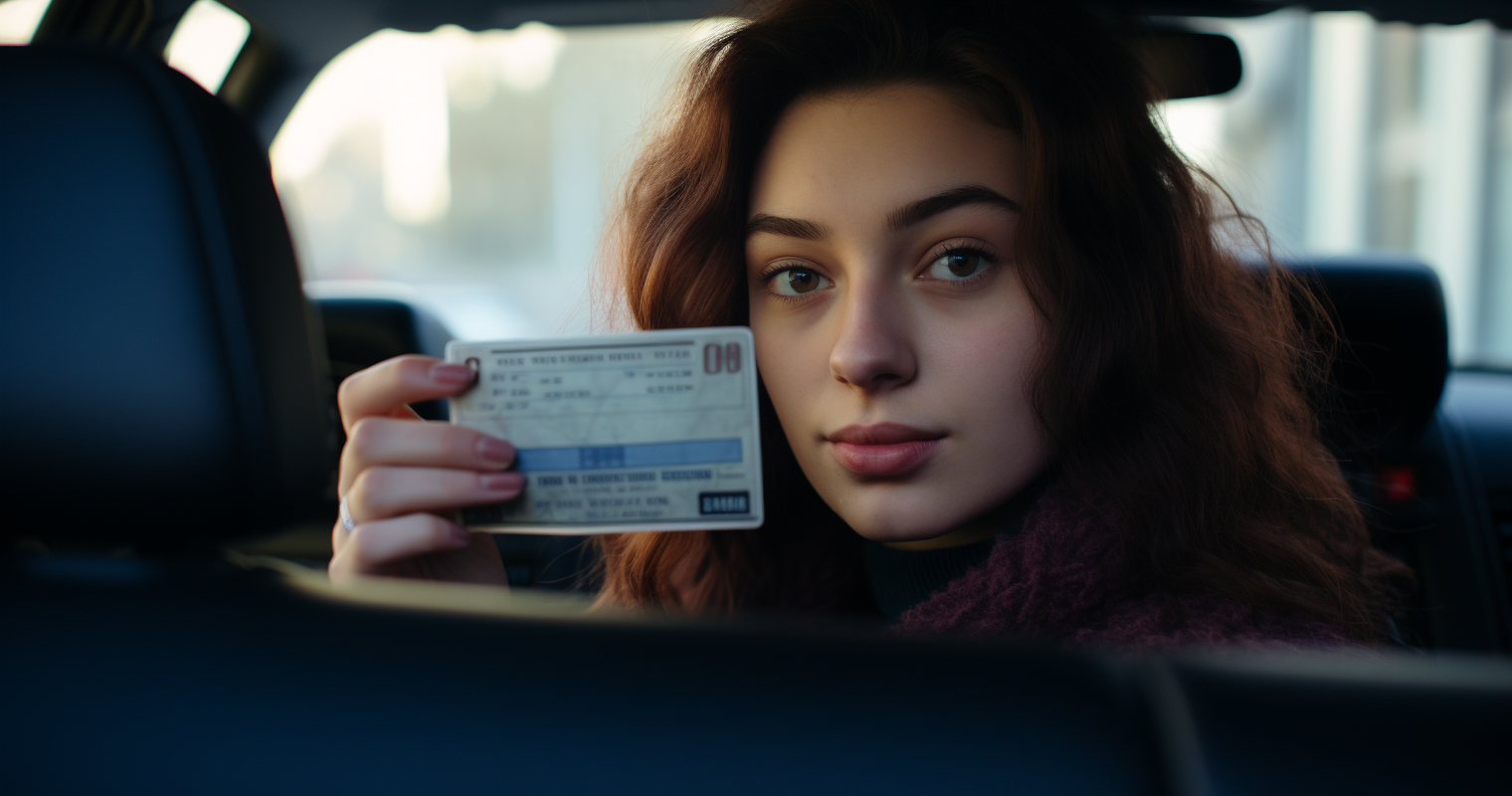
Whether you can drive in Croatia using a foreign licence depends primarily on where that licence was issued and what your residency status is. EU/EEA licence holders are free to continue driving on their existing document for as long as it remains valid. Nationals from outside the EU/EEA are permitted to drive on their foreign licence for a maximum of one year after arriving in Croatia, after which they must convert it to a Croatian vozačka dozvola (driving licence). Short-term visitors can generally use their home country licence throughout their visit.
| Item | Details |
|---|---|
| Non-EU/EEA licence grace period | Up to 1 year from entering Croatia (as of 2025) |
| EU/EEA licence validity | Valid until expiry date — no mandatory exchange (as of 2025) |
| Licence exchange fee (regular procedure) | €20.04 (as of 2025, per MUP) |
| Licence exchange fee (accelerated procedure) | €26.54 (as of 2025, per MUP) |
| Licence exchange fee (urgent procedure) | €59.73 (as of 2025, per MUP) |
| Croatian licence validity period | Typically 10 years (as of 2025) |
| IDP type recognised in Croatia | 1968 Vienna Convention |
| Main licensing authority | Ministry of the Interior (MUP) — mup.gov.hr |
Can foreign nationals drive in Croatia on their home country licence, and for how long?
The rules governing the use of a foreign driving licence in Croatia vary considerably based on two key factors: whether the licence originates from an EU/EEA country or from elsewhere, and whether the holder is in Croatia as a tourist or as a resident. Establishing which category applies to your situation is the essential starting point before getting behind the wheel on Croatian roads.
Licences issued by EU or EEA member states are fully recognised in Croatia and remain valid until their expiry date. There is no requirement to swap an EU/EEA licence for a Croatian equivalent. This reflects the mutual recognition principle that applies broadly across EU member states, making the transition to driving in Croatia straightforward for those relocating from elsewhere in Europe.
Should your EU/EEA licence expire while you are resident in Croatia, you may apply to have it renewed at any administrative police station in the country. Additionally, once you have obtained temporary or permanent residence status, you have the option — though not the obligation — to voluntarily replace your EU/EEA licence with a Croatian one if you prefer.
For those whose licence was issued by a country outside the EU/EEA, the rules are more restrictive. Such licences are permitted for use in Croatia for one year from the date of arrival. After this period, the licence must be exchanged for a Croatian one. Note that this one-year window applies from the point at which residence is established — tourists entering Croatia on a valid visa or under a visa-free arrangement may drive on their home licence throughout their stay without this restriction applying.
One important caveat: if a non-EU/EEA licence has been expired for more than six months at the time an exchange application is made, a direct swap is not permitted. In this situation, the applicant must instead sit the Croatian driving test. It is therefore strongly advisable to initiate the exchange process while your existing licence is still valid and well within its expiry date.
Does Croatia have licence exchange agreements with other countries?
In addition to the automatic recognition that applies within the EU/EEA, Croatia has concluded bilateral agreements with a number of non-EU countries that enable their nationals to exchange their driving licences without sitting a full Croatian driving test. The scope and existence of these arrangements can evolve over time, so it is always advisable to confirm the current position with the Croatian Ministry of the Interior.
Under these bilateral arrangements, holders of a valid foreign licence from an eligible country can typically obtain a Croatian driving licence by direct exchange, bypassing the need for theory or practical examinations. This represents a significant practical benefit compared to the position for those from countries without any such agreement in place.
Countries reported to have such agreements with Croatia include Switzerland, Australia, and Japan. However, the complete and officially confirmed list is not always comprehensively published online, and accessing definitive information may require direct contact with the relevant Croatian authority.
Where no reciprocity arrangement exists between Croatia and your licence-issuing country, you will likely need to pass both a theory examination and a practical driving test in Croatia before a Croatian licence will be issued to you. This stands in clear contrast to the EU/EEA framework, under which no testing whatsoever is required. If you are uncertain whether your country of origin holds such an agreement with Croatia, contact your local police administration or consult the Ministry of the Interior (MUP) for up-to-date guidance.
Croatia has also been engaged in discussions aimed at broadening its network of bilateral licence recognition agreements. For instance, a proposal was put forward to initiate a mutual recognition and exchange agreement between Croatia and Kosovo, with the aim of strengthening bilateral cooperation and supporting road safety. This demonstrates that the list of countries covered by such agreements can change, reinforcing the importance of checking the current situation before submitting any application.
How do you exchange or convert a foreign driving licence in Croatia?
The process for exchanging a foreign driving licence in Croatia is administered through the police authority network and follows a broadly similar framework to exchange procedures in other EU member states. You submit an application with supporting documentation and pay an administrative fee. The main variables are whether a medical examination is needed and whether a driving test must also be completed.
Legal residency in Croatia is a prerequisite before an exchange application can be submitted. Once residency has been established, the exchange process generally involves the following steps:
- Obtain a medical certificate. A medical examination conducted by a certified Croatian doctor is required. The assessment covers vision, hearing, and general fitness to drive. This certificate is a compulsory part of the exchange application. Note that the certificate must typically be obtained within a specified timeframe before submission — confirm the current requirement with MUP at the point of application.
- Assemble your documents. You will generally need to present your original foreign driving licence, which must be currently valid. If the licence is not printed in Croatian or the Latin alphabet, a certified translation by an authorised translator in Croatia will also be required. Additional documents include proof of identity, evidence of Croatian residency, and passport-sized photographs — though these may be waived if a qualifying biometric document was issued within the last five years and your appearance is substantially unchanged.
- Determine whether a driving test is needed. Whether you must sit a theory or practical examination depends on the country that issued your original licence. If a bilateral agreement exists between that country and Croatia, you will likely be exempt. Confirm your status with the local authorities before proceeding.
- Lodge your application. Applications are submitted at a police administration or police station authorised to issue driving licences. A desk officer completes the application form, and you are asked to sign it confirming that the information is accurate.
- Pay the administrative fee. As of 2025, the applicable fees are €20.04 for the regular procedure, €26.54 for the accelerated procedure, and €59.73 for the urgent procedure. Payment is accepted by payment slip issued at the station, standard payment slip, or internet banking. Refer to the official MUP exchange page for the most current fee information before applying.
- Hand over your foreign licence. Your original foreign licence will generally be retained by the police station and not returned to you. However, Croatian law provides that for legitimate reasons it may be given back to the applicant. Raise this point with the officer processing your application if it is relevant to your situation.
- Collect your Croatian licence. Once your application has been approved and all conditions — including any required examinations — have been fulfilled, your Croatian driving licence will be issued. On the day of application, a temporary certificate valid for 30 days is provided while the physical card-format licence is being produced.
Exchanges can be processed at most administrative police stations throughout Croatia. However, because not all stations are equipped to handle this procedure, those living in smaller towns may need to travel to a larger city such as Zagreb to complete the application.
How do you apply for a driving licence in Croatia from scratch?
If you do not hold a qualifying foreign licence, or your licence cannot be exchanged — for example because it has been expired for more than six months — you will need to complete Croatia’s full licensing process. This means attending an autoškola (driving school), passing both a written theory examination and a practical driving test, and then lodging your licence application through a police station.
Eligibility to apply for a Croatian driving licence for the first time extends to Croatian nationals residing in Croatia, nationals of EEA member states with habitual residence or attending education in Croatia, and foreign nationals who have resided in Croatia for a minimum of 185 days in a calendar year and hold temporary or permanent residence status. This eligibility framework applies to all first-time applicants, regardless of background.
Croatian driving licences are organised into 17 vehicle categories. For most expats, the category B licence — covering standard private motor vehicles — will be the primary requirement. Enrolment in a category B driving course also automatically qualifies the holder for categories AM (mopeds and cultivators), F (tractors), and G (working machines).
The complete process for obtaining a Croatian driving licence from the beginning is as follows:
- Enrol in an autoškola (driving school). Attendance at a licensed Croatian driving school is a legal requirement before any examinations can be sat. The school will deliver the necessary theory instruction and a prescribed number of supervised practical driving hours. Course fees differ between schools and locations — contact your chosen school for current pricing, as no centrally fixed tariff applies.
- Pass the theory (written) examination. The theory test covers Croatian road regulations, traffic signage, and safe driving conduct. It is usually held at the driving school or an accredited examination centre. Some schools provide preparation materials in additional languages, though the examination itself is conducted in Croatian.
- Pass the practical driving test. Once the theory examination has been successfully completed, you will take a practical test on public roads with an examiner. Your driving school will handle the booking and scheduling of this assessment.
- Obtain a medical certificate. A certificate confirming your fitness to drive, dated no more than 15 months prior to your application, is required. This can be obtained from a private doctor certified to carry out driver medical assessments.
- Submit your application at a police station. After completing driving school and passing all required tests, you may submit your licence request at any administrative police station in Croatia.
- Pay the applicable fee. As of 2025, the fee is €20.04 for the regular procedure, €26.54 for the accelerated procedure, and €59.73 for the urgent procedure. Always confirm the current rates on the official MUP page prior to attending.
- Receive your licence. The police station will issue a certificate confirming receipt of your application, which is valid for driving for 30 days from the submission date while your physical card-format licence is prepared.
Applications for a first Croatian driving licence based on a driving test certificate can also be submitted digitally via the e-Citizens platform, although licences applied for through this channel are processed exclusively under the regular procedure.
How do you renew a driving licence in Croatia?
Croatian driving licences carry a fixed expiry date and must be renewed once they lapse. The renewal procedure is administered through the police authority network and is largely the same for foreign nationals holding a Croatian licence as it is for Croatian citizens. Expats should nonetheless be aware of a small number of additional considerations regarding documentation.
In most cases, Croatian driving licences are valid for ten years, though shorter validity periods apply to older drivers or to individuals with certain medical conditions. This aligns with the renewal cycle used in many other EU member states, such as France and Germany, where licences carry a fixed expiry date rather than being open-ended.
To renew a Croatian driving licence, you must attend a police administration or police station authorised to issue licences. You will need to bring your expiring licence, a medical certificate confirming your fitness to drive, and proof of identity. The medical certificate must have been issued no more than 15 months before the date of your renewal application.
As of 2025, the fee for the regular renewal procedure is €20.04, or €24.02 if you would prefer the licence to be delivered to your home address. The accelerated procedure costs €26.54, and the urgent procedure €59.73. Before attending, verify the current fee schedule on the official gov.hr renewals page.
Renewals may also be submitted digitally through the e-Citizens platform for eligible users, though licences requested via this route are issued solely under the regular procedure. This option may be particularly convenient for expats who are already registered within the Croatian digital government system and do not require their renewed licence urgently.
If a biometric passport, digital identity card, or a driving licence issued after 4 September 2017 was produced in the past five years, and your appearance has not changed significantly since that time, you are not required to submit a new photograph as part of your renewal application.
Is an International Driving Permit valid in Croatia?
An International Driving Permit (IDP) is a standardised document that renders your national driving licence legible in multiple languages, allowing foreign officials to read and verify it more easily. In Croatia, the IDP functions as a supplementary document rather than a standalone authorisation, and its relevance varies depending on whether you are visiting or residing in the country.
Croatia recognises the 1968 Vienna Convention IDP. It is valid only when presented alongside your national driving licence — the IDP is essentially a translation of that licence and cannot be used independently as a driving authorisation.
An IDP is not necessary provided your home country licence is printed in the Latin alphabet. Where the licence uses a different script — for example, Arabic, Chinese, or Cyrillic — an IDP must accompany it whenever you drive in Croatia. This distinction is practically important for drivers arriving from countries that do not use the Latin writing system.
For those living in Croatia on a longer-term or permanent basis, holding a domestic licence does not override local licensing obligations. Croatian law requires that once the one-year grace period has elapsed, residents from non-EU/EEA countries must obtain a Croatian licence. An IDP does not serve as a substitute for this requirement and does not extend the grace period.
A 1949 Convention IDP is valid for a maximum of one year from its date of issue, while a 1968 Convention IDP is valid for up to three years. In both cases, the IDP cannot remain valid beyond the expiry date of the underlying national licence. Since Croatia recognises the 1968 Convention, obtaining an IDP under that framework is preferable where possible, given the longer period of validity it affords.
To obtain an IDP for use in Croatia, apply through the recognised motoring organisation in the country where your licence was issued before you travel. IDPs must be issued in the same country as the driving licence they accompany. For residents of Croatia who require an IDP for driving abroad, these can be obtained through the Hrvatski Autoklub (HAK).
What are the penalties for driving licence offences in Croatia?
Croatian traffic legislation applies equally to residents and visitors. Foreign nationals who commit traffic offences while in Croatia face the same penalties as Croatian residents, and fines can be forwarded to their home address in another country under EU Directive 2015/413, which provides the framework for cross-border enforcement of traffic penalties. For EU residents in particular, attempting to disregard a fine issued in Croatia is unlikely to prove successful.
Driving without a valid licence, or continuing to drive on a foreign licence after the one-year grace period for non-EU/EEA residents has passed, may result in fines and potentially more serious legal consequences. Once that one-year period has expired, Croatian law requires you to hold a Croatian licence in order to continue driving lawfully. Non-compliance exposes you to enforcement action.
Where a foreign national commits a traffic offence in Croatia and the applicable penalty is a fine of up to €265.45 for natural persons, the fine is treated as fully settled if the offender pays half the prescribed minimum amount or half the exact amount on the spot. This partial on-the-spot payment option is specifically available to visitors who do not hold Croatian residency.
Foreign nationals without a Croatian OIB (personal identification number) who commit a traffic offence and fail to pay the resulting fine can have the matter recorded in misdemeanour records based on their personal data. If such a person subsequently re-enters Croatia without having settled the outstanding fine, they may be brought before the competent misdemeanour court at that point.
For more serious traffic violations, penalties escalate considerably. Particularly severe fines may be accompanied by the suspension of your driving licence for up to 90 days or by formal legal proceedings — for example, where a speed limit is exceeded by more than 50 km/h within an urban area. Repeat drink-driving offenders caught again within 24 months of a previous conviction may face a two-year driving ban, a substantial fine, and a custodial sentence of up to 60 days.
Precise fine amounts are established in Croatian legislation and may be amended. Always verify current penalty rates with the Ministry of the Interior (MUP) or through the official gov.hr penalties page.
Which government departments or agencies handle driving licences in Croatia?
A number of official bodies share responsibility for regulating, issuing, and exchanging driving licences in Croatia. Understanding which organisation to approach for a given matter will save you considerable time when working through the system.
Ministry of the Interior (Ministarstvo unutarnjih poslova — MUP)
MUP is the central authority for driving licences in Croatia, overseeing their issuance, exchange, and renewal through the nationwide network of police administrations and stations. The official website — mup.gov.hr — provides comprehensive guidance on the exchange of foreign licences, applications for Croatian licences, and current fee schedules. Specific enquiries can also be directed to MUP by email at [email protected].
Administrative police stations (Upravne policije)
EU/EEA and non-EU/EEA licence exchanges alike must be completed in person at an administrative police station. Most such stations across Croatia are able to process these applications, though because not every station handles this procedure, those residing in smaller towns may need to travel to a larger city such as Zagreb. A directory of authorised MUP administrative police stations is published on the MUP website.
Croatian Automobile Club (Hrvatski Autoklub — HAK)
HAK provides a range of practical resources for drivers in Croatia, covering regulations, current road conditions, and breakdown assistance. HAK is also the body authorised to issue International Driving Permits to Croatia-based residents wishing to drive in other countries. More information can be found at hak.hr.
Ministry of the Sea, Transport and Infrastructure
This ministry handles the issuance of specialist certificates for professional drivers from third countries, including the Certificate for drivers from third countries (commonly referred to as the pink certificate). This is primarily of relevance to professional drivers operating commercial vehicle categories rather than to the general expat population.
e-Citizens platform (e-Građani)
Certain licence-related applications — including requests for a first Croatian driving licence following the successful completion of tests, and renewals or replacements of an existing Croatian licence — can be submitted online through the e-Citizens platform. This portal is increasingly useful for expats already registered within the Croatian system. It can be accessed via gov.hr.
Frequently asked questions
Can I drive in Croatia as a tourist on my home country licence?
Yes. Visitors to Croatia are permitted to drive on a valid national licence for the duration of their stay. If your licence is not printed in the Latin alphabet, you should carry an International Driving Permit alongside it. Ensure that your licence remains valid in your country of issue at the time you are driving in Croatia.
How long can I drive in Croatia on a non-EU/EEA licence once I become a resident?
A valid licence issued by a third country may be used to drive in Croatia for up to one year from the date of arrival. After this period, the licence must be replaced with a Croatian one. Starting the exchange process with plenty of time to spare before the year is up will help you avoid any interruption to your ability to drive legally.
Do I need to retake my driving test to get a Croatian licence?
This depends on which country issued your licence. In most cases, foreign licences can be exchanged for a Croatian one without any further testing. EU/EEA holders are never required to resit. Holders of non-EU/EEA licences may be exempt from examination if their country has a bilateral agreement with Croatia, but this should be confirmed with MUP before applying.
What happens if my foreign licence expires while I am living in Croatia?
If a non-EU/EEA licence has been expired for more than six months at the time of the exchange application, a direct swap is not possible — the applicant must instead complete a Croatian driving test. EU/EEA licence holders in this situation may renew their licence at any administrative police station in Croatia.
How much does it cost to exchange a foreign licence in Croatia?
As of 2025, the administrative fee is €20.04 for the regular procedure, €26.54 for the accelerated procedure, and €59.73 for the urgent procedure. Additional costs such as a medical examination and any certified translation of your licence should also be budgeted for. Confirm current fees on the official MUP website before applying.
Do I need to surrender my original licence when I exchange it in Croatia?
As a general rule, the original foreign licence is retained by the police station and not returned to the applicant. However, Croatian law permits the licence to be returned to the applicant for legitimate reasons. Raise this matter with the officer processing your application if you have a specific need to retain the original document.
Is the 1949 or 1968 IDP recognised in Croatia?
Croatia recognises the 1968 Vienna Convention IDP. If you hold a 1949 Convention IDP, it is advisable to check with Croatian authorities in advance to confirm whether it will be accepted. For the broadest compatibility and longest validity, obtain a 1968 Convention IDP from the relevant motoring authority in the country where your driving licence was issued before you travel.
Where do I go to exchange my licence in Croatia?
Exchange applications are submitted at a police administration or police station that is authorised to issue driving licences. Not every station is set up to handle this procedure, so if you live in a smaller town you may need to travel to a larger city to complete the process. A full list of competent stations is available via mup.gov.hr.