
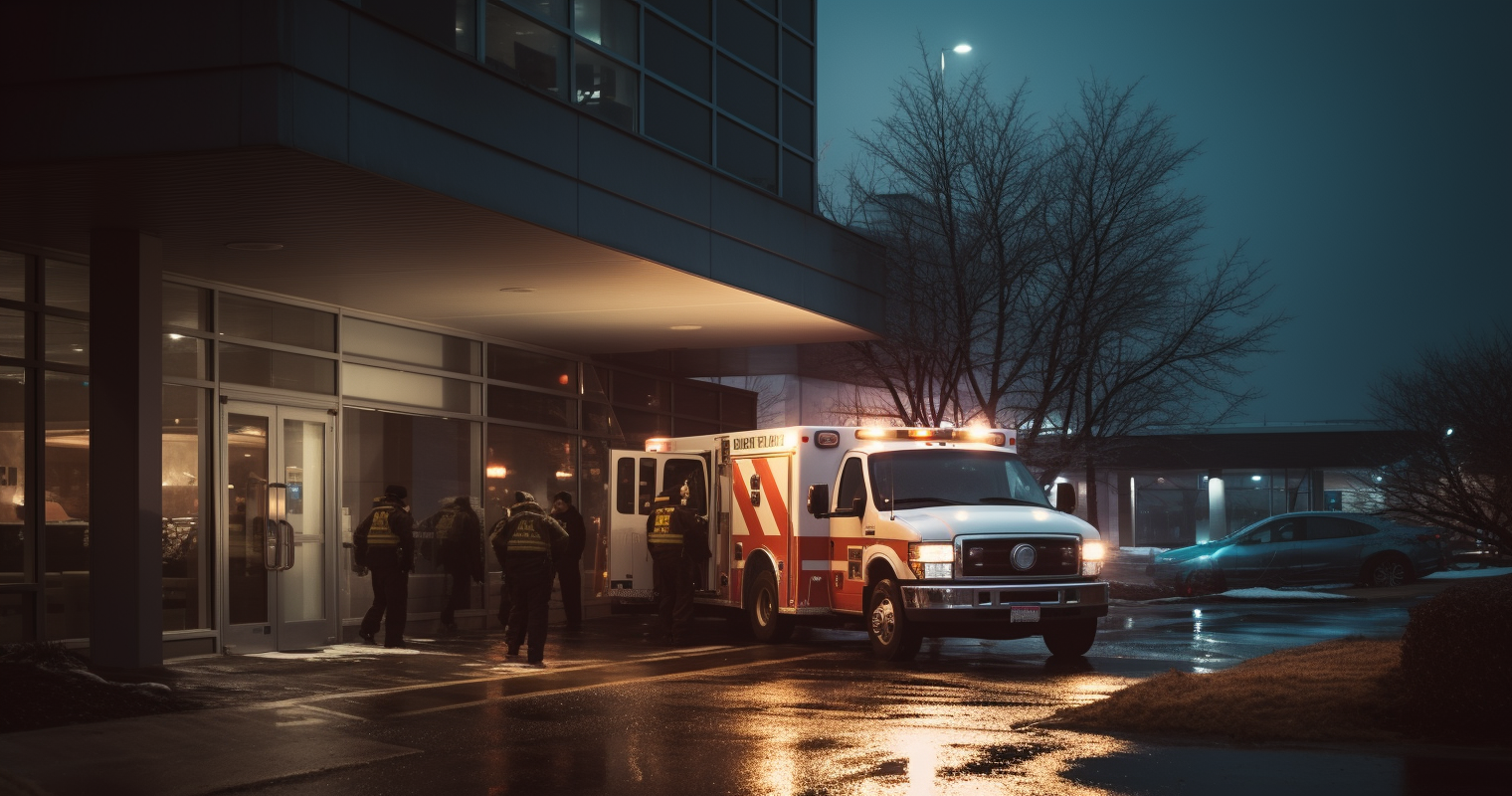
Andorra maintains distinct emergency numbers for each type of service: 110 for police, 116 for medical emergencies, 118 for fire and ambulance, and 112 for mountain rescue. While emergency care is accessible to everyone who needs it, the costs involved vary considerably between CASS-registered residents and uninsured visitors, the latter of whom can be left with hefty bills to settle themselves. Anyone without local social security coverage should take out travel insurance before arriving.
| Item | Details |
|---|---|
| Police emergency number | 110 (as of 2025; dial from within Andorra only) |
| Medical emergency number | 116 — SUM (Servei Urgent Mèdic) |
| Fire & ambulance number | 118 |
| Mountain rescue / general emergency | 112 |
| Main public hospital | Hospital Nostra Senyora de Meritxell, Escaldes-Engordany |
| Emergency cost for uninsured visitors | Approx. €350+ per ER visit; hospitalization can exceed €1,000/night (as of 2024–2025 estimates — verify with hospital) |
| EHIC validity | NOT valid in Andorra — Andorra is not an EU member state |
| CASS reimbursement for residents | 75–100% depending on service type (as of 2024) |
What is the single emergency number in Andorra, and does it cover police, fire, and ambulance — or are there separate numbers for each service?
In contrast to nations that rely on one universal emergency number — such as 999 in the UK and Ireland, or 911 throughout North America — Andorra assigns a different number to each category of emergency service. The numbers to know are: Police on 110, Fire Brigade and Ambulance on 118, Medical Emergencies (SUM) on 116, and Mountain Rescue on 112. It is worth programming all of these into your phone well before you find yourself needing them.
These three-digit numbers connect to national services and are only functional when dialled from within Andorra’s borders. If you are phoning from overseas — for instance, to report an emergency affecting someone already inside the country — you can reach the Police Department via the international line +376 872 000. The main hospital’s international number is +376 871 000, correct as of 2025; always confirm current contact details through official channels.
The number 112 serves as Andorra’s general emergency and mountain rescue line, and it is also the standard GSM emergency number recognised throughout most of Europe. It can be dialled at no cost from most mobile phones, and all GSM-compatible handsets support it even when the device is locked or lacks a SIM card. That said, for medical situations specifically, 116 — the SUM line — is the right number to call first.
How do you call for emergency medical assistance in Andorra, and what should you expect when you call?
Andorra’s nationwide healthcare provision is managed through the Andorran Health Care Service (SAAS), which serves the entire territory. When a medical emergency strikes, the number to dial is 116 — the SUM (Servei Urgent Mèdic, or Urgent Medical Service). This line links you directly to pre-hospital medical dispatch. SAAS advises that where possible, callers should ring 116 before heading to hospital in person.
Medical professionals working in Andorra frequently train in Spain or France, which ensures their qualifications meet European standards. A large proportion of healthcare workers are conversant in Catalan, French, Spanish, and English, making communication considerably easier for both residents and visitors from a range of backgrounds. When you call, give your location as precisely as you can — a full street address, hotel name, or nearby landmark — and offer a concise description of the emergency. The dispatcher will then deploy the most appropriate response team.
Andorra’s small total area — approximately 468 square kilometres — means that response times in urban zones are typically short. In remote mountain terrain, however, especially during poor weather, arrivals may take longer. Owing to its alpine character, Andorra maintains specialist rescue teams and emergency medical crews specifically equipped to handle mountain accidents and outdoor injuries.
If you are unable to call, you can go directly to the emergency department at Hospital Nostra Senyora de Meritxell. For health concerns arising over weekends or public holidays, the Medical Out-of-Hours Service — staffed by general practitioners and offering open consultations from 9 a.m. to 1 p.m. and again from 3 p.m. to 8 p.m. — is another option available to you.
What should you do in a mental health crisis in Andorra — is there a dedicated mental health emergency line, and can you go to a hospital emergency department?
Andorra currently lacks a standalone mental health emergency hotline of the kind found in some other countries — such as the 116 123 Samaritans line in Ireland or the 988 Suicide and Crisis Lifeline in the United States. If you or someone nearby is experiencing an acute mental health crisis, the right first step is to call 116 (the general medical emergency line) or 112 (the all-purpose emergency number), either of which will connect you to suitable assistance.
Hospital Nostra Senyora de Meritxell delivers care across six core medical areas, one of which is mental health. This means the hospital emergency department is capable of assessing and stabilising someone in acute psychological distress, including individuals at risk of self-harm. Do not hesitate to attend A&E or to call 116 in a genuine mental health emergency — the staff are trained to handle these situations with appropriate care.
For non-urgent support, the hospital also offers mental health outpatient services alongside its intensive care and emergency facilities. The Andorran Red Cross (Creu Roja Andorrana) can provide a degree of crisis support and can be reached at +376 825 225. Residents enrolled with CASS can ask their GP or specialist to arrange referrals to mental health services. As service availability can change, always confirm current mental health crisis resources with SAAS (saas.ad) or the Andorran Ministry of Health.
Where can you go for emergency medical treatment in Andorra — are there public hospitals, private hospitals, urgent care clinics, or other facilities, and how do you find the nearest one?
Andorra’s sole hospital, Hospital Nostra Senyora de Meritxell, is comprehensively equipped and provides care across a wide range of specialities, with all services — including emergency treatment — concentrated under one roof. The hospital is situated at Carrer dels Escalls, s/n, AD700 Escaldes-Engordany, and its main switchboard number is +376 871 000. A dedicated traveller assistance line is also available on +376 871 005 (as of 2025 — contact the hospital directly to confirm current numbers).
Although Andorra has no private hospitals, several private clinics operate across the country offering specialised outpatient services. These facilities provide faster access to consultations and diagnostics not always readily available through the public sector, making them a popular choice for non-urgent procedures. For genuine emergencies, however, the hospital remains the primary point of care.
Alongside the central hospital, Andorra has a network of medical centres distributed across each of its parishes to provide primary healthcare. With at least one centre per parish and the additional option of home visits, residents have convenient access to routine and non-emergency medical care wherever they live. These parish health centres generally operate Monday to Friday during regular business hours and are not set up to handle life-threatening situations.
A broad network of pharmacies with varied and extended opening hours provides an additional tier of support. For details of pharmacies operating outside normal hours, the SAAS website at salut.ad publishes an up-to-date list of on-call pharmacies. Where a procedure is highly specialised or exceptionally complex, patients may need to be transferred to hospitals in Spain or France. Barcelona, accessible by air ambulance, represents the nearest centre offering the highest level of tertiary care.
Is emergency medical treatment free in Andorra, or is there a charge — and does this differ for residents versus tourists or short-term visitors?
The price of emergency care in Andorra differs substantially depending on whether the patient is CASS-registered or an uninsured visitor. The essential point is that emergency treatment is not refused to anyone, but visitors without local insurance cover will receive a bill for the full cost of their care. This is a markedly different approach from, for example, the NHS in the UK or public health systems in Spain and France, where emergency treatment is typically provided without immediate charge regardless of a patient’s nationality or insurance status.
Andorra has well-developed emergency medical services, including ambulance provision and dedicated emergency response teams. For residents registered with CASS — Andorra’s social security fund — emergency care at Hospital Nostra Senyora de Meritxell and other healthcare facilities is provided without charge at the point of use.
Those in the country on a temporary basis, or tourists, generally have more restricted access to healthcare services. They are ordinarily expected to hold private health insurance or coverage from their home country. While emergency care is accessible to all regardless of their residency status, non-residents may be required to meet the cost of services themselves.
The financial implications for uninsured visitors can be considerable. A basic emergency room consultation at the Meritxell hospital can cost approximately €350 for a non-resident, and expenses escalate quickly from there; hospital admission can run to more than €1,000 per night without insurance. These figures are indicative, based on 2024–2025 sources, and actual charges should be verified directly with the hospital, as costs are subject to change.
CASS-enrolled residents benefit from a reimbursement structure that substantially reduces personal outlays. Hospitalisation is covered to the level of 90%, with no requirement to pay upfront and then reclaim the amount. Costs arising from occupational accidents, occupational diseases, and childbirth are reimbursed at 100%.
Do expats in Andorra need travel or health insurance to access emergency care, and what happens if they turn up without insurance or without the ability to pay?
Expats taking up employment in Andorra are required to register with CASS (Caixa Andorrana de Seguretat Social), which functions as the public health insurance system. Once registered, CASS covers a substantial share of medical expenses, including emergency treatment. Those who are not employed but live in Andorra can access private insurance; supplementing public cover with a private plan is generally advisable for more comprehensive protection.
Visitors and short-term expats who have not yet enrolled with CASS are strongly urged to take out travel or international health insurance. Andorra has no healthcare agreements with the EU, which means a European Health Insurance Card will not be honoured there. This is a common and potentially costly misunderstanding: because Andorra is not an EU member state, the European Health Insurance Card carries no validity within the Principality.
If someone arrives at the hospital without insurance or the means to pay, a true medical emergency will not go untreated — no facility will deny care to someone whose life is at immediate risk. However, the hospital will issue a bill for all services provided, and it is standard practice to pursue payment. Healthcare in Andorra is of high quality, but the full cost of treatment for non-residents at facilities such as Hospital Nostra Senyora de Meritxell can be very significant. Unpaid bills may be referred to debt collection, so having adequate insurance arranged in advance is far preferable to dealing with the consequences later.
Medical evacuation cover is regarded as particularly valuable for expats who are unfamiliar with how the local healthcare system operates. Holding evacuation cover ensures that if you need to be transferred to a specialist centre in Spain or France, the logistics and costs are handled effectively. This is especially pertinent in cases of serious trauma or illness requiring care beyond what Andorra’s own facilities can provide.
Are there bilateral health agreements between Andorra and other countries that entitle some foreign nationals to reduced-cost or free emergency treatment?
Andorra has formal agreements in place with the public healthcare systems of Spain, France, and Portugal. These are bilateral social security agreements — a distinct category from EU reciprocal arrangements — and should not be conflated with the EU’s EHIC scheme or the UK’s Global Health Insurance Card (GHIC), which serve a different purpose and do not apply in Andorra.
The agreement with France stipulates that any worker, regardless of nationality, who carries out work in either Andorra or France is entitled to receive medical care in the country where they are at the time. This also extends to retired persons, public sector workers, and insured individuals who are not currently in employment. The scope of the agreement covers maternity care, occupational accidents and diseases, care for disabled or elderly individuals, family benefits, and general medical treatment.
For CASS contributors, carrying the CASS vacation health leaflet when in Spain means that medical coverage applies there. Accidents and emergencies are handled via a preferential route, so if you access emergency medical services in Spain, France, or Portugal with your CASS documentation, CASS meets its corresponding share of the cost. In practice, this allows CASS-registered residents to receive emergency treatment in those three neighbouring countries at reduced personal cost, provided they have the appropriate documentation with them.
It is important to note that no bilateral agreement exists between Andorra and the vast majority of other nations — including the USA, Canada, Australia, and countries outside the Iberian–French sphere. If you are visiting from anywhere else and are not CASS-registered, you will need your own travel or international health insurance. Always check with your home country’s embassy and with CASS (cass.ad) to get the most current information on agreements before you travel.
How does Andorra’s emergency healthcare system compare to systems expats may be familiar with?
Andorra operates a public-private healthcare model administered by the Andorran Health Care Service (SAAS). In overall structure, Andorra’s system is widely considered to resemble the French model — combining social insurance, partial co-payments, and optional private supplementary cover. It is neither a fully free-at-point-of-use arrangement like the NHS in the UK, nor a wholly private, fee-based system.
For CASS-enrolled residents, the system functions through co-payments and subsequent reimbursement: patients typically receive back 75–90% of general healthcare costs and up to 100% for work-related injuries and maternity care. This means you generally pay a share upfront and are reimbursed afterwards — a process that echoes the reimbursement-based element of France’s Assurance Maladie, though it differs from the NHS model, under which patients simply present and receive care at no immediate cost.
Unlike countries with universal free emergency departments, uninsured visitors in Andorra will face the full cost of their care out of pocket. In that sense the model has something in common with systems where upfront payment or insurance is the expected norm — such as the United States — though the strong public social insurance framework available to residents and the high standard of care mark it out from a purely market-driven approach.
Because Andorra is a popular winter sports destination, hospitals and clinics can come under considerable pressure during the peak ski season, which may temporarily affect service availability and waiting times. This is worth bearing in mind when planning a visit in January or February. The Andorran system also does not rely solely on domestic facilities; for rare or highly complex procedures, specialist care may be sought from neighbouring countries.
What emergency services exist beyond medical — how do police and fire services work in Andorra, and are there any important differences in how to contact or interact with them compared to what expats may be used to?
Andorra’s national police force, the Policia d’Andorra, can be reached on 110 from within the country or on +376 872 000 when calling from abroad (as of 2025 — verify current numbers at policia.ad). If you lose a possession or suspect it has been taken from you during your time in Andorra, you can contact the Police Department to file an official complaint. Crime levels in Andorra are very low, so most emergency calls to the police are more likely to relate to road accidents or incidents in the mountains than to violent offences.
In the event of an emergency or accident, rescue operations are led by the Andorran Fire Brigade, which handles mountain rescues as well as incidents involving natural fires and urban emergencies. The fire service is reached on 118 — the same line used for ambulance dispatch, with both services handled through the same number. The fire brigade’s official website can be found at bombers.ad.
Mountain rescue is coordinated through 112 and is overseen by the fire brigade, which includes specialist mountain rescue units within its ranks. Given the country’s alpine landscape, Andorra has built up specialised rescue teams and emergency medical services specifically for dealing with mountain accidents and outdoor injuries; these form an integral part of the national emergency response framework. If you are out hiking or skiing and require rescue, call 112 straight away and remain where you are if it is safe to do so.
Andorra does not maintain a substantial standing military. The country’s defence arrangements are effectively shared between France and Spain under longstanding historical treaties, so there is no military emergency structure of the kind that exists in larger states. For matters involving public order or any situation requiring state authority, the Policia d’Andorra is the appropriate point of contact.
Are there any country-specific emergency risks in Andorra — such as natural disasters, extreme weather, civil unrest, or endemic diseases — and what official alert or warning systems exist?
The most significant environmental hazards in Andorra arise from its mountainous, landlocked location within the Pyrenees. The principal risks include avalanches, heavy snowfall, flooding during the spring snowmelt season, summer forest fires, and road closures caused by ice and falling rock. Andorra is generally a very safe country with minimal crime, though visitors should still take sensible precautions with personal belongings and remain vigilant in crowded areas where opportunistic theft can occur.
During winter months, it is a legal requirement to carry snow chains in your vehicle when driving in Andorra — this is not merely advisory but mandatory. Road conditions can be checked ahead of any journey through the government’s mobility service website, which provides a live interactive map showing traffic status and incident information. For weather forecasts, the government operates a weather information line at +376 848 851 and publishes updates through the Servei Meteorològic Nacional d’Andorra.
Civil unrest is exceptionally rare in Andorra, which functions as a stable constitutional co-principality. There are no significant endemic infectious disease risks that would require vaccination before entry, and no vaccinations are mandated as a condition of arrival, though travellers should ensure they have an adequate supply of any personal medication they require. As a landlocked country with no coastline, Andorra faces zero risk of tsunami or coastal storm surge.
For civil protection information and official emergency alerts, the Govern d’Andorra publishes updates through its official portal at govern.ad. Disaster response is coordinated by the government’s Department of Civil Protection (Protecció Civil). During significant weather events, official government social media channels and local radio and television broadcasts are the most reliable sources of emergency information.
What should expats do to prepare for emergencies before they arise in Andorra?
Preparing for emergencies in Andorra is best approached as a series of concrete, practical steps taken before any crisis materialises. Working through this list in advance can save a great deal of stress — and potentially a significant amount of money — if something does go wrong.
- Save all emergency numbers in your phone. Store 110 (police), 116 (medical emergencies), 118 (fire and ambulance), and 112 (mountain rescue and general emergencies) before you arrive. Also save the hospital switchboard (+376 871 000) and the traveller assistance line (+376 871 005).
- Register with your home country’s embassy or consulate. Most governments offer a voluntary registration scheme — for example, the UK’s LOCATE scheme or the US State Department’s STEP programme — that allows consular staff to contact you in a major emergency or disaster. Check your government’s foreign travel advisory website for Andorra and register if possible.
- Sort out your health coverage before you arrive. Expats working in Andorra must register with CASS. If you are not yet enrolled, arrange adequate travel or international health insurance that specifically covers Andorra, including emergency evacuation. Confirm explicitly that Andorra is included in your policy’s coverage territory, as some plans exclude it.
- Understand the EHIC does not work in Andorra. As Andorra is not a member of the European Union, the European Health Insurance Card carries no validity within the Principality. Do not rely on it as a substitute for dedicated insurance cover.
- Carry your insurance documentation. In an emergency, having your insurance policy number, insurer’s 24-hour emergency line, and any CASS documentation (if applicable) readily available will significantly speed up the treatment and billing process.
- Know the location of the hospital. Hospital Nostra Senyora de Meritxell is at Carrer dels Escalls, s/n, Escaldes-Engordany — make sure you are familiar with the route from your home or place of work.
- Check road and weather conditions in winter. Use the government mobility service and official weather forecasts before setting out by car, and always carry snow chains between approximately November and April, as this is a legal requirement.
- Keep physical copies of key documents. Store copies of your passport, residence permit, CASS card, and insurance details separately from the originals — both in a secure place at home and in a digital format.
Where can expats get official and up-to-date emergency information for Andorra?
When seeking information on emergency procedures in Andorra, always prioritise official government and institutional sources over travel blogs or online forums, as numbers, costs, and procedures are subject to change. The most reliable resources are listed below.
- Government of Andorra (Govern d’Andorra): govern.ad — the official gateway to all government ministries and services, including health and civil protection.
- SAAS (Servei Andorrà d’Atenció Sanitària): saas.ad — the national health service, with information on hospitals, health centres, and urgent medical care.
- CASS (Caixa Andorrana de Seguretat Social): cass.ad — social security and health insurance registration, reimbursement rules, and bilateral agreement details.
- Andorran Police (Policia d’Andorra): policia.ad — contact details and non-emergency services.
- Andorran Fire Brigade (Cos de Bombers): bombers.ad — fire, rescue, and mountain emergency information.
- Visit Andorra (official tourism authority): visitandorra.com — a useful overview of emergency contacts and services for visitors.
- Your home country’s foreign travel advisory: For example, the UK Foreign, Commonwealth & Development Office at gov.uk/foreign-travel-advice/andorra, or the US State Department travel advisory. These pages are kept up to date and include emergency consular contact details.
- Ministry of Foreign Affairs of Andorra: exteriors.ad — for information on embassies and consulates accredited to Andorra.
Frequently asked questions
What number do I call in a medical emergency in Andorra?
Dial 116 for an ambulance, 118 for the fire brigade, 110 for police, and 112 for mountain rescue. All three-digit numbers function only when dialled from within Andorra. If you are phoning from outside the country about an emergency occurring inside it, use the relevant international number (e.g. +376 872 000 for police). Always verify current contact details through official sources before you travel.
Does the European Health Insurance Card (EHIC) work in Andorra?
No. Because Andorra is not a member of the European Union, the European Health Insurance Card is not valid within the Principality. The same applies to the UK’s Global Health Insurance Card (GHIC). Neither card should be relied upon — instead, arrange dedicated travel or international health insurance that explicitly names Andorra as a covered territory.
Will I be turned away from the hospital if I have no insurance or cannot pay?
In a genuine life-threatening emergency, care will not be refused. Emergency treatment is accessible to everyone regardless of residency status, but non-residents may be required to pay for the services they receive. The hospital will issue a bill covering all treatment provided, and the costs can be very substantial. Travel insurance is strongly recommended to prevent you from being left with unexpected and significant debt.
Is there a bilateral health agreement between Andorra and my country?
Andorra holds bilateral social security agreements with the public healthcare systems of Spain, France, and Portugal. No equivalent arrangements exist with the overwhelming majority of other countries worldwide. If you are not a national of or resident in Spain, France, or Portugal — and are not enrolled with CASS — you will need private travel or health insurance to cover emergency treatment costs in Andorra. Check with your home government’s embassy and with CASS directly for the most up-to-date details.
What is the CASS and do expat residents need to join it?
CASS (Caixa Andorrana de Seguretat Social) is Andorra’s public social security and health insurance body. Since legislation that entered into force in November 2009, enrolment with CASS has been compulsory for business owners, employees, and retired persons residing in Andorra. Being registered with CASS gives access to substantially subsidised healthcare, including emergency cover.
What are the main natural emergency risks in Andorra I should be aware of?
The chief hazards are avalanches and heavy snowfall in winter, spring flooding as snow melts, summer forest fires, and year-round road closures caused by ice and rockfall. Carrying snow chains in your vehicle is a legal obligation during the winter period. Check official weather and road condition services before any journey, and follow alerts issued by Andorra’s civil protection authorities via govern.ad.
Can I get mountain rescue in Andorra, and is it free?
Yes — Andorra has dedicated specialist rescue teams and emergency medical services specifically equipped for mountain accidents and outdoor injuries, which form a core part of the national emergency response system. Rescue operations are coordinated via 112. Whether charges apply for rescue operations depends on the circumstances and your insurance cover. Mountain sports insurance — covering skiing, hiking, and related activities — is strongly recommended for anyone undertaking outdoor pursuits, as rescue and helicopter evacuation can be very expensive without it.
What should I do if I am in a mental health crisis in Andorra?
If you or someone nearby is in immediate danger, call 116 (medical emergencies) or 112 (general emergency) straight away. Hospital Nostra Senyora de Meritxell includes mental health among its core service areas, and the emergency department can conduct crisis assessments and provide stabilisation. The Andorran Red Cross (+376 825 225) may also be able to offer support. There is currently no standalone dedicated mental health emergency hotline in Andorra — confirm the latest available resources with SAAS at saas.ad.