
End of life care in Andorra is organised around the public health insurer CASS and the country’s principal medical facility, Hospital Nostra Senyora de Meritxell, with further support provided by geriatric residential services and home-based care. While purpose-built hospices do not exist, palliative care can be accessed through hospital wards and community health structures. Advance legal planning — covering wills, powers of attorney, and healthcare directives — is readily achievable, and Andorra imposes no inheritance tax on the estates of its residents.
| Item | Details |
|---|---|
| Main public health insurer | CASS (Caixa Andorrana de Seguretat Social) — covers employed residents and their families (as of 2025) |
| CASS hospitalisation coverage | Up to 90% of costs reimbursed (as of 2025); patient pays remaining co-payment |
| Primary hospital for end of life care | Hospital Nostra Senyora de Meritxell, Escaldes-Engordany |
| Inheritance tax | None — Andorra levies no inheritance or gift tax on residents (as of 2025) |
| European Health Insurance Card (EHIC) | Not valid in Andorra — private or CASS coverage required |
| Specialist referrals abroad | CASS has agreements with hospitals in Spain and France for treatments not available locally |
What palliative and end of life care services are available in Andorra?
Andorra’s healthcare model combines public and private provision under the coordination of two principal bodies. CASS (Caixa Andorrana de Seguretat Social) administers the social security system, while SAAS (Servei Andorrà d’Atenció Sanitària) oversees the actual delivery of healthcare services. Both institutions underpin the range of care accessible to residents, including those living with life-limiting conditions.
The healthcare infrastructure, though modest in scale, functions effectively. Hospital Nostra Senyora de Meritxell — the Principality’s main hospital — operates with 200 beds, and a further 10 health centres are distributed across the country, all offering high standards of care. For patients facing serious or terminal illness, the hospital serves as the primary setting for specialist and palliative medical input.
Dedicated residential and geriatric facilities complement what the hospital provides. The Centre Geriàtric Sant Vicenç d’Enclar supports elderly residents requiring ongoing care, while El Cedre offers accommodation and support for elderly people, individuals with disabilities, and carers in need of respite. Both facilities can provide meaningful continuity of care for individuals with advanced illness who no longer need acute hospital-level intervention but still require nursing and personal assistance.
When specialist treatments or palliative services cannot be provided within Andorra itself, CASS facilitates access to cross-border care. Agreements with hospitals and specialist centres in Spain and France allow residents to be referred abroad for treatments or disciplines unavailable locally. The patient’s general practitioner initiates the referral, and the appointment must be coordinated through CASS, with the applicable proportion of costs subsequently reimbursed. This pathway is especially relevant for advanced oncology care or specialist palliative consultations.
Unlike large national health systems such as the NHS or France’s Sécurité Sociale, Andorra does not maintain a standalone national palliative care programme with its own formal clinical pathway. Nevertheless, the close integration of its compact healthcare network — in which every resident is assigned a referring physician who coordinates all specialist input — allows for highly personalised, well-coordinated end of life care within existing structures.
How does hospice care work in Andorra?
Andorra currently lacks a purpose-built standalone hospice in the sense understood in countries such as Canada, Ireland, or the United Kingdom, where dedicated inpatient facilities operate independently of general hospitals. Instead, palliative and end of life care is woven into the broader public health system, delivered principally through Hospital Nostra Senyora de Meritxell, the network of 10 primary health centres, and the country’s geriatric residential facilities.
Nursing home provision in Andorra encompasses the highest tier of care available for elderly and seriously unwell residents, including round-the-clock nursing and support for complex medical needs such as pain management, wound care, and physical therapy. For many individuals with terminal diagnoses, this standard of residential care closely mirrors what a dedicated hospice unit would provide in a larger healthcare system.
For those who prefer to remain in their own homes during their final weeks or months, home-based end of life support is possible. The primary health centre network enables home visits, and the referring physician model ensures that a single coordinating doctor can arrange nursing care, symptom control, and allied health services in the patient’s home environment.
Access to publicly funded end of life support is tied to registration with CASS. Healthcare through CASS is available to all employed residents and their families; other residents and visiting tourists must hold comprehensive private health insurance. Expats enrolled with CASS who have received a serious or terminal diagnosis are advised to speak directly with their referring physician to access the full scope of available support. Those on passive residency who rely on private coverage should verify with their insurer precisely what palliative and long-term care their policy encompasses. Always confirm current eligibility rules and service availability directly with CASS or SAAS, as these may evolve over time.
What are the cultural and religious customs around death and dying in Andorra?
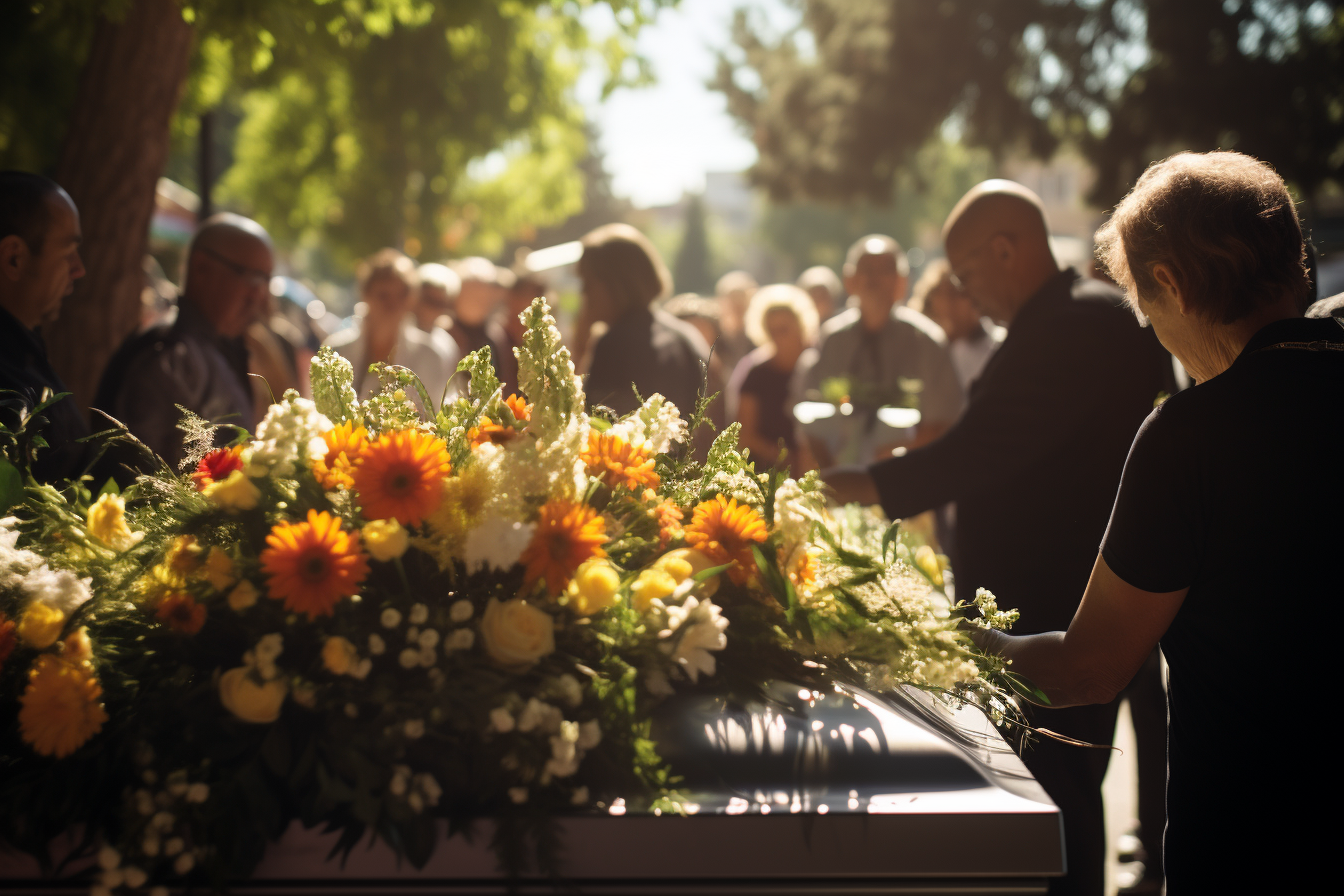
Roman Catholicism is the predominant faith in Andorra and exercises a significant influence over how death and bereavement are observed. It is common for families to hold a wake and a formal church service in honour of the person who has died, followed by communal gatherings where friends and neighbours offer their condolences. These rituals carry deep cultural significance and are an integral part of Andorran life.
Funeral practices reflect this Catholic heritage. Services are generally held within a few days of the death and typically follow a format of a church ceremony succeeded by burial in a local cemetery. Observing these religious conventions and respecting the wishes of the deceased’s family is considered important when making funeral arrangements.
Expats who come from more secular cultural backgrounds — where religious ceremony may be optional and the format of memorial events more varied — may find the expectation of a formal Catholic church service unfamiliar. It is worth discussing individual preferences in advance with family members and a local funeral director, who will be able to explain the full range of options and can advise on secular or non-Catholic alternatives.
Andorra is a small, closely connected society in which community bonds play an important role in daily life. Deaths are generally communicated locally, and it is entirely normal for neighbours, work colleagues, and wider acquaintances to attend funeral services and pay their respects in person. Expats should be aware that bereavement is treated as a shared community experience, and reaching out to the bereaved family with condolences is very much the cultural expectation.
Catalan is the official language of Andorra, and death notices, funeral services, and official paperwork are customarily conducted in Catalan, though Spanish and French are widely spoken throughout the Principality. If you are not comfortable reading or communicating in Catalan, it is advisable to work with a bilingual funeral director or legal professional who can assist you with documents and formalities.
What legal and medical documents should expats prepare in advance in Andorra?
Preparing legal and medical documents well in advance is strongly recommended for all expats residing in Andorra, and particularly for those with serious health conditions or who are entering later life. The essential documents to consider are a will (testament), an advance healthcare directive (voluntats anticipades or document de voluntats anticipades), and a power of attorney covering both financial and health-related decisions.
In Andorra, two principal types of will are available: the notarised will and the holograph will (written entirely by hand by the testator, explicitly stating the date and location of its drafting). A notarised will may take one of two forms: an open will, in which a notary drafts the document in accordance with the testator’s expressed wishes and the testator then signs it, or a sealed will, drafted by the testator or another person, signed by the testator on every page, and deposited with a notary. A notarised will is generally regarded as the more secure option and is less vulnerable to legal challenge.
Documents such as a durable power of attorney and an advance healthcare directive are valuable tools for managing your affairs should you lose the mental capacity to do so yourself. An advance healthcare directive enables you to record your wishes regarding medical interventions, resuscitation decisions, and end of life care for the situation where you can no longer express those preferences directly. These documents carry particular weight in a compact healthcare system where clinical staff may have limited prior knowledge of your personal values.
Andorra recognises wills executed in accordance with the laws of an individual’s country of origin, which simplifies estate planning for expats. However, if you hold assets in Andorra — such as real estate or bank accounts — it is strongly advisable to prepare an Andorran will or to formally register an existing will with an Andorran notary, so as to minimise administrative complications for those who will inherit your estate.
Powers of attorney in Andorra are executed before a local notary. To ensure the lawful transfer of assets — whether by gift or inheritance — engaging a notary who can register the transaction with the relevant registers of the Principality is advisable. The notary will provide guidance at every stage of the process. Fees are applicable and will vary according to the nature and complexity of the document; verify current charges with an Andorran notary, as costs may change.
Where your estate includes assets or family ties in France, Spain, or another country, cross-border legal planning becomes essential. Expert advice combining legal and tax knowledge is the foundation of effective international succession planning from Andorra. Consulting specialists in international law and taxation will help identify appropriate administrative processes and existing tax treaties that can limit the risk of double taxation, particularly in relation to France or Spain. The Andorran Notaries Council maintains a list of registered notaries practising in the Principality.
What should you do immediately when someone dies in Andorra?
The procedures following a death in Andorra broadly resemble those in France and Spain — a physician must certify the death, civil registration must be completed promptly, and a funeral director usually takes responsibility for coordinating the logistical and administrative steps involved. The following practical outline summarises what to do. Always verify current requirements with Andorra’s civil registry (Registre Civil) and relevant official bodies, as procedures may be subject to change.
- Obtain a medical certificate of death. A licensed doctor must certify that the death has occurred. If the death takes place in hospital, the attending physician will prepare this document. If it occurs at home, contact the emergency services or the deceased’s referring physician without delay. No subsequent steps can proceed until this certificate has been issued.
- Notify the civil registry (Registre Civil). The death must be formally registered with the Andorran civil registry as quickly as possible following the death — typically within 24 hours, though you should confirm the exact timeframe with the registry. The Registre Civil is based in Andorra la Vella. The medical certificate of death and the deceased’s identification documents must be presented at registration.
- Obtain the official death certificate. Following registration, the Registre Civil will issue an official death certificate (certificat de defunció). Multiple certified copies will be needed for legal, financial, insurance, and administrative purposes, so request an adequate number at the time of registration.
- Contact a funeral director. Engaging a licensed funeral director (pompes fúnebres) at the earliest opportunity is strongly advisable. The funeral director will handle the legal obligations concerning the body, communicate with the hospital or care facility, and manage burial or cremation arrangements. They can also advise on requirements specific to foreign nationals and assist with repatriation of remains if this is required.
- Notify relevant authorities and institutions. Inform CASS, the deceased’s bank or banks, their employer if applicable, any pension provider, and all relevant insurance companies. If the deceased was a foreign national, contact their country’s embassy or consulate, which can assist with consular death registration and advise on repatriation procedures if needed.
- Secure the estate. Take appropriate measures to protect the deceased’s property and assets. Contact an Andorran notary or lawyer to initiate the estate administration process, particularly where a will is to be executed or property must be transferred.
- Consult a notary or solicitor. For foreign nationals, seeking legal advice promptly is essential, especially where the estate has cross-border dimensions. A notary can serve as an impartial intermediary between heirs of different nationalities, facilitating dialogue, clarifying each party’s rights and obligations, organising meetings, and ensuring that deadlines and country-specific formalities are met.
How are burials, cremations, and funerals handled in Andorra?
Burial remains the traditional and most widely practised choice in Andorra, in keeping with the country’s Catholic heritage. Each of Andorra’s seven parishes maintains its own cemetery, administered by the local parish authority (comú). Burial plots are generally allocated for a defined period and may be renewed; families of non-residents and non-citizens are generally permitted to arrange burial in Andorra subject to standard administrative requirements, though availability and specific regulations should be confirmed with the relevant parish council in advance.
Cremation is an available option, but as of 2025 Andorra does not operate its own crematorium. Families who choose cremation must arrange for the body to be transferred to a facility in Spain or France, with the nearest options located in the Lleida or Toulouse regions. A licensed funeral director will manage the transport documentation and the legal requirements for moving remains across the border. The necessary paperwork includes authorisation from the Andorran civil registry and may require consular involvement where the deceased was not an EU national.
Funeral costs in Andorra differ depending on the type of service selected, whether burial or cremation is preferred, and whether international repatriation is involved. As of 2025, a standard local burial — encompassing the funeral director’s fees, coffin, and cemetery costs — typically falls in the range of approximately €2,000 to €5,000 or more, though prices can vary considerably. Cremation combined with cross-border transport will incur additional documentation and logistics costs. It is advisable to obtain itemised quotations from at least two funeral directors and to check whether any expenses are recoverable under a life insurance policy or private health plan.
Expats who wish to have their remains repatriated to another country will find that their funeral director coordinates the necessary paperwork with the relevant embassy or consulate. Documentation typically required for international transport of remains includes a certificate of embalming, the official death certificate, and a laissez-passer mortuaire. Since requirements differ between destination countries, it is important to engage the relevant embassy as early as possible in the process.
Funerals shaped by Catholic tradition in Andorra generally consist of a church service followed by burial. Non-Catholic or entirely secular ceremonies are by no means unusual for the expatriate community, and Andorran funeral directors are experienced in organising a variety of formats. Families should communicate their wishes clearly from the outset so that arrangements reflect the preferences of the deceased and those closest to them.
How do expats handle estate and inheritance matters after a death in Andorra?
One of the most notable advantages Andorra offers expats from an estate planning perspective is its tax treatment of inherited wealth. Andorra imposes no inheritance tax, gift tax, or net worth tax on individuals resident in the Principality. An inheritance or gift received by an Andorran resident is therefore not subject to any local tax on that transaction. This position remains in force as of 2025 and places Andorra among the most tax-efficient jurisdictions in Europe for succession planning purposes.
The absence of inheritance tax is most fully realised where the deceased was a tax resident in Andorra and the will was made under Andorran law. Expats who are not themselves tax resident in Andorra, or whose heirs live elsewhere, may still face inheritance obligations in those other countries — particularly France, where inheritance tax can be considerable depending on the relationship between the deceased and the beneficiary.
Andorra operates a system of forced heirship. A testator may freely dispose of up to three quarters of their estate, but the remaining quarter is reserved by law and must pass to the testator’s children. Where no children exist, the spouse or partner may receive 75% of the estate in addition to their statutory entitlement. Expats with blended families or complex family arrangements should seek advice from an Andorran notary on how these forced heirship rules interact with their individual circumstances.
The duration of the probate process in Andorra can vary considerably — from several months to a number of years — depending on the scale and complexity of the estate and whether disputes arise among beneficiaries. Where heirs challenge the validity of the will or the authority of the appointed executor, the process is likely to be significantly extended and legal costs will increase accordingly.
Professional legal advice is indispensable for cross-border estates where the deceased held assets in more than one country. An important practical consideration for expats is that Andorran law does not recognise trust structures, as Andorra has not ratified the Hague Convention on the Law Applicable to Trusts and on their Recognition. Expats whose estate planning in their home country relied on trusts should address this issue with a lawyer versed in international succession law. The Government of Andorra and the Andorran Notaries Council can assist in identifying suitably qualified professionals.
Where heirs reside in countries with their own inheritance tax regimes, local tax obligations may apply regardless of Andorra’s position. Tax rates and thresholds differ by country, and heirs based abroad should always seek tax advice in their own jurisdiction. Professional guidance in both Andorra and any other relevant country is essential before finalising any estate plan.
What should expats consider about health insurance and end of life costs in Andorra?
Entitlement to publicly funded end of life care in Andorra is determined by residency status and registration with CASS. Patients contribute a portion of costs themselves, with CASS meeting 75–90% of expenses depending on the type of service. Public coverage is open to legal residents employed in Andorra or contributing to CASS through self-employment or another qualifying route. For hospitalisation — the most intensive setting for end of life care — CASS reimburses up to 90% of costs as of 2025.
Approximately 92% of the population holds CASS coverage, and enrolment is compulsory for employees. Those outside this group are predominantly passive residents, who are legally required to carry private health insurance. Passive residency is a category frequently chosen by retirees who do not take up employment in Andorra; these individuals must fund all medical and end of life care through their private policies, which can represent a significant financial exposure when extended palliative care is needed.
Private health insurance serves an important complementary function for all residents, regardless of CASS status. Private cover can open faster pathways to specialist services, shorten waiting times, and offer access to private clinic accommodation. Policies can also extend to services outside the public system — including dental or optical care — and may incorporate international coverage. For those contemplating end of life care outside Andorra, or who may need specialist treatment in France or Spain beyond what CASS funds, private insurance is particularly relevant.
Out-of-pocket expenses at the end of life can mount rapidly, especially for those without CASS registration or those requiring long-term placement in a nursing home. While elderly care services in Andorra maintain high standards, the limited number of care facilities in the country means that waiting lists for admission are not uncommon. Early financial planning and proactive enquiry about care facility places are therefore advisable steps.
International private health insurance plans can offer broader protection, including emergency evacuation and repatriation cover. Such policies can give expats access to quality care in multiple countries, with provisions for hospitalisation, outpatient treatment, and medical evacuation. Terms, exclusions, and premium levels vary considerably between providers, so it is essential to read any policy thoroughly and to confirm directly with your insurer what is included specifically for palliative, long-term, and end of life care. Do not assume that a standard health insurance policy automatically encompasses hospice-equivalent care or home nursing provision.
For the most accurate and up-to-date information on public coverage, contact CASS directly. For private insurance, obtaining quotations from several providers and taking independent advice where needed is recommended.
Frequently Asked Questions
Can I receive palliative care at home in Andorra?
Yes. Home-based care is available in Andorra through the primary health centre network and the referring physician system. Your designated GP can coordinate nursing visits, pain management, and allied health support in your home. Eligibility and the extent of services depend on your CASS registration status. Speak with your referring physician to explore what home-based end of life support can be arranged for your specific situation.
Does Andorra have a hospice?
Andorra does not have a dedicated standalone inpatient hospice facility as of 2025. Palliative and end of life care is delivered through the national hospital (Hospital Nostra Senyora de Meritxell), primary health centres, geriatric care homes such as Centre Geriàtric Sant Vicenç d’Enclar, and El Cedre. For patients who wish to remain at home, community-based nursing and medical support can be arranged through CASS-affiliated providers.
Is an advance healthcare directive (living will) legally recognised in Andorra?
Yes. Andorra recognises advance healthcare directives, sometimes referred to as a document de voluntats anticipades (advance statement of wishes). This document allows you to specify your preferences regarding medical treatment, resuscitation, and end of life care in the event that you are no longer able to communicate those preferences yourself. It should be prepared with the help of an Andorran notary to ensure it carries legal force. Consult a notary or your referring physician for details of the current formal requirements.
Will my will from another country be valid in Andorra?
Andorra generally recognises wills prepared in accordance with the laws of another country. However, where you hold assets in Andorra — such as real property or bank accounts — it is strongly advisable to prepare or formally register a will with an Andorran notary. Doing so streamlines the administration of your estate and reduces the likelihood of delays for your beneficiaries. Estates with cross-border elements should always be reviewed by a lawyer with expertise in both Andorran and international succession law.
How do I register a death in Andorra?
Deaths in Andorra must be registered with the Registre Civil (civil registry) in Andorra la Vella as promptly as possible following the death — generally within 24 hours, though you should confirm the precise current requirement with the registry directly. You will need to present a medical certificate of death together with the deceased’s identification documents. The registry will then issue an official death certificate (certificat de defunció); you should request a sufficient number of certified copies for use with banks, insurers, and other organisations.
How do I repatriate remains from Andorra to another country?
Repatriation of remains from Andorra requires close coordination between a licensed Andorran funeral director, the civil registry, and the embassy or consulate representing the destination country. Documents typically required include the official death certificate, a certificate of embalming, and a laissez-passer mortuaire (authorisation for the international transport of human remains). Requirements differ depending on the destination country. Contact the relevant embassy or consulate — whether in Andorra or in Spain — as early as possible to establish current documentation requirements.
Is there inheritance tax in Andorra?
No. As of 2025, Andorra does not levy inheritance tax, gift tax, or estate tax on residents. Where both the deceased and their heirs are tax resident in Andorra, the transfer of the estate on death carries no local tax liability. However, where heirs reside in other countries — particularly France or Spain — they may face inheritance tax obligations under the laws of those jurisdictions. Professional tax advice in both Andorra and any other relevant country is essential in such circumstances.
What healthcare coverage applies to end of life care for passive residents?
Passive residents — those who live in Andorra without engaging in employment — are not entitled to CASS coverage and are legally required to hold a valid private health insurance policy. All end of life care costs, including hospitalisation, nursing home placement, and home nursing support, must therefore be met through their private policy. It is essential to examine your insurance policy carefully to establish what palliative and long-term care is included, and to explore supplementary coverage where gaps are identified. Contact your insurer directly for confirmation specific to your policy terms.