

End of life care in Antigua and Barbuda is provided through the national public hospital network, private healthcare practitioners, and the St John Hospice — the only dedicated palliative care facility on the island. Following a death, the event must be formally recorded at the Civil Registry located at the High Court in St John’s. Expats living in the country are advised to have the appropriate legal documentation in place, maintain suitable insurance coverage, and familiarise themselves with local customs well before they are needed.
| Item | Details |
|---|---|
| Main hospice facility | St John Hospice, Holberton Hospital Complex, St John’s — 9 beds for terminally ill, 2 for short-term nursing care |
| Death registration authority | Civil Registry, High Court, Parliament Drive, St John’s, Antigua and Barbuda |
| Death certificate language | Issued in English, usually within a few days of death |
| Death certificate fee (as of 2020 fee schedule) | Approx. US$10 (local); UK£5 / US$7 (overseas requests) — verify current fees with the Civil Registry |
| Euthanasia / assisted dying | Illegal under Antiguan law; not permitted in any form |
| Inheritance tax | No inheritance or estate tax in Antigua and Barbuda |
What end of life care options are available in Antigua and Barbuda, and how does the system work?
Healthcare in Antigua and Barbuda is delivered through a blend of public and private providers. The principal public institution is the Sir Lester Bird Medical Centre (formerly known as Mount Saint John Medical Centre) in St John’s, which offers hospital care to patients with a wide range of conditions, including those who are seriously ill. Private clinics and independent general practitioners add to this provision, and while a limited number of specialists are based on the island, more complex or unusual cases are sometimes transferred to better-equipped regional medical facilities in places such as Barbados or Trinidad.
For individuals approaching the end of their life, the available options include hospital-based care at the Sir Lester Bird Medical Centre, private nursing at home, and dedicated palliative and hospice care through the St John Hospice. Hospice services in Antigua and Barbuda are coordinated closely with hospitals, home care agencies, and primary care physicians to provide smooth continuity as a patient’s needs evolve. Because the overall healthcare infrastructure is relatively modest by comparison with larger nations, expats are advised to plan ahead and build a clear picture of what is on offer before any crisis emerges.
What is palliative care in Antigua and Barbuda, and who is eligible for it?
Palliative care is centred on enhancing the quality of life for people living with serious or terminal conditions, concentrating on managing pain and distressing symptoms rather than attempting to cure the underlying illness. In Antigua and Barbuda, this type of care is delivered principally through the St John Hospice, which accepts patients from across the islands without restriction based on nationality or religious background.
Community-based palliative home care in Antigua was first established in 2005 under the auspices of the Order of St John, following recognition that no services or facilities existed for those diagnosed with terminal conditions. A hospice model was introduced that initially focussed on home visits, and this developed over the following years into a facility-based service. In practice, anyone with a terminal or life-limiting diagnosis can be referred for palliative care, including foreign nationals residing on the island. Referral is usually initiated by the patient’s treating physician.
Are there hospices in Antigua and Barbuda, and how do you access them?
The St John Hospice in Antigua and Barbuda is a non-profit organisation whose Patron is the Governor General and which is overseen by a Board of Directors. It has a workforce of 15 staff, with 9 beds dedicated to terminally ill patients and a further 2 beds for short-term nursing care. The hospice is situated within the Holberton Hospital Complex in St John’s.
The organisation is a charitable body operating under the umbrella of St John International, a worldwide organisation that delivers first aid, healthcare, and humanitarian support services in many countries. As a non-profit institution caring principally for those at the end of life and offering short-term convalescent provision at nominal rates, the hospice is committed to ensuring that care is accessible to all, regardless of means.
Access to the hospice is generally arranged through a physician referral. Expats seeking admission should approach their treating doctor — whether at the Sir Lester Bird Medical Centre or through a private practice — who can begin the referral process. Further details are available at the St John Hospice website.
Is palliative or hospice care covered by public health insurance or the national health system in Antigua and Barbuda, or does it need to be funded privately?
Antigua and Barbuda does not have a universal public health insurance programme equivalent to schemes such as the NHS in the United Kingdom or Medicare in Australia. Public hospital services at the Sir Lester Bird Medical Centre are available at subsidised rates, but the system relies substantially on patient contributions, and there is no guarantee that comprehensive specialist palliative or end of life care will be fully funded for all residents — particularly those who are not nationals.
The St John Hospice operates primarily on a charitable model, sustaining itself through fundraising, donations, and voluntary contributions in order to deliver quality care to its patients. While the hospice endeavours to provide services at minimal cost so that no one is turned away, this is not a fully state-backed arrangement. Expats are strongly encouraged to hold comprehensive international private health insurance that specifically includes palliative care, terminal illness treatment, and hospice admission within its cover. Policy exclusions vary widely between insurers, so carefully reviewing the small print is essential. Current subsidy arrangements should also be confirmed directly with the hospice or the Ministry of Health.
What legal documents should expats have in place before the end of life in Antigua and Barbuda — such as a living will, advance directive, power of attorney, or healthcare proxy — and how do these work?
Putting the right legal documents in order well before a health crisis occurs is one of the most valuable steps any expat can take. The principal instruments to consider are a living will (sometimes called an advance directive), a lasting or enduring power of attorney, and potentially a healthcare proxy or healthcare power of attorney.
A living will records your preferences regarding medical treatment in the event that you lose the capacity to communicate — for instance, whether you would want life-sustaining measures to be continued or withdrawn. A healthcare power of attorney or proxy designates a trusted individual to take medical decisions on your behalf. A general power of attorney authorises someone to handle your financial and legal matters. In Antigua and Barbuda, these documents should be drawn up with the assistance of a locally qualified attorney to confirm that they are valid and enforceable under Antiguan law.
It is also worth noting that in Antigua and Barbuda the definition of next of kin encompasses a married spouse or the nearest blood relative; same-sex partners — whether legally married or not — are not recognised as next of kin under local law. This makes a formal healthcare proxy or power of attorney particularly vital for unmarried partners or those in same-sex relationships, who would otherwise lack any legal authority to make decisions on behalf of their partner. Consult a local lawyer to ensure your documents are properly witnessed, notarised where required, and kept in a safe and accessible location.
Are documents such as advance directives or powers of attorney made in another country legally recognised in Antigua and Barbuda?
Antigua and Barbuda does not have a detailed statutory framework that automatically gives effect to foreign advance directives or powers of attorney in the way that some larger jurisdictions do. While there is no outright prohibition on such documents, whether they are acted upon in practice will depend on local legal interpretation, the discretion of healthcare providers, and the extent to which the document conforms to generally accepted legal standards.
Documents originating abroad are more likely to be treated as credible official instruments if they carry an apostille issued under the Hague Convention, to which Antigua and Barbuda is a signatory. It is important to understand, however, that an apostille authenticates the document — it does not in itself guarantee that the document will be given binding effect in a medical or legal setting. The most prudent course of action is to have any foreign advance directive examined and if necessary supplemented by a locally prepared document drafted with the assistance of an Antiguan solicitor. Always carry copies of all relevant documents when seeking medical attention, and make sure your treating physician knows they exist.
What are the laws around euthanasia or assisted dying in Antigua and Barbuda?
Euthanasia and assisted dying are not lawful in Antigua and Barbuda. No legislation exists permitting either voluntary euthanasia or physician-assisted suicide. In keeping with the approach of the majority of Caribbean states, Antigua and Barbuda operates within a common law legal tradition under which deliberately bringing about a patient’s death — even with their full consent — would constitute a serious criminal offence.
Medical professionals practising in Antigua and Barbuda are bound both by law and by professional codes of ethics that prohibit any active steps intended to end a patient’s life. Palliative sedation — the administration of medication to relieve severe pain and distress during the dying process — is, however, a well-recognised and accepted component of good end of life care, and does not amount to euthanasia. Expats who hold strong views on end of life treatment should record them carefully in a living will and engage their treating physician in an open discussion about their wishes.
What are the local customs, traditions, and religious practices around death and dying in Antigua and Barbuda?
Antigua and Barbuda has a deeply rooted cultural heritage, and the practices that surround death and dying are an expression of that identity. Death is widely understood as an inherent part of the human experience, and communities frequently honour the life of the person who has died through long-established funeral customs.
Religious faith is central to life in Antigua and Barbuda, with the majority of the population following Christian traditions. Accordingly, religious observance — including church funeral services and interment — forms an integral part of how end of life is marked across the islands. The principal denominations represented include Anglican, Methodist, Moravian, Roman Catholic, and Pentecostal Christianity. Funerals are typically community gatherings and commonly include church services, hymn singing, and communal prayer.
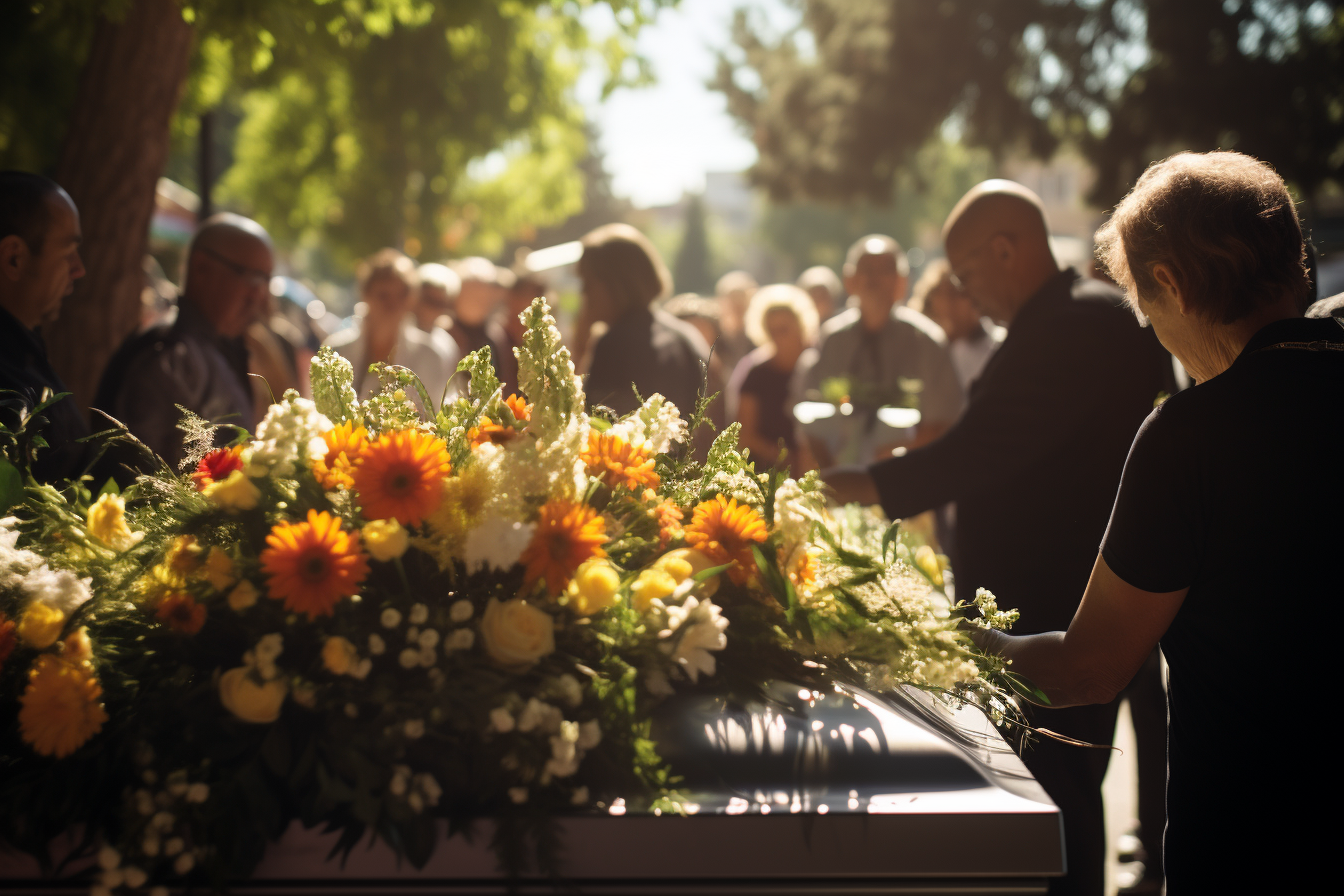
Wakes — evening gatherings held at the family home or a communal space before the burial — are a firmly embedded element of Antiguan mourning tradition. These occasions are often warm and sociable, with stories about the deceased shared among family and friends, and music played in celebration of a life lived, reflecting the view that death is a passage rather than a final ending. Expats attending funerals or offering support to bereaved families should approach these traditions with respect and be prepared for services that may differ considerably from those in their home country. Funerals are typically formal occasions, and subdued or dark attire is the usual expectation.
What must you do when someone dies in Antigua and Barbuda? Who do you notify, how quickly, and in what order?
When a death occurs in Antigua and Barbuda, a series of steps must be taken without delay to ensure proper care of the deceased and compliance with legal requirements. The following actions should be carried out as promptly as circumstances allow:
- Inform the attending physician without delay. Where a death takes place in a hospital or hospice, the physician responsible for the patient’s care must be notified at once. That doctor will issue a death certificate, which is the legal document confirming the cause and time of death. If the death happens at home and a doctor was present, the same responsibility falls to that practitioner.
- Alert the coroner where the death is sudden or unexplained. A coroner must be informed if the death was sudden, took place in suspicious circumstances, or occurred without a doctor being present. The coroner will open an investigation, and if a cause of death cannot be established within sixty days of the death, the Registrar will record the cause of death as pending investigation.
- Engage a local funeral home. Once the death has been formally confirmed and a death certificate issued, contact a funeral home to make arrangements. Funeral directors in Antigua and Barbuda handle transportation of the deceased, preparation of the body for burial or cremation, and organisation of the funeral service.
- Register the death at the Civil Registry. The next of kin is usually responsible for registering the death at the Civil Registry, though this task may also be undertaken by a local funeral director. If you wish a funeral director to act on your behalf, you will need to provide them with a written letter of authorisation confirming your instruction.
- Contact the embassy or consulate of the deceased’s home country. Where the person who died was a foreign national, the nearest embassy or high commission of their home country should be notified as soon as possible. Many states do not maintain a full diplomatic presence in Antigua itself; consular services are often administered from embassies based in Barbados, Trinidad and Tobago, or Washington D.C.
- Notify the deceased’s insurance providers. Get in touch with any travel, life, or international health insurance companies to begin relevant claims and, where applicable, to arrange assistance with the costs of repatriating the remains.
- Inform other relevant organisations. Banks, pension administrators, employers, and relevant government bodies in the deceased’s home country should all be notified in due course. It is advisable to request multiple certified copies of the death certificate, as these will be needed for a variety of administrative and legal purposes.
How is a death officially registered in Antigua and Barbuda, and what documents are needed?
A death in Antigua and Barbuda is formally recorded through the Civil Registry of the High Court. Once registration is complete, the Civil Registry produces the death certificate, ordinarily within a few days of the death. The Civil Registry is located at the High Court, Parliament Drive, St John’s.
Death certificates are issued in English and include the certified cause of death. The information entered on a death record typically covers: the date and location of death, the date and country of birth, gender, marital status, last known address, the names and details of parents and spouse, the name and relationship of the person registering the death, and the name of the certifying physician.
The documents generally required at the point of registration include the medical certificate of cause of death (completed by the attending physician or the coroner), identification documents for the deceased and for the person presenting for registration, and a completed application form obtained from the Civil Registry. Documents may be submitted in person to the Registrar, or forwarded by registered or express post addressed to the Registrar, Civil Registry, St John’s, Antigua and Barbuda, and must be accompanied by the applicable registration fee. Fee amounts should be verified directly with the Civil Registry, as they are subject to periodic revision.
What happens if a foreign national dies in Antigua and Barbuda — what are the specific steps for notifying their home country’s embassy or consulate, and what role does the consulate play?
When a foreign national passes away in Antigua and Barbuda, the family or next of kin should contact the deceased’s home country embassy or high commission without delay. Most countries do not operate a resident embassy on Antigua itself; consular services are commonly provided through missions stationed in Barbados, Trinidad and Tobago, or Washington D.C. The appropriate contact details can be found on your government’s foreign affairs or consular services website.
The consulate has an important role to play in supporting both the family and the administrative process. As one example, the UK’s Foreign, Commonwealth and Development Office (FCDO) maintains a list of internationally operating funeral directors as well as funeral homes in Antigua and Barbuda that families may find useful. It is important, however, to be clear about the boundaries of consular assistance: the FCDO is not in a position to contribute financially to any costs incurred.
In general terms, the consulate can: relay confirmation of the death to the home country’s official registration bodies; assist in facilitating the return of the deceased’s remains; supply a list of local legal practitioners and funeral directors; and offer practical welfare guidance to the bereaved family. British nationals are entitled to apply for a Consular Death Registration certificate through the Overseas Registration Unit, and equivalent procedures are available through many other countries’ consular services. Contact the relevant consulate directly to establish precisely what assistance is available to nationals of your home country.
Same-sex partners, whether in a legal marriage or not, are not accorded next of kin status in Antigua and Barbuda, which may restrict who is able to formally handle arrangements. In these circumstances, consular staff may be able to offer some guidance, and having a properly executed power of attorney or advance directive in place before any emergency arises is strongly recommended.
How are funerals typically arranged in Antigua and Barbuda, and what are the usual options for burial or cremation?
Funerals in Antigua and Barbuda are generally organised through established local funeral homes, which manage the full range of tasks from preparation of the body and transportation through to the arrangements for interment. Several funeral directors operate on the island. The family or next of kin will normally engage a funeral director as soon as the death certificate has been issued, after which the funeral home takes responsibility for liaising with the Civil Registry and the relevant religious or civil authorities.
Burial remains the most common form of final disposition in Antigua and Barbuda, a reflection of the country’s predominantly Christian cultural values. Burials may be carried out in cemeteries affiliated with a church, in municipal burial grounds, or in some cases on private land subject to applicable local regulations. Cremation is available as an alternative, though it is chosen less frequently given its cultural context. The Civil Registration (Vital Statistics) Act 2020 specifically requires that a certificate be obtained prior to any cremation, and a formal permit must be in hand before the process can proceed. Families should confirm with their funeral director which cremation facilities exist on-island and whether it may be necessary to arrange a transfer elsewhere.
Funeral services in Antigua and Barbuda typically consist of a church or chapel service, a ceremony at the graveside, and a gathering of family and friends afterwards. The full process from death to burial ordinarily takes place within a week, though this timeframe may be extended if a coroner’s investigation is needed or if distant relatives require additional time to travel to the island.
What are the approximate costs of a funeral in Antigua and Barbuda, and are there any state or insurance-based funds that can help cover them?
Funeral costs in Antigua and Barbuda depend on a range of factors including the type of service selected, the funeral home engaged, and whether burial or cremation is chosen. While exact up-to-date pricing should always be obtained directly from local funeral directors — since costs change regularly — a straightforward funeral covering preparation of the body, a coffin, and burial will typically run into several thousand Eastern Caribbean dollars. More elaborate arrangements, such as imported caskets, extensive church ceremonies, or post-service hospitality, will add considerably to this figure. As of 2026, it is advisable to obtain itemised quotations from at least two funeral directors before committing to any arrangements.
No state-funded funeral assistance programme exists in Antigua and Barbuda for expats or foreign nationals. Where the deceased did not hold insurance covering death-related expenses — whether life insurance or travel insurance — a family member or formally appointed representative will typically need to engage a funeral director and take on full financial responsibility for the costs incurred. This makes comprehensive insurance with explicit provisions for death abroad, repatriation of remains, and funeral expenses an essential consideration for all expats. The exact scope of cover varies considerably between policies, so the specific terms should be scrutinised carefully before relocating or travelling.
What is the process for repatriating the remains of a foreign national from Antigua and Barbuda to another country?
Arranging for remains to be returned from Antigua and Barbuda to another country involves multiple steps and requires coordination between the local funeral director, the Civil Registry, the relevant health authorities, and the destination country’s own requirements. Depending on the circumstances — including whether a coroner’s inquest must be completed — the process may take anything from several days to several weeks.
The key steps involved are:
- Obtain the local death certificate from the Civil Registry.
- Appoint a local funeral director who has experience handling international repatriation cases. Under the Civil Registration (Vital Statistics) Act 2020, a death must be registered before the body may be removed from the country.
- Secure a removal permit from the appropriate Antiguan health or civil authority.
- Ensure the body has been embalmed and placed in a casket or container that meets the requirements of the receiving country — these standards differ significantly from one country to another.
- Obtain any required health certificates, particularly where the deceased suffered from a communicable disease. If the person who died had an infectious condition such as hepatitis or HIV, the relevant local authorities must be notified so that appropriate precautions can be observed.
- Contact the embassy or consulate of the receiving country to obtain any import permits or documentation that will be needed at the destination end.
- Arrange international air freight for the remains through the local funeral director or a specialist international funeral transport provider.
Where the body or ashes of a British national are being returned to the United Kingdom, it is not necessary to re-register the death in the UK. The Antiguan death certificate will in most circumstances be sufficient for UK purposes, including for probate proceedings. Equivalent arrangements may apply in other countries, but the relevant authorities at the destination should always be consulted before the remains are transported.
What happens to the estate of someone who dies in Antigua and Barbuda — how does probate or estate administration work, and are there inheritance taxes?
When a person dies in Antigua and Barbuda, any assets they held solely in their own name within the country — including property, bank accounts, and other possessions — will generally need to pass through the local probate process. Probate is administered through the High Court of Justice in Antigua and Barbuda and involves establishing the validity of a will where one exists, settling any outstanding debts owed by the estate, and distributing the remaining assets to the designated beneficiaries.
Expats whose estates extend across more than one country should engage a locally qualified solicitor to manage the Antiguan probate process, since assets held in different jurisdictions may require separate probate proceedings in each country — an arrangement commonly referred to as ancillary probate. Legal advice should be obtained in both Antigua and the expat’s home country to develop a clear understanding of how all assets will be dealt with.
One notable advantage from a tax perspective is that Antigua and Barbuda levies no inheritance tax or estate duty. There is likewise no capital gains tax, making the country a relatively uncomplicated jurisdiction for estate administration in fiscal terms. Nonetheless, legal fees, court charges, and executor expenses will arise. A local attorney should always be consulted for current advice, as the legislative landscape can change over time.
If an expat dies without a will in Antigua and Barbuda, what happens to their assets under local intestacy laws?
Where a person dies intestate — that is, without leaving a valid will — in Antigua and Barbuda, their estate will be distributed in accordance with local intestacy rules, which follow a defined order of priority among potential beneficiaries. As a general principle, assets pass first to a surviving spouse and then to children, with other close relatives following in descending order of kinship. The precise entitlement of each beneficiary will depend on the composition of the family at the time of death.
For expats, dying without a will introduces particular difficulties. Assets situated in Antigua and Barbuda will be governed by Antiguan intestacy law irrespective of the deceased’s nationality or country of usual residence, and this may produce outcomes that were never intended or that conflict with the intestacy provisions of the deceased’s home country. As a practical example, an unmarried partner would have no automatic right of inheritance under Antiguan intestacy law, even if they would have been entitled to inherit under the rules applicable in the country where the deceased originally came from.
For all of these reasons, making a valid will — ideally one that addresses assets held both in Antigua and abroad — is strongly recommended. Consulting a solicitor in both Antigua and your home country will help to ensure that your wishes are clearly documented and that they can be enforced across multiple jurisdictions. Wills should be reviewed and updated following significant life events such as marriage, separation, or the acquisition of new property.
Frequently asked questions
Will my international or travel health insurance cover hospice or palliative care in Antigua and Barbuda?
The answer depends entirely on the specific terms of your individual policy. Some international health insurance plans do include cover for palliative care, terminal illness treatment, and admission to a hospice facility, while others explicitly exclude these. Before relocating to Antigua and Barbuda, review your policy’s exclusions with care, and if there is any uncertainty, contact your insurer directly to ask whether admission to the St John Hospice would fall within the scope of your cover. Supplementary life insurance and a rider covering repatriation of remains are also well worth considering.
Are documents prepared in another country, such as a power of attorney, accepted in Antigua and Barbuda?
Foreign legal documents stand a greater chance of being accepted if they bear an apostille issued under the Hague Convention, which attests to the authenticity of the document for use in another country. However, an apostille is a verification of authenticity — it does not in itself ensure that the document will carry legal weight in a healthcare or probate context. It is strongly advisable to have any foreign power of attorney or advance directive reviewed by a qualified Antiguan lawyer and, where necessary, supported by a locally drafted supplementary document.
How long does it take to repatriate remains from Antigua and Barbuda?
The process will generally take a minimum of several days and may extend to several weeks, particularly where a coroner’s inquest is required or the cause of death remains under investigation. Obtaining the local death certificate, a removal permit, the necessary health certificates, and making arrangements for international air freight all take time and require careful coordination. Appointing an experienced local funeral director at the earliest opportunity is the most effective way of avoiding unnecessary delays.
Is there any state financial support available to cover funeral costs in Antigua and Barbuda?
No government-funded funeral assistance scheme exists in Antigua and Barbuda for foreign nationals. Neither the Antiguan authorities nor overseas embassies and consulates will meet funeral or repatriation expenses. The most reliable safeguard for expats is travel or life insurance that includes explicit provision for death abroad and repatriation of remains. Where no such insurance is in place, the financial obligation will fall to the next of kin or a duly appointed representative.
What support is available to bereaved family members in Antigua and Barbuda?
Dedicated bereavement support services are more limited in Antigua and Barbuda than in countries with larger healthcare systems. The St John Hospice may be in a position to offer some assistance and guidance to the families of patients who were in its care. Pastoral support delivered through local churches and community networks is widely available and forms an important part of how loss is managed on the island. There are no known local charities specifically focused on helping individuals affected by a death in Antigua and Barbuda, though some overseas government departments maintain guidance and resources for their nationals who have experienced a bereavement abroad.
Does Antigua and Barbuda issue death certificates in English?
Yes. The death certificate is produced in English and is ordinarily issued within a few days of the death being registered. Antiguan death certificates include a record of the certified cause of death. This means that for most administrative purposes — including probate proceedings in other English-speaking countries — the original certificate can usually be used without requiring translation. That said, certain countries may still request an apostille or a notarised copy, so it is worth checking with the relevant authorities at the destination before submitting documentation.
What happens to a foreign national’s pension or benefits if they die in Antigua and Barbuda?
Pension and benefit entitlements are determined by the laws and terms of the country or institution responsible for administering them, not by Antiguan law. The next of kin or the executor of the estate should contact the relevant pension provider, insurance company, and any government agencies in the deceased’s home country at the earliest opportunity. The death certificate issued by the Antiguan Civil Registry — and in some cases a certified copy, apostille, or translation — will typically be needed to support these claims.
Can a funeral director in Antigua and Barbuda register the death on behalf of the family?
Yes. Death registration may be carried out by a local funeral director rather than by the next of kin personally. If you wish to delegate this task to a funeral director, you will need to supply a written letter of authorisation confirming that you are instructing them to act on your behalf. The funeral director will be able to advise you on exactly what the letter should contain. This is a practical and commonly used arrangement, particularly when the next of kin is living overseas and cannot travel to Antigua in person.