

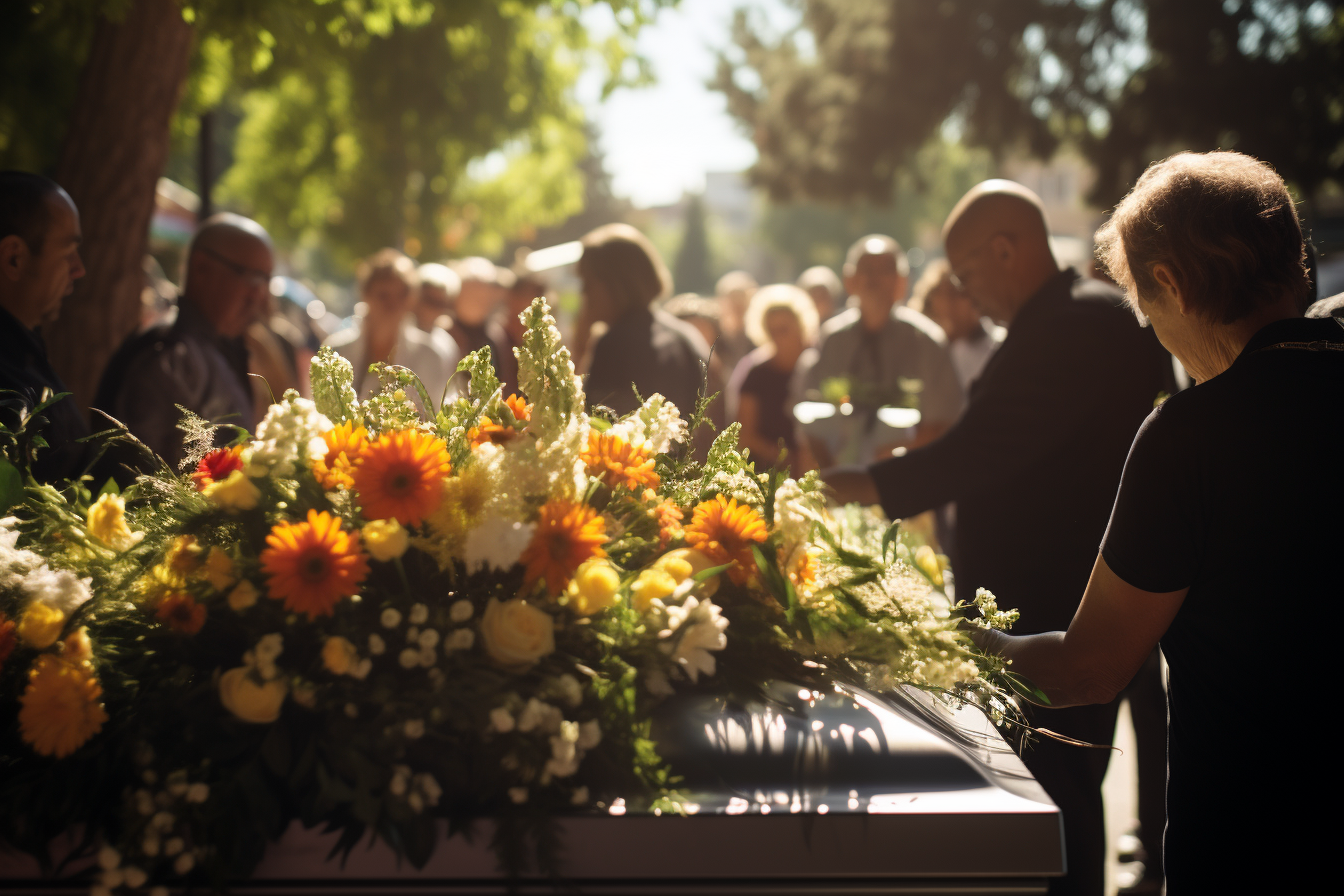
Austria maintains a comprehensive but geographically uneven network of palliative and hospice care services, supported by public health insurance and a dedicated national funding framework. Following a death in Austria, a doctor must certify the passing and the death must be formally registered at the local registry office (Standesamt) no later than the following working day. For foreign nationals, additional obligations apply — including notifying the relevant embassy and, where necessary, making arrangements for the repatriation of the deceased’s remains.
| Item | Details |
|---|---|
| Death registration deadline | Must be registered at the local Standesamt (registry office) by the next working day after death certification |
| Binding advance directive validity | 8 years; must be renewed after that period (as of 2025) |
| Assisted dying law | Legal under strict conditions since January 2022 (Sterbeverfügungsgesetz) |
| Inheritance tax | None — inheritance and gift tax was repealed in Austria as of August 2008 |
| Funeral expenses grant | Up to €436.04 available from the sickness insurance fund for those in need (verify current figure with your insurer) |
| Repatriation timeline | Preparation of remains: 3–5 working days; full procedure to destination country: approximately 7–10 working days |
What end of life care options are available in Austria, and how does the system work?
Austria operates a tiered end-of-life care model that matches support to each patient’s changing circumstances — whether they are being cared for at home, in a hospital ward, or in a dedicated inpatient hospice facility. Rather than routing every patient through a single pathway, this graduated approach is designed to keep people in familiar surroundings for as long as their condition allows.
The scope and availability of hospice and palliative services expanded considerably following a parliamentary decision in 2001 to promote the structured development of such care across the country. This has enabled a greater proportion of patients to spend their final period of life at home. In 2005, a nationwide graded model was introduced for adult care, distinguishing between services delivered in general settings — including hospitals, residential care homes, and community or ambulatory care — and those provided by specialist hospice and palliative care teams.
Hospice and palliative care encompasses the holistic support of people with serious illnesses for which curative treatment is no longer an option. It includes voluntary and paid end-of-life care, palliative medicine, and psychosocial and spiritual support. Volunteers occupy a particularly important place within this system; in 2016, a total of 3,528 volunteers were active across Austria, each having completed a palliative care training programme comprising 80 hours of theoretical instruction and 40 hours of practical experience. These volunteers work mainly within hospice teams under continuous professional supervision.
Coverage remains uneven across the Länder (federal provinces). Expats residing outside major cities such as Vienna, Graz, or Innsbruck may encounter more limited local provision and should speak with their GP or treating physician about what is available in their specific area.
What is palliative care in Austria, and who is eligible for it?
Palliative care is a patient-centred approach aimed at improving quality of life for people living with serious illness, regardless of their expected prognosis. It addresses physical symptoms alongside the psychological, social, and spiritual dimensions of care for both patients and their families. It can be initiated at any point following a serious or incurable diagnosis and delivered across a range of settings, from hospital wards and outpatient clinics to the patient’s own home.
In contrast to systems where palliative care is triggered only in the final weeks of life, Austria’s framework permits referral from the point at which a serious and incurable diagnosis is confirmed. Hospice and palliative care are understood as complementary elements of a unified approach, beginning with the diagnosis of a serious, incurable illness and focused on alleviating pain and other symptoms while preserving quality of life for as long as possible.
Provision differs for adult patients compared to children, adolescents, and young adults. Paediatric palliative care exists in Austria but remains an area of ongoing development. Referral into the palliative care system is generally made by the patient’s treating physician or specialist; there is no single national eligibility threshold, and access is determined primarily by clinical need. The umbrella organisation Hospiz Österreich can help identify services in any given region.
Are there hospices in Austria, and how do you access them?
Hospice care is intended specifically for people in the final weeks and months of life and is typically delivered within a dedicated hospice facility. It concentrates on comfort and emotional support rather than curative treatment. As of 2022, Austria had 43 palliative care units and 14 inpatient hospices operating across the country.
Day hospices provide treatment, counselling, and practical guidance through a multi-professional team working alongside volunteers. They also offer psychosocial and therapeutic services to help patients engage in structured daily activities in the company of others facing similar challenges. This model complements and extends outpatient hospice care by offering a middle ground between full inpatient admission and care at home.
Mobile teams and outpatient hospice services bring support directly to patients in their own homes. For expats, access to inpatient hospice or palliative units is typically initiated through a hospital consultant, a GP, or a mobile palliative care team. If you are already under specialist care, ask your specialist to make a direct referral. The national umbrella organisation Hospiz Österreich holds a regional directory of services and can help identify teams operating near you.
Significant gaps have been identified in the provision of day hospices, palliative consultancy services, and inpatient hospice beds. Waiting times for inpatient placements can therefore vary substantially from one region to another, making early planning strongly advisable.
Is palliative or hospice care covered by public health insurance, or does it need to be funded privately?
Social insurance occupies a central role in funding end-of-life care in Austria. It covers the costs of many medical and care services, including mobile palliative care teams, symptom-relief medication, and medical treatment — helping to ensure that essential care is not withheld on financial grounds.
Palliative care has gained increasing prominence within Austria’s health policy, and since 2022, two significant legislative developments have accelerated its expansion. The Hospice and Palliative Fund Act (Hospiz- und Palliativfondsgesetz) establishes a national funding framework and directs special-purpose grants towards palliative services. The Hospice and Palliative Care Fund provides federal financing to extend and consolidate specialist care provision across the country.
Meeting the costs of hospice and palliative care is a concern for many families; in practice, however, expenses are often more manageable than anticipated, given the layered structure of public funding, insurance contributions, and social welfare support. That said, coverage is not always comprehensive. Certain inpatient hospice beds and supplementary services — such as spiritual care or specialist psychosocial support — may not be fully reimbursed by public insurance, leaving families with some out-of-pocket expenses. Expats enrolled in Austria’s public health insurance system (ÖGK or an equivalent regional fund) are generally entitled to the same benefits as Austrian residents. Those relying solely on private international health insurance should review their policy’s palliative and hospice care coverage with their insurer before the need arises.
What legal documents should expats have in place before the end of life in Austria?
The Austrian Living Will Act (Patientenverfügungsgesetz – PatVG) sets out the requirements and legal effect of advance directives, enabling patients to exercise their right to determine healthcare decisions in advance of losing decision-making capacity. There are several key documents that expats living in Austria should consider preparing:
- Advance directive / living will (Patientenverfügung): This document takes effect when you are no longer able to make or communicate decisions at the time of treatment. Austrian law distinguishes between binding and non-binding advance directives. A binding living will requires a precise description of the specific medical intervention being refused. A doctor must provide full information to the person wishing to make the living will about its medical significance and consequences, assess whether that person genuinely understands those consequences, and document the entire consultation in writing.
- Healthcare power of attorney (Vorsorgevollmacht): This document authorises a trusted individual to act on your behalf in health, legal, and financial matters should you lose the capacity to do so yourself.
- Advance care proxy (Erwachsenenvertreter): If no power of attorney is in place and you lose decision-making capacity, an Austrian court may appoint a legal representative on your behalf. Identifying a trusted person in advance avoids this outcome.
A binding living will must be in writing, include the date of execution, and be drawn up before a lawyer, a notary, a legally qualified employee of a patient advocacy organisation, or a legally qualified employee of an adult protection association. It remains binding for eight years, unless the patient has specified a shorter period, after which it must be reconfirmed through a further medical consultation.
Living wills may be registered in the register maintained by the Office of Austrian Notaries and in the equivalent register held by the Austrian Lawyers’ Association. Systems are in place to allow all Austrian hospitals to access these registers. Registration is strongly recommended so that medical teams can retrieve the document swiftly in an emergency situation.
Are documents such as advance directives or powers of attorney made in another country legally recognised in Austria?
Austria has no overarching rule that automatically confers legal recognition on all foreign advance directives or powers of attorney. Whether a document produced abroad carries legal weight in Austria depends on its format, its content, and the degree to which it satisfies the formal requirements of the PatVG.
A foreign advance directive is unlikely to be treated as binding under Austrian law unless it meets all applicable formal standards — including written form, specific descriptions of rejected treatments, documented medical consultation, and authentication before a legally qualified professional. A document that falls short of these criteria may nonetheless be taken into account as a non-binding expression of the patient’s preferences, but physicians are not legally required to follow it.
Foreign powers of attorney may be recognised in Austria if they have been properly notarised and, where relevant, accompanied by an apostille issued under the Hague Convention. However, for the purpose of healthcare decision-making within Austria, it is generally advisable to execute an Austrian-law Vorsorgevollmacht with a local notary or lawyer, even where an equivalent document already exists from your home country. This is particularly important for expats who have established long-term residence in Austria. For tailored guidance on your specific situation, consult an Austrian notary or lawyer with experience in cross-border legal matters.
What are the laws around euthanasia or assisted dying in Austria?
Assisted suicide became lawful in Austria under defined conditions from January 2022. Among the requirements are two informational consultations with physicians, one of whom must hold a qualification in palliative medicine.
Under the current framework, physician-supported assisted suicide is permitted in principle for adults who are suffering from a serious or terminal illness and who retain the capacity to make their own decisions. Following two medical consultations, a notarial advance directive for assistance in suicide may be drawn up, entitling the individual to obtain the lethal medication after a prescribed waiting period has elapsed.
The legal basis for this change was established by a 2020 ruling of the Austrian Constitutional Court, which found that the existing prohibition was excessively restrictive and violated the constitutional right to self-determination. The federal Assisted Dying Act (Sterbeverfügungsgesetz) regulates access to assisted suicide for those with an incurable disease leading to death, or a serious and permanent condition from which there is no prospect of recovery.
It is important to note that Austrian law permits assisted suicide only — not active euthanasia, in which a clinician directly administers a lethal substance. The individual must self-administer the medication. In the months following the law’s introduction, a significant practical difficulty emerged: people wishing to exercise this right found it very hard to locate physicians willing to provide the required consultations. This access challenge persists and remains a notable aspect of the law’s operation in practice. Expats contemplating this option should seek comprehensive legal and medical advice well in advance.
What are the local customs, traditions, and religious practices around death and dying in Austria?
Roman Catholicism has historically shaped Austrian culture, and Catholic traditions continue to underpin many death and funeral customs, although practices have evolved considerably and secular or non-denominational services have become increasingly common. Many funerals still include a church service or religious blessing, candles placed at the bedside of the dying, and a period of open-coffin viewing for close family and friends prior to burial.
Austrian funerals tend to be formal and respectful occasions. Dark or black clothing is customary. It is conventional for mourners to offer condolences in person, and bringing flowers — particularly white chrysanthemums or lilies — is common practice. Alternatively, families may request donations to a nominated charity in place of flowers (Blumenspende or Spendenhinweis). Funeral announcements (Todesanzeigen) are routinely published in regional newspapers and displayed publicly within the local community.
A strong cultural preference for dying at home or in a familiar environment exists across the Austrian population, regardless of how imminent or distant death may feel. This preference has significantly influenced the growth of Austria’s mobile palliative care services, which allow people to receive end-of-life support in their own homes.
Austria is also home to diverse religious communities, including Protestant, Orthodox Christian, Muslim, and Jewish populations, each observing distinct funeral traditions and timelines. Both Muslim and Jewish traditions call for burial to take place as promptly as possible following death. Vienna has a long-established Jewish community with dedicated cemeteries and active burial societies (Chevra Kadisha). Expats from non-Catholic backgrounds should inform their chosen funeral director of any specific religious requirements as early as possible so that appropriate arrangements can be made without delay.
What must you do when someone dies in Austria? Who do you notify, how quickly, and in what order?
Several official steps must be completed within strict timeframes following a death in Austria. The correct sequence is as follows:
- Contact a doctor without delay to certify the death. In a public hospital, the pathologist will produce a medical death certificate. Private hospitals and care facilities in Vienna coordinate certification through the central certification office of the district public health offices (MA15). For deaths at home, contact a GP or emergency services. In Vienna, the Central Death Registry Office of the MA15 — reachable around the clock on 01 4000-87890 — must be informed.
- Obtain the medical death certificate (Totenbeschaubefund or Todesbescheinigung in Vienna). This document — known as the Todesbescheinigung in Vienna and the Totenbeschaubefund in other provinces — is a prerequisite for all subsequent steps.
- Register the death at the local registry office (Standesamt). Registration must occur no later than the next working day. The death will be entered into the central register of births, deaths, and marriages, and an official death certificate (Sterbeurkunde) will be issued.
- Appoint a funeral director. Arrangements for the disposition of remains may only proceed once the official Austrian death certificate has been obtained. In Vienna, relatives have five working days to make these arrangements; in Lower Austria, the maximum period is ten days. Deadlines differ across provinces — confirm the applicable timeframe with your funeral director.
- Notify the deceased’s embassy or consulate (if they were a foreign national). The death of a non-Austrian citizen must be reported to the relevant consular representative in Austria. This should be done as soon as possible after the official death certificate is available.
- Notify relevant Austrian authorities and institutions. The registry office will automatically forward notification to the Austrian Registry Office (ZMR), the Federation of Austrian Social Insurance Entities, and the driving licence register. However, next of kin should also personally inform the deceased’s employer, bank, landlord, and any pension or benefit bodies.
- Contact the district court or notary for estate proceedings. Where the deceased was resident in Austria, a court-appointed district notary will manage estate and inheritance proceedings. Next of kin should contact the appointed notary for guidance.
- Review insurance coverage. If the deceased held an insurance policy, notify the insurer promptly. The insurer may appoint a funeral director in Austria and, where relevant, in the home country, and may also cover repatriation costs and assist with medical, legal, interpretation, and translation expenses.
How is a death officially registered in Austria, and what documents are needed?
The process begins with the preparation of a coroner’s certificate. Based on this document together with the passport of the deceased, the official Austrian death certificate (Sterbeurkunde) is issued by the Registrar’s Office (Standesamt) in the district where the death occurred.
To register the death at the Standesamt, you will ordinarily be required to present the medical death certificate; the deceased’s identity documents (passport or national identity card); the deceased’s birth certificate; and, where applicable, marriage or divorce documentation. For foreign nationals, a valid passport serves as the primary proof of identity; additional supporting documents may be requested, and the registry office may require certified German translations of any documents not originally issued in German.
In many cases today, notification of the death or submission of the death certificate is processed electronically and forwarded to the registry office. Once registration is complete, the official Sterbeurkunde becomes the essential document for all subsequent administrative purposes, including arranging the funeral, initiating estate proceedings, and notifying authorities in other countries. It is advisable to request several certified copies of the death certificate at the outset, as multiple originals will be required for different official purposes.
What happens if a foreign national dies in Austria — what are the specific steps, and what role does the consulate play?
When a foreign citizen dies in Austria, their home country’s embassy or consulate must be notified promptly. This is both a legal obligation and a practical necessity: the consulate plays a pivotal role in connecting Austrian authorities with the deceased’s family abroad and in facilitating repatriation arrangements where required.
The consulate can support the family in a number of significant ways. For deceased US citizens, for example, the US Embassy will prepare and transmit a Consular Report of Death Abroad (form DS-2060) to the next of kin or legal representative. This document is issued in English, based on the Austrian death certificate, and is generally accepted by US courts in place of a local death certificate for purposes of estate administration. Most other countries’ consulates operate comparable documentation procedures — contact your embassy for country-specific guidance.
Where the cremation of a deceased foreign national is sought, approval must first be obtained from the consulate of the person’s nationality, or from the competent authority of their last place of residence. A consular licence mechanism allows relatives to authorise cremation, and embassies generally grant this permission.
If the identity of the notary public handling the estate is not known to the next of kin, the embassy may be able to help establish this. Consulates do not typically fund funerals or repatriation, but they can direct families towards relevant service providers. For those without consular representation accessible in Austria, the Austrian Foreign Ministry (BMEIA) may also be able to offer guidance.
How are funerals typically arranged in Austria, and what are the usual options for burial or cremation?
Engaging a local funeral director is necessary to arrange either a burial or cremation in Austria. Funeral directors (Bestatter) take responsibility for the bulk of official paperwork and coordinate with cemeteries, crematoria, and the relevant authorities on the family’s behalf. Larger cities offer a wide selection of providers; in rural regions, the choice may be more limited.
Local burial is generally only available where the deceased had their main registered place of residence in Austria. Foreign nationals may, however, arrange a local cremation in Austria. Most Austrian crematoria require a signed consent and data protection declaration form, completed either by the deceased prior to death or by the next of kin afterwards.
Scattering ashes is not permitted in Austria; only authorised parties such as funeral directors may accept, hold, or transport cremated remains. A local authority may grant permission for ashes to be kept in a sealed urn within a specific private dwelling, though regulations on this point differ by province (Bundesland).
Embalming is not routine practice in Austria; it is generally carried out only when a body is being repatriated to a destination country that requires it. Families should discuss all needs and preferences — including any religious requirements — with the funeral director from the outset, and should request a clear, itemised breakdown of the quoted price.
Body donation to medical science is possible in Austria, provided the deceased made an explicit statement to this effect in their last will and testament. Without such a statement, the donation will not be accepted. The relevant institutions are the universities of medicine in Vienna, Graz, and Innsbruck.
What are the approximate costs of a funeral in Austria, and are there any state or insurance-based funds that can help cover them?
Funeral costs in Austria vary considerably by region, the type of service selected, and the funeral director engaged. A basic cremation with subsequent burial of the urn in a Vienna municipal cemetery typically begins at around €2,000–€3,000, while a full traditional church burial including coffin, burial plot, headstone, and ceremony can rise to €5,000 or well beyond €10,000. These are indicative figures only; always request a comprehensive, itemised quotation from your chosen funeral director.
A funeral expenses grant (Zuschuss zu den Bestattungskosten) is available in Austria for those facing financial hardship. It can contribute up to €436.04 towards funeral costs and is claimable from the sickness insurance fund. Verify the current amount directly with the relevant insurance fund (Krankenkasse), as this figure is subject to periodic revision.
Where the next of kin lacks the financial means to meet funeral or cremation costs, the state will arrange a so-called “pauper’s funeral.” If no funeral director is appointed within the required timeframe, the state will organise a local cremation. Some municipal social welfare offices may also offer additional financial assistance to families experiencing exceptional hardship.
Travel insurance and international health insurance policies frequently include coverage for repatriation and funeral costs. Expats are strongly advised to review the terms of any existing policy and to consider dedicated funeral insurance if no such protection is currently in place. If you wish to spare your relatives the financial and logistical burden, it is possible to pre-arrange funeral provision directly with a funeral director.
What is the process for repatriating the remains of a foreign national from Austria to another country?
Repatriation — the return of a deceased person’s remains to their country of origin — involves coordination with both Austrian and foreign authorities and can be logistically involved. The key steps are as follows:
- Obtain the official Austrian death certificate (Sterbeurkunde) from the local Standesamt.
- Notify the deceased’s home country’s embassy or consulate and request guidance on the specific documentation required by the destination country.
- Appoint a funeral director in Austria with experience in international repatriation. If there is no applicable insurance, you will typically need to engage and fund your own funeral director for cremation, or an international funeral director to transport the body back to the home country. Ask whether local funeral directors offer international repatriation services.
- Note that embalming is not standard practice in Austria and is generally only performed where the destination country makes it a requirement.
- For cremation and return of ashes: under Austrian law, cremated remains may not be released to a private individual — with the exception of the province of Salzburg — including the next of kin. They must either be interred locally or shipped to a cemetery or funeral home in the destination country for disposition in accordance with that country’s laws.
Preparation of remains in Austria takes between three and five working days. The complete procedure, from preparation through to arrival of the remains in the destination country, typically takes between seven and ten working days. Weekends, public holidays, the requirement for a post-mortem examination, or delays in consular paperwork can all extend this timeframe.
Repatriation may only proceed — and costs will only be borne — where the deceased’s relatives assume full financial responsibility, or where an applicable insurance policy provides coverage. The costs of repatriating a body internationally can be considerable. Total costs for preparation and shipment of remains to the United States amount to approximately $7,500; cremation and shipment of the urn is approximately $3,500 (varying by province). Costs to other countries will differ; always obtain itemised quotations from the funeral director.
What happens to the estate of someone who dies in Austria — how does probate or estate administration work, and are there inheritance taxes?
Under Austrian law, a deceased person’s assets and liabilities do not pass directly to their heirs at the moment of death. Instead, both are transferred by operation of law to the Verlassenschaft (estate), which forms a distinct legal entity. During the probate process, heirs must establish their entitlement and then formally declare whether they wish to accept the inheritance.
A court-appointed district notary acts as commissioner for the court and oversees the entire probate process, including recording the estate and establishing the identity of the heirs. Next of kin should contact the appointed notary with any enquiries relating to estate proceedings.
Austrian inheritance law provides for simplified procedures in cases involving small estates — those not exceeding a value of €5,000 and containing no real property (as of 2025; verify the current threshold). Where the estate is expected to exceed €5,000, the parties must be represented by a lawyer, including in cases where this threshold only becomes apparent as proceedings advance.
Austria does not currently impose inheritance or gift tax. These taxes were abolished following a ruling by the Austrian Constitutional Court, taking effect from 1 August 2008. Although the question of reintroducing such taxes has been debated politically from time to time, no legislation to that effect has been enacted.
However, the gratuitous transfer of Austrian real estate — whether by inheritance or gift — gives rise to real estate transfer tax (Grunderwerbsteuer), calculated on the basis of the assessed property value (Grundstückswert). Expats should seek specialist legal advice on cross-border estate matters, as EU Succession Regulation No 650/2012 may also determine which country’s succession law governs the estate of a deceased EU resident.
If an expat dies without a will in Austria, what happens to their assets under local intestacy laws?
Where a person dies intestate — without a valid will — in Austria, the estate is distributed in accordance with Austrian succession law, which establishes a clear hierarchy of entitlement based on family relationship.
A surviving spouse or registered partner inherits together with any children: the spouse or partner receives one-third of the estate, with the remaining two-thirds divided equally among the children. Where the spouse inherits alongside the deceased’s parents rather than children, the spouse is entitled to two-thirds of the estate. In the absence of all other heirs, the surviving spouse or registered partner becomes the sole beneficiary.
Where no spouse or registered partner survives, the estate passes first to children, then to parents and their descendants (including siblings), and then to grandparents and their descendants, following the “line and degree” system of Austrian succession law. Unmarried partners do not hold automatic inheritance rights under Austrian intestacy rules — a point of critical importance for expat couples who are not legally married or registered as partners.
An heir who makes an unconditional declaration of inheritance accepts unlimited personal liability for the deceased’s debts. A conditional declaration of inheritance, by contrast, limits the heir’s liability to the value of the assets forming part of the estate. Heirs are entitled to investigate the estate before deciding which type of declaration to make, and this choice should be considered carefully.
In principle, Austrian succession law applies to Austrian citizens; however, this position changes where the law of the deceased’s nationality refers back to Austrian law. Under EU Succession Regulation 650/2012, to which Austria is a party, the law of the country in which the deceased was habitually resident at the time of death generally governs the estate — meaning that the worldwide estate of a long-term expat resident in Austria may be subject to Austrian succession law. Foreign nationals are strongly encouraged to seek specialist legal advice on this issue well in advance.
Frequently Asked Questions
Will my foreign travel insurance or international health insurance cover end of life care costs in Austria?
This depends entirely on the terms of your policy. Many international health insurance plans cover inpatient hospital treatment, including certain palliative procedures, but may exclude inpatient hospice stays, home-based palliative care, or specialist psychosocial support. Travel insurance typically covers emergency medical treatment and repatriation but seldom extends to ongoing end-of-life care. It is important to read your policy documents thoroughly and contact your insurer to confirm coverage before you are in a position of needing it. If you are enrolled in Austria’s public health system, you should in principle be entitled to the same services as Austrian residents.
Are advance directives written in another language legally valid in Austria?
A foreign-language advance directive is not automatically binding under Austrian law. For a document to be treated as a binding Patientenverfügung in Austria, it must satisfy the formal requirements of the Austrian Living Will Act (PatVG) — including being in German or accompanied by a certified German translation, and having been executed before a qualified Austrian legal professional. A document that does not meet these criteria may still be considered as a non-binding indication of your preferences, but physicians are under no legal obligation to follow it. For legal certainty, it is strongly advisable to draw up a fresh Austrian-law advance directive with a local notary or lawyer.
How long does the repatriation of remains typically take in Austria?
The preparation of remains in Austria takes between three and five working days. The complete process, from preparation through to delivery of the remains in the destination country, typically requires between seven and ten working days. Delays may arise if a post-mortem examination is required, if public holidays fall within the period, or if consular documentation takes longer than expected. Engaging an experienced funeral director immediately after the death is the most effective way of minimising delays.
What support is available to bereaved family members in Austria?
Bereaved families can access support through several organisations. Hospiz Österreich and its affiliated regional teams frequently offer grief counselling and bereavement support as part of their broader palliative care services. Caritas Austria and the Austrian Red Cross also run bereavement support programmes. GPs can refer families to psychological services and, where necessary, specialist grief therapy. For foreign nationals, embassy staff may be able to suggest local support groups or services that operate in languages other than German.
Is it possible for a foreign national to be buried locally in Austria?
Local burial is generally only available to individuals whose main registered place of residence was in Austria. Foreign nationals may, however, arrange a local cremation in Austria. Expats who have established their main residence (Hauptwohnsitz) in Austria are ordinarily eligible for interment in a local cemetery. For the specific rules applicable in your area, contact your local municipality or the administration of the cemetery concerned.
Does Austria recognise EU powers of attorney for healthcare decisions?
Cross-border recognition of legal documents is gradually improving within the EU, but there is no automatic mutual recognition of healthcare powers of attorney across all member states. A healthcare proxy prepared under the law of another EU country may not fulfil Austria’s specific requirements for a Vorsorgevollmacht. Expats from EU countries who are long-term residents in Austria are advised to draw up an Austrian-law healthcare power of attorney with a local notary or lawyer. For shorter stays, a notarised document from the home country accompanied by a certified translation may carry practical weight, though formal legal recognition is not guaranteed.
What happens if no next of kin is available to handle arrangements after a death in Austria?
If no funeral director is appointed by the applicable deadline, the state will arrange a local cremation. The estate will be administered by a court-appointed notary, who will endeavour to trace any heirs. If no heirs can be identified, the estate ultimately passes to the Austrian state (Heimfall). It is therefore important for expats living alone in Austria to ensure that a trusted person — whether a friend, lawyer, or designated representative — has access to key documents and knows what steps to take in the event of death.
Can I arrange my own funeral in advance in Austria?
Yes. Pre-arranged funeral plans are offered by most Austrian funeral directors, and funeral insurance is available through funeral providers for those who wish to spare their relatives from financial or logistical burdens. You may also record your wishes regarding burial or cremation, specific religious rites, or body donation to science in your will or in a separate written statement kept alongside your legal documents. Note that body donation must be explicitly stated in the last will and testament; without such a statement, the donation will not be accepted.
Does Austria have inheritance tax, and could my home country also tax my Austrian estate?
Austria does not currently levy inheritance or gift tax; these were abolished with effect from 1 August 2008. The gratuitous transfer of Austrian real estate through inheritance does, however, attract real estate transfer tax (Grunderwerbsteuer). Your home country may still impose its own inheritance or estate taxes on your worldwide assets, even if you are resident in Austria. Double taxation treaties covering inheritance are in force with nine countries, including France, the Netherlands, and the United States, and may be used to mitigate double taxation. Always obtain advice from a tax professional with expertise in both Austrian tax law and the tax law of your home country.