
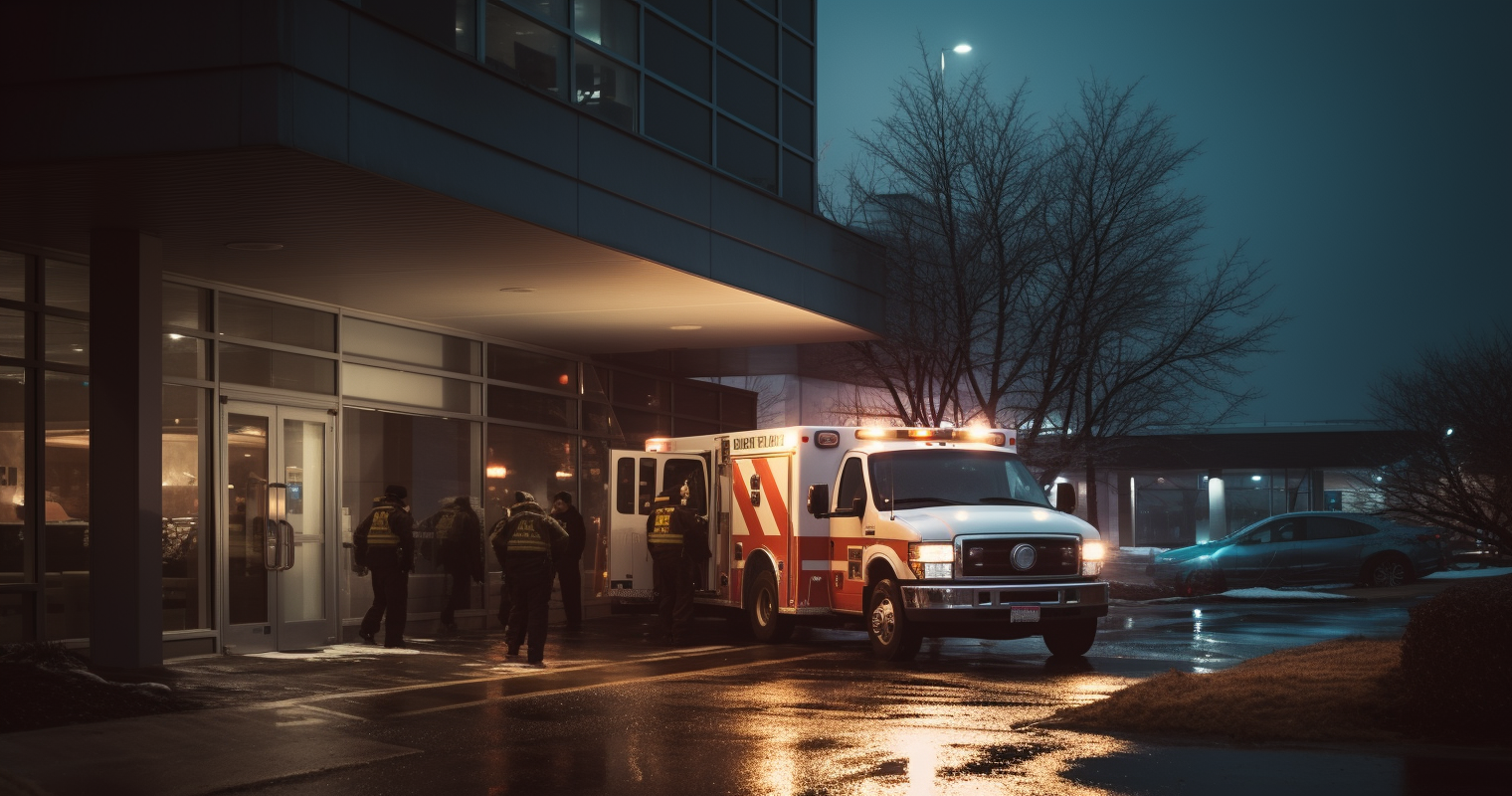
In the Bahamas, the main emergency number is 919 (and also 911), putting callers through to police, fire, and ambulance services. Emergency medical treatment is provided at both public and private hospitals, but it is not free — every patient, whether a resident, visitor, or expat, is expected to cover the cost of their care. Taking out comprehensive health or travel insurance before you arrive is strongly advisable.
| Item | Details |
|---|---|
| Primary emergency number | 919 (also 911) — covers police, fire, and ambulance, as of 2025 |
| Maritime / air-sea rescue | BASRA: (242) 322-3877 / (242) 325-8864 |
| Emergency treatment cost | Not free — all patients expected to pay; verify current fees with Public Hospitals Authority |
| Main public hospitals | Princess Margaret Hospital (Nassau), Rand Memorial Hospital (Freeport), Sandilands Rehabilitation Centre (Nassau) |
| Main private hospitals | Doctors Hospital (Nassau, JCI-accredited), Lyford Cay Hospital (Nassau) |
| Health insurance requirement | No legal requirement, but strongly recommended — NHI does not cover emergency or inpatient costs |
What is the single emergency number in the Bahamas, and does it cover police, fire, and ambulance?
The Royal Bahamas Police Force urges all members of the public to report criminal activity, serious accidents, fires, and emergencies by dialling 911 or 919. Both numbers are active and link to the same central dispatch system. Calling 919 will reach ambulance, police, and fire services; dialling 911 does precisely the same, and was introduced to accommodate the high volume of North American visitors who arrive already familiar with that number. You can use either from any type of phone.
Both 919 and 911 can be dialled free of charge from any mobile or landline. The concept is comparable to the 112 system used throughout the European Union or the 999 system in the United Kingdom — one number, whichever service you require. What distinguishes the Bahamas arrangement is simply that two numbers are equally current and functional.
Alongside these main lines, there are service- and island-specific numbers worth knowing. The Bahamas Air Sea Rescue Association (BASRA) can be contacted on (242) 325-8864 or (242) 322-3877. A voluntary non-profit, BASRA has been conducting search and rescue operations in Bahamian waters since 1960 and maintains a fleet of vessels for that purpose. For fire emergencies specifically in Freeport, a direct number of (242) 352-8888 is available, with (242) 348-3444 serving Eight Mile Rock and West End. Always verify these numbers remain current via the Royal Bahamas Police Force website before you travel.
How do you call for emergency medical assistance in the Bahamas, and what should you expect?
The National Emergency Medical Services (NEMS) is the publicly operated ambulance system and functions as an agency of the Public Hospitals Authority. It is led by a full-time Medical Director who holds the position of Consultant Emergency Medicine Specialist. Dialling 919 or 911 routes your call to central dispatch, which coordinates NEMS responses across the islands.
When requesting an ambulance, operators will ask for a number of key pieces of information, including whether the patient is breathing. Provide clear, precise answers to every question and remain on the line until the dispatcher tells you it is safe to hang up. Give your exact location, describe the nature of the emergency, and specify whether you are on a main island or a remote cay, since response times differ considerably from place to place.
The Bahamas comprises more than 700 islands. A great many of those islands have no emergency medical provision and can only be accessed by helicopter or boat. Beyond New Providence and Grand Bahama — where the majority of medical facilities are situated — it is essential to research local emergency options in advance. Even on New Providence itself, reaching a hospital can prove difficult: road traffic is frequently very heavy, and ambulances often carry minimal advanced life support equipment.
Depending on your location, transport to a medical facility may come via ambulance, vessel, or helicopter. For patients with insurance cover or the means to pay privately, air ambulance services operate on a round-the-clock basis. Payment for EMS services is made at the A&E Business Office or the Main Business Office — a clear indication that ambulance and emergency transport carry a charge. Further detail on costs appears in the section below.
What should you do in a mental health crisis in the Bahamas?
Mental health services in the Bahamas have been expanding in recent years. The Bahamas Ministry of Health and Wellbeing drafted the landmark 2022 Mental Health Act in collaboration with the Pan American Health Organization and the WHO. Through that partnership, guidance was provided for rolling out telehealth platforms and free emergency hotlines, both of which have become meaningful routes to mental health support for people across the islands.
Crisis intervention is available through the Department of Social Services and the Bahamas Crisis Centre, both of which focus on mental health and suicide prevention. The Bahamas Crisis Centre is a private, non-profit body based in Nassau, New Providence, that works with survivors of physical, sexual, and emotional abuse. Trained volunteers staff a 24-hour crisis hotline, and the organisation also provides rape advocacy, court watch programmes, and community education.
Sandilands Psychiatric Hospital serves patients dealing with mental illness and substance misuse. The facility includes a maximum-security ward, a child and family guidance centre, a drug treatment unit, a detoxification and evaluation unit, an alcoholism unit, and day hospital provision. In any life-threatening mental health situation, call 919 or 911 and request both police and ambulance assistance, or go directly to the accident and emergency department at Princess Margaret Hospital in Nassau or Rand Memorial Hospital in Freeport. The Sandilands Rehabilitation Centre also runs an outpatient mental health service — the Community Counselling & Assessment Centre (CCAC) — on Collins Avenue, New Providence, reachable at (242) 323-3293 and open Monday to Friday, 9:00 a.m. to 5:00 p.m. Outside those hours, dialling the main emergency number and asking for direction is the most dependable course of action.
Where can you go for emergency medical treatment in the Bahamas?
The Bahamas has three public hospitals and two private hospitals in total. Medical provision in more rural parts of the country is limited, though hospitals do operate satellite clinics across what are commonly referred to as the “Out Islands.” The bulk of hospital services are concentrated on New Providence (Nassau) and Grand Bahama (Freeport).
The main hospitals with accident and emergency departments are:
- Princess Margaret Hospital (Nassau, New Providence) — This publicly run facility has more than 400 beds and offers departments covering medicine, surgery, maternity, intensive care, paediatrics, accident and emergency, and a range of specialist outpatient clinics. Emergency physicians are on duty around the clock, seven days a week.
- Rand Memorial Hospital (Freeport, Grand Bahama) — A public hospital of more than 100 beds on Grand Bahama Island, delivering medical, surgical, gynaecological, obstetric, paediatric, accident and emergency, psychiatric, pathology, laboratory, and radiology services.
- Doctors Hospital (Nassau, New Providence) — The only hospital in the Bahamas to hold Joint Commission International accreditation. This privately operated facility has around 70 beds and provides cardiovascular, orthopaedic, general surgical, obstetric, and numerous other specialist services. Its emergency room is open 24 hours a day, seven days a week.
- Lyford Cay Hospital (Nassau, New Providence) — A small private outpatient clinic specialising in cardiology, internal medicine, and family practice. Its emergency coverage is limited; confirm opening hours before depending on it for acute care.
- Sandilands Rehabilitation Centre (Nassau) — Located on the eastern side of New Providence, this government-owned facility concentrates on mental health and addiction treatment and includes a family guidance centre.
Public primary healthcare is delivered through 28 health centres, 33 main clinics, and 35 satellite clinics spread across the inhabited islands. These community-level facilities generally operate Monday to Friday during standard business hours and are not equipped to handle life-threatening emergencies. Numerous smaller islands have either no medical infrastructure at all or clinics open just one or two days each week. The official Bahamas government medical facilities directory lists clinics by island and is a practical reference to consult before you travel.
Is emergency medical treatment free in the Bahamas, or is there a charge?
Emergency medical treatment in the Bahamas is not free for any group of patients. The NHI Bahamas programme does not cover the expense of care if you become ill or sustain an injury. Emergency treatment, surgical procedures, cancer care, and even prescription medicines all come at a personal cost unless you hold private insurance coverage.
The NHI Bahamas programme explicitly excludes services such as pharmacy supplies, inpatient care, chemotherapy, childbirth, and emergency treatment for conditions including heart attacks and fractures. Costs for these services must be met by the individual or their insurance policy.
Hospitals and medical practitioners typically expect immediate payment for services rendered. Serious medical episodes requiring hospitalisation or evacuation to the United States can run to thousands of dollars. Even where insurance exists, carrying sufficient funds is advisable, since facilities may require upfront payment with reimbursement to follow through your insurer.
The practical distinction between residents and visitors is minimal. Expats do not receive free healthcare in the Bahamas. The public NHI scheme extends only to citizens and lawful residents, and even within that group it covers only primary and preventive care — emergency and inpatient services fall entirely outside its scope. Fees at public hospitals are generally lower than those at private facilities, but neither provides emergency treatment without charge. Check the current fee schedule directly with the Public Hospitals Authority (PHA) before relocating.
Do expats need travel or health insurance to access emergency care in the Bahamas?
There is no statutory obligation to hold health insurance in order to access emergency services in the Bahamas, but the financial exposure of going without cover is substantial. Emergency treatment will not be withheld on the basis of insurance status, but every patient will be billed for the care they receive.
The Bahamas has some of the most developed medical infrastructure in the Caribbean region, yet expats are still strongly advised to arrange health insurance before making the move. Those without private cover face paying for all healthcare directly from their own funds, and those costs accumulate rapidly. A solid policy should encompass a broad range of medical services, and cover for medical evacuation is particularly important given that facilities on many islands may be unable to treat complex emergencies.
Visitors should also ensure they hold adequate travel insurance covering medical emergencies, evacuation, and repatriation. This is especially relevant for people planning water sports, adventure activities, or extended stays. Arriving at a hospital without insurance or the means to pay will not prevent you from receiving stabilising emergency care, but you will be held personally liable for all resulting costs and may face serious financial difficulty. Always carry your insurance documents and, wherever possible, enough funds to cover an initial deposit.
Are there bilateral health agreements entitling foreign nationals to reduced-cost emergency treatment?
The Bahamas does not participate in any system of reciprocal healthcare agreements comparable to those that exist between EU member states — such as the European Health Insurance Card arrangement — or between certain Commonwealth countries. Unlike the European model, where a valid EHIC or GHIC card entitles the holder to state-provided medical care on the same terms as a local resident, no equivalent mechanism currently operates in the Bahamas.
There is no publicly documented bilateral health agreement between the Bahamas and any other nation that would grant foreign citizens access to reduced-cost or free emergency treatment. Whatever your nationality, you should therefore expect to pay for emergency healthcare in full. This position aligns with travel guidance issued by numerous foreign missions. Always verify the current situation with your home country’s foreign ministry or its embassy in Nassau before travelling or relocating, as bilateral arrangements are subject to change. Useful contacts include the US Embassy in Nassau and the British High Commission in Nassau.
How does the Bahamas emergency healthcare system compare to systems expats may be familiar with?
Healthcare in the Bahamas operates as a two-tier structure made up of public and private sectors. The public health service falls under the authority of the Ministry of Health, while private facilities provide additional options for those able to pay. This mixed model broadly resembles arrangements found across much of the Caribbean and Latin America, and is markedly different from fully tax-funded systems such as the NHS in the United Kingdom or the universal coverage models in place in parts of Europe.
Unlike the NHS — which provides emergency treatment free at the point of use to everyone, regardless of where they are from — emergency care in the Bahamas carries a direct cost for all patients. The system bears a closer resemblance to the American model, in which upfront payment or insurance coverage is the standard expectation before or immediately after treatment is given. The Bahamas is one of the more expensive countries in the Caribbean overall, and healthcare costs reflect that reality.
While the system blends public and private provision, transfers between the two types of facility do happen depending on bed availability and clinical need. For highly complex cases, onward transfer to the United States may be arranged. Patients requiring procedures beyond local capabilities may undergo a medical evacuation to the US for immediate treatment. This is a practically significant distinction from countries that can offer more comprehensive specialist coverage within their own borders.
What emergency services exist beyond medical — how do police and fire services work in the Bahamas?
The Royal Bahamas Police Force asks all members of the public to report criminal activity, serious accidents, fires, and emergencies by dialling 919 or 911. A 911 or 919 emergency is defined as any situation calling for an immediate response from police, fire, or medical services in order to protect life or property. This covers incidents such as fires, assaults or imminent threats of harm, serious illness or injury, crimes actively in progress, choking, fighting, any matter involving weapons, or a drowning.
The Royal Bahamas Police Force (RBPF) is the national law enforcement body with jurisdiction across all islands. Expats should be aware that response times can differ considerably between New Providence and the more isolated Family Islands — a disparity not unlike the gap between urban and rural policing found in many countries. If you fall victim to a crime, report it to the RBPF as a matter of priority, and contact your embassy or consulate, particularly if travel documents such as your passport have been taken.
Fire services are also dispatched through the 919/911 system, and direct local numbers exist for specific areas. In Freeport, the fire service can be reached directly at (242) 352-8888; the number for Eight Mile Rock and West End is (242) 348-3444. On the smaller islands, emergency response may depend on community volunteers rather than career professionals, and arrival times can be significantly delayed. Payment for EMS services must be made at the relevant business office, which is a reminder that emergency attendance — including in some fire-related contexts — may carry administrative charges. Verify the current position with local authorities.
Are there country-specific emergency risks in the Bahamas, and what official alert systems exist?
There are several distinct environmental and public health hazards in the Bahamas that expats should factor into their preparations. The most significant of these is the threat posed by tropical storms and hurricanes.
Hurricane Dorian struck the northwestern Bahamas in 2019 as a devastating Category 5 storm and caused widespread destruction. Remote communities on Grand Bahama lost access to medical facilities when local health clinics were destroyed, and the mental health and psychosocial demands on the population surged sharply as survivors confronted catastrophic losses. The Atlantic hurricane season runs from June through November each year, and anyone living in or visiting the Bahamas during this window should track official forecasts carefully.
For storm updates and official warnings, expats should consult:
- The Government of the Bahamas official website for national emergency declarations and public advisories.
- The Bahamas Department of Meteorology for weather forecasts and storm alerts.
- The US National Hurricane Center (nhc.noaa.gov), which tracks all Atlantic and Caribbean storm systems.
- The travel advisory pages of your home country’s foreign ministry (for example the US State Department or the UK Foreign Commonwealth & Development Office).
Beyond hurricanes, flooding, coastal erosion, and disruption to inter-island transport are recurring secondary hazards during and after major weather events. Smaller islands commonly rely on clinics with minimal resources, and serious cases may require air evacuation — meaning that damage to airstrips or harbour facilities during a storm can completely sever emergency medical access for entire communities. Expats based on the Family Islands should have a personal evacuation plan ready well before hurricane season begins.
What should expats do to prepare for emergencies before they arise in the Bahamas?
Advance preparation carries particular weight in the Bahamas, given the archipelago’s scattered geography, the uneven distribution of medical services across its islands, and the direct costs attached to emergency care. The following steps provide a solid foundation:
- Register with your embassy or consulate. Most countries run a registration scheme — such as the US STEP programme or the UK FCDO registration service — enabling officials to reach you in the event of a natural disaster, civil emergency, or other crisis. Registration costs nothing and can be completed online in minutes.
- Arrange comprehensive health insurance. While the Bahamas offers relatively advanced medical facilities by Caribbean standards, expats should have a policy in place before they relocate. Ensure it includes cover for emergency evacuation and repatriation.
- Find out which medical facilities are closest to your island. If an emergency strikes on a remote island, an ambulance may simply not be available. Before that situation arises, work out in advance how you would reach a medical facility from where you live.
- Store key contact numbers on your phone. Save 919 (or 911), BASRA at (242) 322-3877, the direct number for your nearest hospital, and your insurer’s emergency line — all before you ever need them.
- Know your blood type. There is a persistent shortage of blood at Princess Margaret Hospital in Nassau, where the majority of emergency surgery takes place. People with rare blood types should identify potential donors in the area in case the need arises.
- Put together a hurricane kit and an evacuation plan. Residents in the Bahamas should keep water, non-perishable food, prescription medications, and key documents in a waterproof bag. Know the location of your nearest official shelter and your evacuation route before hurricane season gets underway.
- Include medical evacuation cover in your insurance. Local facilities on many islands lack the capacity to manage complex medical emergencies. Medical evacuation insurance can cover the expense of transporting you to a better-equipped hospital.
- Carry cash or a reliable payment card. Even if you hold valid insurance, hospitals may ask for payment at the time of treatment and process reimbursement later, so having accessible funds is prudent.
Where can expats get official and up-to-date emergency information for the Bahamas?
Staying on top of current emergency information is vital in a country where services, charges, and procedures can shift. The sources below are the most reliable starting points:
- Government of the Bahamas (bahamas.gov.bs) — the main government portal, including the Ministry of Health, a medical facilities directory, and emergency services information.
- Public Hospitals Authority (pha.bs) — the body responsible for Princess Margaret Hospital, Rand Memorial Hospital, and Sandilands Rehabilitation Centre; publishes current hospital contacts and service details.
- Royal Bahamas Police Force (royalbahamaspolice.org) — the authoritative source for emergency reporting numbers and crime prevention guidance.
- US Embassy Nassau — travel alerts and citizen registration services for US nationals.
- UK FCDO Travel Advice for the Bahamas — regularly updated safety and emergency guidance for British nationals.
- US National Hurricane Center (nhc.noaa.gov) — live tracking of hurricanes and tropical storms across the Atlantic and Caribbean.
- US CDC Travel Health — The Bahamas — vaccination recommendations and health guidance for travellers.
Always cross-reference specific details — including hospital fees, emergency numbers for individual islands, and insurance requirements — against these official sources, as information can change without advance notice. When in doubt, contact the relevant Bahamian government ministry directly to obtain the most current guidance.
Frequently asked questions
What number do I call in a medical emergency in the Bahamas?
Call 911 or 919 to reach emergency services in the Bahamas. Both numbers are free from any phone and connect directly to police, fire, and ambulance dispatch. Give your precise location and a clear description of the emergency, and let the dispatcher know whether you are on a populated island or in a remote location, as response times vary considerably across the archipelago.
Will I be treated in a Bahamian hospital if I have no insurance?
Anyone requiring emergency care in the Bahamas will be seen regardless of their citizenship or insurance status. However, a bill will be issued for all treatment received. Hospitals and doctors typically expect payment promptly, often at the time of treatment. Without insurance, the full cost of care falls on you personally and can be considerable.
Does the NHI Bahamas programme cover expats?
Expats are not entitled to free healthcare under the NHI Bahamas programme. NHI covers only citizens and lawful residents, and even that coverage extends only to primary and preventive care — emergency treatment and inpatient services are explicitly excluded. Expats should secure private international health insurance before moving to the islands.
What should I do in a hurricane or tropical storm emergency?
Keep a close eye on updates from the Bahamas Department of Meteorology and the US National Hurricane Center. Follow any evacuation orders issued by the Bahamian government. If you are based on one of the Family Islands, bear in mind that many have no emergency medical services and that access may depend entirely on helicopter or boat — making a pre-prepared evacuation plan essential. Maintain a stocked hurricane kit and confirm that your insurance includes cover for storm-related medical evacuation.
Is there a dedicated mental health emergency line in the Bahamas?
Crisis intervention services are provided through the Department of Social Services and the Bahamas Crisis Centre, with trained volunteers running a 24-hour hotline. For any life-threatening mental health emergency, dial 919 or 911. Non-urgent support is available from the Bahamas Crisis Centre or the Community Counselling & Assessment Centre at (242) 323-3293 during business hours.
Can I get an air ambulance in the Bahamas?
Air ambulance services operate around the clock and are available to patients with appropriate insurance or the financial means to pay privately. Medical evacuation cover is strongly recommended for anyone living on the islands, since local facilities may not be equipped to handle all types of emergency. A number of US-based air ambulance operators also serve the Bahamas from Florida.
How do I find a government clinic on a smaller Bahamian island?
The Bahamian government provides healthcare services to residents and visitors across the islands, and the official medical facilities directory on the government website lists available services by island. You can access it at bahamas.gov.bs/medical-facilities. Be aware that clinics on many smaller islands operate only one or two days per week, so checking hours ahead of time is important.
Should I register with my embassy when moving to the Bahamas?
Yes — registering with your home country’s embassy or consulate in Nassau is strongly advisable. Most nations provide free registration systems that allow consular staff to contact you in the event of a natural disaster, civil emergency, or other serious situation. It also simplifies access to safety alerts and consular support if you are hospitalised or become a victim of crime. Get in touch with your specific embassy or high commission in Nassau to register — for example the US Embassy or the British High Commission.