
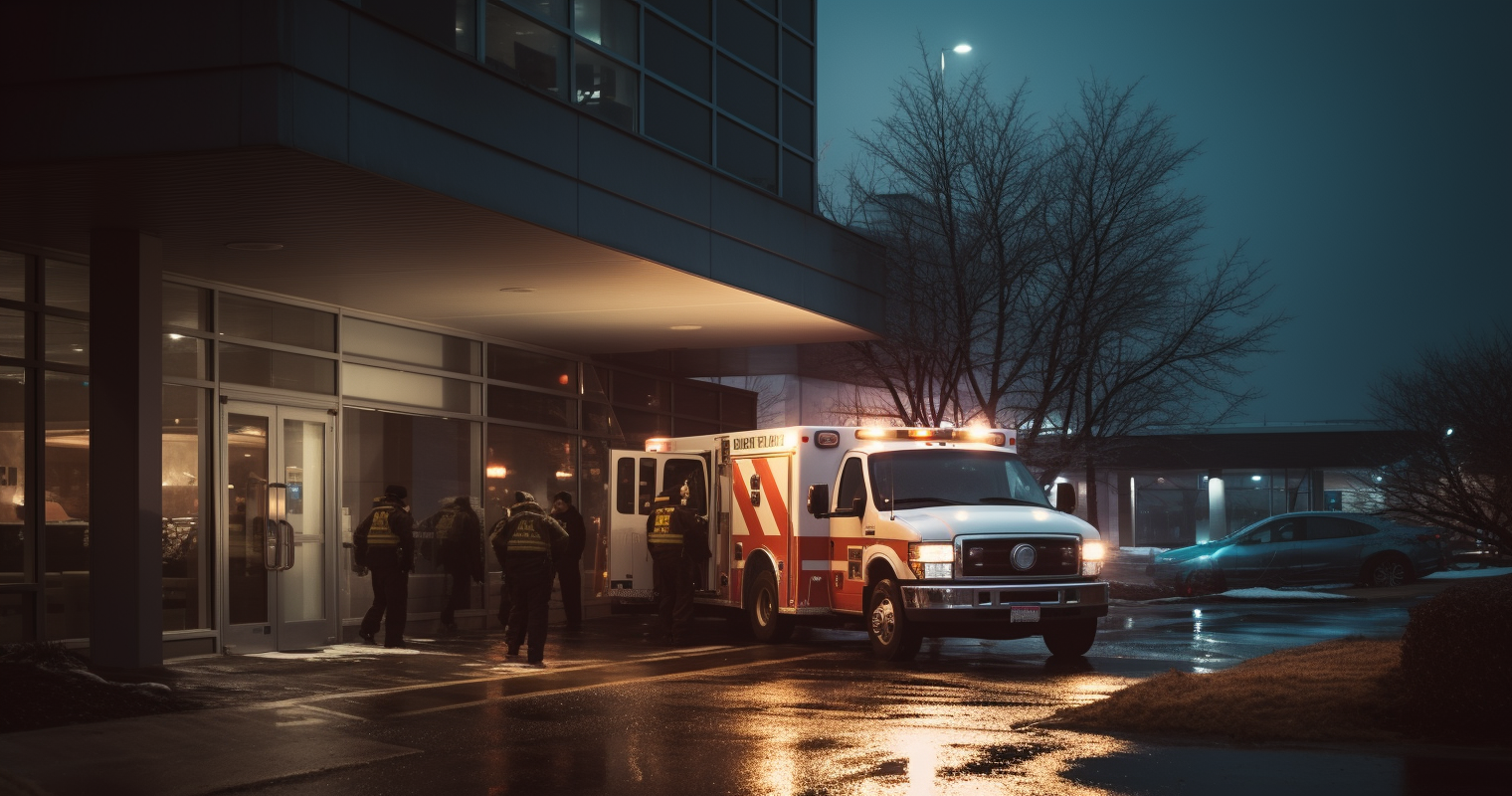
Bahrain operates a single emergency number — 999 — covering police, fire, and ambulance services, and calls are free from any phone. Bahraini citizens receive no-cost emergency care at public hospitals, while expatriates and visitors are entitled to emergency treatment under the national health framework but should anticipate charges and are strongly urged to carry comprehensive health insurance. As of 2026, regional security conditions have worsened, and every resident should remain alert.
| Item | Details |
|---|---|
| Single emergency number | 999 (police, fire, ambulance) — free to call as of 2025 |
| Traffic accidents | 199 (separate dedicated line) |
| Emergency treatment — nationals | Free at public hospitals (as of 2025) |
| Emergency treatment — expats/visitors | Covered under national framework but costs apply; comprehensive insurance strongly advised |
| Key public hospital | Salmaniya Medical Complex, Manama (main public referral centre) |
| Current security status | Elevated regional risk as of March 2026 — check your government’s travel advisory before travelling |
What is the single emergency number in Bahrain — and does it cover police, fire, and ambulance?
Bahrain’s nationwide emergency contact number is 999, which operates at no charge and connects callers to all emergency services — fire, police, and ambulance alike. There is no need to remember distinct numbers for different types of emergencies, as a single call routes you into the national dispatch network. The number is free for both prepaid and postpaid mobile users and is administered through the Ministry of Interior, encompassing ambulance, fire, and police response.
Although 112 serves as the GSM-standard emergency number across many countries, it is not officially designated as an emergency number in Bahrain. Anyone calling from a foreign SIM card should dial 999 rather than assuming 112 will connect to services. Beyond the principal emergency line, a range of dedicated hotlines exists for specific circumstances.
As of 2025, the following additional numbers appear on Bahrain’s official government portal:
- 999 — Ambulance, Civil Defense, Police Rescue; 199 — Traffic Accident; 80008008 — Police Hotline (non-emergency); 17700000 — Coastguard.
- 997 — Fire accidents; 990 — Emergency Casualty Bureau; 992 — Emergency Criminal Investigations (CID); 994 — Emergency Coast Guard.
Always confirm the latest contact numbers via the official Bahrain National Portal, as these may be subject to change.
How do you call for emergency medical assistance in Bahrain, and what should you expect?
Dialling 999 is the correct action in any medical emergency in Bahrain. Once connected, you will reach a national dispatch operator. When speaking to the operator, clearly communicate your location, the nature of the emergency, and the specific service required — ambulance, police, or fire. If you cannot provide a precise address, describe nearby landmarks, road names, or building numbers to help dispatch teams reach you.
Emergency medical services in Bahrain are reasonably well-equipped, though response times are not always predictable. For this reason, wherever the patient’s condition safely permits, expats are generally advised to make their own way to hospital — by taxi or private vehicle — rather than waiting for an ambulance. This is guidance commonly given across the Gulf region and in parts of southern Europe, where ambulance response times can vary considerably.
Emergency cases receive immediate attention upon arrival, and it is common to find healthcare professionals capable of communicating in multiple languages, as many Bahraini medical staff have received training abroad. That said, communication difficulties can arise in certain contexts, so carrying a card detailing your name, blood group, known allergies, and current medications — written in both Arabic and your native language — is a sensible precaution.
What should you do in a mental health crisis in Bahrain?
Bahrain does not currently operate a broadly publicised, standalone mental health crisis line comparable to services such as the Samaritans in the UK and Ireland, or the 988 Suicide and Crisis Lifeline in the United States. Where an individual is in immediate danger, calling 999 is the appropriate step — operators can dispatch emergency services and coordinate an appropriate response. This approach is consistent with practice in many countries that have not yet established a separate psychiatric emergency line.
Bahrain maintains 43 licensed government health facilities within its public infrastructure, including a dedicated psychiatric hospital. The Psychiatric Hospital in Manama is the principal public-sector resource for mental health emergencies and can be accessed either through the 999 system or by attending the emergency department at Salmaniya Medical Complex. In the private sector, a number of hospitals in Bahrain provide psychiatric consultation services — contact your insurer to identify approved facilities.
If you are experiencing a mental health crisis but are not in immediate physical danger, your employer’s Employee Assistance Programme (EAP) — where one is available — may offer a confidential support line. International service providers such as International SOS also operate 24-hour assistance lines for members; check whether your employer or insurer has arranged access for you. Readers are encouraged to verify current mental health crisis service availability with the Bahrain Ministry of Health, as provision in this area is actively developing.
Where can you go for emergency medical treatment in Bahrain?
Bahrain delivers healthcare through a combination of public and private providers. The country introduced a universal healthcare system as far back as 1960, under which government-funded care is free for Bahraini citizens and subsidised for non-citizens. When it comes to emergency treatment, the public sector is the primary point of access for most residents.
The principal public referral facility is Salmaniya Medical Complex in Manama, which maintains a round-the-clock emergency department. Other prominent healthcare institutions include the American Mission Hospital and Bahrain Specialist Hospital. The private sector is wide-ranging: Bahrain hosts 877 licensed private facilities, including 21 private hospitals, 166 optical care centres, 151 multi-specialty medical centres, and 79 multi-specialty dental centres.
Given Bahrain’s relatively small population, lengthy queues or protracted waiting times are unusual even within public facilities. For non-life-threatening conditions, private urgent care clinics can offer a more streamlined alternative to busy hospital emergency departments. Medical facilities across Bahrain are modern, particularly in the capital Manama. To locate the nearest public health centre, the Ministry of Health’s facility locator on its official website is a useful resource.
Is emergency medical treatment free in Bahrain — or is there a charge?
Bahraini citizens are entitled to unlimited free treatment across all government medical facilities under the Sehati national health programme. The services covered include comprehensive primary healthcare, inpatient and outpatient care, and emergency and accident treatment. The model is broadly similar in spirit to fully funded public health systems, with the critical distinction that this entitlement is reserved for nationals.
Foreign workers are covered by state medical services only for emergency and primary care, while visitors are entitled only to emergency care. In practice, an expat resident or short-term visitor presenting at a public emergency department in a life-threatening situation will not be refused treatment, but charges are likely to follow. Foreigners are required to pay for their medical treatment, though the government provides partial subsidies. The degree of subsidy varies according to insurance status and the type of facility used.
With the ongoing implementation of the Sehati national health programme, the healthcare landscape has become increasingly segmented. While employers are legally required to fund a basic insurance package for foreign staff, this coverage is often confined to primary care and emergency services within the public sector. Any non-emergency or specialist treatment beyond initial stabilisation will typically require expats to access the private sector at their own expense. For the most current framework details, consult the Bahrain Ministry of Health, as the Sehati programme is still being rolled out and the rules may evolve.
Do expats need health insurance, and what happens if they arrive without cover?
For expatriate employees in Bahrain, employers are now legally obliged to fund health insurance, with this obligation incorporated into the cost of work permit issuance and renewal. Under the SEHATI framework, expatriates receive state medical coverage, but this is restricted to emergencies and primary care — anything beyond that requires private health insurance.
Because healthcare costs for non-Bahraini citizens can be substantial, securing a private health insurance policy is essential for expats. It is equally important to confirm that any policy includes emergency evacuation cover, which ensures you are protected if a serious condition requires transfer to another country for treatment.
As of 2026, indicative private costs include a GP consultation of approximately $55 to $100 per visit and a private hospital room of approximately $350 to $750 per night. These figures are a guide only — verify current rates directly with providers. Premium private care typically operates through co-payment arrangements and annual benefit limits, and without robust international cover, an unexpected hospitalisation can quickly escalate into a severe financial burden. Arriving at a private hospital without insurance will generally result in a requirement to pay upfront or provide a deposit before any non-emergency treatment begins, although emergency stabilisation should not be withheld.
Are there bilateral health agreements entitling some foreign nationals to reduced-cost care?
Bahrain is not a party to any widely recognised bilateral reciprocal healthcare agreements comparable to, for instance, the arrangements among European Economic Area countries facilitated by the European Health Insurance Card (EHIC) scheme, or the historical Commonwealth health agreements. There is no equivalent to the UK’s Global Health Insurance Card (GHIC) that automatically entitles visitors from a given country to subsidised care.
Citizens of Gulf Cooperation Council (GCC) states — namely Saudi Arabia, the UAE, Kuwait, Oman, and Qatar — may benefit from provisions under the GCC framework that afford some degree of access to Bahraini public health services, though the precise scope of these arrangements can differ. GCC nationals should confirm the applicable terms with their home country’s health authority before travelling. For all other nationalities, no automatic bilateral entitlement to free or discounted emergency treatment exists, and comprehensive travel or health insurance remains indispensable.
Some bilateral social security agreements between Bahrain and other countries address pension entitlements and employment benefits, but these do not generally extend to reciprocal free healthcare access. Consult your home country’s social security or health authority, as well as your embassy in Manama, for any arrangements that may apply to your specific nationality. Embassy contact details can be found through the Bahrain National Portal.
How does Bahrain’s emergency healthcare system compare to systems expats may know?
Bahrain’s system is best understood as a mixed public-private model with a compulsory insurance layer — distinct from both a fully tax-funded public system (like the NHS in the UK or the public healthcare systems in Nordic countries) and a fully privatised, insurance-driven system (like the US before the Affordable Care Act).
Healthcare in Bahrain is delivered through a blend of public and private providers, and the country has maintained a universal healthcare structure since 1960, with government-funded care free for citizens. Unlike the NHS, which provides emergency and routine treatment free at the point of use for all residents regardless of nationality, Bahrain’s public system concentrates its full benefits on citizens, with expatriates covered for emergency and primary care through a mandatory insurance mechanism rather than direct state provision.
Although employers are now legally required to make a health contribution for every foreign worker — built into work permit fees — this public entitlement, referred to as the Mandatory Resident Package, is deliberately limited. It covers primary care and emergency stabilisation at public health centres. Elective procedures, specialist diagnostics, and non-emergency surgery all require the private sector. This positions Bahrain closer to the model seen in Singapore or other Gulf states, where a basic safety net exists but private insurance is the expected vehicle for anything beyond emergency stabilisation.
What emergency services exist beyond medical — how do police and fire services work?
The 999 number encompasses all emergency services, including fire and police, so there is no need to use a separate number in the first instance. Bahrain’s police operate under the Ministry of Interior, while the Civil Defence directorate is responsible for fire emergencies and civil protection. Both are routed through the same national call centre.
Expats should be aware of several important points when dealing with police in Bahrain: always carry your CPR (Central Population Registration) card or passport, as you may be asked to produce identification at any time. Photographing or filming military and police installations or the scenes of incidents is prohibited, and sharing or circulating unverified media about security incidents is subject to criminal prosecution under Bahraini law. This represents a considerably stricter legal environment than many countries where photographing public spaces is broadly unrestricted.
For traffic accidents, the dedicated line is 199 rather than 999 — this distinction matters because it routes your call directly to traffic police. Maritime emergencies should be directed to the Coastguard on 17700000. The Ministry of Interior has introduced a National Civil Protection Platform, a wide-ranging system designed to strengthen public safety and security, grounded in the principles of the National Emergency Strategy and Civil Defense Council plans.
Are there country-specific emergency risks in Bahrain — and what alert systems exist?
As a small island nation in the Arabian Gulf, Bahrain faces a particular combination of environmental and geopolitical hazards that newcomers should understand before arriving.
Extreme heat represents the most persistent and consistent environmental risk. Heatstroke, sunburn, and dehydration are the most frequently encountered medical conditions affecting people in Bahrain. Ongoing construction activity, combined with sand and dust from across the island, can worsen respiratory complaints — especially for those with pre-existing conditions such as asthma. There is no significant seismic or volcanic hazard, and major flooding is not a feature of Bahrain’s climate, though sandstorms can dramatically reduce visibility and disrupt travel.
Geopolitical and security risk is currently elevated. As of March 2026, the US State Department has advised travellers to reconsider travel to Bahrain due to terrorism and armed conflict, having directed non-emergency US government personnel and their dependants to leave the country because of safety risks. Following the outbreak of regional hostilities, there has been an ongoing threat from drone and missile attacks, and commercial flight operations have been significantly disrupted. All residents should monitor their own government’s travel advisories closely and maintain a personal emergency plan.
In terms of alert systems, Bahrain’s emergency notification infrastructure includes siren alerts and notifications delivered through the MyGov app. A newer wireless alert system pushes warnings directly to mobile devices without requiring any app download or subscription. Bahrain’s Civil Defence Council approved the phased pilot programme for this system in January 2026, as part of the National Emergency Strategy, which emphasises closer coordination among government agencies in disaster response. Expats should install the official Bahrain MyGov app and ensure notifications are enabled.
What should expats do to prepare for emergencies before they arise?
Advance preparation is the single most effective way to limit the impact of any emergency. The following steps are strongly recommended for anyone living in or visiting Bahrain:
- Register with your embassy or consulate. Most governments provide a registration service for their nationals living abroad. US citizens in Bahrain, for example, are encouraged to enrol in the Smart Traveler Enrollment Program (STEP), which allows the embassy or consulate to reach you or a nominated emergency contact when needed. Other countries operate equivalent schemes — the UK’s FCDO offers registration through its travel advice pages, and many EU member states run similar platforms. Check your government’s foreign affairs website before travelling or relocating.
- Save all key emergency numbers. Store 999, 199, your nearest private hospital’s direct line, and your insurer’s 24-hour emergency number in your phone — and keep a written copy at home as a backup.
- Understand your insurance cover. Know precisely what your policy includes, which hospitals fall within your network, and the procedure for emergency admissions. Verify that your plan covers emergency medical evacuation should you require treatment in another country.
- Install the Bahrain MyGov app and activate notifications so that official emergency alerts and civil defence warnings reach you promptly.
- Assemble a personal emergency kit. Maintain a supply of food, water, essential medications, and other critical items at home — particularly given the current heightened regional security situation.
- Know your evacuation options. Develop an exit plan that does not rely entirely on government assistance. Familiarise yourself with routes out of Bahrain by road (via the King Fahd Causeway into Saudi Arabia) and by sea or air, and ensure your travel documents remain valid and within easy reach.
- Keep documents accessible. Store copies of your passport, CPR card, insurance documents, and relevant medical records somewhere secure but immediately retrievable — both in digital form and as physical copies.
Where can expats get official and up-to-date emergency information for Bahrain?
The sources listed below are the primary official references for emergency and safety information in Bahrain. Always cross-check any figures, procedures, or numbers cited in this article against these sources directly, as details can and do change:
- Bahrain National Portal — Emergency Numbers: bahrain.bh — the Government of Bahrain’s official directory of all emergency hotlines.
- Bahrain Ministry of Health: moh.gov.bh — for details on public hospitals, the Sehati insurance programme, and public health advisories.
- Ministry of Interior — Civil Defence: moi.gov.bh — for guidance on civil protection, fire safety, and emergency preparedness.
- Bahrain National Portal — Emergencies: bahrain.bh/emergencies — official information about the National Emergency Strategy.
- Your home country’s travel advisory: Consult the foreign affairs or travel advisory pages of your own government regularly. Examples include the US State Department, the UK FCDO, or your national equivalent. As of March 2026, the US State Department recommends reconsidering travel to Bahrain because of terrorism and armed conflict — check your own government’s current advisory for the most up-to-date guidance.
- Your country’s embassy in Manama: Embassy contact details are available through the Bahrain National Portal or your government’s official diplomatic directory.
Frequently asked questions
What number do I call in any emergency in Bahrain?
The universal emergency number in Bahrain for police, ambulance, and fire services is 999. It connects directly to the national Emergency Call Centre, which coordinates all emergency services, and calls are free of charge. For road traffic accidents specifically, use the dedicated line 199. Always confirm the latest numbers via the official Bahrain National Portal.
Will I be treated at a Bahraini hospital if I have no insurance?
A public emergency department will not turn away someone presenting with a genuine, life-threatening emergency. However, foreigners are required to pay for medical treatment, though the government provides a partial subsidy. Private hospitals may demand a deposit or payment guarantee before proceeding with non-emergency treatment. Always carry proof of insurance and ensure your policy includes emergency hospitalisation cover.
Is there a dedicated ambulance number separate from 999?
The 999 number functions as the national emergency call centre and encompasses ambulance dispatch. Some older sources have cited 998 as a direct ambulance line, but the officially confirmed and dependable number is 999. Check current contact details at bahrain.bh before you need them.
Do expat employees in Bahrain have to have health insurance?
Yes — employers in Bahrain are now legally required to fund health insurance for their expatriate employees, with this obligation built into the cost of work permit issuance and renewal. Under the SEHATI framework, expatriates are entitled to state medical coverage, but only for emergencies and primary care. Broader or more comprehensive protection requires private health insurance.
Is there a mental health crisis line in Bahrain?
Bahrain does not currently operate a widely publicised dedicated mental health crisis line equivalent to those available in certain other countries. If someone’s life is at immediate risk, call 999. The public psychiatric hospital in Manama and the emergency department at Salmaniya Medical Complex can both provide mental health emergency assessment. Your employer’s EAP or insurer may also be able to direct you to additional support services.
Is Bahrain safe to live in right now?
As of March 2026, the US State Department advises travellers to reconsider travel to Bahrain due to terrorism and armed conflict, and has directed non-emergency US government employees and their dependants to leave the country. All expats and prospective residents should review the current travel advisory issued by their own government, install the Bahrain MyGov app to receive emergency alerts, and ensure they have a personal evacuation plan in place.
How do I receive emergency alerts in Bahrain?
Bahrain’s emergency notification infrastructure delivers alerts via the MyGov app and through a newer wireless alert system that broadcasts warnings directly to mobile devices without requiring any download or subscription. Install the official Bahrain MyGov app and ensure all notifications are activated. Civil Defence authorities may also sound physical warning sirens during serious emergencies.
Should I register with my embassy when living in Bahrain?
Registration with your home country’s embassy or consulate in Manama is strongly recommended. US citizens can use the Smart Traveler Enrollment Program (STEP), which enables the embassy or consulate to contact you or a nominated emergency contact when required. Most other governments provide equivalent registration mechanisms through their foreign affairs or travel advice portals. This is especially important given the currently heightened regional security situation.