
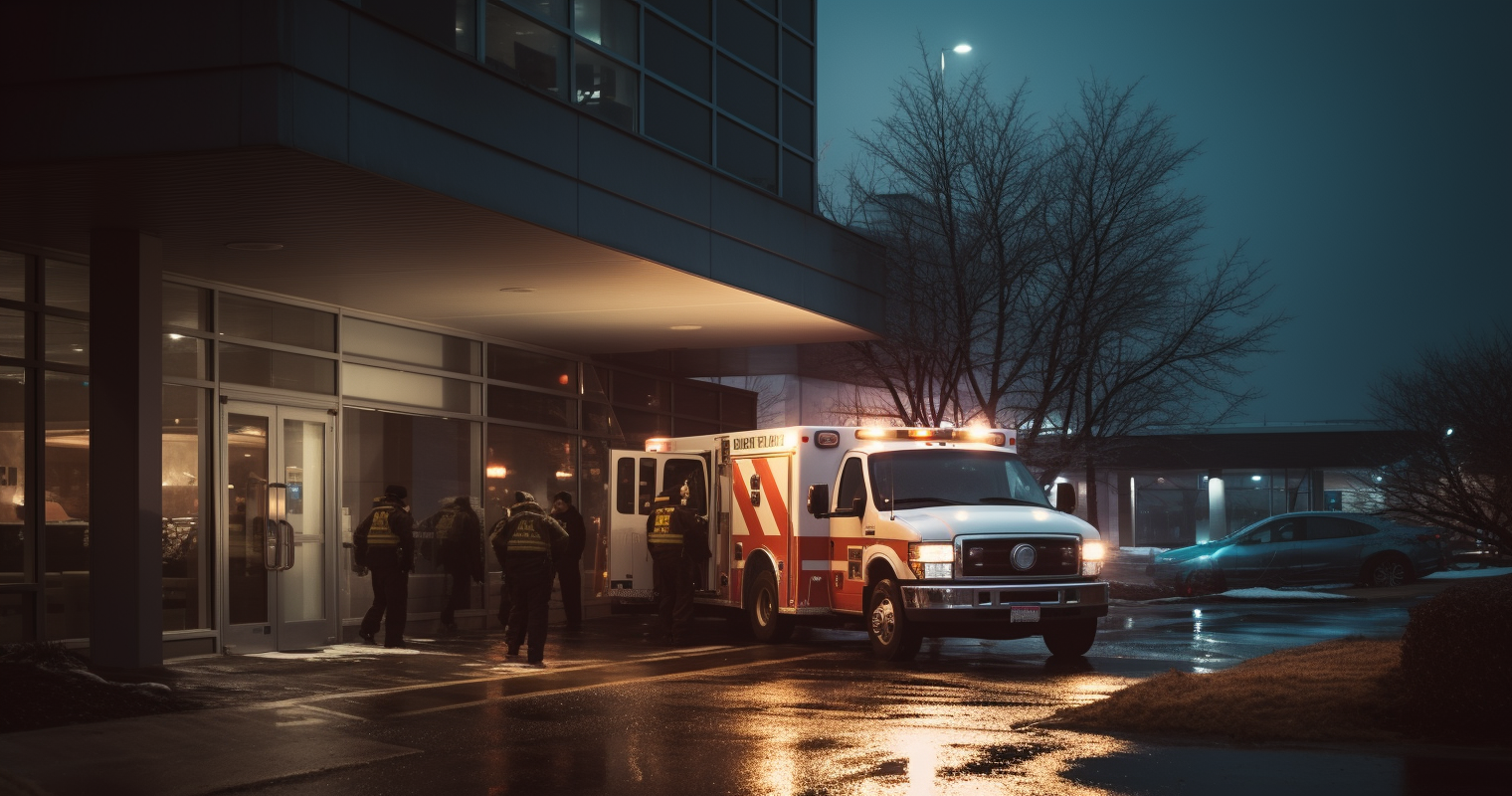
Estonia uses a single number for all emergencies — medical, fire, and police: 112. This line is free, operates around the clock, and functions even if your phone has no SIM card. Acute emergency medical care is provided at no cost to anyone present on Estonian soil, regardless of nationality or insurance status, though the rules governing follow-up and non-urgent treatment vary depending on where you live and what coverage you hold.
| Item | Details |
|---|---|
| Single emergency number | 112 (police, fire, ambulance) — free, 24/7, as of 2025 |
| Ambulance cost | Free at the point of use for all persons in Estonia, as of 2025 |
| Emergency medical care cost | Free for everyone on Estonian territory regardless of insurance status, as of 2025 |
| EHIC entitlement | EU/EEA citizens with a valid EHIC receive medically necessary treatment at local resident rates |
| Hospital inpatient co-payment (insured residents) | Up to €5 per day, max €50 per medical case, as of 2025 — verify with Estonian Health Insurance Fund |
| Family doctor helpline | 1220 (for non-emergency medical advice) |
| Poison control helpline | 16662 |
| National crisis information | kriis.ee |
What is the single emergency number in Estonia, and does it cover police, fire, and ambulance — or are there separate numbers for each service?
Across Estonia — and the rest of the European Union — a single telephone number, 112, connects callers to ambulance, police, and rescue services alike. This is the only number you need to remember when facing any life-threatening or urgent situation. It functions in much the same way as 911 in the United States or 999 in the United Kingdom: one number, one gateway to all emergency responders.
In 2015, Estonia unified its separate domestic police emergency line with the pan-European emergency number 112, which had already been handling ambulance and fire calls. This consolidation was supported by EU funding that enabled the development of the technical infrastructure needed to connect the previously distinct systems operated by the Estonian Emergency Response Centre and the Police and Border Guard Board. The result is that people in crisis only need to remember a single number.
Calling 112 costs nothing and is accessible at all times. Even a phone without a SIM card, or one that cannot find a normal network signal, can place a call to 112. Operators at the line are able to communicate in Estonian, Russian, and English — a meaningful reassurance for expats who have not yet acquired Estonian language skills.
For situations that are not urgent emergencies, the Emergency Response Centre also operates a general information line — 1247 — for queries that do not require immediate dispatch. If you need medical guidance but are unsure whether to call an ambulance, the family doctor helpline — 1220 — is the appropriate first point of contact.
How do you call for emergency medical assistance in Estonia, and what should you expect when you call?
To request an ambulance, dial 112. If you are uncertain whether your situation warrants an ambulance, you can first seek guidance by calling the family physician helpline at 1220. In suspected poisoning cases, the dedicated poisoning helpline at 16662 is available.
A trained rescue coordinator will answer your call and evaluate the urgency of the situation. If the coordinator determines that dispatching an ambulance, police, or rescue team is not warranted, they will guide you further or transfer your call to the relevant service.
Once connected, you should be prepared to communicate clearly and quickly. Here is what the process looks like:
- Describe what has happened and indicate whether there are injured people who need immediate assistance.
- Provide your location as precisely as possible — give a full address, describe your surroundings, or if available, share your exact GPS coordinates.
- Respond to the coordinator’s questions. These are not a delay to the response — they allow the coordinator to accurately assess the situation and relay detailed information to the relevant services before they arrive.
- Understand that if life or property is at risk, help will be dispatched while you are still speaking. Answering additional questions will not slow down the response.
- Do not end the call until the rescue coordinator has confirmed that all necessary information has been gathered and that it is acceptable to hang up.
- If circumstances change, inform the Emergency Response Centre immediately. Keep your phone available so the coordinator can reach you again if needed.
Calls to 112 are typically answered within ten seconds on average. Ambulance transport does not incur any charge for the patient. The service is administered at national level and financed through the Estonian Health Insurance Fund in partnership with contracted service providers.
What should you do in a mental health crisis in Estonia — is there a dedicated mental health emergency line, and can you go to a hospital emergency department?
When someone’s safety is immediately at risk due to a psychiatric or mental health crisis — for instance, where there is a credible threat of self-harm or harm to others — the correct action is to call 112, exactly as you would for any other medical emergency. The dispatcher can coordinate an appropriate response, which may include both medical and psychiatric personnel.
For urgent psychiatric concerns, patients can present at SA PERH Psühhiaatriakliinik (the North Estonia Medical Centre Psychiatry Clinic), located at Paldiski mnt 52, Tallinn, telephone +372 617 2650. Hospital emergency departments are also equipped to receive people in acute mental health distress and can arrange referrals to specialist psychiatric care where needed.
Where someone is in emotional difficulty but not facing a physical danger, a dedicated support line is available. Eluliin offers emotional crisis counselling by telephone: call 655 8088 for Estonian-language support (6am–6pm) or 655 5688 for Russian-language support (6am–6pm). This service is designed for people in distress who do not require emergency dispatch.
The website peaasi.ee is dedicated to mental health promotion in Estonia and provides resources covering self-help, counselling, programmes, and awareness campaigns. Estonia has also distinguished itself as one of the earliest countries to establish a formal Mental Health and Psychosocial Support (MHPSS) Coordination Group within its national emergency preparedness framework. Anyone under 18 — or anyone with concerns about a young person — can contact the children’s helpline Lasteabi at 116 111, which is open around the clock, every day of the year.
Where can you go for emergency medical treatment in Estonia — are there public hospitals, private hospitals, urgent care clinics, or other facilities, and how do you find the nearest one?
In an emergency, you can seek medical attention from a family physician, present directly to a hospital emergency department, or call an ambulance by dialling 112. Accident wards and emergency medical units operate 24 hours a day, seven days a week, making them particularly important at weekends and overnight when family doctors are not on duty.
The majority of Estonian hospitals are structured as limited liability companies owned by local authorities, or as foundations established by the state, municipalities, or other public bodies. A smaller number of hospitals are privately operated. Key emergency facilities include:
- North Estonia Medical Centre (Põhja-Eesti Regionaalhaigla) — J. Sütiste tee 19, Tallinn. Information line: +372 617 1995.
- East Tallinn Central Hospital (Ida-Tallinna Keskhaigla) — Ravi 18, Tallinn. Tel: 1900 or +372 622 7070. The Emergency Room operates 24 hours a day.
- Tartu University Hospital — Puusepa 1a, 50406 Tartu. Tel: +372 731 8111. Estonia’s primary academic hospital and a leading trauma centre.
- Pärnu Hospital — Tel: +372 4494 800.
- Narva Hospital — Haigla tn. 7, Narva 20104. Tel (information): +372 357 1835.
The standard of medical care in Estonia is broadly good, particularly in Tallinn and major urban centres such as Tartu and Pärnu, where skilled and well-trained medical professionals are available. That said, some hospitals — especially in rural locations — face ongoing challenges with equipment and resource availability.
Private healthcare providers in Estonia frequently cater to an international clientele and often offer services in multiple languages. Prominent private clinics such as Confido, Medicum, and Meliva provide multilingual consultations, particularly in larger cities. For non-emergency situations requiring prompt attention, a private clinic may offer a faster and more navigable experience, though fees will apply unless you hold valid insurance. In genuinely urgent situations, you may attend an Emergency Medical Centre without a referral.
Is emergency medical treatment free in Estonia or is there a charge — and does this differ for residents versus tourists or short-term visitors?
In the event of a medical emergency, trauma, or poisoning, every person physically present in the Republic of Estonia has a legal entitlement to emergency medical care, regardless of their insurance status. This is not a discretionary provision — it is a firm legal guarantee that extends to tourists, short-stay visitors, and undocumented individuals without exception.
The right to receive emergency medical care is universal on Estonian territory, and that care is provided free of charge to the patient. Even those without any health insurance coverage cannot be denied emergency treatment; in such cases, the state assumes responsibility for the associated medical costs.
The situation differs, however, when it comes to non-emergency follow-up treatment. Care that goes beyond stabilising an acute emergency is not always provided without charge, and patient co-payments apply in line with Estonian tariffs. For this reason, purchasing private travel insurance before visiting Estonia is strongly advisable.
For insured residents, the co-payment structure as of 2025 (based on official EU guidance — verify current figures with the Estonian Health Insurance Fund) is as follows: the self-liability fee for a visit to a medical specialist, physiotherapist, clinical psychologist, or speech therapist is up to €20. For hospital inpatient stays, including inpatient nursing care, the fee is up to €5 per day for up to ten days — a maximum of €50 per medical case. No patient fee is charged for urgent treatment that is immediately followed by hospitalisation.
Ground ambulance transport is free in all emergency situations. Air ambulance transport is free only when the emergency has occurred within Estonia; international air ambulance repatriation will generally need to be covered by travel or health insurance.
Do expats in Estonia need travel or health insurance to access emergency care, and what happens if they turn up without insurance or without the ability to pay?
As described above, no person can be turned away from acute emergency care in Estonia due to a lack of insurance or an inability to pay — this protection is enshrined in law. However, it applies only to genuine emergencies; costs for broader, ongoing, or non-urgent treatment can be considerable if you have no coverage.
Uninsured individuals may be billed for medical services that fall outside the definition of emergency care, though the emergency itself will always be treated. This distinction matters practically for anyone who requires extended treatment, specialist follow-up, or hospitalisation beyond the initial emergency response.
Expats who are employed in Estonia and whose employers pay social tax on their behalf are automatically enrolled in the public health insurance system administered by the Estonian Health Insurance Fund (Haigekassa). The employer contributes a 13% social tax that includes this coverage. For those not yet within this system — including newly arrived expats, students, freelancers, and digital nomads — comprehensive private or international health insurance is strongly recommended.
It is particularly advisable to obtain a policy that includes overseas medical evacuation and airlift coverage in the event of a serious emergency. Non-EU visitors and students should arrange medical insurance for at least the duration of their temporary residence permit. In practice, those who arrive without insurance and subsequently require non-emergency treatment may face substantial out-of-pocket expenses or receive invoices after the fact.
It is worth noting that dental treatment is expensive in Estonia and adult dental costs are not covered by the Health Insurance Fund except in specific emergency circumstances. Ensure your insurance policy explicitly includes dental emergencies if this is a concern for you.
Are there any bilateral health agreements between Estonia and other countries that entitle some foreign nationals to reduced-cost or free emergency treatment?
The most significant arrangement governing cross-border health coverage in Estonia operates through the European Union’s framework. As an EU member state, Estonia extends entitlements to EU citizens who carry a valid European Health Insurance Card (EHIC). Holding an EHIC entitles you to medically necessary treatment during a temporary stay in Estonia — meaning treatment for conditions that cannot reasonably wait until you return to your home country. This includes sudden illness, accidents, pregnancy, childbirth, and management of chronic conditions.
Crucially, the EHIC does not mean treatment is free — it means you pay the same rates as Estonian residents. In practical terms, EHIC holders are subject to the standard resident co-payments described earlier, rather than being charged full private rates. The card covers public healthcare only, so it is essential to seek treatment through a state healthcare provider for it to apply.
If you do not have an EHIC, or if it is not accepted in a given situation, you will need to pay the full cost of treatment yourself. You can then apply to your home country’s health insurance authority for reimbursement upon returning. If you are relocating to Estonia on a permanent basis, the appropriate route is to register using the S1 form and formally deregister from your previous home country’s health system, rather than relying indefinitely on the EHIC.
Beyond the EU framework, Estonia does not have widely publicised bilateral health agreements comparable to, for example, the reciprocal arrangements some nations maintain with the United Kingdom, or Australia’s Medicare reciprocity agreements. Nationals of non-EU countries should not assume any entitlement beyond the universal right to emergency stabilisation described in this guide, and should carry comprehensive private health insurance. Always check the current status of any potential agreement with your home country’s health authority or embassy prior to travel.
How does Estonia’s emergency healthcare system compare to systems expats may be familiar with?
Estonia’s healthcare system is financed primarily through public funds, with an earmarked payroll tax forming the central funding mechanism. These contributions are pooled by the Estonian Health Insurance Fund (EHIF), which acts as the country’s sole purchaser of medical services. In broad structural terms, this resembles the single-payer models found across Scandinavia or in the UK’s NHS — a single entity paying for publicly contracted care.
There are nonetheless meaningful differences. Unlike the NHS, where most GP and hospital services are provided free of charge at the point of use for residents, the EHIF functions more as a purchasing body that reimburses contracted providers according to agreed tariffs. Family physicians in Estonia typically operate either as self-employed practitioners or as employees of private medical companies. The overall model — where coverage is tied to social tax contributions — is structurally similar to Germany’s or France’s social health insurance systems, rather than a purely tax-funded universal service.
One of Estonia’s most distinctive features is the depth of its digital health infrastructure. Once registered with a GP, patients can access their medical records through the Estonian e-Health Portal using an ID card, Mobile-ID, or Smart-ID. This level of digital integration places Estonia well ahead of many comparable healthcare systems globally, and represents a genuine practical advantage for newly arrived expats managing their healthcare from the outset.
Regarding emergency care specifically, the guarantee that acute treatment is free regardless of insurance status places Estonia broadly in line with most Western European countries — and considerably more generous than the United States, where uninsured individuals can face substantial bills even after emergency treatment. Estonia’s emergency healthcare system is widely regarded as accessible and of good quality.
What emergency services exist beyond medical — how do police and fire services work in Estonia, and are there any important differences in how to contact or interact with them?
To reach police urgently — whether to report a disturbance, a crime in progress, or a serious traffic accident — dial 112. As noted throughout this guide, all three emergency services share this single number, which is handled centrally by the Estonian Emergency Response Centre (Häirekeskus).
Internal security policy and coordination in Estonia falls under the Ministry of the Interior, which plays a central role in risk and crisis management and oversees key agencies including the Rescue Board and the Police and Border Guard Board.
For non-urgent police matters — reporting a past theft, for example, or obtaining documentation for an insurance claim — there is no need to use the 112 line. The Police and Border Guard Board’s client information number is +372 612 3000, available Monday to Friday from 8:00 to 19:00. Police stations in Tallinn are located at Rahumäe tee 6/1, Kolde pst 65, and P. Pinna 4 (Lasnamäe), all of which are open Monday to Friday from 9:00 to 17:00.
One thing expats should be aware of is that English-language capacity can vary outside Tallinn and other major cities. Some hospital staff — including emergency room personnel — and some police station officers outside the capital may have limited English. However, 112 dispatchers do speak English, and general communication in English is manageable in larger urban areas. It is wise to download a translation application or keep a short list of essential phrases in Estonian or Russian as a precaution.
For road-related issues such as breakdowns and non-injury incidents, a roadside assistance service is available on 118. This is a separate service from emergency response and is not intended for situations involving injuries.
Are there any country-specific emergency risks in Estonia — such as natural disasters, extreme weather, civil unrest, or endemic diseases — and what official alert systems exist?
Estonia is a politically stable country with a low incidence of violent crime and no exposure to the kinds of natural disasters — earthquakes, hurricanes, volcanic activity — that define higher-risk regions. Nevertheless, there are specific environmental and geopolitical factors that expats should understand.
Severe winter weather is the most frequently encountered natural hazard. Harsh cold, heavy snowfall, icy roads, and storms are recurring features of the Estonian winter. Emergency preparedness training for weather-related events has been conducted across all regions, and significant resources have been invested in managing storm damage and flooding. Coastal flood risk and storm surge monitoring is ongoing, particularly around Tallinn and the western coast, where the Estonian Rescue Centres work in collaboration with the Estonian Meteorological and Hydrological Institute on forecasting and sea-level projections.
Cybersecurity is formally recognised as a national risk. The Estonian government has identified six major risk event categories: rescue events, police events, cyber incidents, radiological or nuclear accidents, healthcare events, and infectious animal disease. Estonia has faced significant state-sponsored cyberattacks in the past, and digital resilience is treated as a serious national security priority.
Public warning systems: Estonia does not yet have a fully comprehensive nationwide alert system in place. During an active emergency, authorities may communicate warnings through radio, television, the internet, text messages, and — in some localities — sirens. Development of the public alert infrastructure is ongoing: the Estonian Rescue Services Agency has conducted tests of its full warning system, known as EE-ALARM, including activation of the siren network with the actual warning signal.
As of 2024, the Estonian Rescue Board has designated 228 public emergency shelters across the country, which can be located via the official map on the Land Board’s geospatial portal. Given Estonia’s geographic proximity to Russia and the broader security environment in the region, the government has substantially increased its focus on civil defence readiness in recent years.
What should expats do to prepare for emergencies before they arise in Estonia?
Effective emergency preparedness is built well before a crisis occurs. A handful of practical steps taken when you first settle in Estonia can prove invaluable when — or if — an emergency does arise.
- Register with your home country’s embassy or consulate. Most governments operate a registration scheme for their citizens living or travelling abroad — examples include the US STEP programme (Smart Traveler Enrollment Program), the UK’s FCDO registration service, and equivalent schemes run by many other countries. Registration enables your government to reach you in a national emergency or during an evacuation, and supports consular staff in providing assistance if you encounter serious difficulties.
- Arrange appropriate health insurance. Confirm whether your current coverage extends to Estonia, whether you qualify for an EHIC as an EU/EEA national, or whether you need a private or international health insurance policy. Anyone visiting Estonia is strongly advised to hold comprehensive travel insurance; those planning an extended stay should consider an expat health insurance plan. Check that your policy covers emergency medical evacuation.
- Save the key emergency numbers. Store 112, 1220 (family doctor helpline), and 16662 (poison control) in your phone. Make a note of the location and address of the nearest hospital emergency department to where you live or work.
- Download the “Ole valmis!” (Be Ready!) app. This official mobile application provides instructions on how to respond to a wide range of scenarios — power cuts, the need for first aid, fire or water emergencies, natural disasters, essential service failures, cybersecurity incidents, and security threats. It is a practical, government-produced resource.
- Bookmark kriis.ee. The national crisis preparedness website at kriis.ee publishes information about major accidents and ongoing emergencies, as well as detailed behavioural guidance for various types of crisis and the relevant legislative framework.
- Locate your nearest emergency shelters. Use the official Rescue Board map on the Land Board’s geospatial portal to identify the designated public shelters in your neighbourhood before you ever need them.
- Assemble a basic emergency supply kit. The Estonian government recommends keeping reserves of water, food, essential medications, and important documents at home. The kriis.ee website provides specific guidance on what quantities and items to include.
Where can expats get official and up-to-date emergency information for Estonia?
Several authoritative sources should be bookmarked by anyone living in or relocating to Estonia. Always consult official government and institutional websites rather than relying solely on third-party sources, as procedures, contact details, and entitlements can be updated.
- Estonian Emergency Response Centre (Häirekeskus): www.112.ee/en — official information about the 112 service, how to make a call, and what to expect from the process.
- Estonian Ministry of Social Affairs (emergency medical care): www.sm.ee/en — covers ambulance services, emergency care entitlements, and broader health policy.
- Estonian Health Insurance Fund (Tervisekassa): www.tervisekassa.ee/en — for details on insurance coverage, co-payment structures, and how to use an EHIC in Estonia.
- Police and Border Guard Board: www.politsei.ee/en — guidance on police emergencies, crime reporting, and border-related matters.
- Kriis.ee (national crisis preparedness portal): www.kriis.ee/en — official guidance on emergency preparedness, shelter locations, and crisis response instructions.
- Estonian Rescue Board: www.rescue.ee/en — information on fire, rescue operations, and civil protection.
- European Commission EHIC guidance for Estonia: European Commission EHIC Estonia page — detailed information on co-payments and entitlements for EHIC holders visiting Estonia.
Your home country’s embassy in Tallinn is also a valuable resource. Most embassies publish country-specific safety and emergency information tailored to their nationals. The US Embassy in Estonia, for instance, maintains a regularly updated list of hospitals, medical contacts, and emergency guidance. Check your own country’s embassy website for comparable resources.
Frequently asked questions: emergencies in Estonia
Can I call 112 in Estonia if I don’t speak Estonian?
The 112 operators speak Estonian, Russian, and English. If you speak none of these languages, the dispatcher will do their best to assist and may use interpretation services. It helps to be able to state your location and the nature of the emergency as simply as possible. Do not hesitate to call even if you are unsure about the language — the priority is getting help to you.
Is ambulance transport free in Estonia?
Ambulance transport is free of charge in an emergency. Only air ambulance transport covering emergencies occurring within Estonia is free of charge — international air ambulance repatriation will generally require travel or health insurance to cover costs.
Will I be turned away from an Estonian hospital emergency room if I have no insurance?
No. Every person on the territory of the Republic of Estonia is entitled to emergency medical care, regardless of whether they have medical insurance or not. You cannot legally be refused emergency stabilisation. However, non-emergency follow-up care may be billed if you are uninsured, so having insurance is still strongly recommended.
Does the European Health Insurance Card (EHIC) cover me fully in Estonia?
The EHIC does not guarantee free treatment — you will pay the same cost for healthcare as local residents. This means you benefit from reduced resident co-payments rather than full private fees, but you may still have some out-of-pocket costs. The EHIC only covers public healthcare, so you should ensure you are treated by a state healthcare provider.
What is the number for poison control in Estonia?
Call 16662 or +372 794 3794 in case of poisoning. The call centre is available 24 hours a day. In a life-threatening poisoning emergency, also call 112 for an ambulance simultaneously.
What are the biggest emergency risks for expats living in Estonia?
The main practical risks are extreme winter weather (ice, snow, storms), the possibility of flooding in coastal areas, and general cyber vulnerabilities given Estonia’s digital infrastructure. Violent crime is low. The Estonian government’s recognised major risk event categories include rescue events, police events, cyber incidents, radiological or nuclear accidents, healthcare events, and infectious animal disease. Geopolitical awareness is also advisable given Estonia’s position on NATO’s eastern border.
How do I find out where the nearest emergency shelter is in Estonia?
The Estonian Rescue Board has continued to mark shelters across the country. As of June 2024, 228 public shelters have been marked, and they can be found on the official map at the Land Board’s geospatial portal (xgis.maaamet.ee). The kriis.ee website also provides guidance on shelter use and crisis preparedness.
Should I register with my embassy when moving to Estonia?
Yes — this is strongly recommended. Most countries operate a free registration scheme for citizens living or travelling abroad. Registration allows your government to notify you in a crisis, assist with evacuation if necessary, and provide consular support if you face arrest, serious medical problems, or other emergencies. Check your country’s foreign ministry or embassy website for the relevant registration portal before you travel.