
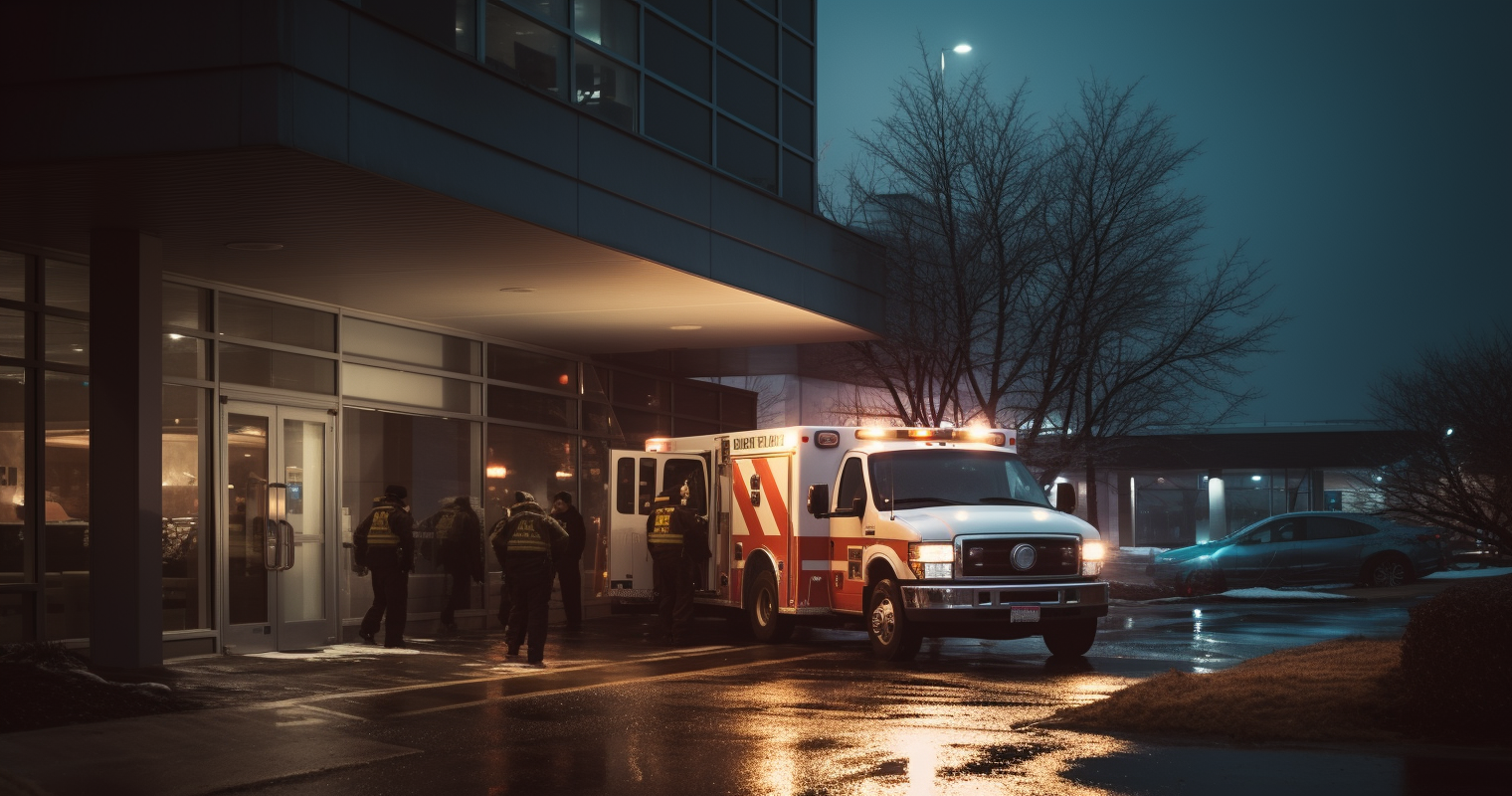
Finland operates a single emergency number — 112 — covering all emergency services: police, fire, and ambulance. Calls are completely free from any telephone. Anyone in Finland can access emergency medical treatment through the public healthcare system regardless of their nationality, though what you pay depends on your residency status, insurance arrangements, and country of origin. Always confirm current fees and procedures with official sources before relying on any figures.
| Item | Details |
|---|---|
| Emergency number | 112 (all emergencies — police, fire, ambulance) — free from any phone, as of 2025 |
| Medical helpline (non-urgent) | 116 117 — free, available around the clock in most areas, as of 2025 |
| Public healthcare patient fee (primary care) | Up to €23.00 per visit, chargeable a maximum of 3 times per year (as of 2024) |
| EU/EEA visitors | Entitled to medically necessary treatment with a valid EHIC card |
| Australia bilateral agreement | Australians entitled to medically necessary treatment in Finland |
| Visitors from outside EU/EEA | Entitled to urgent emergency care; billed for costs afterwards unless covered by insurance |
What is Finland’s single emergency number, and does it cover police, fire, and ambulance — or are there separate numbers for each service?
Finland has one emergency number only: 112. This same number functions across all EU member states, making it a familiar point of contact for European visitors. In contrast to countries like the United States — where 911, 311, and various other numbers serve distinct functions — or the United Kingdom, which separates urgent calls (999) from less pressing ones (101), Finland’s approach is straightforward: one number handles everything.
Dial 112 only when you genuinely need immediate assistance from authorities — whether that means police officers, paramedics, firefighters, or social services. The call is free from every type of telephone, requires no area code, and works on any mobile or landline, including phones from other countries.
Finland’s Emergency Response Centre (ERC) system has attracted international attention for its cooperative design, in which all 112 authorities work within a single integrated framework. Crucially, the same operator who answers your call also dispatches the relevant assistance — you are never passed between separate agencies. When you ring 112, the operator assesses your circumstances and mobilises the right response directly.
How do you summon emergency medical help in Finland, and what should you expect when you make the call?
To request emergency medical help in Finland, dial 112. Use this number whenever there is immediate danger to life, health, property, or the environment. Do not call it for ordinary illnesses or non-urgent concerns — a dedicated helpline for those situations is described below.
Once connected, the Emergency Response Centre operator will guide you through a series of questions. Answer them carefully and stay on the line until the operator tells you the call is complete. The questions are designed to ensure the correct type of help reaches you as quickly as possible.
Your exact address and municipality are essential pieces of information. Similar street names can exist in different municipalities within the same Emergency Response Centre’s coverage area, so stating the municipality — not just the street — prevents any confusion about where help should be sent.
The Emergency Response Centre handles calls in Finnish, Swedish, and English. If you speak none of these, tell the operator your language at the start of the call and wait while a telephone interpreter is connected. Interpretation is available for a wide range of languages.
Downloading the free 112 Suomi mobile application is strongly recommended. When a call is placed through the app, the Emergency Response Centre operator can see your precise location automatically, making it unnecessary to describe where you are. This feature is especially valuable in remote forests or rural areas where giving accurate directions can be challenging. The app is available from standard app stores.
When your situation is urgent but not immediately life-threatening, call the Medical Helpline at 116 117 instead. This free service operates around the clock across most of Finland. If an ambulance or medical helicopter is needed, it will be dispatched after you call 112.
What steps should you take during a mental health crisis in Finland — is there a dedicated mental health emergency line, and can you attend a hospital emergency department?
Anyone experiencing an acute mental health crisis in Finland can seek help at a local health and social services centre, an emergency clinic (päivystys), or an on-call hospital. Hospital emergency departments treat acute psychiatric emergencies, and no referral is needed in a genuine crisis.
Where symptoms are severe — including suicidal or violent behaviour — call 112 immediately. If a person close to you is in a serious condition requiring acute psychiatric inpatient care and refuses to seek help voluntarily, they may be referred to compulsory treatment; this requires a doctor’s referral for coercive care.
The Medical Helpline (Päivystysapu) at 116 117 operates around the clock in most parts of Finland. If it is available in your area, call before heading to an emergency department — the advisors will tell you what steps to take.
The crisis helpline of MIELI Mental Health Finland offers immediate support to people experiencing a crisis as well as to those close to them. Calls are answered by crisis workers and trained volunteer support persons. Consult the MIELI Mental Health Finland website for current contact details, as numbers may change over time.
If you are a registered resident of a Finnish municipality, you can contact your local health and social services centre (sosiaali- ja terveyskeskus) for ongoing mental health support. When calling, make it clear that you need urgent attention — your doctor can refer you to a mental health professional if required.
Where can you receive emergency medical treatment in Finland — are there public hospitals, private hospitals, urgent care clinics, or other options, and how do you locate the nearest facility?
Both public and private healthcare facilities operate in Finland. Within the public system, urgent medical care is always available to everyone. The country is organised into 20 hospital districts; the Hospital District of Helsinki and Uusimaa (HUS) is the largest, encompassing approximately 30 hospitals.
In a genuine emergency you will be admitted to a Finnish hospital directly. When the situation is not life-threatening, you should first contact a healthcare centre rather than going straight to a hospital — this mirrors the triage approach used across much of Europe, where immediate emergencies receive instant attention while less urgent conditions are directed to primary care settings.
Finland’s private healthcare sector includes primary care clinics, dental practices, and specialist providers. Because the public system is well developed, the private sector remains relatively modest in scale. Many expats choose private facilities for non-emergency care, particularly when seeking shorter waiting times for specialist consultations, dental treatment, or physiotherapy.
For situations that are not life-threatening, you can contact the health centre or hospital emergency unit in your area of residence. The InfoFinland website and your local wellbeing services county website will help you identify the nearest appropriate facility. The 112 Suomi app can also direct you to suitable services close to your current location.
What does emergency medical treatment cost in Finland, and do fees differ for residents compared with tourists or short-term visitors?
Every person in Finland has the right to emergency medical care within the public healthcare system. Your nationality or country of origin has no bearing on this right. However, the scope and cost of care depend on whether you hold a Finnish municipality of residence, possess a certificate of entitlement to medical treatment, and how long you intend to stay.
Public healthcare in Finland carries charges, though these are modest and subject to legal caps. In 2024, the maximum client fee for a primary care visit — such as seeing a doctor at a health centre — was €23.00, and this fee could be charged no more than three times per year. Annual out-of-pocket costs are capped by law; once the limit is reached, patients pay nothing further (this cap does not cover short-term institutional care).
If you are registered as a resident of a Finnish municipality, you have full access to all public healthcare services. The client fees charged are identical for all residents of the relevant wellbeing services county, regardless of their citizenship or country of origin.
Visitors arriving temporarily from countries outside the EU, EEA, Switzerland, or the United Kingdom are entitled to emergency care only. They can subsequently be billed for the actual cost of that treatment. Always check current fee schedules directly with the treating facility or through the EU-terveydenhoito.fi website, as charges are subject to revision.
Do expats in Finland need travel or health insurance to access emergency care, and what happens if they present without insurance or the ability to pay?
In an emergency, you are entitled to receive urgent medical care at any facility within the Finnish public health system. Urgent care encompasses the immediate assessment and treatment required following sudden illness, injury, or a deterioration of a chronic condition. No one will be refused emergency treatment simply because they have no insurance or cannot make an immediate payment.
That said, people who lack a certificate of entitlement to medical care — such as a valid EHIC — may be billed for the full actual cost of their treatment once care has been provided, unless they are demonstrably without financial means. For complex cases, those costs can be considerable.
Carrying adequate travel insurance before coming to Finland is therefore strongly advisable. Insurance can cover unexpected medical expenses including ambulance services. Without it, visitors may be responsible for the entire cost of any treatment they receive.
Expats who have established residency in Finland should enrol in the Finnish national health insurance scheme through Kela (the Social Insurance Institution of Finland) as a priority. Finland’s healthcare is funded primarily through taxation, and Kela administers national insurance benefits including reimbursements for prescription medicines and travel to medical appointments.
Which bilateral health agreements cover Finland, and do they entitle certain foreign nationals to reduced-cost or free emergency treatment?
Finland participates in several international healthcare arrangements that affect what visitors and short-term residents can claim, and what they will pay. Citizens of EU and EEA countries, the United Kingdom, and Switzerland are entitled to medically necessary treatment upon presenting a valid European Health Insurance Card (EHIC). This reflects the reciprocal healthcare framework that operates across Europe under EU regulations.
Australian nationals are also entitled to medically necessary treatment in Finland under a bilateral social security agreement between Finland and Australia — making Australia one of a small number of non-European countries holding this level of entitlement. Australians should carry evidence of their Medicare entitlement when travelling and be aware that standard client fees may still apply. Verify the current details via EU-terveydenhoito.fi or Kela before departure.
If you are covered by health insurance in another Nordic country and fall ill unexpectedly while in Finland, you are entitled to receive care. Show your passport or another form of identity confirming your permanent address in the other Nordic country, or present your EHIC.
Visitors from countries outside the EU, EEA, Switzerland, and the United Kingdom — and not covered by any bilateral arrangement — are entitled only to emergency care. Comprehensive travel insurance is essential for anyone in this category.
How does Finland’s emergency healthcare system compare with systems that expats may already be familiar with?
Finland’s healthcare system is grounded in the principle of universal public provision. Under the Finnish Constitution, public authorities are obligated to ensure that all residents have access to adequate social, health, and medical services. This places Finland squarely within the tradition of comprehensive, publicly funded healthcare.
In broad terms, Finland’s model resembles those of the United Kingdom’s NHS and other Nordic countries — predominantly tax-funded, universally accessible, and requiring no upfront payment for emergency treatment. One important distinction, however, is that unlike the NHS (where most public healthcare is provided free at the point of use for residents), Finnish public healthcare does carry patient fees, even if these are capped at levels that are widely considered manageable.
Compared with systems such as that of the United States — where lack of insurance can generate very large bills — Finland’s legally capped fee structure offers meaningful protection against catastrophic costs for registered residents. The maximum charges municipalities may levy are set out in the Act and Decree on Social and Health Care Client Fees.
Alongside the public system, private healthcare services are widely available in Finland. Expats frequently turn to private providers for non-emergency needs where waiting times for specialist care, dental work, or physiotherapy may be shorter. Private treatment is more expensive, though partial reimbursement through Kela may be available to those enrolled in the Finnish national health insurance scheme.
How do police and fire services work in Finland, and are there important differences in how to contact or deal with them?
Just as with medical emergencies, you reach both police and fire services by dialling 112 — there is no separate urgent line for either service. If you need immediate police assistance, 112 is the only number you need. Uniformed officers in marked patrol vehicles are typically the first to respond to emergencies.
Emergency responses in Finland are frequently a coordinated effort involving multiple authorities. During a fire, for example, the police are responsible for establishing a perimeter and preventing unauthorised access, while firefighters deal with the blaze itself. The police role in joint operations generally focuses on maintaining safety and addressing any criminal dimensions of the incident.
For matters that are not urgent — general enquiries, permit applications, and non-emergency incident reports — the Finnish Police (Poliisi) maintains a dedicated website and non-emergency line. Visit poliisi.fi for guidance on how to report non-urgent matters. Finland has a low overall crime rate, but expats should familiarise themselves with local expectations when interacting with the police. Officers typically communicate in Finnish or Swedish, though English is widely spoken in cities and larger towns.
Finland’s rescue services (pelastustoimi) manage fire emergencies, search and rescue operations, and hazardous material incidents. Call 112 for any genuine and urgent emergency — whenever there is a risk to life, health, property, or the environment, or whenever you suspect such a risk exists. Further information is available at pelastustoimi.fi.
What country-specific emergency risks exist in Finland — such as extreme weather, natural disasters, civil unrest, or endemic diseases — and what official warning systems are in place?
Finland is a politically stable country with very low levels of civil unrest. Nevertheless, it presents a range of environmental and climate-related hazards that expats — particularly those arriving from warmer parts of the world — should take seriously.
Extreme cold is the most significant seasonal risk. Finnish winters can be brutal, with temperatures in the north regularly dropping well below −20°C. Frostbite, hypothermia, treacherous road conditions, and severely limited daylight hours all demand preparation and adaptation. Summer brings its own hazards: forest fires, flooding caused by snowmelt, and sudden severe storms are all possibilities.
Finland’s primary early warning system for natural disasters is the LUOVA system, a platform for authorities providing warnings about natural hazards both within Finland and internationally. The Finnish Meteorological Institute (FMI) serves as LUOVA’s principal information supplier, generating real-time situational awareness covering dangerous weather, flooding, and seismic events.
It is a statutory duty of the Emergency Response Centre Administration to pass emergency warnings issued by public authorities to the Finnish Broadcasting Company (YLE). These warnings are read out on regional radio broadcasts and, where the relevant authority decides, may be extended nationwide and broadcast on television as well. All emergency warnings appear on teletext page 112. The Emergency Response Centre also distributes warnings through the 112 Suomi mobile app, its own website, and social media channels.
Finland maintains a national outdoor siren network capable of sounding alerts during serious civil emergencies or large-scale disasters. The sirens are tested publicly every year on the first Monday of September at noon. Expats are encouraged to download the 112 Suomi app and to monitor the Finnish Meteorological Institute website for weather warnings, especially during winter months.
How should expats prepare for emergencies in Finland before an incident occurs?
- Download the 112 Suomi app. When you place a call through the app, the Emergency Response Centre operator can locate you automatically without you having to describe where you are. This is particularly valuable in remote or unfamiliar surroundings.
- Register with your home country’s embassy or consulate. Most governments offer voluntary registration programmes — such as the UK’s LOCATE service, the US STEP programme, or equivalent schemes — enabling consular staff to reach you in the event of a major emergency, natural disaster, or civil disturbance. Check your home government’s foreign affairs website and register before you move.
- Know your address and municipality. Write your exact address down and keep it somewhere visible in your home and any holiday accommodation, so that both you and your visitors can provide it accurately during an emergency call.
- Save key numbers in your phone. Store 112 (emergencies), 116 117 (Medical Helpline), and your local health centre number. Also keep the contact details for your country’s nearest embassy or consulate close to hand.
- Arrange appropriate insurance. If you have not yet joined the Finnish national health insurance scheme through Kela, make sure you hold valid travel or international health insurance that covers emergency treatment and potential medical evacuation.
- Read Finland’s official preparedness guidance. The Finnish government publishes a Preparing for Incidents and Crises guide at Suomi.fi/preparedness, available in multiple languages, including a printable PDF summary in 15–16 different languages that can be shared with family members.
- Get ready for winter. If you are relocating from a warmer climate, purchase proper cold-weather clothing and footwear before winter sets in, and learn to identify the early warning signs of hypothermia and frostbite.
- Register your residence with Finnish authorities. Holding a Finnish municipality of residence gives you full entitlement to public healthcare services, irrespective of your nationality or country of origin. Registering with the Digital and Population Data Services Agency (DVV) is a fundamental first step in establishing this entitlement.
Where can expats find official and up-to-date emergency information for Finland?
Finland provides an extensive network of official online resources in multiple languages. The following are the key sources to bookmark:
- Emergency Response Centre Agency (Hätäkeskuslaitos): 112.fi — official guidance on the 112 system, the 112 Suomi app, and how to use emergency services correctly
- Ministry of the Interior: intermin.fi — rescue services, civil protection, and national preparedness
- Finnish Police: poliisi.fi — emergency and non-emergency police contacts
- Finnish Rescue Services: pelastustoimi.fi — fire and rescue service information
- Kela (Social Insurance Institution): kela.fi — health insurance entitlements, reimbursements, and international healthcare agreements
- EU-terveydenhoito.fi: eu-healthcare.fi — National Contact Point for Cross-Border Healthcare; guidance on treatment fees and EHIC entitlements in Finland
- InfoFinland: infofinland.fi — practical health and emergency guidance for people living in Finland
- Finnish Meteorological Institute: fmi.fi — weather warnings and extreme weather alerts
- Suomi.fi preparedness guide: suomi.fi/guides/preparedness — available in Finnish and Finland-Swedish sign language, with a PDF summary in 15–16 languages for printing and distribution.
Always consult official sources directly for the most current information, as fees, procedures, and contact numbers can change. If you are uncertain about your entitlements, Kela’s Centre for International Affairs can provide guidance.
Frequently asked questions
What number do I call in an emergency in Finland?
Finland has a single emergency number: 112. It is free to call from any phone and requires no area code. It connects you to police, fire, ambulance, and social services. As of 2025, this remains the only emergency number in use throughout the country.
Can I call 112 if I don’t speak Finnish or Swedish?
The Emergency Response Centre handles calls in Finnish, Swedish, and English. If you do not speak any of these languages, tell the operator your language at the beginning of the call and wait while a telephone interpreter is brought in. As of 2025, interpretation is available across a broad range of languages.
Will I be charged for going to a hospital emergency department in Finland?
Finnish public healthcare is not free, though the fees are reasonable and legally capped. In 2024, the maximum primary care visit fee was €23.00, applied no more than three times per year. Emergency hospital treatment may attract additional charges depending on the care received. Verify current fees with the treating facility directly.
I have a European Health Insurance Card (EHIC) — does it work in Finland?
Citizens of EU and EEA countries, Switzerland, and the United Kingdom can access medically necessary treatment in Finland by presenting a valid European Health Insurance Card or its temporary replacement certificate. You will pay the same client fees as local residents. Bear in mind that the EHIC does not cover treatment in private healthcare facilities.
Is there a special phone number for mental health crises in Finland?
The crisis helpline of MIELI Mental Health Finland provides immediate support to people experiencing a crisis and to those around them, with calls answered by crisis workers and trained volunteer support persons. For very severe or acute symptoms — including suicidal or violent behaviour — call 112 without delay. Check the MIELI website for up-to-date helpline numbers, as contact details may be revised.
What happens if I need an ambulance as a tourist with no insurance?
Finland’s public health system guarantees urgent medical care to everyone within its borders. However, people without a certificate of entitlement to medical care can be billed for the actual cost of treatment after the fact, unless they are demonstrably without financial means. You will receive the care you need, but may face a substantial bill later. Travel insurance is strongly recommended before visiting Finland.
Are there any natural disaster risks I should know about before moving to Finland?
The main environmental hazards in Finland are weather-related: extreme winter cold, blizzards, icy roads, spring flooding, and summer forest fires. The LUOVA early warning system provides natural disaster alerts, with the Finnish Meteorological Institute serving as the principal information provider, offering real-time situational awareness for dangerous weather, flooding, and seismic events. Download the 112 Suomi app and keep an eye on fmi.fi for weather warnings.
How do I find my nearest hospital or emergency clinic in Finland?
In a genuine emergency you will be taken directly to a Finnish hospital. In non-emergency situations, you should approach a healthcare centre first. Use the InfoFinland website or your local wellbeing services county website to find the nearest facility. The 112 Suomi app can also help you identify services near your location. If you are unsure whether your situation warrants urgent care, ring the Medical Helpline at 116 117 for advice.