
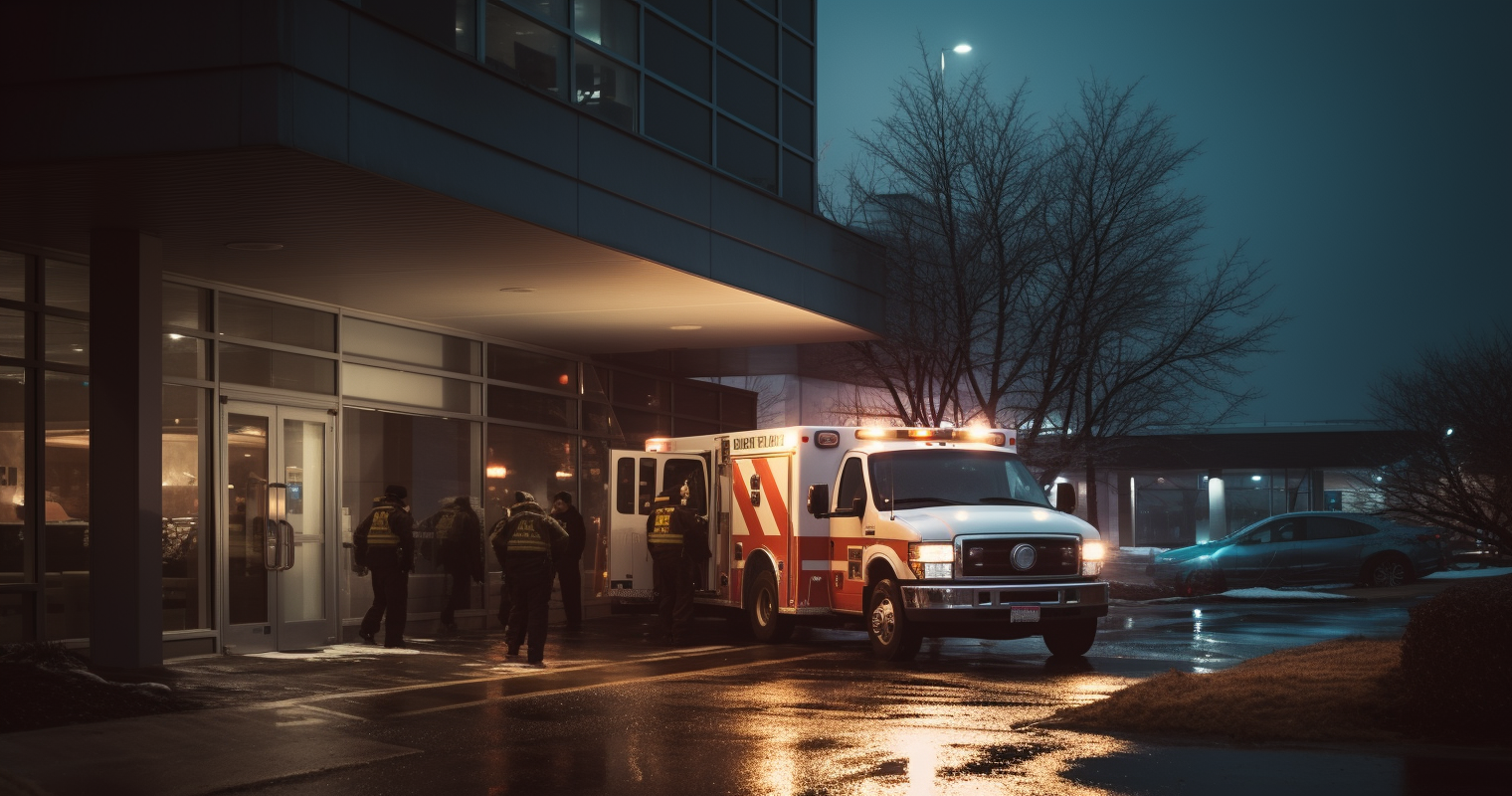
France maintains a highly organised network of emergency services. The pan-European emergency number 112 connects callers to police, fire, or ambulance services from anywhere in the country at no charge. Individual dedicated lines also exist: 15 (medical emergencies/SAMU), 17 (police), and 18 (fire brigade). Emergency care is never refused on grounds of inability to pay upfront, but treatment is not automatically free for tourists or temporary visitors — what you ultimately owe depends on your residency status and whether you hold adequate insurance.
| Item | Details |
|---|---|
| Universal emergency number | 112 (free, 24/7, reaches police, fire, and ambulance; as of 2024) |
| Medical emergency (SAMU) | 15 (free to call, 24/7; as of 2024) |
| Police emergency | 17 (free to call, 24/7; as of 2024) |
| Fire brigade (pompiers) | 18 (free to call, 24/7; also responds to accidents and medical emergencies; as of 2024) |
| Emergency A&E flat rate (without hospitalisation) | €23 patient flat rate (FPU); may be reduced to €9.96 or zero depending on circumstances (as of 2024 — verify with official sources) |
| EHIC coverage | EU/EEA/Swiss nationals with a valid EHIC card receive coverage equivalent to French residents; as of 2024 |
| Schengen visa insurance minimum | €30,000 minimum medical coverage required for Schengen visa holders; as of 2024 |
What is the single emergency number in France, and are there separate numbers for each service?
In any emergency situation in France, the number to dial is 112 — the universal European emergency line that routes your call to the police, the fire service, or SAMU (Service d’Aide Médicale Urgente) according to the nature of the incident. Crucially, you do not need to speak French to use this number: operators are able to assist callers in French and in other languages, meaning tourists and recently arrived expats can access help without a language barrier.
In addition to the universal line, France maintains individual numbers for each emergency service: SAMU for medical emergencies on 15, police on 17, and the fire brigade on 18. A separate number, 114, exists for emergencies involving people who are deaf or hard of hearing, while 196 covers maritime emergencies. All of these lines are free to call around the clock, every day of the year.
Calls placed to 112 are received by either SAMU or the fire brigade and are then routed immediately to the most appropriate service, or managed directly — the teams reachable via 15 and 18 work in close coordination, with overlapping competencies across many emergency scenarios. France’s emergency infrastructure is of a high standard overall, though in remote rural areas services may rely partly on volunteers and response times can be longer than in cities.
From October 2024 onwards, calls placed to you by emergency operations centres in France will appear on your phone as 0800 112 112. This is a legitimate official number — not a scam or sales call — and you can answer with full confidence at no cost. Expats who are new to France may find this detail particularly useful to know in advance.
How do you call for emergency medical assistance in France, and what should you expect?
Emergency medical care in France is coordinated through a network of public organisations, the most central of which is SAMU — the Service d’aide médicale urgente (Urgent Medical Aid Service). There are approximately 100 SAMU centres across the country, one allocated to each département, and all are run by public hospitals.
When you dial the SAMU, the call is first handled by a permanent medical regulation assistant (PARM), whose immediate priorities are to establish the caller’s location and identify the patient. Through a structured set of questions, the PARM assesses the nature and urgency of the situation before deciding whether to pass the call to a regulating doctor or address it directly.
Depending on the circumstances, the SAMU can offer telephone medical advice, dispatch an ambulance, arrange for a GP to visit your home, or send a mobile resuscitation team in the most critical cases. When speaking with SAMU, aim to be clear and concise. Be prepared to provide: your precise address or location — including the floor number and building entry code if relevant — your phone number, the names of the caller and patient, the patient’s age, and a description of their symptoms or condition.
A defining feature of the French approach to emergency medicine is the priority placed on delivering high-quality care at the scene itself. SMUR units — advanced mobile response vehicles operated by SAMU — are staffed by a fully qualified doctor alongside a nurse and/or emergency medical technician. This differs considerably from systems in which on-scene care is primarily delivered by paramedics. If French is not your language, an interpreter can be brought onto your call; always check current language assistance arrangements with official sources when you arrive.
What should you do in a mental health crisis in France?
If you or someone nearby is facing a mental health crisis in France, support is available through both dedicated crisis lines and the general emergency system. Where there is an immediate risk to life, calling 15 (SAMU) or 112 is the right course of action — a qualified doctor is always on duty to determine the most appropriate response, whether that means providing advice remotely or dispatching an emergency team.
France also runs a dedicated suicide prevention and mental health crisis line: 3114 (Numéro National de Prévention du Suicide), staffed by trained professionals and available every hour of every day. Always confirm current operating details at www.3114.fr, as information may be updated.
It is also possible to go directly to a hospital emergency department (les urgences) if you are in crisis. French A&E units are equipped to triage psychiatric emergencies, and the SAMU can coordinate transfers to specialist psychiatric facilities when required. No one facing a genuine life-threatening situation will be turned away for lacking health insurance or valid residency documentation. Language is not a barrier either — when emergency services attend in person, communication tools including voice translation applications are available to help bridge any gap.
Where can you go for emergency medical treatment in France?
State-run public hospitals form the backbone of France’s healthcare system and offer a comprehensive range of services, including emergency care, surgical procedures, and specialist treatment. The emergency department in France is referred to as les urgences. In Paris alone, 38 public hospitals and research centres are managed under a single administrative body (AP-HP), employing approximately 100,000 staff.
Private clinics also play a role in French healthcare, frequently focusing on particular specialisms or offering shorter waiting times. However, it is important to be aware that private facilities may charge above the nationally regulated rate, and not all of these additional costs will be reimbursed through the public system. Some establishments set fees that exceed the statutory tariff and fall outside Health Insurance Scheme coverage, and a small number of private clinics operate without state regulation.
For situations that are urgent but not life-threatening, out-of-hours GP services provide an alternative to hospital A&E. Maisons Médicales de Garde (MMGs) offer round-the-clock access to general practitioners and other health professionals in various parts of the country. SOS Médecins is a private service for less serious medical needs and home visits, operating primarily in larger urban areas. To find the emergency facility nearest to you, use the official service-public.fr directory or call 15 for guidance.
Is emergency medical treatment free in France, or is there a charge?
The answer varies considerably depending on your circumstances. France runs a hybrid universal healthcare model that blends public and private provision, with costs shared between the state and individual or private insurance. Residents contribute to mandatory health insurance through payroll deductions or taxation, which entitles them to substantial reimbursement of medical costs.
For a visit to the emergency department that does not result in hospitalisation, a patient emergency flat rate (FPU) of €23 applies (as of 2024). This can be reduced to €9.96 or waived entirely depending on your personal situation. Always consult the official CLEISS website or your local CPAM (Caisse Primaire d’Assurance Maladie) for the latest figures, as charges are subject to periodic revision.
Once you have been resident in France for three months and enrolled in the French healthcare system, fees paid to conventionné doctors are reimbursed at 70% of the standard Sécurité Sociale rate. Hospital care is reimbursed at 80% for the first month of a stay, rising to 100% thereafter, minus a fixed daily charge. Public reimbursement does not cover the full cost of every consultation — a GP visit, for example, is typically reimbursed at around 70%. Where a doctor charges above the regulated fee (as is common under “secteur 2” or fully private practice), the patient covers the difference.
Foreign nationals cannot receive free medical treatment in France unless they are residing in the country as irregular migrants, and even then only for specific procedures. Tourists and short-term visitors who hold neither an EHIC nor a bilateral coverage agreement must pay out of pocket and seek reimbursement through their own travel insurance. Emergency treatment is never withheld — but a bill may arrive afterwards.
Do expats need travel or health insurance, and what happens if they turn up without insurance or without the ability to pay?
France’s healthcare system provides universal coverage for all citizens, irrespective of age, financial situation, or pre-existing conditions. Foreign nationals living in France are eligible to join this system after three months of residence. During the period before eligibility is established, comprehensive private health insurance is strongly advised.
If you require a Schengen visa to enter France, your travel insurance policy must provide a minimum of €30,000 in medical coverage (as of 2024). When selecting a policy, ensure it covers emergency medical treatment, hospitalisation, repatriation, trip cancellation, and round-the-clock global assistance. Confirm current visa insurance requirements directly with the French consulate or embassy in your home country before you travel.
If you present at a French emergency department without insurance or without the means to pay, you will still receive care — France does not deny treatment in genuine emergencies. However, if you are a national of a country that holds no special social insurance arrangement with France, the French compulsory health insurance scheme offers you no protection, and you will be responsible for settling the full cost of your treatment. A bill is typically issued after care has been delivered, and in some cases hospitals may request a financial guarantee or deposit for non-urgent planned procedures. Residents who are already enrolled in the French system can take out a mutuelle (supplementary private health insurance) to cover the portion of costs that state reimbursement does not meet.
Are there bilateral health agreements entitling some foreign nationals to reduced-cost or free emergency treatment?
If you are enrolled in the social security scheme of an EU Member State, Iceland, Liechtenstein, Norway, or Switzerland, you are entitled to coverage for medically necessary care during a temporary visit to France. By showing your EHIC (European Health Insurance Card) to French healthcare providers, you will be treated under the same terms that apply to French scheme members.
The EHIC is valid across the European Economic Area and Switzerland, thanks to reciprocal arrangements between these countries that allow card holders to access state healthcare when temporarily present in another member country. In practice, you will often need to pay your healthcare costs upfront and then submit a reimbursement claim to the French health insurance fund. If you did not arrange reimbursement during your stay, you can send your invoices to your home health insurance fund upon returning to your country.
Bilateral social security agreements between France and countries outside the EU/EEA also exist. These include (but are not limited to) agreements with Canada, Tunisia, Morocco, Algeria, and several others. The scope of each agreement differs substantially — some are limited to emergency care, while others confer broader healthcare entitlements. Always verify the current terms of any relevant bilateral agreement through the official CLEISS website (cleiss.fr) or through your home country’s social security authority before you travel, as agreements and their conditions can change over time.
How does the French emergency healthcare system compare to systems expats may be familiar with?
France is consistently ranked among the leading healthcare systems worldwide, blending private medical practice with public reimbursement in a model that sets it apart from both fully public systems and entirely market-driven ones. This hybrid approach differs from the NHS, where most care is free at the point of use for residents, and equally from systems where patients are expected to pay privately for everything upfront.
Under France’s universal model, patients have freedom to select their own doctors and hospitals, and fees are fixed for each category of service within the public system. Patients contribute a co-payment for each type of care received. One feature that particularly distinguishes France from many other countries is the medical philosophy underpinning its emergency response: rather than relying primarily on paramedics to stabilise patients for hospital transport, France dispatches SMUR units staffed by a qualified physician alongside a nurse and/or emergency medical technician, bringing advanced clinical care to the scene itself.
For expats navigating this system in practice: French hospitals will treat you in an emergency regardless of insurance, but the cost is not automatically absorbed by the state as it would be under the NHS for UK residents. France also differs from systems that require full upfront payment followed by later reimbursement — French hospitals generally bill the relevant insurance scheme directly where one exists, leaving the patient liable only for the outstanding co-payment element.
What emergency services exist beyond medical — how do police and fire services work in France?
French law enforcement is divided between two main national forces: the Police Nationale and the Gendarmerie Nationale. As a broad rule, the Police Nationale is responsible for towns and cities, while the Gendarmerie operates in rural and semi-rural areas. Dialling 17 puts you through to the appropriate emergency policing service for your location, whether that is the Police Nationale or the Gendarmerie Nationale.
The Police Nationale is a civilian law enforcement agency under the authority of the Ministry of the Interior, responsible for security in urban areas, including patrols, traffic management, identity checks, and criminal investigations. A second tier of local policing, the police municipale, operates under the control of individual town halls with a more restricted jurisdiction — handling routine local enforcement, minor traffic matters, domestic offences, and lost property within their district.
The French fire service, les sapeurs-pompiers, regularly attends medical emergencies in addition to fires — particularly road traffic collisions and accidents in the home. In many parts of France, especially rural areas, the fire brigade is typically the first emergency service to arrive at the scene of a road injury or domestic incident. France’s fire brigades comprise professional brigades (SPP), health and medical units (SSSM), and volunteer brigades (SVP). Newcomers should be aware of one distinctive practice: on the first Wednesday of every month at noon, France conducts a nationwide test of its emergency warning sirens. The test consists of three sequences, each lasting 1 minute 41 seconds, with a five-second pause between each. This is entirely routine — it does not signal a real emergency.
Are there country-specific emergency risks in France, and what alert systems exist?
Expats living in or visiting France should be aware of a range of natural and man-made hazards. These include flooding — especially in the Loire and Rhône valleys and across the south — severe heatwaves that have claimed significant numbers of lives in recent decades, winter storms and avalanches in the Alps and Pyrenees, wildfires concentrated in the south and the Provence-Alpes-Côte d’Azur region, and periodic seismic activity in certain zones. France’s extensive nuclear power infrastructure also means that occasional industrial incidents form part of the country’s civil protection planning.
If emergency sirens sound outside of a scheduled test, tune in to France Inter or France Info radio stations for official guidance on the nature of the incident. The French government also operates FR-Alert, a public warning system that pushes geolocalised notifications to mobile phones in areas affected by serious incidents. FR-Alert requires no advance registration — any phone with location services activated will automatically receive alerts within the relevant zone. Further information is available at info.gouv.fr.
For weather-related hazards, Météo-France (meteofrance.com) publishes colour-coded vigilance warnings that cover the full range of meteorological risks. The government’s risk information portal, gouvernement.fr/risques, provides region-by-region guidance on both natural and industrial hazards. Expats are also encouraged to consult their own government’s travel advisory service regularly, as these are kept up to date and may contain country-specific guidance for French residents.
What should expats do to prepare for emergencies before they arise?
- Register with your embassy or consulate. Most governments offer a citizen registration scheme — such as the FCDO’s LOCATE service, the US State Department’s STEP programme, or their equivalents — enabling your home country to contact you in the event of a national emergency, natural disaster, or civil unrest. Visit your government’s embassy in France website and register before or shortly after your arrival.
- Save key emergency numbers. Store 15 (SAMU), 17 (police), 18 (fire), 112 (universal), and 114 (deaf/hard of hearing) in your phone. When you call, be ready to give your name, phone number, exact location, and a clear description of the emergency.
- Obtain appropriate health insurance. If your home country has no social insurance agreement with France, you will not be covered by French compulsory health insurance. Take out private health insurance sufficient to cover medical costs and repatriation before you arrive.
- Carry your EHIC or equivalent card. EU, EEA, and Swiss nationals should keep their EHIC on their person. If the card is lost, forgotten, or stolen, apply for a Provisional Replacement Certificate (PRC) — it carries a shorter validity period but functions identically.
- Locate your nearest hospital urgences. Before an emergency happens, find out where the nearest public hospital accident and emergency department is relative to your home and place of work. SAMU can also point you to the nearest suitable facility when you call 15.
- Keep a pharmacy contact handy. Even when most pharmacies are closed — on Sundays and public holidays, for instance — a pharmacie de garde (on-duty pharmacy) in every town or district remains open for urgent prescriptions. Its address is displayed on the door of all other pharmacies in the area and published in local newspapers. You can also call 3237 to be directed to the nearest open pharmacy.
- Understand the FR-Alert system. Make sure location services are enabled on your mobile phone so that FR-Alert geolocalised emergency notifications reach you automatically during serious incidents — no prior registration is needed.
- Learn a few key phrases in French. Even a handful of basic expressions — “C’est une urgence” (it’s an emergency), “J’ai besoin d’une ambulance” (I need an ambulance), and your address — can make a crucial difference in the opening moments of an emergency call.
Where can expats get official and up-to-date emergency information for France?
The resources below represent the most authoritative starting points for emergency and healthcare information in France. Fees, procedures, and entitlements can change, so always consult these sources directly for the latest details:
- Service-Public.fr — service-public.fr: The French government’s central administrative information portal, covering emergency numbers, healthcare entitlements, and residency procedures.
- CLEISS (Centre des Liaisons Européennes et Internationales de Sécurité Sociale) — cleiss.fr: The official resource for information on bilateral health and social security agreements affecting visitors and expats in France.
- Ameli.fr (Assurance Maladie) — ameli.fr: The official website of the French national health insurance fund, covering reimbursement rates, EHIC procedures, and residents’ healthcare rights.
- Info.gouv.fr — info.gouv.fr: The French government’s official portal for crisis management and emergency preparedness, including guidance on natural risks and civil protection measures.
- Météo-France — meteofrance.com: Official weather forecasting and hazard warnings, including the colour-coded Vigilance system used to alert the public to meteorological risks.
- Your home country’s embassy in France: For citizen registration schemes, crisis notifications, and consular support. Embassy websites can be found by searching for your country’s name together with “embassy France”.
- Ministère de l’Intérieur (Ministry of the Interior) — interieur.gouv.fr: The official source for information on the Police Nationale, the Gendarmerie, and national security matters.
Frequently asked questions
What is the best single number to call in any emergency in France?
The most reliable single number in any emergency is 112, the universal European emergency line that connects you to the police, fire service, or SAMU according to the nature of your situation. It is free to call, available at all hours, and operators can assist in multiple languages. You may also dial 15 (medical), 17 (police), or 18 (fire) to reach each service directly.
Will I be turned away from a French hospital if I don’t have insurance?
No. In a genuine life-threatening emergency, no hospital in France will refuse to treat you on the grounds of missing insurance or the absence of valid residency documents. However, if you are a visitor without an EHIC or bilateral coverage, a bill will be raised following your treatment, and you will need to pay or recover costs through your own private travel insurance.
What is the EHIC and do I need one in France?
The EHIC (European Health Insurance Card) is available to nationals of EU Member States, Iceland, Liechtenstein, Norway, and Switzerland. Presenting it to French healthcare providers means you will be treated on the same terms as French scheme members. It does not eliminate all costs — certain co-payments may still apply — but it substantially limits your financial exposure. Nationals of other countries should verify whether a bilateral agreement applies by consulting the CLEISS website at cleiss.fr.
Is calling an ambulance (SAMU) in France free?
Dialling 15 to reach the SAMU costs nothing. However, that refers only to the phone call itself. Once medical care or ambulance transport has been provided, charges may arise depending on your circumstances. A qualified doctor will assess whether an ambulance is medically warranted — if transport is arranged in the absence of a medical recommendation, you may be liable for the cost of the journey. Consult Ameli.fr or your insurer for the most current information on applicable charges.
Can I go directly to a hospital emergency department in France without calling SAMU first?
Yes, you can make your own way to the nearest hospital urgences without calling first. That said, for serious or potentially life-threatening conditions, it is advisable to call 15 or 112 beforehand — SAMU can evaluate your situation remotely, dispatch the appropriate help to your location, and direct you to the most suitable facility rather than simply the closest one.
What happens if I don’t speak French when I call for help?
Language is not a barrier to accessing emergency services in France. For the universal number 112, operators are equipped to assist callers in multiple languages. If you do not speak French, an interpreter can be brought onto your call. Knowing your address or location in French is still valuable, as it is typically the most critical piece of information in the opening moments of an emergency call.
Is there a dedicated mental health crisis line in France?
Yes. France operates a national suicide prevention and mental health crisis helpline on 3114, available around the clock every day of the year and staffed by trained mental health professionals. For situations where there is an immediate physical risk to life, calling 15 (SAMU) or 112 is the appropriate course of action. You may also go directly to any hospital urgences department during a mental health crisis. Verify current details for 3114 at www.3114.fr.
What are the main natural disaster risks in France and how will I be warned?
The principal risks include flooding, extreme heatwaves, winter storms, avalanches in mountainous areas, and wildfires — particularly in the south of France. Météo-France issues colour-coded weather vigilance warnings, and the FR-Alert system delivers automatic geolocalised notifications to mobile phones during serious incidents with no need to register in advance. If an unscheduled emergency siren sounds, listen to France Inter or France Info radio for official guidance. The civil protection portal at info.gouv.fr provides comprehensive guidance on risks across all regions.