
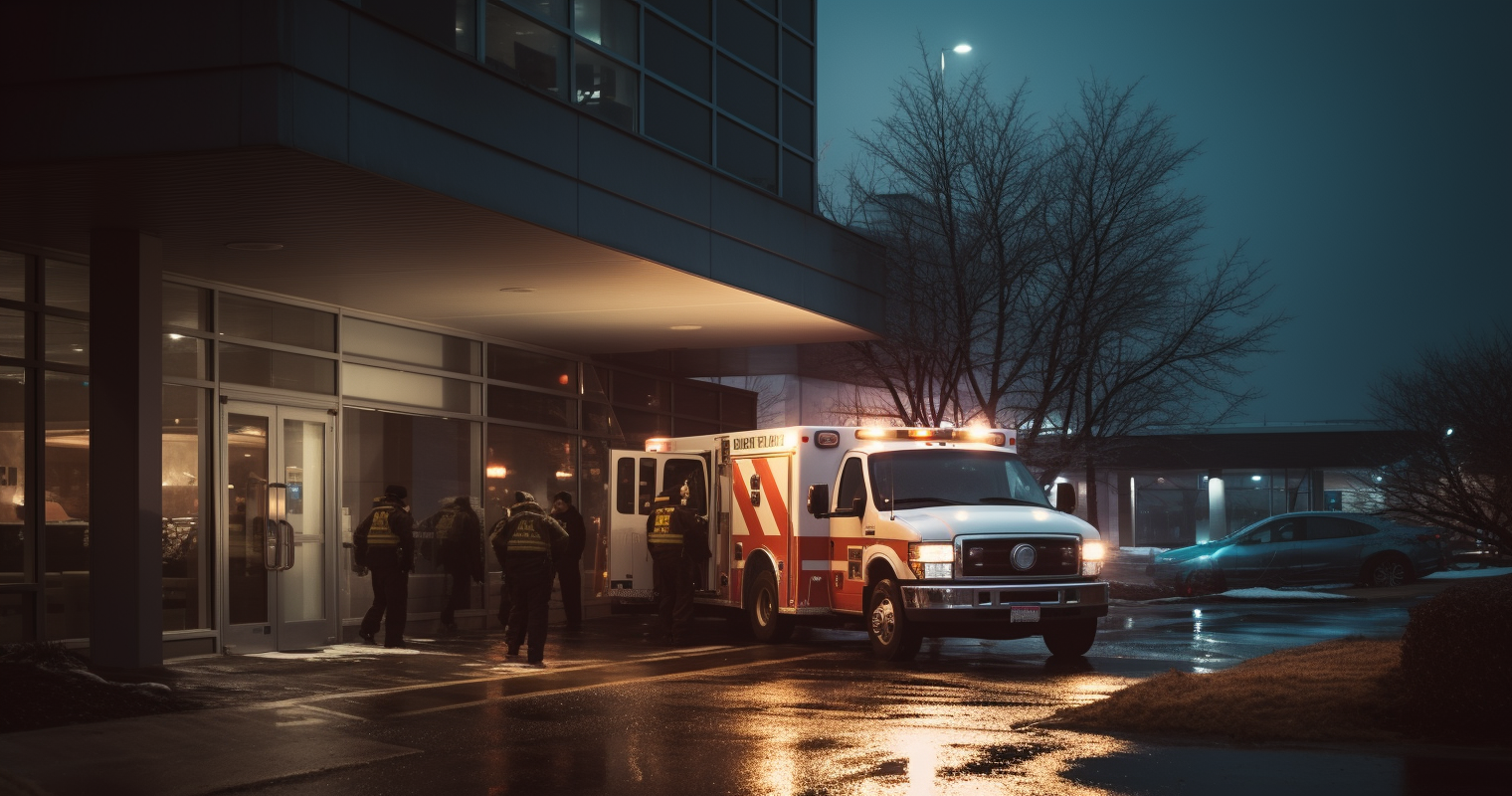
Germany operates two principal emergency numbers: 112 for fire and ambulance services, and 110 for the police. Both can be dialled free of charge from any telephone, including handsets without a SIM card. Hospitals are obliged to treat everyone in an emergency irrespective of insurance, but residents covered by statutory health insurance (GKV) typically pay little or nothing, whereas uninsured visitors may receive a direct bill running into hundreds of euros.
| Item | Details |
|---|---|
| Medical/fire emergency number | 112 (free from any phone, including without SIM card, as of 2025) |
| Police emergency number | 110 (free from any phone, as of 2025) |
| Non-emergency medical on-call | 116 117 (out-of-hours GP service) |
| Crisis/suicide helpline | Telefonseelsorge: 0800 111 0 111 or 0800 111 0 222 (free, 24/7) |
| Emergency treatment for uninsured visitors | Treatment provided; billed directly — ambulance approx. €300–€600; hospital costs can reach thousands (as of 2024; verify with official sources) |
| EU/EEA visitors | EHIC/GHIC card gives access to public healthcare on same basis as residents |
What is the single emergency number in Germany, and are there separate numbers for police, fire, and ambulance?
Germany uses two distinct emergency numbers — 112 and 110 — rather than a single unified line for all services. Dialling 112 connects you to the fire brigade and ambulance services, but not to the police. This is a notable difference from countries such as the United States, where 911 handles all emergency services, or the United Kingdom, where 999 serves the same combined purpose.
If you need the police urgently in Germany, you must dial 110. This sets Germany apart from many other EU countries where 112 alone is used for all three emergency services. It is worth committing both numbers to memory well before you might ever need them.
Both numbers are free to call and function from any telephone, even without a SIM card installed. As a rule of thumb, 112 is the number for medical crises or immediate threats to life and limb, while 110 is the number for non-medical emergencies, criminal incidents, and serious road accidents where police attendance is required to secure the scene.
Because emergency services in Germany are organised at the state level, each of the country’s 16 federal states manages its own local emergency response. Nevertheless, both 112 and 110 automatically route your call to the relevant local dispatch centre, wherever in Germany you happen to be.
There are no nationwide emergency contact numbers specifically designed for people with hearing impairments. In certain cities, regional emergency lines can be reached via WhatsApp or SMS. Voice-free emergency calls can also be made through private providers such as Handhelp, Tess, MeinNotruf, and InstantHelp. You should consult local resources for your city or federal state to find out which accessible emergency contacts are available to you.
How do you call for emergency medical assistance in Germany, and what should you expect?
When you call 112, begin by stating your location — give the full street address, the city, and any recognisable landmarks nearby. Then describe what has happened, how many people are involved, and what injuries or symptoms are present. Dispatchers are trained to guide callers through the conversation, so respond clearly to their questions and remain on the line until they confirm you can end the call.
If you are uncertain of your precise location, mention nearby street names, prominent buildings, or read out your phone’s GPS coordinates. Should you be unable to describe your whereabouts at all, emergency services may attempt to pinpoint you using your mobile phone’s GPS signal.
Germany’s emergency system is well-equipped to assist callers who do not speak German. English-language support is always available at the 112 dispatch centre. Do not let a language barrier discourage you from calling — operators regularly handle calls from people with limited German.
For medical situations that are urgent but not immediately life-threatening — such as a persistent high fever, an ear infection, or a condition that cannot wait until your regular GP is available — the number to call is 116 117. This is Germany’s out-of-hours on-call medical line for non-critical situations outside normal surgery hours, comparable in purpose to the NHS 111 service in the UK or nurse-on-call lines in other countries. Reserve 112 for genuine life-threatening emergencies, which include: chest pain or suspected heart attack, serious injuries or accidents, breathing difficulties or choking, loss of consciousness, suspected stroke, severe allergic reactions such as anaphylaxis, and uncontrolled bleeding.
What should you do in a mental health crisis in Germany?
Germany provides a variety of options for those experiencing a mental health crisis, ranging from telephone support lines through to hospital emergency departments. Where there is an immediate risk to life — whether your own or someone else’s — call 112 without delay. When an ambulance is dispatched in Germany, emergency physicians travel with the crew. These doctors are authorised to administer medication on the scene and, where necessary, can arrange compulsory admission to a psychiatric facility.
If you are in acute need of psychiatric hospital care — for instance, due to active suicidal thoughts — you can call 112 for emergency medical services, dial 110 for police assistance, or proceed directly to the emergency department (Notaufnahme) of the nearest general hospital or psychiatric facility.
For telephone crisis support in situations that are distressing but not immediately life-threatening, Germany has an established helpline network. Telefonseelsorge is reachable on 0800 111 0 111 or 0800 111 0 222. This is a free, anonymous, around-the-clock crisis line. While it primarily operates in German, English-speaking volunteers are available in many larger cities. Support is also accessible via email and online chat at telefonseelsorge.de.
The Berlin Crisis Service (Berliner Krisendienst) offers prompt professional support for psychosocial crises and acute psychiatric emergencies. Its service is free of charge and operates every day of the year, at any hour. Help is available by phone, in person, and — in serious situations — on location at nine different sites across Berlin, with no appointment needed. Callers can also remain anonymous if they wish. Other German cities operate comparable regional crisis services; check locally to find your nearest equivalent.
Mental health treatment, including crisis intervention, is covered by both statutory public health insurance (GKV) and private health insurance (PKV), encompassing therapy, hospitalisation, and medication. If you are admitted to hospital for a mental health crisis, your costs will be met by your insurer. Insured patients may be required to contribute a co-payment of around €10 per day for up to 28 days per year (as of 2024 — confirm current co-payment rules with your insurer or official sources).
Where can you go for emergency medical treatment in Germany?
Most German hospitals have a dedicated emergency department (Notaufnahme) capable of handling urgent and serious cases. To locate one near you, consult the Deutsches Krankenhausverzeichnis (DKV) — Germany’s official hospital directory, searchable online by location and medical specialty — or ask your GP for a recommendation.
When in doubt about how serious a situation is, call an ambulance. Paramedics can begin treatment during transit and will alert the receiving hospital in advance of your arrival, which is frequently the most efficient course of action in a genuine emergency.
Many towns and cities also have walk-in urgent care centres known as Notdienst (emergency medical services), which are open outside regular business hours, including weekends and public holidays. These are well suited to urgent but non-life-threatening problems and often have shorter waiting times than hospital emergency departments during busy periods.
Private clinics may appeal to those seeking shorter queues, access to specialists, or multilingual staff for non-emergency situations. However, private care carries a higher upfront cost and you would typically be expected to pay at the time of treatment and seek reimbursement from your insurer afterwards. In a genuine emergency, a public hospital emergency department should always be your first destination.
If you need a pharmacy outside normal opening hours, the directories at Apotheken.de and Aponet.de list on-call pharmacies by location. Both are official platforms — simply enter your postcode and city, or share your current location, to find the nearest one that is open.
Is emergency medical treatment free in Germany, or is there a charge?
The answer depends largely on your insurance status, and understanding the distinction in advance is important. German law requires hospitals to provide emergency treatment to everyone, so you will not be turned away in a life-threatening situation. However, receiving care does not automatically mean you will not receive a bill.
For residents enrolled in Germany’s statutory public health insurance (Gesetzliche Krankenversicherung, or GKV): emergency hospital treatment is generally free of charge. A small fee — around €10 — may apply for an ambulance journey unless the situation is classified as life-threatening. While initial emergency care is covered, further inpatient treatment or specialist services following admission may carry some cost depending on your specific plan (as of 2024 — verify current co-payment rules with your insurer or official sources).
For visitors and tourists without German health insurance: all services will be charged directly to you. These costs can be substantial — an ambulance ride typically comes to around €300–€600, and an emergency room visit may amount to anywhere from several hundred to several thousand euros depending on the nature of the treatment required (as of 2024 — consult official sources for current figures). Public hospitals will provide care but may require upfront payment; you can subsequently seek reimbursement from your travel insurer.
Healthcare charges in Germany are tightly regulated, with fee schedules set at the national level by official bodies. This means the cost of treatment is consistent regardless of nationality — there is no foreign visitor surcharge. The difference lies not in the price, but in whether an insurer covers it or whether you must pay out of pocket.
Do expats need travel or health insurance to access emergency care in Germany?
Health insurance is a legal requirement for everyone residing in Germany, including foreign nationals. If you are living in the country, you must be enrolled in either the statutory public system (GKV) or an approved private insurance plan (PKV). This obligation is not discretionary, and retroactively filling a gap in coverage can be both costly and administratively complicated.
Anyone without statutory health insurance is classified as a Privatpatient — a private patient. In practice, this means they settle their medical bills personally and then seek reimbursement from their private insurer. Non-EU visitors to Germany are treated on the same basis: the treating doctor or hospital issues an invoice, which the patient pays and then submits to their insurance company for reimbursement.
If you present at an emergency department with neither insurance nor funds, you will still receive treatment — hospitals are legally prohibited from refusing emergency care. However, a bill will follow, and without insurance, the entire cost falls to you personally. For anything beyond a very minor incident, this can result in a considerable financial burden. Anyone spending time in Germany who is not already covered by GKV or PKV is strongly advised to take out comprehensive travel or international health insurance before arriving.
Travel health insurance designed for visitors to Germany typically covers unexpected medical expenses, including emergency treatment, hospitalisation, and the cost of prescribed medications. Such policies may also include provisions for emergency evacuation or repatriation to your home country if required.
Are there bilateral health agreements entitling some foreign nationals to reduced-cost treatment?
The most significant arrangement governing healthcare access for foreign nationals in Germany is the European Health Insurance Card (EHIC) scheme. Temporary visitors from EU or EEA countries, or from Switzerland, can present their EHIC to access emergency medical care in Germany. Showing the card signals to the provider that you hold statutory health insurance, with the costs to be recovered from your home country’s insurer.
EU residents can use their EHIC, while UK residents may use the Global Health Insurance Card (GHIC), to obtain medical care through Germany’s public healthcare system on the same basis as locally insured residents. Neither card guarantees that all treatment will be entirely free of charge — co-payments may still apply for GP visits or hospital stays — but they do provide significant protection against out-of-pocket costs.
Citizens of non-EU countries should note that neither the EHIC nor the GHIC applies to them, making comprehensive travel health insurance an essential precaution. Germany does not maintain an extensive network of separate bilateral healthcare reciprocity agreements outside the EU/EEA framework comparable to, for example, arrangements between certain Commonwealth nations. If you are uncertain whether your home country has any specific agreement with Germany, contact your national health authority or the German Federal Ministry of Health (Bundesministerium für Gesundheit) before travelling. Always verify the current status of any such arrangements with official sources, as they are subject to change.
How does Germany’s emergency healthcare system compare to systems expats may be familiar with?
Germany’s healthcare model, which dates back to the 1880s, is built on a dual public-private structure. This makes it distinctly different from a purely tax-funded national health service such as the UK’s NHS, where treatment is free at the point of use for residents and financed through general taxation. It also differs from systems in which individuals bear primary responsibility for securing their own insurance in a largely unregulated market.
Around 90% of residents in Germany are covered by public health insurance. GKV premiums are income-based and split between employer and employee — a model with clear similarities to the social insurance systems used in France, the Netherlands, and a number of other continental European countries. Unlike some systems where emergency treatment requires advance authorisation from an insurer, German hospitals are legally bound to treat emergency patients first and deal with payment questions afterwards.
Expats arriving from countries with fully public healthcare systems will find that the main conceptual shift is funding through mandatory insurance contributions rather than general taxation. For those accustomed to markets where patients may face large, unpredictable medical bills due to inadequate or absent insurance, Germany’s tightly regulated, universally insured model offers considerably greater financial predictability. Treatment fees are set nationally by official bodies, which means the kind of extreme and variable billing that can arise in less regulated healthcare markets is not a feature of the German system.
What emergency services exist beyond medical — how do police and fire services work in Germany?
Day-to-day emergency policing in Germany is handled by the state police forces (Landespolizei). They are sometimes supported by the federal police (Bundespolizei or BPOL) during major disturbances or complex national emergencies. The federal police encompasses several specialist divisions, including general law enforcement, border control, railway policing, aviation security, and public order units.
In an emergency involving the police, call 110 from any telephone. This routes you directly to the nearest police operations centre. For non-urgent matters — reporting a minor theft, for example — you can instead call 0800 6 888 000.
The fire brigade is reached by calling 112, the main emergency number. Germany’s fire service advises people to call regardless of how serious a fire appears, even if you believe you could handle it yourself. Beyond fire incidents, the Feuerwehr also responds to gas leaks, flooding, road accidents, and other hazardous situations — it is by no means limited to fire-related calls.
One useful tip for drivers: if you are involved in a breakdown or accident on a major road, including the Autobahn, switch on your hazard lights immediately and pull as far to the side of the road as possible. Place your warning triangle behind the vehicle. If you have no phone with you, orange emergency call boxes are positioned at intervals along major roads; if you cannot spot one, look for small roadside posts bearing arrows pointing towards the nearest one.
Are there country-specific emergency risks in Germany, and what official alert systems exist?
Germany is a politically stable, well-administered country with low levels of civil unrest and no endemic tropical diseases of concern to the vast majority of visitors or residents. That said, several natural and environmental hazards merit attention, and Germany has built a sophisticated public alert infrastructure to keep residents informed.
The most significant natural disaster risk in Germany is flooding, particularly in and around the major river valleys of the Rhine, Moselle, Elbe, and their tributaries. Severe flood events have caused substantial loss of life and property damage in recent decades. Flash flooding following extreme rainfall can occur with little warning. Germany’s Federal Office of Civil Protection and Disaster Assistance (Bundesamt für Bevölkerungsschutz und Katastrophenhilfe, or BBK) is the authoritative national body for civil protection guidance and public preparedness information; their website at bbk.bund.de is the primary resource for hazard-specific advice and warnings.
Germany’s NINA warning app (Notfall-Informations- und Nachrichten-App des Bundes), developed by the BBK, pushes emergency alerts — covering severe weather, flooding, industrial accidents, and civil protection events — directly to users’ smartphones. All expats living in Germany are strongly encouraged to download this free app upon arrival. Alerts are issued primarily in German, though some notifications may appear in additional languages depending on your device settings.
In 2020, Germany restored a nationwide network of sirens, recognising that digital alerts alone may not reach all residents in a major emergency. Germany also participates in the EU-wide Cell Broadcast system, which transmits emergency messages to every mobile phone present in an affected geographic area without requiring any prior registration or app download. Extreme weather events — including summer heatwaves, winter storms, and heavy freezing fog — can develop rapidly, and current warnings are published by the German Weather Service (Deutscher Wetterdienst, DWD) at dwd.de, both online and through their app. Always check official sources for the most current alert procedures, as these systems continue to be updated.
What should expats do to prepare for emergencies before they arise in Germany?
- Register with your home country’s embassy or consulate. Most countries provide a voluntary registration service — the US operates the Smart Traveler Enrollment Program (STEP) and the UK offers registration through the FCDO — enabling your government to reach you in the event of a natural disaster, civil emergency, or other crisis. Visit your country’s embassy website in Germany for details on how to sign up.
- Enrol in Germany’s mandatory health insurance. Health insurance is legally required for all residents, including non-German nationals. Arrange your GKV or PKV coverage before arriving or immediately on arrival — do not allow any gap in cover to develop.
- Download the NINA warning app. This free app from the BBK delivers push notifications for major emergencies directly to your phone. It is available for both iOS and Android — search for “NINA Warn-App” in your app store.
- Identify your nearest hospital emergency department (Notaufnahme). Once you have settled in Germany, find out which hospital is closest to your home. Store its address and telephone number somewhere easily accessible.
- Store key emergency numbers in your phone. Save 112 (ambulance and fire), 110 (police), and 116 117 (out-of-hours medical service). Also store the Telefonseelsorge crisis line (0800 111 0 111) and your insurer’s emergency helpline number.
- Know what your insurance covers. Familiarise yourself with the specifics of your GKV or PKV policy — particularly what is covered for ambulance transport, hospital admission, and repatriation. Carry your health insurance card (Gesundheitskarte) with you at all times.
- Complete your registration at the local residents’ office (Einwohnermeldeamt). Anmeldung — formally registering your address with local authorities — is a legal obligation in Germany. It also ensures that official communications, including emergency notifications, can be delivered to you.
- Assemble a basic emergency kit. The BBK recommends that households maintain a several-day supply of drinking water, non-perishable food, essential medications, a torch, spare batteries, a battery-powered radio, and copies of important documents. Consult bbk.bund.de for their current recommended preparedness checklist.
Where can expats get official and up-to-date emergency information for Germany?
The principal official source for emergency preparedness and civil protection is the Federal Office of Civil Protection and Disaster Assistance (BBK), accessible at bbk.bund.de. The site covers emergency planning guidance, information about the NINA app, and detailed advice on specific hazard scenarios including flooding and severe weather events.
For information about the health system, the Federal Ministry of Health (Bundesministerium für Gesundheit) publishes official guidance at bundesgesundheitsministerium.de, and broader public health information is available at gesund.bund.de.
Up-to-date severe weather warnings are published by the German Weather Service (Deutscher Wetterdienst) at dwd.de. Information about the European Health Insurance Card is administered at a national level — EU residents should check with their national health insurer, while UK residents should refer to the NHS website for GHIC guidance.
For travel safety advice tailored to your nationality, consult your home country’s foreign ministry travel advisory service — for example, the UK’s Foreign, Commonwealth & Development Office (FCDO), the US State Department, or the relevant equivalent body. These services publish regularly updated assessments of safety conditions, local laws, and emergency contact information. Your home country’s embassy in Berlin can also provide consular emergency contacts and details of registration services. As of 2025, the US Embassy’s emergency line for American citizens in Germany is listed on their official website at de.usembassy.gov.
Frequently asked questions
Can I dial 911 in Germany if I have an emergency?
No — 911 is the emergency number used in the United States, not Germany. The correct emergency numbers in Germany are 112 for ambulance and fire services, and 110 for the police. While some smartphones may informally redirect a 911 call to local emergency services, this is unreliable and should never be counted on. Make a point of memorising 112 and 110 before you need them.
Do emergency dispatchers in Germany speak languages other than German?
Yes. Germany’s 112 emergency dispatch centres always have someone available who can assist in English. A language barrier should not prevent you from calling — operators are accustomed to handling calls from people who speak little or no German, and getting help to you quickly is the priority.
What is 116 117 and when should I use it?
116 117 is Germany’s out-of-hours on-call medical line for situations that are urgent but not life-threatening. Use it when you need a doctor outside normal surgery hours — for example, if you develop a high fever during the night or have a painful ear infection at the weekend. Always call 112 for genuine emergencies.
Will I definitely be treated at a German hospital if I have no insurance?
German hospitals are legally required to provide emergency treatment regardless of insurance status, so you will receive care in a life-threatening situation. However, without insurance you will be billed directly for all services. Costs can be significant — ambulance journeys typically run to around €300–€600, and emergency room treatment can amount to hundreds or even thousands of euros depending on what is required (as of 2024; verify with official sources). Comprehensive health or travel insurance is essential for anyone without GKV or PKV coverage.
Does the European Health Insurance Card (EHIC) cover all my medical costs in Germany?
The EHIC does not guarantee that all treatment will be free of charge. It provides access to Germany’s public healthcare system on the same terms as insured residents, which means co-payments may still apply for certain GP visits or hospital stays. It is not a substitute for comprehensive travel insurance, and it does not cover repatriation or treatment that is not medically necessary.
Is there a dedicated mental health emergency line in Germany?
There is no single nationwide psychiatric emergency number, but several important resources exist. Telefonseelsorge operates two free, anonymous, 24/7 crisis lines: 0800 111 0 111 and 0800 111 0 222. For a life-threatening mental health emergency, call 112 or go directly to the nearest hospital emergency department (Notaufnahme). In Berlin, the Berliner Krisendienst provides prompt, professional, free-of-charge support for acute psychiatric and psychosocial emergencies, available every day of the year around the clock. Other German cities have comparable regional services.
How do I find an emergency pharmacy in Germany outside normal hours?
The directories at Apotheken.de and Aponet.de both list on-call pharmacies open outside regular hours. These are official platforms — enter your postcode and city, or share your current location, to find the nearest pharmacy that is currently open.
What is the NINA app and should I download it?
NINA (Notfall-Informations- und Nachrichten-App) is the official emergency alert app developed by Germany’s Federal Office of Civil Protection and Disaster Assistance (BBK). It delivers push notifications to your smartphone for major incidents including flooding, extreme weather events, and civil protection emergencies. The app is free, compatible with iOS and Android, and strongly recommended for all expats living in Germany. Search for “NINA Warn-App” in your app store and visit bbk.bund.de for further information.