
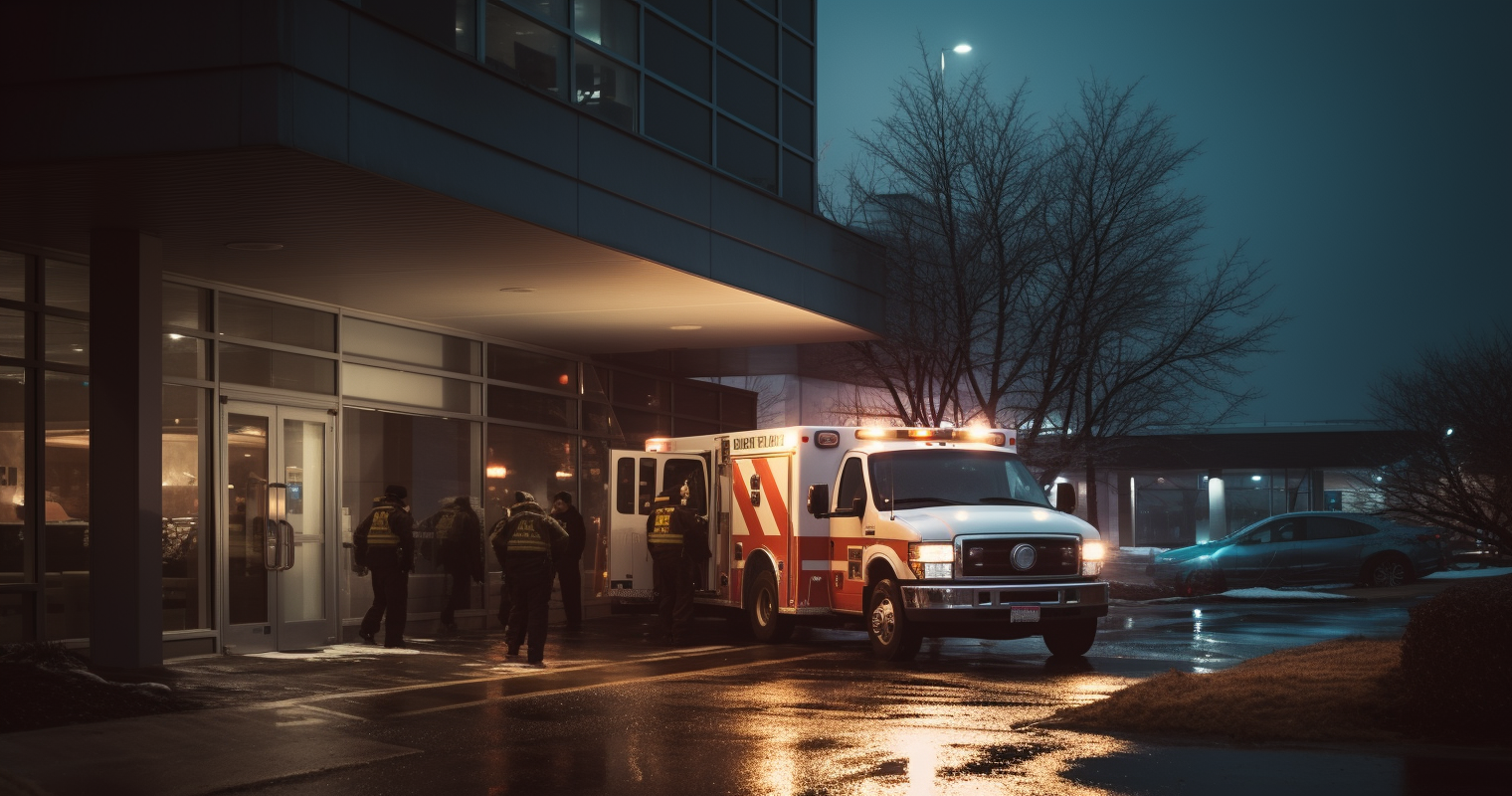
In Greece, the single emergency number 112 connects callers to every emergency service — police, fire, ambulance, and coastguard — at no cost from any telephone. Dedicated direct lines are also available: 166 for ambulance, 199 for fire, and 100 for police. As of 2025, emergency medical treatment at public hospitals (ESY) is provided at no charge to all patients, irrespective of nationality or insurance status.
| Item | Details |
|---|---|
| Single emergency number | 112 (free, all services, 24/7) — as of 2025 |
| Ambulance direct line | 166 (EKAV/EKAB) — as of 2025 |
| Police direct line | 100 — as of 2025 |
| Fire direct line | 199 — as of 2025 |
| Emergency treatment cost (public hospitals) | Free of charge for everyone, including tourists and non-residents — as of 2025 |
| EHIC/GHIC validity | Accepted at ESY public hospitals and EOPYY-contracted providers — as of 2025 |
| Key natural disaster risks | Wildfires, earthquakes, flash floods, extreme heat |
| Official civil protection authority | General Secretariat for Civil Protection: civilprotection.gov.gr |
What is the single emergency number in Greece — and does it cover all services?
Dialling 112 puts you in touch with all emergency services — medical, fire, and police — from anywhere across Europe. Calls can be placed from any telephone, including mobile phones, payphones, and landlines, and there is no charge. Greece has operated the 112 service since September 1999, with round-the-clock availability every day of the year.
The 112 call centre is staffed by representatives of all relevant emergency agencies, including the Hellenic Police, the Hellenic Fire Service, the Hellenic Coastguard, and the National Centre for Emergency Care (EKAV). A single call is therefore sufficient to dispatch whichever service — or combination of services — the situation requires.
Greece also maintains individual direct lines for each service if callers prefer a more targeted route: Police (100), Fire Service (199), Ambulance Emergency (166), and Coastguard (108). A Tourist Police line (171) additionally exists to assist visitors who require guidance or help while in the country.
Calls to 112 can be placed from landlines, payphones, and mobile phones — including handsets without a SIM card — and are always free. If the location of the incident falls outside your own mobile network’s coverage, the call will automatically be routed through any available network covering that area.
Operators answering 112 calls work in three languages: Greek, English, and French. When you call, the operator will ask for the location of the incident and determine whether police, fire, medical, or other assistance is needed. The model functions similarly to 911 in the United States or 999 in the United Kingdom — a single gateway that routes your call to the correct service.
In addition to voice calls, 112 can be contacted via SMS, MMS, or fax to 11.112. The official mAiGreece mobile app includes a 112 emergency button that sends an SMS — along with your geographical coordinates — directly to the civil protection operations centre.
How do you call for emergency medical assistance in Greece?
To request an ambulance in Greece, dial 112 or 166. Emergency medical services are managed by EKAV (the National Centre for Emergency Care) and can be accessed from all parts of the country, including the islands. Dialling the dedicated ambulance line 166 connects you directly to EKAV dispatchers and is often the most direct option in a purely medical situation.
Calling 166 or 112 in a medical emergency will result in transport to a public hospital on duty. Emergency ambulance transportation provided by EKAV is free. If a private provider or clinic supplies the ambulance, you will be billed directly. It is always worth establishing whether the ambulance being dispatched is state-operated (EKAV) or privately run.
The service operates using a two-tier response model combining motorcycles and ground-based ambulances. EKAV is well resourced in larger urban areas, with generally acceptable response times, but access can be more restricted on certain islands and in rural regions. In such circumstances, private ambulances, EKAV helicopters, or even taxis may be the most practical alternatives.
Ambulance response times across Greece can vary considerably — from approximately 10 minutes to over two hours — depending on the proximity of the nearest hospital and current service demand. If you are located on a remote island or in an isolated rural area, be prepared for potential delays and consider making your own way to the nearest health centre if it is safe to do so.
Air ambulance transfers, which fall under EKAV’s responsibility, are provided at no cost in most circumstances — for instance, when a patient on an island requires urgent transfer to the mainland due to a life-threatening condition. With more than 150 inhabited islands, this service is of particular importance in Greece. To request an air ambulance, dial 166.
What should you do in a mental health crisis in Greece?
If you or someone nearby is experiencing a mental health emergency in Greece, your immediate options are to call 112 or 166, present directly at a public hospital emergency department, or reach out to a specialist support line. Greece does not currently operate a single, widely publicised 24/7 mental health crisis hotline equivalent to, for example, Samaritans in the UK or Lifeline in Australia — it is advisable to verify what services are currently available through official sources before you travel or relocate.
A dedicated support line for domestic violence and crisis situations, the Violence Against Women SOS Helpline, operates on 15900 and is accessible in both Greek and English. The 112 system can also connect callers to the National Helpline for Children (SOS 1056) and the European Hotline for Missing Children (116000). For general mental health distress, contacting 112 and describing the situation will result in the appropriate service being deployed.
In an acute crisis, you may go directly to the emergency department of a public hospital or an EOPYY-contracted hospital. Emergency departments at public hospitals in Greece are equipped to assess and manage serious mental health crises, including those involving a risk of self-harm or harm to others. Staff at major hospitals in larger cities are frequently able to communicate in languages other than Greek. If language presents a barrier, calling 112 first and requesting interpreter assistance can be a helpful step.
Expats managing ongoing mental health conditions are encouraged, where possible, to establish a relationship with a private psychiatrist or psychologist before any crisis arises. Multilingual private practitioners are available in Athens, Thessaloniki, and other major urban centres. The EOPYY website provides a directory of contracted providers, and your home country’s embassy may be able to supply a referral list.
Where can you go for emergency medical treatment in Greece?
Greece’s healthcare system operates under a universal framework known as ESY (Ethniko Systima Ygeias), which provides free or subsidised medical care to residents. ESY is designed to guarantee fair access to quality health services for all. It encompasses a combination of public and private providers, organised into primary, secondary, and tertiary care tiers.
State hospitals operate on a rotating on-call system, and both public and certain private hospitals are able to provide emergency care. In practice, on any given day, designated public hospitals serve as the “on-call” (εφημερεύον νοσοκομείο) facility and will be open to receive emergency patients. Dialling 112 or 166 will direct you to the appropriate establishment.
Smaller outpatient clinics exist in rural areas and are linked to larger public hospitals. Every inhabited island has at least one doctor, and larger islands maintain their own hospitals. Corfu, Santorini, and Kefalonia are among the islands with hospital facilities. Corfu is home to CorfuMedica, one of the country’s more modern diagnostic and treatment centres. Santorini has pharmacies, clinics, a main hospital, and private practitioners. Kefalonia has two hospitals: the General Hospital in Argostoli and a smaller facility in Lixouri.
Private healthcare facilities in Greece are broadly regarded as offering more modern equipment and shorter waiting times than public alternatives. Many visitors and residents opt for private care on account of its speed and convenience. That said, private treatment is provided at full cost unless covered by insurance.
To identify your nearest on-call public hospital, call 112 or 166. The EOPYY website can also be used to locate contracted healthcare providers in your area. For non-life-threatening urgent concerns, pharmacies offer a useful first point of contact — they operate on a duty rota, ensuring at least one local pharmacy is open at any hour, and are typically identified by a green cross on a white background.
Is emergency medical treatment free in Greece?
Public hospitals in Greece provide emergency care free of charge to all patients regardless of nationality. Whether you are a tourist, a short-term visitor, a long-term resident, or an expat, you will not be refused life-saving treatment on grounds of inability to pay.
Any person — regardless of visa or residency status — who attends a public hospital in an emergency will receive medical care without charge. Greece’s public health system guarantees immediate care in an emergency, but follow-up treatment, inpatient stays, and specialist consultations may incur costs if you lack public or private health insurance. It is an important distinction: stabilisation during an acute emergency is free, while extended or non-emergency care may not be.
Treatment in ESY hospitals carries no charge. If you choose a private clinic that holds an EOPYY contract, a co-payment will apply — 30% for DRG-classified treatment, or 10% for daily hospitalisation charges. Choosing a private clinic without an EOPYY contract means you receive no public coverage and must meet all costs yourself.
In most circumstances, patients contribute 25% towards the cost of prescribed medication. For diagnostic tests carried out at EOPYY-contracted private clinics or laboratories, a 15% patient contribution applies. As of 2025, these co-payment rates apply to insured patients using the public system — always verify the current figures with EOPYY.
If you are a tourist or a non-EU national, you retain the right to use public hospitals, but you may be asked to pay upfront before seeking reimbursement through your travel insurer. In practice, many hospitals will administer treatment first and address payment afterwards in a genuine emergency, though this cannot be guaranteed. Having your insurance documentation readily available is therefore strongly advisable.
Do expats need insurance to access emergency care in Greece?
Greece’s public healthcare system extends emergency medical services to everyone in urgent need, including foreign nationals, at no charge. No law permits a public hospital emergency department to refuse treatment to an uninsured patient. Nevertheless, insurance is strongly recommended to protect against the financial exposure that arises from care beyond the immediate emergency.
Expats who have been assigned a social security number (AMKA) and contribute to public insurance through EFKA — the principal social security fund for employees and the self-employed — are entitled to the full range of public healthcare. Most visa and residency permit applications require applicants to demonstrate valid health coverage. Expats in Greece on long-stay visas who have not yet enrolled in the public insurance system should hold private or international health insurance to cover this gap.
Expats intending to use private hospitals should hold private health insurance, as they will bear the entire cost of private treatment without it. Tourists and expats alike are encouraged to maintain travel or private insurance to address any medical needs extending beyond emergency care.
Arriving at a private hospital without insurance and without the means to pay may result in redirection to a public facility. Attending a public hospital without insurance will generally result in treatment for the acute emergency, but non-emergency elements of care may generate a bill. If you were without your EHIC at the time treatment was provided and paid out of pocket, contact your national health insurance fund upon returning home to explore whether reimbursement is possible.
Are there bilateral health agreements entitling some foreign nationals to reduced-cost treatment?
The most significant agreement affecting healthcare in Greece is the European Health Insurance Card (EHIC) scheme, which applies across all EU member states. The EHIC is a free card that entitles holders to medically necessary, state-provided healthcare during a temporary stay in Greece, on the same terms and at the same cost as people insured within the Greek system.
An EU citizen carrying a European Health Insurance Card has access to the public healthcare system during a temporary stay in any of the 27 EU member states, including Greece, on equal terms with the domestically insured population. EHIC holders are expected to present both the card and their identity document or passport at the point of care.
UK citizens may use the Global Health Insurance Card (GHIC), which replaced the EHIC for British nationals following Brexit. The GHIC confers broadly comparable entitlements to the EHIC for medically necessary care in Greece. UK nationals should carry their GHIC and confirm the current terms with the NHS before travelling, as these arrangements remain subject to change.
The EHIC may also cover treatment for pre-existing chronic conditions and routine maternity care, provided the primary purpose of the visit was not to seek that treatment or give birth. This makes Greece relatively accommodating for visitors with ongoing health needs compared to some other countries.
For citizens of countries outside the EU/EEA and the UK, formal bilateral health agreements with Greece are limited. Foreign nationals are encouraged to establish in advance whether any reciprocal healthcare arrangement exists between their country and Greece. Where no such agreement is in place, comprehensive travel or private health insurance is essential. Always verify your country’s position with your home government’s foreign affairs or health ministry prior to travel.
How does the Greek emergency healthcare system compare to systems expats may be familiar with?
Greece’s healthcare operates through the universal ESY framework, which delivers free or subsidised medical services to residents and is funded by taxation and social security contributions. In broad terms, this resembles the NHS in the United Kingdom or Medicare in Australia — publicly funded systems built on the principle that residents should be able to access care without direct payment at the point of service.
In practice, however, there are significant differences. While medical training in Greece meets high standards, the public health service operates under chronic underfunding. Hospitals frequently experience overcrowding, and the quality of facilities and care tends to be higher in private settings, albeit at greater cost. Rather than a fully integrated public system on the NHS model, Greece functions more like the mixed public-private arrangements seen in France or Italy, where public care acts as the safety net while private care is widely used as a practical supplement.
Unlike systems where ambulance call-outs are entirely free regardless of provider, in Greece the distinction between state-operated (EKAV) and private ambulances has direct financial consequences. Transport by EKAV is provided at no charge, whereas a private ambulance will generate a bill. This is an important detail that differs from the experience of expats accustomed to uniformly free emergency transport.
A consultation with a private clinic doctor in Greece will typically cost between €60 and €150 (as of 2025 — verify current figures with providers). The overall cost of medical services, including blood tests, imaging, and MRI scans, is generally lower than comparable charges in the United States. Expats from systems where a single public insurer covers all costs should be aware that out-of-pocket spending is common in Greece, even for those with insurance.
What emergency services exist beyond medical — how do police and fire work in Greece?
The Hellenic Police (ELAS) is the national law enforcement agency and one of Greece’s three security services. It handles everything from road traffic enforcement to counter-terrorism operations. The direct police number is 100, though dialling 112 will also route your call to them. For maritime incidents, the Coastguard is reachable on 108.
The Tourist Police line (171) offers assistance to visitors requiring guidance or help of a non-criminal nature. This can be a valuable resource for expats dealing with issues such as theft, missing documents, or disputes with local businesses. Officers on the Tourist Police line typically have the ability to communicate in languages beyond Greek.
The Hellenic Fire Service is responsible for fires, rescue operations, and natural disaster response. To report a fire, dial 199. In large-scale disasters, the 112 and 166 call centres coordinate communications with the fire service, police, and military through the Special Department of Medical Disasters. In contrast to some countries where fire services deal exclusively with structural fires, Greece’s fire service plays a central role in wildfire response — a critical function given the country’s exposure to this hazard.
When engaging with police in Greece, it is important to carry identification at all times. Greek law permits officers to request identification at any point, and being without it can complicate an already difficult situation. If you are involved in a road traffic accident, Greek law requires you to remain at the scene and notify the police by calling 100.
Are there country-specific emergency risks in Greece?
Greece is subject to extreme natural events, including earthquakes, wildfires, flash floods, and severe heat. These are not isolated occurrences — they are recurring seasonal and geographical realities that every expat living in Greece must plan around.
The country’s national risk assessment identifies forest fires, earthquakes, flooding, and industrial accidents as primary concerns. Particular emphasis is placed on forest fires, earthquakes, severe weather events, floods, and landslides, all of which occur with significant frequency and carry substantial social and economic consequences.
On wildfires specifically: elevated temperatures, dry conditions, and strong winds can rapidly combine to trigger outbreaks. The Greek Ministry of Climate Crisis and Civil Protection publishes a Daily Fire Risk Map indicating danger levels across different regions. Wildfires can result in road closures, power outages, and degraded air quality, and areas in the path of a fire may be subject to evacuation orders issued by the Greek authorities.
On earthquakes: early 2025 saw the Santorini–Amorgos area struck by a seismic swarm featuring dozens of M ≥ 4.0 earthquakes. This prompted rare heightened preparedness measures from Greek Civil Protection, including risk communication campaigns, reinforcement of operational structures on the affected islands, revisions to local emergency plans, and the distribution of self-protection guidance. Earthquake preparedness is a practical necessity in Greece, not merely a theoretical precaution.
To receive emergency alerts relevant to your location in Greece, ensure your mobile phone is configured to accept them. You can also register with Greece’s Emergency Communications Service to receive warnings by SMS, email, or voicemail if you do not use a smartphone. The mAiGreece app includes a 112 emergency button and transmits your geographical location to the civil protection operations centre when activated.
What should expats do to prepare for emergencies before they arise?
Preparation before a crisis occurs is essential. The steps below outline the key practical measures recommended for expats living in or relocating to Greece.
- Save emergency numbers in your phone. Programme 112, 166 (ambulance), 100 (police), 199 (fire), and 108 (coastguard) into your contacts before you need them. If you are using a foreign mobile phone in Greece, note that not all three-digit local numbers may connect — 112 is the number guaranteed to work from any handset on any network.
- Register with your home country’s embassy or consulate. Most governments offer a registration scheme — such as the UK’s LOCATE service, the US Smart Traveler Enrollment Program (STEP), or equivalent programmes — enabling the embassy to reach you during a national emergency or evacuation. Locate your embassy’s registration page through your government’s official foreign affairs website.
- Ensure your health insurance is in order. Most visa and residency permit applications in Greece require evidence of valid health insurance. Establish whether you qualify for public cover through AMKA/EFKA, and if not, arrange private or international health insurance.
- Enable emergency alerts on your mobile phone. Confirm that your device is configured to receive emergency alerts from Greek authorities, which are broadcast automatically to all handsets within range of a threat.
- Download the mAiGreece app. The mAiGreece app, published by the Greek Ministry of Tourism, serves as a travel companion and provides key information for those in Greece. It includes a 112 emergency button with automatic location sharing.
- Familiarise yourself with earthquake safety procedures. Learn the recommended actions in the event of an earthquake and visit mysafetyplan.gov.gr to identify your nearest emergency assembly points.
- Know your nearest on-call hospital. Identify the public hospital or hospitals closest to your home and understand how the on-call rota functions. Call 166 or consult EOPYY for current information on which facility is designated on duty.
- Keep copies of key documents. Maintain copies of your passport, residency permit, AMKA number, EHIC/GHIC, and insurance policy details — either in physical form or stored securely in the cloud — so that they remain accessible during an emergency.
Where can expats get official and up-to-date emergency information for Greece?
The official and authoritative sources listed below are the most reliable starting points for current emergency information in Greece. Always confirm details directly with these organisations, as telephone numbers, procedures, and costs are subject to change.
- General Secretariat for Civil Protection (GSCP) / Ministry of Climate Crisis and Civil Protection: civilprotection.gov.gr/en — the primary authority for disaster preparedness, daily wildfire risk maps, earthquake guidance, and civil protection planning. Self-protection guidance for natural and man-made disasters is available in Greek, English, Spanish, French, Albanian, and Arabic.
- EOPYY (National Organisation for Health Services): eopyy.gov.gr — Greece’s main healthcare insurance body. Use it to locate contracted providers, understand EHIC entitlements, and access health information. For EHIC-related queries, EOPYY can be reached by email at [email protected] or by telephone on +30 210 8110918-9 or +30 210 8110541.
- EKAV (National Centre for Emergency Care): The state ambulance service, reachable via 166 or 112.
- European Commission — EHIC information for Greece: Official EU EHIC page for Greece — a detailed explanation of how the EHIC operates in Greece.
- Your home country’s embassy in Athens: Most embassies publish country-specific emergency guidance and maintain citizen registration services. Search your government’s official foreign affairs website for Greece travel advice and the Athens embassy contact details.
- MySafetyPlan: mysafetyplan.gov.gr — the Greek government’s interactive map for locating emergency assembly points near your address.
- 112 Emergency Communications Service: Non-urgent enquiries about the service can also be submitted by email to [email protected].
Frequently asked questions: emergencies in Greece
What is the most important emergency number to remember in Greece?
The single most important number is 112, which connects you to all emergency services — medical, fire, and police — from any telephone in Europe, entirely free of charge. It functions even from a handset without a SIM card and is answered by operators in Greek, English, and French. If you can only commit one number to memory, make it 112.
Will I be turned away from a Greek public hospital if I have no insurance?
Emergency care at public hospitals is provided at no cost to everyone, irrespective of nationality. You will not be turned away in a genuine emergency. However, non-emergency or follow-up care may require payment or insurance coverage. Carrying your insurance documentation with you will simplify procedures if you do need hospital treatment.
Does the EHIC or GHIC work in Greece?
The EHIC entitles holders to medically necessary, state-provided healthcare during an emergency in Greece on the same basis as Greek-insured patients. UK nationals can use their Global Health Insurance Card (GHIC), which took the place of the EHIC for British citizens following Brexit. Present the card along with photo identification at the hospital admissions desk. Neither the EHIC nor the GHIC covers treatment at private hospitals without an EOPYY contract.
Is the state ambulance service (EKAV) free to use?
Emergency ambulance transport provided by EKAV is free of charge. If the ambulance is dispatched by a private clinic or provider, you will be billed directly. Always confirm whether the ambulance being sent is state-operated (EKAV) or privately contracted, as the cost difference can be substantial.
What are the biggest natural disaster risks for expats in Greece?
Greece faces recurring hazards including wildfires, earthquakes, flash floods, and extreme heat. The Greek Ministry of Climate Crisis and Civil Protection publishes a Daily Fire Risk Map showing danger levels by region. Make sure your mobile phone is configured to receive emergency alerts, and consider registering with Greece’s Emergency Communications Service to receive SMS warnings.
Can I access mental health emergency care in Greece?
Yes. If you are experiencing a mental health crisis, call 112 or go directly to the emergency department of a public hospital or an EOPYY-contracted facility. The Violence Against Women SOS Helpline (15900) offers support in both Greek and English and operates around the clock. A dedicated national mental health crisis line comparable to services in some other countries does not currently exist — confirm the most up-to-date options through official health sources.
How do I find out which hospital is on call near me in Greece?
Greece’s public hospital system operates a rotating on-call schedule (εφημερεύον νοσοκομείο). In an emergency, you can attend the on-duty public hospital directly, or call 112 or 166 for ambulance assistance and guidance on the correct facility. The EOPYY website (eopyy.gov.gr) also lists contracted providers by area.
Should I register with my embassy when living in Greece?
Yes — registering with your home country’s embassy or consulate in Athens is strongly recommended. Most governments provide a voluntary registration programme that enables the embassy to contact you during a national emergency, natural disaster, or civil unrest, and to offer consular assistance when needed. Visit your government’s official foreign affairs website to find the scheme that applies to your nationality.