
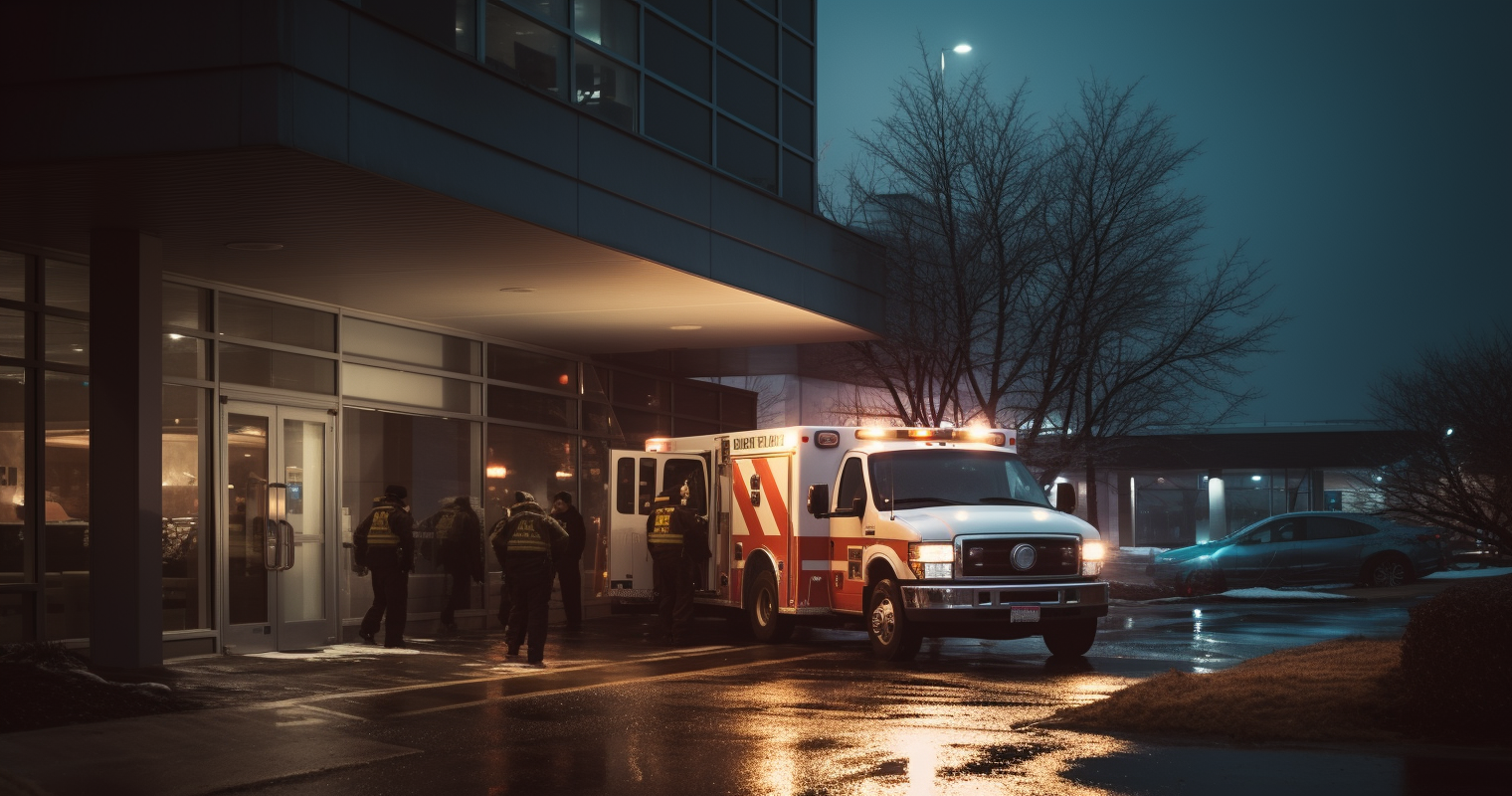
Gibraltar uses a single emergency number — 999 — for police, fire, and ambulance, with 112 available as the pan-European alternative. Emergency treatment at St Bernard’s Hospital, the territory’s only public hospital, is provided free at the point of care for those covered under the Gibraltar Health Authority system, including UK passport holders and those carrying a valid GHIC or EHIC. Visitors from other countries are strongly advised to hold travel or health insurance before arriving.
| Item | Details |
|---|---|
| Main emergency number | 999 (as of 2024); also 112 (pan-European) |
| Non-emergency police | (+350) 200 72500 |
| Non-emergency ambulance | (+350) 200 77390 |
| Main public hospital | St Bernard’s Hospital, Europort (A&E on site) |
| Mental health crisis support | GibSams: 116 123; Mental Health Liaison Team at A&E |
| Emergency treatment cost | Free for UK passport holders and GHIC/EHIC holders; others should carry insurance — verify current eligibility with the Gibraltar Health Authority |
What is the single emergency number in Gibraltar, and does it cover police, fire, and ambulance — or are there separate numbers for each service?
The Royal Gibraltar Police (RGP), Gibraltar Health Authority (GHA), and Gibraltar Fire and Rescue Service (GFRS) all share one emergency number: 999. The choice of 999 reflects Gibraltar’s close alignment with the United Kingdom, making it instantly recognisable to British residents and visitors alike. This consolidated number replaced a number of separate lines that had existed for many years, significantly simplifying the process of reaching emergency services.
Callers to 999 are presented with an automated menu: Press 1 for Police, Press 2 for Ambulance, and Press 3 for Fire. The pan-European emergency number 112 also connects to the same services and can be dialled from any telephone, including mobile phones without an active SIM card. Calls on both numbers are free of charge. It is advisable to confirm current emergency contact numbers via official sources before travelling, as operational details may be updated over time.
For situations that do not require an immediate emergency response, non-emergency contacts are available: the Royal Gibraltar Police on 200 72500, the Fire Department on 200 79507, and the Ambulance Service on 200 77390. These lines should be used for routine queries or minor matters, with 999 reserved strictly for genuine emergencies.
How do you call for emergency medical assistance in Gibraltar, and what should you expect when you call?
To summon emergency medical help in Gibraltar, dial 999 and select option 2 for Ambulance when prompted. Gibraltar’s ambulance paramedics are trained to assess patients thoroughly and can provide basic, intermediate, or advanced life support depending on what the situation demands.
When your call connects, have the following ready: your telephone number, your precise location, a description of what has happened, and the number of people affected. Speak slowly and clearly, and follow any instructions the dispatcher gives you — they may walk you through first-aid steps while help is in transit.
In some circumstances, ambulances may transport patients across the border into Spain for treatment, particularly where specialist care is not available locally. Because of this cross-border possibility, always keep your health insurance documents or relevant health card on your person, as these may be requested on arrival at a Spanish facility. For most local cases, the A&E department at St Bernard’s Hospital is the first point of care.
What should you do in a mental health crisis in Gibraltar — is there a dedicated mental health emergency line, and can you go to a hospital emergency department?
Anyone facing a mental health crisis in Gibraltar has several pathways to support. GibSams, Gibraltar’s dedicated emotional support and crisis line, is reachable on 116 123 at no charge, around the clock. Modelled on the Samaritans service familiar to UK and Irish residents, GibSams offers confidential, non-judgmental listening to anyone in distress or acute emotional difficulty.
A Mental Health Liaison Team is based near the A&E department at St Bernard’s Hospital, providing prompt responses to crises for both hospital patients and individuals presenting in acute distress. If you or someone else is in immediate danger due to a mental health emergency, attending A&E directly is a valid course of action — specialist support will be available there. For life-threatening situations, call 999 immediately.
Mental health services form an integral part of Gibraltar’s wider healthcare provision. The GHA offers inpatient psychiatric care through facilities including Ocean Views, and community-based support through the Community Mental Health Team, which was established in 2017. A non-emergency number for the King George V Mental Hospital — the territory’s historical mental health facility — is listed as 200 78807, though you should confirm current contact details with the GHA directly, as services and numbers are subject to revision.
Where can you go for emergency medical treatment in Gibraltar — are there public hospitals, private hospitals, urgent care clinics, or other facilities, and how do you find the nearest one?
St Bernard’s Hospital at Europort is Gibraltar’s sole hospital and the destination for all serious medical emergencies. Its Accident and Emergency department is equipped to manage both major and minor cases. A Primary Care Centre — staffed by 16 GPs — handles first-line and less complex matters, with specialist services available at St Bernard’s. Outside standard GP hours, the Primary Care Centre can also provide urgent assessments for conditions that are not life-threatening. St Bernard’s is a 210-bed civilian facility that opened in 2005.
The hospital’s infrastructure includes two main operating theatres, a day surgery unit, an emergency backup theatre, a hydrotherapy pool, a rehabilitation clinic, and a cardiac rehabilitation unit. Additional services such as physiotherapy, diagnostic investigations, and dermatology are offered, often delivered by visiting consultant specialists.
Where local resources are insufficient for a patient’s needs, the GHA coordinates referrals to NHS facilities in the United Kingdom or to hospitals in neighbouring Spain. Given Gibraltar’s relatively small population, full-time specialist employment is not always feasible, and specialists are periodically flown in from the UK. Privately, residents may access Hospital Quirónsalud Campo de Gibraltar just across the border, or private clinics in Algeciras, Marbella, or within Gibraltar itself. Always consult the GHA or your insurance provider to determine which facility is most appropriate for your circumstances.
Is emergency medical treatment free in Gibraltar, or is there a charge — and does this differ for residents versus tourists or short-term visitors?
Entitlement to free emergency treatment in Gibraltar depends largely on your status. As a British Overseas Territory, Gibraltar’s healthcare system is administered by the Gibraltar Health Authority and closely follows the model of the British NHS — care is free at the point of delivery for eligible individuals, funded through a contributory health insurance scheme. All citizens contribute to the Group Practice Medical Scheme (GPMS), which grants registered individuals access to free medical care.
All Gibraltarian residents are entitled to free treatment in public wards and clinics at St Bernard’s Hospital and the Primary Care Centre. All other British citizens are similarly entitled to free-of-charge treatment on presentation of a valid British passport during stays of up to 30 days. This makes it essential for British nationals to carry their passport whenever seeking medical care in Gibraltar.
Visitors from EU countries holding a valid European Health Insurance Card (EHIC) can access free emergency care on the same terms as local nationals. A GHIC or EHIC covers state-provided treatment that becomes medically necessary during your stay. For those arriving from countries outside the UK or EU, emergency treatment will still be provided, but costs may subsequently be charged — it is important to verify eligibility with the GHA in advance and to hold comprehensive travel or health insurance.
Do expats in Gibraltar need travel or health insurance to access emergency care, and what happens if they turn up without insurance or without the ability to pay?
Access to Gibraltar’s state healthcare system is linked to participation in the Group Practice Medical Scheme, which is funded through taxation and social security contributions. Expats who wish to access public healthcare must meet eligibility requirements and register with the GHA, submitting the relevant documentation. Even those who qualify must complete this process before they can be treated without charge.
For non-British expats, access to GHA services may be more restricted, and private medical insurance is generally advisable. Many expats opt for private cover from the outset, as it provides immediate access to care without administrative delays. In a genuine emergency, the A&E department at St Bernard’s will not refuse treatment — but those without entitlement to free GHA care may receive a bill afterwards. The cost of private medical care in Gibraltar is reported to be on the higher side, which reinforces the importance of adequate insurance.
A GHIC or EHIC is not a replacement for comprehensive travel or private medical insurance — it will not cover medical repatriation, ongoing treatment, or non-urgent procedures. Expats who are uncertain about their coverage should contact the GHA at gha.gi before any emergency occurs, rather than trying to resolve the matter in the midst of one.
Are there any bilateral health agreements between Gibraltar and other countries that entitle some foreign nationals to reduced-cost or free emergency treatment?
Gibraltar has a particular arrangement with the United Kingdom under which all UK citizens may access GHA healthcare facilities free of charge, without any obligation to pay insurance contributions. This arrangement is rooted in the specific constitutional and historical relationship between Gibraltar and the UK, and is not a general benefit extended to all visitors — it is best understood as a bespoke reciprocal arrangement rather than a model applied to other nationalities.
EU citizens holding a valid EHIC can access GHA services, though the ease of obtaining public services may vary for nationals of other countries. It is important to note that reciprocal healthcare arrangements with Spain came to an end in 2022, meaning that referrals to Spanish hospitals may now involve costs that would not previously have arisen. Gibraltar residents insured under the GPMS lost the right to access free emergency healthcare in Spain during temporary visits — this position has applied across all EU member states except Spain since 31 December 2020.
There is, however, a dedicated government scheme for elderly British citizens aged 60–90 who reside solely in Gibraltar and are registered with the GHA. This scheme covers emergency medical treatment incurred while travelling in Andalucía in southern Spain, with the Gibraltar Government reimbursing eligible costs. Full details and registration information are available at the HM Government of Gibraltar Emergency Medical Scheme page. As with all bilateral and reciprocal arrangements, you should verify current terms directly with the GHA or the relevant government authority, since these agreements can change.
How does the emergency healthcare system in Gibraltar compare to systems expats may be familiar with?
Gibraltar’s healthcare is overseen by the Gibraltar Health Authority, an organisation that manages the territory’s medical facilities and services along lines very similar to those of the UK’s National Health Service. For anyone accustomed to a publicly funded, free-at-the-point-of-use system, the basics will feel familiar: you dial 999, an ambulance arrives, and qualified paramedics treat you without requiring payment on the spot — as long as you are entitled to GHA coverage.
This stands in contrast to systems in many countries — particularly across parts of the Americas and Asia — where hospitals may request insurance details or a financial deposit before or immediately after delivering emergency care. Gibraltar does not operate this way for those with established entitlement, though individuals without eligibility may still receive a bill in retrospect, making advance insurance planning a necessity rather than an optional extra.
In practical terms, waiting times at St Bernard’s tend to be shorter than those typically encountered at NHS hospitals in the UK. However, the hospital’s limited capacity means that patients with complex or specialist needs are frequently referred abroad — usually to the NHS in the UK where they are eligible. This cross-border dependency is something expats from larger countries often find unexpected: your emergency care pathway in Gibraltar may well involve transfer to another country, and being aware of this in advance allows for more effective planning.
What emergency services exist beyond medical — how do police and fire services work in Gibraltar, and are there any important differences in how to contact or interact with them?
The Royal Gibraltar Police (RGP) serves as the primary civilian law enforcement body in Gibraltar, alongside HM Customs Gibraltar. Established in 1830, it is recognised as the oldest police force in the Commonwealth of Nations outside the United Kingdom. Policing practice broadly mirrors that of the UK, so expats familiar with British law enforcement culture — remaining cooperative, staying calm, and reserving 999 for genuine emergencies — will find the experience largely recognisable.
The RGP defines an emergency as a situation in which a crime is actively occurring or has just been witnessed, or where there is a risk of injury or serious property damage. Non-emergency matters should not be reported via 999, as doing so may delay responses to genuine crises. The non-emergency line for the Royal Gibraltar Police is (+350) 200 72500; the station is located at New Mole House Police Station on Rosia Road.
The Gibraltar Fire and Rescue Service (GFRS) is reached by dialling 999 and selecting option 3. The non-emergency fire department number is 200 79507. The RGP operates alongside a broader security apparatus that includes the Gibraltar Defence Police, HM Customs Gibraltar, the Border and Coastguard Agency Gibraltar, HM Prison Service, and the military Joint Provost and Security Unit — a remarkably layered infrastructure for such a small territory. The Border and Coastguard Agency is particularly significant given Gibraltar’s distinctive geographic position at Europe’s southern tip, and can be contacted through the Government of Gibraltar website.
Are there any country-specific emergency risks in Gibraltar — such as natural disasters, extreme weather, civil unrest, or endemic diseases — and what official alert systems exist?
The risk of natural disaster in Gibraltar is low overall. The territory is not significantly prone to seismic activity or severe weather events, though increasing rainfall associated with climate change has heightened the risk of localised coastal flooding in recent years. The Rock’s steep cliff faces and narrow peninsular geography mean that rockfall and landslide hazards — while not extreme — warrant attention, especially following periods of heavy rain. Restricted zones and cliff path warnings issued by authorities should always be observed.
Gibraltar has a low crime rate and is widely regarded as a safe place to live and visit. Risks such as terrorism, civil unrest, violent crime, and unusual health threats are not significant day-to-day concerns. The UK Government’s Foreign, Commonwealth and Development Office (FCDO) publishes and regularly updates travel advisories for Gibraltar at gov.uk/foreign-travel-advice/gibraltar — consulting this page both before travel and after arrival is good practice for visitors of any nationality.
Gibraltar has no endemic tropical diseases, and tap water is safe for consumption. The GHA’s Public Health Department monitors disease activity and communicates any outbreaks or alerts to residents. Official government notices and emergency announcements are published on the HM Government of Gibraltar website. The Gibraltar Broadcasting Corporation (GBC) broadcasts emergency public information on both television and radio, making it a practical source of alerts during any civil emergency situation.
What should expats do to prepare for emergencies before they arise in Gibraltar?
Taking steps in advance is by far the most effective approach to managing emergencies. Before arriving in Gibraltar, confirm your healthcare eligibility with the Gibraltar Health Authority, and if you are not automatically covered, arrange comprehensive health or travel insurance that includes emergency medical evacuation. Expats from countries other than the UK should not assume coverage without checking directly with the GHA first.
Register with your home country’s embassy or consulate. For most nationalities, consular representation for Gibraltar is handled through embassies in Madrid or London — check your own government’s foreign affairs website for the appropriate contact details. Many governments operate citizen registration schemes, such as the UK’s LOCATE service or the US STEP programme, through which authorities can contact you in the event of a significant emergency or disruption in the territory where you are living.
- Store key emergency numbers in your phone before you need them: 999 (all emergencies), 112 (pan-European alternative), 200 72500 (RGP non-emergency), 200 77390 (ambulance non-emergency), 116 123 (GibSams crisis line).
- Always carry your health documentation — UK passport, GHIC/EHIC, or private insurance card as relevant to your situation.
- Register with the GHA on arrival if you qualify for public healthcare, removing any potential obstacles in an emergency.
- Familiarise yourself with the location of St Bernard’s Hospital at Europort and your quickest route there before you ever need to make that journey.
- Register with your home country’s consular services and provide a current local address.
- Sign up for any official alert services from HM Government of Gibraltar and bookmark the government website for access to public notices.
- Maintain a supply of essential prescription medication and note that while normal pharmacy hours are approximately 9am to 6–7pm on weekdays, a duty pharmacy is always available outside these hours, on weekends, and on public holidays.
Where can expats get official and up-to-date emergency information for Gibraltar?
The sources listed below represent the most reliable starting points for official, current emergency information in Gibraltar. It is wise to cross-reference multiple official channels, and to remember that phone numbers, fees, and procedures are subject to change — verify details periodically rather than depending on information gathered before your move.
- HM Government of Gibraltar — the central portal for all government services, emergency contacts, and public health notices: gibraltar.gov.gi
- Gibraltar Health Authority (GHA) — for healthcare eligibility, emergency medical services, and public health alerts: gha.gi
- Royal Gibraltar Police (RGP) — for policing contacts and safety information: police.gi
- Gibraltar Fire & Rescue Service (GFRS) — for fire safety and emergency fire contacts: gibfire.gi
- UK FCDO Travel Advice for Gibraltar — regularly updated health and safety guidance, useful for many nationalities: gov.uk/foreign-travel-advice/gibraltar
- GibSams (crisis support line) — 116 123, free to call at any time: gibsams.gi
- Gibraltar Broadcasting Corporation (GBC) — local television and radio broadcasting emergency public information: gbc.gi
Your own country’s foreign affairs ministry or its embassy in Spain will also be an important resource. Most embassies maintain dedicated emergency lines for their citizens abroad — save this number well in advance, because searching for consular contact details during an actual emergency is far from straightforward.
Frequently asked questions
What is the main emergency number in Gibraltar?
All emergency services — police, ambulance, and fire — are reached by dialling 999. The pan-European number 112 also functions and connects to the same services. Both are free to call. This unified system came into effect in 2024, replacing the previous arrangement of separate numbers (190 for fire and ambulance, 199 for police). Confirm current numbers via the HM Government of Gibraltar website.
Will I be charged for using an ambulance in Gibraltar?
Those entitled to GHA coverage — including UK passport holders and individuals holding a valid GHIC or EHIC — receive ambulance services as part of the publicly funded system at no charge. Individuals without entitlement may be billed. Verify your eligibility with the Gibraltar Health Authority before any emergency arises, and confirm that your travel or health insurance policy covers emergency ambulance transport.
Can I use my GHIC or EHIC card in Gibraltar?
A GHIC or EHIC entitles the holder to state-provided medical treatment that becomes necessary during their stay. Visitors to Gibraltar should bring one of these cards, as treatment may sometimes take place across the border in Spain. That said, a GHIC or EHIC does not replace comprehensive travel or private medical insurance — it will not cover medical repatriation or non-urgent care.
Is Gibraltar’s healthcare system the same as the NHS?
Gibraltar’s healthcare system is structured along similar lines to the UK’s National Health Service and is administered by the Gibraltar Health Authority (GHA), established in 1987. It is, however, a distinct system funded by Gibraltar’s own taxation and social security contributions, with differing entitlement rules. Specialist doctors are not always permanently based in Gibraltar and are periodically brought in from the UK; patients may also be referred to NHS facilities or Spanish hospitals when local capacity is insufficient.
What should I do in a mental health emergency in Gibraltar?
Dial 999 if there is an immediate threat to life. For emotional distress or a mental health crisis, call GibSams on 116 123 — a free, confidential listening service running around the clock. The Mental Health Liaison Team based near the A&E at St Bernard’s Hospital provides rapid responses to crises. If you need an urgent mental health assessment, you can attend A&E directly.
Do I need to register with the GHA when I move to Gibraltar?
To access public healthcare in Gibraltar, expats are required to meet eligibility criteria — including contributing to the Group Practice Medical Scheme — and must apply to the GHA with the necessary documentation. A GHA card is required before you can access the public system, and the registration process is straightforward once residency has been established. Contact the GHA as early as possible after your arrival to clarify your entitlement and complete the process.
Is Gibraltar safe from natural disasters?
Gibraltar faces a low natural disaster risk — it is not significantly prone to earthquakes or severe weather events, though rising rainfall linked to climate change has increased the potential for localised coastal flooding. The territory is generally regarded as very safe, with a low crime rate. Keep an eye on official government communications and GBC broadcasts for weather warnings or civil emergency alerts, and consult the UK FCDO travel advice page for current assessments.
What happened to the old emergency numbers (190 and 199)?
The previous numbers — 190 for fire and ambulance, and 199 or 112 for police — were replaced by the single 999 number. While the old numbers may have continued to function for a transitional period, they should not be relied upon. Use 999 or 112 for all emergencies. Always confirm current numbers via the HM Government of Gibraltar emergency contacts page.