
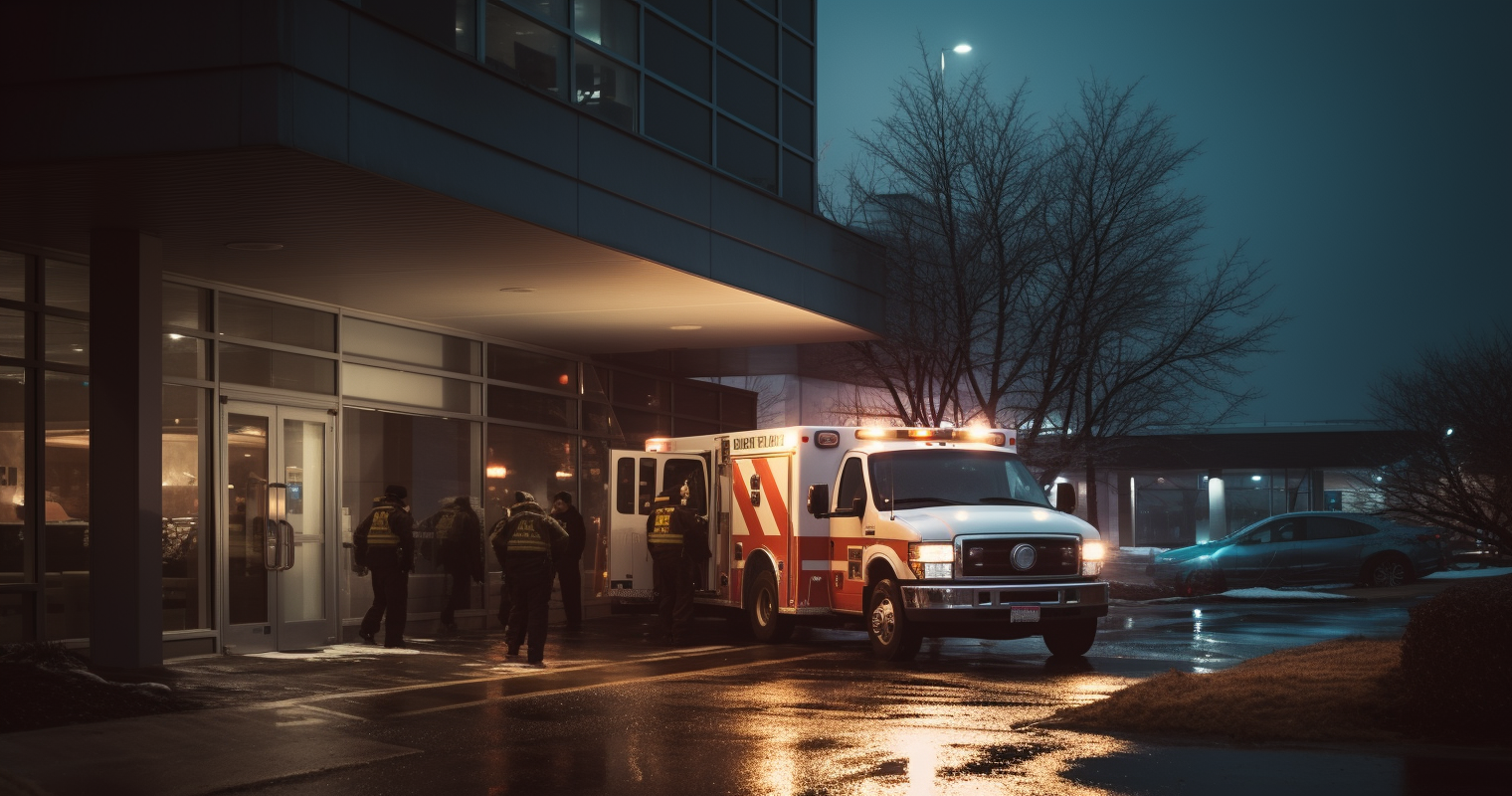
Rather than a single all-purpose emergency line, Peru maintains dedicated numbers for individual services — though dialling 911 will also reach emergency dispatch. Current numbers (as of 2025) are 105 for the police, 116 for fire services, and 106 for the medical ambulance service (SAMU). Emergency treatment is available at both public and private hospitals, but payment or proof of insurance is generally expected before care is provided — there is no free-at-the-point-of-use system for most expats and visitors.
| Item | Details |
|---|---|
| Universal emergency number | 911 (also connects to police); as of 2025 |
| Police | 105 (or 911); as of 2025 |
| Fire brigade | 116; as of 2025 |
| Medical ambulance (SAMU) | 106 (free service); as of 2025 |
| EsSalud ambulance | 117; as of 2025 |
| Civil Defence (INDECI) | 110; as of 2025 |
| Emergency treatment cost | Not free at point of use for most expats/tourists; upfront payment or insurance typically required |
| Civil protection alerts | INDECI/COEN: coen.indeci.gob.pe |
What is the single emergency number to call in Peru, and does it cover police, fire, and ambulance — or are there separate numbers for each service?
Peru uses a hybrid approach: unlike the UK’s 999 or the EU-wide 112, there is no single number that automatically dispatches all three emergency services simultaneously. That said, dialling 911 will connect you to a central emergency switchboard, and the number has become recognised across Peru partly because of its widespread use in North America. Both 911 and 105 are free to call.
In everyday practice, each major service operates its own dedicated line that locals and emergency personnel will often direct you to. As of 2025, the key emergency numbers in Peru are 105 for police, 116 for fire, and 106 for ambulance. Memorising these individual numbers is more dependable than relying on 911 alone — especially outside major cities, where centralised dispatcher routing can be considerably slower.
All primary emergency lines — police, firefighters, SAMU, the Red Cross, Civil Defence, EsSalud, and Serenazgo — operate around the clock, every day of the year. However, response times and service quality differ substantially between urban and rural settings, so it is worth confirming the most current contact numbers through official channels before you travel.
How do you call for emergency medical assistance in Peru, and what should you expect when you call?
For medical emergencies, the principal number to call is 106, which reaches SAMU — the Sistema de Atención Móvil de Urgencia. This service is entirely free of charge and is available to anyone requiring urgent medical attention, particularly in critical situations. EsSalud also operates a separate public ambulance service; to reach their Emergency Assisted Transport System (STAE), dial 117.
When placing a call, be ready to describe your precise location, explain the nature of the emergency clearly, and indicate how many people are affected. Speaking Spanish will make communication considerably easier — while some urban dispatchers may have a working knowledge of other languages, this should not be assumed. If language is a barrier, remaining on the line and describing visible landmarks can help dispatchers pinpoint your position.
Many private hospitals in Lima maintain their own ambulance fleets, accessible by calling the hospital directly. The public ambulance network is not consistently reliable and is not universally recommended. In smaller towns, ambulances may simply not be available; in such situations, arranging private transport or hailing a taxi to the nearest hospital is often the more practical option. Clients of private hospitals or clinics can also access ambulance services through those facilities directly, though fees will typically apply.
For large-scale emergencies or natural disasters such as earthquakes, the Peruvian Red Cross (Cruz Roja) can be reached on 115. For civil defence matters, INDECI (Instituto Nacional de Defensa Civil de Perú) is contactable on 110. As with all emergency contacts in Peru, confirm these numbers through official sources before travelling, as they may change.
What should you do in a mental health crisis in Peru — is there a dedicated mental health emergency line, and can you go to a hospital emergency department?
Mental health care is available within the public hospital network, but access remains constrained. Many individuals opt for private psychological or psychiatric services in order to receive better treatment. Unlike some other countries — where services such as the Samaritans provide a well-known national crisis line — Peru has no widely promoted, dedicated mental health emergency number. The overall provision of such services continues to develop, but remains limited, particularly outside Lima. The Ministerio de Salud (MINSA) is the best source for up-to-date information on any mental health helplines, which can change over time.
In the event of a mental health emergency, public hospitals do provide emergency services. Dialling 106 for an ambulance or proceeding directly to the nearest hospital are both viable options for any medical crisis, including mental health emergencies. Emergency departments in public hospitals can provide initial stabilisation, though the speed and quality of response will differ from facility to facility. In Lima, private clinics such as Clínica San Felipe are known to offer psychiatric and psychology services and are generally better equipped to manage mental health crises.
Expats in a mental health crisis should also consider reaching out to their embassy, which may be able to provide referrals to appropriate services or supply a list of local mental health practitioners. An increasing number of international health insurance policies now include mental health support lines and remote consultation services, which can serve as a valuable first point of contact during a crisis.
Where can you go for emergency medical treatment in Peru — are there public hospitals, private hospitals, urgent care clinics, or other facilities, and how do you find the nearest one?
Peru’s healthcare landscape is a mixture of public and private provision, offering universal coverage through EsSalud and MINSA. In practice, the standard and availability of facilities varies widely depending on location. Lima and other urban centres benefit from comparatively well-developed healthcare infrastructure, while rural regions frequently face shortages of both medical professionals and equipment.
For expatriates, the most suitable options tend to be found in Lima and Cusco, where private facilities operate to a higher standard than most public hospitals. Several private clinics in these cities offer full consultation and hospital services, including 24-hour emergency departments. Notable private facilities in Lima include Clínica Anglo Americana (San Isidro), Clínica Internacional, and Clínica San Borja — all of which maintain round-the-clock emergency rooms. Clínica Internacional holds the distinction of being the first Peruvian hospital to receive accreditation from the Joint Commission International (JCI), an internationally recognised marker of hospital quality.
EsSalud maintains approximately 380 healthcare centres distributed across the country, though more than half of these are concentrated in Lima. Healthcare provision in other cities is generally adequate, but rural areas typically lack sufficient medical infrastructure. Cusco has several reputable private clinics, but serious medical conditions are best managed in Lima.
To locate the nearest facility, Google Maps or a query to your hotel are practical starting points. The MINSA website publishes a national directory of public health facilities. For tourist assistance, the Peruvian government operates Tourist Protection offices in many visitor destinations, accessible through a 24-hour hotline — dial 424 2053 in Lima, or 01 424 2053 from elsewhere in Peru.
Is emergency medical treatment free in Peru or is there a charge — and does this differ for residents versus tourists or short-term visitors?
Peru does not operate a system of universal free care: consultations, diagnostic tests, hospital stays, and medications all carry fees, depending on the type of coverage a patient holds. This represents a fundamental difference from systems where emergency treatment is provided at no cost to the patient at the point of use. Charges apply in both public and private hospitals.
Emergency services are in principle accessible to all individuals regardless of residency. However, access does not equate to free care. While the system is designed to provide a basic level of healthcare to all Peruvians, significant resource limitations affect quality — particularly in rural regions. Some services are fully state-subsidised for qualifying Peruvian citizens based on income, but this subsidy structure does not generally extend to expatriates.
Expats who are employed by a company registered in Peru are automatically enrolled in EsSalud, as employers are legally required to register employees with the scheme from their first day of work. While EsSalud covers a portion of medical costs, co-payments for services and prescriptions still apply, meaning out-of-pocket expenses remain a reality even for covered workers.
For tourists and short-term visitors, there is no entitlement to subsidised care. Private healthcare in Peru is relatively affordable by the standards of many high-income countries, but doctors will typically expect cash payment before treatment, regardless of a patient’s insurance status. Wherever possible, confirm payment arrangements before receiving care.
Do expats in Peru need travel or health insurance to access emergency care, and what happens if they turn up without insurance or without the ability to pay?
Expats and visitors are strongly advised to arrange international health insurance before arriving in Peru. Public healthcare is generally of lower quality than in many other countries, while private care can be costly without adequate coverage. Given the scarcity of medical facilities in rural areas, international health insurance that includes emergency evacuation is considered essential for expats living outside Lima.
Even with comprehensive insurance, many private Peruvian clinics require a deposit or credit card guarantee before admitting a patient — particularly in an emergency. Where the insurer does not have a direct billing arrangement with the facility, patients are often required to pay out of pocket and subsequently seek reimbursement. Keeping a credit card with sufficient available credit and retaining all invoices and medical records is therefore strongly advisable.
If you arrive at a public hospital without insurance or funds, emergency stabilisation should not be withheld — but comprehensive ongoing care cannot be assured without payment. As a foreign national, you may be asked to pay a fee at the point of entry to the hospital or clinic. In any life-threatening situation, go immediately to the nearest emergency department, then contact both your embassy and insurer as soon as conditions allow.
Travellers are also advised to obtain insurance that covers emergency evacuation and transport costs. In remote areas, finding a suitable healthcare facility can be challenging — and if one is found, it may lack the resources to treat certain conditions or injuries. Being transferred to another town, city, or region can cost as much as $100,000. Medical evacuation cover is therefore not optional for those living or spending time outside Lima — it is a practical necessity.
Are there bilateral health agreements between Peru and other countries that entitle some foreign nationals to reduced-cost or free emergency treatment?
Peru does not participate in any broad network of bilateral social security or reciprocal healthcare arrangements comparable to those that exist between EU member states or under the European Health Insurance Card (EHIC) system. EU citizens cannot present a card at a Peruvian hospital and expect to receive subsidised treatment — no equivalent mechanism exists in Peru.
Peru is a member of the Andean Community (CAN), alongside Bolivia, Colombia, and Ecuador. The Andean Community has developed certain frameworks for coordinating social security entitlements among member states — primarily focused on the pension rights and social security contributions of workers moving between member countries. These arrangements are oriented around contributory benefits for working migrants rather than providing free emergency medical treatment to tourists or short-stay visitors. For the most current details on any applicable arrangements, consult the Comunidad Andina or your home country’s social security authority.
For the overwhelming majority of expats and visitors arriving from outside the Andean Community — regardless of nationality — no bilateral agreement will offset emergency medical costs in Peru. The consistent advice from embassies and travel health professionals is clear: do not rely on any bilateral arrangement to cover medical expenses in Peru. Comprehensive private health or travel insurance is essential. Check the official website of your home government’s foreign ministry or your national embassy in Lima for the most current information on any applicable agreements.
How does the emergency healthcare system in Peru compare to systems expats may be familiar with?
Peru operates a mixed healthcare system combining public and private provision. Unlike fully public systems such as the NHS in the United Kingdom — where emergency treatment is provided free at the point of use to all residents, and to a significant degree to visitors — Peru requires payment or valid insurance for most services. In this respect, it more closely resembles systems where upfront payment or proof of coverage is a precondition of receiving care.
Healthcare in Peru falls under MINSA’s regulatory oversight, but public hospitals frequently face funding constraints and resource shortages relative to private facilities. The public system is accessible in principle, but is often characterised by long waiting times and limited supplies, while private facilities offer a higher standard of care at greater cost. EsSalud, the public health insurance programme, is widely regarded as under-resourced — reported wait times of up to 40 days for general consultations and up to 60 days for surgical procedures illustrate the pressures it faces.
For expatriates, the reality is twofold: Lima’s private sector has developed rapidly and now hosts internationally accredited clinics that offer quality care at costs well below those in many high-income countries; but beyond the capital — particularly in the Amazon basin or more remote parts of the Andes — medical infrastructure is far more limited, and anything beyond basic stabilisation may require evacuation. An expat receiving care in Lima’s private sector may find the experience broadly comparable to a modern mixed-system country; for those in remote locations, the situation demands a very different level of preparation and planning.
What emergency services exist beyond medical — how do police and fire services work in Peru, and are there any important differences in how to contact or interact with them?
The traditional way to reach Peru’s national police in an emergency is by calling 105. Dialling 911 also connects you to the police nationwide. Additionally, the National Police operates a WhatsApp-based communication channel — the relevant numbers are +51 964-605-570 and +51 942-479-506 (as of 2025; confirm current details through official sources before use).
A dedicated Tourist Police force (Policía de Turismo) exists specifically to support visitors dealing with crimes, lost travel documents, and other visitor-related issues. Officers from this unit are often stationed at tourist hotspots, near archaeological sites, and around major attractions, and they can direct you to the nearest Tourist Police post. In Lima, the main Tourist Police headquarters are located in San Borja.
For the fire brigade, dial 116 to reach the Cuerpo General de Bomberos Voluntarios del Perú. Peru’s fire service is staffed entirely by volunteers — a significant distinction from the fully professional, salaried fire services found in many other countries. As well as responding to fires, firefighters are also deployed to road traffic accidents and medical emergencies. The volunteer nature of the service means operational capacity can vary between stations, particularly in smaller towns and rural areas.
Peru also has the Serenazgo, a type of municipal patrol force that acts in a supplementary role to the national police. Their remit covers neighbourhood-level matters such as noise complaints and minor disputes. For any serious emergency, the National Police on 105 or 911 should always be your first call rather than the Serenazgo.
When dealing with police in Peru, always remain calm and cooperative. Carry a copy of your identity documentation at all times, as officers may ask to see identification. Where a state of emergency is in effect, security forces hold expanded powers to restrict movement, conduct searches and seizures, and detain individuals. If you find yourself in an area under a declared state of emergency, follow all instructions from police, military, and other authorised officials.
Are there any country-specific emergency risks in Peru — such as natural disasters, extreme weather, civil unrest, or endemic diseases — and what official alert or warning systems exist?
Peru sits within a highly active seismic zone, meaning earth tremors are a frequent occurrence and a persistent source of potential emergencies. Earthquakes can be followed by tsunamis in coastal areas, though such events are relatively rare. Landslides, mudslides, and flooding are recurring hazards during the rainy season, which runs from November to April, and can severely disrupt travel in mountainous regions. By way of illustration, as of February 2025, states of emergency had been declared across 157 districts in 20 regions following widespread destruction caused by heavy rainfall and flooding.
The US State Department advises travellers to exercise increased caution throughout Peru owing to crime, civil unrest, and the risk of kidnapping. Particularly elevated risk areas include the Colombia-Peru border zone in the Loreto Region due to criminal activity, and the Valley of the Apurímac, Ene, and Mantaro Rivers (VRAEM) due to crime and terrorism-related threats. Protests and demonstrations can escalate quickly and without warning, and associated road blockades can disrupt travel at short notice.
Dengue fever is a serious mosquito-borne illness that is endemic to Peru. In February 2024, a State of Public Health Emergency was declared across 20 of Peru’s 25 regions in response to a significant surge in dengue cases. Additional health risks include altitude sickness for those travelling to elevated areas such as Cusco or Lake Titicaca, as well as malaria and yellow fever in certain jungle regions. Consult the MINSA website and your home country’s travel health advisories for current vaccination recommendations and disease information.
For official emergency alerts and warnings, Peruvian authorities publish information through coen.indeci.gob.pe — the National Emergency Operations Centre (COEN), managed by INDECI. During natural disasters, monitor local media and government bodies including iPerú (Tourist Information and Assistance), PROMPERU, and Peru’s National Meteorology and Hydrology Service (SENAMHI) for ongoing updates. The iPerú service offers round-the-clock support via WhatsApp at +51-944-492-314, and useful official social media accounts include @COENPeru, @SENAMHIPeru, and @Sismos_Peru_IGP (as of 2025; verify current details).
The INDECI app is also available for download and provides real-time alerts from Peru’s National Institute of Civil Defence. During major earthquakes or large-scale disasters, mobile networks can become heavily congested. In such circumstances, Peru operates an emergency messaging service on 119, allowing you to leave a voice message for family members.
What should expats do to prepare for emergencies before they arise in Peru?
Effective preparation undertaken before an emergency occurs is the single most valuable step you can take. The actions outlined below cover the essential measures to complete both before and after your arrival in Peru.
- Register with your embassy or consulate. Enrol in your government’s overseas registration scheme — for example, the US Embassy’s Smart Traveler Enrollment Program (STEP) — to receive security messages and alerts, and to make it easier for authorities to locate you in a crisis. Most national embassies in Peru offer equivalent services. Check your home government’s foreign ministry website for details.
- Take out comprehensive health and travel insurance. Ensure your policy covers emergency evacuation, medical repatriation, and any activities you plan to undertake, including adventure sports where applicable. If you lack profession-focused local coverage, consider an international health insurance plan offering direct billing, emergency relocation, and both inpatient and outpatient benefits.
- Save all key emergency numbers. Before you need them, store 105 (police), 116 (fire), 106 (SAMU medical), 117 (EsSalud), 110 (INDECI), and your insurer’s emergency line in your phone.
- Identify your nearest trusted medical facility. Where possible, register with the international patient service at your chosen facility. Some hospitals provide dedicated health checks for expatriate patients.
- Prepare financially. Maintain a credit card with an adequate available limit and keep all medical invoices and reports carefully filed. Most private hospitals and many public facilities accept Visa, MasterCard, and frequently American Express.
- Know your evacuation options. Before undertaking an extended stay in Cusco, Iquitos, or any remote area, check vaccination requirements, assemble a basic emergency kit, and confirm that your insurance policy covers medical evacuation to Lima or to a third country if necessary.
- Monitor official alerts. Follow COEN-INDECI on social media for updates on weather events and natural disasters, and subscribe to your embassy’s alert email service.
- Keep copies of important documents. Produce two copies of all your key travel documents, leaving one set with a trusted person at home.
Where can expats get official and up-to-date emergency information for Peru?
Emergency numbers, fees, and procedures can change, so always cross-check with official sources both before and during your time in Peru. The following are the principal authoritative references:
- INDECI / COEN (Civil Defence and National Emergency Operations Centre): coen.indeci.gob.pe — for disaster alerts, civil protection guidance, and emergency declarations.
- MINSA (Ministry of Health): minsa.gob.pe — for public health alerts, hospital directories, and health emergency information.
- SENAMHI (National Meteorology and Hydrology Service): senamhi.gob.pe — for weather forecasts and flood and landslide alerts.
- iPerú (Tourist Information and Assistance): Available via WhatsApp at +51-944-492-314 (24/7 as of 2025 — verify current details before use).
- Your home country’s embassy in Lima: Most embassies publish country-specific travel advice and provide out-of-hours emergency lines for their nationals. Register with your embassy’s alert service before you travel.
- US Embassy Lima: pe.usembassy.gov — publishes security alerts and emergency notices relevant to all foreign nationals as well as US citizens.
- EsSalud: essalud.gob.pe — for information on the public health insurance system and affiliated facilities.
During a natural disaster, keep a close watch on local media and agencies including iPerú, PROMPERU, and SENAMHI for real-time developments, and follow official social media accounts such as @COENPeru and @SENAMHIPeru. Local radio stations can be an indispensable source of timely information when mobile networks are overloaded during a crisis.
Frequently asked questions: emergencies in Peru
What is the most important emergency number to memorise in Peru?
If you can only retain one number, dial 911 — it functions as a general emergency dispatcher and is broadly recognised. For a more direct connection to individual services, use 105 for police, 116 for the fire brigade, and 106 (SAMU) for medical emergencies. All calls to these numbers are free of charge (as of 2025). Always verify current numbers through official sources before travelling.
Will a public hospital in Peru treat me in an emergency if I have no money or insurance?
Emergency care is technically available to all individuals regardless of residency or financial status. However, Peru does not operate a universally free emergency care system, and hospitals may require a deposit or payment guarantee before proceeding with non-urgent treatment. In a life-threatening situation, go immediately to the nearest emergency department and address payment matters once the immediate danger has passed. Contact your embassy if you encounter serious difficulties.
Is the SAMU ambulance service reliable across all of Peru?
SAMU (dial 106) is a free public medical emergency service, but its reliability and response times vary considerably across the country. Coverage is far more dependable in major cities than in rural areas, where emergency services are often very limited. Outside urban centres, it may be quicker to arrange private transport to the nearest hospital rather than waiting for an ambulance. Always have a contingency plan, particularly if you are living in or travelling through remote regions.
Do I need to speak Spanish to access emergency services in Peru?
Spanish is the primary — and in most cases the only — language used by emergency services in Peru. Some private hospitals in Lima may employ staff with knowledge of other languages, but this should never be assumed in an emergency. Learning a handful of key phrases in Spanish, including how to state your location and describe the nature of an emergency, is strongly recommended. The Tourist Police and iPerú service can sometimes offer multilingual assistance.
Is altitude sickness a medical emergency and how should I handle it in Peru?
Altitude sickness — known locally as soroche — can range from mild discomfort to a serious, life-threatening condition at high-altitude destinations such as Cusco (3,400m), Puno (3,800m), or during trekking expeditions. Severe forms of altitude sickness, including high-altitude pulmonary or cerebral oedema, constitute genuine medical emergencies requiring immediate descent and hospital treatment. If you or anyone with you develops severe symptoms — including confusion, an inability to walk, or pronounced breathlessness at rest — call 106 or proceed directly to the nearest hospital. Notify your insurer promptly, as evacuation to a lower altitude or to Lima may be required.
What should I do if I am caught in a protest or civil disturbance in Peru?
If you find yourself unexpectedly in the vicinity of a protest or civil disturbance, move away from the crowd as quickly as possible and find shelter in a nearby building or hotel. Follow any instructions given by local authorities or security personnel. Keep your emergency contacts and embassy information readily accessible, and avoid photographing or filming the situation, as doing so may attract unwanted attention. Once you are safely out of the area, contact your embassy to report the incident.
Are there specific vaccinations I should have before moving to Peru?
The WHO recommends a number of vaccinations ahead of travel to Peru, including hepatitis A and B, typhoid, yellow fever, and rabies — particularly for those planning extended stays. Dengue fever also poses a significant risk: it is endemic throughout much of Peru, and in February 2024 a State of Public Health Emergency was declared in 20 of Peru’s 25 regions following a sharp increase in cases. Consult a travel health clinic or your doctor well in advance of your move, and review the latest MINSA guidance for current information on disease risks.
How do I register with my embassy in Peru before an emergency occurs?
Most countries maintain a registration scheme for nationals living or travelling abroad. The US Embassy’s Smart Traveler Enrollment Program (STEP), for example, allows you to receive security messages and alerts and makes it easier for authorities to locate you in a crisis. The UK, Australia, Canada, and most other countries operate equivalent services — consult your home government’s foreign ministry or travel advice website for the registration link relevant to your nationality. Registration is free and takes only a few minutes, making it one of the simplest and most effective precautions you can take before a crisis arises.