
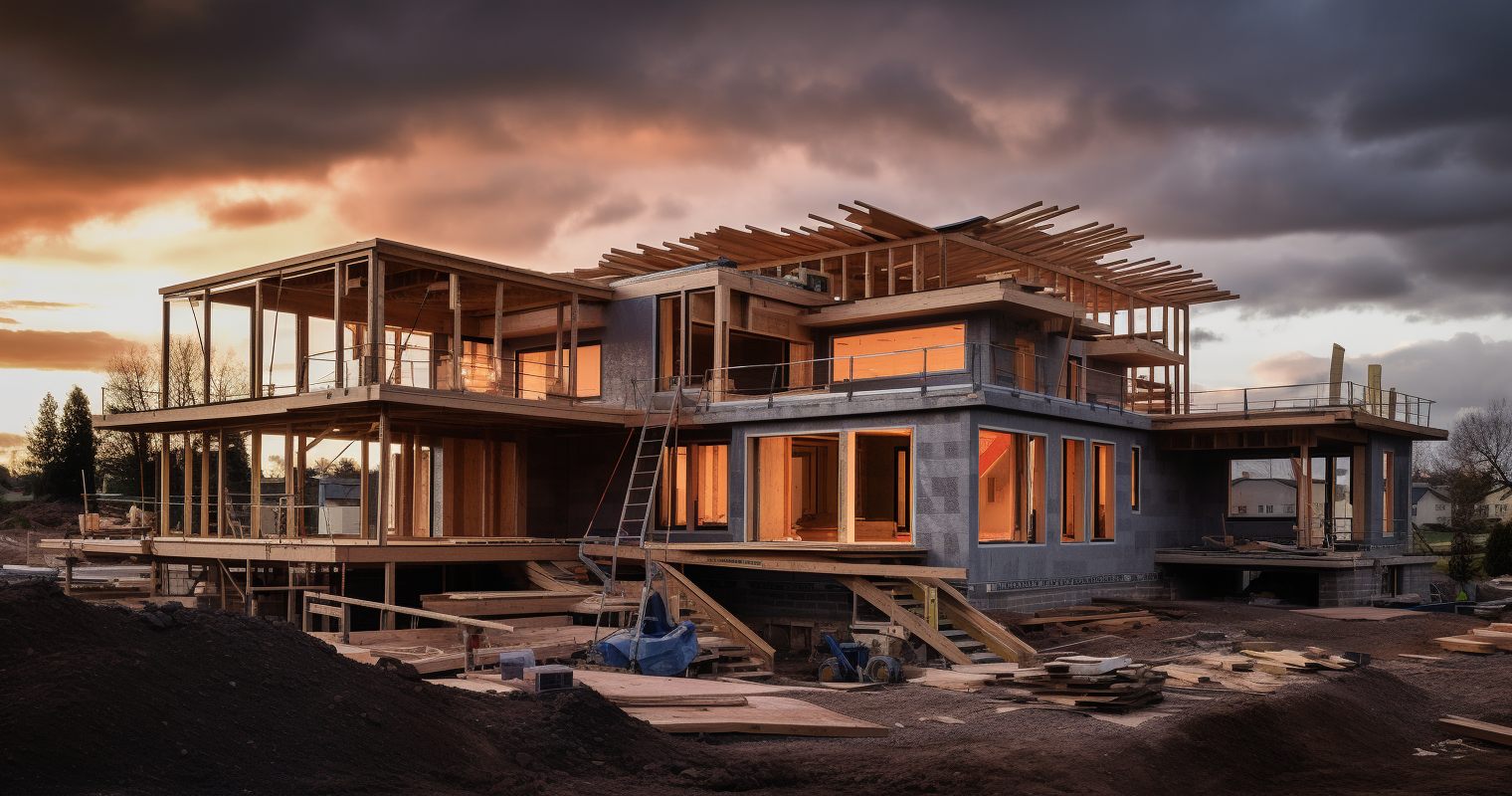
Any construction work undertaken in The Bahamas — from new builds and extensions to decks and outbuildings — requires a building permit under the Buildings Regulations Act. Planning and building approvals fall under the remit of the Ministry of Works & Urban Development. While foreign nationals are permitted to own and develop property, those acquiring larger land parcels must obtain prior approval under the International Persons Landholding Act.
| Item | Details |
|---|---|
| Building permit required? | Yes — for all new construction, additions, alterations, decks, sheds, fences, and retaining walls (as of 2024) |
| Permit processing time | Six to eight weeks after full submission of documents (as of 2024) |
| Permit validity | 18 months from date of issue; extensions available before expiry (as of 2024) |
| Deposit on application | 10% of estimated permit fee payable on submission (as of 2024) |
| Foreign land ownership | Permit required under the International Persons Landholding Act for holdings over one acre (as of 2024) |
| Key authority | Buildings Control Division, Ministry of Works & Urban Development, Nassau |
Do you need planning permission to build or renovate a property in The Bahamas?
Under the Buildings Regulations Act, a building permit is compulsory for essentially all forms of construction work in The Bahamas — new buildings, additions, structural alterations, decks, sheds, retaining walls, and fences all fall within its scope. This represents a considerably wider net than jurisdictions such as the UK, where “permitted development” rights allow homeowners to carry out certain minor works without obtaining formal planning consent. No comparable general exemption exists in The Bahamas for residential projects.
Routine minor repairs may be undertaken without an application or permit, so long as the cost does not exceed $50 and the work does not breach any provisions of the applicable code. It should be noted, however, that this exemption is confined to the Freeport area under the Grand Bahama Port Authority’s code. Everywhere else in the country, virtually any structural or material alteration should be treated as requiring a permit, and you should seek confirmation of your specific circumstances from the Buildings Control Division before work begins.
The purpose of building permits is to safeguard public safety, health, and welfare as they relate to construction — covering structural integrity, mechanical and electrical systems, adequate exit provision, sanitation, lighting, ventilation, and fire safety. In practice, the system combines both land-use planning assessment and construction safety approval within a single application process.
The Bahamas Building Code (3rd Edition) sets out minimum standards and requirements for sound building design, construction methods, and the use of materials. Its provisions supplement the Building Regulations Act 1971 and its subsidiary legislation, and compliance with the Code forms a condition attached to every building permit that is issued.
How to apply: a step-by-step guide
- Engage a registered architect. Architectural drawings must carry the signature of a registered architect. Your architect will typically coordinate or assist with the permit submission process.
- Assemble your documentation. Required documents include a location plan, a survey drawing of the site, architectural drawings signed by a registered architect, structural drawings, and mechanical and electrical drawings signed by a registered engineer.
- Secure any specialist approvals in advance. Depending on the location and nature of the project, an approval letter from the relevant agency will be needed before submission — for example, from the Port Department for a dock, the Civil Aviation Department for a hangar, or the Ministry of Agriculture where agricultural land is involved.
- Lodge your application and pay the deposit. Submit the completed application form and supporting documents to the Ministry of Works & Urban Development or the relevant local administrator. Applications in Freeport are directed to the Grand Bahama Port Authority Limited. A deposit equivalent to 10% of the estimated building permit fee is due upon submission.
- Multi-department review. The application is circulated to the Civil Design Section for drainage and road access checks, the Department of Physical Planning for zoning approval, the Department of Environmental Health/BEST Commission for environmental impact and health code compliance, and finally to the Buildings Control Division for mechanical, electrical, structural, and other technical checks.
- Approval, settlement of fees, and collection. Once approved, drawings are formally stamped and the final permit fee is calculated. Applicants are notified by telephone and may collect the permit upon payment. Applicants on the Family Islands collect their approved permit and settle the balance at their local government office.
Following complete submission of all documents, processing typically takes six to eight weeks, though this may extend depending on the requirements of external agencies (as of 2024). The permit remains valid for eighteen months from the date of issue, and an application to extend it may be made before it expires. Permit fees vary by project type and value — consult the Building Permit Schedule of Fees on the Ministry of Works website for current figures.
The Buildings Control Division can be contacted at: Ground Floor, East Wing, John F. Kennedy Drive, P.O. Box N-8156, Nassau, New Providence, The Bahamas. Tel: (242) 302-9511 Ext. 4300 | Fax: (242) 302-9765 | Office Hours: 9:30 am to 4:30 pm.
For Freeport projects: Grand Bahama Port Authority, Pioneers Way & East Mail, PO Box F-42666, Freeport, Grand Bahama. Tel: (242) 350-9000 | Website: www.gbpa.com
What are the rules around listed buildings, conservation areas, and heritage protection in The Bahamas?
The Bahamas does not currently operate a formal listed building designation system directly comparable to those found in the UK or Ireland, where individual structures are graded and separately consented alterations are required. Nevertheless, heritage and conservation considerations are embedded within the planning framework through legislation and the Department of Physical Planning.
The Planning Act in The Bahamas carries objectives to protect and conserve the country’s natural and cultural heritage, promote sustainable development within a healthy natural environment, and maintain and improve the quality of the physical and natural environment. These goals give planning authorities the power to attach conditions to, or refuse, applications that pose a threat to heritage or conservation values.
Nassau’s historic centre — particularly around Parliament Square and Bay Street — is widely acknowledged as possessing significant colonial-era architectural character, and proposals to demolish, substantially alter, or construct within these areas are likely to receive closer scrutiny from the Department of Physical Planning during the zoning approval stage of the building permit process.
Before purchasing any property you believe may have historical or architectural significance, or that sits within a historically sensitive precinct, contact the Department of Physical Planning directly. This department handles zoning approval as part of the building permit process and can advise on any site-specific restrictions. It can be reached through the Ministry of Works & Urban Development at John F. Kennedy Drive, Nassau. The official Government of The Bahamas website provides contact details for all relevant departments.
Carrying out unauthorised work on a heritage structure or within a protected area can result in a stop-work order, a requirement to reinstate original features at the owner’s cost, and potential prosecution under the Buildings Regulations Act. Always obtain written confirmation of any restrictions before committing to a purchase or agreeing a project scope.
What permits and licences are required when building or renovating in The Bahamas?
In addition to the building permit itself, a construction project in The Bahamas will generally require a range of further approvals at different stages. Understanding these requirements at the outset will allow you to build a more realistic project timeline.
- Zoning Approval: The Department of Physical Planning grants zoning approval as part of the building permit process. Where a proposed use does not conform to the land’s zoning classification, a separate application for rezoning or a variance will be needed, and this can add considerably to your timeline.
- Environmental Approval: The Department of Environmental Health/BEST Commission evaluates environmental impact and checks compliance with Environmental Health codes. Larger developments, or those in proximity to coastlines, wetlands, or ecologically sensitive zones, may require a full Environmental Impact Assessment (EIA). Contact the Bahamas Environment, Science and Technology (BEST) Commission to determine whether your project triggers this requirement.
- Drainage and Road Access: The Civil Design Section reviews drainage adequacy and road access as part of the standard permit assessment. If the site lacks sufficient road access or drainage provision, these matters will need to be resolved before approval can be granted.
- Utility Connection Permits: In Freeport, plans must be reviewed and stamped by Grand Bahama Power and the Grand Bahama Utility Company prior to submission to the Building Department. In Nassau and elsewhere, you will need to engage Bahamas Power and Light (BPL) and the Water and Sewerage Corporation separately to arrange connections. Only electrical contractors licensed and authorised by Bahamas Power and Light (BPL) may carry out electrical installations.
- Occupancy Certificate: Once construction is complete and prior to the building being occupied, an Occupancy Certificate must be obtained. This document confirms that the completed structure accords with the approved drawings and the Building Code. A newly constructed property must not be occupied before this certificate has been issued.
- Demolition Permit: Any demolition of an existing structure on the site requires a separate demolition permit before work proceeds.
- Dock or Waterfront Structures: The construction of a dock requires an approval letter from the Port Department in addition to the standard building permit.
Fees and processing times for all of these approvals are subject to periodic change — always verify current requirements directly with the issuing authority. The Ministry of Works & Urban Development website at www.mowbahamas.gov.bs is the primary official reference point.
How do you find a reliable, trustworthy builder in The Bahamas?
The regulatory framework governing contractors in The Bahamas is an important consideration before engaging a builder. The Construction Contractors Act 2016 represented a significant step forward, driven by the Bahamian Contractors Association (BCA), and provided for the creation of the Construction Contractors Board as a key industry regulator. However, as of early 2026, full implementation of this licensing regime has been substantially delayed.
The failure to appoint the Board that would oversee the construction industry’s self-regulation means it has not yet been able to handle the licensing and registration of contractors and trades persons. It would also have enforced the Act, imposing penalties and sanctions on contractors found guilty of misconduct and defective work, thus providing consumers with protection and a means of redress.
This has left construction as the last major Bahamian profession without self-regulatory powers. For foreign buyers and expats commissioning building work, this is a significant practical concern. Unlike engaging a lawyer or doctor in The Bahamas — or a contractor in countries such as Australia or Canada, where active licensing bodies vet and discipline builders — there is currently no independent authority you can approach to verify a contractor’s credentials or submit a formal complaint against them.
The most important professional organisation to consult is the Bahamian Contractors’ Association (BCA). Established in 1959, the BCA is the leading body representing construction professionals in The Bahamas, with a mission to protect, educate, and empower contractors while driving up industry standards.
The BCA maintains a contractor register and can provide referrals to member companies. Inclusion in the Contractor Register is presented as an indicator of a reputable business. The BCA works alongside developers, government agencies, and foreign investors to ensure local contractors can access major projects, and offers expertise and guidance across all phases of construction.
Bahamian Contractors’ Association (BCA):
Website: www.bahamianscontractors.org
Check their website for current contact details, as these are updated regularly.
Practical steps for vetting any contractor include:
- Ask for references from recent clients on projects of a comparable scale and type to yours. Where possible, visit finished buildings in person.
- Check insurance. Require evidence of public liability insurance and, ideally, employer’s liability cover before any work commences on site.
- Use staged payments rather than large upfront sums. Tie payments to clearly defined milestones set out in a written contract. Be wary of any contractor who demands substantial advance payment before work has begun.
- Formalise everything in writing. A proper contract should specify the scope of works, programme, materials, payment schedule, and how disputes will be handled. There is no universally adopted standard construction contract in The Bahamas, and parties are free to negotiate their own terms. Larger projects often adopt a US-style format such as that of the American Institute of Architects, a UK-style format such as that of the Joint Contracts Tribunal, or some combination of the two.
- Be alert to common pitfalls. Consumer complaints about the construction industry in The Bahamas — including contractors operating without a construction licence, disappearing after receiving advance payments, and delivering deficient work — are widely reported. Foreign property owners are especially exposed. If you will not be resident in The Bahamas during the build, appointing an independent local project manager or architect to oversee the works on your behalf is strongly recommended.
How do you find a qualified local architect in The Bahamas?
The architectural profession in The Bahamas is regulated under the Architect Registration Act, which establishes a formal registration framework and a professional register. The Board causes the Registrar to keep “The Register of Professional Architects”, which records the name and address of every architect and architectural technician registered under the Act, the qualifications by virtue of which they are registered, and such other particulars as may be prescribed.
Because all architectural drawings submitted with a building permit application must be signed by a registered architect, engaging an unregistered practitioner will result in your permit application being rejected. Always confirm that any architect you plan to use is listed on the official register before instructing them.
The leading professional body for architects is the Institute of Bahamian Architects (IBA). A not-for-profit membership organisation, the IBA has represented Bahamian architects and the architectural profession since 1973, working to foster the creation of buildings and communities that are safe, healthy, sustainable, and resilient.
Institute of Bahamian Architects (IBA):
Website: www.ibabahamas.org
Contact the IBA through their website for a referral to a registered member architect.
The Professional Architects Board is the statutory body responsible for maintaining the Register of Professional Architects and administering the registration process. The Board publishes a list of qualifications and institutions it recognises in relation to the academic training required for registration eligibility, and oversees architectural practice in accordance with the Act.
For expats commissioning a new build or major renovation, seek out an architect with a track record of working with international clients, a thorough understanding of the permit application process, and experience with construction materials suited to the Bahamian environment — particularly with regard to hurricane resilience and resistance to salt-air corrosion. The IBA website is the best starting point. All professional practice in The Bahamas is conducted in English.
Another professional network worth knowing about is Bahamas Engineers, Architects and Allied Professionals (BEAAP), which brings together construction industry professionals. Their website is beaapbahamas.com.
What are the common pitfalls when buying land to build on in The Bahamas?
Purchasing land for development in The Bahamas involves specific risks that differ considerably from land transactions in countries with comprehensive, centralised land registry systems. Awareness of these issues before contracts are exchanged can prevent serious financial and legal difficulties later.
Title and ownership history
The Bahamas does not yet operate a fully comprehensive, centralised land registry of the kind found in countries such as the UK or Australia, where state-guaranteed ownership records provide a reliable starting point for any transaction. Real property reform legislation is under active discussion, with the overarching goal of establishing a registered land system. At the time of writing, the government is inviting recommendations from practitioners on draft bills. If enacted, it would likely take a number of years to codify existing title deeds and build out the registry; once in place, the title review process would become considerably less burdensome. Until such reform is in effect, you must rely on a qualified Bahamian attorney to undertake a thorough title search, verifying ownership and identifying any encumbrances, liens, or unresolved disputes extending back over many decades.
Zoning and land use
Before committing to purchase, confirm the zoning classification of the land with the Department of Physical Planning. Land may be designated for agricultural, residential, commercial, or other uses — and the visual appearance of a plot tells you nothing about whether planning permission for a dwelling will be forthcoming. Obtaining written confirmation of the applicable zone and any associated restrictions before signing any sale agreement is essential.
Environmental and flood risk
The Bahamas is a low-lying archipelago with substantial exposure to hurricanes, storm surges, and coastal inundation. Before proceeding with a purchase, commission an independent survey to assess flood risk, proximity to mangroves or protected coastal habitats that may constrain development, and any contamination issues affecting the site. The BEST Commission is the relevant authority for environmental queries.
Utilities
Particularly on the Family Islands and more remote parcels, you should verify the availability and cost of connecting water, electricity, and sewerage to the site before purchase. Extending utility infrastructure to an undeveloped plot can be a substantial expense — and one that cannot be recovered if planning permission is subsequently refused.
Foreign ownership requirements
Sector-specific restrictions apply to protect certain industries, including real estate. Under the International Persons Landholding Act (IPL Act), foreign nationals are prohibited from acquiring or holding more than one acre of land without government approval. On 1 July 2024, the Act was amended. The legislation now provides that the permit will expire if the holder fails, within 180 days of the date the permit is granted, to pay the applicable Value Added Tax on the conveyance and submit a notice to the Chief Valuation Officer at the Department of Inland Revenue indicating the change in ownership, usage and other particulars, and pay the real property taxes. Ensure you engage a Bahamian attorney who is fully up to date with these requirements before signing any sale agreement.
Survey and boundaries
Boundary disputes are not uncommon in The Bahamas, particularly in relation to older parcels. Always commission an independent survey by a licensed land surveyor before exchange, and verify that the survey drawing corresponds precisely with the description in the title deed. The survey drawing will in any event be required as part of your building permit application.
What are the rules around foreign ownership and financing for construction projects in The Bahamas?
The Bahamas is broadly welcoming of foreign investment in real estate and construction, but prospective buyers should understand the specific legal requirements that apply to foreign land ownership and financing before proceeding.
Foreign land ownership
Foreign and domestic private entities have the right to establish and own business enterprises in The Bahamas without general limitations on foreign ownership and control. However, sector-specific restrictions do apply, including in real estate. Foreign nationals are prohibited from acquiring or holding more than one acre of land without government approval. Applications for a landholding permit are submitted under the International Persons Landholding Act to the Investments Board. For properties of less than one acre, a permit is still required where the purchaser is a foreign national.
Foreign direct investment is actively encouraged through industry-specific legislation, and a range of legislative incentives and concessions are available to businesses operating in The Bahamas. The Bahamas Investment Authority (BIA) regulates and facilitates foreign direct investment in accordance with the country’s National Investment Policy. For larger development projects or investment-linked construction, the BIA should be your first port of call. Visit www.bahamas.gov.bs for contact details.
Financing construction
Well-established licensed local banks and financial institutions in The Bahamas offer conventional financing for projects across a wide range of types and scales. The Bahamian government has historically also permitted the financing of local commercial projects by international lenders, subject to exchange control regulations and the standard vetting and approval requirements applicable to foreign investors.
Where a foreign lender intends to advance a loan secured against Bahamian real estate, an application must be made to the Investments Board for a mortgagee’s landholding permit under the IPL Act, and to the Central Bank of The Bahamas for the necessary approvals under the Bahamian Exchange Control Regulations.
Foreign nationals can in principle apply for mortgages or construction loans from Bahamian banks, but lenders will require evidence of legal status, a landholding permit, and satisfactory due diligence on both the borrower and the project. Loan-to-value ratios and interest rates available to non-resident applicants may differ from those offered to residents. Consult the Central Bank of The Bahamas (www.centralbankbahamas.com) and the Bahamas Investment Authority for current guidance.
What official sources should you consult when planning to build or renovate in The Bahamas?
Construction and property regulation in The Bahamas involves multiple government departments and statutory bodies. The following table sets out the key official sources to consult before and throughout any project.
| Authority | Role | Website / Contact |
|---|---|---|
| Ministry of Works & Urban Development (Buildings Control Division) | Building permits, building code compliance, inspections, occupancy certificates | www.mowbahamas.gov.bs | Tel: (242) 302-9511 Ext. 4300 |
| Department of Physical Planning | Zoning approval, land-use planning, heritage and conservation considerations | Via Ministry of Works & Urban Development |
| BEST Commission (Bahamas Environment, Science and Technology) | Environmental impact assessment, environmental compliance | www.best.bs |
| Bahamas Investment Authority (BIA) | Foreign direct investment approval, National Investment Policy | www.bahamas.gov.bs |
| Grand Bahama Port Authority (GBPA) | Building permits and construction regulation in Freeport | www.gbpa.com | Tel: (242) 350-9000 |
| Central Bank of The Bahamas | Exchange control regulations, mortgage and financing approvals for foreign nationals | www.centralbankbahamas.com |
| Professional Architects Board / Institute of Bahamian Architects (IBA) | Architect registration, register of qualified architects | www.ibabahamas.org |
| Bahamian Contractors’ Association (BCA) | Contractor register, industry standards, dispute guidance | www.bahamianscontractors.org |
| Department of Housing | Approved Builder Status Certificates; housing-related approvals | Charlotte House, Corner of Charlotte and Shirley Streets, P.O. Box N275, Nassau | Tel: (242) 302-5816 |
Regulations, fees, and procedures are subject to change. Always verify current requirements directly with the relevant authority rather than relying solely on third-party sources, including this article. The Official Government of The Bahamas website serves as the primary gateway to all central government services.
Frequently asked questions
How much does a building permit cost in The Bahamas?
Permit fees vary according to the type of project and are typically calculated as a percentage of the estimated construction value. The Building Permit Schedule of Fees sets out the applicable charge for each category of work. As of 2024, a deposit equivalent to 10% of the estimated building permit fee is payable when the application is submitted. Always consult the current schedule via the Ministry of Works & Urban Development website at www.mowbahamas.gov.bs, as fees are revised from time to time.
How long does the building permit process take in The Bahamas?
Following the complete submission of all required documents, a permit is typically processed within six to eight weeks, although this may vary depending on the requirements of external agencies (as of 2024). In practice, where documents are incomplete or questions arise during the multi-department review, the timeline can stretch considerably. Submitting drawings that are fully complete, correctly signed, and properly stamped before lodging the application is the most effective way to avoid unnecessary delays.
Are UK or US building qualifications or standards recognised in The Bahamas?
UK and US qualifications are not automatically recognised in The Bahamas. Architects must be registered with the Professional Architects Board, which publishes a list of qualifications and institutions it considers acceptable for the purpose of meeting the academic training requirement for registration. Foreign-qualified construction professionals should check with the Board and the IBA whether their credentials are eligible for recognition before seeking to practise. The Bahamas Building Code sets the applicable construction standard for all projects regardless of the training background of the contractor involved.
What happens if I build without a permit in The Bahamas?
Construction carried out without a permit, in breach of the Building and Sanitary Code, or in an unsafe manner may attract a stop-work order. Further consequences can include a requirement to demolish the unauthorised work at your own expense, financial penalties, and the inability to obtain an occupancy certificate. Unpermitted work will also create difficulties when you come to sell the property, as the absence of approved permits will be identified during any conveyancing due diligence exercise.
Do I need to speak a particular language to deal with authorities or contractors in The Bahamas?
English is the official language of The Bahamas, and all government departments, permit applications, building codes, and professional registers operate entirely in English. Foreign nationals who are not confident reading legal or technical English documentation should engage a bilingual Bahamian attorney or a qualified interpreter to assist them, particularly when reviewing contracts, title deeds, or permit conditions.
How do I resolve a dispute with a contractor in The Bahamas?
As of 2026, the Construction Contractors Board — which the Construction Contractors Act 2016 provides for, and which would establish a formal mechanism for handling contractor complaints and disciplinary matters — has not yet been appointed and is therefore not operational. Part VI of the Act sets out a process for property owners to bring complaints before the Board for resolution, but this avenue remains unavailable in practice. In the interim, disputes with contractors are generally pursued through civil litigation in the Bahamian courts, or through arbitration where this has been stipulated in the contract. The Bahamas is a member of the World Bank’s ICSID Convention, and disputes between companies may in some circumstances be referred to the ICSID. Every construction contract should include an explicit dispute resolution clause.
Can foreign nationals get a mortgage or construction loan in The Bahamas?
Established licensed banks and financial institutions in The Bahamas provide conventional financing across a range of project types and scales. Foreign nationals may in principle apply for mortgages or construction loans from Bahamian lenders, but will be subject to additional requirements including a landholding permit and exchange control approval from the Central Bank of The Bahamas. Interest rates, loan-to-value ratios, and eligibility criteria for non-resident applicants may differ from those available to Bahamian residents. Independent financial and legal advice should be obtained before entering into any financing arrangement.
Are there restrictions on the type of construction allowed near the coast in The Bahamas?
Yes. Coastal and waterfront development is subject to assessment by the BEST Commission for environmental impact and by the Department of Physical Planning for zoning compliance. Projects proposed in proximity to mangroves, coral reefs, or other ecologically sensitive coastal areas are subject to stringent environmental regulation and may require a full Environmental Impact Assessment. In view of The Bahamas’ exposure to hurricanes, the Bahamas Building Code also imposes specific structural requirements for properties in coastal locations, including standards for wind load resistance and storm surge resilience. Always consult the BEST Commission and the Department of Physical Planning to confirm what restrictions apply before purchasing coastal land or proceeding with the design of coastal structures.