
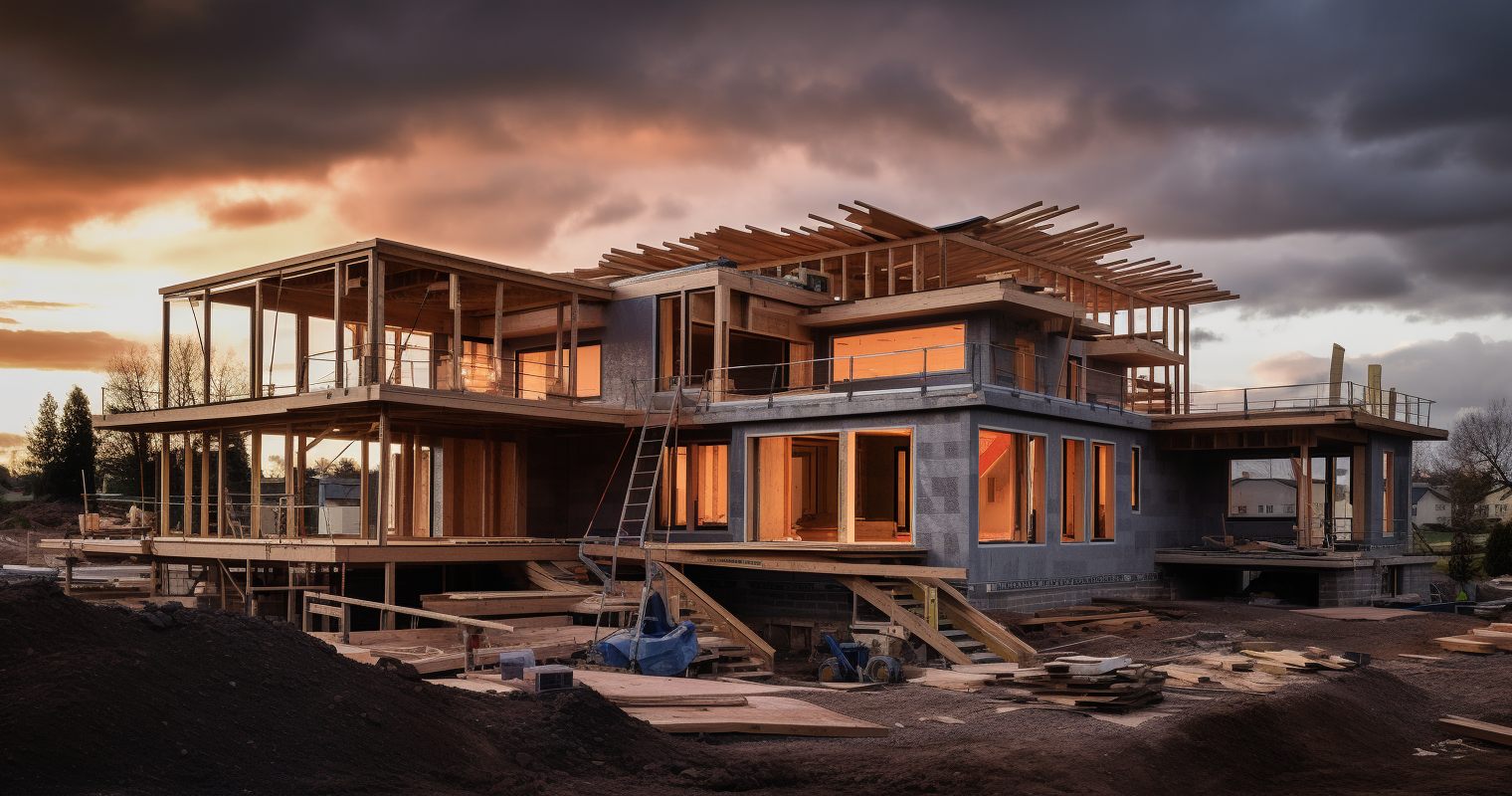
Anyone planning to build or renovate property in Bahrain will need planning permission from the Ministry of Municipalities Affairs and Agriculture for nearly all substantial construction work, submitted through the official Benayat portal. The industry operates under a framework of licensed engineering offices and classified contractor grades. Non-Bahraini nationals are restricted to purchasing land or undertaking construction within government-approved freehold zones, and every project must adhere to the Unified Building Permit Regulations.
| Item | Details |
|---|---|
| Planning permission authority | Ministry of Municipalities Affairs and Agriculture (via Benayat portal) |
| Average permit approval time (Benayat system) | Approximately 2 working days (as of 2024) |
| Penalty for building without a permit | BHD 1,000–BHD 10,000 fine (as of 2024) |
| Property registration fee | 2% of property value; reduced to 1.7% if submitted within 60 days of notarisation (as of 2025) |
| Foreign ownership zones | Designated freehold zones only (e.g. Juffair, Amwaj Islands, Reef Island, Bahrain Bay, Durrat Al Bahrain) |
| Minimum investment threshold for non-GCC foreign buyers | BD 50,000 (~USD 133,000) (as of 2025) |
Do you need planning permission to build or renovate in Bahrain?
Planning permission is mandatory for virtually every category of significant building and renovation activity in Bahrain. The principal legislation underpinning this requirement is Decree-Law No. 13 of 1977 (the Building Code), which, together with its executive regulations, sets out the rules for securing building permits, overseeing construction activities, and ensuring that completed work conforms to approved drawings and safety standards. The scope of this framework is broader than in many comparable jurisdictions: whereas some countries permit minor internal alterations or small outbuildings without formal consent, Bahrain requires a permit for the great majority of structural modifications.
The Benayat platform provides a dedicated service for applying for addition permits on existing structures, divided into two categories: small additions and large additions. The small additions permit covers work not exceeding 50 square metres and may be lodged either by the property owner personally or through a certified engineering office. When the owner submits directly, the application must be audited by the municipality; where a licensed engineering office submits on the owner’s behalf, the applicant has the flexibility to select the auditing body. For additions of 50 square metres or more, only a licensed engineering office is authorised to file the application.
The Benayat Building Permit Portal has transformed the permit process by introducing a unified building code, redesigned administrative workflows, and a purpose-built electronic system that enables rapid issuance of building permits. The platform handles permit issuance for all project categories in Bahrain — investment, residential, industrial, commercial, and beyond.
Applications processed through Benayat are approved in an average of two working days (as of 2024), which compares very favourably with planning timelines in many other countries — standard applications in the United Kingdom, for instance, typically require eight weeks or more. That said, large or complex projects in Bahrain may require sign-offs from several government bodies and could take considerably longer from submission to approval.
The step-by-step process for obtaining a building permit in Bahrain is as follows:
- Define your project type — Establish whether your project is residential, commercial, industrial, or constitutes an addition or renovation, since the requirements differ across categories. Consult the interactive zoning map on the Benayat platform to confirm which requirements apply to your specific plot.
- Engage a certified engineering office — A properly licensed engineering office must be engaged for the design and supervision of the project, ensuring all technical work is carried out by qualified professionals. Select an office holding a current licence from the Committee of Organising Engineering Professional Practice (COEPP).
- Prepare required documents — Documents required include a valid survey certificate or municipality-approved master plans, together with approval letters from relevant authorities such as the Supreme Council for Environment (for factories) or the Bahrain Tourism and Exhibition Authority where the site warrants it. Architectural drawings for every floor and structural engineering plans must also be included in the submission package.
- Submit via Benayat — Through the platform, licensed engineering offices can lodge building permit applications, monitor the progress of requests, access advisory services from relevant government agencies, and settle permit fees electronically.
- Pay fees online — Payment is made electronically through the Benayat system. Permit fees are calculated according to project type, size, and classification. Always consult the Benayat portal for the current fee schedule, as charges are subject to periodic revision.
- Await review and approval — The municipality or the licensed engineering office will audit the application. All construction projects must satisfy planning regulations consistent with Bahrain’s urban development objectives, and permit issuance depends on compliance with national urban development policies.
- Commence construction — Work may only begin once the permit has been formally granted. The permit must be kept on site throughout the duration of the project.
Non-compliance with building regulations in Bahrain carries financial consequences. Under Chapter 2 of the Unified Guidebook of Building Permit Regulations, erecting a building or undertaking works without a municipality licence can result in a penalty ranging from BHD 1,000 to BHD 10,000 (as of 2024). Always confirm current fees and thresholds directly with the Ministry of Municipalities Affairs and Agriculture.
What are the rules around listed buildings, conservation areas, and heritage protection in Bahrain?
Bahrain possesses a distinctive architectural and cultural legacy, and formal protections exist for historically significant structures and districts, though the system differs from the tiered listed building classifications used in countries such as the UK or the National Register of Historic Places in the USA. The body with primary responsibility for cultural and heritage protection is the Bahrain Authority for Culture and Antiquities (BACA), operating under the Ministry of Information. BACA oversees heritage sites, archaeological zones, and historically significant buildings across the Kingdom.
Certain parts of Bahrain — most notably sections of Muharraq (a UNESCO World Heritage Site connected to the pearling industry) and the historic core of Manama — carry significant heritage designations. Any renovation, modification, or construction work within or adjacent to these protected areas requires prior consultation with BACA and may necessitate additional specialist approvals before the municipality can issue a building permit. Prospective buyers should check with BACA before acquiring or beginning any works on older properties, especially in historic districts.
Bahrain does not currently operate a publicly searchable online register equivalent to the UK’s listed buildings database or Australia’s State Heritage Register. Buyers and developers are therefore strongly advised to approach BACA directly to establish whether any heritage designation applies to a property or surrounding area. The Bahrain Authority for Culture and Antiquities can be reached through its official website; its offices are based in Manama. Approval letters from the relevant authorities are required in certain circumstances, including from the Bahrain Tourism and Exhibition Authority where applicable to a particular site.
Bahrain does not have tree preservation orders equivalent to those found in some European systems, though environmental restrictions may apply in ecologically sensitive locations. Environmental clearance from the Supreme Council for Environment may be required for projects that could affect the surrounding environment. Breaching heritage protection rules can result in stop-work orders, mandatory restoration of original features, financial penalties, and potential criminal liability under Bahrain’s cultural protection legislation. Always obtain written confirmation of any heritage restrictions before signing a purchase agreement or instructing a contractor.
What permits and licences are required when building or renovating in Bahrain?
Construction projects in Bahrain must secure a range of permits and approvals at various stages to demonstrate compliance with applicable regulations and safety standards. The specific requirements depend on the nature of the project, the types of entities involved, and where the project is situated. While the municipal building permit forms the cornerstone of the approvals process, a number of additional consents are typically needed.
Civil Defence Approval is required to satisfy fire safety obligations, particularly for high-rise buildings and industrial facilities. This approval must be obtained from the General Directorate of Civil Defence, which falls under the Ministry of Interior. Residential projects face less demanding fire safety requirements than commercial or multi-storey developments, but any building incorporating multiple units or commercial elements will require formal clearance before it can be occupied.
Electricity, water, and sewerage permits are issued by the Electricity and Water Authority (EWA) alongside relevant municipal authorities. Permissions for temporary power and water supply during the construction phase must also be secured from EWA before site works commence. Contact the Electricity and Water Authority early in the planning stage, as connection lead times can affect the overall programme.
Depending on the nature of the project, environmental clearance from the Supreme Council for Environment may be required, particularly where construction could impact the surrounding environment. This is most relevant for industrial developments, large-scale land reclamation projects, or work near coastal or ecologically sensitive zones.
Bahrain’s Green Building Code (Law No. 212 of 2019, Green Building Code V1.0) establishes a regulatory framework for promoting sustainability in construction, addressing energy efficiency, water conservation, greenhouse gas reduction, and Bahrain’s broader urban planning goals. Compliance is mandatory for new builds and significant renovations, and your engineering office must demonstrate conformity as part of the permit application.
All contracting companies must hold an active Commercial Registration issued by the Ministry of Industry and Commerce (MOIC), and that registration must list activities relevant to the work being carried out. Confirm that your chosen contractor holds a valid and current CR before entering into any contract. Fees and timescales for specialist permits vary; always verify current figures directly with the relevant authority, as requirements and costs are updated from time to time.
How do you find a reliable, trustworthy builder in Bahrain?
Bahrain’s construction sector operates under a system of commercial registration and contractor grading. Every contracting company must hold an active Commercial Registration from the Ministry of Industry and Commerce, and that registration must specifically cover the activities relevant to the work in question. For government-related or large-scale projects, contractors must additionally be pre-qualified by the Ministry of Works, which maintains a graded list of approved firms.
The Ministry of Works publishes a register of classified contractors on its website at www.works.gov.bh. Contractor grades range from small residential builders through to large firms capable of handling projects valued at over BHD 6 million. For residential or renovation work, always request a copy of the contractor’s current Commercial Registration certificate and verify that it remains active via the Sijilat portal operated by MOIC.
When evaluating a contractor, the following practical steps are advisable:
- Request references — Ask for at least three recently completed projects and speak directly with those clients. Visit completed sites wherever possible.
- Verify licensing — Confirm that the contractor holds a current CR with the correct activity codes for your project, and that any subcontractors they engage are similarly registered.
- Use written contracts — There is no specific legislation in Bahrain governing payment arrangements in the construction industry; the parties are free to agree on payment mechanisms — such as progress payments, retention sums, and final payments — within their contracts, provided these comply with applicable laws. Always use a detailed written contract that specifies scope, materials, milestones, and a clear payment schedule.
- Stage your payments — Structure payments as milestone-based instalments tied to verified stages of completion rather than paying large sums in advance. Retain a percentage — typically 5–10% — until practical completion and the expiry of the defects liability period.
- Check for decennial liability — Under Article 615 of the Civil Code, contractors and engineers bear responsibility for any structural defects or damage arising in buildings they construct. This warranty lasts ten years from project completion and covers defects relating to the structural integrity and safety of the building, even where the owner has approved the defective work.
- Confirm insurance — Request evidence of contractor’s all-risks insurance and public liability cover for the full duration of the project.
Frequent pitfalls for foreign property owners include contractors who submit artificially low initial quotations only to inflate costs mid-project, work commencing before all necessary permits have been obtained (leaving the owner exposed to fines), and inferior materials being substituted without the owner’s knowledge. A notable example involves a company that proceeded with construction before securing Civil Defence approval for its fire safety system; a mid-project inspection revealed non-compliant materials, a stop-work order was imposed, and the resulting three-month delay substantially increased overall costs. Always insist that your contractor obtains every required permit before each phase of work begins.
How do you find a qualified local architect in Bahrain?
Architects and engineers wishing to practise in Bahrain must be licensed through the Committee of Organising Engineering Professional Practice (COEPP), which operates under the Ministry of Municipalities Affairs and Agriculture. COEPP is the statutory licensing authority for all engineering professionals — including architects, civil engineers, and structural engineers — who are authorised to work in the Kingdom. A properly licensed engineering office must be engaged for the design and supervision of any building project.
COEPP maintains a register of licensed engineering offices and individual practitioners. You can verify the licence status of any architecture or engineering firm by checking directly with the Ministry. Contact details for COEPP and the Ministry of Municipalities Affairs and Agriculture are:
- Website: www.mun.gov.bh
- Email: [email protected]
- Telephone: +973 17981000
- Postal Address: Ministry of Municipalities Affairs and Agriculture, P.O. Box 53, Manama, Bahrain
When choosing an architect, ensure that their engineering office holds a current COEPP licence and that the licence extends to the relevant activities for your project — architectural design, structural engineering, and construction supervision may each require separate certifications. Where a property owner submits an application directly, it must be audited by the municipality; where a licensed engineering office submits on the owner’s behalf, the applicant may select the auditing entity. Engaging a fully licensed office can therefore significantly expedite your approvals process.
For expatriates, it is worth noting that while Arabic is Bahrain’s official language, many architects and engineering offices working in Manama and the principal development zones operate in both Arabic and other languages. However, all official documents, drawings, and permit submissions must conform to the standards set by COEPP and the municipality, regardless of the language used in communications with the client. Ask prospective architects for examples of recently completed projects comparable to yours, particularly where you have specific design requirements linked to international building standards or materials.
The Bahrain Society of Engineers (BSE) is a professional organisation to which many qualified engineers and architects belong. It can serve as a useful starting point for identifying competent professionals and verifying credentials. The BSE can be reached via its website at www.bse.org.bh.
What are the common pitfalls when buying land to build on in Bahrain?
Acquiring land in Bahrain with a view to building involves a range of risks that are particularly significant for those unfamiliar with local property and planning systems. Obtaining professional legal and technical advice before committing to any purchase is essential.
Confirm that planning permission can be secured before you commit to buying. All construction projects in Bahrain must comply with planning regulations consistent with national urban development objectives, and building permits are only issued where compliance with those policies can be demonstrated. Use the interactive zoning map on the Benayat platform to establish what development is permissible on any specific plot before exchanging contracts.
Scrutinise title deeds and ownership history with care. Property registration is one of the most fundamental steps in protecting ownership rights in Bahrain. The Survey and Land Registration Bureau (SLRB) oversees all real estate transactions, from the issuance of title deeds to land-use classifications. Without proper registration, buyers risk ownership disputes, delays in future transactions, or even losing legal entitlement to the property altogether. Conduct a title search through SLRB before exchanging contracts.
Verify land boundaries and commission an independent survey. SLRB may require a site survey to confirm plot boundaries, and any boundary disputes must be resolved before registration can be completed. Do not accept verbal assurances from a seller or agent regarding plot dimensions.
Understand zoning classifications thoroughly. All building permit regulations and plot-specific requirements are accessible through the interactive map on the Benayat platform. Zoning designations determine what may be built, to what height, and what proportion of the land area may be developed. In certain residential zones, for instance, the total built area shall not exceed 180% of the land area, with no single floor covering more than 60% of the plot.
Investigate for encumbrances. Establish that the property is free from encumbrances such as mortgages, liens, or ongoing disputes before proceeding. Title deeds in Bahrain are issued by SLRB and will record any registered charges or restrictions.
Verify utility availability in advance. Contact the Electricity and Water Authority (EWA) to confirm that water, electricity, and sewerage connections are accessible or can be extended to the plot at a reasonable cost. On newly developed or reclaimed land, the necessary infrastructure may not yet be in place.
Further common pitfalls include purchasing off-plan from developers who have not properly established RERA-mandated escrow accounts, failing to verify the seller’s title through SLRB records, and overlooking existing liens or mortgages on the property before committing. Always engage a qualified local property lawyer with proven experience in Bahraini real estate transactions.
What are the rules around foreign ownership and financing for construction projects in Bahrain?
By regional standards, Bahrain takes a comparatively open approach to foreign property investment, but the applicable rules are specific and must be fully understood before any purchase or construction project is initiated.
Foreign nationals face defined constraints but are nonetheless able to own property in Bahrain. Designated freehold zones allow non-GCC nationals to hold outright ownership; these include Juffair, Amwaj Islands, Reef Island, Bahrain Bay, and Durrat Al Bahrain. Ownership outside these zones is not available to foreigners except under special government authorisation.
Foreigners may own land in their personal name in Bahrain, but only where that land lies within one of the designated freehold zones. For villas and townhouses in eligible zones, true freehold ownership — covering both the structure and the underlying land — is available. In certain areas, leasehold rights of up to 99 years may also be granted, giving foreign nationals long-term use rights without full ownership.
Non-GCC foreign nationals may only acquire property in government-designated freehold zones and must satisfy specific investment thresholds. As of September 2025, designated freehold areas include Juffair, Amwaj Islands, Seef, Reef Island, Durrat Al Bahrain, and Diyar Al Muharraq. Non-GCC foreigners must obtain prior approval from the Economic Development Board and are generally required to invest a minimum of BD 50,000 (approximately USD 133,000).
With respect to construction activities, foreign participation in construction-related businesses (including the construction of buildings, roads, and railways) is capped at 49%. This means that if you intend to establish or use a locally registered construction company to deliver your project, foreign shareholding in that entity cannot exceed 49% without special dispensation. In practice, most individual property owners commissioning a private build will simply appoint a locally registered contractor rather than forming their own construction company.
All property transactions in Bahrain are recorded through the Survey and Land Registration Bureau (SLRB), and foreign purchasers must ensure that their acquisition is properly registered through this official channel to hold legally recognised ownership. A registration fee of 2% of the property value is payable, reduced to 1.7% if the registration application is submitted within 60 days of notarisation of the sales contract (as of 2025).
Foreign nationals may access mortgage finance from Bahraini banks, though lending criteria, loan-to-value ratios, and eligibility conditions vary by lender and may be more restrictive for non-residents. Some institutions offer Islamic financing products such as murabaha or ijara structures alongside conventional mortgage products. Consult the Central Bank of Bahrain for a list of licensed lenders. Off-plan purchases in Bahrain are protected by RERA’s escrow requirements, which ring-fence buyer funds in a separate account until agreed construction milestones are achieved.
Inheritance matters in Bahrain are governed by Islamic law (Sharia) for Muslim property owners, while non-Muslim expatriates may find that their home country’s inheritance rules apply to assets held in their personal name. This can give rise to complications for jointly owned property or where ownership is structured as part of an estate plan. Seek specialist legal advice on inheritance planning before finalising any property purchase.
What official sources should you consult when planning to build or renovate in Bahrain?
The official bodies and resources listed below are the primary references for anyone intending to build or renovate property in Bahrain. Rules, fees, and procedures change regularly; always consult official sources for the most current requirements before taking any action.
| Body | Role | Website |
|---|---|---|
| Ministry of Municipalities Affairs and Agriculture | Issues building permits; oversees planning regulations and the COEPP licensing of engineering offices; manages the Benayat portal | www.mun.gov.bh |
| Benayat Building Permit Portal | Online portal for submitting, tracking, and paying for building permit applications | benayat.app.gov.bh |
| Survey and Land Registration Bureau (SLRB) | Provides integrated services in the field of property registration and conducting property surveys; maintains the land register and title deed system | www.slrb.gov.bh |
| Real Estate Regulatory Authority (RERA) | Licences real estate developers, brokers, and agents; oversees off-plan project approvals and escrow accounts | www.rera.gov.bh |
| Electricity and Water Authority (EWA) | Issues utility connection permits for electricity, water, and sewerage | www.ewa.gov.bh |
| Supreme Council for Environment | Issues environmental clearances for construction projects that may impact the environment | www.sce.gov.bh |
| Bahrain Authority for Culture and Antiquities (BACA) | Responsible for heritage and archaeological site protection; advises on works near historic buildings or areas | www.baca.gov.bh |
| Ministry of Industry and Commerce (MOIC) | Issues Commercial Registrations for contractors and engineering offices; maintains the Sijilat portal | www.moic.gov.bh / www.sijilat.bh |
| Ministry of Works | Classifies and pre-qualifies contractors for public sector projects; maintains a register of graded contractors | www.works.gov.bh |
| Bahrain Society of Engineers (BSE) | Professional body for engineers and architects; useful for finding qualified professionals | www.bse.org.bh |
| Central Bank of Bahrain (CBB) | Regulates banks and financial institutions; relevant for construction financing and mortgage queries | www.cbb.gov.bh |
Frequently Asked Questions
How long does it typically take to get a building permit in Bahrain?
Applications processed through the Benayat system are approved in an average of approximately two working days (as of 2024). However, this timeframe applies to straightforward submissions lodged by licensed engineering offices. Projects that require sign-offs from multiple agencies — such as those necessitating environmental clearance, Civil Defence approval, or heritage authority consultation — will take considerably longer. For complex builds, allow several weeks to several months from initial submission to permit issuance.
Can I manage a building project in Bahrain if I don’t speak Arabic?
Many engineering offices, architects, and contractors operating in Bahrain’s main development areas work in Arabic alongside other languages. However, all official permit applications, technical plans, and legal documents must be submitted in Arabic or in a format that meets COEPP and municipal requirements. It is strongly recommended to engage a bilingual architect or project manager and to have all contracts reviewed by a qualified local lawyer before signing. Never rely on informal verbal interpretations of legal or technical documentation.
What happens if I build or renovate without planning permission in Bahrain?
Regulatory authorities are empowered to impose financial penalties based on the gravity of the infringement. Under the Unified Guidebook of Building Permit Regulations, erecting a building or undertaking works without a municipality licence can attract a fine of BHD 1,000 to BHD 10,000 (as of 2024). Authorities may also issue stop-work orders, demand demolition of unauthorised work at the property owner’s expense, or refuse future permit applications. The financial and time costs of enforcement action greatly outweigh those of obtaining consent in advance.
Are building standards from other countries (such as UK or US standards) recognised in Bahrain?
Bahrain applies its own Unified Building Permit Regulations and technical codes, including the Green Building Code. International standards may be cited in certain technical specifications but do not automatically replace local requirements. Where a design is based on overseas specifications — for example, a home conceived to UK building regulations standards — your engineer must verify and adapt those specifications to achieve full compliance with Bahrain’s local code. All designs must carry the endorsement of a COEPP-licensed engineering office regardless of where the design originated.
How much does it cost to build a house in Bahrain?
Construction costs in Bahrain vary considerably depending on location, specification, materials, and labour. As a broad guide, mid-range residential construction can fall anywhere between BHD 200 and BHD 450 per square metre, while high-specification or bespoke villa construction can be substantially higher. Rising material costs have made it increasingly challenging for contractors to contain projects within their original budgets. Always obtain a minimum of three detailed written quotations from licensed contractors and set aside a contingency allowance of at least 10–15% above the contract sum for unforeseen expenditure. Verify current rates with local architects or quantity surveyors.
What should I do if I have a dispute with my contractor in Bahrain?
When a dispute emerges, the first step is to pursue resolution through the formal dispute mechanism stipulated in your written contract. If an informal settlement proves impossible, the matter can be referred to the Bahrain Chamber for Dispute Resolution (BCDR-AAA) for arbitration, or proceedings can be brought before the Bahraini civil courts. Parties are free to agree on payment arrangements and dispute resolution procedures within their construction contracts, provided these accord with the Civil Code and applicable legislation. Instructing a qualified Bahraini lawyer at the earliest indication of a dispute will help safeguard your interests. Ensure that all instructions, variation orders, and payments are recorded in writing throughout the project.
Are there restrictions on where foreign nationals can build in Bahrain?
Foreign nationals may own land and build in Bahrain only within government-designated freehold zones. Ownership and construction outside these zones is not available to foreigners except under special government authorisation. Designated zones include Juffair, Amwaj Islands, Reef Island, Bahrain Bay, Durrat Al Bahrain, Seef, and Diyar Al Muharraq (as of 2025). Always confirm the current list of approved zones with SLRB or RERA before purchasing a plot, as the list may be updated over time.
Do I need a local company to commission construction work in Bahrain?
Individual foreign property owners within designated freehold zones can commission construction work directly by appointing a locally licensed contractor and engineering office — there is no general requirement to incorporate a local company simply in order to build a private residence. However, anyone wishing to establish a construction or contracting company in Bahrain should be aware that foreign ownership in construction activities is capped at 49%. Those considering commercial property development at scale should take legal advice on appropriate corporate structures before committing to any investment or construction programme.