
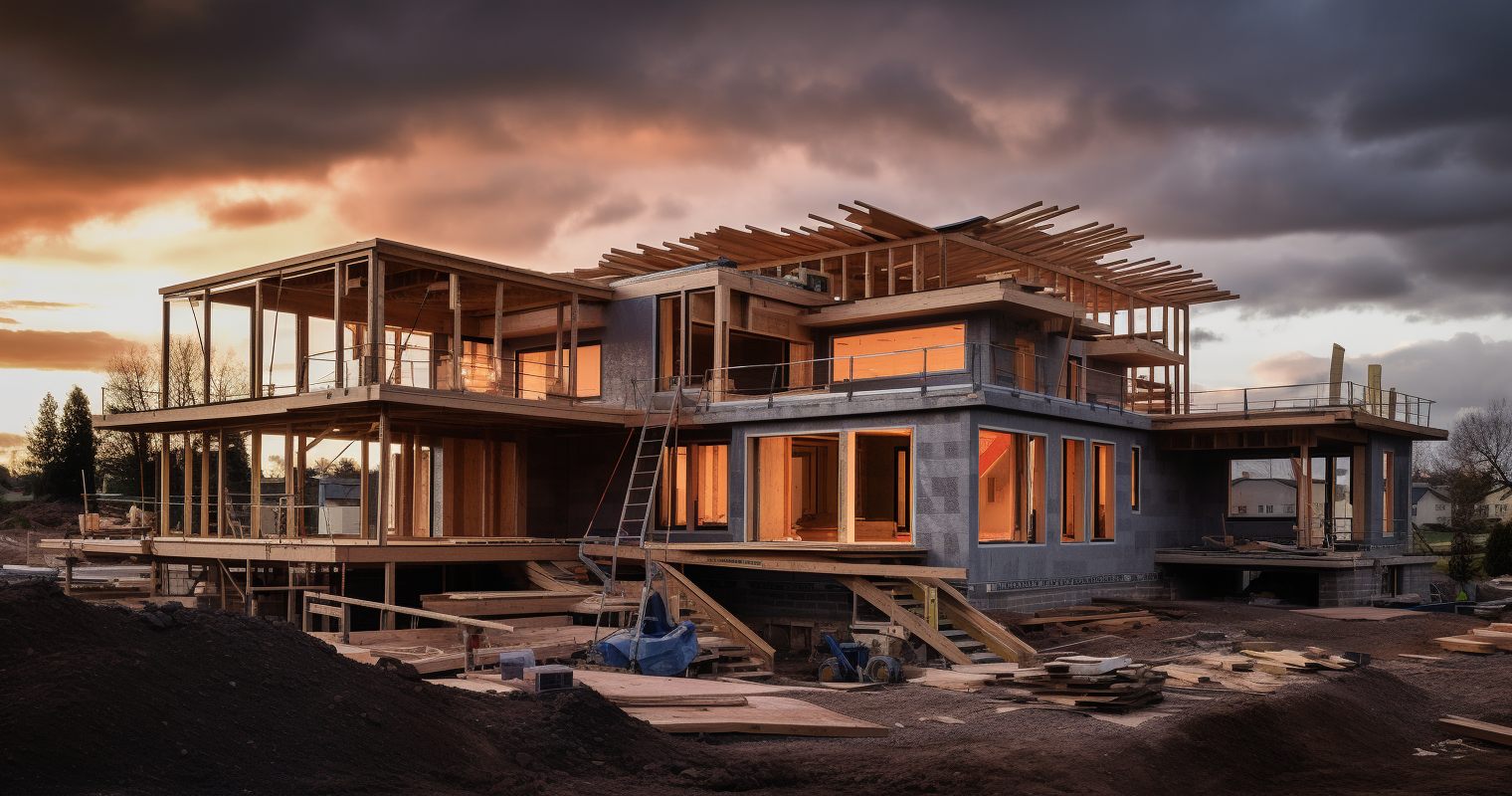
Constructing or renovating a property in Belgium is a strictly regulated undertaking administered at the regional level — Flanders, Wallonia, and Brussels-Capital each establish their own requirements regarding planning authorisation, permits, and building standards. A permit is obligatory for most substantial works, a registered architect is legally required for many project types, and foreign nationals encounter no restrictions when it comes to property ownership. Always confirm requirements with your local municipality before commencing any works.
| Item | Details |
|---|---|
| Planning authority | Regional and municipal (Flanders, Wallonia, Brussels-Capital — as of 2025) |
| Architect requirement | Legally mandatory for most structural works; must be registered with the Ordre des Architectes |
| Permit timescales | Typically 30–75 days for standard applications; longer for complex or heritage projects — verify with your municipality |
| Heritage legal inventory (Brussels) | Over 40,000 properties listed in Brussels Capital Region’s legal inventory (published August 2024) |
| Foreign ownership restrictions | None — foreign nationals may purchase land and property in Belgium on equal terms |
| Notary requirement | A Belgian notary (notaire/notaris) is legally required for all property purchases |
Do you need planning permission to build or renovate a property in Belgium?
Belgium is a federal state made up of the Flemish, Walloon, and Brussels-Capital regions, and responsibility for planning, zoning, and associated permits rests entirely with these regions — the federal government plays only a peripheral role. There is therefore no single national planning framework: the rules governing your project are determined entirely by which region your property sits in.
In Belgium, construction projects — whether entirely new builds, renovations, or changes of use — are subject to rigorous regulation. Central to this process is planning permission, a formal authorisation granted by municipal authorities confirming that a proposed project meets current urban planning, environmental, and safety requirements.
Not every type of work requires a building permit application. Although the categories of work requiring a permit differ from one region to another, certain principles are shared across all three regions. In general, the following types of work will require planning permission:
- Erecting new structures — whether residential, commercial, or industrial in nature.
- Extending or significantly modifying existing buildings, such as adding an annexe or altering the façade.
- Changing the designated use of a building — for instance, converting a commercial space into residential accommodation.
- Installing large outdoor features, including swimming pools and garden outbuildings beyond a specified size.
- Renovation work that affects a building’s load-bearing structure or its external elements such as the roof or façades.
- Full or partial demolition of existing structures.
It is worth noting that certain smaller-scale activities — such as interior refurbishment that neither affects the structure nor alters the outward appearance of a building — may be exempt from the permit requirement. Some energy-related renovation work may also benefit from simplified procedures or full exemption, though this depends on the precise scope of work and applicable local regulations.
In addition, some construction activities do not require a formal building permit but instead call for a prior notification to the relevant planning authority. These tend to be relatively routine works, and the authority generally has limited discretion when assessing such notifications.
An architect is required for many categories of work — in particular, any work that modifies the load-bearing structure or alters the volume of a building — though minor works may proceed without one. Unlike planning systems in countries such as Canada or Australia, where owners or builders can often self-certify simpler projects, Belgium places substantial legal responsibility on the registered architect, who must formally certify the project’s compliance with planning requirements.
The step-by-step process for applying for planning permission is as follows:
- Check your regional and local rules. Requirements may differ between the three regions (Wallonia, Flanders, Brussels-Capital), so it is advisable to contact your local council to establish any specific local conditions that apply.
- Determine if your project needs an architect. For any work that alters a building’s structure or volume, appoint a registered architect before preparing any documents. They will draw up the technical plans and complete the required forms.
- Prepare your application dossier. If your project does not fully comply with the urban planning regulations set out in a municipal plan or by-law, your file must identify the derogations sought and provide justification for them.
- Check for environmental impact. If your project has an environmental impact and is listed in Annex A of CoBAT (Brussels), an accredited design office must carry out an incidence study; if it falls under Annex B, a qualified person must produce an incidence report.
- Submit your application. If you intend to build, renovate, or carry out certain other types of work, you must first apply for and obtain planning permission — an authorisation issued either by the municipality or, in certain cases, by the Region itself. In Brussels, applications may be submitted online via the regional planning portal.
- Await the decision. Processing times vary by region and project type. As a general guide, uncomplicated applications typically take between 30 and 75 days, while complex or heritage-related projects can take considerably longer. Always check current timescales with your municipality.
- Comply with permit conditions. It is essential to adhere to all special conditions attached to the permit, such as environmental measures, rainwater management provisions, or health and safety obligations. Failure to do so may result in administrative penalties, fines, and even a compulsory obligation to demolish non-compliant works.
The cost of obtaining planning permission in Belgium varies considerably depending on the nature and scale of the project and the municipality in which it is situated. Always check the current fee schedule with your local commune, as these figures are subject to regular revision.
Compared with planning systems in countries such as the UK or France, Belgium’s approach is notably decentralised. Rather than a single national planning policy, each region legislates independently, and local communes may impose further conditions on top of those set by the region. Anyone accustomed to a unified national framework should allow additional time to understand which specific rules apply to their location.
What are the rules around listed buildings, conservation areas, and heritage protection in Belgium?
Heritage registers in Belgium encompass immovable heritage ranging from World Heritage Sites to nationally significant properties, and the body responsible for maintaining and updating these inventories differs by region. The designation is referred to as Beschermd erfgoed, Biens classés, or Kulturdenkmal depending on the language of the municipality. This is broadly equivalent to listed building status in other countries, though each region administers the system independently.
The Brussels Town Planning Code (CoBAT/BWRO) provides a number of measures for the protection of immovable heritage. Inclusion on the conservation list and formal classification are the most widely known and most restrictive of these measures, but there is also a third: inclusion in the legal inventory.
In August 2024, the Brussels government published the legal inventory of immovable heritage in the Belgian Official Journal. More than 40,000 properties (including over 4,000 drawn from the 1939–1999 inventory of architectural heritage) and 3,000 trees are now recorded in the legal inventory of the Brussels Capital Region’s immovable heritage.
When a property appears in the legal inventory, any permit application relating to that property must be referred for an opinion to the consultation committee, which may in turn seek the opinion of the Royal Commission for Monuments and Sites (CRMS/KCML). For trees classified as remarkable, planning permission is now required before any alteration to their silhouette. This is broadly comparable to Tree Preservation Orders within the UK planning system.
The architectural and artistic heritage of Brussels encompasses listed buildings and landscapes, civic landmarks and artworks, religious heritage, and monuments. The City of Brussels contains numerous assets, complexes, and landscapes afforded legal protection — including buildings, streets, squares, trees, parks, and archaeological sites — and the stewardship of this heritage is a regional responsibility.
For protected property owned by private individuals or public authorities, the Region — and specifically its Cultural Heritage Service — oversees all matters relating to the preservation of architectural heritage. In Flanders, the relevant body is Onroerend Erfgoed (the Flemish Agency for Immovable Heritage), accessible at www.onroerenderfgoed.be. In Wallonia, heritage matters fall under the Agence wallonne du Patrimoine (AWaP) at www.awap.be. In Brussels, the competent body is urban.brussels, available at urban.brussels.
As a direct consequence of a building’s listed status, any intervention affecting it or its components must receive approval from the regional monuments and sites administration. Breaching heritage protection obligations can lead to substantial financial penalties and a requirement to restore the building to its original condition at the owner’s expense, making it essential to verify a property’s heritage status before purchasing or planning any works.
Even where an estate agent believes everything to be in order, you must independently establish the legal planning situation of the property by consulting the Openpermits website and then the municipal urban planning department. For Brussels, the BruGIS mapping tool at gis.urban.brussels displays heritage inventory designations, protected zones, and soil condition data.
What permits and licences are required when building or renovating in Belgium?
Planning permission is not the only authorisation required for a construction or renovation project in Belgium. Depending on the nature and location of your project, additional permits and approvals may be necessary before, during, and after building works commence.
An environmental permit is a formal authorisation required for any activity or installation that could have a potential impact on the environment or on public health and safety. Development projects frequently involve not just construction works but also other statutory permits. An environmental permit covering the operation of certain installations, or a permit authorising particular commercial activities (most commonly for retailers), are among the most frequently encountered statutory requirements in practice.
In the Flemish Region, applicants may request a single integrated environmental permit covering multiple aspects simultaneously. The principal benefit of this integrated approach is the creation of a common procedural framework, which simplifies and enables a combined assessment of all relevant considerations.
Unlike its Flemish and Brussels counterparts, the Walloon legislator has not yet introduced a mechanism for integrating the various statutory permits. Building permits, environmental permits, subdivision permits, and the Walloon permit for commercial establishments generally remain separate authorisations. This means that in Wallonia, you may need to submit several permit applications through different channels — factor additional time into your project plan accordingly.
Beyond planning and environmental permits, the following approvals are typically relevant to construction and renovation projects in Belgium:
- Urban planning certificate (certificat d’urbanisme/stedenbouwkundig attest): A pre-purchase or pre-design document confirming the zoning and planning rules applicable to a specific parcel of land. Strongly recommended before committing to any land purchase.
- Soil study or contamination report: An accredited design office may be required to conduct a soil investigation prior to the issuance of planning permission, owing to the potential impact of the project on land that may be contaminated.
- Utility connection permits: Separate applications to water, electricity, and gas network operators are required for new connections. These are typically coordinated after the planning permit has been granted.
- Health and safety coordination: For temporary or mobile construction sites, additional obligations apply, including the designation of a health and safety coordinator.
- Worker registration: For certain construction projects, employers are required to register workers present on site on a daily basis with Social Security through the online Checkinatwork system.
- Energy performance certificate (EPC): Required for the sale or letting of a completed property. Flanders, Wallonia, and Brussels each operate their own EPC schemes with distinct requirements and thresholds — consult your regional authority for the most current standards.
Always verify the current fee schedule and processing timescales directly with your local commune or regional authority, as these are subject to change.
How do you find a reliable, trustworthy builder in Belgium?
Until relatively recently, all contractors operating in Belgium were required to meet a range of professional competence requirements. This obligation has since been removed for builders working in Flanders but continues to apply in both Brussels and Wallonia. Non-compliance can result in the invalidation of the building contract, making these requirements of the utmost practical importance.
Belgium does not maintain a single national register of approved contractors comparable to the UK’s TrustMark scheme or Australia’s state-based licensing boards. Nevertheless, several practical steps can help you identify and assess a reputable builder:
- Check registration and VAT number: Any reputable construction company operating in Belgium should be registered with the Crossroads Bank for Enterprises (CBE), searchable at kbo.economie.fgov.be. Confirm that the company holds a valid enterprise number and that its registered business activities include construction.
- Verify Checkinatwork compliance: For certain construction projects, employers must register workers present on site on a daily basis with Social Security via Checkinatwork. You can check this at www.checkinatwork.be.
- Consult Buildwise (formerly CSTC/WTCB): The Belgian Building Research Institute, Buildwise, is the principal technical and research body for Belgium’s construction sector. While it does not publish a public contractor directory, it produces technical standards and guidance that reputable builders should be following. Website: www.buildwise.be.
- Ask for references and completed projects: Request the contact details of at least two or three former clients and, where practicable, visit completed projects. Reputable contractors will provide these without hesitation.
- Confirm professional liability insurance: Belgian law requires both builders and architects to hold decennial liability (ten-year liability) insurance covering structural defects. Request evidence of this cover before signing any contract.
- Use a written contract with staged payments: Belgian construction law accommodates standard form contracts, but always insist on a detailed written agreement specifying the scope of works, materials, timescales, and payment milestones. Never pay the entire contract sum in advance. Staged payments tied to progress milestones are standard practice and provide protection if work is abandoned or proves defective.
- Be alert to unusually low quotes: A frequent trap for foreign property owners involves the informal or “black market” builder who offers substantially below-market prices, insists on cash payments, and provides neither a contract nor insurance. Such arrangements leave the owner with no legal recourse in the event of substandard or incomplete work.
The Confédération Construction (the Belgian Construction Confederation) represents the building industry and can be a useful starting point for identifying member firms. Contact: www.confederationconstruction.be; Rue du Lombard 34–42, 1000 Brussels; Tel: +32 2 545 56 00; Email: [email protected]. In Flanders, the equivalent body is Bouwunie (www.bouwunie.be).
How do you find a qualified local architect in Belgium?
Only individuals registered with the Ordre des Architectes (in French) or Orde van Architecten (in Dutch) are legally permitted to practise as architects in Belgium. Engaging an unregistered person to undertake work that legally requires a registered architect can render your planning permission and building contract invalid.
To qualify and gain registration, an architect must obtain a recognised degree in architecture, complete a compulsory internship of at least two years under the supervision of an experienced practitioner, and pass a final registration examination. Once registered, architects are bound by a strict professional code of conduct and must maintain liability insurance.
Foreign architects wishing to establish a practice in Belgium must apply for registration, with the relevant Council determined by the province in which their principal place of business is located. If you wish to undertake a single project or provide occasional services in Belgium and are a national of an EU or EEA member state, you must register on the register of service providers maintained by the National Council of the Order of Architects. This process is free of charge and may be completed in French, Dutch, German, or English.
The Belgian Order of Architects operates two parallel bodies, one for each language community:
| Body | Language | Website | Contact |
|---|---|---|---|
| Ordre des Architectes (French/German-speaking) | French, German | ordredesarchitectes.be | [email protected] / Tel: +32 2 627 88 10 |
| Orde van Architecten (Dutch-speaking) | Dutch | architect.be | [email protected] |
You can verify an architect’s registration by contacting the Ordre des Architectes directly or by searching practitioner directories for your region. The online portal www.archionweb.be is used for registration purposes and can help you identify registered practitioners.
Belgium’s three regions each operate distinct rules around construction, permits, and planning, which can influence both the time required to obtain permit decisions and the documentation involved. Brussels is subject to strict controls owing to its urban density; Flanders places considerable emphasis on energy efficiency and ecological design; Wallonia tends to be somewhat more flexible in practice, though formal requirements still apply throughout. Wherever your project is located, your architect will help you navigate the applicable local rules and keep your project on track.
For expats unfamiliar with the Belgian system, it is worth seeking an architect who has experience working with international clients and is comfortable communicating in your preferred language. Belgium’s three official languages — French, Dutch, and German — are used in different parts of the country, and planning documents must generally be submitted in the language of the region in which the property is located. Many architects in Brussels are bilingual or multilingual, which can offer a significant practical advantage for foreign clients.
What are the common pitfalls when buying land to build on in Belgium?
Buying land in Belgium with the intention of building on it involves specific risks that are not always obvious from a property listing or informal advice. The following are among the most significant issues to investigate before committing to any purchase.
Verify that planning permission can actually be granted. It is not possible to carry out a project that is incompatible — in terms of land use classification — with the urban development plan of the relevant region or municipality. Land that appears to be buildable may lie within a zone where residential construction is restricted or prohibited. Always obtain an urban planning certificate (certificat d’urbanisme/stedenbouwkundig attest) from the municipality before exchanging contracts, and consider including a suspensive clause in the sale agreement to protect yourself.
Check the cadastral record and title history. Belgium’s cadastral authority, the Algemene Administratie van de Patrimoniumdocumentatie (AAPD), maintains the land register and property valuation database. Before any purchase, a notary will search the cadastre to verify ownership, boundaries, and encumbrances, but you should also request a cadastral extract yourself and compare it against the physical boundaries of the plot. The online portal MyMinfin provides access to cadastral data.
Understand zoning classifications. Belgian land is categorised under regional spatial plans (gewestplan/plan de secteur), which divide territory into agricultural, residential, industrial, natural, and other zones. Construction on agricultural land is almost universally prohibited, and an application for residential use on non-residentially zoned land will be refused.
Check for contamination and environmental risk. An accredited design office may be required to conduct a soil investigation before planning permission can be issued, owing to the potential impact of the project on land that could be polluted. You can check whether a property is affected by soil contamination through an address search on the BruGIS website. In Flanders, the OVAM (Public Waste Agency of Flanders) maintains a soil contamination database at www.ovam.be. In Wallonia, contaminated sites are handled by SPAQuE.
Check flood risk. Certain parts of Belgium — particularly river valleys in Wallonia and Flemish Brabant — are prone to significant flooding. Regional flood risk maps are publicly available and should be consulted before any purchase. Properties situated in designated flood zones may face construction restrictions or may be uninsurable for flood damage.
Confirm utility availability. In rural areas especially, connections to mains water, electricity, gas, and sewerage are not guaranteed. The expense of extending services to a remote plot can be considerable. Consult the relevant network operators — Fluvius in Flanders and Brussels, and ORES in Wallonia — before proceeding with a purchase.
Use a qualified notary. If you are required to sign documents before permission has been received, it is advisable to include a suspensive clause to prevent the agreement from taking effect should permission be withheld, or to ensure that any existing planning irregularities are regularised by the current owner. In Belgium, the transfer of real estate must pass through a notary (notaire/notaris), who is a state-appointed legal officer acting for both parties, conducting all legal searches, and registering the title transfer. Their fee is set by law at approximately 1% of the property purchase price (as of 2024) — verify the current rate with your notary.
What are the rules around foreign ownership and financing for construction projects in Belgium?
Belgium places no legal restrictions on foreign nationals purchasing land or property or commissioning construction projects. Unlike certain other European countries, there is no requirement to engage a local company, establish a joint venture, or seek government approval on grounds of nationality. Both EU and non-EU nationals may purchase land and build on it on precisely the same legal footing as Belgian citizens.
There are, however, practical considerations that affect non-residents and those without a Belgian tax identity number:
- Belgian mortgages and construction loans: Belgian banks do extend mortgages and construction loans (known as a crédit à la construction / bouwkrediet) to non-residents, but eligibility criteria are generally stricter than those applied to Belgian residents. Lenders will typically require evidence of stable foreign income, a higher deposit (often 30–40% for non-residents as of 2024), and proof of identity. Construction loans in Belgium are usually disbursed in tranches as building milestones are achieved, similar to self-build mortgage products in other European countries.
- Tax registration number: A Belgian national number or foreign nationals’ identification number is required for many official processes, including property registration. Non-EU nationals residing in Belgium will receive this number upon registering with their local commune.
- Registration duties (registration tax): When purchasing land or existing property, registration duties (droits d’enregistrement/registratierechten) apply. The applicable rate varies by region and according to whether the property is a primary residence — check current rates with your notary, as these have been subject to revision in recent years, particularly in Flanders.
- VAT on new construction: New construction work is subject to Belgian VAT (TVA/BTW) at the standard rate of 21% (as of 2025). Reduced rates may apply in specific circumstances such as social housing or renovation work on older properties — confirm eligibility with your notary or tax adviser.
- Inheritance and ownership structure: Non-resident owners should seek advice on the inheritance implications of owning Belgian property, as Belgian succession law applies to real estate situated in Belgium regardless of the owner’s nationality. Holding property through a corporate structure may carry tax implications and should be discussed with a Belgian tax adviser before any purchase is finalised.
For official guidance on investment and property ownership, contact the Foreign Investment Agency of Belgium (SFPI/FPIM) at www.sfpi-fpim.be, or consult the Belgian Financial Services and Markets Authority (FSMA) for mortgage-related questions at www.fsma.be.
What official sources should you consult when planning to build or renovate in Belgium?
Belgium’s federal structure means that the most relevant official sources will differ depending on which region your property is located in. The following are the key bodies and resources to consult:
| Body / Resource | Remit | Website |
|---|---|---|
| urban.brussels | Planning, heritage, and urban development in Brussels-Capital Region | urban.brussels |
| Bruxelles Environnement / Leefmilieu Brussel | Environmental permits and soil contamination in Brussels | environnement.brussels |
| Departement Omgeving (Flanders) | Planning, permits, and spatial policy in the Flemish Region | omgevingvlaanderen.be |
| Onroerend Erfgoed (Flanders) | Immovable heritage, listed buildings, and conservation in Flanders | onroerenderfgoed.be |
| Direction générale opérationnelle de l’Aménagement du Territoire (SPW — Wallonia) | Planning and spatial development in Wallonia | spw.wallonie.be |
| Agence wallonne du Patrimoine (AWaP) | Heritage protection in Wallonia | awap.be |
| AAPD (Patrimoniumdocumentatie / Patrimoine Documentation) | National cadastre, land registry, and property data | financien.belgium.be |
| Ordre des Architectes / Orde van Architecten | Architect registration and professional regulation | ordredesarchitectes.be / architect.be |
| Confédération Construction / Confederatie Bouw | Construction sector federation | confederationconstruction.be |
| Buildwise (CSTC/WTCB) | Building research and technical standards | buildwise.be |
| OVAM (Flanders) | Soil contamination register for Flanders | ovam.be |
Regulations, fees, and procedures in Belgium are subject to regular change. Always verify current requirements directly with the relevant municipal planning department and the competent regional authority for your project’s location. Official sources should be your first point of reference — not estate agents, developers, or informal advisers.
Frequently asked questions about building and renovating in Belgium
How long does it typically take to get planning permission in Belgium?
Timescales depend on the region, municipality, and complexity of the project. For standard residential applications, decisions are typically issued within 30 to 75 days of a complete submission, although projects involving heritage properties or environmental impact assessments can take considerably longer. Ask your architect and local commune for an indicative timeline before starting work, and incorporate permit waiting periods into your overall project schedule.
How much does it cost to build a new home in Belgium?
Construction costs in Belgium vary considerably by region, specification, and contractor. As a broad indication, new-build costs ranged from approximately €1,500 to €2,500+ per square metre (as of 2024–25), excluding land acquisition, architect fees (typically 8–15% of construction cost), VAT at 21%, and other professional charges. Always obtain a minimum of three written quotations from registered contractors and ask your architect to review them before accepting any tender.
Is there a language barrier when dealing with planning authorities in Belgium?
Yes, language is an important practical consideration. Planning applications and official correspondence must generally be submitted in the language of the region in which the property is located: Dutch in Flanders, French in Wallonia, French or Dutch in Brussels, and German in the German-speaking community in the east of the country. Your architect will handle the technical documentation, but for legal communications you may require a certified translator or an adviser fluent in the relevant language. Many communes in Brussels can accommodate enquiries in both French and Dutch.
Are qualifications and building standards from other countries recognised in Belgium?
If you are a national of an EU or EEA member state and wish to undertake a single project or provide occasional services in Belgium, you must register on the register of service providers. The process may be completed in French, Dutch, German, or English, and requires a copy of the relevant diploma as listed in the annexes of European Directive 2005/36/EC on the recognition of professional qualifications. Non-EU architects or builders must apply for individual recognition of their qualifications via the relevant Order Council. Belgian building standards are aligned with EU norms — including Eurocodes for structural engineering and energy performance regulations — which differ significantly from those used in North America or Australia.
What happens if I carry out building work without planning permission in Belgium?
Undertaking works without the required permission, or failing to comply with permit conditions, may result in administrative penalties, fines, and in some cases a compulsory obligation to demolish non-compliant structures. Criminal prosecution is also possible in serious cases. Enforcement is carried out at both regional and municipal level. If you purchase a property that already has unauthorised works, you as the incoming owner may bear responsibility for regularising or removing them — always instruct your notary to investigate the full planning history of any property before exchange.
Can I dispute a planning decision or a contractor’s work in Belgium?
Planning decisions may be challenged through the relevant regional planning authority and, ultimately, before the Belgian Council of State (Raad van State / Conseil d’État). Disputes with contractors may be pursued through the Belgian courts or, in some instances, through expert determination under the contract. Alternative Dispute Resolution is not a statutory requirement in Belgium and is therefore not commonly used in construction disputes, other than where expert determination is specifically sought by the parties. Engage a Belgian lawyer (avocat/advocaat) with expertise in construction law if a significant dispute arises.
Do I need a notary to buy land in Belgium, and what do they do?
Yes, the involvement of a Belgian notary (notaire/notaris) is a legal requirement for all real estate transactions, including land purchases. The notary verifies title ownership, checks for outstanding debts and charges, confirms the planning status of the property, calculates and collects registration duties, and registers the deed of sale with the cadastral authority. Notary fees are regulated and are typically around 1% of the purchase price (as of 2024), in addition to registration duties. Unlike in some countries where buyers and sellers each retain separate legal representation, in Belgium a single notary commonly acts for both parties — though you are entitled to appoint your own notary at no additional cost.
Are there any grants or subsidies available for renovation projects in Belgium?
The Brussels-Capital Region offers financial grants to residents for construction and renovation works, as well as for home insulation improvements. Comparable subsidy schemes are available in Flanders (through the VMSW and Fluvius energy grants) and in Wallonia (through the Walloon Energy Agency). Grant amounts and eligibility conditions change frequently and depend on factors including household income, the nature of the works, the energy performance improvement achieved, and the age of the building. Check the current offer with your regional energy or housing authority before commencing renovation works, as grants can substantially reduce the cost of insulation, glazing, and heating system upgrades.