
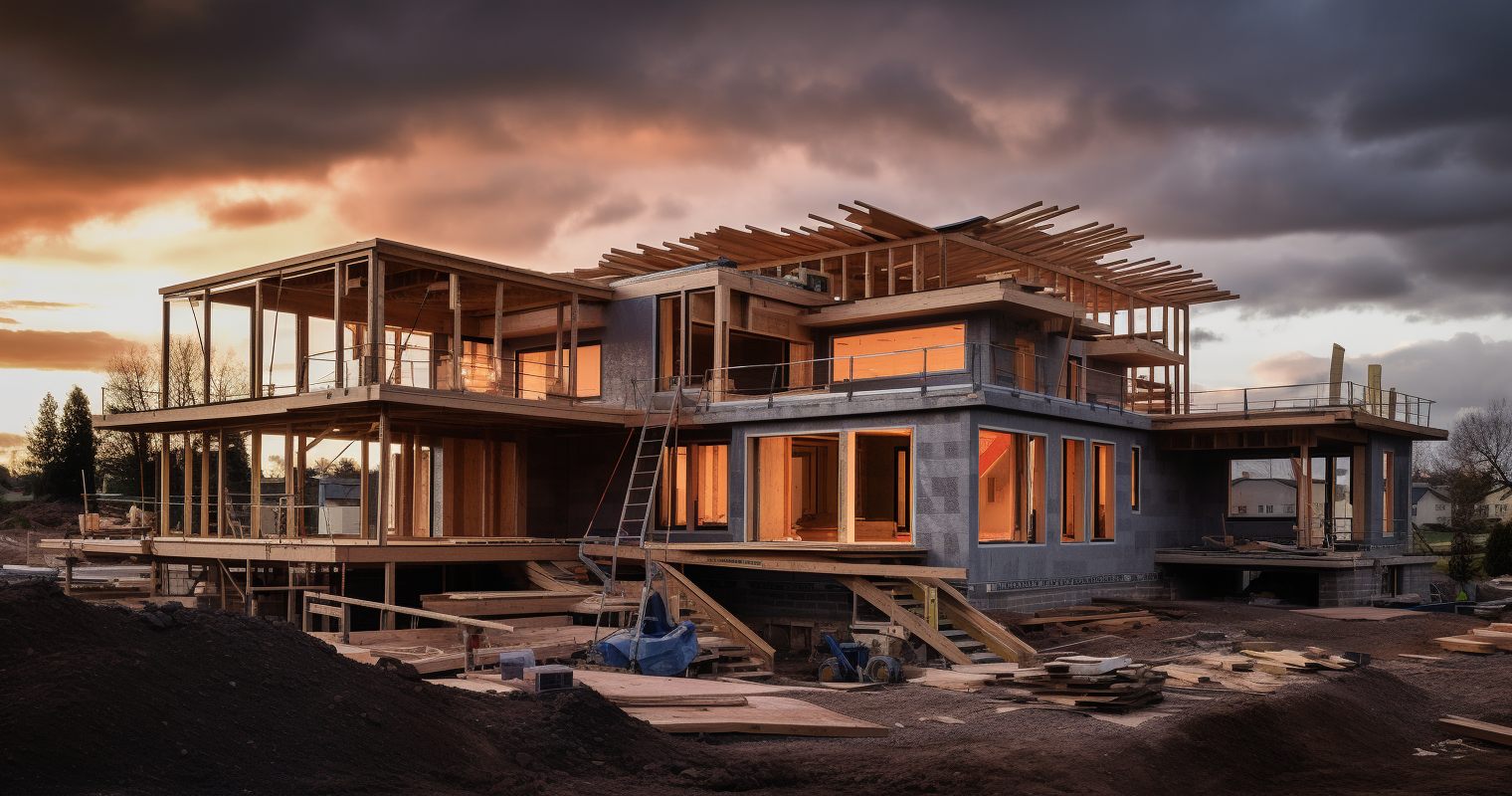
Almost all construction activity in Barbados requires planning permission, governed by the Planning and Development Act, 2019. Applications are handled by the Planning and Development Department (PDD), and only architects registered under the Architects Registration Act may practise in Barbados. While foreign nationals are broadly free to purchase land and undertake construction projects, it is strongly advisable to appoint local legal and professional advisers before making any commitments.
| Item | Details |
|---|---|
| Primary planning legislation | Planning and Development Act, 2019 (proclaimed December 2021) |
| Planning authority | Planning and Development Department (PDD), Warrens Office Complex, St. Michael |
| Standard planning application processing time | Approximately 2 months for simple formal applications (as of 2024) |
| Pre-construction site inspection fee | BDS $100 (as of 2024) |
| Certificate of Compliance fee | BDS $150 (as of 2024) |
| Planning permission validity | 5 years from date of approval |
| Architects registration body | Barbados Architects Registration Board (BARB) / Barbados Institute of Architects (BIA) |
| Heritage authority | Barbados National Trust / National Heritage Department |
Do you need planning permission to build or renovate a property in Barbados?
The Planning and Development Act, 2019 defines “development” as: “The carrying out of building, engineering, mining or other operations in, on, over or under any land, the making of any material change of use of any buildings or land or the subdivision of land.” In practical terms, this means that the overwhelming majority of building work, extensions, and renovations will require formal planning permission to be obtained before any work commences.
A permitted development system does exist, under which formal planning permission for erecting or altering a structure is not required, provided there is a valid permission for the use of the land for the relevant purpose, no restrictions are placed on the future use of the land, and all related activities conform to planning standards. This system covers all types of development, but it excludes land situated within restricted zones.
Even where permitted development applies and formal planning permission is technically unnecessary, an approved plan remains a requirement of lending agencies and is needed to obtain water from the Barbados Water Authority. A dedicated process has therefore been introduced to facilitate the approval of these plans. This type of request is known as an “SL8” and is applicable only where the Director’s permission for the subdivision does not restrict the land’s future development. The proposed works must also comply with the Planning and Development Act, 2019. SL8 requests are typically processed within four weeks.
Unlike the UK planning system — where homeowners enjoy broad permitted development rights covering rear extensions, loft conversions, and garden outbuildings — the permitted development provisions in Barbados are considerably narrower, and most structural works will necessitate a formal application. If you are uncertain whether your proposed works require permission, contact the PDD directly or retain a local town planning consultant before committing to anything.
The step-by-step process for a planning application is set out below:
- Prepare your application documents. A planning application must include a correctly completed application form, a fee calculated according to the nature of the application, and the required number of scale drawings. These must include two copies of the site plan drawn to a scale of no less than 1:200m, a floor plan indicating the arrangement of rooms on each level, and elevation drawings covering at least two external facades.
- Submit your application. Completed application forms must include a valid email address for the applicant and any agent, to enable electronic correspondence. Submissions may be made in person at the PDD’s offices or through the department’s online e-portal at townplanning.gov.bb.
- Await consultation and site visit. The department may refer the application to various government agencies and request supplementary information from the applicant; all consultations must be returned to the department within 30 days of the initial request. A site inspection will be undertaken to evaluate site conditions and confirm whether the plans satisfy building line, side distance, and plot coverage requirements.
- Receive your decision. Straightforward formal applications are typically decided within two months of submission. Applications involving coastal zones, heritage areas, or environmental impact assessments are likely to take considerably longer. An applicant may appeal the decision, or any conditions attached to it, within 28 days of the date of the decision, to the Minister responsible for Town Planning matters.
- Notify the department of your intended start date. Once planning permission has been granted, you must inform the department in writing of the date on which construction is to begin, and all proposed works must be made available for inspection by a department officer prior to commencement. This inspection carries a fee of BDS $100 (as of 2024).
- Obtain a Certificate of Compliance on completion. When the development has been finished, a Certificate of Compliance is needed to confirm that the works have been satisfactorily carried out. All conditions attached to the planning permission must have been properly discharged and the development must correspond to the approved plans. This process is initiated by writing to the department, and the fee is BDS $150 (as of 2024).
Planning approvals lapse five years after the date they were granted. If five years or more have passed, a fresh application must be submitted. Always verify the current fee schedule with the PDD directly, as fees are liable to change.
Where an application relates to the development of beachfront land or to a change of use of agricultural land exceeding two acres, the application is automatically referred to the Minister responsible for Town Planning. Such cases typically attract extended timescales and a higher level of scrutiny.
What are the rules around listed buildings, conservation areas, and heritage protection in Barbados?
Barbados operates a formal system of heritage protections broadly analogous to listed building and conservation area designations found in countries such as the UK or Australia, though administered under its own distinct legislative framework. The principal protections derive from the Planning and Development Act, 2019, which makes explicit provision for Cultural Heritage Preservation Orders and Heritage Conservation Areas.
The permitted development provisions do not apply to any development in, on, over, or under land or buildings subject to a Cultural Heritage Preservation Order, or situated within a designated Heritage Conservation Area under the Act. This means that works which might otherwise qualify as permitted development will still require full planning permission if the property carries a heritage designation.
The Barbados National Trust must be consulted where development involves building, engineering, mining, or other operations affecting a listed building, monument, or site, or any land within a Heritage Conservation Area, including any application relating to a material change of use of such a property.
The Barbados National Trust is dedicated to preserving the island’s historic buildings and raising public awareness of its architectural legacy, running tours of significant sites and offering resources to homeowners seeking to restore their own heritage properties.
Historic Bridgetown and the Garrison Savannah hold UNESCO World Heritage Site status and contain a rich legacy of colonial architecture, including imposing government buildings, churches, and commercial premises. Any development — whether renovation, extension, or demolition — within or adjacent to a World Heritage Site is subject to particularly rigorous controls and heightened scrutiny.
The Planning and Development Act, 2019 also establishes provisions for tree preservation orders. Where a landowner wishes to remove a potentially protected tree, an application form must be completed indicating the site’s location, the tree’s size, and the reason for removal, such as termite infestation; no processing fee is charged for this application.
Before acquiring any property in Barbados — especially older buildings or land near historic towns — you should verify with the National Heritage Department and the Barbados National Trust whether any heritage designations are in place. The Barbados Institute of Architects collaborates with government bodies and regulatory agencies including the Architects Registration Board, the Building Authority, the Division of Energy, the Environmental Protection Department, the Town and Country Development Planning Office, and the National Heritage Department to raise design standards across the built environment. Breaching heritage protections can lead to enforcement action, including requirements to dismantle unauthorised works entirely at your own cost.
The Barbados National Trust can be contacted through its website at barbadosnationaltrust.org. Always check the PDD’s official register and the National Heritage Department before commissioning any works on a property that may be protected.
What permits and licences are required when building or renovating in Barbados?
Planning permission from the Planning and Development Department is only one of a number of approvals that may be necessary before and during a construction project in Barbados. Depending on the nature and location of your project, you may additionally require approvals from the Environmental Protection Department, the Barbados Water Authority, the Barbados Light and Power Company, and the Building Authority.
Approval from the Director of the Environmental Protection Department must be obtained before construction begins. Permission to erect a structure is issued by letter from the Environmental Department and is entirely separate from the planning permission letter from the PDD; the conditions outlined will reflect the nature of the structure and the characteristics of the site.
A coastal zone management plan has been developed by the Coastal Zone Management Unit (CZMU), setting out the overall framework for the management of coastal areas across Barbados. Where a proposed development site falls within the coastal zone management area, the PDD refers the application to the CZMU for its assessment. The CZMU typically undertakes a detailed investigation of such applications to determine whether Barbados’s sensitive marine ecosystem could be endangered; given the thoroughness of this assessment, securing CZMU input and approval can take a considerable amount of time.
The following additional permits and approvals are typically required for a new build or substantial renovation:
- Environmental Protection Department approval: Mandatory for all new construction; addresses drainage, sewage disposal, and environmental impact. Issued before works commence.
- Barbados Water Authority connection approval: Required to connect to the public water supply. An approved plan is a prerequisite both for lending agencies and for obtaining water from the Barbados Water Authority.
- Electrical connection permit: Required before connecting to the national electricity grid through the Barbados Light and Power Company (BL&P). All electrical installations must be carried out by a licensed electrician and inspected prior to connection.
- Building Authority sign-off: The Building Authority is among the regulatory bodies that work alongside the Barbados Institute of Architects and the PDD to uphold construction standards across the island. Confirm current requirements with the Ministry of Transport, Works and Water Resources.
- Environmental Impact Assessment (EIA): When a notice requiring an EIA is issued, the Chief Town Planner notifies all relevant government departments and agencies; no other licence, permit, or approval may be issued until the EIA has been completed and planning permission granted.
Fee schedules and procedural requirements for these permits are revised from time to time. Always confirm current fees and processes directly with the issuing authority before beginning your project. As of 2024, verify permit costs with the Environmental Protection Department and Building Authority directly, as these are not consolidated in a single publicly available schedule.
How do you find a reliable, trustworthy builder in Barbados?
The Barbados construction sector is regulated, and appointing a reputable, properly licensed contractor is critical to the success of any project. The Barbados Contractors Association represents builders and contractors operating on the island and can be reached at [email protected] or +1 246-436-2213. Checking whether a prospective builder holds membership of this association is a practical first step in assessing their credentials.
When evaluating any contractor, ask for evidence of the following before signing any agreement:
- Proof of registration and licensing: Confirm the contractor is legally registered to operate in Barbados. Request their registration number and independently verify it with the relevant authority.
- Professional indemnity and public liability insurance: Reputable contractors maintain insurance that protects you in the event of accidents, property damage, or defective work. Request a current certificate of insurance before work begins.
- References from recently completed projects: Ask for contact details of at least two or three recent clients and, wherever possible, visit finished projects in person to judge quality of workmanship.
- A detailed written contract: Never rely on verbal arrangements. A sound contract should specify the full scope of work, the materials to be used, a payment schedule, start and completion dates, a process for handling variations, and provisions for resolving disputes.
- Staged payment arrangements: Avoid handing over large upfront sums. Structure payments around clearly defined milestones — for instance, on completion of foundations, on completion of the roof structure, and on final sign-off.
Foreign property owners frequently encounter contractors who demand substantial cash advances before delivering any work, informal verbal agreements that are hard to enforce, and the use of substandard building materials. Non-resident buyers who cannot monitor progress in person are especially at risk. If you are unable to be on site regularly, consider engaging a local project manager or quantity surveyor to oversee the build on your behalf.
Always ensure your contractor has read and fully understood the planning permission conditions before works commence. Any deviation from the approved plans risks delaying your Certificate of Compliance and may necessitate costly remediation.
How do you find a qualified local architect in Barbados?
Under the Architects Registration Act (A.R.A) and Architects Registration Board (A.R.B.) policies, the designations “Full Member” and “Architect” and the professional title “Registered Architect” are reserved for practitioners who have satisfied the education, experience, and examination requirements for engaging in the full range of activities defined as the practice of architecture in Barbados.
The Architects Registration Act delineates the protected scope of work constituting the practice of architecture in Barbados. Only architects holding a Certificate of Practice may offer services within this protected scope to the public. This is comparable in principle to the protection afforded to the “Architect” title in the UK under the Architects Act 1997, or under state-level legislation in Australia — the essential point is that using the title without registration is unlawful, giving you a reliable means of verifying credentials.
The two principal bodies to be aware of are:
- Barbados Institute of Architects (BIA): The BIA is the self-regulating body for the architectural profession in Barbados and the primary resource for information on registered architects, affiliated design and construction professionals, and the breadth of services they offer. The BIA can be found at bia.bb, and contacted by telephone at +1 246-429-1999 or by email at [email protected].
- Barbados Architects Registration Board (BARB): The Architects Registration Act establishes the constitution and operating procedures of the Architects Registration Board, which comprises the Chief Technical Officer of the Ministry of Transport, Works and Water Resources, one person appointed by the Minister, and four registered architects appointed by the Minister on the nomination of the BIA.
BIA members must be qualified architects registered with the Barbados Architects Registration Board, and BIA and ARB registration numbers are published on the BIA website. You can search the full members directory at bia.bb/full-members to locate a registered architect in your area.
The BIA supports its members through training programmes, Continuing Professional Development (CPD) seminars, technical advisory services, Professional Indemnity Insurance (PII) packages, publications, and involvement in setting standards for architectural education and registration. When selecting an architect as a foreign client, look for someone with a demonstrable track record working with international buyers, a thorough understanding of the local planning system, and the capacity to manage communications and submissions with the PDD on your behalf. Many BIA members hold international qualifications such as RIBA (UK) or MRAIC (Canada) in addition to their Barbadian registration, which may be reassuring to clients already familiar with those professional systems.
What are the common pitfalls when buying land to build on in Barbados?
Acquiring land in Barbados with a view to building offers considerable appeal, but a number of important checks must be completed before any purchase is finalised. Neglecting thorough due diligence can leave you owning land you are unable to develop, or that carries costly hidden complications.
Confirm the viability of planning permission before exchanging contracts. Refusal of a planning application is not generally accepted as grounds for terminating a sale agreement. Where a purchaser intends to develop a property that requires PDD approval, the sale agreement should be made conditional on obtaining that permission — this protects you from becoming legally bound to a site that cannot be used for your intended purpose.
Check zoning and the Physical Development Plan. Prospective developers should consult the Physical Development Plan to assess the likely outcome of any application to change the use of land or a building. The Physical Development Plan 2023 (Amended) is in the final stages of adoption and sets out the government’s vision for developing Barbados, providing a spatial framework to help deliver the government’s mandate. Land classified as agricultural, coastal, or environmentally sensitive is likely to face significant development restrictions.
Verify land boundaries, title, and ownership history. Confirm that the land’s boundaries correspond to the land registry records, and investigate any environmental or conservation constraints affecting the site, as well as any outstanding taxes or debts registered against it. Appoint a qualified local attorney to carry out a comprehensive title search through the Barbados Land Registry before contracts are exchanged.
Understand environmental and flood-risk constraints. Coastal land falls under the Coastal Zone Management Plan, and building within the coastal zone requires CZMU approval. The Scotland District presents additional challenges due to soil instability; depending on the soil classification in a given area as specified by the Soil Conservation Unit, development may be limited to wooden structures only, single-storey structures only, or prohibited entirely.
Confirm utility availability. Not every land parcel in Barbados has ready access to mains water, electricity, or sewerage. Before purchasing, check with the Barbados Water Authority and the Barbados Light and Power Company to confirm whether connection is feasible and what the associated costs would be.
Engage a qualified local attorney. Property conveyancing in Barbados is carried out by local attorneys-at-law, who are the equivalent of solicitors or conveyancers in other jurisdictions. Unlike civil law countries where a notary oversees the transaction, in Barbados your attorney manages the entire process, including the title search and registration at the Land Registry. Do not proceed without independent legal representation — this is especially important for foreign buyers unfamiliar with local contract law.
Plot coverage and setback requirements. The extent to which a plot can be built upon is governed by plot coverage requirements; for residential development, the aggregate ground floor area must not exceed 40% of the net land area, while for commercial development the limit is 50%. Road setback requirements also apply, and these vary depending on the classification of the road adjoining the land.
What are the rules around foreign ownership and financing for construction projects in Barbados?
Barbados maintains a broadly open stance towards foreign investment in real estate. No blanket prohibitions prevent foreign nationals from acquiring land, constructing new properties, or undertaking renovation projects. However, there are procedural and financial requirements that overseas buyers should fully understand before moving forward.
Foreign exchange registration. Transactions funded with foreign currency must be registered with the Central Bank of Barbados. When a non-resident purchases property using foreign funds, the transaction must be formally recorded with the Central Bank. This registration is significant because it entitles the owner — or their estate — to repatriate the proceeds of any future sale back into foreign currency. Failing to register can create complications at the point of sale or when transferring funds abroad. Discuss this requirement with your attorney at the very outset of your purchase.
Land Tax and Property Transfer Tax. Both residents and non-residents are liable for Land Tax, which is an annual charge based on the unimproved value of land, and Property Transfer Tax on the disposal of property. As of 2024, verify current rates with the Barbados Revenue Authority at bra.gov.bb, as rates and thresholds are subject to revision through the annual budget process.
Access to local mortgages and construction finance. In principle, foreign nationals can access mortgage and construction loan products from Barbados-based commercial banks, though lenders typically apply more demanding criteria to non-residents. A substantial deposit is usually required — often 30–40% for non-residents — along with documented evidence of income or assets from the applicant’s home country, and in some cases the establishment of a local bank account. Construction loans are generally released in staged drawdowns tied to completion milestones, similar to self-build mortgage arrangements available in other markets. Speak directly with Barbadian commercial banks or a local mortgage broker to obtain current terms.
Ownership structures. Some overseas buyers opt to hold Barbados property through an offshore or local company structure for estate planning or tax efficiency reasons. If you are considering this approach, seek specialist advice from a local attorney and a tax adviser well versed in both Barbadian law and the tax regime of your home country, as the implications can vary substantially depending on individual circumstances.
The Invest Barbados agency, which serves as the national investment promotion authority, provides guidance and assistance for foreign investors including those involved in the real estate sector. Visit investbarbados.org for authoritative information on the investment climate.
What official sources should you consult when planning to build or renovate in Barbados?
Before committing to any purchase, construction, or renovation project in Barbados, consulting the relevant official bodies is essential. Regulations, fees, and procedures evolve over time, and the only reliable source of current requirements is the responsible authority itself. The principal bodies and resources are set out in the table below.
| Body | Role | Website |
|---|---|---|
| Planning and Development Department (PDD) | Planning permission, development orders, Physical Development Plan | townplanning.gov.bb |
| Barbados National Trust | Heritage conservation, historic buildings, preservation orders | barbadosnationaltrust.org |
| Environmental Protection Department | Environmental approvals required before construction | gov.bb (search Environmental Protection) |
| Coastal Zone Management Unit (CZMU) | Approval for coastal zone developments | czmu.gov.bb |
| Barbados Revenue Authority | Land tax, property transfer tax, stamp duty | bra.gov.bb |
| Barbados Water Authority | Water connection approvals and requirements | bwa.bb |
| Barbados Institute of Architects (BIA) | Directory of registered architects, professional standards | bia.bb |
| Barbados Contractors Association | Directory of registered builders and contractors | Contact: +1 246-436-2213 |
| Invest Barbados | Foreign investment guidance and support | investbarbados.org |
| Barbados Land Registry | Title searches, ownership history, land registration | Via the Supreme Court of Barbados |
The Town and Country Planning Act, Cap. 240 was superseded by the Planning and Development Act, 2019, which came into operation on 7 December 2021 when the Act was proclaimed; this legislation sets out the legal framework governing the entire planning process. Always obtain and read the most current version of the Act and the Development Order from the official PDD website, as these are the definitive legal instruments applicable to your project.
The Physical Development Plan 2023 (Amended) is in the final stages of adoption and sets out the government’s vision for developing Barbados, providing a spatial framework to help deliver the government’s mandate. Once formally adopted, it will replace the 2003 Amended PDP as the primary land-use policy document. Check the PDD website for the latest status before submitting any application.
Frequently asked questions about building and renovating property in Barbados
How much does it cost to build a house in Barbados?
Building costs in Barbados vary widely according to the size, specification, location, and standard of finish of the property. As a broad indication, mid-range residential construction typically falls within the range of BDS $350–$600+ per square foot as of 2024, though luxury finishes, remote or difficult sites, and specialist structural demands — such as hurricane-resistant design — can drive costs considerably higher. Always obtain at least three detailed written quotations from reputable contractors and, for larger projects, commission an independent quantity surveyor. Verify current market rates locally, as material costs and labour charges fluctuate regularly.
How long does the planning and construction process typically take?
Straightforward formal planning applications are typically decided within two months of submission. More involved applications — particularly those touching on coastal zones, heritage areas, or requiring environmental impact assessments — may take six months or longer. Once permission is secured, construction timescales depend on the scope of the project; a modest new residential dwelling generally takes between 12 and 24 months from groundbreaking to handover, assuming no significant disruption to materials supply, labour availability, or inspections.
Do I need to speak a particular language to deal with Barbadian planning authorities?
No. English is the official language of Barbados, and all planning applications, official correspondence, contracts, and legal documents are conducted in English. This makes the administrative process straightforward for those already operating in English. If you are more comfortable in another language, numerous local architects and attorneys with experience serving international clients are able to assist with translation or explanation of key documents.
Are UK or US building standards and qualifications recognised in Barbados?
Barbados applies its own building standards, and the local planning system does not automatically incorporate the UK Building Regulations, the US International Building Code, or any other foreign standard. The title “Registered Architect” is reserved for those who have satisfied the education, experience, and examination requirements under the Architects Registration Act, and many locally registered architects also hold dual international qualifications such as RIBA membership alongside their Barbadian credentials. Foreign-qualified architects cannot practise under the protected title in Barbados without first obtaining local registration through the Architects Registration Board. For engineers, the relevant requirement is registration under the Engineers (Registration) Act, Cap. 368B.
What happens if I carry out work without planning permission in Barbados?
Undertaking development without the necessary planning permission constitutes a breach of the Planning and Development Act, 2019. The PDD holds enforcement powers and may issue notices requiring unauthorised works to be halted, modified, or demolished entirely at the landowner’s cost. Financial penalties may also apply. Furthermore, unpermitted works can create serious difficulties when attempting to sell the property, arrange a mortgage, or obtain a Certificate of Compliance. If you discover that previous works on a property you are considering purchasing were carried out without permission, take legal advice before proceeding with the acquisition.
What should I do if I have a dispute with a contractor in Barbados?
Begin by reviewing your written contract carefully to identify the dispute resolution provisions — a well-drafted contract will specify a procedure, which may include mediation before any litigation is pursued. If the contractor is a member of the Barbados Contractors Association, a complaint can be raised with the association. For more serious matters involving financial loss or defective workmanship, you will need to instruct a local attorney. Barbados has a functioning court system and construction disputes can be pursued through the civil courts, though proceedings can be protracted and expensive. Prevention is far preferable: insist on staged payments, document everything in writing, and retain an independent project manager to oversee the works on site.
Can I get a mortgage in Barbados as a foreign national?
It is possible for non-residents to obtain a mortgage or construction loan from a Barbadian commercial bank, though the eligibility criteria and lending terms for overseas applicants are generally more demanding than those applied to residents. Lenders typically require a larger deposit — often 30–40% of the property value — documented evidence of income or assets, a satisfactory credit history, and in some cases an active local bank account. Interest rates and available products change regularly, so speak directly with Barbadian banks or consult a local mortgage broker to understand what is currently on offer. You should also make provision for the requirement to register foreign currency transactions with the Central Bank of Barbados.
Are there any restrictions on the style or materials I can use to build in Barbados?
During the planning process, a site inspection is conducted to evaluate the site, floor, and elevation plans and to assess compliance with building line, side distance, and plot coverage requirements, as well as any applicable restrictive policies. In heritage or conservation areas, the PDD and the Barbados National Trust may impose conditions governing the external appearance, choice of materials, and massing of new buildings or alterations to existing historic ones. All buildings in Barbados must additionally be designed and constructed to withstand hurricane conditions — this is a practical necessity given the island’s climate and local architects and engineers will be thoroughly familiar with the relevant structural requirements. Development close to the coast also triggers CZMU requirements that may affect materials selection and overall design approach.