
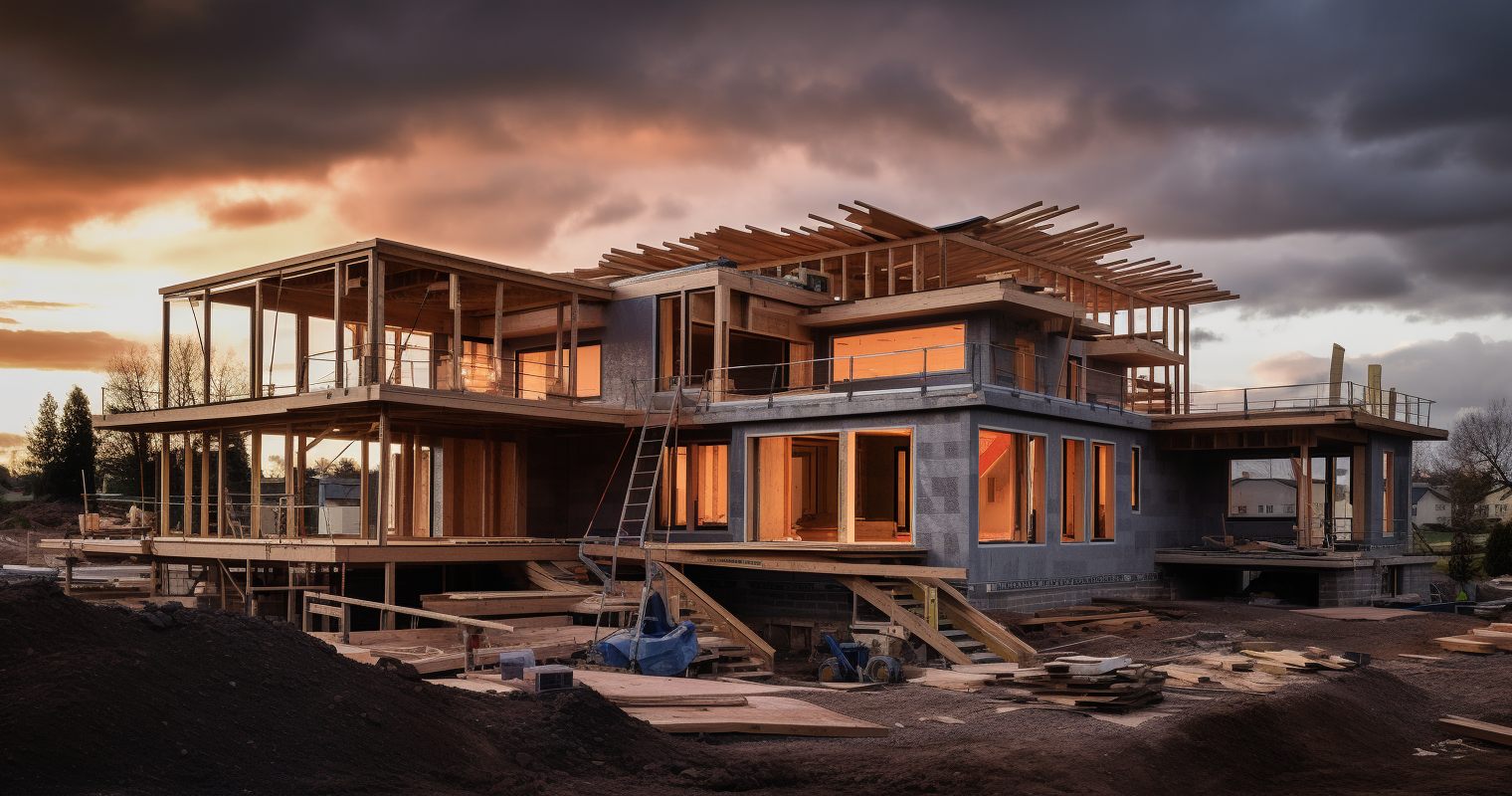
Anyone wishing to build or renovate property in Belize must obtain a building permit before starting work — this requirement applies to everything from brand-new homes and extensions to structural alterations and outbuildings. The Central Building Authority (CBA) and its delegated Local Building Units administer the permitting system. Architecture is a regulated profession, licensed practitioners are mandatory for most projects, and although foreign nationals enjoy exactly the same land ownership rights as Belizean citizens, thorough due diligence on title, zoning, and environmental conditions is essential before a single shovel enters the ground.
| Item | Details |
|---|---|
| Governing legislation | Belize Building Act, Chapter 131 (as amended 2017); Building Regulations SI No. 157 of 2022 |
| Permit authority | Central Building Authority (CBA) and delegated Local Building Units |
| Permit review timescale | 14 business days for buildings ≤5,000 sq ft; 30 days for buildings >5,000 sq ft (as of 2022) |
| Approved plans validity | 12 months — work must commence within this period or you must reapply |
| Foreign land ownership | No restrictions; foreigners hold same rights as Belizean citizens; Alien Landholding Act abolished 2001 |
| Stamp duty on purchase | 8% of property value for foreign buyers (as of 2024); 7% if held via an IBC |
| Architect licensing body | Association of Professional Architects of Belize (APAB) — www.architectsofbelize.com |
| Heritage authority | National Institute of Culture and History (NICH) / Institute of Archaeology — www.nichbelize.org |
Do you need planning permission to build or renovate a property in Belize?
In Belize, a building permit must be obtained before construction begins on virtually any type of structure — whether that is a private home, apartment block, resort, tourist facility, commercial premises, agricultural building, pier or other over-water structure, detached outbuilding, or even a temporary or moveable structure. The same obligation extends to alterations: anyone wishing to add to, remodel, or otherwise modify an existing structure is equally required to secure a permit in advance.
This stands in marked contrast to the UK planning system, where many minor works fall within “permitted development rights” and bypass the need for formal consent. Belize has no comparable general exemption — the requirement to obtain approval is broad and covers nearly all forms of construction activity. The Belize Building Act, 2003 was enacted to regulate building operations in the interests of public health and safety, and to enable the introduction of standards governing materials and construction methods; its provisions apply country-wide to all buildings and structures.
The Central Building Authority has delegated plan review, permit issuance, and occupancy permit functions to Local Building Authorities in Belize City, the City of Belmopan, and in each of the towns established under the Town Councils Act. Projects located outside these urban centres are dealt with directly by the CBA. The CBA’s principal office is at the 3rd Floor, Coastal Zone Management Building, Princess Margaret Drive, Belize City, Belize; Tel: 223-2616; Fax: 223-5738; E-mail: [email protected]. The CBA’s website is www.cbabelize.org.
The scale of a project determines the level of professional sign-off required on the drawings. Private buildings under 1,000 sq ft and no more than one storey do not require the signature of a licensed architect or engineer, though the technician preparing and submitting the documents must still stamp and sign every page. For private buildings between 1,000 sq ft and 3,000 sq ft and up to two storeys, plans and specifications must be prepared, designed, stamped, and signed by either an architect holding corporate membership of the Association of Professional Architects of Belize (APAB), or a civil or structural engineer who is a corporate member of the Association of Professional Engineers of Belize (APEB). All public buildings regardless of size, and all buildings exceeding 3,000 sq ft and/or more than two storeys, require both an APAB-registered architect and an APEB-registered engineer to prepare, design, stamp, and sign the submission documents.
Step-by-step: applying for a building permit in Belize
- Research your site. Check the Ministry of Works for planned road projects, the Ministry of Health, the Ministry of Housing, and the relevant municipality for height and site coverage limits, fire safety requirements, and parking provisions.
- Prepare construction documents. Your submission must include comprehensive architectural drawings — plans, elevations, and sections — as well as, where relevant, engineering drawings covering structural, electrical, plumbing, and mechanical systems.
- Assemble property documents. Gather your property ownership documents (deed, conveyance, or equivalent) and any supporting approvals that may be required from other government agencies.
- Submit your application. All drawings, specifications, calculations, and descriptions must be submitted digitally to the relevant Building Unit in accordance with Section 11 of the Belize Building Act. A minimum of three complete sets of plans should be submitted (four is recommended).
- Pay the application fee. Permit fees are calculated according to the floor area of the proposed building. The current fee schedule is set under Statutory Instrument No. 158 of 2022 — confirm the exact figures with the CBA, as fees are periodically revised.
- Await review. For buildings of 5,000 sq ft or less, the authority must respond in writing within 14 days, either granting the permit or setting out its reasons for refusal; for buildings exceeding 5,000 sq ft, the response period is 30 days (as of 2022).
- Receive your permit. Once the review is complete and approval is granted, you will be notified of any outstanding fees. On payment, the authority issues the official no-objection to the development, the approved construction documentation, and the building permit forms.
- Notify before commencing work. Prior to beginning construction, you must notify the relevant Building Unit of the proposed start date and request that a Building Unit representative attend to inspect and approve the site layout.
- Note the validity period. Approved plans remain valid for 12 months from the date of issue. If work has not commenced within that window, a fresh application must be submitted.
- Obtain an occupancy permit. Within seven days of completing construction, the building owner must submit written notice to the Director confirming the completion date and applying for permission to occupy and use the building.
What are the rules around listed buildings, conservation areas, and heritage protection in Belize?
Belize does not operate a formal system of listed building designations or conservation area designations directly comparable to those used in the UK or Ireland, and there is no equivalent national register of listed buildings. Nevertheless, heritage protection is taken seriously — particularly in relation to Belize’s remarkable Maya archaeological legacy — and disturbing a protected site without authorisation carries serious legal consequences.
The National Institute of Culture and History (NICH) is Belize’s foremost cultural institution. It encompasses several divisions, including the Institute of Archaeology (IA), the Institute of Creative Arts (ICA), the Institute for Social and Cultural Research (ISCR), and the Museum of Belize and Houses of Culture. NICH operates under the Ministry of Education, Culture, Science and Technology. Its website is www.nichbelize.org.
Prospective developers must be alert to any environmental or archaeological regulation that could affect their project, including pier restrictions, nature reserves, national wildlife refuges, and areas protected under forestry, environmental, or archaeological legislation. The Institute of Archaeology is the principal body responsible for safeguarding Belize’s archaeological sites. Under Belizean law, any archaeological monument, artefact, or site is treated as national property irrespective of who owns the land above it.
Any object or structure more than 100 years old is classified as an antiquity and belongs to the state unless the Government has specifically issued a permit allowing an individual to retain it. If you discover ruins, artefacts, or ancient structures on land you own or are developing, you are legally obliged to notify the Institute of Archaeology immediately and suspend all work at that location. Pressing on without authorisation can constitute a criminal offence under Belizean law.
Before acquiring any land — especially in rural locations, jungle settings, or in the vicinity of known Maya sites — consult the Institute of Archaeology via NICH at www.nichbelize.org. You should also check with the Belize Forest Department regarding forestry reserves, and with the Coastal Zone Management Authority and Institute (CZMAI) regarding coastal and marine protected areas, which impose strict controls on construction, landscaping, and land clearance near the coast, cayes, and waterways.
Although Belize has no direct equivalent to tree preservation orders as they operate in the UK, the Forests Act and associated legislation afford protection to certain vegetation. Environmental Impact Assessments (EIAs) may be compulsory for larger developments. The relevant authority is the Department of the Environment, operating under the Ministry of Sustainable Development — visit www.doe.gov.bz.
What permits and licences are required when building or renovating in Belize?
A building permit from the CBA or the applicable Local Building Unit is the foundational approval, but it is rarely the only consent required. Depending on the nature of your project, additional governmental bodies may need to be involved before construction can lawfully proceed. Identifying which approvals apply to your circumstances at the outset can prevent expensive and time-consuming delays later.
Local government entities relevant to your project type — including building and zoning authorities, public utilities, health, environmental, and fire departments — all have roles in reviewing and approving projects. For residential builds, you will generally also need approval from the Public Utilities Commission (PUC) for electrical connections, and the Water and Sewerage Authority (WASA) for water supply and waste disposal. Electrical schematics (PUC-approved) and plumbing drawings, including septic tank and soak-away details, must form part of the building permit application package.
Construction near the coast, on cayes, or adjacent to waterways will require separate approval from the Coastal Zone Management Authority and Institute (CZMAI). Larger or more complex developments — particularly those involving significant land clearance, tourist operations, or impacts on wetlands — may necessitate a formal Environmental Impact Assessment (EIA) submitted to the Department of the Environment. The EIA process can span several months, so factor this into your project timeline from the beginning.
Full compliance with the conditions of your building permit throughout the construction process is essential. Building inspectors from the relevant authorities will conduct periodic site visits to verify that work conforms with the approved plans and applicable regulations. The permit fees cover four site inspections across four distinct construction phases. These inspections are a legal requirement — failing to accommodate them, or failing an inspection, can trigger stop-work orders and additional costs.
Any mid-construction changes to the approved design must be authorised before they are implemented. An owner who proceeds with modifications to an approved structure without first obtaining consent from the Building Unit may face a financial penalty. Always confirm the current fee schedule directly with the CBA, as charges are updated periodically.
How do you find a reliable, trustworthy builder in Belize?
The Central Building Authority was created to bring internationally recognised construction standards to Belize, and all new building work must pass rigorous scrutiny by Belizean architects, engineers, and the CBA. The building department follows the International Building Code (IBC), broadly aligned with American standards. That said, Belize does not have a single mandatory licensing or registration scheme for general contractors or builders comparable to the trade registration systems in, say, Australia or the UK. As a result, careful vetting of any contractor you engage is particularly important.
There is no Belizean equivalent to the UK’s Federation of Master Builders or Australia’s Housing Industry Association. The most relevant professional bodies in the construction sphere are the Association of Professional Architects of Belize (APAB) and the Association of Professional Engineers of Belize (APEB). While these organisations regulate design professionals rather than builders per se, any reputable contractor will operate alongside APAB- and APEB-registered professionals. You can search for registered architects and engineers through the CBA’s website at www.cbabelize.org.
Association of Professional Architects of Belize (APAB)
Website: www.architectsofbelize.com
APAB can advise on registered members and point you toward construction professionals who have a demonstrable track record of working within the regulatory framework.
Practical steps for vetting a builder in Belize include:
- Request references from recently completed projects and, where practicable, visit those properties yourself. Direct conversations with former clients provide the most reliable insight into quality and dependability.
- Insist on a written contract setting out the full scope of work, the materials to be used, a detailed construction programme, a payment schedule tied to milestones, and a clear process for handling disputes or unforeseen delays.
- Use staged or milestone-based payments rather than making large upfront payments. Link each instalment to verified completion of a defined phase — such as foundations, superstructure, roofing, and finishes.
- Confirm insurance. Establish whether your contractor carries public liability insurance and whether any workers’ compensation coverage extends to their workforce.
- Consider an escrow arrangement for substantial payments. A qualified local attorney can advise on appropriate escrow structures to safeguard your funds during the construction period.
- Appoint your architect as project supervisor. An architect retained in a supervisory capacity can monitor the contractor’s work on your behalf and verify that construction proceeds in accordance with the approved documentation.
A common risk for foreign property owners is a builder who quotes an attractively low figure at the outset and then adds substantial costs once work is underway and it is difficult to walk away. Agree a fixed-price or clearly capped contract before any work begins, and set aside a contingency of at least 15–20% above the quoted sum. Some developers retain their own architect and construction manager throughout the build to enforce quality standards and guard against problems such as the use of saltwater-contaminated concrete or the omission of structural rebar.
How do you find a qualified local architect in Belize?
Every architect practising in Belize must be licensed and registered by the Association of Professional Architects of Belize (APAB). Under Section 15(1) of the Professional Architects (Registration) Act (2003), anyone wishing to offer architectural services in Belize — regardless of the size of the project — is required to be a registered APAB member.
The Association of Professional Architects of Belize is a non-profit body that promotes the responsible development of Belize by regulating the practice of architecture and championing its role in creating safe, healthy communities. APAB holds observer status with the International Union of Architects (UIA), a body encompassing 120 member countries, and is also a member of the Federation of Caribbean Architectural Associations (FCAA).
Association of Professional Architects of Belize (APAB)
Website: www.architectsofbelize.com
The APAB website enables you to search for registered members and confirm that any architect you are considering holds a current licence to practise in Belize. A directory of registered architects is also accessible via the Central Building Authority’s website at www.cbabelize.org.
All fully qualified architects wishing to work in Belize are required by law to be on the APAB register. Only APAB members are fully licensed to practise architecture across the country. This means that overseas qualifications alone — whether from the United States, Canada, the United Kingdom, or elsewhere — do not automatically confer the right to practise in Belize. An architect trained abroad must obtain APAB registration before they can legally stamp and sign drawings for submission to the CBA or a Local Building Unit.
When choosing an architect for your project, look for:
- Current APAB membership, verifiable through the APAB register
- Relevant experience with the type and scale of project you have in mind — residential, commercial, coastal, rural, or eco-build
- Familiarity with local materials, climate-resilient design principles (hurricanes and flooding are genuine considerations), and local supply chains
- A proven track record in navigating the relevant permitting agencies and government bodies
- Strong references from clients on comparable projects
English is Belize’s official language, so communication with local design professionals is generally straightforward. However, if your project is in a more remote location, it is worth ensuring that your architect has working knowledge of the specific requirements of the relevant municipal or district authority, which may differ from those applicable in Belize City or Belmopan.
What are the common pitfalls when buying land to build on in Belize?
Before committing to a purchase with the intention of building, you should carry out a thorough preliminary assessment of the site to confirm that there will be no obstacles to obtaining a building permit. This stage of due diligence is arguably more critical in Belize than in many comparable markets, given the relative frequency with which land title irregularities, zoning constraints, and utility shortfalls are encountered.
Title and ownership history. Freehold property in Belize may be evidenced by one of three types of title document: a Deed of Conveyance, a Transfer of Certificate of Title, or a Land Certificate. The Deed of Conveyance is the most common form, particularly for land in unregistered or undeclared areas and on the islands. While it is a legally recognised document effecting the transfer of ownership, it does not constitute definitive proof of title until it has been registered with the Lands Department. There is a documented history of land fraud and corruption within the Lands and Survey Department. Although that department is engaged in a Land Management system reform programme, purchasers are strongly advised to carry out comprehensive due diligence before proceeding. Always retain an independent, qualified Belizean attorney to conduct a full title search before entering into any binding commitment.
Confirming permit-ability before purchase. Check that the parcel you are considering is free from any restrictions that could result in a building permit being refused. Checking the Lands Registry alone is insufficient. You should additionally consult the Ministry of Works regarding future road schemes, the Ministry of Health, the Ministry of Housing, and the relevant municipality regarding height limits, site coverage restrictions, fire safety requirements, and parking provisions.
Zoning and land-use restrictions. Understand the local zoning and building codes that govern development in the area where your project will be located. Land may be zoned for residential, commercial, agricultural, or conservation purposes, and constructing a home on agriculturally designated land, for example, may require a change of use that cannot be guaranteed. Verify the zoning classification with the appropriate Town Council or District Authority before completing a purchase.
Environmental and coastal risks. Belize contains extensive protected areas, coastal zone buffers, and flood-prone terrain. Land close to the sea, rivers, or mangroves is often subject to setback requirements, meaning construction is prohibited within a specified distance of the water. Be alert to any environmental regulations that may affect your project, including restrictions on piers, nature reserves, national wildlife refuges, and areas protected under forestry, environmental, or archaeological legislation.
Utilities. Establish whether the lot is connected to, or capable of connection to, mains water, electricity, telephone, sewerage or septic infrastructure, and drainage. In many rural areas and on the cayes, none of these services is available from the mains, and the cost of providing off-grid alternatives — such as rainwater harvesting, solar power systems, and septic tanks — should be fully costed and incorporated into your budget before you commit to a purchase.
Maya land rights. In January 2016, the Government of Belize established the Maya Land Rights Commission, mandated to give effect to a Caribbean Court of Justice ruling that confirmed the existence of Mayan customary land tenure rights. If you are considering purchasing land in areas with indigenous communities — particularly in southern Belize — seek specialist legal advice to confirm that the title is unencumbered by any such rights.
What are the rules around foreign ownership and financing for construction projects in Belize?
Belize maintains an unusually open stance on foreign property ownership. Non-citizens face very few restrictions and are afforded rights that are essentially equivalent to those enjoyed by Belizean nationals. The Alien Landholding Act was repealed in 2001, removing the requirement for foreign buyers to obtain a special licence before acquiring land. As a result, foreign nationals may purchase, build on, and sell land and property in Belize without needing to establish a local company or enter into a joint venture — a requirement that does exist in certain other Central American jurisdictions.
The Belizean legal system is founded on British Common Law, which fully recognises foreign ownership. Non-citizens hold property on the same terms as locals, meaning they acquire a fee-simple title — the strongest and most complete form of property ownership available. The Preamble of the Constitution of Belize expressly protects the right of the individual to own private property and to operate private businesses, and both foreign and domestic private entities are free to establish, acquire, and dispose of interests in property and business enterprises.
Foreign purchasers may also choose to acquire property through an International Business Company (IBC). This structure can offer potential tax advantages — including a reduced stamp duty rate of 7% rather than 8% — as well as enhanced privacy and asset protection. A Belizean attorney can advise on whether the IBC route is appropriate for your individual circumstances.
The Exchange Control Act requires foreign investments to be registered with the Central Bank of Belize, though amendments introduced in 2020 relaxed certain requirements affecting non-residents in relation to securities and real estate transactions. Confirm the current position with the Central Bank of Belize (www.centralbank.org.bz) or your Belizean attorney before arranging any fund transfer in connection with a purchase.
Financing a construction project as a foreign national can present challenges. Local banks in Belize do provide mortgages and construction loans to foreign buyers, but terms are generally more restrictive than those available in North America or Europe — higher deposit requirements (often 30–40% or more), elevated interest rates, and shorter loan terms are all typical. Many buyers fund construction entirely from their own savings or through a phased self-funding approach. If you are considering a local mortgage, speak directly with Belizean commercial banks such as Atlantic Bank, Belize Bank, or Heritage Bank, and compare their current terms. Mortgages and liens over property do exist and are recorded with the Lands and Survey Department.
Belize is a low-tax jurisdiction with no capital gains tax or estate tax, and property taxes and corporate taxes are also modest. When purchasing property, the buyer is liable for stamp duty at a rate of 8% of the property’s value (as of 2024). Confirm the current stamp duty rate with the Belize Tax Service or your attorney before completing any transaction.
What official sources should you consult when planning to build or renovate in Belize?
Rules, fees, and procedures in Belize are subject to change, so it is always wise to verify requirements directly with the relevant official bodies. The following table lists the key authorities to consult when planning any construction project.
| Body | Role | Website |
|---|---|---|
| Central Building Authority (CBA) | Primary authority for building permits, building regulations, and registered professionals | www.cbabelize.org |
| Government of Belize Online Portal | Official building permit applications and government services | www.belize.gov.bz |
| Ministry of Infrastructure Development & Housing | Oversees housing policy, building codes, and infrastructure | www.midh.gov.bz |
| Ministry of Natural Resources (Lands and Survey Department) | Land registration, title searches, cadastral maps, and land administration | www.mnra.gov.bz |
| Association of Professional Architects of Belize (APAB) | Licensing and registration of architects; architect directory | www.architectsofbelize.com |
| Association of Professional Engineers of Belize (APEB) | Registration of engineers; engineer directory | Listed via CBA website |
| National Institute of Culture and History (NICH) / Institute of Archaeology | Archaeological site protection; cultural heritage oversight | www.nichbelize.org |
| Department of the Environment | Environmental Impact Assessments; environmental permits | www.doe.gov.bz |
| Coastal Zone Management Authority and Institute (CZMAI) | Permits for coastal and caye construction; marine protected area rules | www.coastalzonebelize.org |
| Belize City Council (Building Unit) | Local building permits within Belize City jurisdiction | www.belizecitycouncil.org |
| Central Bank of Belize | Foreign investment registration; exchange control guidance | www.centralbank.org.bz |
The Ministry of Natural Resources is the government body responsible for the management and administration of all land in Belize. Its core functions include the registration of land, the issuance of land titles, the collection of land taxes, the provision of land information services, and the management of public lands. The Ministry plays a central role in ensuring that land transactions in Belize are conducted in a transparent and equitable manner. Always engage a qualified Belizean attorney to conduct a title search through the Lands Department before completing any land purchase.
Frequently asked questions: building and renovating in Belize
How much does it cost to build a house in Belize?
Construction costs across Belize vary considerably based on location, specification, and the complexity of the design. Standard concrete block construction in areas with reasonable access can begin at approximately BZ$100–150 per square foot (roughly US$50–75 per sq ft as of 2024), while premium builds on cayes or in remote locations — where materials have to be transported at significant cost — will be considerably more expensive. Obtain multiple written quotes from reputable contractors and set aside a contingency allowance of at least 15–20% above the agreed figure. Verify current cost benchmarks with a local architect or quantity surveyor before finalising your budget.
How long does the building permit process take in Belize?
The CBA is legally obliged to respond within 14 days for buildings of 5,000 sq ft or less, and within 30 days for buildings exceeding that threshold (as of 2022). In practice, submissions that are incomplete or that require additional approvals from other agencies can take longer to resolve. A planning assumption of two to three months for the full permitting process — including the preparation of documents by your architect — is realistic for most projects.
Can I bring my own architect from overseas to design and build in Belize?
All architects working in Belize must be licensed and registered by APAB. Under Section 15(1) of the Professional Architects (Registration) Act (2003), offering architectural services in Belize — regardless of the project’s scale — requires APAB registration. An overseas architect who is not on the APAB register cannot legally stamp and sign permit drawings for submission. A widely used solution is for an overseas architect to collaborate with a locally registered APAB practitioner, who assumes professional responsibility for the formal submission.
Are UK or US building standards recognised in Belize?
Belize’s building department works within the framework of the International Building Code (IBC), which is broadly aligned with American standards. A new Belize Building Code was also gazetted in 2024 under the Ministry of Infrastructure Development and Housing. Professionals with North American experience will find the IBC framework familiar, but all designs must still be reviewed and approved by the CBA or the relevant Local Building Unit. Adherence to Belize-specific requirements — including tropical climate design, hurricane resistance provisions, and coastal setback rules — is mandatory, and compliance with overseas standards alone is not a substitute.
What happens if I build without a permit, or breach planning rules in Belize?
Undertaking construction without a permit, or failing to comply with the conditions of an approved permit, exposes you to enforcement action by the CBA or the Local Building Unit. This may include stop-work orders, financial penalties, and — in serious cases — a requirement to demolish unauthorised works at your own expense. An owner who makes changes to an approved structure without first obtaining consent from the Building Unit may also be fined. Beyond the immediate regulatory consequences, unpermitted buildings create significant complications when you attempt to sell the property or make an insurance claim.
Is there a risk of land fraud when buying property in Belize?
Yes. There is a documented history of land fraud and irregularities within the Lands and Survey Department. While a Land Management system reform is underway, the risk remains real. All prospective purchasers should instruct a reputable, independent Belizean attorney to conduct a thorough title search before signing any agreement or paying any deposit. Do not rely solely on a title search arranged by the vendor or their agent.
What should I do if I have a dispute with my contractor in Belize?
The best protection against contractor disputes is a detailed, unambiguous written contract agreed before any work starts. If a dispute does arise, the first step should be to put your concerns and position in writing. Should informal resolution fail, Belize offers a Small Claims Court for lower-value disputes and the Supreme Court for larger claims. A Belizean attorney with experience in construction or property law can advise on the most appropriate course of action. There is currently no dedicated construction industry adjudication or arbitration mechanism in Belize comparable to those established in the UK or Australia, which reinforces the importance of having a solid written contract from the outset.
Do I need to be a resident or citizen to commission construction work in Belize?
No. Foreign nationals hold the same property ownership rights as Belizean citizens, and there are no restrictions on non-citizens owning land or commissioning construction work. You are not required to hold residency status, citizenship, or any particular visa category in order to own land and engage a builder. However, if you intend to oversee construction in person over an extended period, you should ensure that your presence in the country is consistent with your visa conditions. Extended on-the-ground project management may necessitate a work or residency permit. Contact the Belize Department of Immigration and Nationality Services for current guidance on your specific situation.