
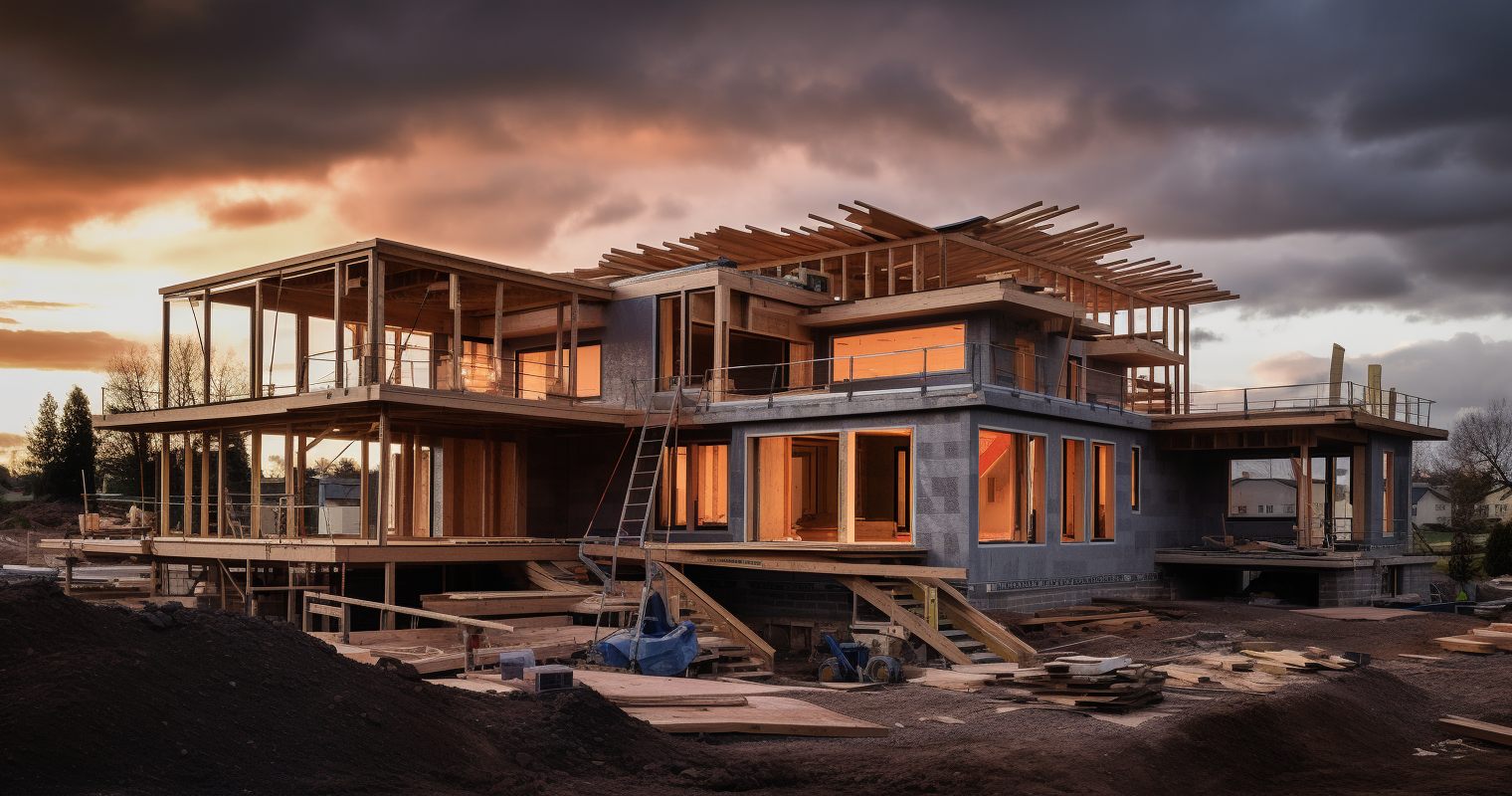
Anyone seeking to build or renovate property in Brazil will need to secure planning permission — known as an alvará de construção or licença de construção — for virtually every type of construction work. This authorisation is granted by the relevant local municipal authority, the prefeitura. Construction activities across the country fall under the oversight of federal and regional professional councils. While foreign nationals are broadly permitted to own property and engage contractors in Brazil, the process tends to be bureaucratic, operates across multiple layers of government, and varies considerably from one municipality to the next — making professional legal and architectural guidance indispensable.
| Item | Details |
|---|---|
| Planning permission body | Local municipal authority (Prefeitura) — requirements vary by city |
| Construction permit name | Alvará de Construção / Licença de Construção |
| Processing time (as of 2025) | A few weeks to several months, depending on municipality and project complexity |
| Environmental licence (large projects) | Several months to over a year where an EIA/RIMA is required (as of 2025) |
| Heritage authority | IPHAN (Instituto do Patrimônio Histórico e Artístico Nacional) |
| Architect/engineer registration | CAU (architects) and CREA/CONFEA (engineers) — mandatory for all projects |
| Foreign land ownership | Generally permitted with minimal restrictions; CPF tax number required |
| Occupancy certificate | Habite-se — required before property can be legally occupied |
Do you need planning permission to build or renovate a property in Brazil?
Securing a construction permit in Brazil is a frequently complex undertaking, shaped by the specific location of your project, the type of work involved, and a wide range of technical and environmental rules. In practice, almost every form of construction activity — whether erecting a new building, extending an existing one, or carrying out substantial structural changes — requires a formal permit. Licensing works with the city government is not optional: if inspectors discover unauthorised construction, the works can be halted, the owner subjected to fines, and in more serious cases the structure may be ordered for demolition.
Each Brazilian city operates under its own distinct construction rules and regulations. This decentralised approach means that, unlike countries with a single national building code, the requirements you face will depend almost entirely on which municipality your property is located in. Your first port of call should always be your local Prefeitura (city hall), where you can establish what the specific rules are for your project and location.
Minor cosmetic improvements — such as repainting interior walls, swapping floor tiles, or replacing fittings — may fall outside the permit requirement, but any work touching the structure of a building, increasing floor area, altering external facades, or affecting building services will almost certainly require authorisation. When uncertain, obtain written clarification from your local Prefeitura before any work commences.
How to apply: step by step
- Appoint a qualified professional. Every project, including smaller residential ones, must designate a Project Manager (Autor do Projeto) and a Technical Manager (Responsável Técnico). These roles are ordinarily fulfilled by a registered architect or engineer.
- Have your architect prepare drawings. The architect or urban planner holding valid registration with the CAU must sign the RRT (Registration of Technical Responsibility) as the nominated qualified technical responsible for the project.
- Submit to the local authority. Applications for a building permit (Alvará de Execução da Obra) covering smaller constructions are lodged with the Town Hall Housing Secretary (Secretaria Municipal de Habitação) at the nearest Prefeitura or subprefeitura. Applications for medium and large-scale construction projects are directed to the Department of Building Permits (Departamento de Aprovação de Edificações — APROV).
- Await lot verification. Once all documentation has been submitted, authorised public officials will inspect and verify the demarcation of the plot or fraction, including its topography.
- Licensing review. The licensing authority will assess the submitted documentation alongside any supplementary technical projects. If everything is in order, the construction permit will be issued.
- Commence construction. Building work may only begin after the alvará has been formally issued and must proceed strictly in accordance with the approved plans throughout.
- Obtain the occupancy certificate. To apply for the certificate of habitation (habite-se), all permanent utility connections required by public service concessionaires must be in place. Connections for electricity and water can be requested by telephone or in writing, after which the relevant concessionaire will conduct an inspection to confirm the completed works match the architectural plans approved under the construction permit.
Processing durations vary widely. A Licença de Construção may be granted within a few weeks or may take several months, depending on the municipality and the complexity of the project. Many municipalities now permit documents to be submitted electronically, though practices differ from city to city. Always confirm the current fee schedule with your local Prefeitura, as charges are determined at municipal level and are subject to periodic revision.
What are the rules around listed buildings, conservation areas, and heritage protection in Brazil?
Brazil has a well-developed system of heritage protection that, while serving a comparable purpose to listed building regimes in countries such as the UK or the United States, operates under specifically Brazilian law and is administered by a dedicated federal body. The principal authority responsible for heritage protection is IPHAN (Instituto do Patrimônio Histórico e Artístico Nacional), which enforces Decree-Law No. 25 of 1937 alongside other regulations designed to catalogue, classify, and safeguard cultural and historical assets of national significance.
IPHAN was formally established by Decree Nº 25 on 30 November 1937 and serves as the foundational federal body upon which state and municipal heritage protection agencies are modelled. Protected buildings and sites are classified at three levels — federal, state, and municipal — and together represent a substantial cross-section of Brazil’s cultural inheritance from its earliest history to the present day. Some protected areas encompass entire urban centres, such as the city of Ouro Preto and the Historic Centre of Salvador.
Protected assets are formally recorded in the Livros do Tombo (official registers) under several categories: historical, artistic, archaeological, ethnographic, and environmental. IPHAN’s online database at www.iphan.gov.br allows you to check whether a given property or area carries protected status before you purchase or begin planning any work.
Any construction, alteration, or demolition involving a classified asset or situated within or adjacent to a listed heritage area requires advance authorisation from IPHAN. Owners of classified cultural property are prohibited from destroying, demolishing, or causing damage to such assets under any circumstances. Before undertaking repairs, repainting, or restoration works, the owner must obtain prior special authorisation from IPHAN — failure to do so can result in a fine equivalent to 50 per cent of the loss in value caused to the asset.
IPHAN exercises ongoing surveillance over protected assets, may carry out inspections at any time, and has the power to impose fines and sanctions for non-compliance. Offences against heritage property are treated as crimes against the national patrimony — a considerably more stringent legal position than that which exists in many other countries. Even well-intentioned renovation works undertaken without IPHAN’s prior approval can result in criminal exposure.
For projects in protected areas — such as those in Ouro Preto or Paraty — IPHAN requires that heritage impact assessments be incorporated into any construction proposal. Developers in such areas will typically need to collaborate closely with architects who have relevant heritage expertise to satisfy these requirements and obtain the necessary permit. If you are considering purchasing a property in any historic city centre or recognised heritage zone, always verify the property’s classification with IPHAN before contracts are exchanged. IPHAN operates as an agency of the Ministry of Culture and maintains regional offices in each state; details of all listed heritage sites can be obtained from these offices.
IPHAN contact details:
Website: www.iphan.gov.br
Head office: SBS Quadra 02, Bloco J, Lote 05, Edifício IPHAN — Brasília/DF, CEP 70070-120
Phone: +55 (61) 3429-9400
(Regional offices are listed on the IPHAN website by state.)
What permits and licences are required when building or renovating in Brazil?
In addition to the core construction permit (alvará de construção), a number of further licences and approvals may be required depending on the scale, nature, and setting of your project. All construction in Brazil must comply with ABNT technical standards — which cover safety and accessibility — as well as environmental regulations operating at federal, state, and municipal levels, with particular attention to waste management, resource use, and biodiversity protection.
Municipal authorities bear primary responsibility for analysing and issuing construction permits (Licença de Construção). The Regional Architecture and Engineering Councils (CREA/CAU) oversee professional credentials and verify that plans meet applicable standards. Municipal councils may impose supplementary restrictions on the basis of master plans or local zoning instruments.
For large-scale developments or projects in environmentally sensitive or protected areas, regional or federal environmental agencies — most notably IBAMA — become involved in the licensing process. Projects anticipated to produce significant environmental impacts must be accompanied by an Environmental Impact Study (EIA) and its associated report (RIMA). Obtaining a Licença Ambiental for projects subject to the EIA/RIMA process can take anywhere from several months to more than a year (as of 2025).
Additional permissions from the relevant competent authorities are required for projects in environmental protection areas, heritage zones, coastal areas, or forested land. If your development is situated near the coast, a river, or woodland, you should anticipate a substantially more involved and protracted approval process.
The key licences and approvals to be aware of include:
- Alvará de Construção (Building Permit): Issued by the Prefeitura; must be obtained before construction begins.
- Licença Ambiental (Environmental Licence): Required where a project may have environmental consequences; issued by IBAMA at the federal level or by equivalent state or municipal environmental bodies.
- IPHAN Authorisation: Mandatory if the property or plot falls within or is adjacent to a heritage-listed area or asset.
- Utility Connection Permits: To apply for the occupancy certificate, all permanent utility connections to public services must be in place. Requests for energy and water connections can be made by telephone or in writing to the relevant concessionaire.
- Habite-se (Occupancy Certificate): Issued by the Prefeitura upon completion and inspection of the works; legally required before the property can be occupied or formally registered.
- Fire Safety Certificate: Issued by the state military fire brigade (Corpo de Bombeiros); required for larger residential buildings and all commercial premises.
Fees for each of these licences are determined locally or by the issuing agency and are subject to change. Always confirm current requirements and costs directly with your local Prefeitura, IBAMA’s regional office, or the applicable state authority. Online fee schedules may be outdated and should not be relied upon.
How do you find a reliable, trustworthy builder in Brazil?
Brazil’s construction sector is governed through a network of regional professional councils. The Regional Architecture and Engineering Councils (CREA/CAU) are responsible for verifying professional credentials and ensuring that submitted plans meet required standards. Every builder, contractor, or engineer engaged on a regulated construction project must hold valid registration with the appropriate council. Foreign design and construction professionals wishing to carry out any work in Brazil are likewise required to register with the relevant engineering, architecture, and agronomy councils. Failure to comply with this requirement can lead to serious civil and criminal sanctions and jeopardise the continuing approval of the project.
The principal professional bodies governing Brazil’s construction industry are:
- CONFEA (Conselho Federal de Engenharia e Agronomia — Federal Council of Engineering and Agronomy): The national oversight body for engineers and agronomists. Website: www.confea.org.br
- CREA (Conselho Regional de Engenharia e Agronomia — Regional Engineering and Agronomy Council): A separate CREA operates in each of Brazil’s federal states — for example, CREA-SP in São Paulo and CREA-RJ in Rio de Janeiro. Your regional council can be found via www.confea.org.br.
- CAU (Conselho de Arquitetura e Urbanismo — Council of Architecture and Urbanism): The regulatory body for architects and urban planners. Website: www.caubr.gov.br
When assessing a potential contractor, the following steps are recommended:
- Verify registration: Request the contractor’s CREA or CAU registration number and cross-check it against the relevant council’s online directory. Contractors without valid registration cannot legally assume technical responsibility for permitted works.
- Insist on a written contract (contrato de empreitada): This document should set out the full scope of works, materials specifications, a payment schedule, a project timeline, penalty clauses for delays, and procedures for resolving disputes. Never proceed on a verbal understanding alone.
- Structure payments in stages: Agree to pay in tranches tied to clearly defined and verifiable project milestones — such as completion of foundations, structural works, and fit-out — rather than making large advance payments. Retaining a portion of the final payment until a satisfactory completion inspection has taken place is sound practice.
- Take up references: Ask for contact details of previous clients and, wherever possible, arrange to visit finished projects in person to assess workmanship.
- Confirm insurance cover: Reputable contractors should hold civil liability insurance (seguro de responsabilidade civil), and for larger projects, a performance bond (seguro-garantia) is advisable.
- Consider appointing a gerenciadora (project management firm): For substantial builds, engaging an independent project manager to oversee the contractor on your behalf is strongly advisable, particularly if you spend significant time outside Brazil.
Warning signs to watch for include contractors seeking disproportionately large up-front payments, quoting significantly below other estimates, being unable to supply a valid CREA or CAU registration number, or showing reluctance to enter into a formal written agreement. A thorough understanding of local regulations is essential for any expatriate undertaking construction in Brazil. Where administrative procedures — which can be complex — are not followed precisely, permit processing times can extend considerably. Cutting corners on documentation or using unregistered labour almost never produces the anticipated savings and frequently results in fines, demolition orders, or difficulties when the time comes to sell the property.
How do you find a qualified local architect in Brazil?
Every architect or urban planner working on a Brazilian project must hold current registration with the CAU (Council of Architecture and Urbanism of Brazil) and must formally sign the RRT (Registration of Technical Responsibility) as the qualified technical responsible for the project. Practising architecture in Brazil without CAU registration is unlawful, so checking an architect’s credentials before engaging them is an essential first step.
To be legally entitled to practise in Brazil, an architect must satisfy one of the following conditions: hold a recognised architecture diploma from an official Brazilian college or higher education institution; hold a diploma from a foreign institution that has been duly revalidated and registered in Brazil; or be a foreign national temporarily registered in Brazil and accepted by the Federal or Regional Councils on grounds of national interest.
The CAU maintains a searchable national register of licensed architects on its website. Consulting this register is the most dependable method of verifying that a prospective architect holds valid qualifications and is in good professional standing before any engagement.
CAU — Conselho de Arquitetura e Urbanismo do Brasil:
Website: www.caubr.gov.br
Address: SHIS QI 03/09 – Área de Serviços Públicos, Bloco F — Brasília/DF, CEP 71605-450
Phone: +55 (61) 3204-5800
(Regional CAU offices are present in every state; full listings are available on the national website.)
Working with Brazilian architects and engineers considerably eases the process of obtaining authorisations and interpreting applicable standards. For expatriates who are not confident in Portuguese, it is worth prioritising an architect with demonstrated experience working alongside international clients, or one who is able to communicate in a language you have in common. Ask candidates directly about their previous work with foreign clients and with projects comparable to yours. Some international architectural practices maintain offices in Brazil, and expat community networks and relocation consultants can be a reliable source of personal recommendations.
All professional communications, technical drawings, and planning applications submitted in Brazil must be in Portuguese. Even where you engage a bilingual architect, ensure that you obtain translations of all key documents so that you fully understand what is being applied for and what you are agreeing to.
What are the common pitfalls when buying land to build on in Brazil?
Brazil places relatively few restrictions on property ownership and offers broadly accessible legal procedures, while its real estate market continues to attract growing interest from overseas buyers. That said, the land acquisition process carries real risks for those who do not conduct thorough due diligence. The issues set out below are among the most important to address before committing to any purchase.
Title and ownership history
Land title in Brazil can be rendered complicated by a history of informal transactions, competing ownership claims, and gaps in registration records. It is essential to instruct a qualified Brazilian property lawyer (advogado imobiliário) to carry out a full title search (pesquisa de matrícula) at the local Cartório de Registro de Imóveis (property registry office). The matrícula is the official land register entry and should document the complete chain of ownership, any outstanding mortgages, liens, or other encumbrances, and the precise boundaries of the land.
Zoning and land-use classification
Land-use rules and zoning compliance are determined at the local level. Before purchasing, verify with the Prefeitura how the land is classified. A plot designated as rural (área rural), environmentally protected (Área de Proteção Ambiental — APA), or subject to a restriction under the municipal master plan (Plano Diretor) may not be suitable for construction — or may permit only certain categories of development. Obtaining written confirmation of planning feasibility before contracts are exchanged is strongly advisable.
Environmental and geographic risks
Additional permissions from the appropriate authorities are required for projects involving environmental protection areas, heritage zones, coastlines, or forested land. Brazil also contains extensive areas at risk of flooding (área de várzea), landslides, or situated within Permanent Preservation Areas (Área de Preservação Permanente — APP), which include riverbanks, hilltops, and wetlands. Construction within an APP is prohibited without special authorisation. An environmental survey of any rural or semi-rural plot should be commissioned before any purchase is made.
Utility availability
Mains water, electricity, and sewerage connections are not available throughout Brazil, particularly in rural and peri-urban locations. Before purchasing a plot, confirm with the relevant service concessionaires whether connections can be provided and, if not, what the cost of bringing utilities to the site would be. Off-grid alternatives — including boreholes, septic tanks, and solar energy systems — are widely used but introduce significant additional cost and complexity.
Restrictions on foreign land ownership
Foreign nationals may generally acquire urban property in Brazil. However, different rules apply to rural land: under Law 5,709/1971, the purchase of rural land by foreign individuals is subject to area limits and approval requirements, particularly in border zones. Foreign nationals and companies under foreign control face additional scrutiny and caps on the total area of rural land they may hold. Specialist legal advice should always be obtained before purchasing rural land.
The habite-se and irregular constructions
A significant number of properties in Brazil have been constructed or extended without the required permits, meaning they do not possess a valid habite-se. Acquiring such a property can leave you with the responsibility of regularising the existing structure — a costly and time-consuming exercise — or facing demolition orders from the authorities. Always confirm that any existing structures on a plot hold valid permits and a habite-se before proceeding with a purchase.
Take care to research the specific requirements applicable to each municipality — including ABNT standards, local building codes, and any restrictions affecting rural or border areas. Prepare all necessary documentation in advance, and rely on a local lawyer or specialist professional to ensure full procedural compliance at every stage.
What are the rules around foreign ownership and financing for construction projects in Brazil?
Brazil has in recent years become an increasingly appealing destination for international investors and expatriates. In a manner broadly comparable to Golden Visa schemes available in countries such as Portugal, Spain, and Greece, Brazil enables foreign nationals to qualify for a residence permit by acquiring real estate that meets specified financial thresholds.
Any foreign national wishing to purchase property or land in Brazil must first obtain a CPF number (Cadastro de Pessoas Físicas), Brazil’s individual taxpayer registration. This number is a prerequisite for all property transactions and can be applied for at a Brazilian consulate abroad or at a Receita Federal office within Brazil. The application procedure is relatively simple and does not require the applicant to hold residency status.
For urban property, no nationality-based restrictions on purchase exist. Foreign nationals acquire property under the same legal framework as Brazilian citizens. All property transactions in Brazil must be formalised by deed (escritura pública) executed before a public notary (tabelião de notas) and subsequently entered in the Cartório de Registro de Imóveis. Transfer taxes (ITBI, typically running at 2–3% of the property value, though rates differ by municipality) together with notary and registration fees will apply — current rates should be confirmed with your local Prefeitura and notary.
For rural land, Law 5,709/1971 imposes restrictions on foreign ownership. Individual foreign nationals face limits on the total area they may acquire, and purchases exceeding certain thresholds require approval from INCRA (the National Institute for Colonisation and Agrarian Reform). Land situated within border zones — within 150 km of Brazil’s national boundary — is subject to further restrictions under national security legislation. Specialist legal advice is essential before any purchase of rural land is contemplated.
In terms of financing, foreign nationals who do not hold Brazilian permanent residency may find access to mortgages or construction loans (crédito imobiliário) from Brazilian lenders difficult to obtain. Caixa Econômica Federal, the principal state-backed housing finance institution, generally requires Brazilian tax residency for loan applications. Certain private banks may extend financing to non-residents, though on less favourable terms and subject to more extensive documentation requirements. The majority of non-resident foreign buyers fund their purchases in cash or arrange financing from abroad. The Banco Central do Brasil (Brazil’s central bank) should be consulted for current regulations governing capital transfers and foreign investment in real estate.
Foreign and domestic businesses are subject to the same general process in principle; however, foreign-owned companies often face supplementary requirements relating to immigration status and restricted sectors. If you intend to carry out property development through a Brazilian corporate vehicle — such as a sociedade limitada — seek advice from a Brazilian tax and corporate lawyer, as the available structures and their respective tax consequences can be complex.
What official sources should you consult when planning to build or renovate in Brazil?
Given how localised and subject to change Brazil’s construction regulations are, consulting official sources directly — rather than depending on third-party guides — is strongly recommended. The bodies listed below represent the primary reference points for anyone planning a construction or renovation project in Brazil.
| Body | Role | Website |
|---|---|---|
| Prefeitura (Municipal City Hall) | Issues building permits (alvará de construção), sets local zoning rules and fees, issues habite-se | Search “[your city] prefeitura” for the correct local website |
| IPHAN | Heritage protection authority; maintains the Livros do Tombo register of listed buildings and areas | www.iphan.gov.br |
| IBAMA | Federal environmental licensing for large-scale or environmentally sensitive projects | www.ibama.gov.br |
| ICMBio | Manages and issues authorisations for federal conservation units | www.icmbio.gov.br |
| CAU Brasil | Registers architects; searchable directory of licensed practitioners | www.caubr.gov.br |
| CONFEA / CREA | Registers engineers; regional councils for each state | www.confea.org.br |
| Cartório de Registro de Imóveis | Land registry; title deeds, encumbrances, ownership history | Local cartório for the municipality where the property is located |
| INCRA | Regulates rural land purchases, including by foreign nationals | www.gov.br/incra |
| Receita Federal | Issues CPF tax numbers to foreign nationals; oversees tax registration | www.gov.br/receitafederal |
| Banco Central do Brasil | Regulates foreign capital transfers and real estate financing | www.bcb.gov.br |
| Ministry of Cities (Ministério das Cidades) | National housing and urban development policy | www.gov.br/cidades |
Regulations, fees, and processing times change frequently. Always verify requirements directly with the relevant authority before committing to any stage of your project, and keep copies of all official correspondence and permits throughout the construction process.
Frequently asked questions
How long does it typically take to get a building permit in Brazil?
A Licença de Construção may be issued within a few weeks or may take several months, depending on the municipality and the complexity of the project (as of 2025). Projects of greater scale or those situated in heritage or environmentally sensitive areas will typically take considerably longer to process. Working with an experienced local architect who has established familiarity with the procedures of the relevant Prefeitura can make a meaningful difference in reducing delays.
How much does a building permit cost in Brazil?
Building permit fees in Brazil are determined at municipal level and differ considerably between cities and project types. No single national fee schedule exists. Contact your local Prefeitura directly for current figures, as fees are subject to periodic revision. Your architect or contractor should be in a position to provide a working estimate based on the scope and location of your specific project.
Can I manage a construction project in Brazil if I don’t speak Portuguese?
All official planning applications, permits, and contracts in Brazil must be prepared and submitted in Portuguese. While bilingual architects and contractors can be found — especially in larger cities and areas with established expat communities — you should always arrange for a qualified translator to review all key legal documents before you sign anything. If you are overseeing a project from abroad or are not fluent in Portuguese, appointing a trusted bilingual project manager or legal representative (procurador) is strongly advisable.
Are overseas building qualifications or standards recognised in Brazil?
Under Law 5,194/1966 and Resolution 444/00 of CONFEA, foreign construction professionals may operate in Brazil provided they obtain registration with the CREA or CAU. Foreign-trained architects are required to have their qualifications formally revalidated by a Brazilian university and registered with the CAU before they are entitled to practise. Technical standards governing construction in Brazil are established by ABNT (Associação Brasileira de Normas Técnicas) and differ from standards used in Europe or North America — compliance with ABNT norms is mandatory for all construction, regardless of the originating country of the designer.
What happens if I carry out construction work without planning permission in Brazil?
Ensuring that all works are properly licensed with the city government is not optional. Should inspectors discover unauthorised construction, the works may be stopped, the owner fined, and in more serious cases the structure can be ordered demolished. Conducting construction without proper authorisation can also prevent you from obtaining the habite-se occupancy certificate, which renders the property legally unoccupiable, unmortgageable, and effectively unsellable until the situation is formally regularised.
What should I do if I have a dispute with my contractor in Brazil?
Contractor disputes in Brazil are governed by Brazilian civil law, principally the Civil Code (Lei 10.406/2002) and, where applicable, the Consumer Defence Code (Lei 8.078/1990). As a first step, seek to resolve the matter by issuing a formal written notice (notificação extrajudicial) through a notary or solicitor. If this does not produce a resolution, disputes may be escalated to a state civil court (Justiça Estadual) or, for lower-value claims, to the Special Civil Courts (Juizados Especiais Cíveis). Engaging a Brazilian lawyer with expertise in construction disputes is recommended. Including an arbitration clause in your original contract can offer a faster and less adversarial route to resolution than formal litigation.
Are there restrictions on building near the coast or in the Amazon region in Brazil?
Yes. Coastal land in Brazil falls under the Lei do Mar (Sea Law) and associated management rules administered by the Brazilian Navy, which place restrictions on construction within specified distances from the high-water mark. Construction within Permanent Preservation Areas (APPs) — covering riverbanks, hilltops, and wetland margins — is prohibited without special authorisation under the Forest Code (Lei 12.651/2012). In the Amazon and other ecologically sensitive regions, IBAMA and state environmental agencies apply stringent licensing requirements. An environmental and legal survey of any plot in these areas should always be obtained before a purchase is made.
Do I need to be a resident of Brazil to build or own property there?
No — non-resident foreign nationals are entitled to own property and engage contractors for construction in Brazil. You will need a CPF number (Brazilian individual taxpayer registration) and should consider granting power of attorney (procuração) to a trusted representative based in Brazil to handle administrative and legal matters on your behalf if you are not resident in the country. Access to Brazilian mortgage and construction finance is significantly more difficult for those without permanent residency status. Brazil does, however, permit foreign nationals to qualify for a residence permit by purchasing real estate meeting certain financial thresholds, which may be worth exploring if you intend to establish a more permanent presence in the country.