
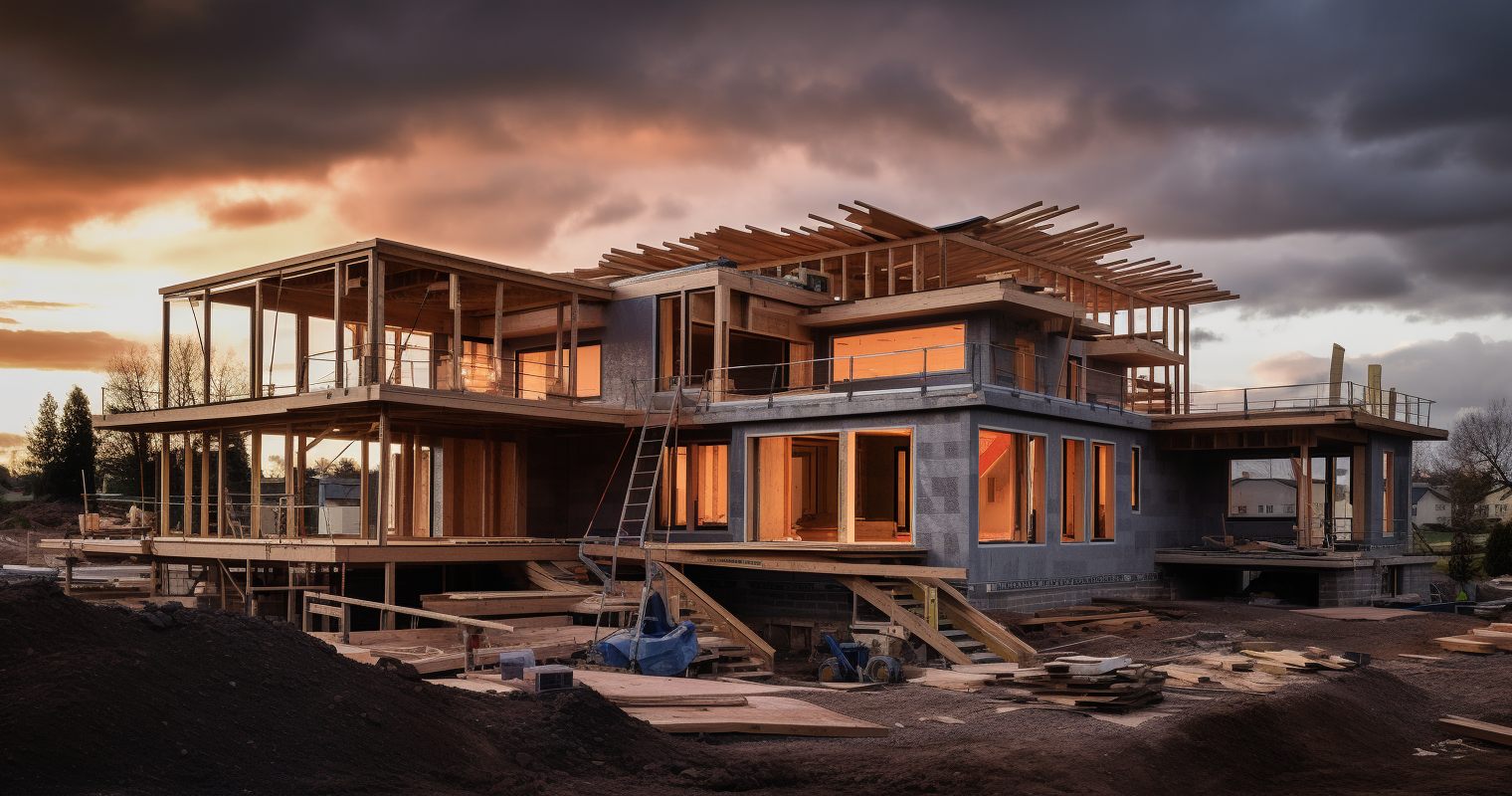
Anyone wishing to build or renovate in the Cayman Islands must obtain planning permission for virtually all substantial works. On Grand Cayman, this authority rests with the Central Planning Authority (CPA); on the Sister Islands, it is handled by the Development Control Board (DCB). The construction sector is governed by a compulsory licensing framework for builders and contractors. Importantly, foreign nationals face no barriers to owning land or commissioning construction work, making the Islands genuinely open to international property buyers.
| Item | Details |
|---|---|
| Planning authority (Grand Cayman) | Central Planning Authority (CPA) — meets bi-weekly on Wednesdays |
| Planning authority (Sister Islands) | Development Control Board (DCB) — Cayman Brac & Little Cayman |
| Planning permission validity | 5 years once granted (as of 2024) |
| Applications portal | Online Planning Services (OPS) — planning.ky/ops |
| Foreign ownership restrictions | None — foreigners may purchase land and build freely |
| Land registry | Cayman Islands Land Registry (Lands & Survey Department) — caymanlandinfo.ky |
Do you need planning permission to build or renovate a property in the Cayman Islands?
Planning permission is a mandatory requirement — not a mere formality — before undertaking any construction, significant alteration, change of use, excavation, or substantial site works. Commencing work without it exposes owners to enforcement action, financial penalties, and potentially compulsory demolition.
The Development and Planning Act (2021 Revision) defines development broadly as “building, engineering or other operations in, on, over or under any land, the making of any material change in the use of any building or land, or the subdivision of land.” Given how widely this definition is drawn, if there is any doubt about whether your intended works require consent, you should check directly with the Department of Planning before starting.
Certain categories of work are exempt from the planning permission requirement. These include internal alterations or improvement works within a dwelling house that have no material effect on its outward appearance. Other exempt activities are: enclosing an existing porch with screening (though solid block wall construction is not exempt); laying a patio no higher than six inches above the existing ground level; and converting a garage into an additional family room or bedroom (though creating a self-contained separate unit would require permission).
The installation of an LPG tank is similarly exempt, provided the combined total of existing and proposed LPG on site does not exceed 1,000 gallons. It is worth noting that exemption from planning permission does not necessarily mean exemption from a building permit, since the building code operates as a separate regulatory process addressing different considerations.
On Grand Cayman, the Central Planning Authority (CPA) decides planning applications, while on Cayman Brac and Little Cayman this role falls to the Development Control Board (DCB). Drawing on assessments and recommendations from the Department of Planning and other government agencies, the CPA determines whether to approve or refuse each application and sets any conditions attached to an approval.
The Cayman Islands manages its built environment through statutory planning controls broadly comparable to those used in the UK and administered by the CPA. Unlike jurisdictions in North America or parts of Europe where minor extensions below a certain floor area may be permitted automatically, the Cayman Islands no longer provides any such automatic allowance — the former provision permitting a 10% floor area increase without permission has been abolished.
Applications are submitted electronically through the Department of Planning’s Online Planning Services (OPS) portal. The system sends automatic email notifications to applicants as their application progresses, and the department’s overriding aim is to improve administrative efficiency and reduce paper-based processing. CPA meetings take place every two weeks on Wednesdays at 10 am in the Conference Room on the first floor of the Government Administration Building.
Once planning permission is granted, it remains valid for five years (as of 2024), during which all pre-permit conditions must be fulfilled before any site work can begin. Notably, land clearance cannot proceed until the Department of Environment has assessed whether any indigenous plants are present and whether they can be preserved — even manual clearance by hand is prohibited until this approval has been given. Current fees and processing timescales should always be verified directly with the Department of Planning, as these are subject to revision.
What are the rules around listed buildings, conservation areas, and heritage protection in the Cayman Islands?
The Cayman Islands does not have a formal listed building or conservation area regime equivalent to that operated by Historic England in the UK, or similar statutory frameworks in Canada and Australia. There is no dedicated national heritage register that automatically imposes statutory restrictions on renovation works affecting specific historic structures.
Nevertheless, environmental protection has a substantial influence on what may and may not be built. Planning decisions are shaped by the National Conservation Act, which requires environmental considerations to be factored into the decision-making process. The Act allows for the creation of protected areas on Crown land or on privately owned land where the landowner has entered into an agreement. Prospective purchasers of undeveloped land should investigate whether any such conservation agreements are in place before proceeding.
The Department of Environment (DoE) plays a central role in this process. Before any land clearance can occur as part of a development project, the DoE must complete an assessment of indigenous plant life on the site. There are also protective measures governing construction activity near water. Any planning application involving a setback adjacent to the sea must include a Mean High Water Mark survey physically marked on the ground no more than six months before the application is submitted.
There is increasing political recognition of the tension between ongoing development and the preservation of the natural environment. Government officials have acknowledged that residents wish to see the natural environment given greater weight as the Islands continue to grow. Those considering heritage or character properties, or land in proximity to mangroves, wetlands, or the coastline, should consult the Department of Environment (doe.ky) before buying or initiating any works, and should obtain written confirmation that no conservation agreements or environmental constraints apply to the land concerned.
To establish whether a specific site is subject to environmental or conservation limitations, contact the Department of Environment at the Government Administration Building, George Town, Grand Cayman, or visit doe.ky. The Department of Planning can also advise on any zoning classifications or site-specific restrictions relevant to a proposed development.
What permits and licences are required when building or renovating in the Cayman Islands?
In addition to planning permission, almost every building or renovation project in the Cayman Islands requires a separate building permit. Whether you are constructing a new building, carrying out demolition, or undertaking renovation works, a building permit will be needed. This is administered by the Building Control Unit (BCU) within the Department of Planning and is entirely distinct from the planning approval process.
Once planning permission has been granted and all pre-permit conditions have been met, attention turns to the BCU, which verifies technical compliance with the Cayman Islands Building Code and applicable safety standards. This is broadly analogous to building regulations approval in the UK, or a building inspection process in the United States — though structured here as a formal permit rather than a purely inspection-based system.
The step-by-step process for obtaining a building permit is as follows:
- Secure planning permission first. Lodge your planning application through the OPS portal at planning.ky/ops, including a site plan, architectural drawings, and any other documentation the CPA requires.
- Fulfil pre-permit conditions. Site work may not begin until every condition set out in the CPA approval letter has been satisfied, including the DoE’s assessment of indigenous vegetation on the site.
- Pay the planning administration fee and the first instalment of the permit fee. At this point the Department of Planning will collect its administration fee and half of the permit fee. The amount payable depends on the scale and value of the project (as of 2024); always refer to the current fee schedule at planning.ky/dop-documents/fees-list.
- Lodge your building permit application with the BCU through OPS. Supply complete construction drawings, structural specifications, MEP (mechanical, electrical, and plumbing) plans, fire safety documentation, and energy efficiency details.
- Await technical review by the BCU. Examiners will assess compliance with structural requirements (including wind and seismic loading and hurricane resistance), life safety provisions (fire separation, means of escape, alarm systems), electrical and plumbing codes, and energy conservation standards.
- Respond to any comments. Where revisions are required, you will be notified through OPS; amend your drawings and resubmit accordingly.
- Receive your building permit. A permit is issued once the drawings satisfy all code requirements and any necessary approvals from external agencies — such as the Fire Service and the Water Authority — have been obtained.
- Begin construction and schedule required inspections. Inspections at key construction stages must be arranged via OPS, covering structural, electrical, and plumbing elements, culminating in a final inspection before a Certificate of Fitness for Occupation (CFO) can be issued.
Further approvals that may be required include sign-off from the Fire Service, connection permits from the Water Authority, and electrical contractor licensing. A dedicated board governs the licensing of electrical contractors operating in the Cayman Islands, and all electrical work must be carried out by a contractor holding a valid licence. Plumbing contractors are also subject to licensing, with scheduled examinations held throughout the year. Current fee schedules and application requirements should always be confirmed with the Department of Planning.
How do you find a reliable, trustworthy builder in the Cayman Islands?
The construction industry in the Cayman Islands operates under a structured licensing regime. A dedicated Builders’ Board, administered by the Department of Planning, is responsible for registering both business entities and qualified individuals as building contractors. You should only engage contractors who hold a current and valid licence from this board.
Information about Builders’ Board licensing requirements and registered contractors is available through the Department of Planning. Licence status can be verified by contacting the Department directly. Any reputable contractor should be willing to provide their licence number without hesitation — if they cannot or will not do so, do not engage them.
Contact the Department of Planning (Builders’ Board):
Website: planning.ky/permits
Address: Government Administration Building, Elgin Avenue, George Town, Grand Cayman KY1-9000
Phone: +1 (345) 244-6501
Email: [email protected]
Irrespective of how a contractor comes to your attention, the following practical steps should always be followed when assessing them:
- Confirm their licence. Verify the contractor’s status on the Builders’ Board register through the Department of Planning before entering into any agreement.
- Request references. Ask for a minimum of three recent client references from projects of comparable size and type. Where practicable, visit completed works in person.
- Insist on a written contract. Never proceed on the basis of a verbal arrangement. A properly drafted contract should cover the scope of works, materials to be used, agreed timelines, a staged payment schedule, and a dispute resolution mechanism.
- Check insurance coverage. Contractors must hold current public liability insurance and, where applicable, employer’s liability insurance. Request certificates of insurance before any works begin.
- Structure payments in stages. Tie payments to verified project milestones rather than releasing large sums in advance. Consider instructing a quantity surveyor or project manager to certify each stage before funds are released, consistent with retention and stage-payment practices used in formal construction contracts in the UK and Australia.
- Be cautious of unusually low tenders. As with many island economies, material costs in the Cayman Islands are elevated relative to larger markets due to importation expenses. A quote that appears suspiciously low may indicate inadequate budgeting, the use of unlicensed subcontractors, or the sourcing of non-compliant materials.
A common trap for foreign property owners is engaging a contractor before planning permission has been secured, only to face costly redesign or delays when conditions require amendments. Always ensure planning permission is fully in place — with all pre-permit conditions satisfied — before allowing any contractor onto the site. Additionally, prefabricated homes from many countries will not meet the Cayman Islands building code and will not clear Customs, so material specifications should be discussed with your architect and contractor at the earliest possible stage.
How do you find a qualified local architect in the Cayman Islands?
There is currently no standalone statutory registration body for architects in the Cayman Islands equivalent to the Architects Registration Board (ARB) in the UK or the Architects Acts that operate in Canadian provinces. However, as a British Overseas Territory, the Cayman Islands generally aligns with Commonwealth professional norms. The Department of Planning requires all drawings submitted with planning and building permit applications to carry the name and signature of the person responsible for the design.
Every plan, drawing, specification, and accompanying document must identify the designer and meet the required standard of preparation. In practice, suitably qualified architects, draftsmen, and engineers prepare the great majority of submissions lodged with the CPA and BCU.
The Cayman Islands Society of Architects (CISA) is the principal professional body for architects practising in the Islands. Membership of CISA provides a useful indication of professional standing, continuing professional development (CPD), and familiarity with local regulatory requirements. When approaching any prospective architect, ask whether they are a CISA member and whether they have a track record of successfully submitting applications to the CPA.
Contact CISA:
Website: cisarchitects.com
Address: P.O. Box 32084, Grand Cayman KY1-1208, Cayman Islands
When selecting an architect for a project in the Cayman Islands, the following considerations are particularly important:
- Familiarity with local building codes. The Cayman Islands Building Code contains specific provisions governing hurricane resistance, seismic loading, and energy conservation. There are local regulations which take into account seismic activity and hurricanes; the Planning website publishes the relevant Codes. An architect without this knowledge will generate delays and additional expense during the BCU review process.
- Experience with CPA applications. An architect who has previously prepared and submitted successful CPA applications will understand presentation standards, likely approval conditions, and how to respond effectively to objections.
- Language. All official processes in the Cayman Islands are conducted in English. No specific non-English language proficiency is required of architects, though firms that work regularly with international clients may have multilingual capability.
- International qualifications. Many architects practising in the Cayman Islands hold qualifications obtained in the UK, US, Canada, or elsewhere. The most important factors are local experience and a thorough working knowledge of Cayman’s planning and building code framework, rather than any particular national accreditation.
In most cases, an architect or draftsman will guide you through the planning permission process. It is strongly advisable to engage a locally experienced architect before purchasing land, as they can provide early advice on zoning, development feasibility, and likely approval conditions before you commit to buying a specific site.
What are the common pitfalls when buying land to build on in the Cayman Islands?
Acquiring land with the intention of building is a significant commitment in any country, and the Cayman Islands presents its own specific risks. On the positive side, the land registration system is highly reliable. The Cayman Islands operates one of the most secure land registration systems in the world, providing a transparent and well-structured process. In contrast to some jurisdictions where title documents can be lost or contested, every parcel of land in the Cayman Islands is fully recorded with the Cayman Islands Land Registry.
Every parcel is allocated a unique Block and Parcel number, which is formally recorded in the Land Registry. The Block Number identifies a specific section of land within a designated area on the Islands’ land map, enabling accurate and unambiguous property identification. Always confirm the Block and Parcel number of any land you are considering purchasing and conduct a Land Registry search before contracts are exchanged.
The Cayman Islands uses a title-by-registration system for real property, under which the Registrar of Lands maintains a public register for each parcel into which all registrable dealings are entered. Both the register and supporting documents constitute public records, ensuring full transparency in ownership transactions.
The most significant pitfalls to guard against include:
- Assuming planning permission will follow automatically. Zoning classifications, setback distances, height restrictions, and site coverage limits may prevent you from constructing what you have in mind on a particular plot. Always ask your architect to carry out a planning feasibility assessment before exchanging contracts — not afterwards.
- Overlooking environmental constraints. Land adjacent to mangroves, wetlands, or the coast may be subject to substantial restrictions under the National Conservation Act. Prospective purchasers should investigate whether any conservation agreements have been entered into with respect to undeveloped land before proceeding with a purchase.
- Underestimating flood and storm risk. The Cayman Islands sits within the hurricane belt. Land that is susceptible to flooding or storm damage may attract additional engineering requirements, complicate insurance arrangements, or present difficulties upon resale. Commission specialist surveying advice on any low-lying plot.
- Failing to confirm utility availability. Connection to the water network, electricity grid, and sewerage system cannot be taken for granted. Verify availability and associated connection costs with the Water Authority of the Cayman Islands and Caribbean Utilities Company (CUC) before completing a purchase.
- Relying on visual inspection to establish boundaries. Cadastral surveying defines property boundaries with legal precision and is a requirement within the registration process; it may only be carried out by Licensed Land Surveyors or Government Surveyors. Commission a current survey of any undeveloped land before purchasing.
- Neglecting environmental liability. Environmental liabilities are not always addressed in sale contracts, and those responsible for pollution — as well as owners and occupiers — may face civil proceedings for environmental harm. Ensure appropriate warranties and representations are included in your purchase contract.
Although it is technically possible to complete the relevant documentation without professional legal assistance, it is strongly recommended that you instruct an attorney to ensure your rights are properly protected throughout the transaction. Retaining a qualified local attorney with real property experience is essential. The Cayman Islands Law Society (lawsociety.ky) maintains a directory of practising attorneys.
What are the rules around foreign ownership and financing for construction projects in the Cayman Islands?
The absence of any restrictions on foreign ownership means that buyers from anywhere in the world can acquire land in the Cayman Islands with confidence, supported by a transparent government land registry. This represents a considerable advantage over many other popular expat destinations, where foreign land ownership is either prohibited or subject to government approval, compulsory joint ventures with local partners, or the use of a locally incorporated corporate structure.
Foreign buyers’ property rights are legally recognised and protected under English Common Law — a legal foundation shared with jurisdictions such as the UK, Australia, and New Zealand — which gives international purchasers significant assurance regarding the security of their title.
There is no requirement to hold land through a local company, and freehold title is available to foreign nationals. That said, some buyers elect to hold property through a Cayman Islands company or trust structure for estate planning, tax efficiency, or privacy purposes — your attorney can advise on the most suitable arrangement for your particular circumstances.
Local banks and international financial institutions with a presence in the Cayman Islands do provide mortgages and construction loans to foreign nationals, though lending criteria for non-residents are generally more demanding than for those with established residency or Caymanian status. Key lenders include Butterfield Bank, CIBC FirstCaribbean, and RBC Royal Bank. As a general rule, non-resident borrowers should expect to provide a larger deposit — commonly 25–40% of the total project value — together with evidence of income, proof of identity, and details of existing assets. Lending criteria change regularly, so always verify current requirements directly with the lender.
There is no property purchase tax in the Cayman Islands, though stamp duty (a one-off transfer fee) is payable on land transactions. This is typically 7.5% of the property value, though rates may vary — confirm the current rate with the Lands and Survey Department or your attorney before exchanging contracts. Official figures are available at caymanlandinfo.ky.
For broader guidance on investment into the Cayman Islands, contact the Cayman Islands Department for Commerce and Investment (DCI):
Website: dci.gov.ky
Address: Government Administration Building, Elgin Avenue, George Town, Grand Cayman KY1-9000
Phone: +1 (345) 945-8694
What official sources should you consult when planning to build or renovate in the Cayman Islands?
Before committing to any land acquisition or construction project in the Cayman Islands, refer to the official bodies and resources listed below. Regulations, fees, and procedures are subject to change, and only official sources can be relied upon to provide current requirements.
| Body | Role | Website |
|---|---|---|
| Department of Planning | Planning permission, building permits, BCU, zoning, Builders’ Board, Electricians’ Board | planning.ky |
| Central Planning Authority (CPA) | Decision-making body for planning applications on Grand Cayman | planning.ky/cpa |
| Development Control Board (DCB) | Oversees and reviews the physical development of Cayman Brac and Little Cayman | planning.ky |
| Lands and Survey Department | Records details of all land ownership information and the Registry Map; the Registrar of Lands is responsible for the maintenance of the Land Register | caymanlandinfo.ky |
| Department of Environment (DoE) | Environmental assessments, National Conservation Act, indigenous vegetation | doe.ky |
| PlanCayman | The development plan for the Cayman Islands, setting out long-range policies and proposals for physical development and the overall use of land | plancayman.ky |
| Online Planning Services (OPS) | Submit all planning and building permit applications online; track status and inspections | planning.ky/ops |
| Cayman Islands Society of Architects (CISA) | Professional body for architects practising in the Islands | cisarchitects.com |
| Department for Commerce and Investment (DCI) | Foreign investment guidance, business licensing | dci.gov.ky |
| Cayman Islands Law Society | Directory of qualified local attorneys for conveyancing and property law | lawsociety.ky |
Frequently asked questions
How much does it typically cost to build a home in the Cayman Islands?
Building costs in the Cayman Islands are considerably higher than in many larger markets, primarily because the majority of construction materials must be imported. As a general indication, standard residential construction may cost between CI$150 and CI$250+ per square foot, with premium finishes pushing the figure substantially higher. These figures shift with global supply chain conditions and exchange rate movements. Always obtain a minimum of three detailed quotes from licensed contractors and have your architect or quantity surveyor benchmark them against prevailing market rates before making any commitment. Check current figures with local architects and the Department of Planning’s fee schedule at planning.ky.
How long does the full planning and building permit process take?
For a straightforward residential development, the end-to-end process — from lodging a planning application to receiving a building permit — typically takes several months, and may be significantly longer for complex or large-scale projects. Since the CPA convenes every two weeks, applications move through a regular review cycle. Following the grant of planning permission, further time is required to discharge pre-permit conditions and obtain BCU approval of full construction drawings. A reasonable minimum to budget for the combined process on a standard new build is three to six months, though this will vary by project. Application progress can be monitored in real time through the OPS portal at planning.ky/ops.
Are UK, US, or other overseas building standards and qualifications recognised in the Cayman Islands?
All appliances must be UL (Underwriter Laboratories) inspected, meaning they have been safety-tested and certified for the North American market. The building code draws on international standards but is specifically adapted to local conditions, with particular emphasis on hurricane and seismic resistance. Prefabricated homes sourced from many countries will not comply with the Cayman Islands building code and will not clear Customs. Architectural and engineering qualifications from the UK, US, and Canada are generally recognised in practice, but the most important consideration is local experience and a thorough understanding of Cayman’s specific code requirements. Compliance requirements for any imported materials or systems should always be confirmed with the BCU before procurement.
What happens if I build without planning permission or breach planning conditions?
Proceeding with construction without planning permission, or departing from approved plans without prior consent, is treated as a serious matter. The Department of Planning holds enforcement powers and may issue notices requiring works to be modified or demolished at the owner’s expense. Permission is granted on the basis that development is carried out strictly in accordance with the approved drawings, and any deviation should be queried in advance. Unauthorised works may also prevent the issuance of a Certificate of Fitness for Occupation, which in turn affects your ability to legally occupy or sell the property. If you discover unauthorised works on a property you are purchasing, contact the Department of Planning without delay.
Can I have a dispute with a contractor independently resolved?
Yes. When a dispute arises with a contractor, the starting point should be the written contract, which ought to set out an agreed dispute resolution procedure. The Cayman Islands court system is founded on English common law and has a well-regarded record in resolving commercial disputes. Mediation and arbitration are available as alternatives to court proceedings. Where the dispute concerns the conduct or competence of a licensed contractor, a formal complaint may also be made to the Builders’ Board through the Department of Planning at planning.ky. If a dispute moves beyond informal negotiation, retaining a qualified local attorney is strongly advised.
Is there a language barrier when dealing with planning authorities in the Cayman Islands?
No — all official government processes, planning applications, legal documentation, and contractor agreements are conducted in English. As a British Overseas Territory, English is the official language of the Cayman Islands. This is a practical benefit for many expats who are accustomed to navigating building and planning processes in English. That said, the specific forms, procedures, and terminology of the Cayman system have their own nuances and distinctions, which is why engaging a locally experienced architect and attorney is strongly recommended regardless of your language background.
Do I need to be a resident to purchase land or commission a build in the Cayman Islands?
The Cayman Islands imposes no residency requirement on the purchase of land or the commissioning of construction works. You do not need to hold a Cayman Islands residency permit, work permit, or citizenship to own land or develop a property. However, if you intend to remain on the island for an extended period in order to personally oversee construction, your immigration position may require consideration. Contact the Cayman Islands Department of Immigration (immigration.gov.ky) for advice relevant to your individual circumstances.
What due diligence should I carry out before buying land to build on?
Before exchanging contracts on any land earmarked for development, take the following steps: (1) Search the Land Registry at caymanlandinfo.ky to confirm title and identify any registered charges or restrictions; (2) Commission a current cadastral survey by a licensed land surveyor to establish boundaries definitively; (3) Ask your architect to assess planning feasibility in light of current zoning and Development Plan policies; (4) Consult the Department of Environment regarding any conservation constraints affecting the land; (5) Confirm utility availability and connection costs with the Water Authority and CUC; and (6) Retain a qualified local attorney to review the sale contract and advise on stamp duty and all registrable dealings. Purchasers can verify their land details directly through the Cayman Islands Land Registry.