
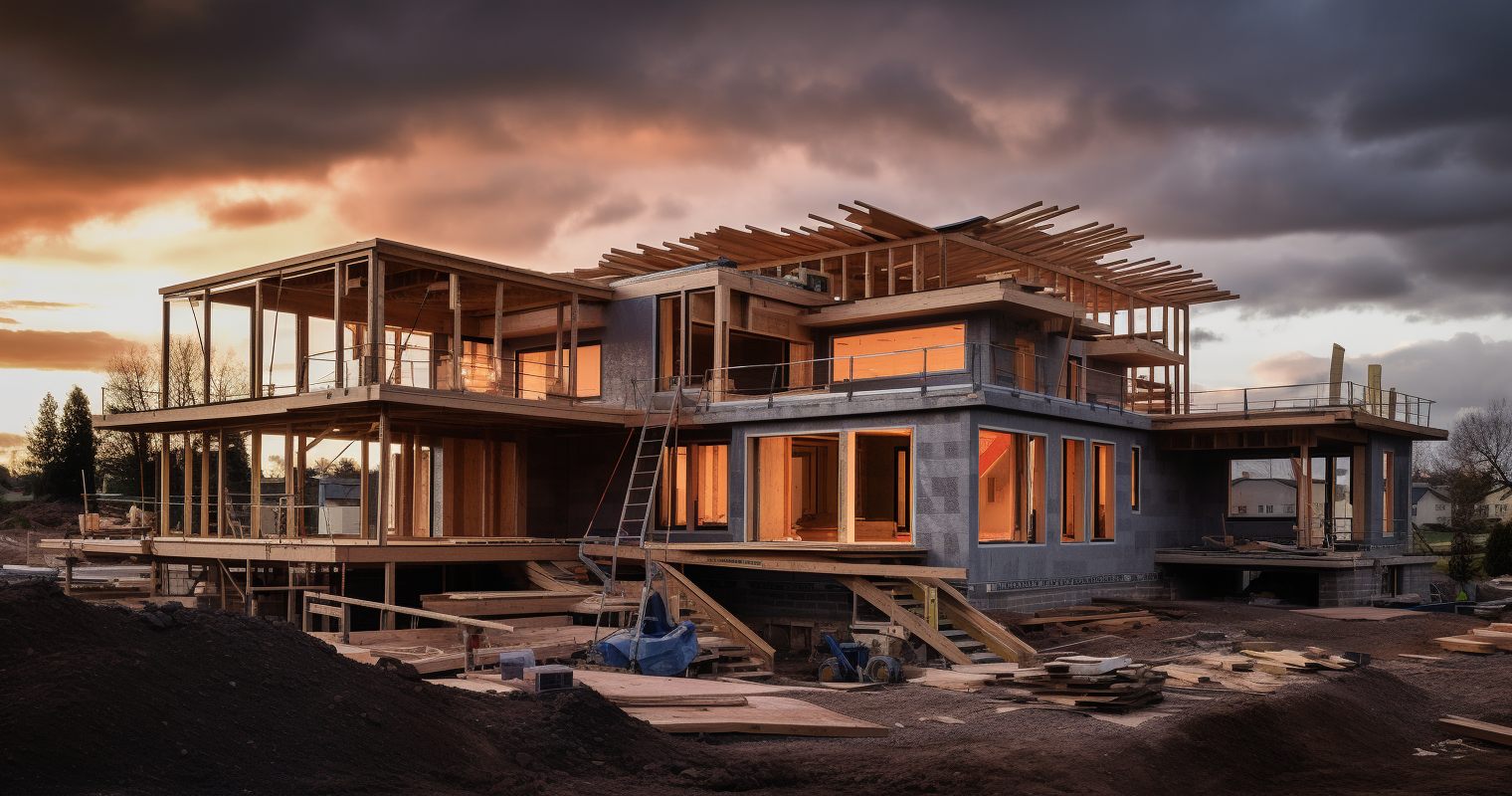
Whether you are starting from scratch or updating an existing structure, building and renovating in Chile is a well-regulated but broadly welcoming process for overseas nationals. Foreign buyers face virtually no blanket restrictions on acquiring land or commissioning construction work. Every new build and the majority of substantial alterations must receive authorisation from the local Municipal Works Directorate (DOM). Chile’s construction sector functions within a robust legal framework, and the country’s exceptional seismic activity means that an independent structural review is a compulsory element of every significant project.
| Item | Details |
|---|---|
| Permit authority | Municipal Works Directorate (Dirección de Obras Municipales – DOM) at your local municipality |
| Standard permit response deadline | 30 working days (as of 2024, under Law 21,718) |
| Larger project (1,000+ occupants) deadline | 60 working days (as of 2024, under Law 21,718) |
| Heritage authority | Consejo de Monumentos Nacionales (CMN) – over 1,600 protected monuments |
| Foreign ownership restrictions | Generally none, except near borders/coasts and some agricultural land rules |
| Key zoning document | Certificado de Informaciones Previas — request from your local DOM before purchase |
Do you need planning permission to build or renovate a property in Chile?
Both private individuals and developers are required to secure building permits from their local municipality before undertaking any construction or development activity. These permits exist to ensure that planned works conform to applicable zoning classifications and safety requirements. New dwellings, extensions to existing structures, and most works affecting load-bearing elements all fall within this requirement. The system broadly resembles building consent frameworks in countries such as Canada or Australia, though Chile’s specific documentation, fee structures, and timeframes differ considerably from those models.
The General Urbanism and Constructions Law (Ley General de Urbanismo y Construcciones – LGUC) establishes a comprehensive national framework governing urban development and construction activity throughout Chile. It addresses safety standards, zoning controls, and permit procedures, creating a consistent foundation for construction oversight. Individual municipalities then implement this national legislation through their own regulatory plans, meaning local rules can vary noticeably from one commune to another.
A building permit must be secured before any work commences on site. As part of the permit process, an independent specialist must review and sign off on all structural and seismic calculations. Given Chile’s position in one of the world’s most seismically active regions, this independent review requirement is an absolute legal obligation — those familiar with systems where structural sign-off is absorbed into a general planning approval may find this a notable distinction.
The permit is issued by the DOM on the basis of the project’s compliance with construction and occupancy regulations, encompassing architectural design, structural calculations, engineering, and the intended purpose of the building — whether residential, commercial, educational, or otherwise — together with conformity to the relevant local planning rules. Approval is granted where the project satisfies all applicable requirements.
Minor internal alterations and cosmetic changes that do not affect the structure may not always require a formal permit, but you should seek confirmation from your local DOM before starting any work, as the threshold varies between municipalities. Erring on the side of caution and applying is always the safer path — proceeding without a required permit can attract meaningful penalties and create serious complications when the time comes to sell.
The step-by-step permit application process is as follows:
- Request a Certificado de Informaciones Previas from your local DOM. This document sets out the zoning classification for the plot, clarifies what uses are permitted, specifies building height limits, and identifies any other relevant restrictions.
- Engage a licensed Chilean architect to produce complete architectural and structural drawings in accordance with the LGUC and the applicable local planning regulations.
- Have the structural and seismic plans examined and certified by an independent qualified reviewer (revisor independiente), as mandated by law.
- Submit the full application package — covering architectural drawings, structural calculations, the independent reviewer’s certificate, proof of ownership, and the completed application form — to your local DOM.
- The Municipal Works Directorate (DOM) maintains a 30-day deadline to respond to the applicant regarding a permit application for standard projects. A 60-day deadline applies to larger housing projects for which occupancy load is equal to or greater than 1,000 people. Both deadlines were confirmed under Law 21,718, introduced in November 2024.
- Should the DOM decline your application, a formal appeals mechanism exists. Applicants may lodge a challenge with the SEREMI MINVU — the regional ministry of housing and urban development — within 30 calendar days of the decision being published or notified.
- Once the permit is issued, construction may proceed. Upon completion, you must approach the DOM for a recepción definitiva (final occupancy certificate) confirming that the finished work corresponds to the approved plans.
Permit fees are calculated as a percentage of the declared construction budget and differ from one municipality to the next. Always verify current fee schedules directly with your local DOM, as figures are subject to change. Closing costs in Chile typically range from 1.5% to 4.5% of the purchase price, and construction permit costs come on top of this — confirm the latest figures with your local municipality before drawing up your budget.
Law 21,718, enacted on 29 November 2024, is designed to accelerate real estate projects by trimming administrative steps, improving transparency, and strengthening the liability framework for parties who fail to comply or who cause harm during the course of a development project. This represents a meaningful and welcome reform for anyone planning to build in Chile, addressing longstanding criticism of delays in the previous system.
What are the rules around listed buildings, conservation areas, and heritage protection in Chile?
Chile’s national monuments — places and properties, whether moveable or fixed — are protected by the State under Law No. 17,288 of 1970 on the Protection of National Monuments. Oversight of this protection rests with the Council of National Monuments (Consejo de Monumentos Nacionales – CMN), which acts on the basis of the historical, artistic, scientific, or commemorative significance of the properties under its care, all of which form part of the country’s cultural inheritance.
The National Monuments Council, which traces its origins to 1925, today oversees the preservation of more than 1,600 national monuments, of which roughly one third are located in or around Santiago. This is Chile’s closest functional equivalent to the listed building registers maintained by countries such as France or Germany, though the Chilean system is broader in scope, encompassing categories as diverse as archaeological zones and nature sanctuaries.
Urban or rural groupings of properties that constitute a coherent unit and are distinguished by their architectural style, building materials, or construction techniques, or that contain historically or archaeologically significant structures, may be designated as “typical or picturesque zones” (zonas típicas o pintorescas) under Law 17,288. As of May 2024, there are 149 such typical zones entered in the National Monuments Council’s register. These designations function broadly like conservation area controls in other jurisdictions and impose restrictions on any alterations that would affect the character or streetscape of the protected area.
The National Monuments Council is responsible for considering declarations of national monuments and typical zones — the latter covering streets or districts that have preserved their traditional character — and must give its approval before any intervention is carried out on properties within its remit. This means that if your property lies within a protected zone, or is itself a designated monument, you must obtain CMN authorisation for any renovation or construction work, over and above the standard DOM building permit.
The consequences of breaching heritage controls can be serious. Carrying out unauthorised works on a protected building or within a typical zone can lead to criminal proceedings, a mandatory obligation to restore the property to its original condition at the owner’s cost, and financial penalties. Before purchasing any property in an older neighbourhood, a coastal settlement, or an area of historical character, check the CMN’s online register at www.monumentos.gob.cl and speak directly with both the CMN and your local DOM to establish whether any designations apply to the property.
Chile is home to seven UNESCO World Heritage Sites, including the historic quarter of Valparaíso and Easter Island (Rapa Nui), and these carry additional layers of international protection. If you are considering purchasing near any of these sites, review both CMN requirements and UNESCO’s guidance on buffer zones before initiating any plans.
The contact details for the Consejo de Monumentos Nacionales are: www.monumentos.gob.cl, Calle Vicuña Mackenna 84, Santiago, Chile. You can also contact the Servicio Nacional del Patrimonio Cultural at www.patrimoniocultural.gob.cl.
What permits and licences are required when building or renovating in Chile?
Beyond planning authorisation, a building or renovation project in Chile is likely to require several additional permits and licences. These can include a building permit, a sanitation permit, and an electrical permit, among other approvals depending on the nature and location of the project. Researching the specific requirements applicable to your particular property and locality is essential, and all necessary authorisations must be in place before any work begins.
All construction in Chile must conform to national building codes, which govern everything from structural performance to fire safety provisions. Chile has dedicated seismic codes — including NCh1156 for structural masonry and NCh1498 for reinforced concrete — that reflect the country’s location within one of the most seismically active corridors on earth. Any structural work must satisfy these standards, and an independent reviewer must certify compliance before a permit will be issued.
The key permits and approvals typically required for a construction project in Chile are as follows:
- Permiso de Edificación (Building Permit): The principal construction authorisation, issued by the local DOM. This must be obtained before any significant construction commences.
- Certificado de Informaciones Previas: Not a permit in the strict sense, but an indispensable pre-application document that confirms the zoning and land-use rules governing your specific plot. This should always be the first document you obtain.
- Sanitation permit (permiso sanitario): Required for sewerage and water connections, issued through the relevant sanitation authority or water utility company.
- Electrical permit: Required for new electrical installations, coordinated with the appropriate energy distribution company. Under Law 21,718, sanitation and energy service providers must respond to necessary requests within ten days in order to move forward with construction projects, counted from the date of the request.
- Environmental permit (if applicable): Larger developments or those situated in environmentally sensitive areas may require an environmental impact assessment or permit from the Servicio de Evaluación Ambiental (SEA). Agricultural land may additionally require environmental compliance certificates depending on the proposed use.
- CMN approval (if applicable): Required before carrying out any works to a listed monument or within a designated typical zone — see the heritage protection section above for further detail.
- Recepción Definitiva (Final Occupancy Certificate): Issued by the DOM once construction is finished and the completed works have been inspected and confirmed as matching the approved drawings. This certificate is a legal prerequisite for occupying or selling the property.
- Activity licence (patente municipal): Required where a building is to be used for a specific commercial or operational activity. The municipality’s licence office (oficina de patentes) will grant this licence provided the activity is permitted within the relevant building zone and the associated taxes are settled.
Municipalities are now required to publish on their websites a resolution issued by the corresponding Municipal Works Directorate (DOM). This resolution must include a complete record of all permits and authorisations granted in the preceding month, together with any modifications — covering building and urbanisation permits, land use changes, subdivisions, and preliminary project approvals. This transparency obligation, introduced in 2025, makes it substantially easier to track the progress of your own application and to review what has been authorised in your vicinity.
Always verify fees and processing times directly with your local DOM, as these differ between municipalities and are updated periodically.
How do you find a reliable, trustworthy builder in Chile?
When searching for dependable contractors in Chile, a sound starting point is to look for companies or individuals affiliated with professional organisations such as the Cámara Chilena de la Construcción (Chilean Chamber of Construction) or comparable national industry bodies. Membership of these organisations is not always a legal condition of practice for every category of contractor, but it does serve as a meaningful indicator of professional conduct and commitment to recognised industry standards.
The Cámara Chilena de la Construcción (CChC) is the primary trade body representing Chile’s construction industry. It encompasses contractors, developers, and construction professionals throughout the country and maintains a member directory that can be used to identify vetted firms. Contact details: www.cchc.cl, Marchant Pereira 10, Providencia, Santiago, Chile. Tel: +56 2 2376 3300.
Construction in Chile must comply with national building codes, which regulate everything from structural integrity to fire safety. Works that fail to conform to these codes may be stopped by the authorities or attract penalties. When evaluating a potential contractor, always ask for evidence that their previous projects have received final occupancy certificates from the DOM — this provides concrete confirmation that their work met the required standards.
Practical steps for vetting a contractor in Chile include:
- Request references: Ask for the contact details of at least three former clients and, where possible, arrange to visit completed projects in person. Exercise particular caution with any contractor who is reluctant to provide references.
- Verify their RUT (tax identification number): Any legitimate business will hold a valid RUT registered with the Servicio de Impuestos Internos (SII). Business registrations can be checked at www.sii.cl.
- Request a written contract: Ensure that all works, materials, timelines, and payment milestones are clearly set out in a signed written agreement. Having the contract certified by a Chilean notary (notaría) provides an additional layer of legal security.
- Use staged payments: Avoid paying large sums in advance. Structure payment instalments to correspond to agreed completion milestones, retaining a final payment until the recepción definitiva has been issued.
- Confirm insurance: Reputable contractors should carry both public liability insurance and workers’ compensation cover. Request written evidence of these policies before work begins.
- Be cautious of unusually low quotes: A quotation that is substantially below the market rate may signal that the contractor intends to economise on materials, labour quality, or permit compliance. Always obtain a minimum of three independent quotes before making a decision.
One of the most common traps for expat property owners is engaging a contractor who proposes to begin work before permits are in place, assuring them that the paperwork will be handled later. Projects that do not comply with building codes can be halted or subject to penalties. Never allow construction to start without a valid permit in hand, and retain copies of all permits, plans, and written correspondence throughout every stage of the project.
How do you find a qualified local architect in Chile?
In Chile, the practice of architecture requires a university degree in architecture from a recognised and accredited institution. The Colegio de Arquitectos de Chile was established in 1942 and serves as the professional association for architects who choose to become members on a voluntary basis. While membership is not an unconditional legal requirement to practise, selecting an architect who belongs to the Colegio gives you assurance that they have met acknowledged professional standards.
To locate a suitably qualified architect in Chile, the recommended approach is to search the member directory maintained by the Colegio de Arquitectos de Chile. This directory can be filtered by geographic area, area of specialisation, and other criteria, and is available to search online. It is a reliable first step in identifying qualified professionals operating in your region.
The contact details for the Colegio de Arquitectos de Chile are: www.arquitectos.cl, Alameda Bernardo O’Higgins 115, Santiago, Chile. Tel: +56 2 2441 4100.
Engaging an architect is not optional in Chile — the DOM will only issue a building permit where the project demonstrably complies with all construction and occupancy regulations, which includes the architectural and engineering components of the plans. These must be prepared and authenticated by a professionally qualified architect. Without an architect’s professional seal and signature on the submitted documentation, the DOM will not process the application.
For expats, there are several practical points worth bearing in mind when selecting an architect. If Spanish is not your working language, seek an architect with a track record of working alongside international clients, since all official documentation, plans, and communications with the DOM are conducted in Spanish. Certain firms in major centres such as Santiago, Valparaíso, and the Lake District have particular experience supporting foreign clients and can help guide them through the administrative aspects of the process. Always agree in writing on the scope of services, the fee structure, and the stages at which payments fall due. Architect fees in Chile are commonly calculated as a percentage of the total construction cost, though fixed-fee arrangements can also be negotiated.
It is equally important to ensure that your chosen architect has direct familiarity with the relevant local DOM and a thorough understanding of the planning rules applicable to your specific municipality or region. Local knowledge carries substantial weight within the Chilean system, where planning requirements can diverge significantly between communes.
What are the common pitfalls when buying land to build on in Chile?
Acquiring land for construction in Chile demands thorough due diligence. Unlike purchasing an existing home, buying a plot commits the buyer to working through the entire planning, permitting, and construction process — and difficulties that surface after the transaction has been completed can prove extremely costly to address. The following are the most frequently encountered traps for expat purchasers.
Failing to check zoning and permitted use before purchase. The authority responsible for zoning and land-use information in Chile is the local municipality, specifically the Dirección de Obras Municipales (DOM), which administers the local zoning plan (Plan Regulador Comunal or PRC). The document that confirms zoning classification is the Certificado de Informaciones Previas, which you can request from the DOM, and which tells you what uses are permitted on the site, building height limits, and other restrictions. This certificate should always be obtained before signing any purchase agreement.
The parcela de agrado trap. A common zoning pitfall that foreign buyers miss in Chile is buying a parcela de agrado (rural lifestyle plot) without realising it may be zoned for agricultural use only, which can restrict building permits, subdivisions, or commercial activities they might have planned. These plots are widely marketed and can appear ideally suited for building a home, but their zoning status must be independently verified before any commitment is made.
Unclear or disputed title. The minimum formalities for the sale and purchase of real estate are certified by the notaría and by the Conservador de Bienes Raíces. The notary and the Conservador verify, among other things, that the property is duly owned by the seller, that there is no prohibition over the land such as mortgages, that the property does not have debt, as well as the formalities of the sale agreement. Always commission a thorough title study (estudio de títulos) covering no fewer than ten years of ownership history prior to completing a purchase.
Boundary and survey issues. Unclear or contested property boundaries, zoning constraints, and incomplete or inaccurate property records are among the most common problems encountered when buying land in Chile. Engaging a licensed surveyor to physically verify and confirm the plot boundaries against the registered plans before any commitment is entered into is strongly advisable.
Border and coastal zone restrictions. Foreigners can own property in Chile, and there are no significant restrictions on foreign ownership of real estate. However, certain areas — for example, land near borders — may be subject to limitations for foreign nationals, and foreign ownership of agricultural land may require special permits in certain situations. Land falling within restricted zones near borders or coastlines requires additional authorisations from the relevant government ministries before a purchase can be completed.
Utility availability. Not all rural or semi-rural plots in Chile have immediate access to mains water, electricity, or sewerage infrastructure. The availability and likely cost of utility connections should be confirmed before purchase, as connection costs can be considerable, particularly in remote locations. Under Law 21,718, sanitation and energy service providers must respond to necessary requests within ten days in order to move forward with construction projects.
Inheritance complications. Chile operates a forced heirship system, under which a defined portion of a deceased person’s estate must pass to their children regardless of the contents of any will. Property is typically distributed in accordance with the rules set out in the Chilean Civil Code. If you are purchasing in Chile as a foreign national, take legal advice on how Chilean inheritance rules interact with the succession laws of your home country, as the interaction of these two frameworks can have significant implications for estate planning.
The most critical legal verification that should never be omitted in Chile is the title study (estudio de títulos) combined with lien verification at the Conservador de Bienes Raíces, because ownership only transfers upon registration and it is essential to confirm that no hidden encumbrances exist. Always instruct a qualified Chilean notary and a specialist real estate lawyer, and never execute any preliminary agreement (promesa de compraventa) without independent legal advice.
What are the rules around foreign ownership and financing for construction projects in Chile?
Foreigners can own property in Chile, and there are no significant restrictions on foreign ownership of real estate. This comparatively open stance sets Chile apart from a number of neighbouring countries and makes it one of the more straightforward markets in South America for international buyers and developers to enter.
No specific visa is required to purchase property in Chile, but in virtually all cases a Chilean tax identification number (RUT) will be needed to complete the transaction and register the title deed. Obtaining a RUT is a straightforward administrative process through the Servicio de Impuestos Internos (SII), which can be completed in person or, in many cases, remotely through a power of attorney. Without a RUT, it is not possible to sign a deed, open a Chilean bank account, or enter into most formal contracts.
Foreign buyers have the option of completing the entire land acquisition process remotely through a legal representative. Remote purchases require establishing power of attorney with a qualified Chilean lawyer who can act on your behalf at every stage of the transaction — including obtaining your RUT, conducting due diligence, negotiating contract terms, executing documents, and completing registration procedures.
Chile does not operate a golden visa or residency-by-investment programme connected to property acquisition, meaning that purchasing real estate will not automatically confer any immigration benefit. The Chilean government maintains a clear separation between property ownership rights and immigration status. Acquiring land, regardless of its value or extent, will not qualify the buyer for any category of visa or residency permit.
For financing, if financing the purchase through Chilean banks, additional documentation including credit history, income verification, and Chilean residency status will be necessary, though most foreign buyers pay cash due to financing limitations. Chile’s mortgage rates for housing loans averaged around 4.1% in late 2025 according to Banco Central data, making financing comparatively accessible relative to other Latin American markets, but non-resident buyers will generally find it harder to qualify for local mortgages or construction loans without established residency. Construction loans (créditos de construcción) are offered by Chilean banks to those holding residency and a solid credit profile, though eligibility criteria and terms differ significantly between lenders.
There is no requirement to structure a purchase through a Chilean company or joint venture arrangement simply to acquire land or commission a residential construction project as a foreign individual. However, if commercial property development is your intention, operating through a Chilean legal entity (sociedad) may offer tax and liability advantages. A qualified Chilean accountant or tax lawyer should be consulted to identify the most suitable structure for your particular circumstances.
For authoritative guidance on foreign investment in Chile, contact InvestChile (the Foreign Investment Promotion Agency) at investchile.gob.cl. For property registration matters, the relevant authority is your local Conservador de Bienes Raíces.
What official sources should you consult when planning to build or renovate in Chile?
Chile’s regulatory framework for construction involves multiple bodies operating at national, regional, and municipal levels. The following are the key official sources to consult before embarking on any project. Always verify requirements directly with these bodies, as rules, fees, and procedures are subject to change — including substantial amendments introduced in late 2024 and 2025 under Law 21,718.
| Body | Role | Website |
|---|---|---|
| Ministerio de Vivienda y Urbanismo (MINVU) | National housing and urban development policy; oversees the LGUC and planning law | www.minvu.gob.cl |
| Dirección de Obras Municipales (DOM) | Issues building permits and occupancy certificates at local level; administers local planning regulations | Contact your local municipality (municipalidad) |
| SEREMI MINVU | Regional ministry of housing; handles planning appeals under the new system introduced by Law 21,718 | Via www.minvu.gob.cl |
| Consejo de Monumentos Nacionales (CMN) | Heritage protection authority; manages listed monuments and typical zones | www.monumentos.gob.cl |
| Conservador de Bienes Raíces | Land registry; records property ownership, mortgages, and encumbrances | Contact your local conservador (varies by region) |
| Servicio de Impuestos Internos (SII) | Tax authority; issues RUT numbers and maintains property valuations (avalúos fiscales) | www.sii.cl |
| Servicio de Evaluación Ambiental (SEA) | Environmental permitting for larger or environmentally sensitive projects | www.sea.gob.cl |
| InvestChile | Foreign investment promotion and guidance for international buyers | investchile.gob.cl |
| Colegio de Arquitectos de Chile | Professional body for architects; member directory for finding qualified architects | www.arquitectos.cl |
| Cámara Chilena de la Construcción (CChC) | Main construction industry body; member directory for finding vetted contractors | www.cchc.cl |
Municipalities are now required to publish on their websites a resolution issued by the corresponding Municipal Works Directorate (DOM) setting out all permits granted in the preceding month. This means that the local municipality’s website can be used to review what has been authorised in your area — a useful tool both for tracking your own application and for checking whether a seller’s claims about prior permitted works are accurate.
Frequently asked questions
How much does it typically cost to build a house in Chile?
Construction costs across Chile differ considerably depending on region, design specifications, and materials chosen. As a broad indication (as of 2025), a basic residential build in regional areas may begin at around USD 600–900 per square metre, while premium finishes or projects in Santiago and other large cities can rise substantially above this range. Mandatory seismic compliance adds to both materials and engineering expenses. Always gather multiple quotes and confirm prevailing rates with local contractors, as costs have climbed in line with global inflationary pressures. Building permit fees are calculated as a proportion of the declared construction budget and vary between municipalities — check current figures directly with your local DOM.
How long does the building permit process take in Chile?
The Municipal Works Directorates (DOM) maintain a 30-day deadline to respond to the applicant regarding a permit application for standard projects. A 60-day deadline is included for larger housing projects for which occupancy load is equal to or greater than 1,000 people. These deadlines were set under Law 21,718 (as of November 2024). In practice, however, assembling the complete documentation package — which includes architectural plans, structural calculations, and the independent reviewer’s certificate — typically takes several months before the application is even lodged. A realistic minimum timeline for the total pre-construction phase of a straightforward residential project is three to six months.
Do I need to speak Spanish to manage a building project in Chile?
Every piece of official documentation, every planning application, every formal contract, and all correspondence with Chilean authorities is conducted in Spanish. While some architects and contractors in major urban centres have working knowledge of other languages, this cannot be relied upon. Using a bilingual lawyer is strongly recommended, and all key contracts and documents should be reviewed by a certified translator before signature. Appointing a local project manager or architect with a proven track record of working with overseas clients can go a long way towards bridging the language gap.
Are overseas building qualifications or standards recognised in Chile?
No. Chile maintains its own national building codes — including seismic design standards such as NCh433 — which apply to all construction work regardless of the owner’s or contractor’s nationality. Architectural plans must be prepared and certified by an architect registered in Chile, and reviewed by a Chilean-qualified independent structural specialist. Qualifications obtained in other countries are not automatically transferable — foreign architects wishing to practise formally in Chile must have their credentials validated through the appropriate Chilean university or professional body recognition process.
What happens if planning rules are breached in Chile?
Works that do not comply with applicable building codes may be halted by the authorities and expose the owner or contractor to financial penalties. Unauthorised construction can prompt the DOM to issue a demolition order, impose fines, and withhold the final occupancy certificate, leaving the property legally incapable of being occupied or transferred. Where a property is purchased and later found to contain unauthorised structures, the new owner may face significant costs to bring the situation into compliance — or in some circumstances, demolition may be unavoidable. Always confirm that all existing structures on a plot hold valid permits and a recepción definitiva before committing to a purchase.
Can I have a dispute with my contractor resolved in Chile?
Yes. Disagreements between property owners and contractors may be brought before the Chilean civil courts, and for lower-value consumer disputes, before the national consumer protection authority (SERNAC) where the contractor is operating commercially. A comprehensively drafted written contract, ideally authenticated by a notary, is essential groundwork for any future claim. On substantial projects, appointing an independent site inspector (inspector técnico de obra) to monitor construction quality and document defects as they emerge is a worthwhile safeguard. Chilean law also provides for seller and builder liability in relation to hidden defects (vicios ocultos), and the General Urbanism and Constructions Law imposes ongoing structural liability on builders for a defined period following completion.
Can I buy land in Chile and build a holiday home without residency?
Foreigners can own property in Chile, and there are no significant restrictions on foreign ownership of real estate. No specific visa is required to purchase property, but in almost every case a Chilean tax identification number (RUT) will be needed to complete the transaction and register the deed. You may commission and own a construction project without holding residency, but as noted above, securing local financing without residency is considerably more challenging, and most non-resident foreign buyers fund their projects without resorting to local mortgages. It is worth noting that non-resident foreign nationals who rent out property in Chile are subject to a 35% Additional Tax on rental income — a rate considerably higher than that applying to Chilean residents.
How do I verify that land I am considering buying has no outstanding debts or legal issues?
The most critical legal verification is the title study (estudio de títulos) combined with lien verification at the Conservador de Bienes Raíces, because ownership only transfers upon registration and you must confirm the absence of any hidden encumbrances. In addition, obtain a certificate confirming no outstanding municipal property taxes (certificado de deuda de contribuciones) from the SII, and check whether any pending enforcement notices exist at the local DOM. Legal checks in Chile — including title searches, lien verification, and permit reviews — typically cost between 100,000 and 400,000 CLP (approximately USD 100–400) for standard certificates, with more involved due diligence packages ranging from 300,000 to 1,000,000 CLP (approximately USD 300–1,000) as of 2025–2026. Always instruct a qualified Chilean notary and a specialist conveyancing lawyer, and never agree to waive due diligence in order to accelerate the transaction.