
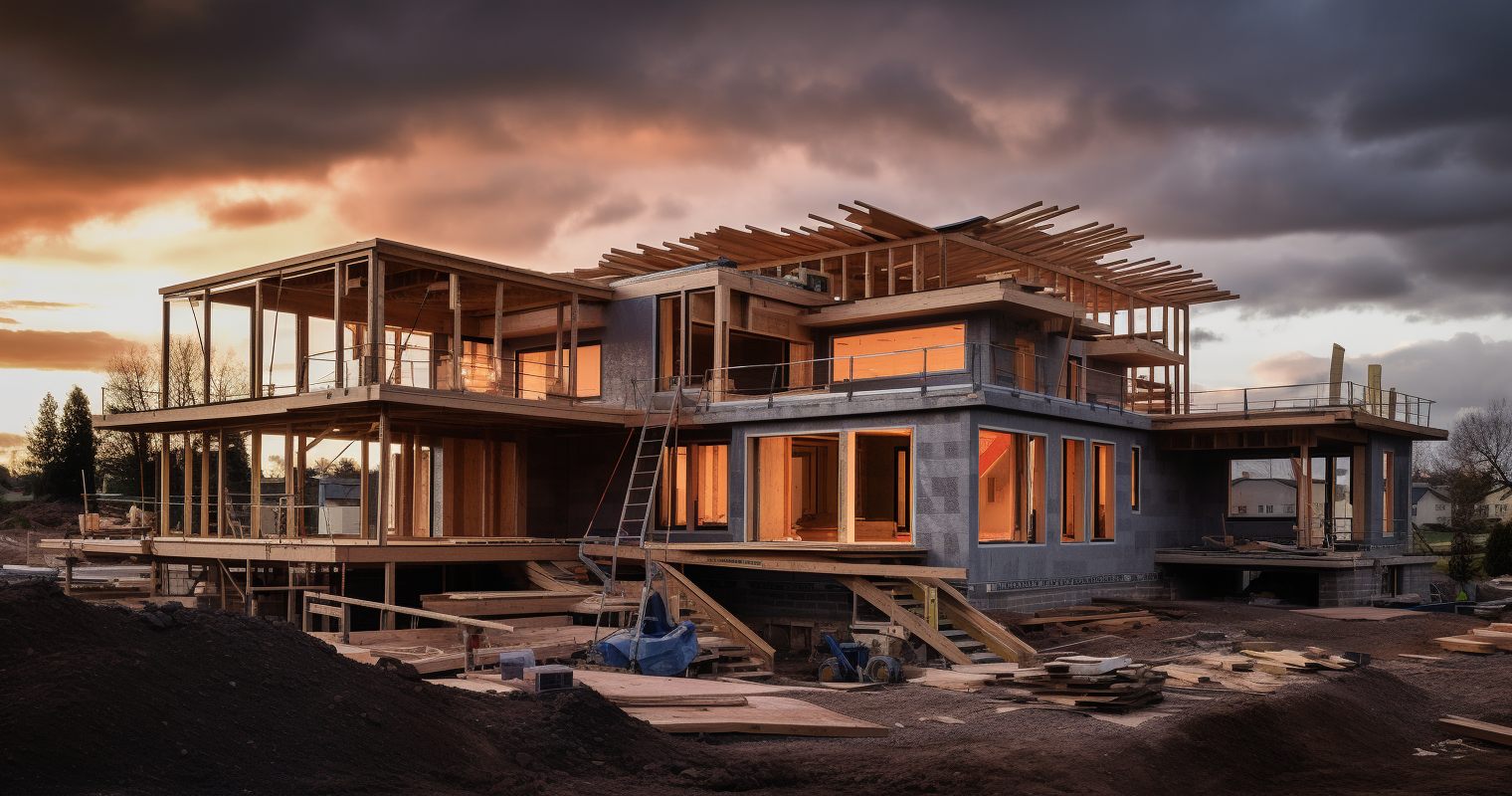
Any structural work on Egyptian property — whether construction from scratch or significant renovation — requires a formal building permit under the Unified Building Law No. 119 of 2008 and its 2024 amendments. Local municipalities administer this process, which recent reforms have shortened to as few as 26 working days for uncomplicated applications. Foreign nationals encounter specific ownership limits, heritage protections are wide-ranging, and engaging a professional registered with the Egyptian Engineers Syndicate is a legal obligation rather than a matter of preference.
| Item | Details |
|---|---|
| Governing law | Unified Building Law No. 119 of 2008 (amended 2015, 2021, 2024) |
| Permit-issuing authority | Local municipal / city council technological centre, under the Ministry of Local Development |
| Processing time (as of 2024) | 26 working days (no insurance required) or 40 working days (insurance document required) |
| Foreign individual ownership cap | Maximum 2 properties, each no larger than 4,000 m² (Law No. 230 of 1996) |
| Construction requirement on vacant land | Foreign nationals must begin construction within 5 years of acquiring vacant land |
| Architect/engineer requirement | All building plans must be stamped and approved by a professional registered with the Egyptian Engineers Syndicate |
| Resale restriction | Properties acquired by foreigners generally cannot be resold for 5 years from acquisition |
Do you need planning permission to build or renovate a property in Egypt?
The principal legislative framework governing construction in Egypt is the Unified Building Law No. 119 of 2008, which introduced sweeping reforms to urban planning, construction licensing, and engineering compliance. Subsequent amendments in 2015, 2021, and 2024 have continued to shape the regulatory landscape, with the most recent changes substantially reversing restrictions that had been introduced in 2021.
A building permit is an official authorisation from a local government body permitting the construction, renovation, demolition, or change of use of a structure. In Egypt, this document confirms that the proposed works comply with zoning classifications, safety codes, architectural standards, and applicable national and local building requirements. In contrast to countries like the UK — where certain minor internal works may qualify as permitted development needing no formal approval — Egypt mandates a permit for nearly all forms of structural activity.
The legal requirement for building permits exists to guarantee that construction meets safety standards, respects zoning designations, and aligns with urban planning objectives. Proceeding without a permit can expose the property owner to serious legal consequences, including mandatory demolition and substantial financial penalties. Expatriates accustomed to more permissive planning regimes elsewhere should treat this requirement with particular seriousness.
Categories of work that ordinarily require a permit include: all new construction regardless of whether it is residential, commercial, or industrial, as well as structural alterations or extensions to existing buildings. Purely decorative internal works — such as repainting walls, replacing floor coverings, or changing fixtures — typically fall outside the permit requirement, but any work touching structural elements, modifying exterior facades, or adding floor area will need formal approval. When in doubt, always consult the local municipality before commencing any work.
Egypt’s Minister of Local Development has introduced a streamlined permit process for Egyptian cities, cutting procedural steps from 15 down to 8 with the aim of simplifying the system. These changes have meaningfully compressed processing times: as of 2024, permits are now issued within 26 working days where no insurance document is required, and within 40 working days where one is needed.
The permit application unfolds in two main phases. The step-by-step procedure is as follows:
- Site suitability assessment: Lodge a request at the local technological centre, supplying a copy of your national ID card (or passport in the case of foreign nationals) together with a sketch of the site. Under 2024 reforms, the previous requirements to provide a registered property contract and site coordinates have been removed.
- Site survey: Pay the applicable fee for a site survey, which is carried out by a designated surveying body such as the Military Survey Department or the Directorate of Surveying and must be completed within 15 days.
- Site suitability statement: The administrative authority verifies planning and building requirements and issues a site suitability statement through the technological centre within 5 days, bringing the total initial phase to 20 days.
- Building permit application: Submit an application accompanied by a contract with a certified engineer, a power of attorney, and the architectural and engineering drawings bearing the engineer’s approval. Proof of land ownership and, where applicable, an insurance document must also be included.
- Application review: The technological centre and the planning and organisation department examine the application against building codes, planning requirements, and architectural standards — a process that takes 15 days.
- Appoint supervising engineer and contractor: Once the review is concluded, the applicant must engage a supervising engineer and a contractor for the project, providing copies of those contracts to the technological centre.
- Fee calculation and payment: A review committee at the local unit calculates the applicable fees based on the project’s scope. Fees differ by governorate and project size — confirm current figures with your local municipal authority, as they are subject to periodic change.
- Permit issuance: After payment and final approval, the building permit is formally issued and work may begin.
Only professionals enrolled with the Engineering Syndicate are entitled to stamp building plans. Requirements also differ by area, particularly in coastal or seismic zones. This distinguishes Egypt from systems in countries such as Canada or Australia, where a broader range of accredited professionals may certify plans — in Egypt, Engineers Syndicate registration is an absolute requirement with no exceptions.
The 2024 amendments reversed several key 2021 provisions, reinstating more flexible rules to stimulate development while preserving oversight mechanisms. Always consult the relevant local authority for the most up-to-date procedures and fee schedules, as Egypt’s regulatory environment continues to evolve.
What are the rules around listed buildings, conservation areas, and heritage protection in Egypt?
Egypt holds one of the world’s most extraordinary concentrations of cultural and archaeological heritage, and the legal protections surrounding it are multi-layered and, in certain respects, complex. Unlike the UK’s listed building system — which operates through a single formal register with clearly defined Grade I, II*, and II designations — Egypt’s heritage protections are distributed across a number of distinct statutes and authorities.
Antiquities are safeguarded by Law No. 117 of 1983, while buildings of architectural value and historical significance fall under Law No. 178 of 1961. Law No. 144 of 2006 governs demolition licences and addresses the protection of buildings recognised as having architectural worth.
Under Law No. 117, a building is classified as “historic” if it can be attributed to one of Egypt’s foundational cultural traditions — Greek, Roman, Christian, Islamic, or Ancient Egyptian. Law No. 144, on the other hand, leaves the concept of “heritage” considerably less defined, and no single ministry or institution carries explicit statutory responsibility for formally classifying or protecting heritage buildings under that law. This ambiguity makes it essential to seek specific legal and technical advice before undertaking any work on an older property.
The Supreme Council of Antiquities (SCA) was established in 1994 and carries responsibility for the conservation, protection, and oversight of all antiquities and archaeological excavations across Egypt. In 2022, the department was incorporated into the Ministry of Antiquities and Tourism. The Ministry, through the SCA, is the principal authority to engage when any construction, renovation, or demolition work is contemplated near or on a site of historical significance.
If you are considering a property in areas such as Islamic Cairo, Luxor, Aswan, Alexandria, or anywhere in proximity to an archaeological site, you must obtain a formal clearance from the Ministry of Antiquities and Tourism before proceeding. Any construction or renovation that risks damaging, obscuring, or altering a protected structure can give rise to criminal liability under Law No. 117 of 1983 and the Antiquities Protection Law No. 91 of 2018. Penalties may include imprisonment and substantial financial sanctions.
There is currently no publicly searchable online heritage register comparable to, for example, Historic England’s National Heritage List. Prospective buyers and developers should commission a legal search through a qualified Egyptian lawyer and contact the Ministry of Antiquities and Tourism directly — reachable at www.antiquities.gov.eg — to establish the status of any property or land before purchase or commencement of works. Never assume that a building is free from heritage restrictions simply because you have not been formally notified of any.
What permits and licences are required when building or renovating in Egypt?
In addition to the building permit itself, a construction project in Egypt will typically involve a series of further approvals and licences at various stages. Precisely which are needed depends on the location, scale, and nature of the development.
Utility companies routinely require sight of a valid building permit before connecting water, electricity, or gas to a property. Utility connection permits are applied for separately from the building permit and are coordinated directly with the relevant utility providers — principally the Egyptian Electricity Holding Company for power supply and the appropriate local authority for water and sewerage.
The key permits and approvals typically required are as follows:
- Building permit (ruhsat al-bina): The primary approval, issued by the local municipality as described above. Building permits are issued by local administrative units — such as the city council or municipal authority — under the supervision of the Ministry of Local Development and the Ministry of Housing, Utilities, and Urban Communities. Larger-scale projects may additionally require scrutiny by a central authority or technical committee.
- Site suitability certificate: This precedes the building permit and confirms that the land is zoned appropriately for the intended purpose. It is issued by the local technological centre.
- Engineering syndicate stamp: Under the Engineers’ Syndicate Law No. 66 of 1974, no engineering work in Egypt may be entrusted to any person other than engineers or engineering consultancy firms admitted before the Engineers’ Syndicate. All plans must carry this stamp before submission to the permitting authority.
- Neighbour notification / consent: Many local authorities require applicants to notify neighbouring landowners of proposed works. While recent reforms have reduced certain formalities, a boundary or rights dispute with a neighbour can still cause significant project delays.
- Insurance document: Certain projects require an insurance certificate issued by the insurance syndicate as part of the permit application, which adds up to 15 days to the overall process (as of 2024).
- Environmental permit: Larger developments, or those close to protected natural areas, may require an environmental impact assessment approved by the Egyptian Environmental Affairs Agency (EEAA). Contact the EEAA at www.eeaa.gov.eg for guidance.
- Fire safety approval: Commercial buildings and multi-unit residential properties must obtain fire safety sign-off from the relevant civil defence authority before they can be occupied. This approval is typically sought at the completion stage.
- Demolition licence: Where an existing structure is to be demolished as part of the project, a separate demolition licence is required pursuant to Law No. 144 of 2006.
Always confirm the current list of required approvals with your local governorate’s technological centre and a qualified Egyptian lawyer, as requirements differ considerably between Cairo, Alexandria, the Red Sea coast, and other regions, and fee schedules change regularly.
How do you find a reliable, trustworthy builder in Egypt?
Egypt’s construction industry is subject to a combination of licensing obligations and professional syndicate membership requirements, though on-the-ground enforcement can be inconsistent and informal building practices remain prevalent in some parts of the country. Expatriates commissioning construction work need to exercise particular care in selecting and thoroughly vetting any contractor.
To operate as a contractor and carry out construction work in Egypt, a valid construction licence from the Egyptian Ministry of Housing and Urban Development is required. Licensed contractors are categorised according to their area of specialisation, including general contractors, building contractors, road construction specialists, and sub-contractors for specific trades. Always ask to inspect a contractor’s current licence before entering into any agreement.
The principal professional body relevant to builders and engineers in Egypt is the Egyptian Engineers Syndicate (Niqabat al-Muhandisin al-Misriyin), which regulates engineering professionals working in construction:
- Website: www.syndeng.org
- Address: 28 Ramses Street, Cairo, Egypt
- Phone: +20 2 2574 9046
The Engineering Syndicate was established in Egypt in 1964 and serves as the statutory body overseeing engineering practice across all disciplines. Any licensed engineer or supervising engineer involved in your project must be a registered member. Verify membership directly with the Syndicate before engaging any professional.
Practical steps for vetting contractors in Egypt:
- Insist on a written contract in Arabic (with a translated copy): Verbal agreements carry very limited legal weight. The contract should define the scope of work, materials to be used, timeline, stage payment schedule, and a retention clause.
- Structure payments around milestones: Never release the full project cost upfront. Tie payments to clearly defined stages — such as completion of foundations, wall construction, roofing, and finishing works — and retain a percentage (typically around 10%) until final sign-off.
- Confirm insurance cover: Request evidence that the contractor holds current workmen’s compensation insurance and public liability cover, and verify that the policy has not lapsed.
- Follow up references: Ask for contact details of at least three recent projects of comparable scope and, where possible, visit the sites and speak directly with previous clients.
- Appoint an independent supervising engineer: Egyptian law requires a supervising engineer at the permit stage, but choosing your own — independent of any recommendation from the contractor — provides an additional safeguard over the quality and progress of work.
- Common pitfalls for foreign owners: One issue that frequently catches foreign buyers off guard is purchasing within a development where building permits or land allocation documents are incomplete, or where compound rules prohibit short-term letting despite the owner’s plans to generate vacation rental income. Contractors may also inflate quotes for foreign clients, price in US dollars or euros while sourcing materials locally at lower cost, or become uncontactable after receiving an initial payment. Arranging payments through an escrow facility with a reputable Egyptian bank can offer some degree of protection.
How do you find a qualified local architect in Egypt?
In Egypt, architects must hold active membership of the Engineers Syndicate to practise legally and to apply the required stamp to building plans. This is a statutory obligation rather than a professional convention — plans submitted to the permitting authority without the endorsement of a Syndicate-registered architect or engineer will be refused.
Graduates of architecture programmes are entitled to seek professional registration through the Egyptian Syndicate of Engineers, entitling them to practise architecture in Egypt. They may also join the Egyptian section of the International Union of Architects — the Society of Egyptian Architects.
The two key bodies to consult when searching for a qualified architect are:
-
Egyptian Engineers Syndicate (Niqabat al-Muhandisin al-Misriyin)
The primary registration and regulatory body for all engineers, including architects.
Website: www.syndeng.org
Address: 28 Ramses Street, Cairo, Egypt
Phone: +20 2 2574 9046 -
Society of Egyptian Architects (Al-Gamʿiyya Al-Misriyya lil-Miʿmariyin)
The professional association for architects, affiliated with the International Union of Architects (UIA).
Website: UIA Member Profile
When choosing an architect as a foreign national, consider the following practical points:
- Language: Arabic is the official language for all legal and planning documentation. Many architects working in Cairo, Alexandria, and Red Sea resort towns are proficient in additional languages, but do not take this for granted — ask about language capabilities explicitly at the interview stage and allow budget for professional translation of all key documents.
- Experience with international clients: Ask prospective architects whether they have previously worked with non-Egyptian clients and whether they are familiar with the supplementary permit and ownership requirements that apply specifically to foreign property owners.
- Foreign qualifications: Architecture degrees obtained outside Egypt are not automatically recognised for Syndicate registration purposes. Under the Engineers’ Syndicate Law No. 66 of 1974, engineering work in Egypt may only be assigned to professionals or firms admitted before the Engineers’ Syndicate. However, the Syndicate may, upon request from the relevant employer, issue a temporary permit to a non-Egyptian engineering consultancy firm to operate in Egypt on an exceptional basis. If you wish to involve a foreign architect in your project, obtaining such a permit is a complex undertaking that must be factored into your project schedule from the outset.
- Fee structures: Architect fees in Egypt are not publicly standardised. Agree a detailed written fee schedule before any design work begins, covering how fees will be calculated if the project changes in scope or complexity.
What are the common pitfalls when buying land to build on in Egypt?
Acquiring land in Egypt with the intention of building on it involves specific risks that may be unfamiliar to buyers from other property markets. Thorough due diligence is essential and must always involve a qualified Egyptian property lawyer.
Confirm zoning before exchange: Zoning designations exist to manage population density, infrastructure capacity, and land use. Do not take a seller’s word that land is “buildable” — request written confirmation of the official zoning classification from the local municipality before exchanging contracts.
Title deed and ownership chain: Egypt’s land registry — known as the Real Estate Registry or “Tabu” — does not always present a complete picture of ownership. Informal transfers, contested inheritances, and unregistered sales are not uncommon. Once a buyer agrees to purchase, the sale contract must be authenticated before a public notary and registered at the local Real Estate Registry (known as “Tabu”) within 10 days. Commission a lawyer to carry out a full title search tracing ownership back several decades before committing to any purchase.
Build obligation on vacant land for foreign nationals: A foreign national who acquires ownership of vacant land is required to commence construction within a period not exceeding five years from the date of title transfer. Failure to comply can complicate the title. If you are not planning to build immediately, factor this obligation carefully into your purchase decision.
Restricted and agricultural land: Agricultural land is reserved exclusively for Egyptian nationals. Law No. 15 of 1963 on the Prohibition of Foreign Ownership of Agricultural Lands bars foreigners from acquiring agricultural land by way of freehold ownership, usufruct, or any other form of real property right. Attempting to circumvent this restriction through a nominee arrangement carries serious legal exposure.
Sinai and border zone restrictions: The most clearly defined exception is the Sinai Peninsula, where outright land or property ownership by foreigners is prohibited and individuals are instead restricted to usufruct-style rights under the Sinai development law — making this area fundamentally distinct from the rest of Egypt in terms of ownership rights. Land and property near international borders, military installations, antiquities sites, or areas of designated national security significance are categorically off-limits for foreign ownership.
Utility availability: In newly established urban communities, desert developments, and coastal areas, essential services such as mains water, electricity, gas, and sewerage may not yet be available. Always obtain written confirmation from the relevant utility providers regarding availability, connection costs, and expected timelines before proceeding with a purchase.
Incomplete permits in developments: A hazard that frequently goes unnoticed by foreign buyers is purchasing within a development whose building permits or land allocation documents are not yet in order. Ask to see the developer’s actual building permit and land allocation documentation — not just marketing materials — before signing any agreement.
Foreign currency and registration requirements: For foreign purchasers, the authorities require evidence that acquisition funds were transferred from abroad in foreign currency. The seller must demonstrate that the purchase price was paid via an approved bank transfer from outside Egypt, or if paid in Egyptian pounds, that an equivalent foreign-currency transfer was made at the prevailing rate. Non-compliance with these currency requirements will prevent registration of the title.
What are the rules around foreign ownership and financing for construction projects in Egypt?
Egypt operates a defined legal framework governing what foreign nationals may own, where they may own it, and on what terms. While the rules have been progressively relaxed in recent years, significant restrictions remain in place.
Personal ownership limits: Under Law No. 230 of 1996, non-Egyptian individuals and companies may own real estate, albeit subject to strict limits and approvals. Pursuant to Article 2 of Law No. 230 of 1996, the number of lands or built properties which a foreigner may own must not exceed two properties for residential purposes (for the owner and their immediate family), and the area of each property must not exceed 4,000 square metres.
2024 desert land reforms: In January 2024, Parliament amended the Desert Land Law to permit foreigners to take full ownership of land for investment projects, removing the earlier requirement for majority Egyptian ownership (51%) in investment ventures. Standard residential property sales to foreigners, however, continue to be governed by the limits set out in Law No. 230 of 1996.
Residency and visa conditions: Ownership of property in Egypt entitles a foreign national to apply for a form of investment residency — a renewable annual residence permit valid for as long as the property remains in the owner’s name. More substantial investment may qualify for longer-term residency arrangements; check current thresholds with Egyptian immigration authorities.
Resale restriction: A foreign national who acquires ownership of real estate pursuant to this law may not dispose of that property in any manner for a period of five years from the date of acquisition. This restriction applies equally to land on which you have self-built — incorporate this into your planning if you anticipate selling at any point in the medium term.
Restricted areas: Restricted zones include Sinai, military and border areas, and the Sharm el-Sheikh and Dahab region. In practice, the majority of foreign real estate activity is concentrated in designated development areas such as New Cairo, the North Coast, the Red Sea resorts of Hurghada and El Gouna, and recently developed urban zones including the New Administrative Capital.
Corporate ownership: Egypt’s 2017 Investment Law (No. 72/2017) encourages foreign capital by enabling corporate investors to acquire real estate for project purposes and by providing certain incentives, though it did not alter the basic personal ownership caps. Foreign investors wishing to develop on a larger scale typically do so through an Egyptian-registered company, which removes the two-unit individual limit.
Mortgages and construction loans: As of early 2026, certain Egyptian banks are prepared to lend to foreign nationals for residential property purchases, though this is generally more straightforward for those who are resident in Egypt with demonstrable local income. Many foreign buyers continue to rely on cash purchases or developer instalment plans. Construction loans for self-build projects are less readily accessible to foreign nationals, and terms vary considerably between institutions. Contact the Central Bank of Egypt (www.cbe.org.eg) or the General Authority for Investment and Free Zones (GAFI) (www.gafi.gov.eg) for official guidance on financing options.
All transactions must be recorded in the national registry, accompanied by evidence of foreign-currency payment. Engage a qualified Egyptian property lawyer to manage the registration process and ensure full compliance with all foreign-currency and documentary requirements.
What official sources should you consult when planning to build or renovate in Egypt?
Regulations, fees, and procedures in Egypt are subject to regular change. The bodies listed below should be consulted directly for the most current requirements. Do not rely solely on intermediaries, estate agents, or online forums — always verify critical information with authoritative official sources.
| Authority | Remit | Website |
|---|---|---|
| Ministry of Housing, Utilities, and Urban Communities | National housing policy, building codes, urban communities | www.housing.gov.eg |
| Ministry of Local Development | Supervises local permit-issuing authorities; permit reform | www.mold.gov.eg |
| Egyptian Real Estate Registry (Tabu) / Real Estate Registration Authority | Land and property registration; title deeds | Contact via local Governorate office |
| General Authority for Investment and Free Zones (GAFI) | Foreign investment rules, land ownership for investment projects | www.gafi.gov.eg |
| Ministry of Antiquities and Tourism / Supreme Council of Antiquities | Heritage and archaeological site protection | www.antiquities.gov.eg |
| Egyptian Engineers Syndicate | Registration of architects, engineers, and engineering firms | www.syndeng.org |
| Egyptian Environmental Affairs Agency (EEAA) | Environmental permits and impact assessments | www.eeaa.gov.eg |
| Central Bank of Egypt | Foreign currency regulations, banking rules for property transactions | www.cbe.org.eg |
| Official Egyptian Real Estate Platform (government blog) | Guidance on building permits and regulations | blogs.realestate.gov.eg |
Your local governorate’s technological centre is the first port of call for all building permit enquiries, as requirements can vary meaningfully between Cairo, Alexandria, the Red Sea coast, Upper Egypt, and other regions. Always contact or visit the centre for your specific location rather than relying on generalised guidance.
Frequently asked questions: building and renovating in Egypt
How much does it cost to build a house in Egypt?
Construction costs differ considerably depending on location, specification, and contractor. As a broad indication, basic residential construction in Egypt can range from approximately EGP 3,000 to EGP 8,000 per square metre for standard finishes, while higher-specification projects in areas such as New Cairo or the Red Sea coast may exceed EGP 12,000 per square metre. These figures shift with exchange rate movements and the cost of materials — always obtain at least three detailed written quotes and verify prevailing prices locally before committing to a budget.
How long does a typical construction project take in Egypt?
A straightforward residential build in Egypt generally takes between 12 and 24 months from permit issuance to completion, depending on the scale, location, and capacity of the contractor. Following the 2024 reforms, the permit process itself can be completed in as little as 26 working days for uncomplicated cases (as of 2024), though complex projects or those involving heritage-sensitive zones may take substantially longer. Allow for additional time if the site requires new utility connections.
What happens if I build without a permit in Egypt?
The legal requirement for building permits ensures that construction meets safety standards, complies with zoning designations, and accords with urban planning objectives. Proceeding without a permit can attract serious legal consequences, including mandatory demolition of the structure and significant financial penalties. Utility companies will also decline to connect unpermitted buildings to their networks. No structural work should be started before formal approval has been obtained.
Will my architect’s or builder’s qualifications from another country be recognised in Egypt?
Under the Engineers’ Syndicate Law No. 66 of 1974, engineering work in Egypt may only be entrusted to engineers or engineering consultancy firms admitted before the Engineers’ Syndicate. The Syndicate may, upon request, grant a temporary permit to a non-Egyptian engineering consultancy firm on an exceptional basis. Building standards and codes from other countries — such as UK Building Regulations or the US International Building Code — do not apply directly; all construction in Egypt must conform to national standards as administered through the local permitting process.
What should I do if I have a dispute with my contractor in Egypt?
If a dispute arises, the starting point is your written contract, which should set out an agreed mechanism for resolving disagreements. Civil claims against a contractor can be pursued through the Egyptian court system, and both Cairo and Alexandria have specialist commercial courts. Many construction contracts include arbitration clauses — ensure yours names an agreed arbitration institution (the Cairo Regional Centre for International Commercial Arbitration, crcica.org, is widely respected in this field). Engaging a local Egyptian lawyer at the outset of any project is strongly recommended.
Are there language barriers I should prepare for when managing a build in Egypt?
Arabic is the official language for all planning documents, contracts, and official correspondence throughout Egypt. While many architects and project managers in Cairo, Alexandria, and major resort towns have working proficiency in other languages, this cannot be assumed universally. Budget for professional legal translation of all contracts and permit-related documents, and consider appointing a bilingual project manager if you intend to oversee the build remotely from another country.
Can I get a mortgage or construction loan in Egypt as a foreign national?
As of early 2026, a number of Egyptian banks are willing to lend to foreign nationals for residential property purchases, though approval is generally more accessible for those who are resident in Egypt with verifiable local income. Many foreign buyers continue to opt for cash purchases or developer instalment arrangements. Construction loans for self-build schemes are less widely available to non-residents, and terms differ significantly from one institution to another. Contact multiple banks and consult GAFI (www.gafi.gov.eg) for up-to-date guidance on financing options for foreign investors.
Is it safe to buy and build in areas near the Red Sea or on the North Coast?
The Red Sea coast — including Hurghada and El Gouna — and the North Coast are among the most accessible parts of Egypt for foreign property buyers and developers. The bulk of foreign real estate activity is concentrated in designated development zones such as New Cairo, the North Coast, the Red Sea resorts of Hurghada and El Gouna, and the New Administrative Capital. For areas in Sinai or adjacent administrative zones, additional caution and thorough verification by a qualified local lawyer are essential. Always establish whether Ministry of Defence clearance is required for your specific location before committing to any purchase.