
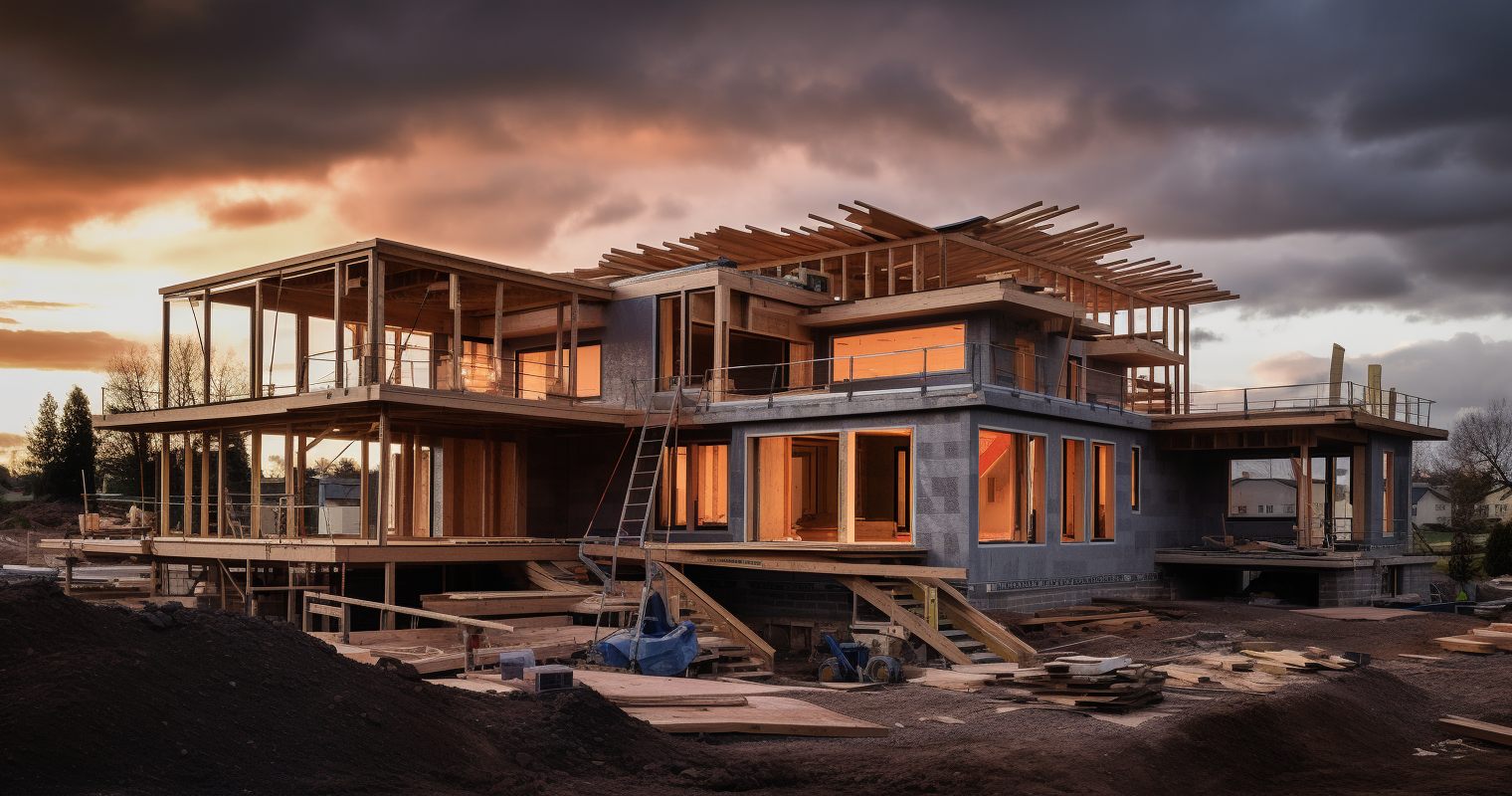
Foreign nationals face no legal barriers to building or renovating in Ecuador — property ownership rights are identical to those held by Ecuadorian citizens. That said, all substantial construction work must be authorised by the relevant municipal authority, rules differ significantly from one canton to the next, and the country’s position on the Pacific Ring of Fire makes strict compliance with the national building code a matter of genuine safety. Engaging a locally registered architect is a legal necessity for any formal construction project.
| Item | Details |
|---|---|
| Planning permission required? | Yes, for all new builds and significant renovations; minor works permit for smaller alterations (as of 2025) |
| Permit fee basis | Approximately 0.12% (1.2 per mil) of declared project value, plus admin fees — varies by municipality (as of 2025) |
| Permit approval timescale | Varies widely by municipality; can be as fast as a few days in some cantons, several weeks or more in others (as of 2025) |
| National building code | Norma Ecuatoriana de la Construcción (NEC) — seismic resistance is a core requirement |
| Architect registration | Must be registered with the Colegio de Arquitectos del Ecuador (CAE) |
| Foreign ownership restrictions | None — foreign nationals have the same property rights as Ecuadorian citizens |
| Heritage authority | Instituto Nacional de Patrimonio Cultural (INPC) — www.inpc.gob.ec |
Do you need planning permission to build or renovate a property in Ecuador?
Securing the appropriate permits before breaking ground is a legal obligation, not a formality. This requirement covers not just new structures but also material alterations or renovations to existing buildings. Ecuador’s planning and permitting framework operates at the municipal level, meaning the rules and procedures are administered canton by canton rather than through any single national body.
The legal foundation for this arrangement is the Código Orgánico de Ordenamiento Territorial, Autonomía y Descentralización (COOTAD). Article 431 of COOTAD vests municipalities with exclusive authority over land use and construction regulation within their boundaries, which is why all permits originate from the city or cantonal government. This differs meaningfully from planning systems in countries like France or Germany, where national frameworks exert considerably more influence — in Ecuador, your local municipality is the decision-making authority that matters most.
Two main permit categories cover most projects: the Permiso de Construcción (Building Permit), required for any new structure, which constitutes the primary approval confirming that plans satisfy all applicable zoning, structural, and safety requirements; and the Permiso de Obras Menores (Minor Works Permit), applicable to significant renovations that leave the structure and footprint unchanged, such as facade modifications or major internal remodelling. Very minor cosmetic works may fall below the threshold for a formal permit, but this line is drawn differently in different municipalities — you should always check with your local planning office before starting any work.
Each canton operates its own land-use framework — in Cuenca, for instance, this takes the form of the Plan de Uso y Gestión del Suelo (PUGS). Administered by the municipality, the PUGS specifies precisely what can be built on any given plot, including height restrictions, allowable lot coverage (the coeficiente de ocupación del suelo), and permitted uses — residential, commercial, or mixed. Compliance is not discretionary.
At the national level, the Norma Ecuatoriana de la Construcción (NEC) establishes technical standards covering structural integrity, seismic resistance, electrical installations, and building materials. Ecuador’s national codes are designed with safety, sustainability, and resilience in mind, and the country’s location on the Pacific Ring of Fire makes faithful adherence to these standards genuinely critical rather than bureaucratically optional.
In rural areas the picture can look quite different. Permit requirements for constructing a home on rural land are sometimes minimal or loosely enforced. However, this should never be treated as a safe assumption — expats have found themselves subject to enforcement action in areas where informal local practice appeared to suggest otherwise.
Step-by-step: applying for a building permit in Ecuador
- Engage a licensed local architect. This is a non-negotiable first step. Your architect will serve as project director and the main point of contact between you and the municipal authority.
- Obtain the IRM (Informe de Regulación Metropolitana or equivalent). To have an architectural project approved, you must obtain the corresponding building line or metropolitan regularisation report (IRM) for each property, along with certificates of conformity for both the architecture and engineering departments. These documents are issued by collaborating entities affiliated with the municipality.
- Prepare full architectural and structural plans. You will need two sets of architectural drawings (scale 1:100 to 1:50) with an area map. The drawings must contain the plot area, COS and CUS percentages, construction area at ground level, total building floor area, and number of dwelling units and parking lots.
- Assemble supporting documents. The application will typically require multiple copies of the property deed (escritura), a certificate from the property registry (certificado del registro de la propiedad), an electrical plan, and evidence of the most recent property tax payment (predios).
- Deposit a guarantee bond if required. Proof of a guarantee deposit (fondo de garantía) is a required document for the building permit application in some municipalities. The municipality notifies the applicant of the amount to be guaranteed, which can be deposited in cash, certified cheque, or as an insurance policy.
- Pay the plan approval fee. The principal charge, the tasa por aprobación de planos, is not fixed — it is calculated against your declared construction value. In Cuenca, this comes to approximately 1.2 per mil (0.12%) of the total project value, with smaller administrative charges on top (as of 2025). Under-reporting the declared value to reduce fees is a frequent misstep that tends to generate far larger penalties at the final inspection stage.
- Receive and display your permit. The permit is issued only once approval is confirmed and all fees are settled. A copy must be visibly displayed at the building site throughout the project.
- Obtain the final occupancy permit. On completion, you must request a final inspection. The inspector checks that the finished construction corresponds exactly to the approved plans. A successful inspection results in the municipality issuing the Recepción Final de Obras (also referred to as a Permiso de Habitabilidad), which certifies the building as legally compliant and safe for occupation. This document is indispensable for obtaining permanent utility connections, insuring the property, and completing any future sale.
The broad requirements are consistent across Ecuador, but every municipality introduces its own particularities. Always confirm the precise document checklist and current fee schedule with your specific cantonal planning department before making any submission.
What are the rules around listed buildings, conservation areas, and heritage protection in Ecuador?
Ecuador maintains a well-developed heritage protection system, administered primarily at the national level by the Instituto Nacional de Patrimonio Cultural (INPC). The INPC is responsible for identifying, cataloguing, and regulating any changes to protected buildings and sites throughout the country. At the national level, it coordinates closely with those responsible for managing Ecuador’s World Heritage properties.
Properties falling under Ecuador’s cultural patrimony legislation include: movable and immovable archaeological monuments originating from the pre-Hispanic or Colonial era, together with human remains, flora, and fauna associated with those periods; churches, convents, chapels, and other Colonial-era constructions; paintings, sculptures, carvings, silverwork, ceramics, and comparable objects from the same period; and ancient manuscripts, rare book editions, and historical maps. In practical terms, this means a wide range of older buildings and sites carry legal protection and place corresponding obligations on their owners.
The INPC’s mandate covers the research, conservation, preservation, restoration, display, and promotion of Ecuador’s Cultural Patrimony, as well as the regulation of all activities of this nature carried out anywhere in the country. It is also tasked with compiling the inventory of all heritage properties, whether publicly or privately held. Owners, administrators, and custodians of inventoried objects are required to inform the INPC by submitting a detailed record within the timeframe the Institute sets, and to permit the Institute to conduct its own inventory work.
Ecuador’s most notable World Heritage Sites include the Galápagos Islands and the city of Quito, both inscribed in 1978. In total, Ecuador has five sites on the UNESCO World Heritage List and five further entries on the tentative list. Properties located within or adjacent to these areas are subject to considerably more rigorous constraints.
If your property sits within Cuenca’s UNESCO World Heritage “Centro Histórico,” you will encounter an altogether stricter set of rules. Your project will need approval from the Dirección de Áreas Históricas y Patrimoniales, which controls everything from facade colours and materials — for example, prohibiting modern aluminium window frames in favour of wooden ones — to roof tile specifications. Appointing an architect without demonstrated expertise in heritage work in this context is a significant risk.
A notable development in 2024 was the publication of Technical Report INPC-DCTCSPC-IT-2024-129, which validated a new form and guide for the inventory of modernist buildings, neighbourhoods, and complexes. This signals that heritage protections may be extended beyond colonial-era properties to encompass modernist architecture as well.
Prior to purchasing any property that might be heritage-listed or within a designated zone, consult the INPC’s national inventory and your local municipality’s Dirección de Áreas Históricas or equivalent body. Violating heritage protection rules can attract heavy financial penalties, compulsory restoration at the owner’s cost, and in serious cases criminal liability under Ecuadorian cultural patrimony law. Make sure your notary and architect confirm heritage status as part of your pre-purchase investigations.
INPC contact details:
Instituto Nacional de Patrimonio Cultural del Ecuador
Mejía No. 352 y Guayaquil, Quito, Ecuador
Website: www.inpc.gob.ec
Phone: +593 2 583-341 / +593 2 583-342
What permits and licences are required when building or renovating in Ecuador?
The core building permit is only the starting point. A construction project in Ecuador will generally require a number of additional approvals, each issued by a different authority — municipal departments, utility providers, and the fire service — and each relevant at a different stage of the project. Failing to obtain any one of them risks bringing your build to a halt, attracting fines, or blocking the final occupancy certificate.
Environmental considerations carry particular weight in Ecuador. The country’s extraordinary biodiversity and constitutional commitment to conservation mean that construction projects are expected to minimise their ecological footprint. An environmental impact assessment is frequently required, documenting specifically how the project will reduce its environmental effect. This requirement is especially relevant for developments near protected natural areas, coastal zones, or the Amazon basin.
Once the regulation report and proof of compliance have been granted, the applicant can initiate the process of obtaining a fire permit from the Fire Department. Fire safety sign-off is a distinct procedural step, typically required before the final occupancy permit can be issued.
Utility connection permits — covering water, sewerage, and electricity — are handled separately by the relevant provider or municipal utility department for each canton. These are independent of the construction permit and must be secured before permanent connections are established. The final Recepción Final de Obras (Permiso de Habitabilidad) is indispensable for connecting those permanent utilities, insuring the property, and facilitating any future sale.
One critically important — and routinely overlooked — obligation concerns worker welfare. The IESS (Instituto Ecuatoriano de Seguridad Social) Affiliation Mandate is perhaps the single most financially dangerous pitfall for property owners. Under the Ecuadorian Labour Law (Código del Trabajo) and the Social Security Law (Ley de Seguridad Social), the property owner can be held personally liable if workers on the site have not been properly enrolled with the IESS for social security purposes. An on-site accident involving an unregistered worker can result in ruinous penalties and personal liability. Before any worker sets foot on your site, demand from your primary contractor the aviso de entrada confirming IESS registration for each individual.
For multi-unit residential developments, a Permiso de Propiedad Horizontal will also be required after construction. This is not a construction permit but a legal procedure carried out following completion, essential for any building that creates multiple separately-owned units such as a condominium. It divides the property into distinct, individually titlable units.
Fees and processing times for all secondary permits vary by canton and project type. Always confirm current requirements with the relevant municipal department, the Cuerpo de Bomberos (fire brigade), and your utility provider at the very outset of your project.
How do you find a reliable, trustworthy builder in Ecuador?
Ecuador’s construction industry is regulated through municipal and professional-college structures rather than a single national licensing body. The result is that the competence and professionalism of builders can vary enormously, and careful screening before any contract is signed is essential — particularly for foreign property owners who are less accustomed to local norms and practices.
Any reputable builder will operate in close coordination with a licensed architect and will have all workers properly enrolled in the IESS social security system. Insist on seeing proof of IESS registration for every worker before work begins, as the legal and financial liability for unregistered individuals rests squarely on the property owner.
Bear in mind that a Maestro Mayor de Obras is an experienced tradesperson, but they do not have the legal authority to sign and take professional responsibility for architectural plans on new builds. For projects of any real scale, you require a licensed architect or civil engineer to assume formal professional responsibility for the design — a maestro mayor operating alone is legally insufficient.
Practical steps for vetting any contractor include:
- Request references and visit completed projects. Speak directly with previous clients, ideally those who have undertaken projects of comparable scale and complexity to yours.
- Insist on a written contract in Spanish. This should define the scope of works, timeline, payment milestones, materials to be used, and a mechanism for handling variations or disputes. Have a bilingual lawyer review it before you sign.
- Structure payments by milestone. Never hand over a large sum at the outset. Tie payments to verified stages of completion — foundation, walls, roof, fit-out — and only release funds once work meets an agreed standard.
- Verify IESS registration. Request the aviso de entrada for each worker. This is a legal obligation, not an optional courtesy.
- Be cautious of unusually low quotes. You cannot assume that your builders know how to do what they say they know. Extremely low bids may reflect plans to use substandard materials, bypass required permits, or inflate costs later through variation orders.
- Consider retaining your architect throughout the build. If you lack construction experience or will not be physically present at all stages of the project, it is sensible to engage your architect not only to produce the plans but to carry out regular site inspections throughout.
A common mistake among expat property owners is attempting to manage the entire build remotely. Being on site as much as possible allows problems to be caught early, before they escalate into costly setbacks. If personal attendance is not feasible, appoint a trusted and legally authorised local representative to monitor progress on your behalf.
The Cámara de la Construcción (Chamber of Construction) operates in major cities including Quito and Guayaquil and can serve as a useful starting point for identifying registered construction professionals. Member directories and contact details vary by city — search for your local branch online or ask your municipality’s planning department for a referral.
How do you find a qualified local architect in Ecuador?
To practise legally in Ecuador, an architect must hold current registration with the Colegio de Arquitectos del Ecuador (CAE). Registered architects bear legal responsibility for ensuring that their designs comply with the local land-use plan (PUGS) and the national building code (NEC). This registration is not simply a professional credential — it is a legal precondition for any architectural plans to be accepted by a municipal authority. Always confirm your architect’s current CAE membership before you engage them.
The CAE functions at both national and provincial levels. You can approach the national body or your relevant provincial college (Colegio Provincial de Arquitectos) to verify registration, obtain a directory of qualified professionals, or raise concerns about professional conduct.
Colegio de Arquitectos del Ecuador (CAE) — national body:
Website: www.cae.org.ec
Address: Quito, Ecuador (provincial colleges are located in each provincial capital)
(Check the official website for current phone and email contact details, as these are subject to change.)
When choosing an architect, look for someone with clear, demonstrable experience in the specific type of project you are planning — whether a ground-up build, a renovation, or a project situated within a heritage zone. In protected areas such as Cuenca’s Centro Histórico, the local authority dictates everything from facade colours and materials to roof tile specifications. Selecting an architect who lacks specific heritage experience in such an area represents a serious liability.
For expats, it is highly advisable to engage an architect who either speaks your language or works regularly with foreign clients, and who has hands-on experience navigating the particular municipal system in your target canton. Ask prospective architects how many projects they have completed for non-Ecuadorian clients, and whether they have dealt with heritage authorities where that is relevant. Successfully navigating Ecuador’s regulatory environment requires a thorough grasp of local law, a proactive approach to permit acquisition, and effective collaboration with informed professionals.
Beyond your architect, a civil engineer (Ingeniero/a Civil), who must also be registered with their professional college, is legally responsible for structural calculations, foundation design, and seismic safety plans. For most projects of any meaningful scale, you will require both an architect and a structural engineer working in tandem.
What are the common pitfalls when buying land to build on in Ecuador?
Purchasing land in Ecuador with construction in mind is a compelling prospect, but it demands a series of non-negotiable due diligence steps. Problems that crop up in property markets the world over — contested title, zoning mismatches, absent utilities — are all present in Ecuador, and the financial consequences of overlooking them can be severe.
Confirm that a building permit can genuinely be obtained. Zoning regulations dictate how land may be used and classify areas for residential, commercial, industrial, or mixed purposes. Understanding these categories is essential for avoiding conflicts with local authorities and aligning your plans with community planning objectives. Before any purchase, request the IRM (Informe de Regulación Metropolitana or its cantonal equivalent) from the local municipality. This document defines exactly what may be built on the plot, including height limits, setbacks, and permissible uses. Never assume that land marketed as “residential” carries the specific zoning your project requires.
Scrutinise the title with care. Ecuador uses a notarial system for property transfers, and all transactions must be registered at the Registro de la Propiedad (Property Registry) of the relevant canton. The title process should involve presenting all original documentation, deeds, and evidence of any mortgage discharges from the seller. Engaging a reputable lawyer to assist with a real estate purchase in Ecuador is strongly recommended — the legal fee is modest compared with the risk of acquiring a property burdened by encumbrances or falling prey to fraud.
Understand boundary and cadastral issues. In rural Ecuador particularly, land boundaries are not always clearly marked on the ground, and cadastral records held by the cantonal authority do not always correspond to the physical reality. Commission an independent topographic survey before purchasing, and cross-reference its findings against the registered title at the Registro de la Propiedad.
Evaluate environmental and natural hazard risks. Ecuador’s biodiversity commitments and conservation laws mean that construction must minimise ecological impact. Establish whether the land lies within any protected ecological zone, Ramsar wetland, or buffer area around a national park. Also investigate flood risk (especially for coastal or Amazonian land), landslide risk (for Andean plots), and given Ecuador’s seismic profile, the stability of the ground itself. Your architect or a specialist engineer can provide guidance.
Verify utility availability. Access to water, electricity, and sewerage cannot be taken for granted, particularly in rural or peri-urban settings. Ask the vendor for documentary proof of existing connections, or contact the local utility provider directly to confirm that new connections can be made and to understand the associated costs.
Note the Galápagos restriction. If you are exploring the Galápagos Islands, be aware that land ownership there is heavily restricted and foreign buyers face significant additional legal barriers. Specialist legal advice is essential before pursuing any property interest in the Galápagos, where tourist-specific legislation introduces unique complications.
Note also that Ecuador has no equivalent to the escrow accounts or title companies that buyers in certain other countries may be accustomed to; a transaction proceeds on the basis of a contract — in essence a promise to purchase — between buyer and seller. This reality makes independent legal representation all the more vital. Always work with a qualified local notary and an independent bilingual lawyer. Consult the national land registry — the Registro de la Propiedad — and the cantonal cadastral office before committing to any purchase.
What are the rules around foreign ownership and financing for construction projects in Ecuador?
Ecuador has emerged as an increasingly attractive destination for foreign real estate investment, underpinned by a notably open legal framework. In contrast to a number of other Latin American countries, Ecuador grants foreign citizens the same property ownership rights as its own nationals. There is no requirement to use a local corporate structure, enter into a joint venture, or include an Ecuadorian co-owner in order to purchase land or commission construction — foreign nationals can hold title directly in their own name.
This is a significant distinction from jurisdictions such as Mexico, where foreigners purchasing within the “restricted zone” near coasts and borders must use a bank trust or corporation, or Thailand, where foreigners are barred from outright land ownership. In Ecuador, the purchase process for a foreign buyer closely mirrors that of an Ecuadorian citizen, with the main additions being the requirement to produce a valid passport and, in certain cases, evidence of residency status.
Residency is not a prerequisite for purchasing property or commissioning construction in Ecuador. However, holding a legal residency visa — such as the investor visa (tied to a qualifying investment) or the retirement visa (pensionado) — can simplify certain administrative processes, open access to some banking services, and prove useful when directly overseeing a build. If you are uncertain which visa category fits your situation, seek advice from an immigration lawyer.
Financing is a more complicated matter. Access to local mortgages and construction loans from Ecuadorian banks is available to foreign nationals in principle, but in practice lenders routinely require proof of income generated in Ecuador or a well-established local credit history, and the conditions are substantially more restrictive than for Ecuadorian residents. Interest rates on local loans are generally higher than buyers accustomed to low-rate environments may expect. As a result, many expats fund their builds from savings or equity released from property in their home country rather than through Ecuadorian finance. Seek independent financial advice and consult the Superintendencia de Bancos del Ecuador (www.superbancos.gob.ec) for current guidance on regulated lending products.
For information on investment queries and the broader legal framework for foreign capital, the Ministerio de Producción, Comercio Exterior, Inversiones y Pesca and the investment promotion agency ProEcuador (www.proecuador.gob.ec) can supply official guidance on the regulatory environment for overseas investors.
What official sources should you consult when planning to build or renovate in Ecuador?
Navigating Ecuador’s construction regulations involves dealing with multiple authorities operating at national, provincial, and municipal levels. The key bodies and registers listed below are the ones you should approach before committing to any purchase or build. Always check directly with each source for the most up-to-date requirements, since fees, procedures, and contact details are subject to change.
| Authority / Body | Role | Website |
|---|---|---|
| Your local Municipio (Cantonal Government) | Issues building permits, IRM, land-use certificates, and final occupancy permits. The primary authority for all construction approvals. | Varies by canton — e.g. www.quito.gob.ec (Quito); www.cuenca.gob.ec (Cuenca) |
| Registro de la Propiedad | National and cantonal property registry — use to verify title, ownership history, and any encumbrances. | www.registrodelapropiedad.gob.ec |
| Instituto Nacional de Patrimonio Cultural (INPC) | Heritage and cultural patrimony authority — consult for protected buildings and conservation areas. | www.inpc.gob.ec |
| Colegio de Arquitectos del Ecuador (CAE) | Professional body for architects — use to verify an architect’s registration. | www.cae.org.ec |
| Ministerio de Desarrollo Urbano y Vivienda (MIDUVI) | National ministry responsible for housing policy and the NEC national building code. | www.habitatyvivienda.gob.ec |
| Instituto Ecuatoriano de Seguridad Social (IESS) | Social security authority — all construction workers must be registered here. | www.iess.gob.ec |
| Ministerio del Ambiente, Agua y Transición Ecológica (MAATE) | Environmental permitting and impact assessments. | www.ambiente.gob.ec |
| ProEcuador | Foreign investment promotion and guidance for overseas investors. | www.proecuador.gob.ec |
| Superintendencia de Bancos del Ecuador | Financial regulator — for guidance on regulated mortgage and construction lending. | www.superbancos.gob.ec |
The frontline regulatory body for construction and architectural matters at the local level is the Municipal Planning Department in each canton. These departments administer local building codes and are responsible for issuing all permits. Making contact with them early in your planning process is essential to avoid complications and delays down the line.
Frequently asked questions: building and renovating in Ecuador
How much does it typically cost to build a house in Ecuador?
Construction costs in Ecuador are substantially lower than in Western Europe or North America, though they vary considerably depending on location, specification, and the materials chosen. Entry-level construction in rural or coastal areas can begin at around $300–$500 per square metre, while higher-specification projects in cities such as Quito or Cuenca may reach $700–$1,000 per square metre or beyond. Always gather at least three written quotations from licensed contractors and ask your architect to review them before committing. Keep in mind that material costs and labour rates fluctuate, so verify current market conditions locally.
How long does the building permit process take in Ecuador?
The timeline for building permits in Ecuador can range widely — from a matter of days in some cantons for uncomplicated projects, to several weeks or even months in larger cities or for more complex builds. The experience and local knowledge of your architect can make a material difference to how quickly your application moves through the system. Choosing someone who is familiar with your specific municipality’s processes is one of the most effective ways to avoid unnecessary delays.
Do I need to speak Spanish to manage a building project in Ecuador?
All official documentation, permits, and contracts will be drawn up in Spanish, and the overwhelming majority of contractors, municipal officials, and tradespeople work exclusively in that language. While some architects and lawyers operating in expat-popular areas such as Cuenca or the coastal regions do speak other languages, relying on this is inadvisable. Working with a bilingual lawyer and architect, or engaging a trusted bilingual project manager, is strongly recommended — particularly if you will not be on-site throughout the build.
Are building standards from other countries recognised in Ecuador?
No. Ecuador applies its own national building code, the Norma Ecuatoriana de la Construcción (NEC), which establishes technical standards for structural safety, seismic resistance, electrical systems, and materials. Professional qualifications or building standards obtained abroad are not automatically recognised and cannot substitute for compliance with the NEC and applicable municipal regulations. Foreign architects are not permitted to practise in Ecuador without the requisite local accreditation.
What happens if I breach planning rules or build without a permit in Ecuador?
Proceeding without the necessary authorisations can lead to construction being halted, financial penalties, and orders requiring unpermitted structures to be brought into compliance or pulled down. In heritage areas, violations may additionally trigger criminal liability under cultural patrimony legislation. The cost of rectifying unpermitted work — which can include retrospective permit fees, fines, and rebuilding — almost invariably exceeds what it would have cost to follow the correct process from the outset.
What is the risk of contractor fraud or scams for foreign buyers in Ecuador?
Disputes with contractors are among the most frequently reported difficulties for expat builders in Ecuador. Common problems include contractors vanishing after receiving advance payments, substitution of inferior materials for those specified, and failure to register workers with the IESS, which leaves the property owner exposed to liability. Protect yourself by structuring payments against verified milestones, insisting on written contracts reviewed by a lawyer, and having your architect conduct regular site inspections. Avoid releasing more than 20–30% of the total contract value as an upfront payment.
Can I get a mortgage or construction loan from an Ecuadorian bank as a foreign national?
This is possible in principle, but local banks typically expect applicants to demonstrate Ecuadorian residency, a verifiable local income, and an established credit history in Ecuador. Interest rates on local financing products are generally higher than buyers from low-rate economies may be used to. Many expats instead fund their builds through savings or by unlocking equity from property in their country of origin. Consult the Superintendencia de Bancos del Ecuador (www.superbancos.gob.ec) and independent financial advisers to understand the options currently available.
What should I do if I have a dispute with my contractor in Ecuador?
Make sure your contract contains a dispute resolution clause that specifies the applicable jurisdiction and procedure — ideally one that provides for Ecuadorian arbitration or mediation before any recourse to litigation. Ecuador operates a network of Centros de Mediación (Mediation Centres) through the judiciary and professional bodies, offering a faster and more economical route than the courts. Should a dispute escalate to formal legal proceedings, you will need an Ecuadorian lawyer authorised to practise in the relevant jurisdiction. From the very beginning of your project, retain all written correspondence, contracts, invoices, and photographic records — these will be essential if a dispute arises.