
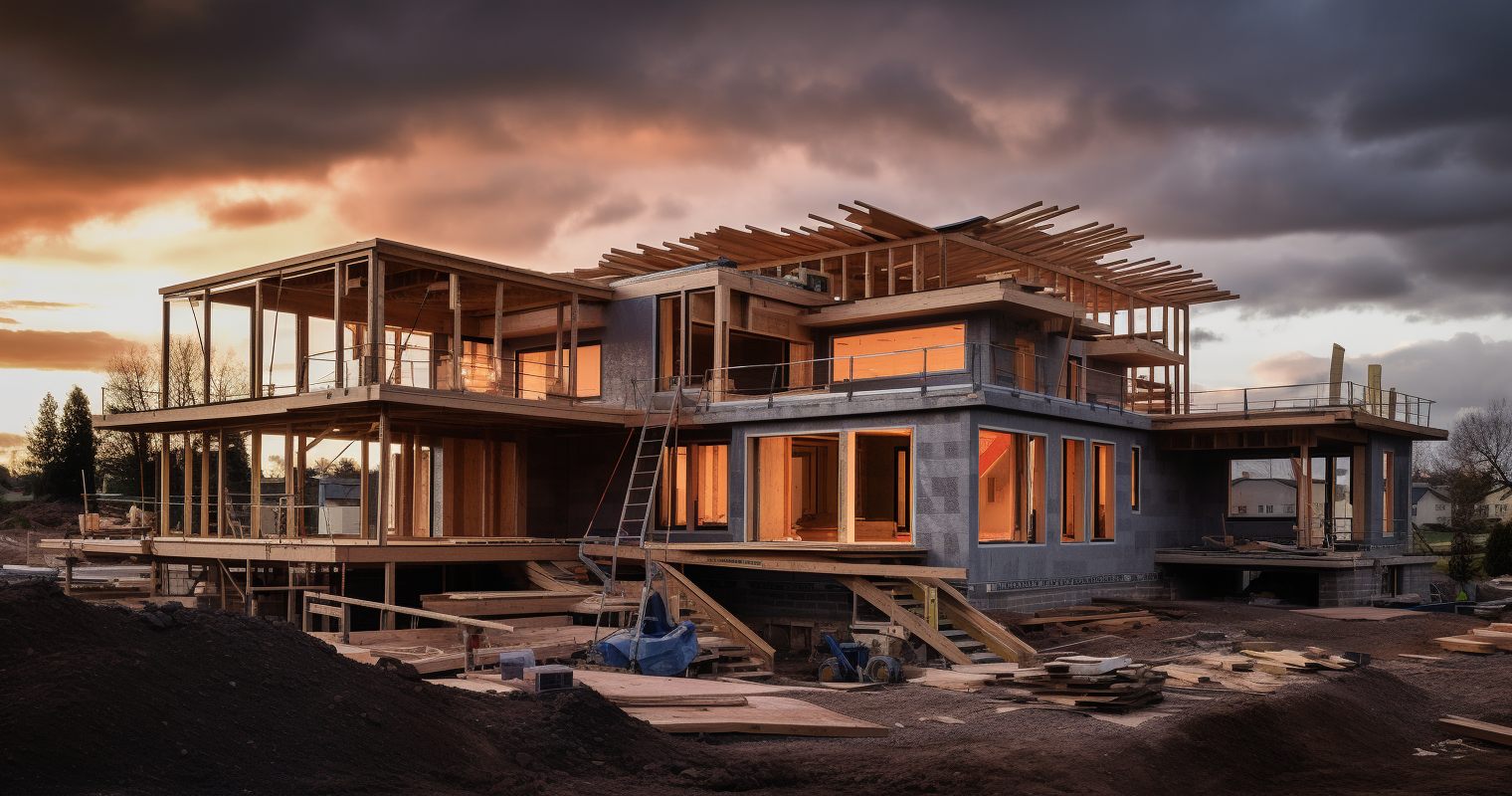
For foreign nationals, building or renovating property in Estonia is a well-regulated undertaking that is entirely achievable with the right preparation. A building permit — the formal term for planning permission — is typically necessary for any structure exceeding 60 m² in floor area or 5 metres in height, and is granted by the relevant local municipality. Construction activity in Estonia is governed by the Building Code, historic designations impose special obligations in protected zones, and while foreigners can generally purchase land freely, restrictions exist for agricultural, forest, and border-zone land.
| Item | Details |
|---|---|
| Building permit threshold | Required for structures over 60 m² ground area or over 5 m in height (as of 2024) |
| Building notice (lighter process) | Required for structures between 20–60 m² (as of 2024) |
| Building permit validity | 5 years from issue; 7 years once construction has started (as of 2024) |
| Use permit state fee | €30 for standard; €500 for retrospective/illegal construction (as of 2024) |
| Heritage-protected monuments | Over 13,000 immovable monuments and 12 heritage conservation areas under state protection |
| Foreign land ownership restrictions | EEA citizens have equal rights; non-EEA nationals face restrictions on agricultural/forest land over 10 ha and border-zone land |
Do you need planning permission to build or renovate a property in Estonia?
Estonia operates a tiered building control framework set out in the Building Code (Ehitusseadustik). Whether your project requires a full building permit, a more straightforward building notice, or no formal consent at all depends primarily on the dimensions and nature of what you intend to construct. The system resembles permitted development rules in other countries — minor works are largely exempt, while larger projects must go through a formal approval process.
As a general rule, structures with a ground-floor projection of up to 60 m² and a height of no more than 5 metres do not require a building permit. A written notification to the local authority is required when constructing a small building with a ground area of between 20 and 60 m². For structures of 20 m² or under — a modest garden shed, for instance — neither a permit nor a notice may be necessary, though you should always check with your local municipality before commencing any work.
A building permit is an administrative act that authorises the start of construction. Its purpose is to confirm, before any work begins, that the proposed building and all planned construction activity comply with applicable requirements — covering building standards, planning and zoning rules, health and safety obligations, fire safety provisions, environmental legislation, and all other relevant regulatory frameworks.
Once you have identified a suitable site for your new home, you will need to consider whether building design documentation is sufficient to support a permit application immediately, or whether a detailed spatial plan must first be drawn up. The obligation to prepare such a plan is established by the Planning Act or the municipality’s comprehensive plan. Under Estonian law, the preparation of a detailed spatial plan is mandatory for areas within cities, towns, and smaller urban settlements before a building subject to permit requirements can be erected. In rural areas this step may not apply, but the local municipality’s comprehensive plan must still permit the type of construction you have in mind.
Through a comprehensive spatial plan, a local government maps the existing situation and establishes broad development directions for the municipality or a part of it, with the aim of preventing the undesirable mixing of industrial and residential zones or incompatible building heights. The overarching goal is to safeguard each area’s distinctive character and prevent architectural inconsistency. Specific parameters can differ between municipalities, but a comprehensive spatial plan may set rules on matters such as building heights, roof pitch, plot coverage ratios, and the proportion of land to be kept as green space.
How to apply for a building permit: step by step
- Check the spatial plan. Review your municipality’s comprehensive plan and, where applicable, the detailed spatial plan to confirm your intended construction is permitted on the land. Contact your local government (vallavalitsus or linnavalitsus) for guidance.
- Obtain design specifications. Request design specifications (projekteerimistingimused) from the local authority. These define the parameters — such as footprint, height, and materials — that your design must respect.
- Commission building design documentation. A set of compliant building design documents must accompany the building permit application. This package typically includes an explanatory memorandum, a schedule of materials and specifications (covering quantities and dimensions), and both technical and architectural drawings.
- Submit the application electronically. Applications are lodged electronically through the state register of construction works. Guidance on using the register, along with customer support contacts, is available at www.ehr.ee.
- Authority review and consultation. The local authority will involve the property owner, neighbouring landowners, and any bodies whose rights or interests may be affected by the proposed construction. If those consulted do not submit an opinion or request an extension within ten days, consent is deemed to have been given by default — meaning the applicant does not need to seek individual approvals before filing the application.
- Receive your building permit. The building permit grants the right to construct the building described in the approved construction project. It is valid for five years from the date of issue, or seven years once construction has commenced. A building permit lapses if work has not begun within two years of issue.
- Obtain a use permit on completion. On finishing construction, you must obtain a use permit (kasutusluba) before the building may be occupied. A state fee of €30 applies to a standard use permit (as of 2024).
Unlike certain other systems — for example, the UK’s separate planning permission and building regulations approval tracks — Estonia consolidates much of this oversight into a single permit process administered by the municipality, making it comparatively straightforward for uncomplicated residential projects.
What are the rules around listed buildings, conservation areas, and heritage protection in Estonia?
Estonia has a thorough and formally structured heritage protection framework that is broadly comparable to listed building and conservation area designations in other countries, though it operates under its own distinct legal basis. If you are considering purchasing an older property or land within a historic town centre, gaining a clear understanding of these obligations before you commit to any purchase is essential.
Overall responsibility for heritage matters rests with the Ministry of Culture. Buildings, sites, and locations of historical, architectural, and archaeological significance are protected under the Heritage Conservation Act (2011), whose aim is to ensure that monuments, sites, and heritage conservation areas survive within their traditional surroundings.
Estonia has in excess of 5,000 physical monuments — encompassing buildings, bridges, and manor parks — together with more than 1,000 historical monuments. Heritage protection areas have been designated to safeguard entire historic built environments. The majority of these are medieval or modern old towns: Tallinn, Tartu, Narva, Kuressaare, Pärnu, Valga, Võru, Viljandi, Paide, Rakvere, and Lihula.
The principal national authority in this field is the National Heritage Board (Muinsuskaitseamet — NHB). The NHB is the sole state body responsible for heritage conservation, and its remit covers supervision, owner advisory services, support for renovation projects, and the maintenance of a national cultural heritage registry. The Board has staff in all 15 counties and major towns. Its website is muinsuskaitseamet.ee.
Drawing up a construction project for a building that is itself an immovable monument, or that lies within a heritage conservation area, requires compliance with special heritage protection conditions. In Tallinn, these conditions are set by the Tallinn Urban Planning Department’s Heritage Protection Department under a management agreement concluded with the National Heritage Board.
Any work on monuments, their protected zones, or within heritage conservation areas requires either a permit from the Heritage Protection Department or the submission of a notice, depending on the nature and scale of the works. Routine maintenance or minor repairs to a monument do not, however, require a formal permit.
Tallinn Old Town enjoys the highest level of protection available under Estonian law, with the Tallinn Heritage Department enforcing rigorous regulations over renovations, new construction, and commercial activities within the protected zone. Even small exterior changes — such as window replacements or repainting — require Heritage Department approval to ensure compatibility with the area’s historic character.
The objective of conserving and restoring monuments and heritage conservation areas is to preserve the authenticity of those monuments, or to reinstate their potential integrity where this can be done without artistic falsification or historical distortion. Original materials, traditional methods, and period-appropriate technologies should be employed wherever this is practical and justified.
To establish whether a property carries protected status, consult the Register of Cultural Monuments at register.muinas.ee. The register also contains valuable information about structures that have been studied but are not formally protected, including barns, shipwrecks, twentieth-century architecture, and military heritage. The Estonian Land Board’s geoportal can also be used free of charge, and your local authority is a further source of advice. Failing to comply with heritage regulations can result in enforcement notices, mandatory remediation works, and substantial financial penalties — always confirm a property’s status before purchasing or commissioning any works.
What permits and licences are required when building or renovating in Estonia?
In addition to the building permit itself, a construction project in Estonia will typically require a number of supplementary approvals, the precise mix depending on the nature and scale of the work involved. Anticipating these requirements early and building the time required to secure them into your project programme is important for keeping things on track.
For most residential and commercial projects, building permits are issued by the local authority. The Building Code does, however, identify certain special circumstances in which the Consumer Protection and Technical Regulatory Authority (TTJA) acts as the issuing body. The TTJA’s website is ttja.ee.
The key permits and approvals to plan for include:
- Building permit (ehitusluba): The primary consent to begin construction, issued by the municipality for the majority of residential and commercial projects.
- Building notice (ehitusteatis): This document notifies the local authority of an intention to begin construction. If the municipality has not raised any queries about the submitted information within ten days, construction may commence. A building erected on the basis of a building notice must be completed within two years of the notice being submitted.
- Environmental permit: Required where construction may affect protected natural habitats, watercourses, or coastal zones. Contact the Environmental Board (Keskkonnaamet) for guidance.
- Fire safety sign-off: Maintenance instructions confirming fire safety compliance must be provided. Further information is available on the website of the Estonian Rescue Board (Päästeamet) at paasteamet.ee.
- Utility connection permits: Separate approvals are generally required from network operators to connect to water, sewerage, electricity, gas, and telecommunications infrastructure. These should be incorporated into the building design documentation at an early stage of planning.
- Use permit (kasutusluba): This permit confirms that the completed building satisfies all requirements and is safe for occupation. It must be obtained before the building is used for its intended purpose. Using a building that does not hold a use permit may attract a fine from the local authority. The state fee is €30 for a standard use permit, or €500 where construction was carried out without the requisite permits (as of 2024).
The documentation required for a use permit can vary depending on the specific circumstances — it may include a building inspection report, a report on covered works, an audit of construction works, an electrical installations audit, as-built drawings, an amendment project, or a geodetic survey. Always confirm the current requirements with your municipality and the TTJA, as documentation checklists are subject to change.
How do you find a reliable, trustworthy builder in Estonia?
Estonia’s construction sector is subject to regulation at both company and individual level. Knowing what credentials a reputable contractor ought to hold will help you avoid expensive errors — particularly if you are a foreign buyer with less familiarity with local practices and standards.
Any business operating in the construction sector is required to notify the relevant authority of its economic activities and must be competent to carry out its work to a professional standard. In construction, both the company and the responsible individual must hold properly certified qualifications. Competency certification for construction professionals is administered by the Consumer Protection and Technical Regulatory Authority (TTJA).
From 1 October 2023, larger construction projects, subcontracting chains, and the employees permitted to work on construction sites must be registered in the Information System for Registration of Subcontracting Chain and Working Time (TTKI), accessible through the e-services portal of the Estonian Tax and Customs Board. This provides both the state and property owners with improved visibility of who is active on any given site.
The principal professional organisation for the sector is the Estonian Construction Entrepreneurs’ Association (Eesti Ehitusettevõtjate Liit — EEL). Membership can be verified and recommended contractors identified via their website at eel.ee. The Estonian Chamber of Commerce and Industry (Eesti Kaubandus-Tööstuskoda), at koda.ee, is another useful resource.
Practical steps for vetting a contractor include:
- Verify registration: Confirm that the company is registered in the Estonian Business Register at ariregister.rik.ee. A reputable builder should have a valid registrikood (registration code) and an unblemished compliance history.
- Request references: Ask for contact details of previous clients within Estonia and, where possible, visit completed projects. Be cautious of any contractor who is unable to provide local references.
- Use written contracts: All agreements should be documented in writing, signed by both parties, and ideally reviewed by a local lawyer before signing. The contract should specify scope of works, materials, timelines, a payment schedule, and procedures for resolving disputes.
- Staged payments: Avoid paying large amounts upfront. Structure payments to correspond with the completion of defined project milestones — such as foundations, structural frame, roof, and fit-out — and retain a final payment until satisfactory completion and receipt of the use permit.
- Check insurance: A reputable contractor should carry liability insurance. Ask to see a copy of the policy and verify that it is current.
- Beware of common scams: Foreign property owners are sometimes targeted by unlicensed traders who take large deposits before disappearing, or who subcontract work to unqualified labour without the owner’s knowledge. Always use contractors with verifiable registration details and traceable references.
How do you find a qualified local architect in Estonia?
Estonian architects must hold recognised qualifications in order to sign off on building design documentation, and engaging a properly registered professional is indispensable — both for quality and for regulatory compliance. The relevant professional body is the Union of Estonian Architects (Eesti Arhitektide Liit — EAL).
Union of Estonian Architects (Eesti Arhitektide Liit)
Website: arhliit.ee
Address: Lai 29, 10133 Tallinn, Estonia
Email: [email protected]
Phone: +372 646 4555
Professional qualifications and competency for those who prepare and sign building design documentation — architects and engineers alike — are overseen by the Consumer Protection and Technical Regulatory Authority (TTJA), which maintains a register of certified construction sector professionals. Searches for qualified architects can be carried out at ttja.ee.
When choosing an architect for your project, bear the following in mind:
- Local knowledge: An architect who is well acquainted with your municipality’s comprehensive plan, the local planning character, and working relationships with the permit-issuing authority will prove invaluable — particularly in areas with heritage designations or complex zoning provisions.
- Language: Permit applications, design specifications, and all correspondence with authorities are conducted in Estonian. Your architect must be fluent in Estonian; if they are not a native speaker, their professional language competence should be confirmed. Many architects practising in larger cities such as Tallinn and Tartu speak English, but this cannot be assumed as a matter of course.
- Foreign qualifications: Architects qualified in other countries may practise in Estonia provided their qualifications have been formally recognised — those qualified elsewhere in the EU benefit from mutual recognition arrangements. However, signing building design documentation submitted to Estonian authorities generally requires professional certification through the TTJA. Verify this status before making any appointment.
- Heritage experience: If your project involves work on a protected monument or within a heritage conservation area, you should ensure that your architect has a demonstrable track record in heritage-compliant design and a working knowledge of the National Heritage Board’s requirements.
What are the common pitfalls when buying land to build on in Estonia?
Acquiring land in Estonia for the purpose of building requires thorough due diligence. A number of problems commonly catch foreign buyers off guard, several of which can be avoided by consulting the right professionals and reviewing the relevant registers before signing any documentation.
1. Verify buildability before purchase. The building rights attaching to a plot are determined by the detailed plan. Those rights depend on the designated purpose of the registered immovable. If necessary, the designated purpose can be changed, but this can be a protracted process with no guarantee of success. Always confirm with the local municipality that a building permit can in fact be issued for your intended construction before exchanging contracts.
2. Check zoning and land-use classification. Changing the intended purpose of land may become necessary when applying for a bank loan or disposing of the property. Altering the designated purpose of a cadastral unit is a land management process in which the local authority determines the appropriate purpose based on the use set out in the building permit. Industrially designated land cannot be converted to residential use through a simple administrative step — a formal process is required.
3. Confirm utilities availability. Many rural plots in Estonia have no connection to mains water, sewerage, or gas networks. Before purchasing, investigate both the cost and the practical feasibility of connecting to the relevant networks — or installing independent alternatives. Contact the relevant network operators and the local municipality at an early stage.
4. Check for environmental and flood-risk issues. Estonia has extensive areas of wetland, forest, and coastline that are subject to environmental protections. Certain land may lie within a protected nature zone or a flood plain. The Environmental Board (Keskkonnaamet) and the geoportal of the Estonian Land Board (Maa-amet) can help you identify any such designations before you buy.
5. Examine title and boundaries carefully. The e-Land Register holds data on every immovable registered in Estonia. Anyone can access the general details of registered immovables, including area, ownership, restrictions, and mortgages. Cross-check registered boundaries against cadastral maps at maaamet.ee and commission a geodetic survey if there is any uncertainty about plot boundaries.
6. Use a qualified notary. All real estate transactions in Estonia must be executed before a notary (notar), who verifies the legal validity of the transaction. The notary is a neutral officer of the law, not an advocate for either party — which distinguishes the role from a solicitor in some other legal systems. Registered notaries can be found through the Estonian Chamber of Notaries (notar.ee). You should also retain an independent local property lawyer to advise you on contractual terms.
7. Undocumented Soviet-era infrastructure. During construction, previously unknown underground infrastructure laid during the Soviet period — gas pipelines, for example — may be uncovered. Commissioning a pre-purchase ground survey and reviewing available utility records will help reduce this risk.
What are the rules around foreign ownership and financing for construction projects in Estonia?
Estonia is broadly welcoming to foreign property ownership, especially for residential and commercial real estate, but certain categories of land are subject to specific restrictions. Understanding these rules fully before committing to a purchase is essential.
All citizens of the European Economic Area enjoy the same rights as Estonian citizens when it comes to real estate transactions, with any restrictions governed by international agreements. For buyers from outside the EEA, the position is more complex.
In Estonia, the most significant constraints on real estate acquisition relate only to plots of agricultural and forest land exceeding 10 hectares, to small islands, and to land in the territories of local governments along the country’s eastern border. There are no restrictions whatsoever on the acquisition of apartment properties.
If a citizen from a country outside the European contracting states wishes to acquire forest or agricultural land, an application for permission must be made to the local authority regardless of the size of the property. The applicant must have been permanently resident in Estonia for at least six months before a purchase permit can be granted. In the absence of such a permit, the notary cannot validate the transaction.
It is not prohibited to establish a company in Estonia and use it to acquire almost any type of real estate. However, on small islands or in municipalities bordering the Russian Federation, citizens of third countries cannot purchase land under any circumstances. These national defence restrictions apply to all categories of land in the relevant zones.
These limitations do not apply where property is acquired by inheritance. If you inherit land or property in Estonia, the foreign ownership restrictions will not prevent you from taking title, though other legal consequences may need to be considered.
Financing: Estonian banks do offer mortgage and construction loan products to foreign nationals, though conditions vary and lending criteria tend to be stricter for non-residents. Lenders will typically require evidence of income, a detailed construction plan, a licensed contractor, and often a larger deposit than would be required from an Estonian resident. EU citizens and those with an established presence in Estonia are generally better positioned to access local financing. The Estonian Financial Supervision Authority (Finantsinspektsioon — fi.ee) publishes a directory of regulated lenders. Independent financial advice should always be sought before making any commitment.
For official guidance on investment and establishing a business presence, the Enterprise Estonia (investinestonia.com) portal provides a useful introduction for foreign investors.
What official sources should you consult when planning to build or renovate in Estonia?
Estonia’s highly digitalised public sector means that the vast majority of official registers and regulatory bodies are accessible online. Always verify current fees, procedures, and requirements directly with the relevant authority, as the rules are subject to periodic revision.
| Body / Resource | Role | Website |
|---|---|---|
| State Register of Construction Works (EHR) | Submit building permit applications and building notices; search existing permits | ehr.ee |
| Consumer Protection and Technical Regulatory Authority (TTJA) | Construction sector oversight, special-case building permits, professional competency register | ttja.ee |
| Estonian Land Board (Maa-amet) | Cadastral maps, spatial plans, geoportal services | maaamet.ee |
| e-Land Register (RIK) | Search ownership, restrictions, and mortgages on registered properties | rik.ee |
| National Heritage Board (Muinsuskaitseamet) | Heritage monument and conservation area oversight; permit authority for protected structures | muinsuskaitseamet.ee |
| Register of Cultural Monuments | Search for protected monuments and heritage conservation areas | register.muinas.ee |
| Environmental Board (Keskkonnaamet) | Environmental permits and nature protection zone information | keskkonnaamet.ee |
| Estonian Rescue Board (Päästeamet) | Fire safety requirements and sign-off | paasteamet.ee |
| Estonian Chamber of Notaries | Find a registered notary for real estate transactions | notar.ee |
| Ministry of Economic Affairs and Communications | National housing and construction policy | mkm.ee |
| Enterprise Estonia | Investment guidance for foreign nationals | investinestonia.com |
Frequently asked questions
How long does it typically take to get a building permit in Estonia?
Timelines differ between municipalities and are influenced by the scale and complexity of the proposed project. For a routine residential build in an area already covered by a detailed spatial plan, the process can typically be concluded within a few weeks to a couple of months from the date a complete application is submitted. Where a new detailed spatial plan must be prepared from scratch, the process can stretch considerably longer — in some cases exceeding a year. Ask your local municipality for an indicative timeframe and incorporate this into your project schedule. Current information is available at ehr.ee.
How much does it cost to build a house in Estonia?
Building costs in Estonia are influenced by a wide range of factors, including location, specification, choice of materials, and the contractor engaged. As a broad indication, mid-range residential construction for a detached house has been quoted at approximately €1,200–€2,000+ per square metre as of 2024, with costs in Tallinn and other urban centres generally at the higher end. Always obtain a minimum of three detailed, fully itemised written quotes from registered contractors. Current market rates should be verified directly with local contractors and the Estonian Chamber of Commerce.
Are UK or EU building standards and qualifications recognised in Estonia?
Construction products used in works carried out in Estonia must comply with the requirements of Regulation (EU) 305/2011 of the European Parliament and of the Council, which lays down harmonised conditions for the marketing of construction products. This means EU-standard building materials are generally acceptable. For professional qualifications, architects and engineers qualified elsewhere in the EU benefit from mutual recognition frameworks, but must still demonstrate compliance with Estonian certification requirements through the TTJA before they can formally sign off on building design documentation submitted to Estonian authorities. Qualifications obtained outside the EU require a separate recognition assessment.
What happens if I build without a permit or breach planning rules in Estonia?
Carrying out construction without a permit is prohibited. Where unauthorised work is identified, the local authority or the TTJA may issue enforcement orders requiring the work to be suspended, modified, or demolished. Retrospective use permit applications are available as a remedy but come at a significantly higher cost — the state fee for an illegally constructed building is €500, compared with just €30 for a standard use permit (as of 2024). Disposing of a property that does not hold a use permit can also prove difficult, as lenders are increasingly declining to grant mortgages against such properties. Always obtain the necessary consents before any work begins.
Do I need to speak Estonian to manage a building project in Estonia?
All formal permit applications, correspondence with authorities, and most contracts are conducted in Estonian. While many professionals working in larger cities are able to communicate in other languages, this cannot be relied upon for legal and regulatory purposes. It is strongly recommended that you engage a bilingual local lawyer or project manager capable of managing official communications on your behalf and ensuring you fully understand all documents before signing. Appointing an Estonian-speaking architect or project manager at the outset will substantially reduce the risk of costly misunderstandings.
What can I do if I have a dispute with a contractor in Estonia?
When a disagreement arises with a contractor, the first course of action should be to seek resolution through written communication, citing the relevant provisions of your contract. If that approach fails, complaints concerning registered construction companies may be directed to the Consumer Protection and Technical Regulatory Authority (TTJA). For disputes of a contractual nature, Estonian courts have jurisdiction, and retaining a local property or construction lawyer is advisable. The Estonian Courts (kohus.ee) website sets out information on the court system. Mediation is also available as a less adversarial alternative to formal litigation.
Can I get a mortgage or construction loan as a foreign national in Estonia?
Foreign nationals can obtain mortgage or construction finance from Estonian banks, though the conditions attached are generally more demanding than those applied to residents. Lenders typically look for a higher deposit — often 30–40% or more for non-residents — along with documented evidence of stable income, a detailed construction programme, and a formal agreement with a licensed contractor. EEA citizens are ordinarily treated more favourably than nationals of third countries. Seeking advice from a regulated financial adviser and comparing offers from multiple lenders is recommended. The Estonian Financial Supervision Authority (fi.ee) publishes a register of licensed credit institutions.
Are there any tax implications for foreign nationals building or owning property in Estonia?
Landowners in Estonia — including foreign nationals — are subject to annual land tax (maamaks). The applicable rate is set by each local municipality within limits prescribed by national legislation and is calculated on the taxable value of the land. Buildings are not generally subject to a separate annual property tax. Capital gains arising from the sale of Estonian property may attract Estonian income tax, depending on the seller’s tax residency status and the period of ownership. Estonia has concluded double taxation agreements with a large number of countries. Advice from a qualified Estonian tax adviser or accountant is recommended, and the Estonian Tax and Customs Board (emta.ee) publishes guidance specifically for non-residents.