
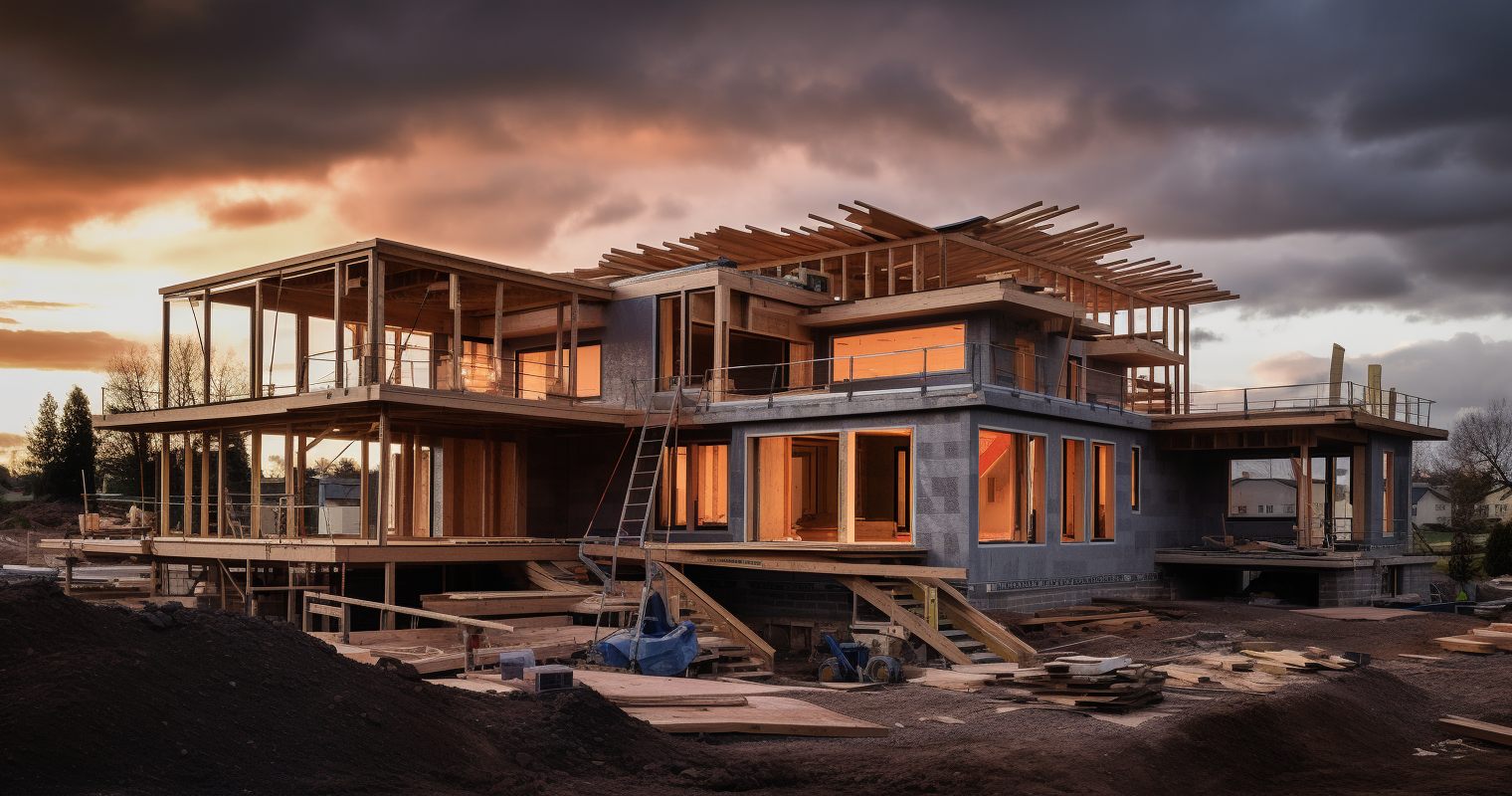
Anyone wishing to build or renovate property in Jordan must obtain planning permission for virtually every form of construction, modification, or change of use, with approval granted by the relevant municipal authority under the national building law framework. While Jordan’s construction sector is actively regulated, the level of oversight differs across regions. Foreign nationals face a distinct set of ownership rules, mandatory project timelines, and government approval processes — all of which make it imperative to seek qualified legal and architectural guidance before a single shovel enters the ground.
| Item | Details |
|---|---|
| Planning permission required? | Yes — for all new construction, extensions, adaptations, and change of use (as of 2024) |
| Permit-granting authority | Local municipality (e.g. Greater Amman Municipality) or relevant regional authority |
| Foreign ownership approval time | Approx. 30 days for Ministry of Interior security approval (as of 2024) |
| Property transfer tax | Approx. 5% of declared value; registration fee approx. 9% (as of 2024) |
| Project completion deadline (foreign owners) | 3 years for residential; 5 years for other uses (as of 2024) |
| Antiquities protection threshold | Structures pre-dating 1700 AD protected under the Law of Antiquities |
| Key professional body for architects/engineers | Jordan Engineers Association (JEA), Amman |
Do you need planning permission to build or renovate a property in Jordan?
Yes — a building licence or construction permit is mandatory for nearly all building activity in Jordan. The country’s foundational planning and construction legislation (Law No. 79 of 1966) stipulates that no construction work or change of use may proceed without first obtaining a permit. This obligation extends well beyond new builds and encompasses a broad spectrum of activities including renovations and extensions.
Works that require a permit include the construction of new buildings or structures, any adaptation, extension, or demolition, external decoration work, and the installation of internal services. In contrast to some other countries — the UK, for instance, where minor internal alterations or smaller outbuildings may be exempt from formal consent under “permitted development” rights — Jordan’s regulatory framework is broadly all-encompassing. If you are constructing, extending, or making structural changes to a property, you should assume a permit is required and confirm this directly with the relevant municipality.
Where a permit application is refused, the applicant has the right to appeal. Proceeding with works in the absence of valid permission, however, can trigger severe consequences including mandatory demolition or financial penalties. The prospect of having completed construction torn down at your own expense is a risk that no builder or renovator should be willing to accept.
Physical planning in Jordan operates primarily under the Law of Planning of Cities, Villages, and Buildings (No. 79 for the year 1966) and its subsequent amendments, which established three tiers of planning authority. In day-to-day practice, the local municipal authority for a given area processes permit applications. In the capital city, this responsibility falls to the Greater Amman Municipality (GAM).
Construction licences for buildings both within and outside zoning boundaries can be obtained through the Greater Amman Municipality’s website. For locations outside Amman, applications are directed to the applicable governorate or local municipality. Jordan’s system is considerably more centralised than the devolved planning structures found in countries such as Canada or Australia, where provinces and states wield most of the planning authority. National legislation sets the overarching framework in Jordan, while local municipalities serve as the primary point of contact for applicants.
The standard process for obtaining a building permit in Jordan involves the following steps:
- Appoint a licensed engineer or architect — registered with the Jordan Engineers Association — to prepare technical drawings and plans that conform to national building codes.
- Lodge the application, drawings, and all required supporting documentation with the local municipality. In Amman, applications can be submitted online through the GAM portal.
- The municipality assesses the application for conformity with zoning rules, building codes, and setback requirements.
- Where a property is situated near an archaeological or heritage site, a supplementary review by the Ministry of Tourism and Antiquities may be necessary.
- Once approved, the building permit is issued and construction work may lawfully begin.
- Municipal inspectors visit the site at prescribed stages of the build.
- Upon satisfactory completion, an occupancy certificate is issued.
Building permit fees are calculated by reference to the construction value and the floor area involved, and are remitted to the municipality. These fees form part of the municipality’s revenue base as charges levied on services rendered. Since fees and processing timeframes differ between municipalities and depend on the nature of each project, always confirm current figures with your local authority before finalising your budget. For projects in Amman, the Greater Amman Municipality website (www.ammancity.gov.jo) is the authoritative starting point.
Greater Amman Municipality applies a system of residential land classifications — Residential (A), (B), (C), and (D) — each of which carries its own requirements regarding permitted building area, maximum floor count, and minimum plot size. Additional classifications cover commercial, industrial, and agricultural land uses. Understanding the zoning designation that applies to your intended plot before acquiring it or drawing up any plans is critical, as it determines what may legally be built there.
What are the rules around listed buildings, conservation areas, and heritage protection in Jordan?
Jordan does not operate a “listed building” regime directly comparable to those found in the UK, Ireland, or France, where individual structures are formally catalogued and assigned protection grades. Instead, heritage protection in Jordan is primarily delivered through the Law of Antiquities and a dedicated interim law on urban heritage, both of which are administered by the Ministry of Tourism and Antiquities (MoTA).
The Antiquity Law No. 21 for the Year 1988 addresses significant elements of Jordan’s cultural heritage; however, cultural heritage that falls outside the category of antiquities is not comprehensively covered by Jordanian legislation. Structures pre-dating 1700 AD are protected under the Law of Antiquities, but later buildings — whether in urban centres or rural settings — do not always benefit from equivalent legal protection. This represents a meaningful contrast with heritage frameworks in many other nations, where buildings from the eighteenth, nineteenth, and twentieth centuries are routinely subject to formal statutory protection.
Interim Law No. 49/2003 for the Protection of Urban and Architectural Heritage was enacted to protect, preserve, and maintain Jordan’s heritage sites. This legislation applies to designated heritage areas and the buildings within them, imposing restrictions on alterations, demolition works, and any new construction that would compromise the character of a protected zone. If you are looking at property in areas such as Aqaba’s historic quarter, Madaba, Salt, or sections of central Amman, this law may materially affect what you can build or modify.
Foreign nationals face an additional constraint in this context: ownership of properties in border, archaeological, or historical areas is prohibited for non-Jordanians. This restriction eliminates certain categories of historically significant land from consideration for foreign buyers, irrespective of how compelling the renovation or restoration potential may appear.
Before purchasing or commissioning any works on a property that may fall within or adjacent to a designated heritage zone, you should contact the Ministry of Tourism and Antiquities. The Ministry holds registers of protected sites and can confirm whether a specific property is subject to heritage controls. The Ministry’s official website is www.mota.gov.jo. Unlike the publicly searchable databases operated by bodies such as Historic England or the US National Register of Historic Places, Jordan does not provide an equivalent online tool — making direct consultation with MoTA especially important.
Breaches of heritage protection legislation can attract criminal penalties and require mandatory reinstatement at the owner’s cost. Given that formal protection for buildings erected after 1700 is incomplete, it is also advisable to check with the local municipality, which may impose its own planning restrictions on buildings of local architectural or townscape significance — particularly within historic city centres.
What permits and licences are required when building or renovating in Jordan?
A construction project in Jordan typically calls for several approvals and clearances in addition to the primary building permit. The specific combination depends on the type, scale, and location of the project, but the consents described below are the most frequently required.
The Greater Amman Municipality has run campaigns to enforce the National Buildings Code Law with the aim of ensuring structurally safe buildings. The law imposes requirements that begin with the registration of engineering and design offices to supervise construction on site. In practice, this means a suitably licensed engineering office must be formally enrolled with the municipality as the supervising body for your project — an informal arrangement with any available engineer will not suffice.
GAM has established a one-stop-shop system for processing registered buildings and coordinating with relevant entities — including the Civil Defense Department and the Jordan Engineers Association — through to the issuance of the building permit. This integrated approach means that for projects in Amman, multiple approvals, including fire safety sign-off from the Civil Defence Directorate, are channelled through the municipality rather than requiring the applicant to approach each body independently.
The following additional permits and approvals are commonly required in Jordan:
- Civil Defence approval: Compliance with fire safety requirements must be verified by the Civil Defence Directorate (operating under the Ministry of Interior), particularly for multi-storey residential buildings and commercial premises.
- Utility connection permits: Separate approvals are needed to connect to the electricity network (Jordan Electric Power Company / JEPCO), water and wastewater systems (Water Authority of Jordan), and telecommunications infrastructure.
- Environmental clearance: Larger developments may require an environmental impact assessment and approval from the Ministry of Environment, especially where construction is proposed near sensitive ecosystems, agricultural land, or water resources.
- Occupancy certificate (Tassrih Iskan): A building may not be legally occupied until a final inspection has been completed and an occupancy certificate obtained from the municipality.
- Green building compliance (where applicable): The Jordan Thermal Insulation Code, Jordan Energy Efficient Building Codes, and the Jordan Green Building Guide collectively aim to improve energy performance in the built environment. Compliance with applicable energy standards is increasingly mandatory.
Processing times and fees for these ancillary permits vary by project type, municipality, and the prevailing workload at the relevant authority. Always confirm current requirements with the appropriate local body before your project commences, as delays at the permits stage are common and can have material knock-on effects for timelines and financing arrangements.
How do you find a reliable, trustworthy builder in Jordan?
Jordan’s construction industry is well-established and active, yet the quality, dependability, and professional standards of individual contractors can vary significantly. The Greater Amman Municipality, in collaboration with the Jordan Engineers Association and the Contractors and Contracts bodies, has formed inspection teams tasked with monitoring construction sites across the capital’s 27 districts. Despite this supervisory infrastructure, independently verifying a contractor’s credentials before entering into any agreement remains essential.
Reputable contractors in Jordan should hold a current licence from the relevant municipal or national authority and maintain registration with the appropriate professional bodies. The primary trade organisation for building contractors in the country is the Jordan Contractors Association, which can be contacted at:
- Jordan Contractors Association
Website: www.jca.org.jo
Address: Amman, Jordan
(Please check the official website for current telephone and email contact details, as these are periodically updated.)
When assessing any prospective contractor, the following practical steps are recommended:
- Confirm registration: Request the contractor’s valid municipal licence and registration certificate. For structural or specialist work, verify that the designated on-site engineer is registered with the Jordan Engineers Association (JEA).
- Seek references: Ask for contact details of at least two or three recently completed projects of a comparable type, and visit those sites where possible to see the quality of workmanship firsthand.
- Obtain several quotes: Secure a minimum of three written, itemised quotations before making any commitment. Unusually low bids are frequently a warning indicator.
- Require a formal written contract in Arabic: Verbal arrangements carry minimal legal enforceability. A proper contract should define the complete scope of works, materials specifications, payment schedule, start and finish dates, and penalty provisions for delays.
- Use staged payments: Never advance the full contract sum at the outset. Tie payments to agreed construction milestones such as foundations, structural shell, and fit-out. Retain a proportion — typically 5–10% — until all works have been satisfactorily completed and inspected.
- Require evidence of insurance: Before any work commences, ask the contractor to provide documentation confirming third-party liability insurance and workmen’s compensation cover.
Foreign property owners and expatriates are particularly susceptible to certain recurring problems. Some contractors apply premium pricing to perceived foreign clients, inflate materials costs, or propose additional works once a project is underway. Engaging an independent local project manager or supervising engineer — one who is answerable to you rather than the contractor — can provide meaningful protection. Avoid cash payments without receipts, and ensure that any variation to the original agreed scope of works is documented and mutually signed off in writing before it is executed.
How do you find a qualified local architect in Jordan?
In Jordan, architects and engineers are legally required to hold active membership of the Jordan Engineers Association (JEA) in order to practise professionally and sign building permit applications. The JEA functions as both the statutory regulatory body and the professional association for engineers and architects across all disciplines. Membership is compulsory rather than voluntary, which makes JEA registration a dependable benchmark for confirming that a practitioner is qualified and authorised to work.
Contact details for the Jordan Engineers Association are as follows:
- Jordan Engineers Association (JEA)
Website: www.jea.org.jo
Address: JEA Building, Al-Kulliyah Al-Ilmiyah Al-Islamiyah Street, Amman, Jordan
Telephone: +962 6 566 1238
(Please verify current contact details on the official JEA website, as they are subject to change.)
The JEA maintains a register of licensed members, against which you can verify whether a named individual holds a valid and current licence. When commissioning an architect for a project that requires a building permit application, always confirm the architect’s JEA membership number before executing any agreement.
For expatriates coordinating a construction project from overseas, language is an important practical matter. Many architects practising in Amman are comfortable working in both Arabic and English and have experience with international clients, but this is by no means universal — particularly outside the capital. When making initial contact with a prospective architect, establish their preferred working language and their track record with projects involving foreign clients or internationally sourced materials and finishes.
It is also important to note that building permit applications must be submitted by a licensed Jordanian engineer or architect. Foreign professionals cannot submit applications to the municipality directly. Where an overseas architect or designer is involved in your project, they must work in close collaboration with a locally registered JEA member who formally assumes responsibility for permit submissions and on-site code compliance.
The Jordan Society of Architects, a professional association operating in affiliation with the JEA, can also be a useful resource when searching for architects with specialist experience in residential design, conservation work, or heritage projects. Contact the JEA directly for current details of affiliated organisations.
What are the common pitfalls when buying land to build on in Jordan?
Acquiring land in Jordan for development is a significant financial undertaking, and a number of potential hazards are particularly relevant for foreign buyers. Obtaining qualified professional advice before contracts are exchanged is strongly advisable.
Confirm that planning permission will be obtainable before committing to a purchase. Zoning classifications govern what may be built on any given plot. Greater Amman Municipality applies a system of residential land categories — Residential (A), (B), (C), and (D) — each with its own permitted building area, maximum storeys, and minimum plot size requirements. Additional classifications cover commercial, industrial, and agricultural uses. Always obtain written confirmation of a plot’s zoning status from the municipality prior to purchase. A plot designated for agricultural use, for example, cannot simply be converted to residential development without a formal reclassification — a process that is neither straightforward nor guaranteed.
Scrutinise title deeds and ownership history with care. Navigating Jordan’s property market can be complicated, which is why engaging a local real estate lawyer is strongly recommended. A qualified lawyer can verify ownership and title deeds, confirm compliance with Jordanian property law, and manage the legal paperwork to minimise the risk of future disputes. Land disputes and conflicting ownership claims are not uncommon, and some parcels carry complex histories involving multiple heirs.
Obtain the title deed (Sanad Malekiya) from the Department of Lands and Survey. Before signing any agreement, verify the legal standing of the property by requesting a title deed from the Department of Land and Survey, checking for existing mortgages or pending legal disputes, and confirming that the seller holds full and unencumbered rights to transfer ownership.
Commission an independent boundary survey. Do not rely solely on information furnished by the seller or agent. An independent cadastral survey will verify plot boundaries, total area, and access rights before money changes hands. Boundary disputes between neighbouring landowners are a recurring issue, particularly at the edges of expanding urban areas.
Investigate utility availability. In urban and suburban locations, electricity, water, and sewerage networks are generally in place, though connection costs and proximity to mains supplies vary. In rural or undeveloped areas, utility connections may involve significant additional expenditure — or may not be practically achievable at all. Confirm availability and estimated connection costs with the Water Authority of Jordan and the Jordan Electric Power Company before proceeding.
Environmental and flood risk considerations. Jordan has extensive wadi (seasonal river valley) terrain and steeply sloping land in certain areas. Land susceptible to flash flooding — a genuine and well-documented hazard in Jordan — may be subject to building restrictions or require costly mitigation measures. Consult the local municipality and a qualified structural engineer on flood risk before committing to a purchase.
Foreign ownership restrictions in designated areas. Foreign nationals are prohibited from acquiring property in border zones, archaeological areas, or historical sites. Ownership must also comply with zoning laws — no purchases in military or strategically sensitive zones are permitted. Verify that any plot under consideration is free from these restrictions before proceeding.
All purchase contracts must be in Arabic. A purchase agreement drafted in Arabic must be executed by both parties, although an English translation is frequently provided as a reference. Engage an independent, certified translator to review all documents before you sign — do not rely on translations prepared by the other party’s agent or legal representative.
What are the rules around foreign ownership and financing for construction projects in Jordan?
Jordan allows foreign nationals to own property, but this is governed by a specific legal framework that introduces approval requirements, reciprocity conditions, and mandatory project completion timelines not encountered in many other countries.
Foreign ownership of real property in Jordan is regulated by several overlapping legal instruments, the most significant of which is the Leasing and Selling Immovable Assets to Non-Jordanians and Juristic Persons Law (Law No. 47 of 2006). This legislation sets out the conditions, approvals, and restrictions applicable to foreign buyers, and is essential reading before any purchase or construction project is committed to.
Foreign nationals and companies may own or lease property in Jordan for investment purposes and are permitted one property for personal residential use, provided their home country extends equivalent reciprocal ownership rights to Jordanian nationals. The reciprocity principle is a meaningful constraint: if the country of your citizenship does not allow Jordanians to own property on comparable terms, you may encounter difficulties obtaining approval.
The Law distinguishes between property ownership by foreign individuals for residential purposes and for business purposes, with each category requiring a different level of approval — from the General Manager of the Department of Lands and Survey, the Minister of Finance, or in certain cases the Council of Ministers.
Non-Jordanians can acquire property, but they must first receive approval from the Ministry of Interior, a process that typically takes around 30 days as of 2024. This security clearance, issued by the Ministry of Interior through the Department of Lands and Survey, is a mandatory prerequisite before any property transaction involving a foreign national can be completed.
Project completion deadlines. A rule of critical importance for foreign buyers intending to build: any foreign person or company that acquires land is legally obliged to complete the project for which it was purchased within three years if the intended use is residential, or within five years for any other purpose. Failure to meet this deadline renders the relevant contract or ownership deed voidable, unless an extension is granted by the Minister of Finance. This obligation has no direct counterpart in countries such as the United States, United Kingdom, or Australia, and must be factored into project planning from the outset.
Restrictions on size and number of properties. The Law also imposes limits on the number of properties and the total area that a foreign individual may own for each designated purpose. Consult the Department of Lands and Survey for the current specific thresholds applicable to your nationality and intended use.
Aqaba Special Economic Zone. The rules described above do not apply within the Aqaba Special Economic Zone, which operates under a separate regulatory framework governing foreign ownership. If you are considering building or investing in the Aqaba region, contact the Aqaba Special Economic Zone Authority (ASEZA) directly at www.aqabazone.com for the rules that apply there.
Mortgages and construction financing. Mortgage products are available in Jordan. While individual banks may offer varying incentives, rates and eligibility criteria are broadly consistent across the market. Financial assistance for construction is available through Jordanian banks and financial institutions. However, access to construction loans and mortgage products for foreign nationals is typically more restricted than for Jordanian citizens, and lenders will generally require extensive documentation covering income, residency status, and the legal standing of the property. Consult a Jordanian bank and a local legal adviser before assuming that financing will be available on terms you are accustomed to elsewhere.
Residency and investment benefits. Property ownership in Jordan does not automatically confer residency rights, but foreign buyers who invest in property may apply for a renewable residence permit. This process requires presentation of a property ownership document and can facilitate extended stays in the country. Policy changes introduced in February 2025 are anticipated to generate increased activity in associated industries including construction, legal services, and property management.
What official sources should you consult when planning to build or renovate in Jordan?
Jordan’s regulatory environment for construction and property ownership involves a range of ministries, authorities, and agencies. The key official bodies that you should consult before and throughout any building or renovation project are set out below. Always verify information directly with official sources, since rules, fees, and procedures are subject to change at any time and without prior notice.
| Authority | Remit | Website |
|---|---|---|
| Greater Amman Municipality (GAM) | Building permits, zoning, occupancy certificates in Amman | ammancity.gov.jo |
| Ministry of Local Administration (MoLA) | National planning policy, oversight of municipalities outside Amman | mola.gov.jo |
| Department of Lands and Survey (DLS) | Title deeds, land registration, foreign ownership applications | lands.gov.jo |
| Ministry of Tourism and Antiquities (MoTA) | Archaeological and heritage site protection, urban heritage law | mota.gov.jo |
| Jordan Engineers Association (JEA) | Registration and regulation of engineers and architects | jea.org.jo |
| Civil Defence Directorate | Fire safety approvals for buildings | psd.gov.jo |
| Water Authority of Jordan (WAJ) | Water and wastewater connection permits | mwi.gov.jo |
| Ministry of Environment | Environmental impact assessments | moenv.gov.jo |
| Aqaba Special Economic Zone Authority (ASEZA) | All construction and ownership in the Aqaba zone | aqabazone.com |
| Jordan Investment Commission (JIC) | Investment facilitation and incentives for larger projects | jic.gov.jo |
When consulting these resources, be aware that many official Jordanian government websites publish their primary content in Arabic, with English-language versions that may be incomplete or not kept fully up to date. For all legal and regulatory matters, seek out the Arabic-language primary source and arrange for it to be professionally translated and interpreted as necessary.
Frequently asked questions
How long does it typically take to get a building permit in Jordan?
Processing times differ by municipality and depend on the complexity of the project. For uncomplicated residential builds within Amman, the review process at the Greater Amman Municipality generally takes several weeks to a few months once all documentation has been correctly submitted. Projects of greater complexity, those in proximity to heritage sites, or those requiring additional environmental or civil defence clearances may take considerably longer. Allow for permit delays in your project schedule and secure approval before locking in contractor start dates.
How much does it cost to build a house in Jordan?
Construction costs in Jordan fluctuate considerably depending on location, specification, and the level of finish. As a broad indication (as of 2024), mid-range residential construction in Amman typically falls between JD 350 and JD 700 per square metre, although high-end specifications can push costs substantially higher. Land values vary enormously depending on the area. Always obtain detailed, itemised quotations from several licensed contractors and budget separately for permit fees, professional charges (architect, engineer, legal adviser), and utility connection costs, all of which are additional to the core build cost.
Can I use a builder or architect from my home country to manage my Jordan project?
Architects and engineers qualified abroad cannot submit building permit applications directly in Jordan — that right is reserved exclusively for professionals registered with the Jordan Engineers Association (JEA). If you wish to bring in a practitioner from another country, they must work alongside a locally licensed JEA-registered engineer or architect who takes formal responsibility for permit submissions and on-site compliance with building codes. Some Jordanian architects with international experience are well-placed to work collaboratively with overseas design teams on projects for foreign clients.
Are UK or US building standards or qualifications recognised in Jordan?
Jordan operates its own national building codes covering structural requirements, energy efficiency, fire safety, and related matters. Building standards from the UK, United States, Australia, or other countries are not directly recognised as substitutes. Any designs originally prepared to foreign standards must be reviewed and revised to meet Jordanian national codes by a locally registered engineer. JEA membership requires Jordanian or regionally recognised qualifications — holding a foreign credential alone is insufficient to practise independently in Jordan.
What happens if I build without planning permission in Jordan?
Proceeding without a valid building permit constitutes a serious infringement of Jordanian planning law. Unauthorised construction may attract financial penalties and, in more serious cases, a demolition order requiring the work to be removed at the owner’s expense. Retrospective approval for unlawful works is achievable in some situations but is by no means guaranteed, tends to be both expensive and protracted, and can generate significant legal complications. The risks — financial and legal — far exceed any perceived convenience of bypassing the permitting process.
What should I do if I have a dispute with my contractor in Jordan?
When a dispute arises, the first step is to seek resolution through formal written correspondence that cites the specific provisions of the signed contract. If that approach fails, mediation is available through Jordan’s court-annexed mediation system. More serious disputes may be referred to the Jordanian civil courts, which have jurisdiction over property and construction matters. The Jordanian Arbitration Act (Law No. 31 of 2001, as amended) additionally allows construction and land disputes to be resolved through arbitration, a process that is often faster and more confidential than court litigation. Ensure that your original contract contains a clearly worded dispute resolution clause.
Are there language barriers when dealing with Jordanian planning and legal authorities?
All official planning and legal documentation in Jordan is produced in Arabic, and permit applications and title deeds must generally be submitted in Arabic. While many professionals in Amman — including architects, lawyers, and some municipal staff — work comfortably in English, this cannot be taken for granted outside major urban centres. For any document presented for your signature, insist on an independent, certified translation before you sign — never rely solely on translations provided by the counterparty’s agent or legal representative.
Can foreign nationals inherit property or land in Jordan?
In principle, Jordanian law permits non-Jordanian nationals to inherit property, but the process is subject to the same approval conditions and ownership restrictions that govern direct purchases. Where inherited property falls into a category that is restricted for foreign ownership — such as agricultural land subject to limitations, or property in a prohibited zone — the inheritor may be required to dispose of it within a defined period. Given the complexity involved, any foreign national who inherits Jordanian property should promptly consult a Jordanian lawyer specialising in inheritance and property law to understand their rights, obligations, and available options.