

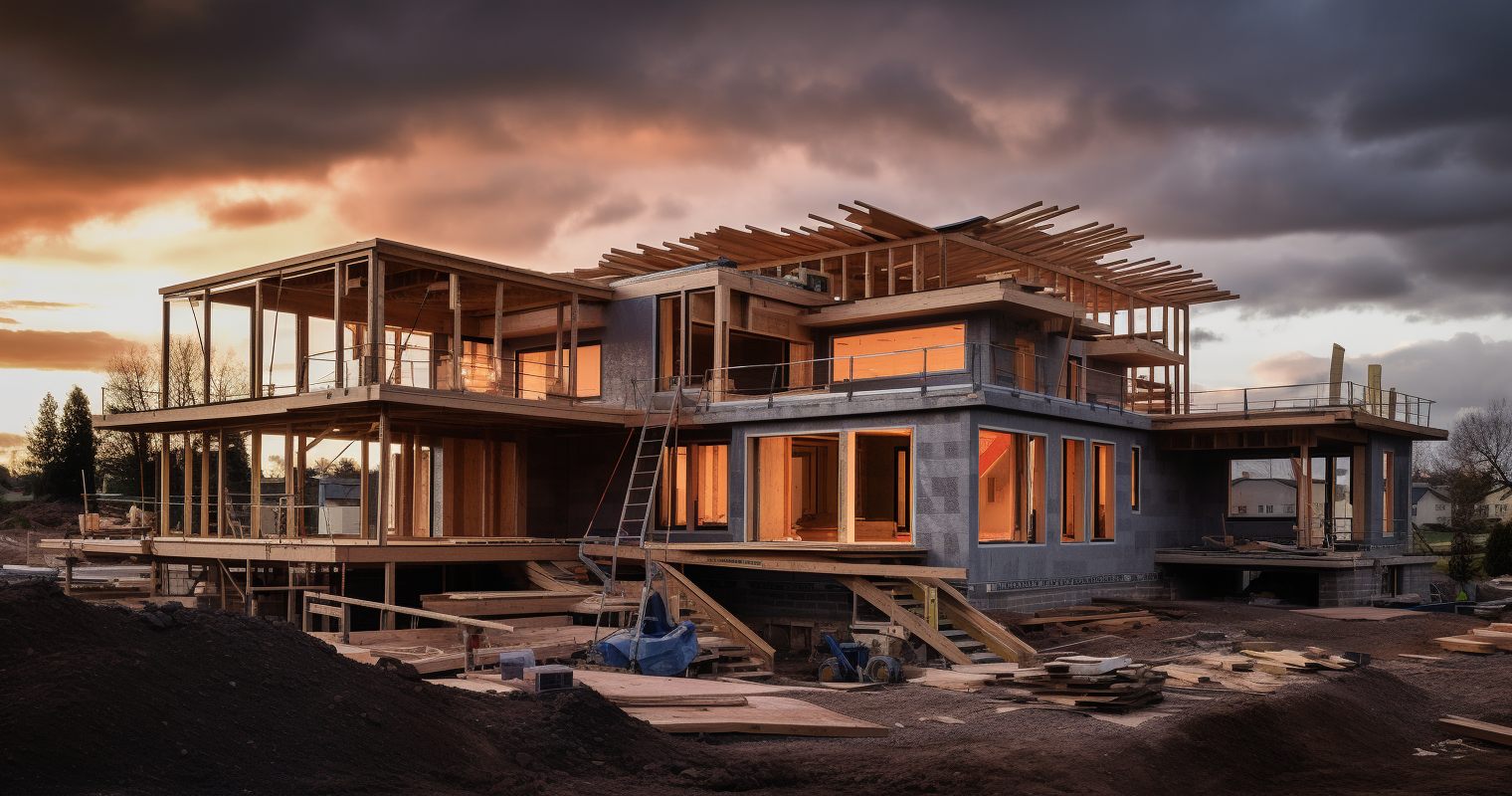
Foreign nationals face no blanket legal barriers to building or renovating property in Japan — owning land and commissioning construction are both entirely permissible regardless of nationality. That said, the process is tightly governed by the Building Standards Act and an array of supporting legislation. Most new builds and substantial structural alterations require what is known as building confirmation (kenchiku kakunin), a formal approval process that sits at the heart of Japan’s construction regulatory framework. Throughout any project, a licensed architect and a licensed contractor are indispensable.
| Item | Details |
|---|---|
| Building confirmation required? | Yes, for most new builds and major structural renovations — as of 2025, this now includes all two-storey wooden homes regardless of size |
| Permit application fees | Typically ¥50,000–¥200,000 for residential projects (as of 2024); verify with your local government or private inspection agency |
| Permit processing time | Several weeks to several months, depending on project complexity (as of 2025) |
| Construction licence validity | Five years; issued by prefectural governor or MLIT (as of 2024) |
| Foreign land ownership | No general legal restriction; foreign nationals may purchase land and commission construction freely |
| Heritage authority | Agency for Cultural Affairs (Bunkacho), under the Ministry of Education, Culture, Sports, Science and Technology |
Do you need planning permission to build or renovate in Japan?
Japan does not operate a “planning permission” system in the sense familiar to those from countries such as the UK or Australia. The closest equivalent is the building confirmation process (kenchiku kakunin — 建築確認申請). Whether you are erecting a new structure or undertaking renovation work, you will generally need to submit an application confirming that the work meets all relevant regulations, followed by an inspection once the project is complete.
Under the Building Standards Act, owners wishing to construct, extend, rebuild, or relocate buildings that meet certain thresholds — for example, wooden buildings of three or more storeys, structures exceeding 500 m² in total floor area, or buildings taller than 13 m — must apply for and receive a building permit from either a local government building official or a government-designated private confirmation and inspection agency. Even smaller structures must satisfy zoning requirements established under the City Planning Act.
Important 2025 change: Previously, single- and two-storey wooden homes with a combined floor area of 200 square metres or less were exempt from the building confirmation requirement. From 2025, however, all two-storey wooden buildings — irrespective of their total floor area — must obtain a building permit, a reform that affects a substantial proportion of privately owned wooden homes throughout Japan.
Major renovations also require a building permit, specifically those involving alterations to more than 50% of the primary structural elements — walls and columns, for instance. Work that leaves the main structural elements untouched does not require a building confirmation application, and certain categories of construction may proceed with relatively few restrictions. Cosmetic interior improvements, floor replacements, and the installation of non-structural fittings such as handrails or ramps are typical examples of exempt work — though consulting a licensed architect before starting is always the prudent approach.
Where plans involve adding a second storey, enlarging the building footprint, making substantial changes to the exterior — such as new roofing, walls, or structural reinforcement — or adapting a property for commercial use (for instance, applying for a short-term rental Minpaku licence or a Ryokan licence), working through the formal permit process is essential. Bypassing it can lead to legal complications, problems with insurance, and financial penalties.
Unlike certain other countries, where a single local planning authority processes all applications, Japan offers a degree of flexibility: building confirmation may be handled either by the local government building official or by a private confirmation and inspection agency (shitei kakunin kensa kikan) that has been designated by the national government. Property owners can therefore choose which route to take when submitting their application.
There is no legal obligation for a homeowner to hold a professional architectural licence in order to apply for a building permit. However, the application demands considerable technical knowledge and a high level of Japanese language proficiency, which is why the majority of property owners engage a Japanese architectural firm or licensed architect to manage the paperwork on their behalf.
The step-by-step process for obtaining building confirmation is as follows:
- Pre-application consultation: Before submitting a formal application, it is usually required or strongly advisable to consult the local government. Bring preliminary design sketches and use the meeting to clarify zoning restrictions, required setbacks, and any applicable local regulations.
- Engage a licensed architect: For anything beyond the most modest projects, appoint a registered first- or second-class architect (kenchikushi) to prepare architectural drawings and structural plans. The architect will also manage the permit submission on your behalf.
- Prepare application documents: Compile and submit comprehensive architectural drawings covering structural modifications, materials, and the intended use of the building. Since 2025, revised legislation has expanded the documentation requirements, meaning that homeowners must now provide detailed structural calculations and energy efficiency assessments, adding complexity to the process.
- Submit to local government or private inspection agency: The completed application must be submitted to the relevant local government building official under the Building Standards Act, or alternatively to a government-designated private inspection agency.
- Structural calculation review (if applicable): For certain larger structures — steel-framed buildings of four or more storeys or reinforced concrete buildings exceeding 20 m in height, for instance — a separate application to a government-designated private structural calculation review agency is also required.
- Await confirmation: Depending on the scale and complexity of the project, permit approval may take anywhere from several weeks to several months. Factor this into your overall project timeline from the outset.
- Interim inspections: Local governments specify which construction phases require interim inspections. Once a designated phase is complete, the building owner must apply for an interim inspection within four days, and construction may not advance to the following phase until the inspection is passed.
- Completion inspection: On finishing the works, the Building Standards Act requires the owner to apply for a completion inspection from a designated inspection agency, which will certify that both the building and its surroundings comply with all applicable regulations.
Permit application fees differ by location and the scope of the project. As a general guide, expect to pay between ¥50,000 and ¥200,000 for residential projects, though more complex schemes may attract higher charges (as of 2024). Always obtain current fee information directly from the relevant municipal building control office or private inspection agency, as amounts are subject to change.
Japan’s building codes are revised frequently, which means many older buildings no longer comply with current standards. These are generally protected by a grandfather clause and exempt from immediate retrofit obligations — unless major renovation work is undertaken. Bringing a pre-1981 building up to current code can be extraordinarily expensive, and in numerous cases demolition and a complete rebuild proves more economical than extensive renovation.
What are the rules around listed buildings, conservation areas, and heritage protection in Japan?
Japan’s approach to heritage protection is quite distinct from the listed building and conservation area systems used across much of Europe. Rather than maintaining a single national register of listed buildings, Japan operates a tiered designation framework established under the Law for the Protection of Cultural Properties (Bunkazai Hogo Ho).
Cultural Properties (bunkazai — 文化財) are administered by the Agency for Cultural Affairs, which falls under the Ministry of Education, Culture, Sports, Science and Technology. The category encompasses a broad range of assets: tangible items such as buildings and artworks; intangible elements including performing arts and traditional craft techniques; folk cultural properties; monuments; cultural landscapes; and clusters of traditional buildings.
Under the Law for the Protection of Cultural Properties, the national government designates, selects, and registers the most significant cultural properties under categories including National Treasures, Important Cultural Properties, Historic Sites, Places of Scenic Beauty, and Natural Monuments. Restrictions on exportation and on alterations to the existing condition of these assets are then imposed. While broadly comparable to the UK’s Grade I and Grade II listed building system, the Japanese framework encompasses a far wider range of property types beyond individual structures.
The legislation includes a “designation system” (shitei seido — 指定制度) under which properties of special importance are formally classified as Cultural Properties. This designation triggers restrictions on alteration, repair, and export. Anyone who owns or is acquiring a designated property must obtain approval from the Agency for Cultural Affairs before carrying out any work that would alter its current state. Unauthorised modifications may result in criminal prosecution and mandatory restoration orders.
Historical architecture is regarded as an irreplaceable cultural asset, and preserving it is central to any renovation project involving a designated heritage structure. External modifications are strictly controlled, and any changes require special permits. Property owners may be eligible for government subsidies to help offset the cost of preservation work, including the repair of original facades and the maintenance of traditional design features.
Alongside national designation, prefectural and municipal governments may designate their own cultural properties under local ordinances. The City Planning Act also provides for the creation of scenic districts (keikan chiiku) and preservation districts for groups of historic buildings (dentoteki kenzobitsugu hozon chiku). These locally imposed designations layer additional planning controls on top of national requirements and may restrict external alterations to individual buildings as well as changes to the character of the surrounding streetscape.
Before purchasing any property or commissioning work, check both the national Cultural Properties database — accessible through the Agency for Cultural Affairs website at bunka.go.jp — and the registers held by the relevant prefecture and municipality. The local government’s planning or urban development department can advise on any scenic or preservation district designations that apply to your area. Where a project may involve a potentially protected structure, always seek advice from both a licensed architect and a specialist in heritage property before proceeding.
What permits and licences are required when building or renovating in Japan?
Building confirmation is only one layer of a multi-tiered regulatory framework. Depending on the nature, scale, and location of your project, additional permits, approvals, and notifications may also be required, with national, prefectural, and municipal requirements potentially applying all at once.
Beyond the construction permit itself, a development permit (kaihatsu-kyoka) from the prefectural government may be required under the City Planning Act if construction is to take place within certain designated districts. This requirement most commonly applies to larger developments or to construction in areas outside established urban zones.
Building permits are issued only where the proposed works comply with the technical standards set out across all applicable legislation — including the Building Standards Act, the Fire Service Act, and the City Planning Act. Fire safety compliance is therefore embedded in the building confirmation process itself, but larger residential or commercial projects may also need separate sign-off from the local fire authority.
Further key permits and requirements include the following:
- Soil contamination investigation: Under the Soil Contamination Countermeasures Act, anyone intending to develop land of 3,000 square metres or more must notify the relevant local government at least 30 days before work begins. If the authorities consider there to be a risk of contamination, a formal soil investigation must be undertaken by the developer.
- Asbestos management: Many older buildings contain asbestos-based materials. Renovation work on such structures must include a dedicated asbestos survey and a removal plan prepared and executed by licensed specialists. This is of particular relevance for buildings constructed before the 1980s.
- Environmental notifications: The Air Pollution Act imposes obligations on construction companies to prevent the dispersal of asbestos fibres or dust from building sites. Under the Noise Regulation Act, companies are also prohibited from conducting certain noise-generating activities within designated areas.
- Machinery notification: Prior to commencing any work involving heavy plant or piling equipment, construction companies must submit a notification to the relevant local government.
- Utility connections: Utility infrastructure — electricity, gas, water — is installed by the respective utility supplier at the property owner’s expense. You will need to liaise directly with each utility provider and budget separately for connection costs.
- Workplace safety compliance: The Industrial Safety and Health Act places obligations on employers to implement appropriate measures to protect the health and safety of workers on construction sites.
The licensing requirements of contractors are also relevant at the appointment stage. A Construction Business Licence covers 28 classifications of work, including general building, carpentry, electrical installation, plumbing, roofing, steel structures, fire protection facilities, and others, and is valid for a five-year period. Always verify that your chosen contractor holds a licence in the specific classification applicable to the work you require.
From 2025, the extended building permit requirement will add to renovation costs through application and inspection fees, as well as the time involved in the approval process. Always confirm current fee schedules and expected processing times directly with your local municipal building control department or private inspection agency, as both vary by prefecture and are regularly updated.
How do you find a reliable, trustworthy builder in Japan?
Japan’s construction sector is regulated principally through the Construction Business Act (Kensetsu Gyoho), which requires most contractors to hold a valid Construction Business Licence (kensetsu gyo kyoka) granted either by the relevant prefectural governor or by the Ministry of Land, Infrastructure, Transport and Tourism (MLIT).
Both Japanese and foreign contractors must obtain a licence before operating a construction business, unless the work they undertake falls within the minor works threshold defined in the relevant cabinet order. Works are considered minor when general building contracts are valued at less than 15 million yen, or where the project involves constructing a wooden house with a total floor area below 150 m². Works valued at less than 5 million yen in other categories are similarly treated as minor. Licences are issued for a five-year period and must be renewed on a regular basis.
A separate licence is required for each of the 29 categories of construction business listed in the Act. Operating a construction business or site without the appropriate licence exposes an individual to a prison term of up to three years or a fine of up to ¥3 million; corporate entities may face fines of up to ¥100 million. Verifying a contractor’s licence before engaging them is therefore not merely good practice — it is essential.
A licence issued by MLIT is required for companies maintaining offices in more than one prefecture, while a licence issued by the governor of the relevant prefecture suffices for companies operating solely within a single prefecture. Licence details can be searched through the MLIT’s Construction Industry Information System (Kensetsu Gyosha Jouhou Database). The MLIT’s construction industry pages are available at mlit.go.jp.
When assessing a contractor, the following practical steps are advisable:
- Verify the licence: Request the contractor’s Construction Business Licence number and check it against the MLIT database or the relevant prefectural register. Confirm that the licence covers the specific category of work your project requires.
- Check references: Ask for contact details for at least two or three previous clients, ideally those who have completed projects of a similar type and scale. Where possible, inspect completed work in person.
- Use written contracts: Standard contract forms for private works have been developed by Japanese joint associations of contractors. While use of these forms is not legally mandated, they are widely adopted — often with minor amendments — when parties enter into a construction agreement. Always insist on a written contract in Japanese and arrange for a certified translation if necessary.
- Staged payments: Tie payments to verified completion milestones rather than advancing large sums upfront. This is standard practice in Japan and provides meaningful protection if work is delayed or falls below the required standard.
- Insurance: No specific construction insurance is mandated by law in Japan. However, under the standard construction contract form, contractors are required to take out property insurance covering damage to completed portions of the works and to building equipment and materials on site. Request written confirmation of the contractor’s insurance arrangements before work commences.
- Beware of unlicensed traders: Foreign property owners — particularly those acquiring rural akiya (vacant homes) — may come across individuals offering renovation services without the appropriate licence. Always verify credentials independently before engaging anyone.
The Japan Federation of Construction Contractors (Nikkenren) is one of the principal industry bodies representing general contractors: nikkenren.com. For housing-specific contractors, the Japan Home Builders Association (Zenkoren) represents registered home builders. The MLIT publishes English-language guidance on the licensing system at mlit.go.jp/sogoseisaku/1_6_hf_000037.html.
How do you find a qualified local architect in Japan?
The Act on Architects and Building Engineers (202/1950) requires both foreign and Japanese individuals to hold an appropriate licence — matched to the scale and type of building — in order to carry out design work in Japan. This means that, unlike in some jurisdictions where informal architectural practice may occur without formal state registration, working as an architect in Japan is contingent on holding a government-issued licence.
Japan’s architect licensing framework is divided into three tiers:
- First-class architect (ikkyu kenchikushi): Authorised to design buildings of any size or type. Required for larger residential buildings and most commercial or mixed-use developments.
- Second-class architect (nikyu kenchikushi): Authorised to design smaller buildings, principally wooden structures of up to three storeys. Under the 2025 code revisions, timber buildings of up to three storeys or 16 metres in height may use simplified structural calculations, and second-class architects are permitted to design such buildings.
- Wood-frame architect (mokuzo kenchikushi): A licence specific to small-scale traditional wooden construction.
The leading professional body for architects in Japan is the Japan Institute of Architects (JIA), which can assist in locating qualified, registered architects across the country:
- Website: jia.or.jp
- Address: 2-3-18 Jingumae, Shibuya-ku, Tokyo 150-0001, Japan
- Phone: +81-3-3408-8291
Licences are administered at the national level by the Ministry of Land, Infrastructure, Transport and Tourism (MLIT), with prefectural governors responsible for second-class and wood-frame licences. The MLIT maintains the official architect registration system; current information is at mlit.go.jp.
For expats, working with an architect who has direct experience dealing with foreign clients and an appreciation of international design concepts offers clear advantages. The building confirmation application demands specialist technical knowledge and a strong command of written Japanese, which is why most property owners retain Japanese architectural firms to handle submissions on their behalf. Some practices in Tokyo, Osaka, and other major urban centres have bilingual staff or dedicated services for international clients — the JIA member directory, accessible through their website, is a good starting point for identifying suitable architects in your area.
When briefing a prospective architect, be explicit about your budget, timeline, and construction preferences — whether traditional Japanese, Western-influenced, or a hybrid style. Ask directly whether they have experience guiding foreign clients through the building confirmation process and whether they can liaise with local inspectors on your behalf. Overseas professional qualifications — from European, North American, or other bodies — are not automatically recognised in Japan; the architect you appoint must hold a valid Japanese licence.
What are the common pitfalls when buying land to build on in Japan?
Acquiring land in Japan for construction purposes involves navigating a distinct set of legal, technical, and practical risks that differ considerably from property purchase processes in many other countries. Rigorous due diligence before signing any agreement is absolutely essential.
Zoning and land-use classifications: Japan operates a detailed zoning system under the City Planning Act, covering 13 distinct categories ranging from Category 1 Low-Rise Exclusive Residential through to Commercial and Industrial zones. Permitted uses, maximum heights, floor area ratios (FAR), and building coverage ratios (BCR) all vary between zones. Before purchasing any plot, always verify the zone classification with the local municipal office — a parcel that looks suitable for residential development may be zoned for agriculture or industry, severely constraining what can be built.
Building confirmation eligibility: Certain plots — particularly in rural locations or on land that does not front a road recognised under the Road Act — may be classed as “non-rebuildable” (saikenchi fuka). Such properties are subject to restrictions under the Building Standards Act that prohibit new construction and significantly limit major renovation work, making subsequent sale or development extremely difficult. Always establish that building confirmation can actually be obtained for a plot before committing to a purchase.
Land boundaries and title: Japan’s land registry system (toki) is administered by the Legal Affairs Bureau (Homukyoku). The tokibo real estate register records details of land and buildings, providing official documentation of ownership. Boundary disputes are not uncommon in Japan — particularly in older residential neighbourhoods where informal understandings may have persisted across generations. Engage a certified land surveyor (tochi kaoku chosashi) to establish boundaries precisely before completing any purchase.
Soil contamination and flood risk: Under the Soil Contamination Countermeasures Act, a developer intending to work on land of 3,000 square metres or more must notify the relevant local government at least 30 days before starting. Even for smaller plots, reviewing hazard maps (hazard map) published by municipal governments is strongly recommended. These maps indicate flood risk, landslide susceptibility, and tsunami zones — all of which may affect your ability to obtain insurance or financing and may impose specific requirements on construction specifications.
Utilities availability: In rural and semi-rural areas particularly, mains water supply, sewerage systems, gas, and electricity connections may be absent or may require substantial investment to establish. Confirm the availability and likely cost of each utility connection with the relevant providers well before committing to a purchase.
Ownership history and inheritance complications: The number of properties with uncertain or disputed ownership has grown significantly across Japan, primarily because former owners moved away without updating their details or because heirs failed to register an inheritance following a death. From 1 April 2024, inheritance registration became a legal obligation, with penalties imposed for non-compliance. Always commission a thorough title search through the Legal Affairs Bureau before exchanging contracts, to confirm there are no unresolved ownership issues or encumbrances attached to the land.
Using professional advisers: While it is technically possible to search the register yourself, most people retain a judicial scrivener (shihoshoshi) to verify the register contents ahead of a property transaction and to record the subsequent transfer of ownership. Service fees cover the scrivener’s verification of the register before transfer and the registration of any mortgage and of the buyer’s ownership. A shihoshoshi performs a role broadly comparable to that of a notary or conveyancing solicitor in other legal systems. A bilingual real estate agent (fudosan gyosha) holding a valid real estate transaction licence (takken) is also a valuable member of your advisory team.
What are the rules around foreign ownership and financing for construction projects in Japan?
Japan imposes no blanket legal restriction on foreign nationals purchasing land or commissioning construction. In contrast to countries that prohibit or cap overseas land ownership, anyone — irrespective of nationality — may lawfully buy land in Japan and develop it. The regulatory and administrative environment has, however, been evolving, and there are a number of important points to keep in mind.
Property registration for foreign buyers: From 1 April 2024, a new requirement took effect: when a foreign individual registers ownership of real estate in Japan, their name must appear in the register in both Japanese script (Katakana or Kanji) and the Roman alphabet (uppercase letters). This change improves accuracy and consistency within the registry and does not constitute any restriction on the right of foreign nationals to own property.
Forthcoming nationality disclosure requirement: New property owners will shortly be required to declare their nationality in Japan’s updated real estate registry database. Beginning in fiscal year 2026 (from 1 April), foreign nationals will be asked to state their nationality when registering a property purchase. This is an administrative measure and not a constraint on the right to buy.
Inheritance registration: As noted above, the mandatory registration of inherited real estate took effect from 1 April 2024, with penalties for non-compliance. This obligation extends to all persons who inherit property in Japan — including Japanese nationals and overseas-based foreign nationals. Expats who own land or buildings in Japan should incorporate this requirement into their estate planning.
Construction business licensing for foreign contractors: Foreign companies entering the Japanese construction market may unintentionally breach the Construction Business Act through unfamiliarity with the regulatory differences between Japan and their home jurisdiction. Any foreign entity involved in a Japanese construction project — even in a consultancy or construction management capacity — should seek legal advice from specialists experienced in the Act, and should confirm any applicable licensing requirements before commencing operations.
Mortgages and construction loans: Foreign nationals are not legally excluded from Japanese mortgage or construction loan products, but qualifying conditions can be demanding. Most Japanese banks require long-term residency (typically a permanent residence visa or a spousal visa), a demonstrable and stable Japanese income, and an established credit history in Japan. Some banks and specialist lenders do offer products to non-permanent residents, but terms vary considerably between institutions. Consulting a bilingual mortgage broker or financial adviser with a track record in the expat market is strongly recommended. The Financial Services Agency (FSA) oversees Japan’s banking and lending sector: fsa.go.jp/en.
Foreign investment in real estate: For large-scale development projects or acquisitions of land in areas of national security relevance, additional requirements may apply. The Foreign Exchange and Foreign Trade Act may require prior notification or approval in certain circumstances. Consult the Ministry of Finance (MOF) at mof.go.jp/english or a qualified legal adviser for guidance on substantial or commercial investments.
What official sources should you consult when planning to build or renovate in Japan?
Japan’s construction and planning framework evolves regularly, with regulations, fees, and procedures subject to ongoing revision. The bodies and resources listed below are the authoritative sources to consult before committing to any building or renovation project. Always contact these sources directly to obtain the most up-to-date requirements.
| Body / Resource | Remit | Website |
|---|---|---|
| Ministry of Land, Infrastructure, Transport and Tourism (MLIT) | Building Standards Act, construction licensing, housing policy, urban planning | mlit.go.jp/en |
| Agency for Cultural Affairs (Bunkacho) | Cultural property designation, heritage protection, Law for the Protection of Cultural Properties | bunka.go.jp/english |
| Legal Affairs Bureau (Ministry of Justice) | Real property registration (toki), land ownership records, inheritance registration | moj.go.jp/EN |
| Financial Services Agency (FSA) | Banking regulation, mortgage and loan products | fsa.go.jp/en |
| Japan Institute of Architects (JIA) | Architect professional body, member directory | jia.or.jp |
| Japan Federation of Construction Contractors (Nikkenren) | General contractor industry body | nikkenren.com |
| Your local municipal government (shi/cho/son office) | Local zoning, building confirmation, development permits, hazard maps | Check your municipality’s official website |
| Prefectural government office | Development permits (kaihatsu-kyoka), prefectural cultural property designations | Check your prefecture’s official website |
For the building confirmation process specifically, the MLIT publishes process flowcharts and explanatory documents in Japanese, and a number of municipalities provide English-language summaries. Your local ward office (kuyakusho) or city hall (shiyakusho) is the principal point of contact for zoning queries and local permit requirements. Where language presents a barrier, a bilingual architect or a registered judicial scrivener (shihoshoshi) can serve as an effective intermediary with official bodies.
Frequently asked questions
How long does a typical building or renovation project take in Japan from planning to completion?
The timeline depends substantially on the type and location of the project. For a standard new-build home, a realistic estimate is six to twelve months from first engaging an architect through to completion — encompassing design, building confirmation (which alone may take several weeks to several months), construction, and the final inspection. Major renovation projects typically follow a broadly similar schedule. Projects in urban centres such as Tokyo or Osaka may benefit from more rapid processing through private inspection agencies, while those in rural locations can encounter longer administrative timescales.
Are there language requirements I need to be aware of when dealing with planning and permit authorities?
The great majority of local government offices conduct business and produce documents exclusively in Japanese. Hiring a bilingual consultant or professional interpreter can streamline the process considerably. There is no legal requirement for the property owner personally to be able to read Japanese, but all official applications and inspections are carried out in Japanese. Retaining a bilingual architect or a judicial scrivener with experience in cross-border transactions is strongly advisable for all expats undertaking construction or renovation projects.
Are overseas building qualifications or construction standards recognised in Japan?
No. Architectural qualifications from overseas — whether from Europe, North America, Australia, or elsewhere — receive no automatic recognition in Japan. Any person wishing to practise as an architect and design buildings in Japan must hold a valid Japanese licence (kenchikushi). Equally, foreign construction business licences cannot be transferred; contractors must obtain the appropriate Japanese Construction Business Licence in order to operate legally in the country.
What happens if I carry out building work without the required permits?
Proceeding without the required permits not only creates genuine safety risks but also exposes all parties to serious legal consequences. An individual who runs a construction site without holding the required licence faces imprisonment for up to three years or a fine of up to ¥3 million; a corporate entity may be liable for a fine of up to ¥100 million. Structures built without authorisation are also vulnerable to demolition orders, and will typically be impossible to insure or sell.
Can I get a mortgage or construction loan in Japan as a foreign national?
It is possible in principle, but often challenging in practice. Most Japanese banks prefer applicants who hold permanent residency or a long-term spousal or work visa, have a stable income in Japan, and have built up a banking history in the country. Some specialist lenders and housing finance institutions — including the Japan Housing Finance Agency (jhf.go.jp/en) — offer products that non-permanent residents may be able to access. Eligibility criteria and terms shift frequently, so seeking guidance from a bilingual mortgage adviser is strongly recommended.
What should I do if I have a dispute with my contractor?
Japan’s Civil Code provides the legal foundation for resolving construction contract disputes. The general limitation period for bringing a court claim for breach of contract is five years from when the aggrieved party becomes aware of the breach, or ten years from the date of the breach — whichever occurs first. The equivalent limitation period for defect liability claims is five years from when the defect is discovered, or ten years from when the defect arose. As a first step, attempt resolution through whichever dispute resolution mechanism is set out in your written contract. The Japan Federation of Construction Contractors and prefectural construction industry associations can offer mediation services. For serious disputes, engage a Japanese-qualified lawyer (bengoshi).
What is an akiya, and are there special rules for renovating one?
An akiya is an unoccupied or abandoned dwelling — a category that has grown substantially in number across Japan, particularly in rural areas. While such properties can represent attractive opportunities to restore a piece of history and create a characterful home, full compliance with Japan’s building codes and permit requirements is non-negotiable. Because building codes have been revised repeatedly over the decades, many older structures no longer meet current standards. Under a grandfather clause, these buildings are generally exempt from immediate retrofit requirements — unless major renovation work triggers the need for compliance. Bringing a pre-1981 building up to current standard can be prohibitively expensive, and complete reconstruction may prove more cost-effective. Many local municipalities actively encourage akiya purchases through subsidy schemes and renovation grants aimed at attracting new residents; check with the relevant local authority for details of any available incentives.
Do I need to be a resident of Japan to buy land and build a home there?
Residency is not a legal requirement for purchasing land or commissioning construction in Japan. Foreign nationals who are non-residents may legally acquire and hold land and property in the country. In practice, however, non-residents face significant hurdles: obtaining financing without residency is difficult, overseeing a construction project from abroad is logistically complex, and navigating the permit process remotely without local support is challenging. Engaging a trusted bilingual project manager, architect, and judicial scrivener who are based in Japan is essential for buyers who cannot be present on the ground throughout the process.