
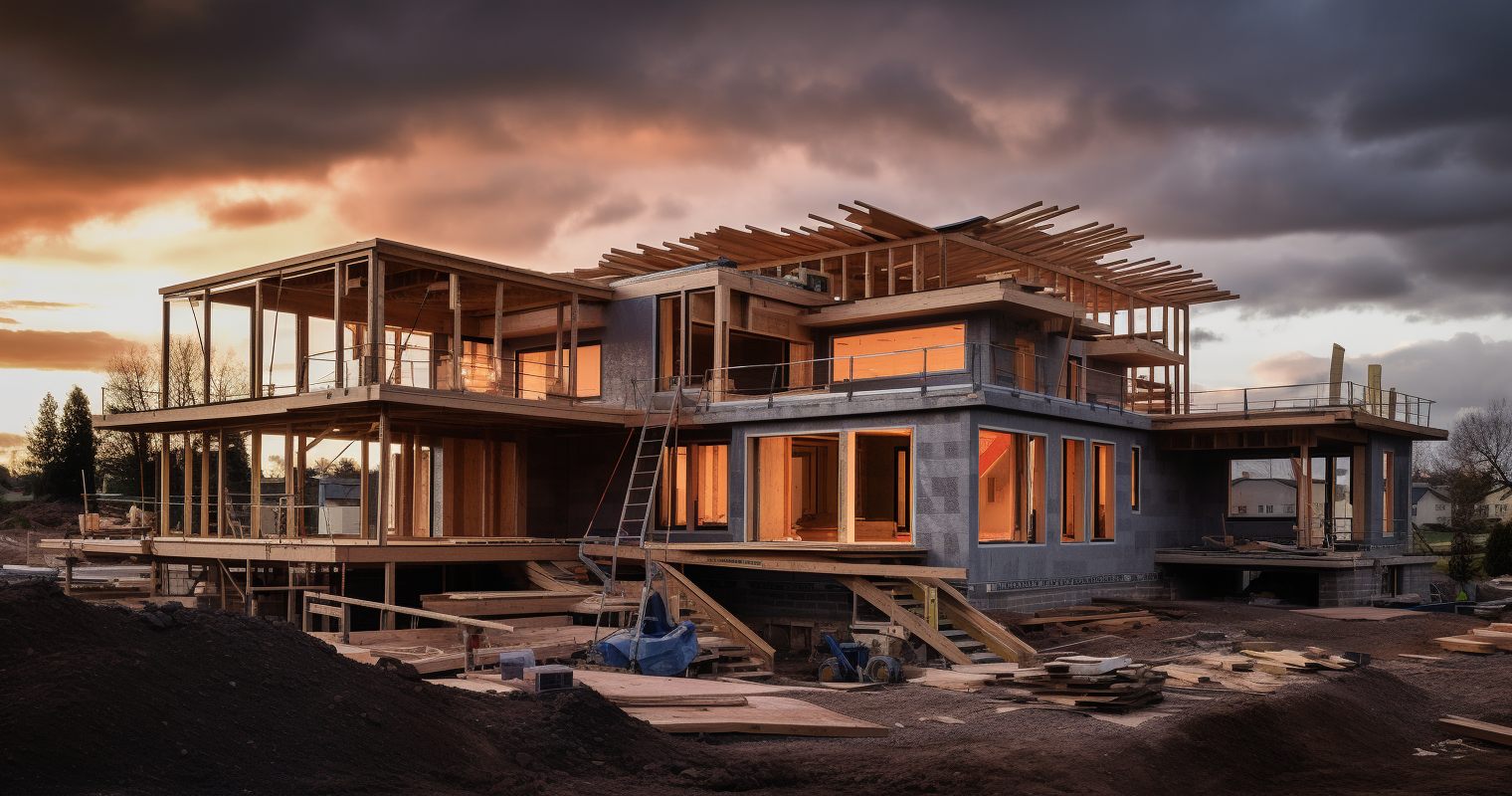
Property construction and renovation in the United States is an inherently localised affair — no single nationwide framework governs the process. What other countries call “planning permission” is here known as a building permit, issued by city or county authorities rather than any federal body. Construction regulation sits primarily at the state level, and while foreign nationals are generally free to purchase land and build, a growing number of states have enacted restrictions affecting buyers with ties to certain foreign governments. Working with licensed contractors and architects is not optional — it is essential.
| Item | Details |
|---|---|
| Permit authority | Local city or county building department (no national permit system) |
| Typical permit processing time | 1–2 business days for simple residential permits; several weeks for standard projects (as of 2025; varies by jurisdiction) |
| Foreign ownership restrictions (federal) | No federal restrictions on residential property for most nationalities; state-level restrictions apply in some cases (as of 2025) |
| Architect licensing body | National Council of Architectural Registration Boards (NCARB); licensing issued state by state |
| Contractor licensing | Regulated at state level; requirements vary by state and trade |
| Heritage protection body | National Park Service (National Register of Historic Places); state Historic Preservation Offices (SHPOs) |
Do you need planning permission to build or renovate a property in the United States?
What many countries call “planning permission” is referred to in the United States as a building permit. Rather than operating through a single centralised authority — as seen in the UK, where a national planning framework is applied through local councils, or in France, where a permis de construire is granted under a unified national code — the US distributes this responsibility across thousands of individual city and county building departments. Requirements, fees, and procedures differ considerably from one jurisdiction to the next.
As a broad principle, building permits are needed for new construction, major structural changes, extensions, and significant alterations to core systems such as electrical wiring, plumbing, or heating and cooling. Minor cosmetic updates — repainting walls, replacing flooring, or swapping out fixtures on a like-for-like basis — typically fall outside permit requirements. What qualifies as “minor” is, however, a matter of local interpretation, so it is always wise to check with your local building department before any work commences.
The specific permit category that applies to your project will depend on its scale and complexity. Basic projects may be handled through administrative review alone, and some jurisdictions offer an accelerated pathway for straightforward residential work, with approval achievable within 1–2 business days (as of 2025). More substantial projects require multi-departmental plan review and correspondingly longer timeframes. Since fees and processing times shift frequently, always confirm current figures directly with the relevant local authority before setting your budget.
The general sequence for obtaining a building permit in the US is as follows:
- Confirm your zoning classification. Before any design work begins, establish that your intended use is permitted under the zoning rules that apply to your land. Contact the local planning or zoning department, or consult the authority’s online portal.
- Assemble your application documents. A complete submission typically includes architectural drawings, structural engineering calculations, a site plan, and details of proposed utility connections. A thorough application should address all critical categories, from zoning compliance and structural engineering through to contractor insurance and utility arrangements.
- File your application. A growing number of cities now require or strongly prefer electronic submission. Digital portals allow both applicants and reviewing departments to track a permit application’s status in real time, reducing delays.
- Undergo plan review. The building division, along with any other relevant departments, will assess your submitted plans for compliance with applicable codes. If anything is missing or unclear, you will be asked to supply additional information before the review proceeds.
- Settle fees and collect your permit. Outstanding fees, including building permit charges, must be paid in full before the permit can be issued. The permit is released once all plans are approved, any conditions of issuance are satisfied, and payment is confirmed.
- Arrange mandatory inspections. At defined stages throughout construction, inspections are required. Coordinate with your contractor to identify every required inspection milestone — such as foundation, framing, and electrical rough-in — since missing any one of them can bring the entire project to a standstill.
What are the rules around listed buildings, conservation areas, and heritage protection in the United States?
The United States maintains a formal heritage protection framework, though it functions quite differently from analogous systems in other countries. The principal national designation is the National Register of Historic Places, which is administered by the National Park Service (NPS) — a federal agency sitting within the US Department of the Interior. Alongside this, every state operates its own heritage mechanisms through State Historic Preservation Offices (SHPOs).
A property that appears on the National Register of Historic Places is formally recognised for its historical, architectural, or cultural importance. However, unlike listed building status in the UK — where owners generally require specific consent before making changes — inclusion on the National Register does not, in itself, stop a private owner from altering or demolishing a building. For private owners, the primary practical benefit of National Register listing is eligibility for federal and state tax incentives on qualifying rehabilitation work. There is an important exception: where a project draws on federal funding or requires a federal licence, Section 106 of the National Historic Preservation Act mandates consultation with the relevant SHPO before any work proceeds.
The most stringent protections tend to originate at the local level. Numerous cities and counties have enacted their own historic district ordinances and local landmark designations that require formal approval — commonly from a Historic Preservation Commission or Architectural Review Board — before owners may alter exteriors, demolish structures, or carry out significant renovation. These local rules are frequently far more demanding than their federal equivalents, and violating them can trigger stop-work orders, financial penalties, and a requirement to restore the property to its prior condition at the owner’s cost.
Before purchasing or commissioning work on any older property, always verify:
- Whether the property appears on the National Register of Historic Places (searchable at nps.gov/subjects/nationalregister)
- Whether it lies within a locally designated historic district (contact the city or county planning department)
- Whether the state maintains its own heritage listings or tree preservation rules (consult your SHPO, accessible via ncshpo.org)
If your property falls under local historic district controls, bring in a preservation architect and seek guidance from the local Historic Preservation Commission well before any work begins. Penalties for unauthorised alterations can be substantial, and in certain jurisdictions may oblige you to fund a full restoration out of your own pocket.
What permits and licences are required when building or renovating in the United States?
A basic building permit is rarely the only approval needed. Depending on the nature of the project and where it is located, you may need a range of additional permits and authorisations. Because regulation in this area operates primarily at the state and local level, always confirm requirements with your local building department and any relevant state agencies.
Common additional permits and approvals include:
- Electrical permit: Necessary for any new electrical installation, panel replacement, or rewiring. Issued by the local building department; the completed work must pass inspection by a certified inspector.
- Plumbing permit: Required for new plumbing installations or substantial modifications. Issued by the local building or plumbing authority.
- Mechanical/HVAC permit: Covers the installation of heating, ventilation, and air-conditioning systems.
- Zoning or land-use approval: Before a building permit is granted, the proposed use must sit within what the local zoning allows. Where it does not, you may need to apply for a variance or conditional use permit from the local zoning board.
- Environmental permits: Environmental permitting can be a protracted process, sometimes drawing in multiple agencies simultaneously. If your project touches areas regulated by different bodies — for instance, both a local conservation commission and a state environmental agency — it is wise to build substantial extra time into your schedule and set aside budget for associated fees and specialist consultancy costs.
- Utility connection permits: No building can function without electricity, water, and waste disposal. Connecting to each utility requires formal approval from the relevant provider, supported by detailed plans.
- Septic or sewage permits: Where the property is not served by a municipal sewer, a separate permit for a septic system is usually required from the county health department.
- Floodplain development permit: If your land lies within a FEMA-designated flood zone, additional approval from the local floodplain administrator is required, along with compliance with FEMA floodplain management standards.
For complex projects, engaging a local permit expeditor — or tasking your architect with managing the permitting process — can save considerable time and frustration. Fees and processing timeframes change regularly; always obtain current figures from the official issuing authority. The US Department of Housing and Urban Development (HUD) and the Environmental Protection Agency (EPA) publish national guidance covering many of these requirements.
How do you find a reliable, trustworthy builder in the United States?
Construction in the United States is regulated chiefly at the state level, which means licensing requirements for general contractors and specialist tradespeople vary considerably across the country. States such as California, Florida, and Arizona mandate that general contractors hold a state-issued licence. Other states regulate only particular trades — electricians, plumbers, HVAC engineers — while a handful impose minimal licensing requirements for general contractors altogether. Before engaging anyone, always verify what your specific state requires.
When selecting a contractor, the following criteria should guide your assessment:
- State licence: Check that the contractor holds a current, valid licence for the category of work they will be undertaking. Most state licensing boards provide an online verification tool.
- Insurance: The contractor must carry both general liability insurance and workers’ compensation coverage. Request certificates of insurance and confirm their validity directly with the insurer.
- Written contract: Insist on a comprehensive written contract specifying the scope of work, materials to be used, the project timeline, payment milestones, and a clear procedure for resolving disputes. Never hand over the full payment upfront.
- References and portfolio: Ask for references from recent comparable projects and take the time to follow them up. Where possible, arrange to view completed work in person.
- Staged payments: Structure payments around defined completion milestones rather than advancing large sums before work is done. Consider retaining a percentage — typically 5–10% — until all work is finished and has passed inspection satisfactorily.
- Permits: Any reputable contractor will secure all necessary permits before starting work. Treat it as a significant warning sign if a contractor suggests bypassing permits to cut costs — the legal and financial consequences of unpermitted work can be severe, including a requirement to demolish what has been built.
Key professional and trade bodies for identifying and vetting builders include:
- National Association of Home Builders (NAHB) — the principal trade association for residential builders and remodellers. Members are bound by a professional code of ethics.
Website: nahb.org
Phone: +1 (800) 368-5242
Address: 1201 15th Street NW, Washington, DC 20005 - National Association of the Remodeling Industry (NARI) — focused on renovation and remodelling contractors; includes a contractor search tool.
Website: nari.org
Phone: +1 (847) 298-9200
Address: PO Box 4251, Des Plaines, IL 60016 - Associated General Contractors of America (AGC) — covers commercial construction and larger residential projects.
Website: agc.org
Phone: +1 (703) 548-3118
Address: 2300 Wilson Blvd, Suite 300, Arlington, VA 22201
Foreign property owners are a well-known target for dishonest contractors, particularly in areas with high concentrations of second homes or investment properties, and in the aftermath of natural disasters. Common fraudulent patterns include collecting large cash deposits and vanishing, delivering poor-quality work and then demanding further payment, and operating without any licence or insurance cover. Always verify licences through independent channels, and be highly cautious of any contractor who approaches you unsolicited or applies pressure to make a quick decision.
How do you find a qualified local architect in the United States?
In the United States, the title of “architect” is legally protected. No individual may offer architecture services or describe themselves as an architect without holding a valid licence. Every state, the District of Columbia, and all US territories require individuals to be licensed before they may practise or hold themselves out as architects.
Obtaining a licence requires satisfying the individual requirements of the state or territory where the architect intends to practise — there is no single national licence that covers all jurisdictions. Although each of the 55 US jurisdictions sets its own precise criteria, all typically require a combination of qualifying education, structured professional experience, and successful completion of a licensing examination.
The organisation that coordinates the national licensing framework is the National Council of Architectural Registration Boards (NCARB) — a nonprofit body made up of the architectural licensing boards of all 55 US states and territories. While each jurisdiction is independently responsible for regulating the practice of architecture within its borders, NCARB develops and administers nationally recognised programmes including the Architectural Experience Program (AXP) and the Architect Registration Examination (ARE) for candidates pursuing licensure.
National Council of Architectural Registration Boards (NCARB)
Website: ncarb.org
Phone: +1 (202) 879-0520 (Customer Service) / +1 (202) 783-6500 (Main)
Address: 1401 H Street NW, Suite 500, Washington, DC 20005
The American Institute of Architects (AIA) is the foremost professional membership body for architects in the US. While AIA membership is not itself a licensing requirement, it signals a commitment to professional standards and ethical conduct. AIA maintains a searchable directory of its members on its website.
Website: aia.org
Phone: +1 (800) 242-3837
Address: 1735 New York Avenue NW, Washington, DC 20006
Architects who qualified outside the United States may be eligible for NCARB’s pathway for internationally trained practitioners, through which they can first earn an NCARB Certificate and then use it to apply for reciprocal licensure in a US jurisdiction. Conversely, architects who hold an NCARB Certificate can pursue licensure in countries including Canada, Mexico, the United Kingdom, Australia, and New Zealand, and architects from those countries can follow NCARB’s published pathways to obtain a US licence.
For expats commissioning work, there is no official language requirement for the architect you choose — working with someone fluent in your preferred language is naturally helpful, but far more important is choosing an architect who has demonstrable, hands-on experience in the specific state and municipality where you are building. Local familiarity with zoning codes, planning authority procedures, and inspection expectations is genuinely invaluable.
What are the common pitfalls when buying land to build on in the United States?
Purchasing land for construction in the US can be a straightforward process, but there are several critical due-diligence steps that buyers — particularly those unfamiliar with the US system — must complete before committing to any purchase.
Establish planning feasibility before signing anything. The fact that a parcel of land is on the market does not mean you can build whatever you have in mind. Before proceeding, confirm with the local planning or zoning authority that your intended use and building type are permitted under current zoning rules. Zoning classifications — such as R1 (single-family residential), R2 (multi-family), C (commercial), or A (agricultural) — govern what may be built, at what density, and how far structures must be set back from property boundaries.
Commission a thorough title search. The US relies on a system of title deeds and land registries administered at the county level — unlike, for example, Australia’s Torrens title system, which offers a government-backed ownership guarantee. Before signing any purchase contract, instruct a licensed real estate attorney or title company to conduct a full title search identifying any liens, easements, encroachments, covenants, or ownership disputes affecting the property. Purchasing title insurance provides an additional layer of protection.
Verify boundary lines precisely. Engage a licensed land surveyor to establish the exact boundary lines before exchanging contracts. Boundary disputes between neighbouring property owners are common, frequently contentious, and can be very costly to resolve.
Investigate environmental and flood risks thoroughly. Check whether the land falls within a FEMA-designated flood zone using the FEMA Flood Map Service Center at msc.fema.gov. Also look into whether the site has any history of contamination — for example, from former industrial activity — which can trigger liability under the Comprehensive Environmental Response, Compensation, and Liability Act (CERCLA). For any commercial purchase or any land with an uncertain history, an environmental Phase I assessment is strongly advisable.
Confirm utility availability before committing. In rural and semi-rural locations especially, access to mains water, electricity, gas, and sewage connections is not guaranteed. Connecting to utilities can carry a heavy price tag, and in particularly remote areas it may not be feasible at all, leaving private wells and septic systems as the only options. Verify availability and obtain estimated connection costs before contracts are exchanged.
- Near military bases or sensitive installations: Properties close to military facilities may be subject to restrictions connected to national security. Environmentally sensitive areas such as wetlands or coastal zones may also carry additional constraints aimed at environmental protection.
- Agricultural land: Certain states have introduced restrictions on foreign ownership of agricultural land to safeguard local farming industries.
In all cases, engage a qualified real estate attorney and work with a reputable title company. There is no single national land registry in the US equivalent to the UK’s HM Land Registry or Australia’s Torrens system — records are maintained at the county level, which makes local legal expertise particularly valuable.
What are the rules around foreign ownership and financing for construction projects in the United States?
At the federal level, the framework for foreign property buyers is broadly welcoming. There are no federal restrictions based on citizenship, residency status, or immigration status, and non-US citizens enjoy the same property ownership rights as US citizens. A Green Card or permanent residency is not a prerequisite for owning real estate. Investors and homebuyers can acquire US property directly from abroad, complete transactions remotely, and participate in one of the world’s most stable and transparent real estate markets. Property ownership carries no link to immigration status, and physical presence in the United States is not required.
The situation at the state level, however, has grown considerably more complex. State and federal lawmakers have increasingly turned their attention to the potential national security and economic implications of foreign land ownership. Between January 2023 and July 2024, at least 22 states enacted legislation regulating foreign ownership of real property. As of 2025, 30 states have passed 54 bills imposing restrictions on foreign property ownership. The majority of these measures target buyers with connections to governments classified as “foreign adversaries” — principally China, Russia, Iran, North Korea, Cuba, Venezuela, and Syria — and tend to focus on agricultural land and properties in the vicinity of military installations, rather than ordinary residential purchases made by private individuals.
The Committee on Foreign Investment in the United States (CFIUS) is an interagency body chaired by the US Department of the Treasury, with oversight over certain foreign direct investment transactions and real estate acquisitions. If you are purchasing land near a military installation or in a strategically sensitive location, obtain legal advice on whether your transaction requires CFIUS review before proceeding.
Regarding financing, foreign nationals can obtain a US mortgage even without an established US credit history. There are no additional taxes, stamp duties, or special charges levied on foreign buyers of US real estate. Foreign national mortgage products are specifically designed for borrowers residing outside the country who wish to purchase or refinance a property. These mortgages are not backed by Fannie Mae or Freddie Mac and are therefore generally offered by specialist lenders at higher interest rates and on stricter terms. Expect to provide evidence of income from your home country, bank statements, and a substantially larger deposit — typically 30–40% of the property value.
It is worth emphasising that buying property in the United States on its own does not confer any entitlement to a green card or residency status. While specific investment visa programmes exist — such as the EB-5 investor visa — the simple act of purchasing a residential property does not qualify. If immigration status is relevant to your plans, always seek advice from a licensed US immigration attorney.
Tax obligations also arise for foreign nationals who own US property. If a non-US citizen generates rental income from the property, that income must be reported to — and taxed by — the United States, and may also need to be declared in the owner’s home country depending on applicable tax treaties. Consult a specialist in cross-border tax matters before completing any purchase.
What official sources should you consult when planning to build or renovate in the United States?
Because the US system is so decentralised, no single government website covers every aspect of building and renovation. The most important official reference points are listed below:
| Authority / Body | Remit | Website |
|---|---|---|
| Local city or county building department | Building permits, plan review, inspections | Search “[your city/county] building department” |
| Local planning or zoning department | Zoning classifications, land-use approvals, variances | Search “[your city/county] zoning” |
| US Department of Housing and Urban Development (HUD) | Federal housing policy, building standards guidance | hud.gov |
| National Park Service — National Register of Historic Places | Heritage listings, Section 106 consultation | nps.gov |
| National Conference of State Historic Preservation Officers (NCSHPO) | Directory of State Historic Preservation Offices | ncshpo.org |
| FEMA Flood Map Service Center | Flood zone maps and floodplain management | msc.fema.gov |
| US Environmental Protection Agency (EPA) | Environmental permits, contamination, wetlands | epa.gov |
| NCARB (architects) | Architect licensing, state board directory | ncarb.org |
| American Institute of Architects (AIA) | Architect member directory, contract documents | aia.org |
| National Association of Home Builders (NAHB) | Builder and remodeller directory | nahb.org |
| CFIUS / US Department of the Treasury | Foreign investment review in real estate | treasury.gov |
| Internal Revenue Service (IRS) | Tax obligations for foreign property owners (FIRPTA, rental income) | irs.gov |
Requirements, fees, and procedures across all of these areas are subject to change. Always verify current rules directly with the relevant authority before committing to a project timeline or budget, and engage a qualified local real estate attorney to guide you through both the acquisition and the planning process.
Frequently asked questions
How long does it typically take to get a building permit in the US?
Timescales differ substantially depending on where you are and what you are building. Certain jurisdictions offer a fast-track route for straightforward residential projects, making approvals possible within 1–2 business days. Ordinary residential projects may require several weeks, while larger or more intricate developments — those involving multiple departments, environmental review, or zoning variances — can stretch to months. Always factor permitting time into your project schedule and check current processing times with your local building department.
Can I build on land without planning permission in the US?
Starting construction without a required building permit is a legal violation with potentially serious repercussions. Local authorities can issue stop-work orders, compel you to tear down unpermitted construction at your own expense, and levy heavy fines. Unpermitted work also creates significant complications when you later try to sell the property, since buyers’ lenders and home inspectors will flag the issue. Secure all required permits before any work begins.
Are foreign qualifications and building standards recognised in the US?
In general, they are not. The United States operates its own system of building codes — primarily the International Building Code and International Residential Code, each adopted and adapted at the state level — and foreign standards do not carry direct recognition. Architects who trained abroad must obtain a US licence through one of NCARB’s established pathways. Holders of an NCARB Certificate can also pursue licensure in countries including Canada, Mexico, the UK, Australia, and New Zealand, and architects who qualified in those countries can follow NCARB’s guidance to obtain a US licence.
How much does building a home in the US cost?
Construction costs span an enormous range depending on location, design specification, materials, and prevailing labour market conditions. As a rough indication, custom home construction in the US has typically fallen somewhere between $150 and $500+ per square foot in recent years, with high-cost states like California and New York sitting at the upper end of that scale. Always gather multiple detailed quotes from licensed contractors and include a contingency allowance of at least 10–15% to cover unexpected costs. Permit fees are commonly calculated as a proportion of the estimated construction value and vary by municipality — confirm current charges with your local building department.
What happens if I have a dispute with my contractor?
Begin by recording everything in writing and consulting your contract. If direct negotiation does not resolve the issue, you can lodge a formal complaint with your state’s contractor licensing board, which has authority to investigate, suspend licences, and in some circumstances order restitution. For lower-value disputes, small claims court is a practical avenue. Larger disagreements are commonly handled through mediation or arbitration, which is often stipulated in the contract itself. Where fraud is suspected, report the matter to your state’s attorney general office. A detailed written contract agreed before work starts is your most important safeguard.
Do I need to be present in the US to manage a building project?
Physical presence is not a legal requirement, but overseeing a construction project from overseas presents real challenges. If you expect to be abroad during construction, appoint a trustworthy local representative — a project manager, architect, or licensed contractor — and give them clear written authority to act on your behalf. Establish a routine of regular video calls and insist on photo and video progress updates. Many architects are prepared to take on a project management role for an agreed additional fee.
Are there language requirements for dealing with US planning authorities?
All official documentation, permit applications, and legal contracts in the US are prepared in English. In localities with substantial non-English-speaking populations, some building department staff may be able to assist in other languages, but this should not be assumed. It is strongly advisable to work with a licensed local architect or a bilingual legal adviser who can manage all formal correspondence on your behalf and ensure you have a full and accurate understanding of any documents you are asked to sign.
What are the tax implications of owning property in the US as a foreign national?
Tax obligations apply to all property owned by non-US citizens. If rental income is generated from the property, it must be declared and tax paid in the United States, and may also need to be reported in the owner’s home country depending on any applicable tax treaties. When a US property is sold, the Foreign Investment in Real Property Tax Act (FIRPTA) generally requires the buyer to withhold a percentage of the sale price and forward it to the IRS, unless an exemption applies. Retain a tax professional with experience in cross-border property ownership well before any purchase is completed.