

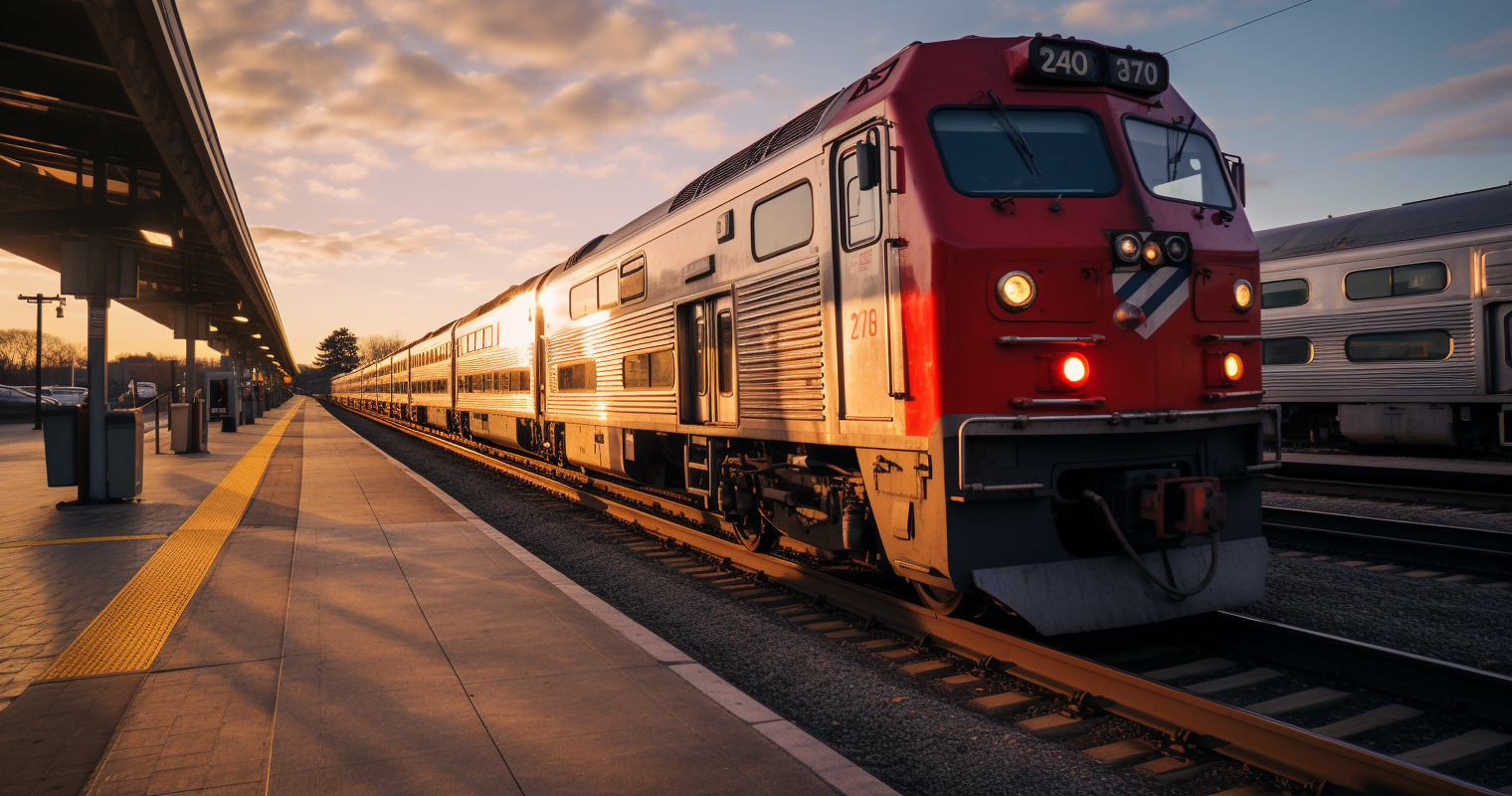
Australia’s train network stretches across more than 31,000 kilometres, yet it is built primarily around state-run urban commuter systems and a handful of long-distance routes. In cities like Sydney, Melbourne, Brisbane, and Perth, rail is a practical everyday choice for getting to work. Intercity passenger services exist but run infrequently, which means the network is far better suited to city commuting and leisure travel than to regular travel between states.
| Item | Details |
|---|---|
| Total rail network length | Approx. 31,200 km (as of 2024) |
| Main long-distance operators | Journey Beyond (The Ghan, Indian Pacific), NSW TrainLink, V/Line, Queensland Rail, TransWA |
| Urban travel cards | Opal (Sydney), Myki (Melbourne), go card (Brisbane), SmartRider (Perth), metroCARD (Adelaide) |
| Sydney Opal weekly travel cap | AUD $50 (as of 2025) — check Transport for NSW for current figures |
| Melbourne Myki card cost | AUD $6 (full fare card), AUD $3 (concession/child) — as of 2025 |
| Concession discounts | Generally 50% off adult fares for eligible seniors, students, pensioners, and Health Care Card holders — verify with individual state transport authorities |
What is the overall standard of rail travel in Australia?
Australia’s railway covers an enormous geographic footprint, but the quality and purpose of that coverage differs greatly depending on your location and travel needs. The continent is vast, and its main line rail infrastructure runs to around 35,000 km — a figure that rivals the total rail length of Germany. The similarity, however, largely ends there when passenger utility is considered.
Australia’s passenger rail continues to trail behind comparable systems in much of the developed world. The majority of long-distance track is dominated by freight traffic, particularly the bulk commodities produced by the country’s enormous mining sector. This stands in stark contrast to tightly integrated networks like those in Japan or Germany, where frequent intercity services make travelling by train across the country genuinely feasible for everyday travellers.
The national system is made up of 18 separate networks, each governed by its own rules, infrastructure standards, and technologies. Decades of independent decision-making by individual networks — often with no consideration for how those choices would affect neighbouring systems — has left a legacy of fragmentation rooted in Australia’s colonial history, when each state constructed its own railway in isolation.
Three different track gauges were used in those early years — 1600 mm broad gauge, 1435 mm standard gauge, and 1067 mm narrow gauge. Although the main lines connecting mainland capital cities were eventually standardised to a single gauge, a process not completed until 1982, many consequences of those 19th-century choices persist, and Australia’s railways remain largely state-based in character.
Urban commuter rail tells a different story. The networks serving Sydney, Melbourne, Brisbane, and Perth are extensive and heavily patronised for daily travel. Australia is currently in the midst of its most ambitious rail expansion in living memory, with metro, regional, and freight projects reshaping the country’s infrastructure landscape and positioning rail as a driver of tourism, regional growth, and long-term economic development. For newly arrived residents, the upshot is simple: city rail works well for daily commuting, while travel between major cities is generally more practical by plane or car than by train.
What classes of rail travel are available in Australia?
The classes of service on offer vary widely depending on the operator and the type of route. On suburban and urban networks, there is universally just one class — standard seating — with no upgrade option available. Meaningful class distinctions exist only on long-distance and luxury touring trains.
The Indian Pacific and The Ghan share a common approach to accommodation. Both trains offer two categories: Gold Service sleepers and Platinum Service sleepers. Each provides proper beds in private compartments, with restaurant meals included. Platinum Service adds a larger cabin — with a double bed available on request — along with access to an exclusive Platinum dining car and a small dedicated lounge area.
Budget accommodation on these trains no longer exists. Red Service sleeper cabins were removed in 2015, with Red Service reclining seats discontinued the following year. This means Journey Beyond’s flagship long-distance trains — The Ghan and the Indian Pacific — are now purely a luxury proposition, appealing to travellers seeking an experience rather than an economical way to cover distance.
State-operated long-distance services offer more modest distinctions. Queensland Rail’s Spirit of Queensland, for instance, features RailBed lie-flat seats and premium economy-style seating, rather than full cabin accommodation. Overnight trains to Brisbane and Melbourne include sleeper carriages with on-board bathrooms, while daytime trains are configured entirely for seated passengers. Advance reservations are required on these services.
V/Line services across Victoria are comfortable and air-conditioned but operate with economy seating only, and most routes do not require a reservation. The absence of premium tiers on most state-run long-distance routes means that comfort on these journeys varies more from operator to operator than through any clearly defined class structure.
Where can you find rail timetables and ticket prices in Australia?
Because rail services are split between state-run operators and private long-distance companies, no single national timetable or booking portal exists. You will need to visit the website of whichever operator covers your intended journey. The main official sources are listed below.
- Journey Beyond (The Ghan, Indian Pacific, The Overland, Great Southern): journeybeyondrail.com.au — bookings and timetables for long-distance touring trains.
- NSW TrainLink (NSW long-distance and regional): transportnsw.info — covers regional trains and coaches from Sydney.
- V/Line (Victoria regional): vline.com.au — timetables, fares, and booking for Victorian regional services.
- Queensland Rail (long-distance and urban): queenslandrail.com.au — long-distance routes including the Spirit of Queensland.
- TransWA (Western Australia regional): transwa.wa.gov.au — regional passenger rail and coach services in WA.
- Transport for NSW (Sydney urban and metro): transportnsw.info
- Public Transport Victoria (Melbourne): ptv.vic.gov.au
- Translink (South-East Queensland): translink.com.au
- Transperth (Perth urban rail): transperth.wa.gov.au
For a broader view of long-distance routes across the country, third-party resources such as seat61.com/Australia and railmaps.com.au offer helpful journey planning tools alongside links to the relevant operators. Australian Rail Maps has been publishing online maps, timetables, and journey planners since 1996, helping visitors, residents, commuters, and travellers navigate Australia’s extensive but fragmented train, tram, bus, and ferry networks. Always confirm fares and schedules directly with official operator websites, as prices change regularly.
How do you buy rail tickets in Australia, and can you book in advance?
How you purchase a rail ticket in Australia depends entirely on the type of journey. Urban commuter travel is handled through smartcard or contactless payment systems (covered in the metro section below), while long-distance and regional journeys use conventional ticketing that can be bought online, at a station counter, or via a self-service machine.
- Online booking: The majority of long-distance operators accept bookings through their own websites. Journey Beyond trains — including The Ghan and Indian Pacific — can be reserved at journeybeyondrail.com.au. NSW TrainLink journeys are bookable at transportnsw.info, V/Line at vline.com.au, and Queensland Rail at queenslandrail.com.au.
- Station ticket offices and machines: Larger stations have staffed counters and self-service machines for buying or collecting tickets. For urban travel, these machines also sell and top up smartcards.
- Phone booking: Operators including Journey Beyond and NSW TrainLink provide telephone booking services — visit the relevant operator’s website for current contact details.
- Travel agents: Some travel agents are able to arrange bookings for long-distance train journeys, particularly the luxury touring trains operated by Journey Beyond.
- Apps: Each city’s transit authority offers its own journey-planning app. Transport for NSW, PTV (Victoria), and Translink (Queensland) all provide real-time information, journey planning, and — in some cases — smartcard top-up functionality.
Booking ahead is strongly recommended and, on some trains, effectively essential. The Ghan in particular has attracted extraordinary demand since services to Darwin resumed, with bookings regularly exceeding expectations. The Great Southern, running between Adelaide and Brisbane, operates only during summer (December to February), and seats tend to disappear quickly — advance booking is a must. On state-operated long-distance trains, reserving in advance ensures you secure a seat or sleeper berth and can sometimes unlock a lower fare.
Long-distance tickets are generally available as e-tickets for smartphones or as printable documents. For urban commuter travel, most Australian cities now accept contactless debit and credit cards directly at station gates — since 2025, passengers in Sydney can tap a Visa or Mastercard contactless card, or use Apple Pay or Google Pay, on the same readers used for Opal cards, without needing a physical smartcard.
What types of rail tickets are available, and are there discount schemes?
Ticket structures differ across networks and operators, but broadly include single-trip, return, and — for urban networks — time-based or capped smartcard travel. Long-distance trains sell point-to-point fares by cabin type or seat class. There is no nationwide rail pass equivalent to Europe’s Eurail Pass or Japan’s JR Pass; travelling long distances requires separate bookings with each relevant operator.
For urban commuters, the smartcard systems in each city apply daily and weekly caps that effectively function as an unlimited-travel ceiling once reached. Sydney’s Opal card carries a daily cap of AUD $16.10 and a weekly cap of AUD $50 (as of 2025). Once you have made eight paid trips in a week, all further journeys until Sunday are free of charge. A Sunday cap of AUD $2.80 also applies, making it the most economical day for sightseeing or longer explorations. Always confirm current figures directly with Transport for NSW, as fares are subject to periodic revision.
Melbourne’s Myki system offers two distinct modes: Myki Money operates as a pay-as-you-go balance, while Myki Pass lets you buy a set period of travel — anywhere from 28 to 365 days — for unlimited use within your chosen zones. Commuters travelling five or more days per week will almost invariably find a Myki Pass cheaper than topping up Myki Money. Current fares are available at ptv.vic.gov.au.
Concession discounts apply across all state networks for eligible passengers. Concession Myki fares — generally 50% of the adult rate — are available for children and teenagers aged 4 to under 19, seniors card holders aged 60 and over, pensioners, asylum seekers, war veterans, school students, eligible tertiary students, Disability Support Pension and Carer Payment recipients, Health Care Card holders, and DHHS Carer Card holders. Comparable concession frameworks operate in other states, though eligibility criteria vary between jurisdictions — check with your local transport authority.
Victoria has announced a significant change for families: from 1 January 2026, a Youth Myki card will make public transport completely free for anyone under 18 across the Victorian network. This represents a notable benefit for families settling in Melbourne.
For long-distance travel on state-run routes, V/Line in Victoria stands out for affordability. Thanks to state government subsidies, the cost of any V/Line journey — regardless of distance — is capped at the equivalent of a standard Melbourne daily public transport fare (AUD $11 as of 2025). Verify this figure at vline.com.au for current pricing. Students should also investigate whether their institution participates in discounted travel schemes — the iUSEpass in Melbourne allows eligible international students at participating universities to purchase a discounted annual Myki pass, which can represent considerable savings compared to full adult fares.
How accessible is the rail network for disabled passengers?
Accessibility obligations across Australia’s rail network are set out nationally through the Disability Standards for Accessible Public Transport 2002 (DSAPT), which establishes minimum requirements that all public transport operators across the country must meet. V/Line, for example, maintains an Accessibility Action Plan aimed at improving access to regional public transport, in support of the objectives of the Disability Discrimination Act 1992 and the Disability Standards for Accessible Public Transport 2002.
In practice, the level of accessibility varies considerably between modern city infrastructure and older regional or rural stations. New metro stations in Sydney and Melbourne are built with step-free access and level boarding as standard requirements. These newer stations feature platform-to-train boarding with no gap or step. However, a significant number of older suburban and regional stations have yet to be fully upgraded, and the gap between train floors and platforms can remain a genuine challenge for wheelchair users.
Queensland Rail offers a range of facilities and assistance for passengers with disabilities. Most V/Line stations and train services are usable by customers travelling with mobility aids, and the majority of scheduled V/Line coach services are fitted with a lift and a designated space for mobility aid users.
Journey Beyond provides assistance to passengers with disabilities — including wheelchair users — throughout their journey, and accessible cabins are available on their trains. If you require a wheelchair-accessible berth on The Ghan or Indian Pacific, it is important to request this at the time of booking, as the number of such cabins is limited.
At stations, most major city operators offer a pre-booking service for passengers who need assistance boarding or alighting. Queensland Rail, for instance, designates assisted boarding points on platforms for customers requiring help. Equivalent services exist across other state networks — contact the relevant operator in advance to make arrangements. Useful official links include:
- NSW: Transport for NSW Accessibility
- Victoria: PTV Accessibility
- Queensland: Queensland Rail Accessibility
Compared to fully step-free systems found on newer metro networks in cities such as Singapore or Tokyo, Australia’s urban rail accessibility is strong on recently built lines but patchy across older station stock. The disparity between capital city metro infrastructure and rural regional stations is a recognised challenge that ongoing investment programmes are working to close.
Are there metro or urban rail systems in Australia’s cities?
Every major mainland city in Australia has some form of urban rail network, and several are investing heavily in new metro-style lines. Tasmania is the exception, with no long-distance or urban passenger rail services.
Sydney operates both a conventional suburban heavy rail network through Sydney Trains and an expanding, fully automated metro system. Sydney Metro is Australia’s largest public transport infrastructure project and the country’s first fully automated metro rail network, delivering new lines and stations and significantly increasing Sydney’s overall rail capacity. The Opal card — and now contactless payment — covers all modes of public transport across Sydney and surrounding regions, including trains, buses, light rail, and ferries across Greater Sydney, the Blue Mountains, the Central Coast, the Hunter, and the Illawarra. Visit transportnsw.info for timetables, fares, and the Opal Travel app.
Melbourne is home to one of the largest metropolitan rail networks in the Southern Hemisphere, operating alongside its iconic tram network. The Metro Tunnel opened on 30 November 2025, creating a new underground spine for the city’s rail system. It links previously separate lines and unlocks capacity for additional services running every minute. The Myki smartcard — or its digital equivalent — is used across all public transport in Victoria, covering trains, trams, and buses in Melbourne and regional areas. Visit ptv.vic.gov.au for information and the PTV app.
Brisbane has a suburban rail network run by Queensland Rail, integrated with buses and ferries through the Translink ticketing system. Brisbane is channelling the momentum of the 2032 Olympic and Paralympic Games into an ambitious rail expansion agenda. The Cross River Rail — a 10.2-kilometre north–south underground corridor featuring four new stations — is designed to relieve congestion in the city centre and transform mobility across the wider metropolitan region. The go card is used across all TransLink services. Visit translink.com.au or use the MyTransLink app.
Perth runs a modern suburban rail network under the Transperth brand, recently expanded through the METRONET programme. Perth’s north-east is now served by public transport following the official opening of the METRONET Ellenbrook Line in December 2024. Perth uses the SmartRider card. Visit transperth.wa.gov.au.
Adelaide operates a suburban rail network under the Adelaide Metro brand, along with a city tram line. The metroCARD is used for ticketing. Visit adelaidemetro.com.au.
A critical point for newcomers: each city uses a different transit card — Opal in Sydney, Myki in Melbourne — and none of them work in another city. You will need to acquire the appropriate card for each city you live in or visit.
What should expats know about using the rail network day-to-day?
Australia’s rail stations and services operate entirely in English. Signage, announcements, and apps are provided in English only — a contrast to metro systems in cities like Hong Kong or Singapore, which routinely offer multilingual information as standard. While Australian transit authorities do not publish official signage in other languages, Google Maps and numerous third-party apps available in many languages can help with journey planning.
Getting around major station networks is straightforward. Fare gates use smartcard tap-on and tap-off readers, and the same applies to contactless payment. The critical rule to remember across all Australian urban networks is that you must tap both when you board and when you exit. Forgetting to tap off will result in the maximum fare being deducted from your card or payment method, regardless of how short your actual journey was.
Luggage policies on urban trains are relaxed. There are no baggage charges, and no formal limit on how much you bring — though large bags during the morning and evening peaks (roughly 7–9am and 4–6:30pm on weekdays) can make overcrowded carriages uncomfortable for everyone. Bicycles are generally allowed outside peak hours. All metro systems accommodate bikes outside peak times, as well as prams, wheelchairs, and luggage, with dedicated spaces in every carriage. Folding bikes may be brought on at any time.
Luggage allowances on long-distance trains vary between operators. Journey Beyond trains generally permit passengers to bring a reasonable amount, and some sleeper cabins include in-room storage. Check the operator’s website before travelling with oversized or bulky items.
Seat reservations are not required for ordinary urban and suburban journeys — you simply board and choose a free seat. Overnight long-distance trains with sleeper carriages require advance reservations. On some regional daytime services, reservations are recommended but not always compulsory — confirm the requirement with the relevant operator before travelling.
As for social norms, Australian train travel tends to be quiet and relaxed in character. Phone calls are not prohibited but keeping noise to a considerate level is the unspoken expectation. Priority seating near carriage doors is designated for older passengers, people with disabilities, pregnant women, and those travelling with young children. Light snacks are generally acceptable on longer journeys, though strongly scented food tends to attract disapproving glances on busy commuter services. There is no tipping culture connected to train travel in Australia.
For live service updates, all major operators publish alerts through their websites and official apps. Sydney’s Transport for NSW app, Melbourne’s PTV app, Brisbane’s MyTransLink app, and Perth’s Transperth app each provide real-time departure information, disruption notices, and journey planning tools.
Frequently asked questions about rail travel in Australia
Is there a national rail pass for travelling around Australia by train?
No. Unlike Europe’s Eurail Pass or Japan’s JR Pass, there is no single national rail pass for Australia. Long-distance journeys require separate bookings with individual operators such as Journey Beyond, NSW TrainLink, V/Line, or Queensland Rail. You should plan each leg of a long journey separately and book well in advance, especially for popular routes like The Ghan.
How long does it take to travel between Sydney and Melbourne by train?
The XPT overnight train operated by NSW TrainLink takes approximately 10–11 hours between Sydney and Melbourne, travelling via Canberra. The journey departs daily but is considerably slower than flying — the appeal is the scenery, overnight travel, and cost. Check current timetables and fares at transportnsw.info.
Do I need to book train tickets in advance in Australia?
For long-distance and overnight trains — particularly Journey Beyond services like The Ghan and Indian Pacific — advance booking is strongly recommended and often essential, as trains sell out months ahead. For state-run regional services, booking in advance is advisable to secure a seat. Urban commuter rail requires no advance booking; simply tap on with your city smartcard or contactless payment.
What is the cheapest way to travel long-distance by train in Australia?
V/Line regional services in Victoria are the most affordable, with any journey capped at the standard daily Melbourne fare (AUD $11 as of 2025 — verify at vline.com.au). NSW TrainLink and Queensland Rail offer economy seating on their intercity routes at moderate prices. Journey Beyond’s touring trains are luxury products and are among the most expensive rail experiences available globally.
Can I use my city transit card in another Australian city?
No. Each major city operates its own transit card system — Opal (Sydney), Myki (Melbourne), go card (Brisbane), SmartRider (Perth), and metroCARD (Adelaide) — and these are not interchangeable. When relocating or visiting another city, you will need to obtain the local card or use contactless payment where accepted.
Are trains in Australia reliable and on time?
Urban metro and suburban trains in Sydney and Melbourne generally achieve reasonable on-time performance, though disruptions from heat, infrastructure faults, and maintenance works are not uncommon. Long-distance trains in Australia have a historical reputation for delays — services covering thousands of kilometres across remote terrain are particularly vulnerable to weather events and freight network congestion. Build flexibility into your plans when taking overnight or multi-day trains.
Are there overnight sleeper trains I can take as a resident?
Yes. Journey Beyond operates The Ghan (Adelaide–Darwin), Indian Pacific (Sydney–Perth), The Overland (Melbourne–Adelaide), and the Great Southern (Adelaide–Brisbane). NSW TrainLink runs overnight XPT services between Sydney and Melbourne, and Sydney and Brisbane. Queensland Rail’s Spirit of Queensland between Brisbane and Cairns also offers lie-flat RailBed seating for overnight travel. All require advance booking.
Is rail travel in Australia suitable for daily commuting to work?
In Sydney, Melbourne, Brisbane, Perth, and Adelaide, yes — urban rail is a practical and widely used means of commuting. Each city’s network connects the CBD with major suburbs, and smartcard daily and weekly caps make the cost predictable. Outside the major cities, commuter rail is less developed and residents in regional areas typically rely on cars or coaches for daily travel.