
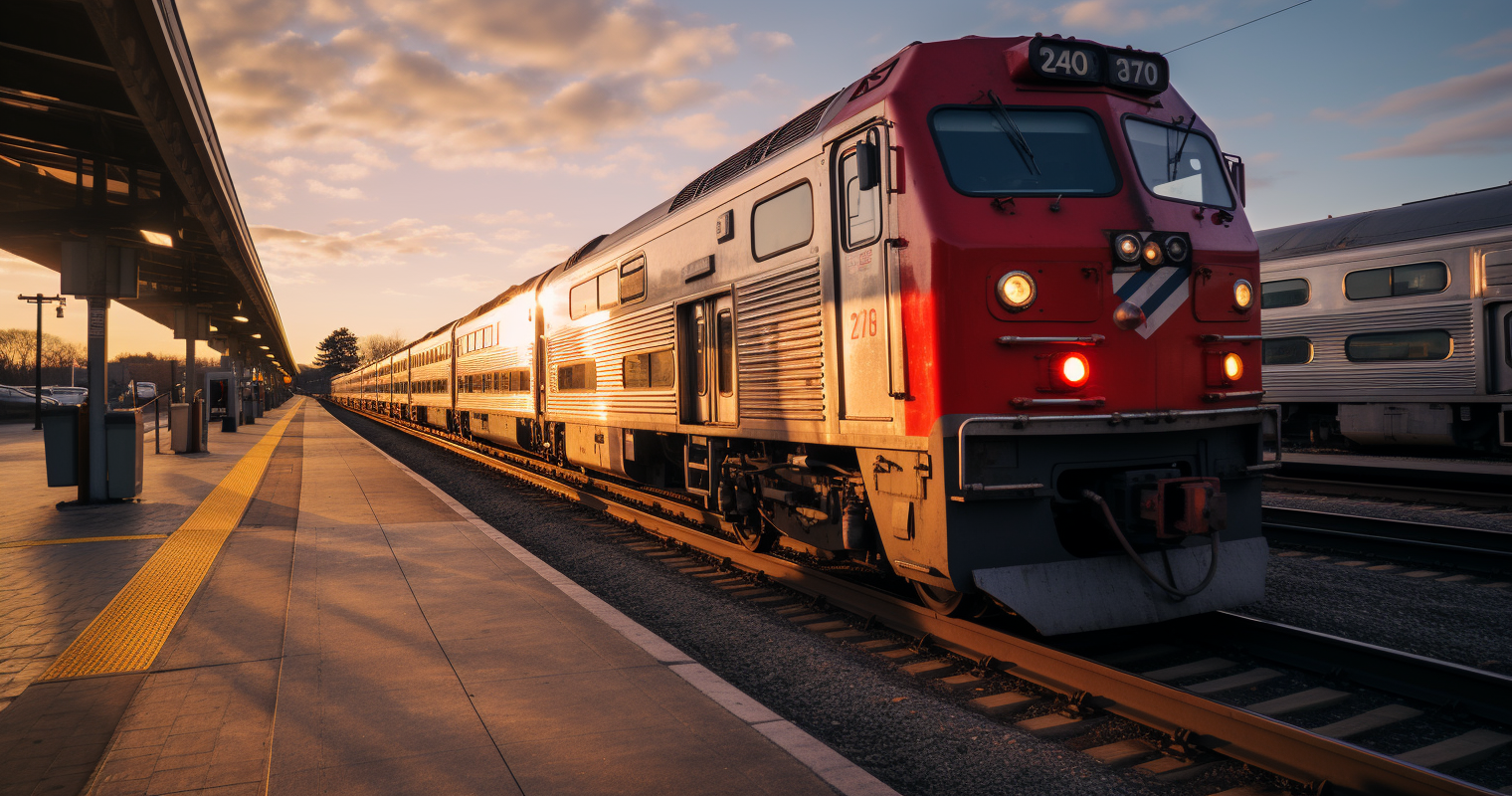
Argentina’s rail network is experiencing a slow but steady recovery after many decades of deterioration, yet its practical scope for everyday travel remains narrow. Buenos Aires operates a busy suburban commuter rail system alongside its metro — known as the Subte — while a small number of long-distance passenger services link several major cities. Beyond the capital, rail coverage is sporadic, and intercity journeys are predominantly made by bus or plane.
| Item | Details |
|---|---|
| National operator | Trenes Argentinos (SOFSE) — state-owned |
| Network size (as of 2018) | Approx. 17,866 km of active track (16th largest in the world) |
| Long-distance routes | Buenos Aires to Mar del Plata, Córdoba, Tucumán, Rosario; Tren Patagónico (Viedma–Bariloche) |
| Sample long-distance fare (as of 2024) | Buenos Aires–Mar del Plata approx. US$22 (Pullman class); check official sources for current fares |
| Urban metro (Subte) | Buenos Aires only — 6 lines, 90 stations, 56.7 km |
| Key travel card | SUBE card — used for Subte, suburban trains, and buses nationwide |
| Advance booking required? | Strongly recommended for long-distance; confirmation required 72–24 hours before departure |
| Disability travel | Free travel for passengers with a valid disability certificate |
What is the overall standard of rail travel in Argentina?
At its peak, Argentina’s rail network stretched to roughly 47,000 km — the most extensive in South America — but successive waves of privatisation, economic turmoil, and political instability eroded it dramatically. The network now covers approximately 17,866 km (as of 2018), still ranking 16th globally by total track length, though far diminished from its former scale.
While Argentina retains a substantial railway infrastructure, it functions mainly as a freight-hauling system. Passenger services are confined to a limited number of long-distance routes, suburban rail in Buenos Aires, and scattered regional connections. This stands in sharp contrast to the dense national networks found in countries such as Germany or Japan, where intercity rail links hundreds of destinations as a primary transport mode.
Growing frustration with private management prompted the national government to begin re-nationalising certain rail operators from 2012 onwards. Operadora Ferroviaria Sociedad del Estado (SOFSE) was established to oversee lines progressively returning to public control, and investment in the railways increased substantially compared to earlier periods.
The government has since resumed services and modernised previously privatised lines with brand-new rolling stock, including long-distance routes such as Buenos Aires to Mar del Plata and Buenos Aires–Rosario–Córdoba. Even so, travelling long distances by train in Argentina should be thought of as more of a leisurely experience than a practical necessity — fares tend to be lower than alternatives, but trains are generally the slowest way to cover ground.
Freight operations remain the backbone of Argentina’s railway activity, with those lines seeing steady use. For commuters, the suburban rail network radiating from Buenos Aires offers the most dependable daily option; for the vast majority of longer journeys across the country, long-distance coach services remain the transport of choice.
What classes of rail travel are available in Argentina?
Argentine trains offer up to four distinct classes of travel, most of which include air conditioning and reclining seats. These are: Turista (the most basic and affordable, seats only), Primera (modestly reclining seats with air conditioning), Pullman (more generous reclining seats with air conditioning), and Coche de Cama (air-conditioned sleeper compartments).
One source of frequent confusion for newcomers is the class naming system, which is structured similarly to airline cabin designations — primera clase, pullman, and camarote (first class, pullman, and cabin). The terminology can be misleading: “primera clase” is actually the entry-level option and the cheapest ticket available. For most routes, Pullman delivers a noticeably better standard of comfort.
In practical terms, Pullman seating places one seat on either side of the aisle, while primera clase positions two seats side by side. Camarote accommodation provides two individual berths. On overnight services such as Buenos Aires to Tucumán, a coche de cama berth is highly recommended — sleeper travel offers a qualitatively different experience, combining rest with a degree of privacy that seated carriages cannot match.
All first-class carriages feature both heating and cooling air conditioning alongside reclining seats arranged in pairs. On premium services booked through the official government website, passengers in first class enjoy Wi-Fi, power outlets, and even an espresso machine with a hot and cold water dispenser. Class availability and specific configurations vary by route and operator — the Tren Patagónico, for instance, operates its own class structure with cabin options, while suburban commuter trains run a single undifferentiated class throughout.
Where can you find rail timetables and ticket prices in Argentina?
The definitive official source for schedules, fares, and route details is the Trenes Argentinos schedules and fares portal on the Argentine government website. For commuter and regional lines, Trenes Argentinos publishes dedicated “Horarios, tarifas y recorridos” pages for each service — this should be your first port of call when planning any trip. Given Argentina’s currency volatility and shifting government subsidy arrangements, fare levels can change frequently, so consulting the official portal for up-to-date figures is essential.
The national ticketing and information hub for long-distance services is found at argentina.gob.ar/transporte/trenes-argentinos. The Tren Patagónico (Viedma to Bariloche) operates its own dedicated booking website at trenpatagonico-sa.com.ar.
As a rough pricing guide: a Pullman-class ticket from Buenos Aires to Mar del Plata — one of the most popular routes, taking approximately 6 hours — costs around US$22 (as of 2024, and the best class available on this route). Always verify current fares through official channels before travelling, as prices shift regularly. For tourist trains, no centralised ticketing system exists, since the majority are privately operated.
For the Buenos Aires Subte (metro), timetables and network maps are published through the official city portal at buenosaires.gob.ar/subte. The City of Buenos Aires tourism portal also provides regularly updated public transport guidance in English.
How do you buy rail tickets in Argentina, and can you book in advance?
Several options exist for purchasing train tickets in Argentina, and the right approach depends on the type of service. For long-distance travel, securing your ticket well ahead of departure is strongly advised. Long-distance trains frequently depart fully booked — which is precisely why early booking matters, and why opting for a higher travel class is worthwhile. The more comfortable the class, the fewer seats per carriage, making for a quieter and less congested journey.
- Online via the official government portal: The primary booking platform for long-distance Trenes Argentinos services is argentina.gob.ar/reservatutren. Purchasing through the government website earns you a 10% discount. The platform operates primarily in Spanish.
- At station ticket offices: Approximately 71 ticket offices are available throughout Argentina for the purchase of intercity and regional tickets. The principal Buenos Aires terminals are Retiro, Constitución, and Once. Tickets can be bought at the counter of any of these stations, though some basic Spanish will be necessary for in-person transactions.
- By phone: Reservations for Trenes Argentinos long-distance services can be made by dialling the free number 0800-222-TREN (8736).
- Via the SUBE card (suburban and Subte travel): Tickets for Buenos Aires suburban and metro services are purchased at ticket booths and self-service printing consoles at railway stations, or on board certain trains. Payment can be made in cash or with the SUBE card, which is also accepted across the country for buses, toll booths, and the underground.
- Trip confirmation (long-distance only): Long-distance passengers must confirm their journey between 72 and 24 hours before departure — for both outbound and return legs — using their reservation number. This step is critical: failing to confirm means you will be denied boarding. Confirmation can be completed online, by phone, through the app, or at any ticket office.
Tickets are valid solely for the date and time specified on them. For Buenos Aires suburban commuter services, no advance reservation is required — simply tap your SUBE card at the turnstile. Since January 2025, contactless credit card payments have also been accepted for Subte journeys in Buenos Aires.
What types of rail tickets are available, and are there discount schemes?
Argentina’s rail ticketing structure is relatively straightforward, though it differs markedly from the intricate fare systems found on networks like those in France or the Netherlands. All tickets are tied to a specific date and time, and no open or flexible ticket options exist for long-distance services. National rail passes covering Argentina’s network are not available.
For Buenos Aires suburban commuter services, fare levels vary according to payment method — journeys paid using the SUBE card benefit from a government subsidy that substantially reduces the cost. Registering your SUBE card unlocks additional savings: a 50% reduction applies to second trips made within a two-hour window. Further discounts accumulate with monthly travel frequency: after 20 trips, fares are discounted by 20%; after 30 trips, by 30%; and after 40 trips, by 40%.
A range of concessionary reductions apply to long-distance Trenes Argentinos services (as of 2024 — always verify current figures at the official website):
- Children under 3: Children below the age of three travel at no charge.
- Children aged 3–12: Children in this age bracket pay 50% of the standard ticket price.
- Students: The student concession fare is equivalent to 50% of the minimum valid ticket cost.
- Retirees and pensioners: Those receiving a retirement or pension benefit can access a 40% discount when purchasing tickets online for all long-distance services.
- Passengers with disabilities: Holders of a valid disability certificate travel free of charge upon presentation of their original DNI and certificate. A companion is entitled to the same benefit where the certificate specifies this.
- School children in uniform: Children travelling in school uniform are generally exempt from fares on suburban rail services.
- SUBE transfer discount: Metropolitan services using the SUBE card offer a 50% fare reduction when passengers transfer between services.
All fares and discount thresholds are subject to change. Always confirm the most current rates through the official Trenes Argentinos portal or by calling 0800-222-8736 before you travel.
How accessible is the rail network for disabled passengers?
Accessibility provision across Argentina’s rail network varies considerably between the modern Buenos Aires Subte and the older infrastructure of long-distance and suburban services. The situation is improving overall, but has not yet reached the uniformly mandated standards typical of many Western European rail systems.
On the Buenos Aires Subte, all stations are fitted with lifts and tactile paving, while priority seating and designated wheelchair spaces are available inside carriages. These upgrades represent a significant advance over earlier decades and bring the metro broadly into alignment with accessibility standards found in many contemporary urban transit systems worldwide.
For long-distance and suburban services, both metropolitan and intercity trains can accommodate passengers with reduced mobility — the latter in Pullman class. Notifying the operator in advance is advisable to ensure appropriate arrangements are in place. Some older tourist trains may present accessibility challenges, so it is important to check route-specific conditions before making a booking.
As outlined in the discounts section, passengers holding a valid disability certificate travel free on long-distance services, and a companion may also be entitled to free travel where specified by the certificate. To arrange accessibility assistance or make a related enquiry, passengers can call 0800-222-TREN (8736) or visit argentina.gob.ar/reservatutren.
For the Buenos Aires Subte specifically, accessibility arrangements are managed by operator EMOVA. Further details are available through the Buenos Aires Subte official website. Passengers with specific assistance needs are encouraged to contact the operator in advance, particularly at older stations where lift installations may still be ongoing.
Are there metro or urban rail systems in Argentina’s cities?
As of 2025, Buenos Aires is the sole Argentine city with a metro system. Known locally as the Subte, it carries a distinguished historical record: the first section opened in 1913, making it the 13th subway network in the world to begin operations and the first underground railway in both Latin America and the Southern Hemisphere.
Today, the network’s six lines — A, B, C, D, E, and H — together span 56.7 kilometres and serve 90 stations. Complementing these is Line P, a 7.4-kilometre premetro (tram) line with 18 stops.
The Buenos Aires Subte begins operating at 5am and closes between 9pm and 11pm depending on the line. Train frequency ranges between 3 and 8 minutes, varying by line and time of day. Carriages become noticeably crowded during the morning peak (8am–9.30am) and evening rush (5pm–7pm).
Beyond the Subte, Buenos Aires operates one of South America’s most heavily used commuter-rail networks, with three terminals handling the bulk of traffic: Retiro, Constitución, and Once. Understanding these hubs — which lines depart from each, how they connect with the Subte, and where to buy tickets — is fundamental for getting around the city affordably and efficiently.
Outside the capital, Mendoza has committed to developing a 32.3 km suburban rail project connecting the existing Metrotram terminus at Gutiérrez with San Martín, reflecting ongoing regional investment in rail. Mendoza already runs a light-rail Metrotranvía network. Buenos Aires is also advancing plans for a new driverless metro line: tenders for the 5 km initial phase of driverless metro Line F are scheduled to be called in June 2025. The first section will serve six stations linking Brandsen in the south with Tucumán in the centre, at an estimated cost of US$1.1bn.
The SUBE card is the essential payment tool for urban rail. It is indispensable for using public transport in Argentina, covering buses, subways, trains, trolleybuses, and ferries. The system operates across the City and Greater Buenos Aires as well as more than 60 towns nationwide, including Bariloche, Ushuaia, and Mendoza. The official SUBE portal is at argentina.gob.ar/sube.
What should expats know about using the rail network day-to-day?
Navigating Argentina’s rail network on a day-to-day basis calls for some advance preparation, especially for those used to highly digitised systems with multilingual interfaces. The single most important practical step on arrival is obtaining a SUBE card. To travel by bus or Subte in Buenos Aires you will need this rechargeable contactless travel card loaded with credit. SUBE cards can be picked up at Subte stations, Tourist Assistance Centres, and at countless kioscos (corner shops) throughout the city.
SUBE Digital — the smartphone version of the card — currently works with buses and is set to expand to trains, subways, and water transport in Buenos Aires province. When using suburban trains, you must tap the card at the turnstile both on entering and on leaving the station, ensuring you are charged only for the distance actually travelled rather than the full route length.
Station signage across the Buenos Aires Subte and main suburban terminals is almost exclusively in Spanish, and announcements are made in Spanish only. There is no systematic bilingual signage as found, for example, on the London Underground or Paris Métro. New residents will benefit considerably from picking up basic Spanish transport vocabulary early on. The City of Buenos Aires official tourism website provides helpful guidance in English.
For navigation, the “BA Cómo llego?” (How do I get there?) app is a digital mapping tool — available online and as a download — that identifies the most efficient route between any two points in the city, whether by public transport, car, or on foot. Simply enter your starting location, your destination, and your preferred mode of travel.
When it comes to station orientation, a simple rule applies: Retiro serves lines heading north, Constitución those going south, and Once lines running west. For rapid cross-city connections between Retiro and Constitución, Subte Line C is the quickest option.
There are also some cultural norms worth knowing for train travel in Argentina. On the Subte, it is common for vendors to place small items on your lap if you are seated. If you have no interest in buying, simply leave the item where it is — the vendor will return to collect it. A polite “No, gracias” works equally well. During peak hours, carriages can become extremely full, and on certain lines at rush hour it is normal for passengers to squeeze into packed cars — this is considered a routine part of commuting rather than anything unusual.
For long-distance trains, no strict luggage size restrictions are publicly advertised, but travelling with a manageable amount of baggage is sensible given that storage space differs between classes and routes. Animals are not permitted on most services. It is worth packing snacks and water for extended journeys, particularly on routes where on-board catering options may be limited.
Frequently asked questions about rail travel in Argentina
Is train travel in Argentina reliable enough for daily commuting?
Within Buenos Aires, the suburban commuter rail network carries millions of passengers every day and represents a practical choice for regular commuters, though delays are not uncommon. Most services run at intervals of 8–20 minutes, though frequency may be lower on longer-distance routes. Beyond Buenos Aires, intercity rail is not a viable commuting option, and most people rely on buses or private vehicles instead.
Do I need to speak Spanish to buy train tickets in Argentina?
For long-distance services, tickets can be purchased online via the official Trenes Argentinos portal without requiring face-to-face communication, though the website is primarily in Spanish. Buying tickets in person at a main Buenos Aires station counter is possible but will require at least a basic level of Spanish. For Subte and suburban services, the SUBE card is a contactless tap-and-go system with no language interaction needed.
What is the SUBE card and how do I get one?
The SUBE card (Sistema Único de Boleto Electrónico) is a rechargeable contactless card that serves as the standard payment method for nearly all public transport in Buenos Aires, including buses, the subway, suburban trains, trolleybuses, and ferries. Cards are available at Subte stations, Tourist Assistance Centres, and at kioscos throughout the city. You can also request one online at argentina.gob.ar/sube.
Can I travel free as a passenger with a disability?
Passengers holding a valid disability certificate are entitled to travel at no charge on Trenes Argentinos long-distance services, provided they present their original DNI and certificate. A companion may also qualify for free travel where the certificate specifies this. On suburban and Subte services, people receiving disability-related pensions are generally also exempt from fares in most circumstances.
Are there any scenic or tourist train routes worth knowing about?
Argentina is home to several celebrated tourist railways. The Tren a las Nubes (Train to the Clouds) runs on the Argentine section of the Antofagasta–Salta line, departing from the city of Salta at 1,187 metres above sea level and climbing to the La Polvorilla viaduct at 4,200 metres, crossing 29 bridges, 21 tunnels, and 13 viaducts along the way. The Tren del Fin del Mundo near Ushuaia and the Tren Patagónico connecting Viedma and Bariloche are also well-regarded tourist routes.
How do I confirm a long-distance train reservation?
All long-distance passengers are required to confirm their journey between 72 and 24 hours before departure, for both outbound and return legs, using their reservation number. This step is not optional — without confirmation you will be refused boarding. Confirmation can be completed online, by calling 0800-222-8736, at a ticket office, or through the “Confirm Your Trip” app, which is available for both Android and iOS devices.
Is there a train from Buenos Aires to Bariloche?
No direct rail connection links Buenos Aires to Bariloche. The Tren Patagónico operates between Viedma and Bariloche within Río Negro province and is a well-regarded option for the Patagonian leg of a journey, but reaching Viedma first — typically by bus or flight — is required. Cabin class on the Tren Patagónico costs around US$80 (as of 2024) and is generally the most comfortable choice. A vehicle transport carriage is also available at approximately US$110 per car — tickets for this should be purchased as far ahead as possible given limited capacity.
Are there any apps for navigating Buenos Aires public transport?
The “BA Cómo llego?” app is a practical navigation tool for Buenos Aires, helping users identify the best route between two points by public transport, car, or on foot — simply input your origin, destination, and travel preference. The SUBE app (available on Android) lets you manage your card balance and, since September 2024, use a digital SUBE on NFC-enabled smartphones for bus travel, with planned expansion to include trains and subways.