

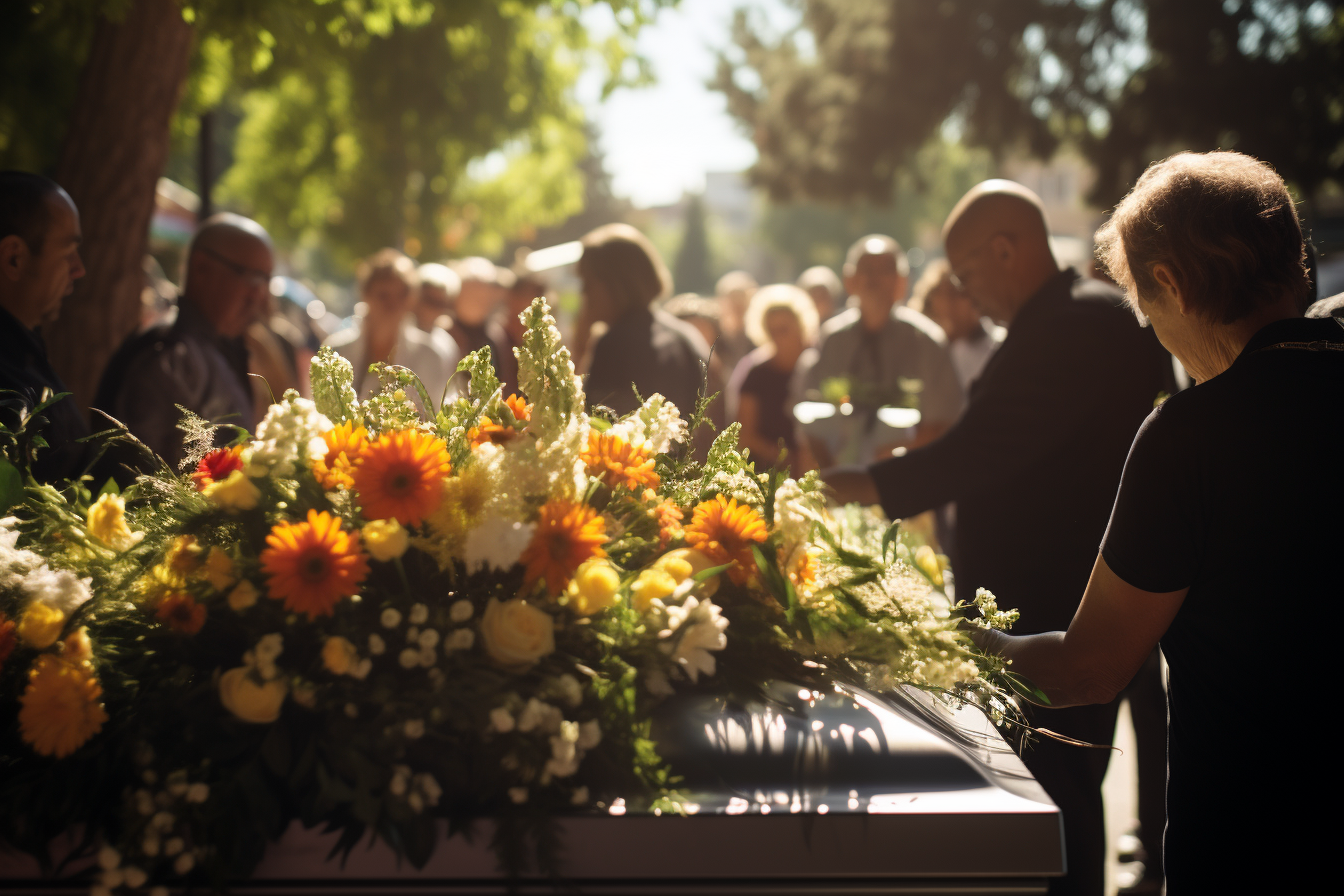
Argentina operates a blended public-private healthcare system that encompasses palliative care services, although the standard and availability of those services differs significantly from one region to another. Argentine law requires that a death be registered within 48 hours at the relevant local civil registry (Registro Civil), and a physician must formally certify the death before burial or cremation may proceed. Foreign nationals face additional obligations, including the requirement to notify their home country’s embassy or consulate. Expats are strongly encouraged to prepare legal documents in advance, including an advance directive and a power of attorney.
| Item | Details |
|---|---|
| Death registration deadline | Within 48 hours of death, at the local Registro Civil (civil registry) |
| Authority responsible for death registration | Registro Civil (administered at the provincial level; no single national database) |
| Death registration fee | Free to register; a fee applies for the burial permit (licencia de inhumación) |
| Advance directive (Directiva Anticipada) | Legally recognised under Argentina’s Patient Rights Law (Law 26.529, as amended 2012) |
| Euthanasia / assisted dying | Illegal in Argentina; passive withdrawal of treatment is permitted under law |
| Inheritance tax | No federal inheritance tax in Argentina (as of 2025); some provinces may apply a stamp duty — verify locally |
What end of life care options are available in Argentina, and how does the system work?
Argentina’s healthcare structure rests on three pillars: the public sector (sector público), social health insurance funds (obras sociales), and private prepaid health cover (medicina prepaga). End of life care is delivered through all three, though the breadth and quality of services depend significantly on geography and the type of coverage a patient holds. The widest selection of services is concentrated in major urban centres, especially Buenos Aires, Córdoba, and Rosario.
The origins of organised palliative care in Argentina date to the 1980s, when Argentine and Colombian teams began introducing both inpatient and outpatient services. The sector has expanded considerably since then. Today, the end of life care landscape in Argentina typically encompasses inpatient palliative care units within hospitals, outpatient palliative consultations, home-based care teams, and a small number of dedicated hospice facilities found mainly in larger cities.
Palliative services are generally delivered by multidisciplinary teams composed of a physician, a nurse, and frequently a psychologist, social worker, or other allied health professional. Most of these services are concentrated in major cities and are primarily oriented towards adults, with limited provision for children and adolescents. Expats residing outside metropolitan areas may need to travel to access specialist palliative support.
What is palliative care in Argentina, and who is eligible for it?
In Argentina, palliative care is referred to as cuidados paliativos and centres on enhancing the quality of life for individuals living with serious or life-limiting illness. This encompasses the management of pain and other troubling physical symptoms, as well as emotional, psychosocial, and spiritual support for both patients and their families.
Argentina’s legislative framework for palliative care reflects a broadly modern understanding of the field, though practical challenges persist in relation to the scope of the Mandatory Medical Programme (Programa Médico Obligatorio) and in ensuring that services reach patients with both oncological and non-oncological conditions. In practice, those with advanced cancer most consistently receive palliative care, though the situation for patients with other serious conditions is gradually improving.
Across Latin America, including Argentina, palliative care has historically been most closely associated with cancer treatment, with approximately a quarter of services reported as exclusively serving patients with oncological diagnoses. While this connection helped palliative care gain a foothold within established cancer care networks, it also restricted access for those with non-cancer illnesses. Expats whose diagnosis falls outside oncology are advised to specifically enquire about eligibility when approaching providers.
Argentina ranks alongside Costa Rica, Chile, and Mexico as one of the more advanced countries in Latin America for palliative care development, meaning that by regional standards it offers a reasonably well-established foundation — though full integration into the broader health system remains a work in progress.
Are there hospices in Argentina, and how do you access them?
Dedicated hospice facilities (hospices or unidades de cuidados paliativos) do exist in Argentina, but their numbers are modest and they are clustered primarily in larger cities. The situation is quite different from countries such as the United Kingdom, where a broad national network of independent hospices operates partly through charitable donations; Argentina’s hospice sector is smaller and unevenly spread across the country.
End-of-life hospice care is present in some parts of the region, but these services are rarely government-financed or available at no cost. The Asociación Argentina de Medicina y Cuidados Paliativos (AAMYCP) is an important professional body and a useful starting point for identifying available services. In Buenos Aires, institutions including the Hospital Británico and the Instituto Alexander Fleming have developed palliative care units. Home-based hospice teams also operate in some areas, bringing multidisciplinary care directly to the patient’s home.
Accessing hospice services normally requires a referral from a treating physician. Care teams should include professionals with at least a foundational level of palliative care knowledge, and for patients or families facing particularly complex circumstances, the team may also include a psychologist, social worker, and chaplain, as well as trained volunteers. Expats should ask their general practitioner (médico clínico) or specialist to arrange a referral to the nearest palliative care or hospice service.
Is palliative or hospice care covered by public health insurance or the national health system in Argentina, or does it need to be funded privately?
In many parts of the region, palliative care is provided at no charge within public hospitals and certain primary care centres, and in some countries private health insurance covers it as well. In Argentina, patients receiving care through the public hospital system or through an obra social (social health fund) may access palliative services without direct cost, subject to what is available locally.
Argentina’s Mandatory Medical Programme (Programa Médico Obligatorio, PMO) sets the minimum coverage requirements that all obras sociales and private health insurers (medicina prepaga) must meet. Palliative care falls within the PMO’s scope, meaning that insured individuals should in principle be entitled to coverage. In practice, however, gaps can arise — particularly for home-based services, specialist equipment, and hospice facilities that are not directly contracted with the insurer. It is essential to review the specific terms of your policy carefully.
Expats who are not enrolled in an obra social or private health plan and who rely solely on the public system may face extended waiting times for specialist palliative support, especially outside Buenos Aires. Those holding private international health insurance should confirm with their insurer whether palliative and hospice care in Argentina is included within their coverage, and seek pre-authorisation where the policy requires it.
What legal documents should expats have in place before the end of life in Argentina — such as a living will, advance directive, power of attorney, or healthcare proxy — and how do these work?
Argentina has established a formal legal framework governing advance healthcare decision-making. The central legislation is Law 26.529 (the Patient Rights Law), amended in 2012 by Law 26.742 — commonly referred to as the Ley de Muerte Digna (Dignified Death Law). This law explicitly affirms the right of terminally ill patients to decline or discontinue life-sustaining treatment, and it gives legal force to advance directives.
A Directiva Anticipada (advance directive) enables you to record your preferences regarding medical treatment should you become unable to communicate or make decisions. It may specify which treatments you consent to or refuse — such as mechanical ventilation, artificial nutrition, or cardiopulmonary resuscitation — and can designate a trusted individual (akin to a healthcare proxy) to act on your behalf. To carry full legal weight, the document should be written, executed before a notary public (escribano público), and ideally lodged with your medical records and shared with your treating doctor.
A separate poder notarial (notarial power of attorney) authorises a named person to manage your financial and legal affairs if you lose the capacity to do so yourself. This is a distinct instrument from a healthcare directive and must be prepared with the assistance of a licensed Argentine notary. Expats should ensure that at least one trusted individual — whether a family member, partner, or close friend living in Argentina — is named in both documents and fully understands what those responsibilities entail.
Having both an advance directive and a power of attorney in place is strongly advisable for any expat in Argentina. Without them, Argentine law will default to next-of-kin in a statutory order prescribed by the Civil and Commercial Code, which may not align with your personal wishes — particularly for those in non-traditional family arrangements or whose closest companion is an unmarried partner.
Are documents such as advance directives or powers of attorney made in another country legally recognised in Argentina?
Legal documents originating in another country — including advance directives and powers of attorney — can be recognised in Argentina, provided they have been put through the correct legalisation procedure. Argentina is a party to the Hague Apostille Convention, which means that documents issued in another Convention member state can be apostilled in their country of origin and will subsequently be valid in Argentina without the need for further legalisation.
Beyond apostilling, any document not already drafted in Spanish must be accompanied by a certified translation prepared by an Argentine-registered sworn translator (traductor público matriculado). A foreign power of attorney that has been properly apostilled and translated will ordinarily be accepted by Argentine authorities and institutions, although individual notaries or banks may impose supplementary requirements. It is prudent to verify this with an Argentine notary or legal adviser before relying solely on a document issued abroad.
Because of these procedural complexities, many expats choose to execute fresh documents under Argentine law in addition to whatever instruments they already hold from their home country. Doing so ensures that their wishes can be implemented promptly and without unnecessary delays if a medical emergency arises. The cost of having a straightforward advance directive and power of attorney prepared by an Argentine escribano is generally reasonable; consult local notaries for current fee information.
What are the laws around euthanasia or assisted dying in Argentina?
Active euthanasia is illegal throughout Argentina. Deliberately ending a patient’s life through a direct act — whether carried out by a doctor or any other person — constitutes a criminal offence under Argentine law. Physician-assisted suicide, whereby a doctor provides the means for a patient to take their own life, is equally prohibited. This position stands in contrast to the legal frameworks of certain other Latin American nations and a number of European jurisdictions.
What the 2012 Dignified Death Law (Law 26.742) does permit is the right of a terminally ill patient — or their legal representative — to refuse or discontinue extraordinary life-sustaining measures. This is sometimes characterised in public discourse as “passive euthanasia,” but in legal terms it is understood as the right to a natural death free from disproportionate medical intervention (encarnizamiento terapéutico). A duly executed advance directive expressing such wishes carries legal authority under the same legislation.
Public and parliamentary debate continues in Argentina regarding the possible expansion of the legal framework around end of life choices, but as of 2025 no law permitting active euthanasia or assisted dying has been enacted. Expats should be aware that Argentine healthcare professionals are bound by these legal constraints and cannot act on any instruction to actively bring about a patient’s death, irrespective of the patient’s nationality or the laws of their country of origin.
What are the local customs, traditions, and religious practices around death and dying in Argentina?
Argentina is a predominantly Roman Catholic country, and Catholic traditions exert a strong influence over the way death and mourning are approached. A central feature of Argentine funeral culture is the vigil (velorio), during which the body is laid out — usually at a funeral home (funeraria) or occasionally in the family home — while relatives and friends gather to pay their respects and grieve together, often through the night. The vigil is a profoundly communal occasion, and attending is widely regarded as an important expression of respect for the deceased and their family.
Following the vigil, a Catholic funeral Mass (misa de difuntos) is customary, after which the body is conveyed to the cemetery for burial. Burial has long been the default choice, reflecting both Catholic teaching and longstanding cultural habit, though cremation has gained broader acceptance in recent decades, particularly in cities. Flowers, prayers, and the lighting of candles are typical gestures of mourning. The anniversary of a death (aniversario) may be observed through a family gathering or a commemorative Mass offered in the deceased’s honour.
Argentina is home to sizeable Jewish, Protestant, Muslim, and Orthodox Christian communities, each with distinct funeral customs. Jewish communities in Buenos Aires and other cities have established burial societies (chevra kadisha), and Islamic associations are able to support Muslim families in making appropriate arrangements. It is worth noting that smaller minority faith communities outside the capital may have limited access to facilities suited to their particular traditions.
Family occupies a central place in Argentine life, and a bereavement typically draws extended family and friends closely together. Expats often find that Argentine neighbours, colleagues, and acquaintances are generous with their support and solidarity in times of loss. It is also common to wear black or restrained clothing as a mark of mourning in the period following a death, though the degree to which this is observed varies between families and regions.
What must you do when someone dies in Argentina? Who do you notify, how quickly, and in what order?
After a death in Argentina, a number of steps must be taken in a defined sequence. Acting without delay is essential, as postponements can complicate burial or cremation arrangements. In most circumstances, a funeral home (funeraria) will guide the bereaved family through the registration procedure, assist with repatriation where necessary, and take care of all the practical arrangements for the funeral. Engaging a funeral home as early as possible is highly recommended.
- Obtain a medical certificate of death. The first step is to contact a local physician who can officially certify the death. If the circumstances are suspicious or the deceased is unknown, the matter should be reported to the police (Tel: 101). The certifying doctor issues both a death certificate (Certificado de defunción) and a statistical death report (Informe Estadístico de Defunción — IED).
- Contact a funeral home (funeraria). A reputable funeral home will arrange for the body to be collected, assist in preparing the documentation needed for civil registration, and provide advice on burial and cremation options. They are also equipped to assist with international repatriation if the deceased is a foreign national.
- Register the death at the local civil registry (Registro Civil). The death must be registered within two working days at the local civil registry. The registry will require the IED certificate, the medical death certificate, and the deceased’s identity documents.
- Obtain the burial permit (licencia de inhumación). The completed paperwork must be submitted to and endorsed by the civil registry before authorisation to bury or cremate the body is granted. Registering the death itself carries no charge, but an administrative fee is payable for the burial permit.
- Notify the deceased’s embassy or consulate (if a foreign national). The death of a foreign national on Argentine soil must be reported to the appropriate embassy or consulate as promptly as possible — certainly within a few days of the death — so that the mission can issue its own documentation and, where applicable, assist with repatriation.
- Notify relevant institutions. The death will be communicated to the National Registry of Persons (RENAPER) and to ANSES (the national social security body), and the deceased will be removed from the electoral roll. For foreign nationals, family members should also inform the relevant authorities in the deceased’s home country.
- Notify insurers, banks, and pension providers. Contact any travel or life insurance providers, banking institutions, and pension or superannuation authorities in both Argentina and the deceased’s country of origin. Gather and safeguard all financial documents in readiness for the estate administration process.
- Consult a local lawyer or notary regarding the estate. Argentine law requires that an estate be formally administered through a judicial process known as sucesión. Seeking early legal advice from a local abogado or notary will help ensure that this process proceeds as efficiently as possible.
How is a death officially registered in Argentina, and what documents are needed?
Argentina has maintained civil registration of births, marriages, and deaths since 1887, with the system first established in the City of Buenos Aires. Because records are administered at the provincial level, no single national database exists; each certificate must be requested from the registry in the jurisdiction where the relevant event was originally recorded. Death registration is carried out at the local office of the Registro Civil in the municipality where the death took place.
Registration must occur within 48 hours of the death before the competent official in whose jurisdiction the death was recorded. If this deadline is not met, registration may still proceed, but the responsible party may be subject to a financial penalty for the delay.
The following documents are generally required to register a death in Argentina:
- The IED certificate (Informe Estadístico de Defunción) issued by the doctor who certified the death.
- The passport or national identity document (Documento Nacional de Identidad — DNI) of the deceased.
- A sworn statement (declaración jurada) signed by a relative or a funeral home confirming the personal details of the deceased, supported by documentary evidence — including date and place of birth and parents’ names (birth certificate), and marital status (marriage certificate or the spouse’s death certificate in the case of widowhood).
- The identification number of the individual or funeral home lodging the registration.
There is no charge for the registration itself. Once the death has been registered, the civil registry issues an official death certificate (partida de defunción), which is the document required for burial permits, estate administration, pension claims, and other legal purposes. Certified copies can be obtained from the registry and, if needed for use in another country, can be apostilled through the Argentine Ministry of Foreign Affairs or a notary association.
What happens if a foreign national dies in Argentina — what are the specific steps for notifying their home country’s embassy or consulate, and what role does the consulate play?
When a foreign national dies on Argentine soil, the death must be reported to the embassy or consulate of their home country. The consulate, working in coordination with a funeral service in the destination country where applicable, can assist with the repatriation of the deceased’s remains. Notifying the relevant embassy or consulate should be treated as a priority — ideally within 24 to 48 hours of the death.
The consulate of the deceased’s home country will typically offer the following forms of assistance: arranging emergency travel documentation for next-of-kin if required; supplying a list of local funeral homes with experience in international repatriation; advising on the documentation needed for repatriation; liaising with Argentine authorities as necessary; and informing relevant government departments in the home country, such as the passport office or pension authority.
In some cases, the death may also be registered directly with the home country’s consulate in Argentina, either in addition to or alongside the Argentine civil registration process. Foreign death certificates that are to be used for Argentine registration purposes must be apostilled and translated into Spanish. Expats should consult their own country’s consulate in Argentina to understand its specific procedures, as these differ between nationalities.
Expats are strongly encouraged to register with their home country’s embassy or consulate upon arriving in Argentina, so that the mission holds their contact information on file. This makes it considerably easier for authorities to reach next-of-kin in the event of a death or other emergency. Most countries operate a voluntary registration service for this purpose — for example, the UK’s FCDO LOCATE service or the US STEP programme.
How are funerals typically arranged in Argentina, and what are the usual options for burial or cremation?
Funerals are generally arranged through a funeral home (funeraria), whose staff will guide the bereaved through the registration formalities, assist with repatriation if applicable, and organise all practical aspects of the service. In Argentina, funerals tend to be held quickly following a death — often within 24 to 48 hours — partly because of the climate and partly in keeping with cultural expectations.
Several options exist for the disposition of remains:
- Burial (inhumación): Burial may take place in a variety of settings. Private park cemeteries (cementerios parques privados) are often set in tranquil, attractive surroundings but are among the more expensive options, typically sold with ongoing maintenance obligations. Municipal cemeteries offer a more affordable alternative. Buenos Aires’s renowned Recoleta Cemetery is an example of a historic urban burial ground, though new interments there are now extremely rare and costly.
- Cremation (cremación): Permission to cremate is ordinarily granted once the next-of-kin have submitted the Certificado de defunción and Informe Estadístico de Defunción to the civil registry. In the event of a death under suspicious circumstances — such as homicide, suicide, or accident — cremation cannot proceed without a court order.
- Mausoleum or above-ground vault (bóveda): Above-ground family vaults within both public and private cemeteries are a common feature of Argentine Catholic tradition. They are widely available but can represent a significant financial outlay in terms of purchase and ongoing upkeep.
Jewish, Muslim, and other faith communities have access to designated sections within some cemeteries, or to entirely separate dedicated burial grounds. In Buenos Aires, the Israelite Association and Islamic associations can provide guidance on the most appropriate options for their respective communities.
What are the approximate costs of a funeral in Argentina, and are there any state or insurance-based funds that can help cover them?
The cost of a funeral in Argentina varies considerably depending on the location, the type of ceremony, the chosen method of disposition, and the funeral home engaged. As a broad indication (as of 2025, and subject to Argentina’s pronounced inflationary pressures and exchange rate fluctuations), a basic funeral incorporating cremation may begin at the equivalent of a few hundred US dollars, while a full burial with a vigil, religious service, and the purchase of a grave or vault could amount to several thousand US dollars or more. Given Argentina’s economic volatility, all figures should be confirmed directly with service providers at the time they are needed.
There is no universal state funeral benefit in Argentina comparable to, for example, the UK’s Funeral Expenses Payment or France’s capital décès. That said, certain social security entitlements may be available depending on the deceased’s employment and contribution history. ANSES (the national social security administration) provides a death benefit (pensión por fallecimiento) for surviving dependants of registered workers, though this functions as an ongoing survivor’s pension rather than a one-off funeral cost grant. Current eligibility criteria and benefit levels can be verified directly with ANSES at www.anses.gob.ar.
Where the deceased held insurance coverage, the relevant policy should be reviewed without delay. If no insurance is in place, the costs of transportation and administration will fall to family or close friends. Some private health insurance plans and life insurance policies include a funeral expenses benefit; expats should examine their policy documents carefully and contact their insurer promptly after a death.
What is the process for repatriating the remains of a foreign national from Argentina to another country?
Repatriating a deceased person’s remains from Argentina is achievable but entails a multi-stage process requiring careful coordination between Argentine authorities, the relevant embassy or consulate, and a funeral home with expertise in international transfers. The process typically spans several days to a few weeks, depending on the circumstances of the death, the requirements of the destination country, and the speed with which the necessary paperwork is completed.
The following documentation is generally required when repatriating remains from Argentina (requirements vary according to the destination country — always verify with the relevant consulate and funeral home):
- Argentine death certificate (partida de defunción), apostilled and translated if required by the receiving country.
- A certificate confirming that the deceased did not suffer from infectious diseases and that the remains may be transported out of the country, issued by the competent health authority.
- A body preparation certificate from the funeral home, endorsed by public health authorities, confirming that the remains have been correctly prepared for international transport.
- An immovable identification plaque affixed to the exterior of the coffin in a clearly visible position, bearing the name, age, sex, and destination of the deceased.
- A burial or cremation permit from the destination country, where applicable.
- Airline-specific documentation — requirements differ between carriers and should be confirmed directly with the airline.
For the repatriation of cremated remains, the procedure is considerably more straightforward. Most airlines permit cremated ashes to be carried as cabin luggage. Passengers should consult their airline regarding the specific documentation required. Ashes should generally be accompanied by a certified copy of the death certificate and the cremation certificate, apostilled if necessary.
It is advisable to contact travel insurance providers (if the deceased was travelling), airlines, and any services you engage to clarify their specific repatriation requirements. The costs involved in repatriating remains can be substantial — often running to thousands of US dollars — making comprehensive travel and life insurance with a repatriation clause one of the most valuable safeguards an expat can put in place.
What happens to the estate of someone who dies in Argentina — how does probate or estate administration work, and are there inheritance taxes?
In Argentina, the formal administration of a deceased person’s estate is conducted through a court-based process known as sucesión (succession proceedings). Unlike some common law systems where an executor can distribute an estate with relatively minimal court involvement, Argentine law requires judicial participation to formally identify heirs and authorise the distribution of assets held in Argentina. Proceedings are initiated in the civil court (juzgado civil) of the jurisdiction in which the deceased was domiciled or where the assets are situated.
The process involves presenting proof of death (the partida de defunción), establishing the relationship between the heirs and the deceased, compiling an inventory and valuation of the Argentine estate’s assets, settling any outstanding debts, and obtaining a judicial ruling recognising the rightful heirs. An Argentine lawyer (abogado) is typically needed to manage these proceedings. Argentine law also protects the inheritance entitlements of certain family members through legítima (forced heirship provisions), which reserve a guaranteed portion of the estate for direct descendants, ascendants, and spouses regardless of the content of any will.
As of 2025, Argentina imposes no federal inheritance tax. The country abolished its national inheritance levy many decades ago. It is nonetheless advisable to check whether the province in which the assets are held applies any local stamp duty or equivalent charge on estate transfers, as tax rules vary between provinces and are subject to change. A local tax adviser or lawyer should be consulted for current guidance.
For foreign nationals, assets held outside Argentina are generally not drawn into Argentine succession proceedings; however, any assets located in Argentina will be, regardless of the owner’s nationality. A foreign will or grant of probate must be recognised by the Argentine courts — ordinarily through an exequatur (recognition) process — before it can be relied upon in dealings with Argentine assets. Obtaining specialist legal advice at an early stage is essential.
If an expat dies without a will in Argentina, what happens to their assets under local intestacy laws?
When an expat dies intestate (without a valid will) in Argentina, their estate — at least the portion situated in Argentina — will be distributed in accordance with the intestacy provisions of the Civil and Commercial Code (Código Civil y Comercial, Law 26.994, which has been in force since 2015). Argentine intestacy law applies a hierarchical order of heirs.
The order of priority under Argentine intestacy law is broadly as follows:
- Descendants: Children are the primary heirs and inherit in equal shares. Grandchildren and more remote descendants inherit by representation where a child has predeceased the estate owner.
- Ascendants: Parents (and further ascendants) inherit in the absence of surviving descendants.
- Surviving spouse: The spouse inherits alongside descendants and ascendants in a share determined by the Code.
- Collateral relatives: Siblings and their descendants inherit only where there are no surviving descendants, ascendants, or spouse.
It is important to note that under Argentine law, unmarried partners — including long-standing de facto partners — do not automatically inherit under intestacy rules unless a registered cohabitation agreement (unión convivencial) is in place and satisfies the relevant legal requirements. Legally married same-sex spouses enjoy full and equal inheritance rights under Argentine law, as same-sex marriage has been legally recognised in Argentina since 2010.
Dying without a will also means forfeiting the ability to make specific bequests, appoint an executor of your own choosing, or direct assets to friends, charities, or more distant relatives ahead of immediate family. For expats — particularly those holding assets across multiple countries, navigating complex family dynamics, or living with a partner outside formal marriage — making a will (or a coordinated international estate plan) is among the most important legal steps they can take.
Frequently Asked Questions
Will my foreign health insurance be accepted for palliative or end of life care in Argentina?
Private international health insurance is broadly accepted at private hospitals and clinics in Argentina that serve expatriates and international patients. However, this is not universally guaranteed — some facilities may require pre-authorisation or direct billing agreements before proceeding. Always check in advance with both your insurer and the specific healthcare provider. Public hospitals provide care at no charge to all patients regardless of insurance status, though the availability of specialist palliative services within the public system may be limited.
Are documents such as advance directives written in a language other than Spanish legally valid in Argentina?
Documents not drafted in Spanish must be translated by a certified Argentine sworn translator (traductor público matriculado) and, if issued in another country, must be apostilled in the country of issue before Argentine authorities, hospitals, or notaries will recognise them. For practical purposes in a medical emergency, having a Spanish-language advance directive prepared by an Argentine notary is far more straightforward and is strongly advised.
How long does repatriation of remains from Argentina typically take?
Repatriation of remains generally takes between one and three weeks from the date of death, though this timeline can vary considerably depending on whether the death is subject to judicial investigation, the pace at which documentation is processed, the destination country’s requirements, and flight availability. Prompt notification of the relevant embassy and engagement of an experienced funeral home will help expedite the process. Repatriation of cremated ashes is substantially quicker.
What support is available to bereaved family members in Argentina?
Argentina has a range of bereavement support resources, though most operate in Spanish. Psychologists and grief counsellors can be reached through both the public health system and private practice. Hospitals with palliative care units frequently extend bereavement support to families as part of their overall service. Certain international churches, expatriate community organisations, and charitable groups in Buenos Aires and other major cities offer counselling and peer support in multiple languages. Your country’s embassy or consulate can often provide a list of local English-speaking mental health professionals.
Does Argentina recognise wills made in another country?
Yes, Argentina is able to recognise foreign wills, but they must be submitted to a formal court recognition process (exequatur) before they can be used to deal with assets held in Argentina. The will must ordinarily be apostilled and translated into Spanish. Given the complexity of cross-border estate planning, it is advisable to engage both an Argentine lawyer and a lawyer in your home country to ensure that your wishes are accurately reflected and legally enforceable in every jurisdiction where you hold assets.
Can a same-sex partner make medical decisions on behalf of their partner in Argentina?
Argentina extended legal recognition to same-sex marriage in 2010, and legally married same-sex spouses hold the same rights as any other spouse under Argentine law, including the right to make healthcare decisions if their partner lacks capacity (subject to any applicable advance directive). Unmarried same-sex partners should ensure that a formal advance directive and healthcare proxy are in place, as the default rules on medical decision-making and intestacy do not automatically extend to de facto partners without formal registration.
Is there a time limit for registering the death of a foreign national with their home country’s consulate?
Most countries do not set a rigid statutory deadline for consular death registration, but notification should be made as promptly as possible — ideally within days of the death — to facilitate repatriation, the release of remains, and administrative processes in the home country. Delays can complicate pension cancellation, estate administration, and passport invalidation. Contact your country’s embassy or consulate in Argentina for their specific procedures and recommended timeframes.
Are there any non-Catholic funeral or burial options available in Argentina for expats of other faiths?
Yes. Argentina, and Buenos Aires in particular, is home to well-established faith communities of many traditions. The Jewish community maintains its own burial societies (chevra kadisha) and dedicated cemeteries. Islamic associations are able to support Muslim families in arranging Sharia-compliant burials. Protestant, Orthodox Christian, and other faith communities have their own churches and, in many cases, dedicated sections within cemeteries or their own burial grounds. Cremation, which carries no particular religious affiliation, is available throughout the country and has become progressively more common. Your consulate or a funeral home with experience in international cases can help identify facilities suited to your needs.