
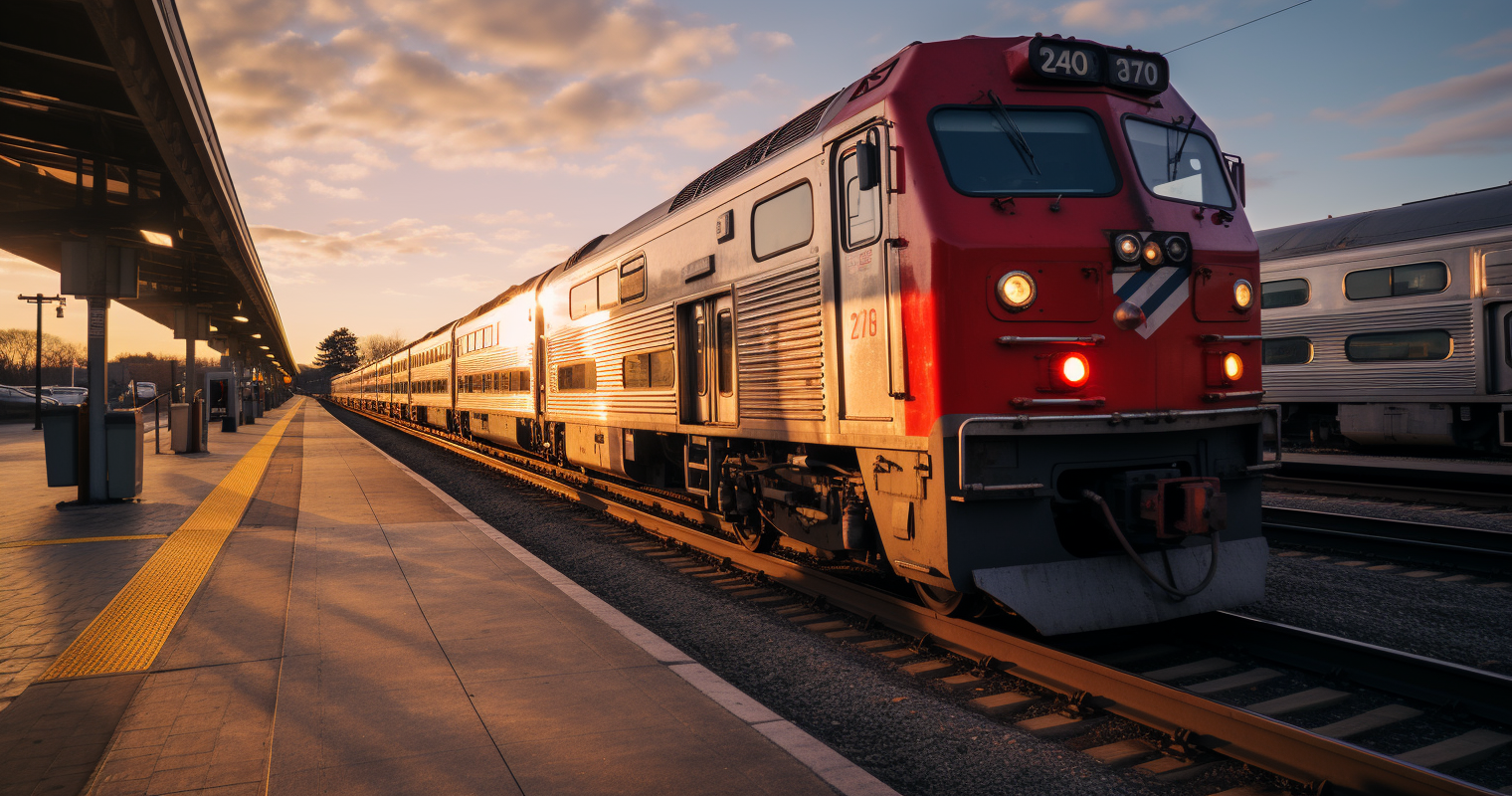
Cuba’s national rail network, run by Ferrocarriles de Cuba (FCC), stretches across the entire island and links every provincial capital — yet it functions more as a basic long-distance service than any kind of reliable, frequent transit system. Trains typically depart on major routes only once every four days, and even then they are prone to delays, cancellations, and fuel-related interruptions. A fleet of Chinese-built carriages introduced in 2019 brought improvements in comfort on key corridors, but the overall network still falls far short of the standards passengers would expect in Western Europe or East Asia.
| Item | Details |
|---|---|
| National rail operator | Ferrocarriles de Cuba (FCC) / Unión de Ferrocarriles de Cuba (UFC) |
| Total network length | Approx. 4,556 km (passenger and freight); over 8,000 km including all rail infrastructure |
| Main route | Havana to Santiago de Cuba (approx. 1,024 km); journey ~16 hours or more |
| Main route frequency (as of 2026) | Every 4 days on key routes due to fuel constraints |
| Ticket sales | In person only via Viajero agency offices or station ticket windows; no online booking for non-residents |
| Advance booking window | Up to 30 days for new Chinese-built trains; 5 days for older trains |
| Children’s fares (as of 2024–2026) | 0–4 years free; 5–11 years half fare; 12+ full fare |
| Official operator website | No official public website; UFC maintains a Facebook page and the Trenes app provides schedule data |
What is the overall standard of rail travel in Cuba?
Ferrocarriles de Cuba (FCC), also referred to as Ferrocarriles Nacionales de Cuba, is responsible for both passenger and freight rail services across the island. The network covers a total of 4,556.25 kilometres and runs predominantly on diesel power, with 1,055 kilometres of electrified track. Every provincial capital is served by the network, as are the six principal ports of Havana, Mariel, Matanzas, Cienfuegos, Nuevitas, and Santiago de Cuba.
The 1,024-kilometre Central Railway forms the backbone of the system, connecting Havana with Santiago de Cuba in the east. Other long-distance passenger routes extend from Havana to Pinar del Río, Cienfuegos, Sancti Spíritus, Bayamo-Manzanillo, and Guantánamo. Cuba holds a distinguished place in regional history: it was the first country in Latin America to construct a railway, when the Compañía de Caminos de Hierro de la Habana inaugurated its 27.5-kilometre line linking Havana to Bejucal on 19 November 1837.
A significant modernisation step came in July 2019 with the deployment of brand-new Chinese-built carriages, which brought air-conditioned seating, non-air-conditioned seating options, and a cafeteria car. Service frequency improved, new fares were introduced, and the advance booking window was extended from 5 to 30 days. Despite these advances, persistent economic pressures have tempered the gains. As one assessment put it, the Cuban railway faces “the dual challenge of modernisation and resilience” and remains “an irreplaceable pillar for the country,” serving as a fundamental mass transit option for countless citizens.
By 2024, Cuba’s acting general director of Railway Transport Administration reported that roughly 67% of tracks and 40% of infrastructure were in need of maintenance. When the new trains first entered service they ran every two or three days, but worsening fuel shortages reduced this to every four days — a pattern that persisted through 2026. When compared with high-frequency rail networks in Germany, Japan, or France, where intercity services can run hourly or better, Cuba’s system operates on an entirely different premise: a low-frequency, long-haul service rather than anything resembling a commuter network.
Routes and timetables are frequently disrupted by adverse weather, shortages of rolling stock, and fuel constraints. The mere existence of a scheduled service offers no guarantee that a train will actually run. Expats seeking reliable transport should consider the Viazul coach service or private shuttle transfers as more dependable alternatives, treating the train as a complementary option for occasional long-distance travel rather than a day-to-day commuting tool.
What classes of rail travel are available in Cuba, and what are the differences between them?
On the newer Chinese-built trains, passengers can choose between first-class air-conditioned seats, second-class non-air-conditioned seats, and access to a cafeteria car. On longer journeys such as the Havana to Santiago de Cuba route, a first-class ticket generally includes a complimentary drink and snack. The air conditioning in first class tends to be set to very low temperatures, so it is wise to pack a sweater or extra layers before boarding.
Class designations are not entirely uniform across the network — both “primera especial” and “primera” are in use, alongside “primera” (first) and “segunda” (second) on different services. On older rolling stock that remains in service on certain routes, only primera-class seating is offered, and the carriages themselves are considerably more dated. Depending on the service, seating in older cars may consist of reclining chairs or, in some cases, wooden bench seats.
There are no couchettes or sleeping compartments anywhere on Cuba’s rail network — all carriages are seat-only. This is a particularly notable gap given how long some journeys are: the Havana to Santiago route alone takes upwards of 16 hours. Passengers on overnight services must plan accordingly. This stands in marked contrast to Western European rail systems, where long-distance overnight routes frequently offer private sleeping compartments and couchette berths.
The broader fleet encompasses several service types: express trains with fewer intermediate stops, some with air conditioning, standard services, and slower local trains. The price difference between first-class air-conditioned and second-class non-air-conditioned travel is relatively modest in monetary terms, but the practical comfort gap — particularly on long overnight journeys through Cuba’s tropical climate — can be considerable.
Where can you find rail timetables and ticket prices in Cuba?
Ferrocarriles de Cuba publishes no official website, no publicly available timetable, and operates no online shop. This situation is in sharp contrast to virtually every national rail operator worldwide, which routinely publishes real-time timetables and online booking facilities. Tracking down schedule and fare information in Cuba therefore requires piecing together a combination of unofficial and semi-official sources.
The most practical tool for residents and visitors alike is the Trenes app. As of 2026, the app remains functional, providing near-real-time schedule updates — including when the next departure on each route is due — along with a directory of Viajero offices around the country. It displays indicative ticket prices and incorporates real-time train tracking. The app can be downloaded from outside Cuba without requiring a VPN, though it is not distributed through a certified app store, so users should exercise appropriate caution regarding security.
The other key semi-official digital resource is the Viajando app, Cuba’s state-run transport booking platform, which allows registered users to purchase tickets for interprovincial buses, trains, and catamarans within Cuban territory. However, Viajando requires a carné number — an identity document issued exclusively to Cuban residents and citizens — to complete any purchase. For expats who have achieved Cuban residency and received their carné, the Viajando app becomes an essential practical resource.
At each functioning train station, a notice board displays which services are departing from that station on any given day. The 2024 timetable, as documented by the widely respected rail travel resource Seat61.com, was considered still valid for 2026. The independently maintained Seat61.com Cuba page provides a useful timetable overview. The Unión de Ferrocarriles de Cuba also maintains a social media presence: their Facebook page (@FerrocarrilCuba) and X account (@ferrocarrilcuba) occasionally carry service updates. Current fares and schedules should always be confirmed directly at a Viajero office or station before travel.
How do you buy rail tickets in Cuba, and can you book in advance?
Online booking is not available — all ticket purchases must be made in person. The process can be challenging, and a passport should always be carried. Since July 2019, tickets have been handled by Viajero, a state-owned travel agency with offices throughout Cuba, including at or close to the majority of major rail stations.
The following is a step-by-step guide to purchasing a train ticket in Cuba:
- Verify the timetable beforehand. Consult the Trenes app or check the notice board at your nearest station to confirm whether your desired service is operating and on which dates. Trains do not run daily — you must establish the actual running days before making any plans.
- Find a Viajero office. Tickets can be bought either at the station you intend to depart from or at any Viajero office elsewhere in Cuba. Be aware that not every Viajero outlet sells train tickets — for instance, the Viajero office located at Havana’s main Viazul bus terminal does not handle rail bookings.
- Book as far ahead as possible. Tickets for the new Chinese-built trains go on sale 30 days in advance; for all other services, the window is 5 days. Places on popular routes sell out within minutes of becoming available, as the majority are snapped up through the Viajando app by Cuban residents.
- Carry valid identity documents. A passport is recommended when buying tickets. Cuban residents should additionally carry their carné de identidad.
- Ask to be placed on a waiting list if sold out. When no seats remain, it is possible to join a reserve list — though you will not receive confirmation of a place until one hour before departure.
- Cuban residents: use the Viajando app. Registered users with a Cuban carné number can purchase tickets through the Viajando app at any hour, every day of the year, without needing to visit an office in person.
- Collect your paper ticket. All tickets are issued on paper and must be collected in person. No digital ticketing or e-ticket system exists on the Cuban rail network.
It is worth keeping an eye on the Viajero Facebook page for announcements of additional services, which are occasionally introduced at short notice — usually around public holidays. These supplementary trains are typically sold on a standby basis, and passengers are generally asked to arrive at least two hours before the planned departure time.
What types of rail tickets are available in Cuba, and are there discount schemes?
Cuba’s rail ticketing system is straightforward, and bears no resemblance to the complex, multi-tier fare structures found in more developed rail markets. There are no rail passes, season tickets, flexi-fare products, or multi-journey cards of the kind routinely offered in Europe or East Asia. Each ticket is a single-journey, point-to-point product tied to a specific train and departure date.
Prices vary according to class and destination. As a rough guide, a journey from Havana to Santiago de Cuba costs approximately €3.64 in second class and €5.05 in first class. The Havana to Holguín route is priced at around €3.06 (second class) and €4.36 (first class). Havana to Bayamo/Manzanillo is approximately €3.80 (second class) or €4.67 (first class with air conditioning); Havana to Guantánamo runs to around €3.83 (second class) or €5.30 (first class with air conditioning). These euro equivalents are for guidance only — fares as of 2024–2026 are charged in Cuban pesos (CUP), and the peso exchange rate is subject to fluctuation. Always check current fares at a Viajero office or through the Trenes app before booking.
Fares rose substantially in 2024. The non-air-conditioned service to Santiago de Cuba, formerly priced at 95 pesos, increased to 670 pesos; the air-conditioned car on the same route, previously 132 pesos, rose to 820 pesos. As of 2026, fares are uniform for all passengers regardless of nationality. Prices are subject to change, so always confirm at a Viajero office before purchasing.
Regarding concessions: children aged 0 to 4 travel free of charge; children aged 5 to 11 pay half fare; anyone aged 12 or over pays the full adult fare. Cuba does not appear to operate formalised discount schemes for senior citizens, students, or disabled passengers comparable to the railcard systems available in countries such as Germany, Japan, or the United Kingdom. Cuban residents with a carné benefit from the practical advantage of priority access through the Viajando app, which is itself highly valuable given how rapidly tickets sell out. Anyone seeking concessionary arrangements should enquire directly with Viajero, as policies may be updated over time.
Cancellations and refunds are available without penalty up to 24 hours before departure. A 10% deduction applies if a ticket is cancelled within the 24 hours preceding departure, rising to 25% from one hour after departure through to 15 days after the travel date — beyond which no refund is possible.
How accessible is the rail network in Cuba for disabled passengers?
Cuba’s rail infrastructure was not constructed to meet contemporary accessibility standards, and provision for passengers with disabilities is limited across the network. Features that are now commonplace on modern rail networks in Western Europe — dedicated wheelchair spaces, step-free boarding, hearing loops, tactile paving — are largely absent from Cuban stations and rolling stock.
The network is sustained by dedicated railway workers operating under severe resource constraints. Accessibility improvements for passengers have not featured prominently in recent modernisation initiatives, which have concentrated primarily on acquiring new rolling stock and carrying out locomotive repairs. The general state of maintenance affects not only trains but station buildings and platforms too. Cienfuegos Railway Station, for example, underwent a thorough refurbishment in 2021, only to be closed again in March 2025 after the building was declared structurally unsafe.
Passengers with mobility impairments should plan their journeys with particular care. Station platforms in Cuba are generally at ground level, and boarding older carriages typically involves negotiating steps with no ramp or lift alternative. Cuba has no national passenger assistance booking service equivalent to those offered by Deutsche Bahn in Germany or the National Rail Passenger Assist programme in the United Kingdom. Anyone requiring support is strongly encouraged to contact the relevant Viajero office in advance to explain their requirements, and to allow ample time before departure. Viajero office locations are listed in the Trenes app and on Viajero’s Facebook page.
Passengers with visual or hearing impairments should also be aware that station announcements and wayfinding signage are inconsistent across the network, and onboard announcements may be minimal or entirely absent on older services. For anyone who requires physical assistance or help navigating the journey, travelling with a companion is strongly advisable when using Cuba’s rail network.
Are there metro or urban rail systems in Cuba’s cities?
No city in Cuba has a metro, underground railway, or modern light rail network. Havana, as the capital and most populous city, is no exception. Urban mobility across Havana and other Cuban cities depends primarily on state-operated and private buses, shared taxis known as almendrones (vintage American cars), and bicitaxis.
The closest analogue to an urban commuter rail service is the Hershey Railway — a historic electric line connecting Casablanca station in Havana with the city of Matanzas. The line was originally constructed by the Hershey Corporation (the confectionery company) and departs from Casablanca station, located across the harbour from central Havana. Passengers reach Casablanca by taking the ferry from the foot of Santa Clara Street in Old Havana. This is the only electric railway in Cuba; however, hurricane damage to the overhead power lines has resulted in repeated service interruptions and suspensions in recent years, though there are plans to restore the line progressively.
The most strategically important junctions on the national network are Havana and Santa Clara, from which a local service runs to Universidad and Vega Alta. Local and interprovincial trains continue to exist on paper, though fuel shortages have severely curtailed their operation. As of early 2026, local and interprovincial services were suspended, with only the national long-distance trains continuing to run.
There is no integrated transit card or unified app for urban travel in Havana, nothing comparable to the Oyster card in London or the Suica card in Japan. Each mode of city transport in Cuba operates as a separate system, with fares almost always paid in cash. Expats should expect to depend on buses, shared taxis, and walking for their everyday urban journeys, rather than any form of urban rail.
What should expats know about using the rail network day-to-day in Cuba?
The Cuban rail network runs from one end of the island to the other, connecting the country’s major cities and towns, and offers a genuinely distinctive travel experience — especially for those who want to journey alongside Cubans in the way that most locals do. For expats based in Cuba, the train is most suited to periodic long-distance travel between cities rather than regular commuting. The following are the most important practical considerations.
Havana stations and departures: Havana’s Estación Central was closed for renovation in June 2015, and although one platform has been back in use for arriving national trains since July 2022, all departures continue to operate from La Coubre station nearby. Always confirm the correct departure point before heading to the station.
Language: Station signage, announcements, and all ticketing processes are conducted in Spanish only, with no bilingual or multilingual provision. Expats who are not Spanish speakers should carry a translation app or travel with a Spanish-speaking companion when navigating stations, purchasing tickets, or handling any travel disruptions. Even a basic command of transport-related Spanish vocabulary will make a significant practical difference to daily rail use.
What to bring on board: Western standards of onboard provision should not be assumed — bring your own toilet paper and be mentally prepared for occasional breakdowns. On longer journeys, carry sufficient water, food, and personal entertainment, as the cafeteria car may not be consistently well-stocked. First-class air conditioning can be very cold, so packing an extra layer is sensible.
Luggage: Additional charges apply to excess baggage. Any luggage exceeding the permitted weight allowance must be declared and paid for at the station, agency, or terminal before boarding — not on the train itself. Luggage above 30 kg attracts a charge of 30 Cuban pesos per additional kilogram (as of 2024). Always check the current weight limits with Viajero at the time of booking, as policies are subject to change.
Timetable reliability: The main Havana–Santiago route covers 636 miles and takes a minimum of 16 hours — but regardless of what the timetable shows, passengers should build in extra time for delays. Havana to Santiago de Cuba trains are generally prioritised over other services on the network. On other routes, delays are considerably more frequent.
Social norms and etiquette: Rail travel in Cuba is a social affair. Passengers commonly strike up conversations with strangers, share food, and tend to be warm and welcoming towards foreign visitors. Showing respect, making an effort to communicate in Spanish, and travelling light will all enhance the journey. Keep valuables secured on your person and remain alert to your belongings at busy stations.
Frequently Asked Questions
Does Ferrocarriles de Cuba have an official website where I can check timetables?
Ferrocarriles de Cuba operates no official public website, publishes no official timetable, and has no online shop. For schedule information, the Trenes app is the most useful resource, and notice boards at stations also display current running information. The Unión de Ferrocarriles de Cuba maintains a Facebook page and X (Twitter) account through which service updates are occasionally shared. Current schedules should always be confirmed at a Viajero office or directly at the station.
Can I buy Cuban train tickets online before I arrive?
No online booking option exists for Cuban train tickets. Tickets are handled by the Viajero travel agency, which has offices throughout Cuba and at or near most major rail stations. The Viajando app — Cuba’s digital ticketing platform — requires a Cuban carné number and can only be used by Cuban residents and citizens. Visitors and newly arrived expats without a carné must purchase tickets in person at a Viajero office or station window.
How far in advance should I book a train ticket in Cuba?
Tickets for the new Chinese-built trains become available 30 days before departure; tickets for all other services go on sale 5 days ahead. Demand is high and tickets routinely sell out within minutes of release, so booking at the earliest possible opportunity — particularly the 30-day mark for popular routes such as Havana–Santiago de Cuba — is strongly recommended.
Are there sleeper trains or overnight trains in Cuba?
Cuba has no couchettes or sleeping cars — all carriages offer seated accommodation only. This applies even to the longest overnight journeys, such as Havana to Santiago de Cuba, which takes approximately 16 hours or more. First-class air-conditioned seating offers the greatest comfort for overnight travel under these conditions.
Do Cuban trains run every day?
Trains do not operate on a daily basis, and schedules are subject to variability. The listing of a route in the timetable does not guarantee that a service will actually run, or that it will depart on time. As of 2026, the principal long-distance routes were running approximately once every four days due to fuel constraints. The Trenes app and station notice boards are the best sources for current running dates.
Is the Viajando app available to expats living in Cuba?
The Viajando app requires a Cuban carné number and is designed for Cuban residents and citizens. If you have obtained official Cuban residency and been issued a carné, you should be eligible to register and use the app to purchase tickets. For guidance on registration, contact your local Viajero office or SITRANS, as the app’s requirements have been revised periodically.
Is there a metro or tram system in Havana?
Havana has no metro, underground rail, or modern tram system. Daily city travel relies on buses, shared taxis known as almendrones, and bicitaxis. The historic Hershey Railway — an electric line running between Havana’s Casablanca station and Matanzas — is the nearest equivalent to an urban rail service, though hurricane damage to its overhead infrastructure has caused significant disruptions in recent years, with a phased reopening under consideration.
What documents do I need to buy a train ticket in Cuba?
All ticket purchases must be made in person, and carrying your passport is recommended. Cuban residents should also bring their carné de identidad. Having at least one form of official identification readily available is standard practice across Cuba’s transport network, so always travel with valid ID when using the rail system.