

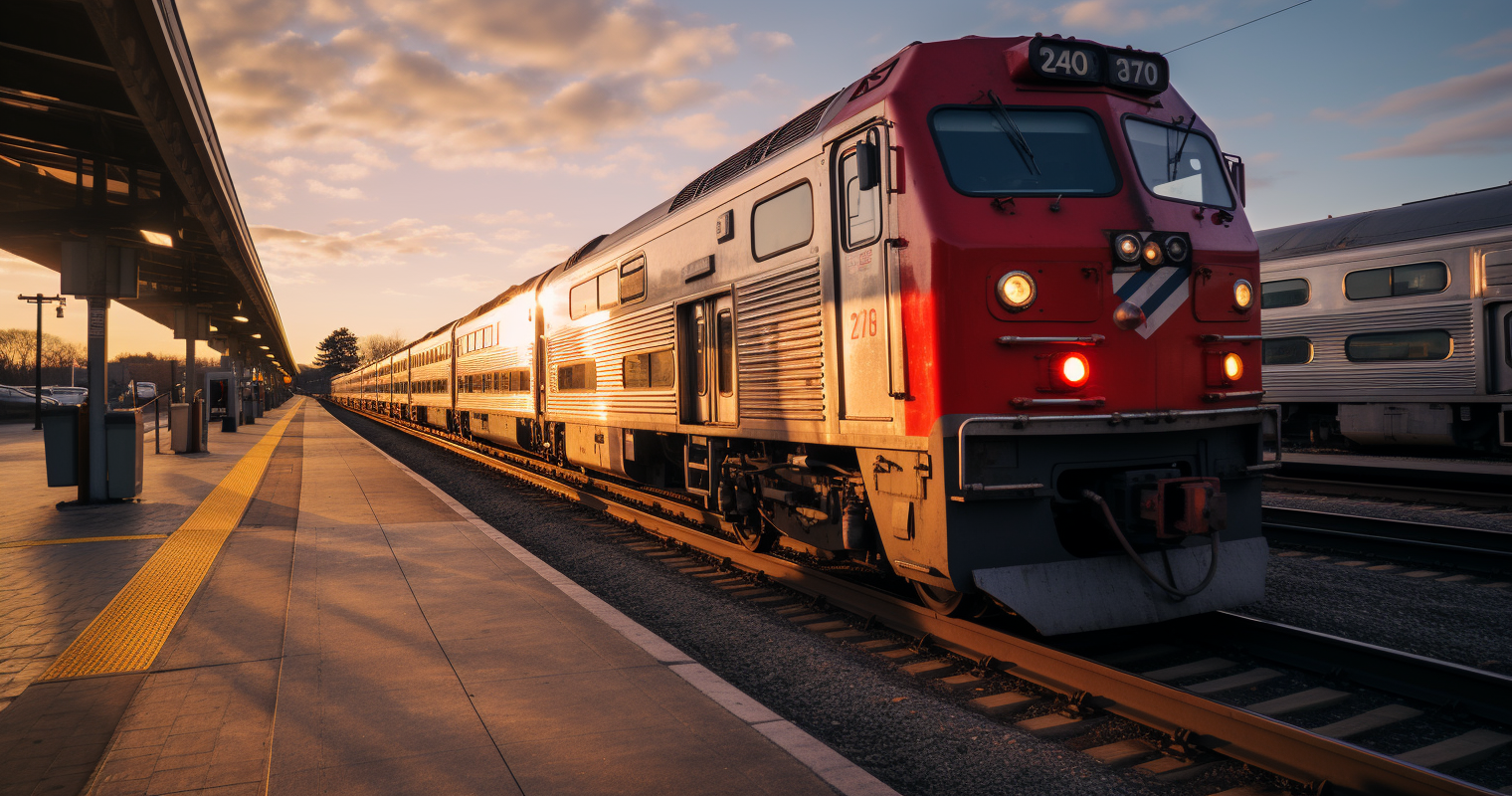
Croatia’s national rail operator, HŽ Putnički prijevoz (HŽPP), runs services along the principal corridors linking Zagreb, Split, Rijeka, and Osijek. The network is considerably smaller and slower than those found across much of Western Europe, making it better suited to long-distance intercity travel than to everyday commuting. That said, substantial EU-backed investment is pushing forward the modernisation of both infrastructure and rolling stock.
| Item | Details |
|---|---|
| National rail operator | HŽ Putnički prijevoz (HŽPP) — hzpp.hr |
| Network size | 2,617 km of railway lines, 550 stations and stops (as of 2025) |
| Online ticket discount | 10% cheaper than ticket office prices when booked online (as of 2025) |
| On-train ticket surcharge | 10% more expensive than ticket office prices when bought on board (as of 2025) |
| Free student rail travel | Full-time university students travel free with an HŽPP smart card (as of 2025) |
| Disability discount | Persons with disabilities entitled to four return trips per year with 75% discount; free travel with National/European Disability Card from January 2026 |
What is the overall standard of rail travel in Croatia?
HŽ Infrastruktura oversees a railway network spanning 2,617 km, encompassing 550 stations and stops, 1,429 level crossings, 113 tunnels, and 552 bridges. Measured against the dense, high-speed networks of Germany, Switzerland, or Japan, this is a comparatively modest system — one that reflects Croatia’s geography and development rather than any fundamental shortcoming in ambition. A better point of reference would be other smaller Central and Eastern European nations: functional across the main corridors, but with notable gaps in coverage elsewhere.
Train services in Croatia are dependable on the key routes between major centres such as Zagreb, Split, and Rijeka, though the network is less comprehensive than in many other European countries. Importantly, rail services terminate at Split — there is no onward rail connection to Dubrovnik or other southern coastal destinations. Along the Adriatic coast and on the islands, buses and ferries take over where trains cannot reach.
Croatia has no high-speed rail. Services operate on conventional lines and are comfortable, if not as swift as the express trains found in France, Spain, or Italy. However, the outlook is changing: around 70 new trains are expected to enter service in the near term, and the Minister of Infrastructure has confirmed that 130 modern trains will be operating across the network by 2032.
HŽ Infrastruktura has committed to a €6 billion investment in railway infrastructure over the coming decade. The 2021–2025 investment plan alone totals €1.9 billion, with 78.7 per cent of that figure drawn from European co-financing. For expats considering rail as their primary means of transport, it works well for journeys between major cities, but falls short as a routine commuting option beyond Zagreb and a small number of other key corridors.
What classes of rail travel are available in Croatia, and what are the differences between them?
Many Croatian trains offer only standard (2nd) class seating. First class is available on the main routes between Zagreb and Split and between Zagreb and Zadar, where it provides somewhat wider, more comfortable seats and generally quieter surroundings. The price gap between classes is fairly modest on domestic routes, and the practical difference is less pronounced than you might experience on, say, a French TGV or a Spanish AVE.
InterCity trains offer the fastest connections between Croatia’s main cities, stopping at fewer intermediate points and cutting overall journey times. Regional trains serve smaller towns and communities, making regular stops and catering primarily to shorter-distance travel. Both 1st and 2nd class are typically available on InterCity and InterCity Nagibni (tilting train) services, while slower regional trains (Putnički vlak) generally operate with a single standard class carriage.
Night trains offer passengers the option of travelling overnight and arriving at their destination rested, with sleeper and couchette berths providing an additional level of comfort on certain routes — particularly on international services. Because class availability differs by route and train type, it is always worth checking when booking. The HŽPP website at hzpp.hr shows class options for each specific journey during the booking process.
Where can you find rail timetables and ticket prices in Croatia?
The definitive source for timetable and fare information is the HŽPP website at hzpp.hr, which is published in both Croatian and English. HŽPP produces separate timetable documents for domestic and international services, issuing updates throughout the year as required. As of early 2025, the current timetable versions are accessible from the main HŽPP page via the menu, under “Timetable” or “Vozni Red”.
For information about line closures and service disruptions, HŽ Infrastruktura’s website at eng.hzinfra.hr lists affected routes. Bear in mind that the Croatian-language version of that site tends to be updated more promptly than the English version — if you have even a basic grasp of Croatian, the Croatian pages will give you the most timely picture.
Third-party platforms such as Traveling.com also publish Croatian train timetables and operate as an authorised agent for domestic ticket sales. For planning international journeys, the Deutsche Bahn international booking tool and the Interrail/Eurail journey planner can both display Croatian rail times and cross-border connections. Always confirm current fares directly through official channels, as prices and schedules may change without notice.
How do you buy rail tickets in Croatia, and can you book in advance?
Tickets are available through several channels: the HŽPP website, staffed ticket offices at stations, self-service vending machines, the Traveling.com platform, and directly on board the train. The channel you choose affects what you pay — online purchases are 10% cheaper than the ticket office price, while buying a ticket on the train costs 10% more than the ticket office rate. For anyone travelling frequently, the online route offers the best value.
E-tickets for domestic journeys can be bought through the HŽPP website or via the HŽPP mobile app, available on both Google Play and the App Store. Payment is accepted by Visa, MasterCard, Diners, or Maestro card. Once purchased, you can either print your e-ticket or display it on your smartphone for the conductor — there is no need to collect or exchange a separate physical ticket.
Self-service vending machines for domestic tickets are located at seven stations: Zagreb Main Station, Sesvete, Osijek, Slavonski Brod, Vinkovci, Varaždin, and Split. Advance booking is possible and sensible for busy intercity routes, particularly during summer when tourist numbers are high and seats can fill quickly. Seat reservations are compulsory on certain InterCity services — always check this when completing your booking.
A further payment option is available through a partnership between HŽPP, PBZ Card, and Nexi Croatia: contactless payment via a SoftPOS application on the conductor’s mobile device, accepting Visa, Mastercard, Maestro, Apple Pay, and Google Pay. For general ticketing queries, HŽPP customer support contact details are listed at hzpp.hr.
How to buy a train ticket in Croatia: step by step
- Visit hzpp.hr or open the HŽPP mobile app and enter your departure station, destination, and date of travel.
- Select your preferred train service from the results, noting train type and journey time.
- Choose your class of travel (1st or 2nd where available) and the number of passengers.
- Apply any applicable discount (student smart card, youth card, family discount, etc.).
- Pay using an accepted debit or credit card. You will receive an e-ticket by email or in-app.
- Present your e-ticket (on your phone or printed) to the conductor when asked. No need to exchange or collect a physical ticket.
- Alternatively, visit a staffed ticket office at a major station, or use a self-service vending machine at one of the seven stations equipped with them.
What types of rail tickets are available in Croatia, and are there discount schemes?
HŽPP sells single tickets, return tickets, and group travel tickets. Annual passes and connecting tickets are also available for regular travellers. On refunds: unused tickets cannot be exchanged for a different service, but a refund can be requested. For tickets bought at a ticket office, machine, or on board, the request must be submitted no later than the first day of the ticket’s stated validity. Always check the HŽPP website for the most current fares, as these are subject to revision.
Several discount schemes are available to residents:
- Full-time university students: Full-time students are entitled to free travel on the basis of the HŽPP smart card, covering an unlimited number of train trips from their place of residence to their place of study and occasional trips in 2nd class on regular trains within Croatia. The smart card costs €2.65 (as of 2025) — confirm the current fee at hzpp.hr.
- Youth discount: Based on EYCA and HI.EURO cards, secondary school students, full-time university students, young Croatian citizens, and young people from abroad are entitled to a 25% discount on an unlimited number of one-way and return trips in 1st or 2nd class on routes longer than 25 km.
- Persons with disabilities: Persons with disabilities are entitled to four return trips per year with a 75% discount, and their companion travels free of charge. Additionally, from 1 January 2026, free public railway transport within Croatia will also be available to persons with disabilities who hold a National/European Disability Card marked as eligible for train travel.
- Family travel: When travelling in a family group (minimum three, maximum ten family members, of which at least one passenger must be a child aged 6–15), HŽPP offers a 40% or 50% discount on return journeys in 1st or 2nd class on all types of regular trains in domestic traffic. (As of 2025 — verify current terms at hzpp.hr.)
- School and student groups: HŽPP offers 75% and 85% discounts for organised group travel by preschool, elementary, and high school children and regular students organised by an educational facility, provided there are five or more passengers in the group.
- Event travel: If you travel by train to a particular event, you are usually entitled to a 40% discount on a return train ticket from any station in Croatia to the event location; the return ticket must be stamped by the event organiser.
All discount thresholds and eligibility criteria should be verified through the official HŽPP website; the figures above are confirmed as of 2025 and remain subject to change.
How accessible is the rail network in Croatia for disabled passengers?
Passengers who require support when boarding, disembarking, or travelling can access a free assistance service provided by HŽPP and HŽ Infrastruktura. You should give at least 24 hours’ advance notice — either at a ticket office, by telephone on 060 333 444 (available daily from 5:00 am to 11:00 pm), or by calling +385 1 4724 026. If prior notice is not given in time, staff will still make every reasonable effort to assist you at stations and during your journey.
Accessibility levels vary considerably across the network. Major stations such as Zagreb Main Station are equipped with lifts, ramps, and dedicated assistance points. However, many smaller and rural stations date from earlier eras and offer very limited facilities for wheelchair users — a stark contrast to the fully step-free networks found in countries such as the Netherlands or Austria.
The rolling stock situation is improving as part of the ongoing investment programme. Newly introduced trains feature modern low-floor designs. One example is the contemporary low-floor train now operating the Zagreb–Ljubljana–Pula international service, which provides wheelchair-accessible spaces, room for bicycles and pushchairs, onboard Wi-Fi, and a modern passenger information system.
From 1 January 2026, free public railway transport within Croatia becomes available to persons with disabilities holding a National/European Disability Card endorsed for train travel. For full accessibility details and to arrange assistance in advance, visit the dedicated section of hzpp.hr.
Are there metro or urban rail systems in Croatia’s cities?
Croatia has no metro or underground rail network. Zagreb is the only city with a substantial urban rapid transit system, which takes the form of an extensive tram network rather than a metro. The Zagreb Electric Tram authority (ZET) manages public transport across Zagreb and parts of the surrounding county, running a comprehensive bus system, 19 tram lines (15 daytime and 4 nighttime), a gondola lift, and a funicular.
Zagreb’s urban transit is built around 19 tram lines and 120 bus routes, both under ZET management, complemented by a suburban rail system operated by Croatian Railways. The tram network forms the backbone of everyday movement within the city centre and is generally reliable and frequent there. However, only two line extensions have been added in the 21st century, meaning the tram infrastructure has not fully kept pace with the city’s outward growth.
Zagreb’s tram fleet is undergoing active renewal. Local manufacturer Končar KEV has delivered the first of 40 NT2400 trams ordered by ZET — an initial contract placed in June 2023, financed through the EU-backed National Recovery and Resilience Plan. The new three-section vehicles measure 20.8 m in length, feature four double-leaf doors, carry up to 115 passengers, and include a wheelchair ramp, USB charging ports, and batteries capable of powering the tram over short distances without overhead supply.
For tickets, tram and bus fares can be paid at standard or specialist ZET kiosks or purchased from the driver on board, though the latter accepts cash only. From 2024, passengers can load credit into the MojZET app and scan a QR code beside the doors to pay for their journey. ZET provides free travel to all residents aged over 65 and, from 2025, to those aged under 18. Students and people with disabilities qualify for discounted passes. Current fares, timetables, and route maps are available at zet.hr.
In Split, Rijeka, Osijek, and other Croatian cities, local bus networks provide the primary means of urban transport, with no trams or urban rail in place. Proposals for overground rapid rail transit in Zagreb — which could run on existing tracks shared with intercity and suburban services — have been put forward as a more affordable alternative to a full metro. Development of an integrated transport plan for the broader Zagreb area is under way through the IPZP public company, but a formal metro system remains a prospect for the longer term rather than the immediate future.
What should expats know about using the rail network day-to-day in Croatia?
The principal hub for rail travel is Zagreb Glavni kolodvor (Zagreb Central Station), a grand 19th-century terminus in the heart of the city. Key regional departure points include Split, Osijek, Rijeka, and Varaždin. Larger stations are well equipped, with staffed ticket counters, waiting areas, left-luggage facilities, and cafés, whereas smaller stops may amount to little more than a platform and a posted timetable.
At bigger stations and on intercity services, signs are in Croatian, but destination names, platform numbers, and train identifiers are generally straightforward to follow even without any knowledge of the language. On-train announcements are typically Croatian only, though newer rolling stock increasingly incorporates multilingual digital information screens. Picking up a handful of useful Croatian railway terms — dolazak (arrival), odlazak (departure), peron (platform), vlak (train) — will make navigating stations considerably easier.
If your luggage exceeds 30 kg or cannot be stowed in the overhead rack or beneath your seat, a fee of €3.58 per item applies regardless of journey distance. Ordinary carry-on baggage and hand luggage travel free of charge. Bicycles can be taken on certain services; the applicable conditions and the full list of trains permitting bicycle carriage are published on the HŽPP website.
Seat reservations are compulsory on some InterCity services at peak times, especially in summer. Timetables and routes are subject to change — sometimes seasonally — so always confirm the latest information before you travel. On the busiest summer routes in July and August, trains can become extremely crowded; on shorter segments it occasionally happens that demand outpaces available seating. For intercity journeys during the summer months, booking well ahead is strongly recommended.
The atmosphere on Croatian trains is generally relaxed and informal. Designated quiet carriages are not a standard feature, so some background noise is to be expected on busier services. A conductor will check tickets at some point during your journey — keep your ticket, physical or digital, readily accessible. Boarding without a ticket at a station where a ticket office or machine was available will result in the on-train surcharge being applied.
On an average day, approximately 668 passenger trains operate across the Croatian network. For practical assistance — lost property, refund requests, or enquiries about special services — HŽPP’s customer support team can be contacted via hzpp.hr. Infrastructure disruptions and line closures are reported at eng.hzinfra.hr.
Frequently asked questions
Does Croatia have a national rail pass?
Croatia is covered by the Interrail scheme (for residents of Europe) and the Eurail scheme (for non-European visitors), both of which allow unlimited travel on HŽPP services within the pass’s period of validity. For those intending to travel extensively — either within Croatia or across multiple countries — these passes can represent good value. Current pricing and conditions are published on the official Interrail and Eurail websites, as they are reviewed each year.
Can I travel from Zagreb to Dubrovnik by train?
Rail services in Croatia terminate at Split, and there is no onward train connection to Dubrovnik or other points further south along the coast. Reaching Dubrovnik requires a bus or ferry from Split or another town in Dalmatia — this is one of the most significant limitations of the Croatian rail network for coastal travellers.
Is the Zagreb to Split train journey practical for regular travel?
The Zagreb–Split route passes through some of Croatia’s most dramatic mountain and karst landscapes and ranks among the most scenic intercity rail journeys in the country. On the fastest services, the trip takes roughly five to six hours. While it makes for a rewarding long-distance journey, it is not a realistic option for daily commuting. Timetables and availability are listed at hzpp.hr — advance booking is advisable, particularly in summer.
Are there international train connections from Croatia?
Croatia is connected by rail to a number of neighbouring countries. Well-used international routes include Zagreb to Budapest (Hungary), Zagreb to Vienna (Austria), Rijeka to Ljubljana (Slovenia), and Zagreb to Sarajevo (Bosnia and Herzegovina). International fares are calculated separately from domestic prices and tickets must be purchased either at international ticket offices or online. Current international timetables and fares are available via the HŽPP website.
How do students access free or discounted rail travel in Croatia?
Full-time university students qualify for free travel under the HŽPP smart card scheme, which covers an unlimited number of journeys between their home and place of study, plus occasional trips in 2nd class on regular domestic trains. The smart card must be obtained directly from HŽPP; the application process and full eligibility criteria are detailed at hzpp.hr.
Is there a commuter rail service in Zagreb?
Zagreb’s urban public transport comprises 19 tram lines and 120 bus routes managed by ZET, alongside a suburban rail network operated by Croatian Railways. HŽPP runs commuter train services from Zagreb Central Station to nearby towns including Sesvete and Zaprešić, as well as along corridors towards Koprivnica and Sisak — a useful option for residents living within Zagreb’s wider catchment area.
Can I bring a bicycle on Croatian trains?
Bicycles are permitted on board certain services, usually subject to a small additional charge. Not every train accepts bicycles, so it is important to verify this before travel — particularly on intercity routes during the busy summer season when space is at a premium. The full list of eligible services and the applicable conditions are published on the HŽPP website.
What app should I use for public transport in Zagreb?
For ZET trams and buses in Zagreb, the official MojZET app lets you load a digital balance and pay for journeys by scanning QR codes at the vehicle doors — a feature introduced from 2024. For national rail travel, the HŽPP mobile app (downloadable from Google Play and the App Store) enables route searches, e-ticket purchases, and booking management. For Zagreb urban transit routes, fares, and schedules, visit zet.hr.