

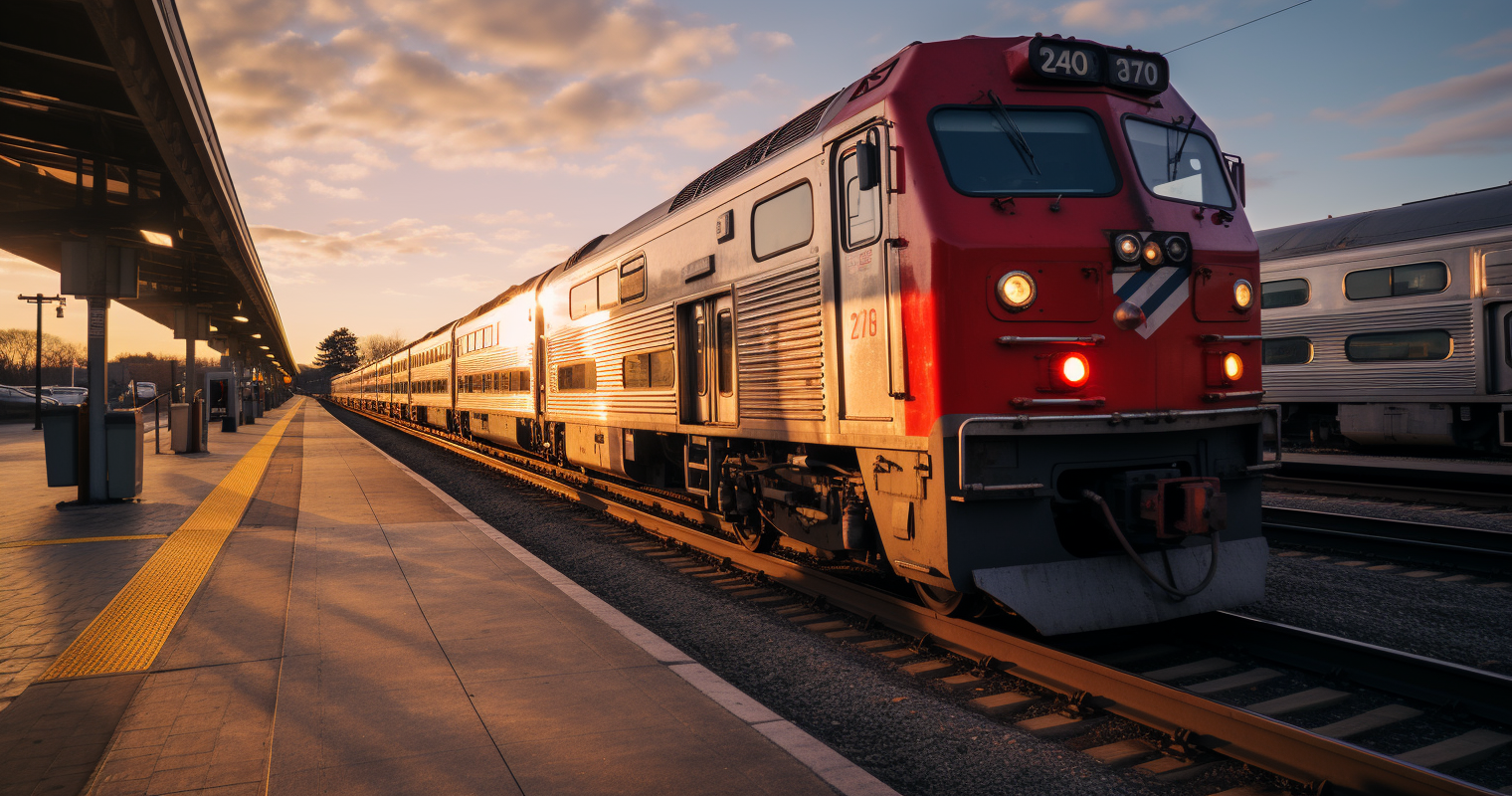
Costa Rica’s railway system is a compact, urban commuter network administered by the state body INCOFER, connecting communities across the Greater Metropolitan Area of San José. It is entirely unsuitable for cross-country journeys, yet it remains a genuinely practical and extremely low-cost option for those commuting daily between San José, Cartago, Heredia, and Alajuela. A substantial modernisation and electrification programme has now secured funding and is actively progressing.
| Item | Details |
|---|---|
| Rail operator | INCOFER (Instituto Costarricense de Ferrocarriles) — official site: incofer.go.cr |
| Active passenger routes (as of 2025) | 3 commuter lines: San José–Cartago, San José–Heredia–Alajuela, Belén–Pavas–Curridabat |
| Typical fare (as of 2025) | Approximately USD $1–2 per journey; verify current fares at incofer.go.cr |
| Longest route | San José (Estación Atlántico) to Cartago/Paraíso — approx. 23 km, 10 stops |
| Planned electric train project | 51 km double-track electrified network; USD $250 million EIB loan approved (2025) |
| No long-distance or international passenger trains | Rail travel is currently commuter-only within the Greater Metropolitan Area |
What is the overall standard of rail travel in Costa Rica?
Rail services in Costa Rica fall under the management of INCOFER (Instituto Costarricense de Ferrocarriles), an autonomous government institution. INCOFER holds ownership of the country’s railway infrastructure and runs virtually all freight and passenger operations, which are concentrated on commuter trains threading through the densely populated Central Valley. Those arriving from countries with comprehensive national rail networks will quickly notice just how different — and more modest — the scope of Costa Rica’s system is.
For visitors or newcomers, the railway may feel quite restricted when set against other modes of transport available in the country. In contrast to sprawling national networks such as those in Germany or Japan — which link cities and regions across an entire country — Costa Rica’s railways are confined exclusively to the urban commuter belt surrounding San José. Long-distance passenger trains do not exist, and there are no cross-border rail connections of any kind.
The network does not extend to either the Pacific or Caribbean coastlines for passenger traffic, which means that reaching places like Liberia, Limón, or the Nicoya Peninsula requires travelling by road or taking a domestic flight. This is a notable contrast to what residents from countries with well-developed intercity rail services will be accustomed to.
The passenger rolling stock is generally maintained to a reasonable standard, though the service can suffer from infrequency and unreliability — delays and cancellations are not unusual. Sections of track requiring attention and the fact that trains share road space in urban areas both constrain speeds and undermine punctuality. Because lines run at street level, trains frequently encounter busy road junctions, keeping average speeds to around 20 km/h (12 mph).
The fleet is made up primarily of Apolo 2400 diesel multiple units sourced from Spain in 2009 — formerly operated by FEVE — alongside air-conditioned metro-style diesel multiple units produced in China and delivered in 2019. The more recently acquired Chinese-built vehicles offer a noticeably fresher and more comfortable travelling environment.
Looking further ahead, Costa Rica’s rail network is positioned for a meaningful transformation. INCOFER will lead the initiative as part of a broader strategic collaboration under the EU’s Global Gateway programme. The project will deliver two double-track lines stretching over 51 kilometres in total, linking Paraíso to San José and San José to central Alajuela, accompanied by 28 new electric train units, 30 stations, two new terminal buildings, and nine crossings — enabling services every ten minutes, seven days a week.
When operational, the electric train system is expected to benefit more than 100,000 commuters each day, giving them meaningfully better access to employment and education while cutting journey times substantially. This represents a genuinely exciting step forward, though the precise delivery timeline should be tracked through official INCOFER announcements.
What classes of rail travel are available in Costa Rica, and what are the differences between them?
Two classes of travel are offered on Costa Rica’s rail network: First Class and Tourist Class. First Class provides a more comfortable ride, with air conditioning, cushioned seating, and generous windows that allow passengers to take in the surrounding landscape. Tourist Class costs less but provides a more basic seat and no climate control.
In day-to-day practice, the distinction between these two classes on the INCOFER commuter network is considerably less dramatic than what passengers might encounter on intercity trains in Europe or Asia. All three services running on the Interurbano line share the same rolling stock interchangeably, and there are no express or limited-stop workings — every service calls at all stations. This means that journey times are identical regardless of class; the meaningful differences come down to seat comfort and whether air conditioning is available.
First Class delivers a more refined experience, while Tourist Class is the budget-conscious choice. Given the relatively short distances involved in most commutes, a large number of regular travellers simply choose Tourist Class without hesitation. Since both classes remain exceptionally affordable by global standards, the additional cost of First Class is modest in absolute terms. For precise current pricing on both options, always refer directly to INCOFER’s official website, as fares are periodically revised.
There are no business-class cabins, sleeper compartments, or dining facilities of any kind — this is, after all, a commuter railway rather than a long-distance service. Reservations are not compulsory for most journeys, though it is worth securing a seat on First Class services in advance. This is especially true during the morning and evening peaks, when trains fill up rapidly.
Where can you find rail timetables and ticket prices in Costa Rica?
INCOFER publishes schedule and fare information through its official website at incofer.go.cr. This should always be your primary reference point for accurate and current journey planning data. Bear in mind that the INCOFER website is presented in Spanish, so those less confident in the language may find a browser translation tool helpful.
It is worth checking the timetable ahead of any planned journey, since services can be infrequent and subject to short-notice changes. Schedules are built around peak commuter periods — typically early morning and late afternoon — and some routes offer considerably reduced frequency at midday or across the weekend. This stands in marked contrast to the high-frequency, all-day operations of metro systems in major cities elsewhere in the world.
For live service information and real-time tracking, the Moovit app has become the most widely trusted third-party tool among commuters. INCOFER’s timetables, departure and arrival times are integrated into Moovit and updated in real time. The app runs on both iOS and Android and is an invaluable companion for anyone relying on the trains daily, offering live service status and alerts across all INCOFER lines.
INCOFER’s official social media channels, website, and WhatsApp are also recommended sources for keeping on top of the latest schedule news. The organisation maintains an active social media presence and regularly shares updates on disruptions, timetable adjustments, and special services — particularly valuable during periods of network interruption, as seen following the 2024 landslide that forced a temporary suspension of services between Tres Ríos and Cartago.
The Rome2Rio platform (rome2rio.com) and Rail.cc (rail.cc) both list Costa Rica train connections and can support initial journey research, though times and prices should always be confirmed directly with INCOFER before you travel.
How do you buy rail tickets in Costa Rica, and can you book in advance?
Purchasing an INCOFER train ticket is a fairly simple process, though it is more limited than the digital-first ticketing platforms found on major rail networks across Europe and Asia. Knowing your options before you set out makes the whole experience considerably smoother.
- Purchase at a station ticket counter. Tickets can be bought directly at the station. The central hub for all INCOFER commuter services is Estación Atlántico in San José. Ticket windows are open during operating hours and accept payment in Costa Rican colones.
- Buy your ticket on the train. If you haven’t bought a ticket at the station, you can purchase one once aboard. This flexibility suits spontaneous journeys, though on crowded peak-hour trains it is more convenient to have your ticket sorted beforehand.
- Check times and fares online before you travel. Online ticket purchasing is not available, but full schedule and pricing information can be reviewed at incofer.go.cr. This means you can plan your journey thoroughly before leaving home, even if the actual ticket must be obtained in person.
- Track trains in real time with the Moovit app. Moovit functions as a live INCOFER tracker, displaying current train positions, estimated arrival times, and service status across all lines on an interactive map. Downloading it before you start commuting regularly is strongly advisable.
- Stay informed through INCOFER’s social media. INCOFER’s official pages on Facebook (facebook.com/IncoferCRC) and X/Twitter (@INCOFERCR) carry real-time updates on service changes, closures, and special timetables — especially useful during the rainy season when disruptions are more frequent.
Buying tickets before you travel is generally advisable, as availability can become tight during busy periods. While same-day purchase is usually possible, arriving at the station a little ahead of your intended departure gives you the best chance of travelling in your preferred class. There are currently no ticket machines or digital purchasing apps — all transactions are conducted either at the counter or on board the train.
What types of rail tickets are available in Costa Rica, and are there discount schemes?
INCOFER provides several ticket formats, covering single journeys, return trips, and multi-ride options. This range is adequate for typical commuting needs, though it is far simpler than the layered fare structures of national rail operators in countries like France or the United Kingdom, where advance-purchase, off-peak, and open-return fares each carry starkly different price tags.
Multi-ride tickets offer a saving for those travelling regularly. If your daily routine takes you between the same two stations, a multi-ride ticket will work out cheaper than buying individual fares each time. Up-to-date pricing on multi-ride options should be confirmed directly with INCOFER, as figures are subject to revision. There are no Costa Rica rail passes of the kind marketed in countries with broader national networks.
Across the board, INCOFER fares are extremely reasonable. A typical journey costs approximately $1–2 (as of 2025), with the San José to Cartago trip taking roughly 52 minutes. Always verify current fares at incofer.go.cr, as these can be adjusted from time to time.
On the concessions side, children under 12 travel free of charge when accompanied by an adult, making the train an attractive option for families with young children. Costa Rican legislation also provides for various public transport concession frameworks covering senior citizens, students, and low-income residents — contact INCOFER directly for the current eligibility requirements and applicable discount rates, as these schemes are administered at an institutional level and may require supporting documentation such as a resident ID card (DIMEX) or a valid student card.
There are currently no weekly or monthly season passes comparable to those sold on commuter networks in cities like Madrid or London, though the very low base fares ensure that even daily travel remains inexpensive. For the latest position on any pass or discount products, check the official INCOFER website or visit a station in person, as the range of offerings continues to evolve alongside the network’s wider modernisation programme.
How accessible is the rail network in Costa Rica for disabled passengers?
When it comes to accessibility, it is important to set realistic expectations about what the current INCOFER network can offer. In honest terms, the system presents significant challenges for passengers with disabilities. There are no ramps or lifts to reach the train platforms, and the carriages themselves are not equipped for wheelchair users. This falls well short of the comprehensive accessible design standards that passengers may be familiar with from modern rail networks in Japan, the Netherlands, or Canada — where step-free boarding, tactile paving, and dedicated wheelchair spaces are taken as given.
The fact that trains operate at street level through San José’s urban centre adds an additional layer of difficulty for those with mobility limitations. Tracks and some station areas are laid directly within narrow streets in several locations, which can make accessing boarding points unpredictable and potentially hazardous for wheelchair users, those relying on walking aids, or passengers travelling with pushchairs.
The fleet includes Apolo 2400 diesel multiple units brought over from Spain in 2009, alongside air-conditioned diesel multiple units manufactured in China and received in 2019. While the newer Chinese-built vehicles offer a more modern onboard environment, inconsistencies in platform heights across the network mean that step-free boarding continues to be a general challenge.
The forthcoming electrification project offers genuine grounds for optimism regarding future accessibility. The new electric train infrastructure will encompass 30 stations, two new terminal buildings, and nine crossings, all designed to support reliable, frequent service. The project’s stated commitment to inclusive design — with particular attention to the needs of women, who represent the majority of public transport users and have comparatively limited access to private vehicles — suggests that accessibility will feature in the planning of the new infrastructure. However, disabled passengers should consult official INCOFER communications for specific commitments around step-free access and passenger assistance services.
Anyone requiring dedicated assistance is strongly encouraged to contact INCOFER before travelling, either via incofer.go.cr or through the organisation’s official social media channels. Staff at Estación Atlántico in San José may be able to provide hands-on help, but this cannot be guaranteed without prior arrangement.
Are there metro or urban rail systems in Costa Rica’s cities?
Costa Rica has no underground railway or metro system. Urban transport in the country relies predominantly on buses, which are widely available and affordable. Unlike neighbouring Panama City — which operates a functioning modern metro — San José has no subway, light rail, or tram network in the traditional sense.
What the country does offer is the Tren Interurbano (Interurbano Line), a commuter rail service operated by INCOFER across the Greater Metropolitan Area. This line connects the provinces of Alajuela, Heredia, San José, and Cartago and, while it runs above ground rather than underground, it serves a broadly equivalent commuter function to what a metro might provide across the capital region.
INCOFER operates 3 train lines in San José serving 34 stations, extending from Alajuela in the north to Estación Plaza Paraíso in Cartago to the south, with the westernmost stop at Estación Hospital Alajuela. The three active corridors — San José to Cartago, San José to Heredia and Alajuela, and Belén–Pavas–Curridabat — together form the backbone of rail-based urban mobility in the metropolitan area.
Ticketing across all three services is unified under INCOFER — there is no separate urban transit authority and no smart card equivalent to, say, London’s Oyster card or Singapore’s EZ-Link. Passengers use the same paper-based ticket system on all routes. The Moovit app (moovitapp.com) provides real-time tracking and journey planning across all INCOFER urban services and serves as the closest thing to a unified transit app for the network.
This picture is set to change considerably with the planned electric tram-train project. The development covers a tram-train system for the Greater Metropolitan Area, with peak-hour frequencies of 10 minutes and involving the rehabilitation, track duplication, electrification, and upgrading of two existing rail lines: Line 1 (San José–Cartago–Paraíso, 27 km) and Line 2 (San José–Heredia–Alajuela, 22 km), plus a 2 km urban rail section connecting the Atlántico and Pacífico stations in San José. Once complete, this will represent a transformative leap in the quality of urban rail travel in Costa Rica.
What should expats know about using the rail network day-to-day in Costa Rica?
For those building a new life in the Greater Metropolitan Area, INCOFER trains can be a reliable and budget-friendly commuting tool — but there are several practical realities worth understanding before you integrate them into your daily schedule.
Language: All station signage, on-board announcements, ticketing facilities, and the INCOFER website are in Spanish. There is no standard multilingual signage or English-language service provision. Those still developing their Spanish will benefit from learning a handful of key terms: horario (timetable), destino (destination), tarifa (fare), boleto (ticket), and retraso (delay). The Moovit app, which is available in English, makes real-time navigation considerably more manageable.
Service hours and frequency: The network remains a commuter service with a constrained schedule. Departures are concentrated around the morning and evening rush hours on weekdays. At midday, in the late evening, and across the weekend, some routes run far less frequently or not at all. Always consult the current timetable before any journey, particularly on Saturdays or public holidays. The Cartago route — normally the busiest line — only resumed operation on 16 January 2025 following a suspension caused by a landslide in 2024, underscoring how natural events can impact the network.
Passenger numbers and peak congestion: Between 1 July and 30 September 2024 alone, approximately 2.97 million passengers used the trains — a figure that illustrates just how popular the service is among local commuters. Trains become extremely crowded during rush hours. Getting to the station a few minutes early, especially if you want a First Class seat, is a habit worth developing quickly.
Luggage: No formal luggage policies exist comparable to those on intercity services. INCOFER trains are commuter vehicles with no dedicated luggage racks or storage for oversized bags. Travelling with a standard backpack or small bag is entirely normal; large suitcases are best left at home during peak hours when space is at a premium.
Street-level track safety: When services resumed after previous closures, train crossings at street level initially lacked barriers, bells, or other safety measures. Security installations were fitted at 45 crossings in 2018, though vandalism and collisions with barriers remain an ongoing concern. As a resident using the network, be mindful of where tracks intersect with roads and take care when driving or cycling near rail corridors.
Social norms onboard: Travelling by train in Costa Rica has a relaxed, neighbourhood feel. Passengers tend to be considerate, and offering your seat to elderly travellers, pregnant women, or those with disabilities is a widely observed social courtesy, even where it is not formally enforced. The trains are used almost entirely by local residents going about their daily lives, giving the experience an everyday and unfussy character rather than a touristic one.
Official contacts: For reliable and up-to-date information, always turn to the official INCOFER website at incofer.go.cr or follow INCOFER on Facebook (facebook.com/IncoferCRC) for live service alerts and timetable updates.
Frequently Asked Questions
Can I use the train to travel from San José to the beach or other tourist destinations?
No. Costa Rica has no long-distance passenger rail services. The network covers only the Greater Metropolitan Area, linking San José with Cartago, Heredia, and Alajuela. Reaching coastal areas or rural destinations requires travelling by bus, private vehicle, or domestic flight.
Do I need to book a train ticket in advance in Costa Rica?
Tickets are available at station ticket counters, and buying ahead of time is advisable since availability can become tight during busy periods. There is no online or app-based purchasing system currently in operation, so tickets must be obtained in person — either at the station or on board the train.
How much does a train ticket cost in Costa Rica?
Tickets cost approximately $1–2 (as of 2025) for journeys such as San José to Cartago. Fares across the network are exceptionally low by international standards. Always check the most current pricing at incofer.go.cr, as these figures can be adjusted periodically.
Is there a train to the airport from San José?
There is no dedicated airport rail link, but the Alajuela–Heredia–San José line serves a stop in the vicinity of Juan Santamaría International Airport. The Boulevar Aeropuerto station sits approximately 1.8 km from the airport (SJO) — around a four-minute drive — but this final stretch is not walkable and will require a taxi or shuttle. Check the latest route details at incofer.go.cr.
Are trains in Costa Rica safe to use?
INCOFER’s commuter services are a mainstream mode of transport used by hundreds of thousands of people every day and are broadly regarded as safe. Rolling stock is generally kept clean and in reasonable condition. As with any busy urban public transport, sensible precautions around personal belongings are advisable, particularly on crowded peak-hour services.
Do trains run on weekends in Costa Rica?
Some INCOFER services do run on Saturdays, though the timetable is pared back compared to weekday provision, and certain routes may not operate at all on Sundays or public holidays. Always check the official timetable at incofer.go.cr before travelling at weekends, as schedules differ by route and can change.
Is there a plan to improve Costa Rica’s rail network?
Yes — and the improvements are substantial. A USD $250 million loan from the EIB, approved in 2025, will finance Costa Rica’s first electric train system under INCOFER’s oversight. The project covers more than 51 km of double-track lines, 28 electric train units, and 30 stations, with an objective of serving over 100,000 daily commuters while cutting carbon emissions by 18,000 tonnes each year — the most ambitious rail investment in the country’s modern era.
What app should I use for INCOFER train schedules in Costa Rica?
Moovit is the most widely recommended tool for tracking INCOFER trains. It offers real-time train positions, estimated arrival times, and live service status across all lines via an interactive transit map. Available in English, it is the go-to third-party app for navigating INCOFER services on a daily basis.