
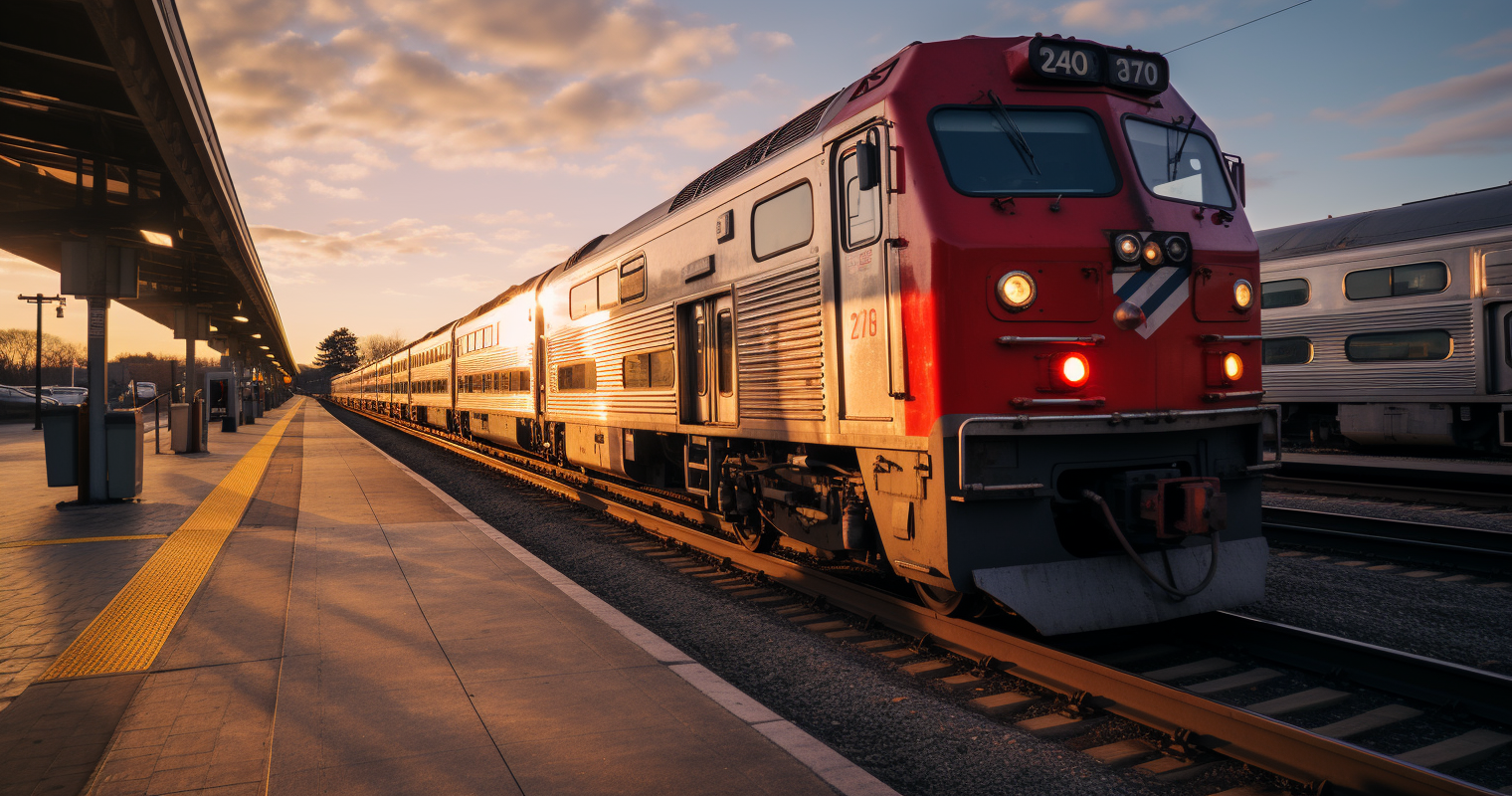
France boasts one of Europe’s most extensive and respected rail networks. Run predominantly by SNCF, the state-owned national carrier, the system stretches across roughly 28,000 km of track, reaching every corner of the country. High-speed TGV services link major urban centres with impressive efficiency, while regional and intercity trains fill in the gaps — although frequency and reliability can differ considerably depending on how remote your destination is.
| Item | Details |
|---|---|
| Network size | Around 28,000 km of track; 15,000 trains run daily (as of 2024) |
| Main operator | SNCF (Société Nationale des Chemins de fer Français) |
| Punctuality (TGV) | Approx. 88% on time during early 2024; 81% in 2023 |
| TGV top speed | Up to 320 km/h on high-speed lines |
| Cheapest advance fare (OUIGO) | From €16 one-way on selected routes (as of 2024) |
| Carte Avantage discount card | Up to 30% off; costs €49/year (as of 2024); age-based tiers available |
| Main booking platform | sncf-connect.com and the SNCF Connect app |
| Customer service phone | 3635 (within France; free service + call price) |
What is the standard of rail travel in France?
France’s railway system ranks among the largest and most intensively used in all of Europe. Its 28,000 km of track serves destinations throughout the entire country, with 15,000 train movements taking place each day. While some national networks are fragmented across multiple private operators with limited central oversight, France follows a predominantly centralised model in which SNCF manages both the infrastructure and the vast majority of passenger services — including the renowned TGV (Train à Grande Vitesse, or “high-speed train”).
The TGV sits at the heart of the network’s identity. Capable of reaching 320 kilometres per hour, these trains compete comfortably with the finest high-speed rail operations anywhere in Europe. The programme has deep roots: SNCF launched the TGV initiative in the 1970s with the ambition of building the world’s fastest railway, a goal realised in 1981 when the inaugural TGV service ran between Paris and Lyon. Today, the high-speed network places Paris within three hours or less of most of France’s major cities — among them Marseille, Bordeaux, Strasbourg, Lyon, Nantes, and Lille.
Punctuality has been an uneven picture. Following a difficult 2023, during which only 81% of services arrived on time, SNCF recorded improved figures of 88% punctuality across the first five months of 2024, with cancellation rates falling from 6.3% to 5%. These results place the operator broadly in the same bracket as other large Western European railways, though they remain some distance behind Switzerland’s consistently high standards. Most service categories showed improved on-time running and actual operating rates during 2024.
Coverage across the country is not uniform. The French network encompasses both high-speed TGV services and slower regional trains known as TER; while TER services are generally dependable, they involve more stops and lower speeds. In less populated areas, trains may run only a few times a day, and some branch lines have seen stop reductions in recent years. Though station service frequency rose by 4% in 2024, it had not yet recovered to 2017 levels, and intermediate stops on the high-speed network appeared to have declined notably. Expats settling in smaller communities may find that supplementary transport options — including car ownership — are worth factoring in alongside rail.
Major investment in the network is ongoing. SNCF Group’s financial performance has enabled record-level spending on French rail infrastructure, totalling more than €10 billion over five years. The Paris–Orléans–Limoges–Toulouse (POLT) corridor and the Clermont–Paris route — both significant arteries of the national network — have been subject to extensive upgrades since 2018, with works intensifying considerably in early 2024. By 2027, the combined investment on these lines, shared with the French government, is set to reach close to €3 billion.
Are there different classes of rail travel in France, and what are the differences?
Travel classes on French trains differ according to the service in question. On TGV INOUI and Intercités trains, passengers can choose between Standard (second class), Première (first class), and — on certain premium routes — Business Première or Grand Voyageur. TGV INOUI, INTERCITÉS, and night INTERCITÉS trains all offer First Class, providing a noticeably enhanced experience compared to Second Class. By contrast, TER and OUIGO services operate without any First Class option.
In Standard class, seats in both first and second class come with complimentary WiFi, power sockets, and access to the onboard food carriage. Seating follows a 2+2 layout, and comfort levels on modern trains are generally good. Aboard the double-deck TGV Duplex, Standard passengers are distributed across both levels and have access to a café-bar shared by all travellers.
Première class delivers a measurably more spacious journey. While the broad arrangement — rows of four or pairs of adjacent seats — mirrors Standard, the spacing between seats is considerably greater. On the TGV Duplex, first class features a 2+1 configuration finished in a refined blue, red, and white colour scheme with premium materials throughout — an environment that has been compared by at least one observer to a high-quality corporate reception. At larger stations, SNCF maintains dedicated First Class lounges where eligible passengers can rest before or after their journey, with WiFi and device charging available in all of them.
For those requiring the highest level of service, SNCF’s Grand Voyageur class functions as a premium tier above ordinary First Class, tailored to professional business travellers. Passengers in Business Première on TGV INOUI services between Paris and Lyon receive a complimentary meal served directly at their seat. In all other travel classes, food and drink must be bought from the onboard Bistro or pre-ordered through the SNCF app.
On certain routes, the fare gap between Standard and First Class is narrower than many travellers expect — particularly when a discount railcard is applied. For shorter TER journeys, the distinction between classes is largely academic. For regular long-distance business travel, however, upgrading to first class can represent genuine value for money. It is always advisable to check live fares through SNCF or a booking platform directly, since prices shift substantially based on route, date of travel, and how far in advance you purchase.
Where can I find rail timetables and ticket prices for France?
The definitive official resource for timetables, fares, and reservations is the SNCF Connect platform: sncf-connect.com. Real-time timetables for all trains are accessible via the SNCF Connect website or app — either by entering your journey details in the search tool or by retrieving your digital ticket and live traffic updates directly. The platform covers TGV INOUI, OUIGO, Intercités, and TER services, as well as a range of international cross-border routes.
For telephone enquiries and travel assistance, SNCF can be reached on 3635 (free service plus the applicable call rate), or in person at station ticket offices and self-service kiosks. This number is accessible only from within France; if you are abroad, the SNCF Connect website provides alternative international contact details.
Third-party booking tools such as Trainline and Omio also draw on SNCF timetable and pricing data and enjoy widespread popularity. These platforms are especially handy for comparing fare categories side by side or for arranging multi-operator journeys across Europe in a single transaction. That said, for the most precise and up-to-date timetable information — particularly for TER regional services — the SNCF Connect platform and its app remain the most authoritative sources.
Fares and schedules are subject to regular change. SNCF uses a dynamic pricing model broadly similar to airline ticketing, meaning that the cost of any given journey can fluctuate considerably depending on booking timing, fare type, and demand levels on that particular service. Always verify current figures with the official SNCF source before finalising any travel arrangements.
How and where can I buy rail tickets in France?
Purchasing a train ticket in France can be done through several straightforward channels. For those planning ahead, the most widely used method is online via the SNCF Connect website or app. Your e-ticket can be accessed directly within the app, retrieved using your booking reference, or downloaded as a PDF from the confirmation email. Mobile tickets are fully accepted on board — a train inspector will scan the barcode on your phone screen, so there is no need to print anything.
Tickets can also be bought at staffed counters in major stations, at self-service machines throughout the network, and through SNCF-approved travel agencies. Station machines support several languages and accept card payments. For OUIGO low-cost services specifically, tickets must be purchased through OUIGO.com, the OUIGO app, or SNCF-authorised online agencies — they are generally not sold at standard station ticket windows.
Here is a step-by-step guide to buying a ticket online through SNCF Connect:
- Visit sncf-connect.com or download the SNCF Connect app.
- Enter your departure and destination stations, travel date, and number of passengers.
- Browse available trains, comparing times, fare types (Prem’s, Loisir, Liberté), and classes.
- Select your preferred service and, for long-distance trains, choose your seat preference.
- Apply any discount cards (Carte Avantage, Carte Liberté, etc.) if applicable.
- Pay by card and receive your e-ticket confirmation by email or directly within the app.
- On the day of travel, present your mobile ticket or printed PDF for inspection on board.
Seat reservations are compulsory on TGV INOUI and most Intercités services — turning up with a general ticket is not sufficient, as your booking incorporates a specific reserved seat. On TER regional trains, reservations are typically unnecessary and passengers may sit wherever they find space. Train operators release tickets several months before the departure date, so booking early can unlock meaningfully lower fares. The earlier you commit, the more you are likely to save.
What types of rail tickets are available in France, and are discounts available?
SNCF structures its fares across multiple tiers. Three ticket categories offer differing levels of flexibility: the Prem’s fare is the least expensive option within the TGV range, bookable up to three months in advance, but it is entirely non-exchangeable and non-refundable. The Loisir fare occupies the middle ground, allowing changes and refunds subject to applicable fees. The Liberté fare is the most adaptable and is designed for business travellers who need the freedom to modify or cancel arrangements at short notice.
OUIGO operates as SNCF’s budget-oriented brand, running high-speed trains with a single class of travel equivalent to standard second class on a conventional TGV. Inclusive prices on OUIGO begin from €16 for a one-way journey on selected routes to more than 50 destinations across France, subject to availability (as of 2024). OUIGO tickets cannot be refunded, and strict luggage restrictions apply, so it is important to read the terms thoroughly before booking.
Frequent travellers can benefit substantially from SNCF’s Carte Avantage discount cards. The Carte Avantage TGV INOUI gives holders up to 30% off high-speed rail fares and is issued in three age-based versions — Jeune (ages 12–27), Adulte (ages 27–59), and Senior (ages 60+) (as of 2024). The card is priced at €49, and the savings are calculated against fares on the 25 most-travelled French routes (as of 2024). Always check the most current card pricing and conditions directly with SNCF, as these details are subject to revision.
Passengers travelling with a disability are entitled to priority boarding and dedicated fare reductions; for journeys from 10 January 2024 on Intercités day trains, wheelchair users can receive a 30% discount on the Fare Loisir du Jour in second class (as of 2024). Families, group bookings, and holders of loyalty cards such as Grand Voyageur and Grand Voyageur Le Club can also access additional benefits and discounts. Eligibility conditions and percentage reductions may change, so consult the official SNCF website for the most up-to-date information.
Newcomers to France or those planning to travel extensively throughout the country might also consider the Eurail France Pass, though residents making regular commutes on fixed routes will generally find SNCF’s own season ticket products — the Abonnement Fréquence or Abonnement Forfait — more cost-effective. These are available through SNCF Connect’s catalogue.
How suitable is the rail network in France for disabled passengers?
SNCF has made meaningful commitments to improving accessibility, and its newest rolling stock alongside the largest stations offer a reasonable standard of provision. First Class carriages on TGV INOUI trains include universally accessible toilets adapted for wheelchair users, complete with changing tables. Every TGV INOUI train features a nursery area in Second Class, situated close to the Espace Famille. Priority seating is clearly marked throughout all carriages, and audio-visual information systems are standard on high-speed services.
A dedicated assistance programme exists for passengers with reduced mobility. Anyone requiring help boarding, alighting, or navigating station environments is encouraged to register their journey in advance via the SNCF Voyageurs accessibility page. Trained staff at larger stations can provide ramps and wheelchair assistance, though it is important to give sufficient advance notice — typically a minimum of 48 hours — so that support can be properly arranged.
Accessibility standards are not consistent across the entire network, however. Smaller rural stations frequently lack step-free access, lifts, or tactile paving, and older rolling stock used on TER regional routes tends to be considerably less accessible than TGV trains. Night trains present particular challenges and are generally not recommended for wheelchair users. This situation contrasts with countries such as the Netherlands and Switzerland, where coordinated accessibility upgrades have been applied more systematically across all station types and route categories.
Passengers with disabilities — whether travelling independently or accompanied — are entitled to special fares and priority queuing arrangements. For the most current details on assistance services, accessible carriages, and station accessibility status, visit the SNCF Voyageurs accessibility hub or the French transport regulator, l’Autorité de régulation des transports (ART).
Are there metros, underground trains, or urban rail systems in France?
Beyond the national SNCF network, France is home to a variety of well-developed urban and suburban rail systems. Paris has the most elaborate city-level rail infrastructure in the country. The Paris Visite travel pass grants access to the full range of public transport options in the capital, encompassing the metro, trams, buses, RER lines, and SNCF Transilien suburban services. The Paris Métro itself comprises 16 lines and over 300 stations, operated by RATP (Régie Autonome des Transports Parisiens). Services run from around 05:30 to 01:00 on weekdays and later at weekends. Frequent, generally clean, and widely regarded as one of Europe’s premier urban metro networks, it is a cornerstone of daily life for millions of Parisians.
The RER (Réseau Express Régional) serves a dual function, operating as an underground metro within central Paris while simultaneously acting as a commuter rail network fanning out across the wider Île-de-France region. A planned 55 km extension of the RER E to Mantes-la-Jolie (Yvelines) will greatly expand connectivity in the western part of the region, positioning it as the most interconnected rail line in the area, and is projected to ease congestion on the RER A by between 10% and 15%. For expats based in the Paris suburbs, the RER will likely form the backbone of their daily commute into the city.
Several other French cities operate their own metro or light rail networks. Lyon has a four-line métro complemented by tram and funicular services, managed by TCL (Transports en Commun Lyonnais). Marseille runs a two-line métro, while Lille operates a fully automated driverless system using the VAL technology — one of the earliest examples of its kind anywhere in the world. Toulouse, Rennes, and Bordeaux each have modern metro or light rail systems, and cities including Montpellier, Nantes, and Strasbourg are served by extensive tram networks that perform a comparable rapid transit role.
The degree of ticketing integration between urban transit and mainline rail varies from city to city. In Paris, a single Navigo card covers the métro, RER, trams, buses, and Transilien suburban trains seamlessly. In regional cities, urban transport passes are typically kept separate from SNCF intercity tickets, though TER regional trains generally connect well with local tram or bus services at major interchange stations.
What practical tips should expats know about using the rail network in France?
One of the first habits worth cultivating is ticket validation. On many older TER regional services, orange validation machines (composteurs) are positioned at the platform entrance, and paper tickets must be stamped before you board — neglecting to do so can lead to an on-the-spot penalty, even if your ticket is otherwise perfectly valid. On TGV INOUI and OUIGO services, e-tickets and mobile tickets are exempt from this requirement, but it is always sensible to verify the specific rules for your ticket type.
Luggage rules have been more formally codified in recent years. Since February 2024, SNCF has applied a clearer luggage policy for TGV INOUI: there are no weight limits, but passengers must be capable of handling their bags unassisted in a single trip; exceeding the permitted dimensions attracts a €50 charge. Passengers may bring either one item of hand luggage plus two suitcases, or one item of hand luggage plus one suitcase and one additional specified item. There is no hold or checked baggage facility — everything travels with you in the carriage, stored in overhead racks or in the luggage areas at the ends of each coach.
Industrial strikes (grèves) are an established part of life on French railways and can cause significant disruption, sometimes at relatively short notice. France has minimum service legislation requiring operators to maintain a guaranteed proportion of trains during industrial action, but services can still be sharply curtailed. When disruption occurs, passengers are typically notified by email or SMS confirming whether their specific train will run or has been cancelled; those whose trains are confirmed will travel as booked, while those facing cancellations are entitled to exchange or refund their tickets at no cost. Registering your email address and mobile number with SNCF Connect ensures you receive automatic notifications as soon as disruption is announced.
Before heading to your platform, it pays to consult the train composition display boards. Most major stations show a ‘Composition des Trains’ chart indicating the exact positioning of each carriage along the platform. Knowing in advance where your coach will stop allows you to position yourself correctly rather than scrambling at the last moment — a particular advantage when travelling with heavy or bulky luggage.
Tipping is not a feature of French culture, and there is no expectation that you will tip train staff. On TGV INOUI services, dedicated Espace Zen (quiet zone) carriages are designated for passengers who prefer a calmer environment — phone calls should be kept short and conversations conducted quietly. There is no formal sanction for non-compliance, but fellow passengers are unlikely to be shy about expressing their displeasure. Arriving at the station 10 to 15 minutes before your train departs is a sensible practice: boarding a train in France does not involve the lengthy security procedures associated with air travel, but taking a few minutes to confirm your carriage position, review platform information, and validate any paper tickets beforehand will make for a much smoother experience.
Frequently asked questions: rail travel in France
Is a rail pass worth it if I live in France?
For residents making regular journeys on specific routes, SNCF’s own subscription products — such as the Abonnement Fréquence or Abonnement Forfait — are generally better value than tourist-oriented passes like the Eurail France Pass. The Carte Avantage discount card (€49/year as of 2024) is an excellent starting point for anyone making occasional long-distance trips, as it gives up to 30% off TGV fares. Always compare the cost of a card or pass against your expected journeys before committing. Check the current terms at sncf-connect.com.
How do I get a refund if my train is delayed or cancelled?
If your SNCF train is significantly delayed or cancelled, you are entitled to compensation. You can choose to cancel or reschedule your journey by refunding or exchanging your ticket free of charge through the SNCF website. For delays experienced during the journey itself, SNCF administers a compensation scheme aligned with EU passenger rights regulations, under which travellers can reclaim a proportion of their fare depending on the extent of the delay. Claims can be submitted via your SNCF Connect account following travel.
Are trains in France safe to travel on at night?
French trains are generally safe, including late-night services. The main intercity night trains (Intercités de Nuit) connect Paris to destinations such as Toulouse, Rodez, and Briançon and offer a practical way to cover long distances while saving on accommodation costs. On urban metro and RER services, the usual precautions applicable to any large city transit system apply during late evening hours — stay attentive to your surroundings and keep your belongings secure.
How does the French rail system handle strikes?
Industrial action occurs more frequently in France than in many comparable European countries, and the railways are no exception. Trade unions are legally required to provide advance notice of planned strikes, giving passengers some opportunity to prepare. During strike periods, a reduced timetable is typically put in place. Affected passengers receive notifications by email or SMS confirming whether their particular train will run or has been withdrawn. Keeping the SNCF Connect app installed and journey alerts activated is the most reliable way to stay informed during periods of disruption.
Can I take my bicycle on French trains?
Bicycles are permitted on many SNCF services, though the specific conditions vary by train type. On TGV INOUI trains, bikes must be enclosed in a padded bag or protective cover and are treated as ordinary luggage. On TER regional trains, folding bikes are usually carried free of charge, while non-folding bicycles require an advance reservation and may attract a fee. Some TER services have designated spaces for cycles. Always confirm the rules applicable to your specific route on the SNCF Connect website before travelling, as capacity is limited and policies differ across services.
Do I need to validate (composter) my ticket before boarding?
Whether validation is required depends on your ticket type. Paper tickets issued for TER regional services must be stamped in the orange composteur machines located at the platform entrance before you board. Travelling without having validated a paper ticket can result in a fine, even if the ticket itself is valid. E-tickets, mobile tickets in the SNCF Connect app, and most long-distance TGV bookings do not require separate validation. If you are ever uncertain, look for the yellow or orange validation machine at the platform and stamp your ticket — validating a ticket unnecessarily causes no problem, but boarding a TER with an unstamped paper ticket can lead to penalties.
Is Wi-Fi available on French trains?
TGV INOUI trains offer complimentary Wi-Fi throughout the journey. Connection quality depends on the route and the number of passengers using the service simultaneously. On TER regional trains and OUIGO services, Wi-Fi provision is more variable and cannot be guaranteed on all routes. Regardless of Wi-Fi availability, most modern intercity trains provide power sockets at or close to passenger seats, making it straightforward to keep devices charged over longer journeys.
What is OUIGO, and how does it differ from TGV INOUI?
OUIGO is SNCF’s low-cost high-speed brand, offering a single class of travel equivalent to second class on a standard TGV. Fares are substantially lower than those on TGV INOUI, but tickets are non-refundable, hand luggage allowances are tightly enforced, and certain OUIGO services operate from stations located further from city centres than their TGV INOUI counterparts. For budget-conscious travellers with fixed plans who can commit to their itinerary in advance, OUIGO represents excellent value. Tickets can be purchased at ouigo.com or through the OUIGO app.