

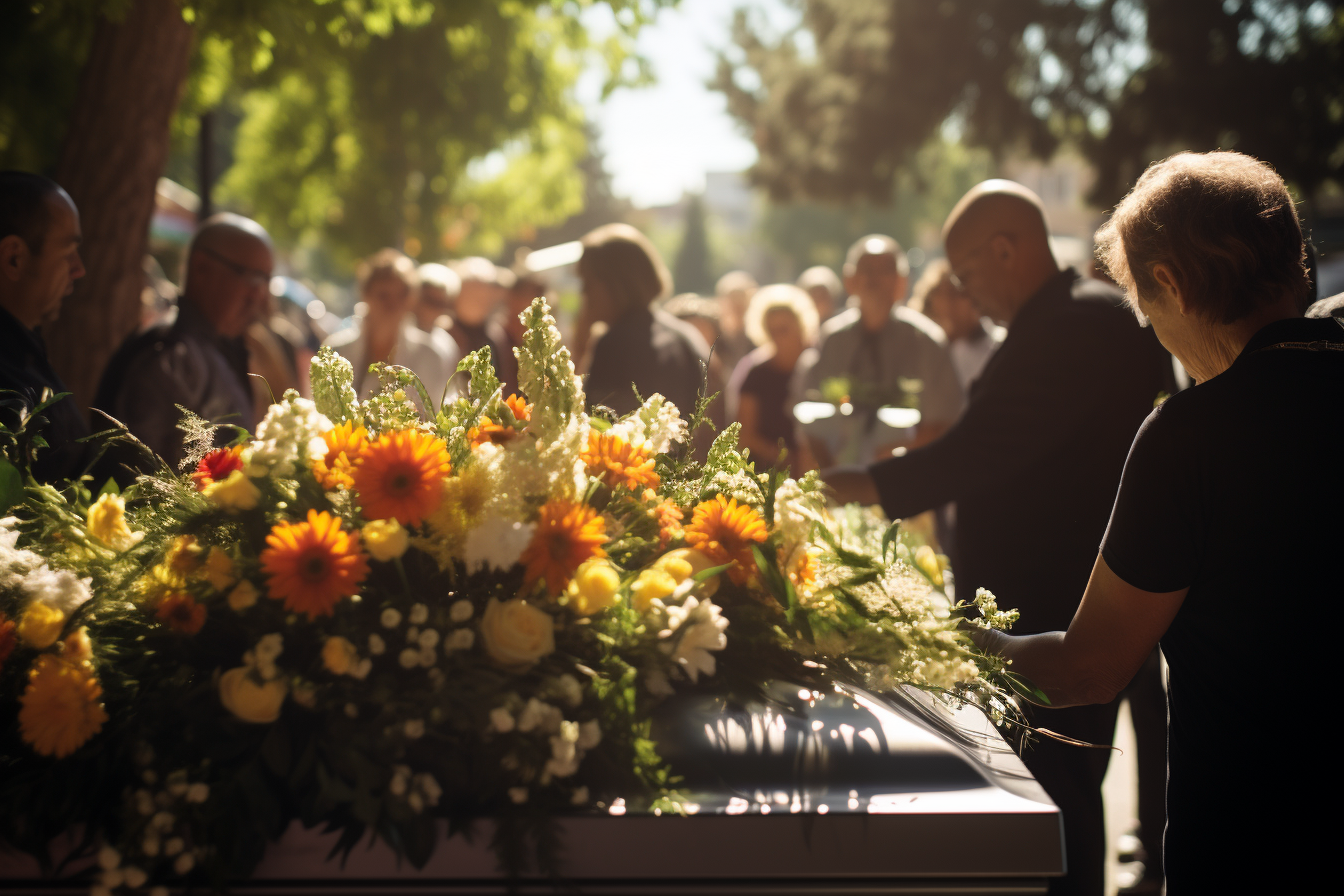
France maintains a comprehensive end-of-life care framework grounded in public health legislation, with palliative services accessible through hospitals, residential care facilities, and, increasingly, in patients’ own homes. Following a death in France, the event must be reported to the local mairie within 24 hours, and the funeral must be held within six working days. Expats are strongly encouraged to prepare advance directives and a French will long before they become necessary.
| Item | Details |
|---|---|
| Death declaration deadline | Within 24 hours to the local mairie (as of 2025) |
| Funeral timeframe | Must take place within 6 working days of death (as of 2025) |
| Inheritance tax — spouse/PACS | Full exemption (as of 2025) |
| Inheritance tax — child allowance | €100,000 tax-free per child per parent (as of 2025) |
| Funeral cost withdrawal from deceased’s account | Up to €5,000 can be drawn directly (as of 2025) |
| Average funeral cost in France | Approximately €3,000–€5,000 (as of 2025) |
| Repatriation cost (within Europe) | Average approximately €2,000 (as of 2024) |
| Inheritance tax return deadline | Within 6 months of death (1 year if death occurred outside France) |
What end of life care options are available in France, and how does the system work?
France’s approach to end-of-life care has undergone considerable development since 1999, when the right to palliative care was first enshrined in national legislation. The legal framework governing end-of-life situations continued to expand between 1999 and 2016, and today patients may refuse treatment, receive palliative care, draft advance directives, and appoint a designated support person who can communicate the patient’s wishes when the patient is no longer able to do so themselves.
End-of-life care in France may be delivered in a variety of settings: public or private hospitals, dedicated palliative care units (unité de soins palliatifs, or USP), residential care facilities for older people with significant needs (établissement d’hébergement pour personnes âgées dépendantes, or EHPAD), or in a patient’s own home supported by a palliative care network. Any patient with a serious, incurable condition whose life is at risk in the near term — a matter of days or weeks — is legally entitled to continuous deep sedation until death.
A 2023 report by France’s Cour des Comptes highlighted that palliative care remained largely absent from settings outside hospitals, and called for its meaningful expansion in nursing homes and private residences. The report noted that around half of patients who could benefit from palliative care do not currently receive it. Addressing these regional and setting-based disparities is an active government priority.
A palliative care network is being developed at regional level and is intended to be progressively rolled out across the country. For expats, the essential first step towards accessing these services is to register with a médecin traitant (GP) and enrol in the French public health system (Assurance Maladie).
What is palliative care in France, and who is eligible for it?
Under French law, palliative care (soins palliatifs) is recognised as a patient right rather than merely a medical option. A broader concept of “supportive care” seeks to deliver holistic care that upholds the patient’s dignity, well-being, and quality of life — addressing physical needs such as pain management alongside psychological and social requirements — with an individualised care plan activated from the moment a serious diagnosis is confirmed.
Eligibility for palliative care is not confined to those who are in the final hours or days of life. In France, palliative care may begin considerably earlier in the course of a serious illness, running alongside curative treatment with an emphasis on symptom relief and quality of life. This integrated approach mirrors that of countries such as Canada and Australia, where palliative care is woven into pathways for cancer and chronic illness rather than reserved solely for life’s final stage.
France has formally recognised the right to palliative care since 1999. The Kouchner Law of 2002 strengthened patients’ rights to refuse treatment, cemented the principle of informed consent, and emphasised the importance of adequate pain management. The Leonetti Law of 2005 introduced the right to decline excessive medical intervention and formalised the use of advance directives. These protections extend to all patients in France, irrespective of their nationality.
Any individual lawfully residing in France and registered with Assurance Maladie is entitled to access palliative care services. The Société Française d’accompagnement et de soins palliatifs (SFAP) maintains a directory of care providers and support organisations. Expats can use this to identify local palliative care teams at sfap.org.
Are there hospices in France, and how do you access them?
France does not have a tradition of independent hospice organisations comparable to those found in the United Kingdom, where charities run large hospice facilities largely separate from the NHS and provide extensive community-based care. Instead, France has built a layered system of end-of-life provision within its general healthcare infrastructure, comprising dedicated inpatient palliative care units located within hospitals, palliative care beds distributed across general wards, and mobile palliative care support teams (équipes mobiles de soins palliatifs) deployed across departments and in the wider community.
Recent legislation has introduced a new type of medico-social facility called a “support home” (maison d’accompagnement). Broadly analogous to a hospice, these small-scale facilities are designed to welcome and care for people in the final phase of life and their families. This development represents a meaningful expansion of dedicated end-of-life accommodation in France.
Referral to an inpatient palliative care unit is typically initiated by a hospital specialist or a médecin traitant. Mobile palliative care teams can be requested to support patients at home. It is worth noting that close to two-thirds of those who need palliative care currently lack access to it, making it important for patients and families to ask explicitly and persistently for a palliative care referral. The SFAP website and the Centre National des Soins Palliatifs et de la Fin de Vie (CNSPFV) can assist patients and families in locating services nearby.
Is palliative or hospice care covered by public health insurance or the national health system in France, or does it need to be funded privately?
Palliative care provided in a hospital or dedicated palliative care unit is covered by Assurance Maladie, France’s national health insurance system, on the same basis as other forms of inpatient treatment. Patients enrolled in the French system who have a serious condition recognised under the long-term illness scheme (affection de longue durée, or ALD) are generally reimbursed at 100% for all related medical costs, including palliative care.
The funding structure differs somewhat for residents of care homes (EHPADs). These facilities charge a daily rate for accommodation and dependency support that the resident must meet personally, while the medical care component is covered through health insurance. In Paris, monthly fees range from approximately €2,500 to €7,500 as of 2024, though costs differ considerably from one region to another.
Home-based palliative care, including support from mobile palliative teams, is also reimbursable through Assurance Maladie when properly prescribed by a doctor. Expats holding an S1 form — typically EU citizens drawing a pension from another EU or EEA country — are entitled to full access to the French health system on the same terms as French residents. Those not yet registered with the public system — for example, recent arrivals who have not yet completed enrolment — should do so promptly via the Assurance Maladie website (ameli.fr).
Supplementary private health insurance (mutuelle) can help cover additional costs such as accommodation top-ups and services not fully reimbursed by the state. Expats holding international private health insurance should review their policy carefully, as coverage for long-term or palliative care varies considerably between providers.
What legal documents should expats have in place before the end of life in France — such as a living will, advance directive, power of attorney, or healthcare proxy — and how do these work?
There are four key legal instruments that expats living in France should consider putting in place well before they are required. These are advance directives (directives anticipées), a designated trusted person (personne de confiance), a power of attorney or future protection mandate (mandat de protection future), and a will (testament).
Advance directives (directives anticipées) are written statements through which patients record their wishes regarding end-of-life treatment. They come into play when a patient is no longer capable of expressing their wishes directly, and may include instructions to continue, limit, halt, or refuse particular medical treatments or procedures.
If you draw up an advance directive, it is essential to inform your doctors and close relatives, and to ensure a copy is held on file if you are admitted to hospital for a serious illness or entering a residential care facility. Copies at home should also be kept somewhere accessible. These directives are legally binding on medical teams, though they are not applied in life-threatening emergencies or where they are found to be inconsistent with or inappropriate to the clinical circumstances.
The personne de confiance is someone you designate — a family member, a close friend, or a doctor — who is authorised to relay your wishes to medical professionals when you are unable to communicate. This is distinct from a power of attorney; it is a specific role created under French health law. The designation must be made in writing and can be updated or withdrawn at any time.
A mandat de protection future is a broader legal arrangement, analogous to a lasting power of attorney in other jurisdictions, which authorises a trusted person to oversee your personal and financial affairs in the event that you lose mental capacity. When it covers property and financial matters, this instrument must be formalised with a notaire. Drafting a French will is critically important for expats residing in France — both to give effect to personal wishes and to navigate the complexities of French succession law.
EU residents may also take advantage of EU Regulation 650/2012 (the European Succession Regulation), which permits EU citizens to elect for the law of their home country to govern their estate rather than French law — but this choice must be explicitly stated in a will. Non-EU nationals should seek guidance from a notaire and an international estate lawyer.
Are documents such as advance directives or powers of attorney made in another country legally recognised in France?
Advance directives and healthcare proxy designations made under a foreign legal system are not automatically enforceable under French law in the way that a French directive anticipée is. French medical professionals are legally bound to act on documents that comply with French health law (Articles L1111-11 and L1111-12 of the French Public Health Code). A document produced under another country’s legal framework may carry moral authority and serve as helpful guidance, but there is no guarantee it will be acted upon in a medical emergency in France.
The most prudent course of action is to complete a French directive anticipée while retaining any foreign document as supplementary material. Where possible, obtain a French translation prepared by a certified translator. A bilingual document may be useful but must conform to French formal requirements to carry legal weight.
For powers of attorney, France is a signatory to the Hague Convention on the Law Applicable to Agency, and a foreign power of attorney may be recognised in France provided it has been properly authenticated — generally through an apostille stamp for documents originating in countries that are parties to the 1961 Hague Apostille Convention. However, recognition is not guaranteed for all categories of foreign legal instruments, and a notaire should be consulted to establish whether a particular document will be accepted by French banks, hospitals, or courts.
With regard to wills, France respects the EU Succession Regulation for EU nationals, and foreign wills can be recognised in France if they satisfy the formal requirements of the country in which they were executed. Here too, engaging a notaire with expertise in international estates is strongly advisable.
What are the laws around euthanasia or assisted dying in France?
As of early 2026, both euthanasia and assisted dying remain unlawful in France, though the question is the subject of active parliamentary debate. French law currently permits deep sedation prior to death — legalised in 2016 — which allows patients who are very close to the end of life to be placed in a deep sleep. This represents the outermost boundary of what current French law allows.
A bill on assisted dying was introduced in France in May 2024, but parliamentary examination was interrupted when President Macron called snap legislative elections. The matter has since returned to the legislative agenda. Prime Minister Bayrou has proposed separating the original bill into two distinct pieces of legislation — one dedicated to strengthening palliative care, and one that would legalise “aid in dying” — enabling members of parliament to vote on each issue independently.
Debate on the two separate bills opened in the National Assembly on 12 May 2025. The assisted dying bill, if enacted, would authorise both assisted suicide and euthanasia under tightly defined conditions. Patients would require the approval of their treating doctor, one additional doctor, and a caregiver, with a decision period of 15 days. Although the bill avoids using the explicit terms “assisted suicide” and “euthanasia,” both practices would be encompassed by its provisions. Minors and individuals suffering from psychiatric disorders or neurodegenerative diseases such as Alzheimer’s would be excluded from its scope.
The legislative picture continues to change rapidly. Expats should monitor developments through France’s official legal publication platform Legifrance or through reliable news sources for the most current position. Until new legislation is passed and brought into force, assisted dying remains prohibited under French law.
What are the local customs, traditions, and religious practices around death and dying in France?
France is a constitutionally secular state (laïque), and its funeral practices reflect a broad diversity of beliefs and traditions. Civil ceremonies with no religious content are commonplace, while Catholic, Protestant, Jewish, Muslim, and other faith-based services are also widely observed. The majority of the French population identifies as nominally Catholic, and Catholic funeral rites remain prevalent — particularly in rural communities and among older generations — though participation in formal religious observance is declining.
It is customary to inform friends and acquaintances of a death through a formal announcement (faire-part de décès), traditionally published in a local newspaper or distributed by post. Condolences may be expressed through cards or letters (lettres de condoléances), and attending a funeral or visiting the family home with personal condolences is both expected and appreciated.
French burial traditions differ from those of many other cultures — rather than individual graves, the deceased are typically interred in family vaults or enclosed tombs. Family crypts and above-ground tombs are a characteristic feature of French municipal cemeteries (cimetières), which are administered by local authorities. Flowers are commonly placed on graves, and white chrysanthemums are strongly associated with All Saints’ Day (La Toussaint, 1 November). For this reason, chrysanthemums should be avoided in other gift-giving contexts, where they carry an unmistakable association with mourning and death.
The formal mourning period is not as explicitly defined as in some other cultures, but respectful and discreet conduct is expected. French employment law entitles workers to bereavement leave: three days for the death of a spouse, civil partner, parent, parent-in-law, or sibling, and five days for the death of a child.
For Muslim communities in France, burials traditionally take place as soon as possible and in keeping with Islamic rites. Many municipal cemeteries include a designated Muslim section, and dedicated Muslim burial grounds also exist. Jewish communities similarly follow established religious customs; both traditions generally favour burial over cremation. Expats from other faith backgrounds are advised to contact their religious community or place of worship for guidance on local practice.
What must you do when someone dies in France? Who do you notify, how quickly, and in what order?
The steps outlined below describe the immediate and short-term actions required following a death in France. Prompt action is essential, as several steps are subject to legal deadlines.
- Obtain a medical certificate of death (certificat de décès). If a death occurs at home, contact a doctor in your area or call 112 (the EU emergency number) or 15 (SAMU). A doctor will certify the death and issue a certificat de décès. If the death takes place in a hospital or care home, the staff will handle this. In the event of a violent, suspicious, or unexplained death, or a suicide, contact the police on 17 or 112.
- Declare the death to the mairie. The death must be formally declared at the town hall (mairie) of the commune where the death occurred within 24 hours. Where the death took place in a hospital or residential care facility, staff may complete this step on your behalf; the funeral director may also do so.
- Gather the required documents. You will need proof of identity for yourself and the deceased, as well as the deceased’s marriage or birth certificate, their address, next of kin details, and maiden name where applicable.
- Contact a funeral director (pompes funèbres). Always obtain a written estimate of costs before entering into any contractual agreement, and consider approaching more than one provider to compare quotes. The funeral director can manage many of the administrative formalities on your behalf.
- Notify the deceased’s embassy or consulate if they were a foreign national. This should be done as promptly as possible (see the dedicated section below).
- Arrange the funeral within the legal deadline. The funeral must be held within 6 days of death, with Sundays and public holidays excluded from the count.
- Inform relevant institutions. Notify the deceased’s current or former employer, pension provider, health insurer, bank, and any relevant benefit-paying bodies — for example, the Caisse Nationale d’Assurance Vieillesse (CNAV, the National Old Age Insurance Fund) if the deceased was receiving a retirement pension.
- Contact a notary (notaire) to initiate the estate administration process, particularly where the estate includes property or assets in excess of €5,000. The notary will guide the family through the succession process.
How is a death officially registered in France, and what documents are needed?
The death certificate must be obtained from the doctor who attended and certified the death. This medical certificate is required before the body can be transferred to a funeral director. Where the death occurred in a healthcare or social care facility — such as a hospital, clinic, or residential care home — the institution’s medical team will draw up the certificate through the relevant department.
The formal civil registration of the death (acte de décès) takes place at the mairie of the commune where the death occurred. The mairie will issue a number of certified copies of the acte de décès, which are required for virtually all subsequent administrative processes — including dealings with banks, insurers, the tax authority, and in the context of estate proceedings. It is advisable to request at least ten certified copies at the point of registration.
The death may be declared by a relative, a close friend, or another family member, though in practice it is often the funeral services that carry out this step. Documents typically required at the mairie include the doctor’s medical certificate of death, the deceased’s identity document (passport or carte de séjour), and the identity document of the person making the declaration.
Once the death has been registered, the mairie automatically notifies the relevant civil registry authorities. Where the deceased held a French birth certificate or was married in France, the corresponding records will be updated to reflect the death. The town hall’s primary role is to register the death and to issue the certificates and authorisations connected with the funeral arrangements.
What happens if a foreign national dies in France — what are the specific steps for notifying their home country’s embassy or consulate, and what role does the consulate play?
When a foreign national dies in France, their home country’s embassy or consulate should be contacted as early as possible — ideally within the first 24 to 48 hours, and in any case before any decisions are made concerning burial or repatriation. The consulate serves as both a practical support resource and a point of liaison between the family and French authorities.
Most embassies in France operate a duty officer or emergency line accessible outside normal business hours. Consular staff can typically assist with verifying the identity of the deceased, providing contact details for approved funeral directors and certified translators, facilitating emergency travel documents for family members travelling to France, liaising with French civil and judicial authorities, and — in certain circumstances — offering guidance on financial assistance where the family faces immediate hardship. However, consulates do not generally fund repatriation costs directly; these expenses typically fall to the family or their insurer.
The death should be registered at the local mairie, and a translation into English or another language can be requested if needed. Optionally, the death may also be registered with the relevant country’s Overseas Registration Unit. Some countries offer a consular death registration certificate for this purpose.
The consulate will ordinarily require certified copies of the French acte de décès, the deceased’s passport, evidence of nationality, and in some instances the doctor’s certificate. Certain countries require the death to be formally re-registered in their own national records; the consulate will advise on this requirement. For EU citizens, it may be necessary to report the death to the relevant national civil registry in the home country so that national records can be updated accordingly.
How are funerals typically arranged in France, and what are the usual options for burial or cremation?
Where the deceased has left instructions regarding the organisation of their funeral, those wishes take precedence. In the absence of such instructions, the decision falls to the family. To arrange a funeral, you must engage an undertaker — known in French as pompes funèbres. Funeral companies in France are subject to regulation and must provide a standardised schedule of fees; always obtain a written quotation before signing anything.
Both burial and cremation are available options in France. Burial takes place in municipal cemeteries, with plots allocated by the local mairie — typically on a concession basis lasting 30 or 50 years, after which the concession may need to be renewed. Cremation requires authorisation from the Mayor of the commune in which the death occurred. It may be requested by the deceased in their will or in a written statement, or by the closest family member.
Following cremation, ashes are placed in an urn and may not be divided. They may be interred in a cemetery plot, placed in a columbarium, or scattered at sea or in a designated natural area. Scattering ashes on public roads, rivers, or footpaths is prohibited. Retaining ashes at home is also not permitted under French law.
The funeral must take place within 6 days of death, with Sundays and public holidays not included in this count. The funeral director will manage the transport of the body, preparation and presentation, the ceremony itself (civil or religious), and all related documentation — including the permits required for cremation or burial. If the family is based abroad or repatriation may be needed, it is advisable to select a funeral company experienced in handling international cases.
What are the approximate costs of a funeral in France, and are there any state or insurance-based funds that can help cover them?
The typical cost of a funeral in France falls between €3,000 and €5,000 (as of 2025). It is possible to request that funeral expenses be met from the deceased’s bank account up to a ceiling of €5,000, provided the account holds sufficient funds. This mechanism allows funeral costs to be settled promptly without waiting for the full estate to be wound up.
Funeral costs are borne by the estate — that is, they are drawn from the estate’s assets where these are sufficient. The person organising the funeral may, upon presenting the funeral invoice, obtain a direct debit from the deceased’s bank account of up to €5,000. For amounts exceeding this figure, a notary must be involved in the process.
Family members should also examine the deceased’s personal documents to establish whether they had taken out funeral insurance. If so, the insurer must be notified without delay. It is also worth contacting the deceased’s health insurance fund to establish whether a funeral expense allowance is available.
A number of French complementary health insurers (mutuelles) pay a capital décès — a lump-sum death benefit — to assist with funeral costs. If the deceased was an employee or recently retired, a capital décès may additionally be payable through the employer’s social security fund. Expats should check whether their international private health insurance policy includes a funeral benefit or death grant, as many policies do offer this provision.
What is the process for repatriating the remains of a foreign national from France to another country?
Repatriating human remains from France is a highly regulated and logistically involved process. It requires coordination between French authorities, the relevant foreign consulate, funeral directors in both countries, and frequently an airline or specialist freight provider.
Repatriation requires close liaison with the relevant embassy or consulate. The body must be embalmed and placed in a zinc-lined coffin, which is sealed by the competent authorities at the point of departure. In some cases, the deceased’s passport must accompany the body during transit. The cost of repatriation may be covered by an insurance policy; where it is not, it falls to the family. Timelines vary according to the cause of death and the destination country.
The largest component of repatriation costs is generally the transport itself, which depends on the combined weight of the coffin and the deceased, as well as the mode of transport chosen. Within Europe, the average cost of repatriation is approximately €2,000 (as of 2024). Repatriation to destinations outside Europe can involve significantly higher costs.
The documentation typically required includes: the French acte de décès, the medical certificate stating the cause of death, a laissez-passer mortuaire (a transit permit issued by French authorities), the embalming certificate, confirmation that the coffin has been officially sealed, and any consular documentation required by the receiving country. Where a post-mortem has taken place, a copy of the pathologist’s report may also be necessary.
Repatriating ashes rather than a body is a simpler process. You will need to obtain permission from the relevant prefect’s office, have the ashes sealed in an urn, and carry the death certificate and cremation certificate with you. You should also inform your airline in advance and clarify whether the urn is to be carried in the cabin or checked as hold luggage.
It is often worthwhile to engage a funeral company that specialises in international repatriation, as these firms can manage the full complexity of the journey, which may involve road, air, and sea transport. Processing times generally range from one to three weeks from the date of death, depending on whether a post-mortem is required and how quickly the necessary paperwork is completed.
What happens to the estate of someone who dies in France — how does probate or estate administration work, and are there inheritance taxes?
France does not operate a probate system in the manner familiar to common law jurisdictions such as Australia, Canada, or the United Kingdom, where a court grants formal authority to administer a deceased’s estate. In France, succession is handled primarily by a notaire (notary), who fulfils a quasi-judicial function — verifying the identity of heirs, establishing the composition of the estate, and overseeing the distribution of assets in accordance with the law or the deceased’s will.
French inheritance tax is referred to as droits de succession. It is a tax levied on gifts and inheritances, paid individually by each beneficiary based on the amount received and their relationship to the deceased. The tax applies where the deceased was resident in France at the time of death, and also where a non-French resident leaves assets located in France.
Tax-free allowances (as of 2025) are determined by the beneficiary’s relationship to the deceased. Married spouses and civil union (PACS) partners continue to benefit from a complete exemption from inheritance tax regardless of the amount inherited. Each child may receive up to €100,000 tax-free from a parent. Amounts inherited beyond these thresholds are subject to a progressive tax scale that rises sharply for more distant relatives and unrelated individuals (reaching up to 60% for those with no family connection to the deceased). Current thresholds should always be confirmed with a notaire or the French tax authority at impots.gouv.fr.
An inheritance tax return must be submitted and any tax due must be paid within six months of the date of death — extended to one year where the deceased passed away outside France.
France operates a forced heirship system, meaning the law prescribes the minimum portion of an estate that must pass to certain heirs, regardless of what a will may state. Children hold a legally guaranteed share of the estate that cannot be overridden. Expats from legal traditions where complete testamentary freedom is the norm may find this surprising and should seek professional advice well in advance.
If an expat dies without a will in France, what happens to their assets under local intestacy laws?
When a person dies without having made a will, their estate is distributed in accordance with the rules of intestacy. In France, this means the estate is divided according to French succession law, regardless of what the deceased’s personal wishes may have been.
French intestacy law establishes a rigid hierarchy of heirs. Children — or their descendants where a child has predeceased the deceased — inherit first, with the estate divided equally among them. Where there are no children, parents and siblings inherit. Common law countries often give primary priority to the surviving spouse under intestacy rules; France, by contrast, gives precedence to children. A surviving spouse does have certain entitlements — including the right to remain in the shared home for life — but is not necessarily the principal beneficiary, which can create significant practical difficulties for cohabiting or non-PACS partners.
Unmarried partners who have not entered into a PACS (pacte civil de solidarité) have virtually no automatic inheritance rights under French intestacy law and would be liable for the highest rate of inheritance tax (60%) on anything they receive. This stands in stark contrast to many other legal systems and represents one of the most compelling reasons for expats to draw up a French will and to consider whether a PACS arrangement is appropriate to their situation.
French succession law applies to the worldwide assets of any person domiciled in France. EU nationals may be able to elect for the law of their country of nationality to apply under EU Regulation 650/2012, but this election must be explicitly stated in a will — it cannot be applied retrospectively after death. Non-EU nationals should take tailored legal advice, as the position depends on applicable bilateral treaties and the nature of the assets in question.
Frequently asked questions
Is foreign health insurance accepted for palliative care in France?
Foreign or international private health insurance may be accepted by French hospitals and palliative care providers, but this depends entirely on the specific insurer and policy. Many international insurers reimburse costs after the fact rather than paying providers directly, which may mean the patient or family must pay upfront and subsequently submit a claim. It is important to contact your insurer before care begins to understand how claims are processed, and to confirm that your policy specifically covers long-term or palliative care, as some exclude it.
Do advance directives or living wills written in English need to be translated into French to be valid in France?
French medical professionals are legally required to follow directives anticipées that comply with French law, which mandates a specific format. A document prepared in another language or under a different legal system does not carry automatic binding force in France. It is strongly recommended to prepare a French-language directive anticipée alongside any document made in another jurisdiction. A certified translation of a foreign document can be attached to the French version for additional clarity.
How long does the process of repatriating remains from France typically take?
The process generally takes between one and three weeks from the date of death, though this can vary considerably depending on the cause of death, whether a post-mortem (autopsie) is required, and the speed with which consular and administrative paperwork is completed. Where a death is sudden, suspicious, or subject to a judicial investigation (enquête judiciaire), timelines can be extended significantly. Holding travel insurance that includes repatriation cover can help expedite the process, as insurers often have established relationships with specialist funeral providers.
What support is available to bereaved family members in France?
Bereaved families in France can access support through a number of channels. The SFAP (Société Française d’accompagnement et de soins palliatifs) maintains a directory of bereavement support services. For those navigating loss in a language other than French, the Bereavement Support Network (BSN), which operates in France, offers assistance to residents dealing with grief. Most hospitals also have social workers (assistants sociaux) who can connect families with psychological support and practical guidance. Employees are entitled by law to bereavement leave, and additional leave may be available under applicable collective agreements.
Can a foreign national be buried in France if they die there?
Yes. Any person who dies in France — regardless of their nationality — may be buried or cremated there. Foreign nationals have exactly the same access to French cemeteries and cremation facilities as French citizens. A family wishing to bury a loved one in France rather than pursue repatriation need only apply to the local mairie for a burial concession in the municipal cemetery. Cemetery plots are available for purchase on a fixed-term basis — typically 30 or 50 years — and are renewable upon expiry.
Does France have double taxation treaties on inheritance that might affect expats?
France has concluded inheritance tax treaties with a number of countries, including the United States, Germany, Sweden, and Switzerland, among others. These agreements may reduce or eliminate the risk of the same assets being taxed in two different jurisdictions. However, many countries — including the United Kingdom and Australia — do not have a dedicated inheritance tax treaty with France, meaning cross-border estates may attract tax liability in both countries simultaneously. Consulting a specialist cross-border estate lawyer and a notaire at an early stage in estate planning is strongly recommended.
Can a non-resident family member handle the estate administration from abroad?
Yes, it is possible for an heir or executor residing outside France to manage the estate administration process from abroad, but the process is complex. A notaire in France must handle the succession formalities for any estate involving French property or assets above certain thresholds. A family member based abroad may grant a power of attorney (procuration) to someone in France — either the notaire or a trusted individual — to act on their behalf. Documents sent from abroad will typically need to be apostilled and, in many cases, translated into French by a certified translator.
Is there any state financial assistance available if the family cannot afford funeral costs?
Where no family member is willing or able to meet the cost of a funeral, and where there are no estate assets to draw upon, the municipality (commune) in which the death occurred is legally obliged to arrange and fund a basic funeral. This is known as obsèques aux frais de la commune and provides for a dignified, if simple, burial or cremation. In addition, the French social security system may pay a capital décès (death grant) to dependants of the deceased who were registered with Assurance Maladie, and some mutuelles or complementary insurers also offer funeral benefits. The deceased’s insurance documents should be examined carefully to identify any available entitlements.