
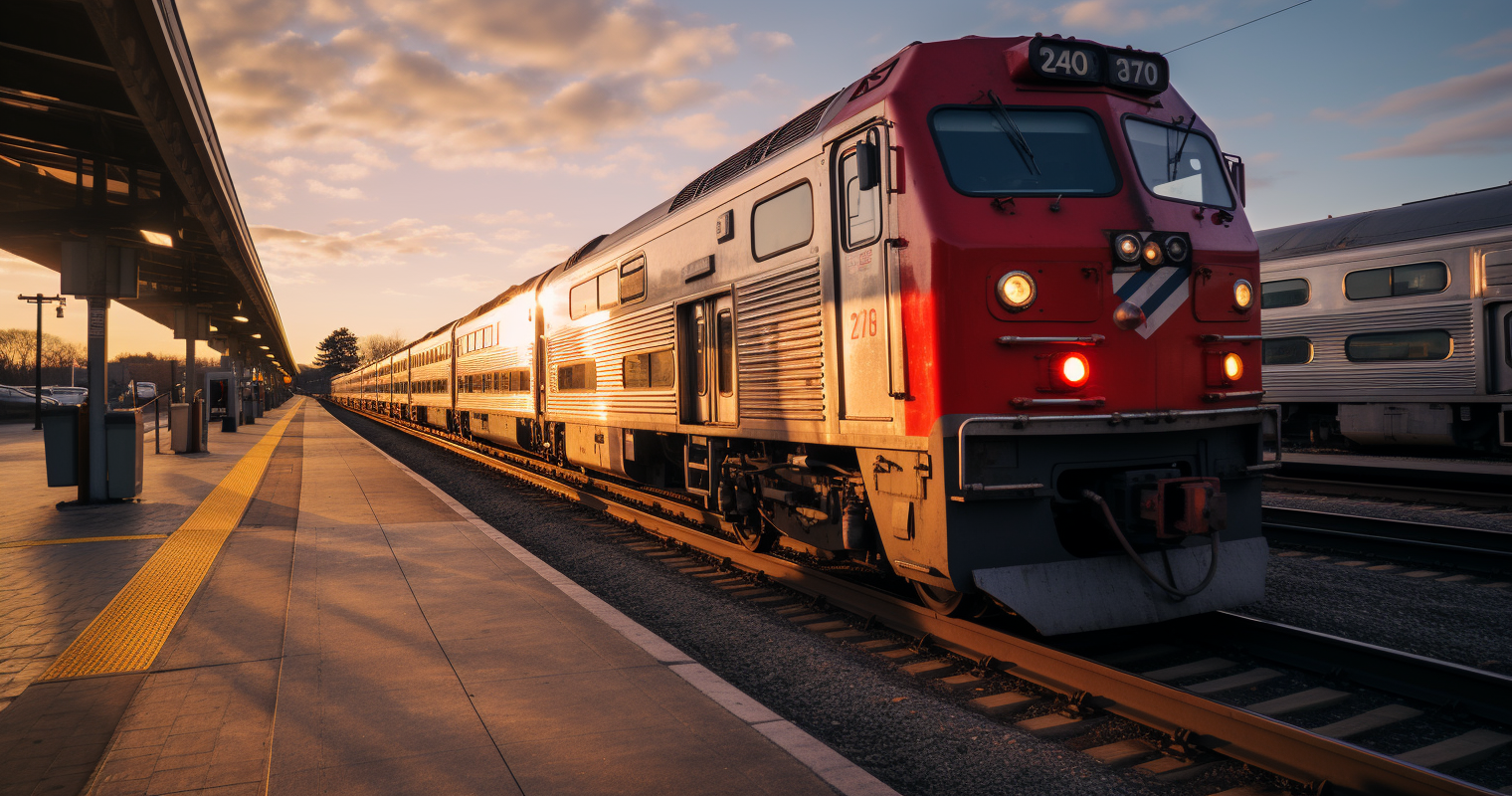
Germany boasts one of the most comprehensive rail networks anywhere in Europe, with Deutsche Bahn (DB) operating services across more than 34,000 km of track. This extensive system links virtually every major city and town — and a great many rural communities — making it a genuinely viable option for both everyday commuting and longer journeys across the country. That said, punctuality and the condition of the network’s ageing infrastructure have attracted considerable criticism in recent years, and substantial investment programmes are now underway to address these shortcomings.
| Item | Details |
|---|---|
| Network size | Over 34,000 km of track (as of 2024) |
| Main operator | Deutsche Bahn (DB); regional private operators also run services |
| Deutschland-Ticket (monthly flat-fare pass) | €63/month for unlimited local and regional travel (as of January 2026) |
| BahnCard 100 (annual unlimited pass) | From €4,899/year (2nd class) — check int.bahn.de for current prices |
| Advance booking window | Up to 180 days ahead; cheapest fares typically released at opening |
| Booking platform | int.bahn.de (official DB international site) and DB Navigator app |
What is the overall standard of rail travel in Germany?
Germany’s rail network ranks among the densest in Europe, and anyone relocating to the country will quickly appreciate just how far it reaches: the national infrastructure spans more than 34,000 km, overseen by the infrastructure subsidiary DB InfraGO. Long-distance and regional services link virtually every city and the vast majority of smaller settlements, making the train a genuinely useful option for commuters and leisure travellers alike.
Despite this impressive coverage, the network has been plagued by well-publicised reliability problems in recent years. Deutsche Bahn’s long-distance high-speed services now rank among the least punctual in Europe — a far cry from the image of German efficiency the country once cultivated. Ageing, overstretched infrastructure generates a high volume of disruptions, with excessive numbers of speed restrictions resulting from the deteriorating track condition. In contrast to Swiss Federal Railways, widely considered the European gold standard for on-time performance, DB has consistently struggled to keep services running to schedule on its busiest corridors.
There are, however, signs of progress. An annual DB infrastructure report found that the condition of the German rail network stabilised in 2024, marking the first occasion since monitoring began in 2021 that the rating had failed to worsen. DB channelled nearly €20 billion into network renewal during 2024 alone, and major corridor upgrade projects are now advancing. The Riedbahn — a heavily used 78 km link between Frankfurt and Mannheim — saw its condition rating improve dramatically from 4.20 to 1.52 after a five-month, €1.3 billion overhaul.
Following decades of underinvestment, the federal government has committed 100 billion euros to rail infrastructure improvement. From 2025, the Emmerich–Oberhausen section will enter a comprehensive modernisation programme, with the Hamburg–Berlin corridor scheduled to follow between August 2025 and April 2026. For newly arrived residents, Germany’s rail network remains thoroughly usable — particularly for regional commuting and intercity journeys — though factoring in additional time for potential delays on long-distance routes remains sound advice.
What classes of rail travel are available in Germany, and what are the differences between them?
Deutsche Bahn divides its long-distance services into two travel classes: 1st Class and 2nd Class (the latter sometimes called Standard Class). Both are offered across all DB trains, though the practical distinction between them varies depending on the type of service. On shorter regional trains (RB and RE services), 1st class accommodation is either absent or offers little meaningful improvement over 2nd class.
On Intercity Express (ICE) trains — Germany’s flagship high-speed service — the separation between classes is most clearly felt in terms of space and tranquillity. First class carriages use a 2+1 seating arrangement across the width of the car, providing face-to-face tables for two passengers on one side and individual seats on the other. Second class uses a 2+2 layout, fitting more passengers into each carriage and producing a busier, more sociable atmosphere. The extra width per seat in 1st class translates to noticeably greater legroom and elbow space, along with a quieter overall environment.
Beyond the additional room, 1st Class tickets on DB services include access to DB Lounges at major stations (where present), unlimited complimentary WiFi, and an at-seat meal and drink service during the journey. DB Lounges are located at key hubs including Berlin, Frankfurt, Hamburg, Munich, Cologne, Stuttgart and others, with typical operating hours of 07:00–21:00, offering free WiFi and complimentary refreshments. It should be noted, however, that food and beverages are not bundled into the 1st Class fare price for on-board consumption — these must be ordered and paid for separately.
ICE trains stand out as some of the most comfortable high-speed trains in Europe, with a well-specified interior that includes free WiFi, power sockets at every seat, and a restaurant car — all accessible to both classes of passenger. By way of comparison, 2nd class fares can begin at roughly 45% less than their 1st class equivalents, though DB employs a highly dynamic pricing model. For most everyday journeys and regular commuters, 2nd class delivers perfectly comfortable travel at considerably greater value for money.
DB also permits spontaneous upgrades from 2nd to 1st class on many long-distance services, bookable up to ten minutes after departure — a handy option if the train is more crowded than anticipated.
Where can you find rail timetables and ticket prices in Germany?
The definitive resource for timetables and fare information is Deutsche Bahn’s official international booking portal: int.bahn.de/en. This is DB’s primary online platform for planning and purchasing rail travel, covering everything from individual tickets and online passes to regional day tickets and promotional offers. Since fares and schedules are updated dynamically and frequently, this should always be your first port of call rather than relying on third-party price aggregators for accurate figures.
The DB Navigator app (available for both iOS and Android) replicates the website’s core functionality and is the tool most residents find indispensable on a daily basis once they have settled in Germany. It delivers real-time departure information, live delay notifications, digital ticketing, and platform details — broadly similar in concept to the Trainline app used widely across other European countries, but connected directly to DB’s own internal systems.
For local and urban services, individual transport associations (Verkehrsverbünde) operate their own dedicated timetable and fare portals. Munich’s transport authority (MVV), for example, runs mvv-muenchen.de, while Hamburg’s authority (HVV) maintains hvv.de/en, and the Berlin–Brandenburg network is accessible at vbb.de/en. These sites are the authoritative sources for local fare structures and zone maps.
Third-party services such as Trainline and Rail Europe are also authorised to sell DB tickets and can be useful when comparing travel options. However, it is always worth cross-checking fares against the official DB platform, as third-party listings do not always reflect the most current pricing.
How do you buy rail tickets in Germany, and can you book in advance?
Advance booking windows open 180 days before departure for most German train services, and the earliest available fares tend to be the most affordable. While advance booking is not compulsory on most routes — you can often purchase a ticket on the platform or on board a regional service — it is highly advisable for long-distance ICE and IC journeys, particularly on busy routes and around public holidays.
- Online via int.bahn.de: The official DB website at int.bahn.de/en allows you to search routes, compare fare options, and complete purchases for all DB services. Tickets can be stored in your account as a PDF or as a mobile ticket.
- DB Navigator app: The Deutschland-Ticket subscription and all other DB ticket types can be purchased through the DB Navigator app, which also manages seat reservations, live journey tracking, and on-screen digital ticket display. This is the most convenient option for day-to-day use by residents.
- Ticket machines at stations (Fahrkartenautomaten): DB’s distinctive blue ticket machines are installed at virtually every station across the country. They accept debit cards, credit cards, and cash, and provide a full English-language interface — ideal for buying tickets on the spot before boarding.
- Ticket offices (Reisezentrum): Larger stations have staffed DB travel centres where you can purchase tickets, reserve seats, and receive personalised journey planning assistance. Staff at major city stations generally speak English. Opening hours differ between stations.
- Third-party platforms: Authorised resellers such as Trainline and Rail Europe offer DB tickets, though booking fees may apply. Always verify that the fare shown matches what is available on int.bahn.de before completing a purchase.
On most DB long-distance services, seat reservations are sold separately from the ticket itself. While reserving a seat is not obligatory on intercity trains, doing so during busy periods or when the website flags high passenger volumes guarantees you a place to sit. Regional trains operate without reserved seating entirely. Reservations can be added at the point of ticket purchase — either online or at station machines — for a modest additional fee; current charges are listed on the DB website.
What types of rail tickets are available in Germany, and are there discount schemes?
Germany’s fare structure can appear daunting at first glance, but it follows a coherent underlying logic once the main categories become familiar. DB offers a spectrum of ticket types ranging from the lowest-cost Super Saver fare — which locks you to a specific train and offers no refund — through to the fully flexible fare that permits travel on any qualifying service.
The principal long-distance fare types are as follows:
- Super Saver (Super Sparpreis): The most affordable option, tied to a particular departure and non-refundable. Securing these fares requires booking as early as possible — the booking window opens 180 days before travel, and the cheapest allocations are released at that point.
- Saver (Sparpreis): A middle tier that offers marginally greater flexibility than the Super Saver while still linking you to a specific service, with somewhat less restrictive change conditions.
- Flexible (Flexpreis): The fully open fare, valid on any train on the chosen travel date. Fully refundable and changeable, making it the preferred choice for commuters or anyone whose schedule may shift unexpectedly.
For those settling in Germany, the most impactful option is undoubtedly the Deutschland-Ticket. Valid on all local and regional services throughout the country — including RB, RE, and S-Bahn trains as well as buses, trams, and urban metro systems operated by participating transport companies — it opens up remarkable freedom of movement. It is not, however, valid on long-distance ICE, IC, or EC trains. The ticket operates as a monthly subscription that renews automatically each calendar month. The price stood at €49 until December 2024, rising to €58 until December 2025; from January 2026 the cost is €63 per month — always confirm the current price at int.bahn.de.
The BahnCard is DB’s primary loyalty and discount programme, aimed at residents who travel frequently by long-distance train. Three versions exist: the BahnCard 25 and BahnCard 50, which deliver 25% and 50% discounts respectively on standard long-distance fares, and the BahnCard 100. Much like the UK Railcard, the BahnCard must be purchased before travel and entitles the holder to a reduction on eligible fares. Since July 2024, DB has ceased issuing physical plastic cards for the BahnCard 25 and 50 variants, making use of the DB Navigator app essential for accessing the virtual card.
The BahnCard 100 provides unlimited travel across most of the DB network for 12 months, priced at €4,899 for 2nd class and €7,999 for 1st class — figures correct as of September 2025. Always check int.bahn.de for current pricing, as these amounts are subject to revision. This option is designed for business travellers and high-frequency users making upwards of 30 long-distance journeys annually.
Discounted BahnCard rates are available to a range of groups including children, young adults under 27, and older passengers. Senior travellers can purchase the BahnCard 50 at a reduced rate. Families benefit from child travel rules whereby children under 15 ride free when accompanied by a parent who holds a BahnCard — verify the precise current conditions on the DB website. Group discounts are additionally available for parties of six or more adults travelling together on long-distance services.
How accessible is the rail network in Germany for disabled passengers?
Deutsche Bahn has invested considerably in accessibility, and both the major stations and newer train fleets generally meet a high standard. ICE trains and newer intercity rolling stock feature dedicated wheelchair spaces, accessible toilet facilities, and audio-visual passenger information systems. Step-free boarding via ramps can be arranged when assistance is requested in advance, and staff at larger stations receive training in supporting passengers with mobility requirements.
DB operates a specialist Mobility Service Centre (Mobilitätsservice-Zentrale) through which passengers with disabilities or reduced mobility can book boarding assistance, ramp deployment, and seat reservations. This service is available by phone or online and should be arranged at least 24 hours before the planned journey to ensure assistance is confirmed. Full details can be found at bahn.de/service/individuelle-reise/barrierefrei (primarily German-language; English support is available by telephone).
Accessibility provision differs considerably between urban and rural parts of the network. Large city terminal stations (Hauptbahnhöfe) are typically equipped with lifts, tactile floor guidance, audio announcements, and accessible ticket machines. Smaller rural stations — particularly those on older lines — may lack step-free access or adequate lift provision, and certain older rolling stock still used on regional routes involves a step up when boarding. Lines in eastern Germany, which have benefited from significant upgrade investment since reunification, tend to offer better infrastructure for accessibility purposes than some equivalent lines in the west.
Passengers holding a recognised severe disability certificate (Schwerbehindertenausweis) may qualify for heavily reduced fares or, in some circumstances, free travel on local and regional public transport — eligibility criteria depend on the recorded degree of disability. This entitlement is administered through Germany’s social welfare framework rather than by DB; newly arrived residents should contact their local authority (Versorgungsamt) to check whether they qualify.
Are there metro or urban rail systems in Germany’s cities?
Germany’s principal cities are served by well-developed urban rail networks that interconnect with the national DB system. The main elements are the S-Bahn (suburban rail), U-Bahn (underground metro), Straßenbahn (tram and light rail), and in certain cities, a Stadtbahn (light metro) system. Most large urban centres operate some combination of these modes.
- Berlin: Home to a wide-ranging S-Bahn and U-Bahn network supplemented by trams and buses. The city’s transport authority is the BVG (bvg.de/en), with ticketing integrated through the VBB network (vbb.de/en).
- Munich: Served by both an S-Bahn and U-Bahn alongside trams and buses, all coordinated by the MVV (mvv-muenchen.de). The S-Bahn extends from Munich’s central station to the airport and the wider surrounding region.
- Hamburg: Operates an S-Bahn, U-Bahn, and AKN suburban rail service, coordinated through HVV (hvv.de/en).
- Frankfurt: Features a U-Bahn, S-Bahn, and an extensive Straßenbahn network, managed through the RMV (rmv.de).
- Cologne and Düsseldorf: Both cities operate Stadtbahn (light metro) systems alongside S-Bahn services, coordinated by VRS and VRR respectively.
The Deutschland-Ticket is valid across all of these urban networks — including metro, tram, bus, and regional rail services throughout Germany. This means a single monthly subscription of €63 (as of January 2026) covers not only regional train travel across the entire country but also day-to-day travel on city transport systems — an outstanding proposition for new residents who commute within or between cities. Urban networks generally operate from approximately 04:30 to 01:00, with round-the-clock services at weekends in cities such as Berlin.
Most urban transport authorities have developed their own dedicated apps offering real-time service information and in-app ticket purchase, which complement the DB Navigator. In Berlin, the BVG app is the most widely used; in Munich, residents favour the MVV app. The regional Fahrinfo apps are also well regarded for city-level journey planning.
What should expats know about using the rail network day-to-day in Germany?
Getting around German stations is generally intuitive. Every DB station displays departure boards (Abfahrt) and arrival boards (Ankunft) showing train numbers, destinations, platform assignments, and delay information. The largest stations offer bilingual German and English signage, and ICE and IC services typically broadcast on-board announcements in both languages. Regional trains may restrict announcements to German only, which makes installing the DB Navigator app worthwhile — it provides real-time tracking of each stop along your route.
Germany’s platform numbering system has a distinctive feature that catches many newcomers off guard: longer platforms are subdivided into sections labelled A through F, and your ticket or seat reservation will specify which section to wait in to align with the correct carriage. Electronic displays mounted above each seat in the carriage show reservation details, so locating your seat once you have boarded is straightforward. Any seat without a reservation shown on its display is available for any passenger to use.
Unlike budget airlines, DB trains impose no luggage restrictions — you are free to bring as many bags as you can practically carry. There are no check-in deadlines or weight limits to worry about. Bicycles are permitted on many services, but require a separate bike ticket and must be placed in designated cycle storage areas; capacity in these spaces is finite, so reserving a spot in advance is advisable for long-distance trips.
A few cultural norms are worth keeping in mind. The quiet zone (Ruhezone), indicated on seat reservation systems and with physical markings inside the carriage, is an area where passengers are expected to avoid phone calls and keep noise to a minimum — this convention is observed and respected by most passengers. Eating on board is broadly acceptable, though pungent food may attract disapproving glances from fellow travellers. Offering your reserved seat to someone with a greater need — an elderly passenger or a person with a disability, for instance — is considered good manners even when not technically required.
Above all, always make sure your ticket is valid for the specific service you intend to board. The DB Navigator app clearly indicates which trains fall within the Deutschland-Ticket’s scope; boarding an ICE or IC long-distance service using only a Deutschland-Ticket — which explicitly excludes these trains — will result in an on-the-spot penalty fare issued by the conductor.
Frequently Asked Questions
Is the Germany rail network good enough to live without a car?
For residents of major cities and well-connected towns, yes — Germany’s combination of regional rail, S-Bahn, U-Bahn, trams, and buses makes car-free living very practical. The Deutschland-Ticket at €63/month (as of January 2026) covers all local and regional public transport nationwide. In rural areas with limited rail connections, a car may still be useful, but even there, regional trains and buses typically provide basic coverage.
What is the Deutschland-Ticket and is it worth it for expats?
The Deutschland-Ticket grants unlimited travel throughout Germany on all local and regional services — including RB, RE, and S-Bahn trains as well as buses, trams, and urban metro systems operated by participating transport companies. Sold as an automatically renewing monthly subscription, it costs €63 per month as of January 2026, making it outstanding value for residents who commute regularly or rely heavily on public transport. Note that it is not valid on long-distance ICE, IC, or EC trains.
Do I need to book seats in advance on German trains?
Seat reservations are not compulsory on intercity trains, but securing one is advisable when travelling at peak times or when the booking system flags high occupancy. Regional trains have no reserved seating whatsoever. On popular routes — particularly Friday evening departures or travel around public holidays — booking ahead is strongly recommended if you want to avoid spending the journey in the aisle.
How do I get a BahnCard as a new resident in Germany?
Three variants are available: the BahnCard 25 and 50 — delivering 25% and 50% discounts respectively on long-distance fares — and the BahnCard 100, which covers unlimited travel across most of the DB network. Applications can be submitted online at int.bahn.de/en/offers/bahncard. Since July 2024, DB no longer produces physical plastic cards for the BahnCard 25 and 50, making the DB Navigator app a requirement for accessing the digital version. Be aware that BahnCard agreements renew automatically each year unless cancelled at least six weeks before the renewal date.
Are German trains accessible for wheelchair users?
Modern ICE and IC rolling stock includes dedicated wheelchair spaces and accessible toilet facilities, and DB’s Mobility Service Centre can arrange boarding assistance and ramp deployment provided you give at least 24 hours’ notice. Accessibility standards at stations vary considerably — major city hubs are generally well equipped, while smaller and older rural stations may offer more limited provision. Accessibility details for individual stations can be checked at bahn.de.
Can I use one app to navigate all of Germany’s rail and transit systems?
The DB Navigator app offers the most comprehensive single solution for planning journeys across both national and regional rail, and it connects with many urban transit networks as well. For more granular, real-time information on city-specific services, however, apps from individual transport authorities — such as the BVG app for Berlin or the MVV app for Munich — tend to deliver greater accuracy on local routes. Most residents find it practical to rely on DB Navigator for intercity travel and their city’s own dedicated app for everyday urban commuting.
What happens if my train is delayed or cancelled?
Under EU rail passenger rights regulations, if a DB long-distance service arrives at its final destination more than 60 minutes late, you are entitled to compensation amounting to 25% of your ticket price; delays exceeding 120 minutes attract compensation of 50%. Claims can be filed online through the DB website or submitted in person at a DB travel centre. Retain your original ticket as supporting evidence. The DB Navigator app will notify you of service disruptions and propose alternative routing options in real time.
Is there a student discount for rail travel in Germany?
Students enrolled at a German university typically receive a semester ticket (Semesterticket) as part of their registration fees, covering local and regional public transport within their university city or surrounding area. The precise extent of coverage varies by institution. The Deutschlandsemesterticket pricing is linked to the Deutschland-Ticket, and in some semesters, price increases to the Deutschland-Ticket do not automatically feed through to the semester ticket rate. Students are also eligible to apply for a reduced-rate BahnCard offering discounts on long-distance services — eligibility details are available at int.bahn.de.