
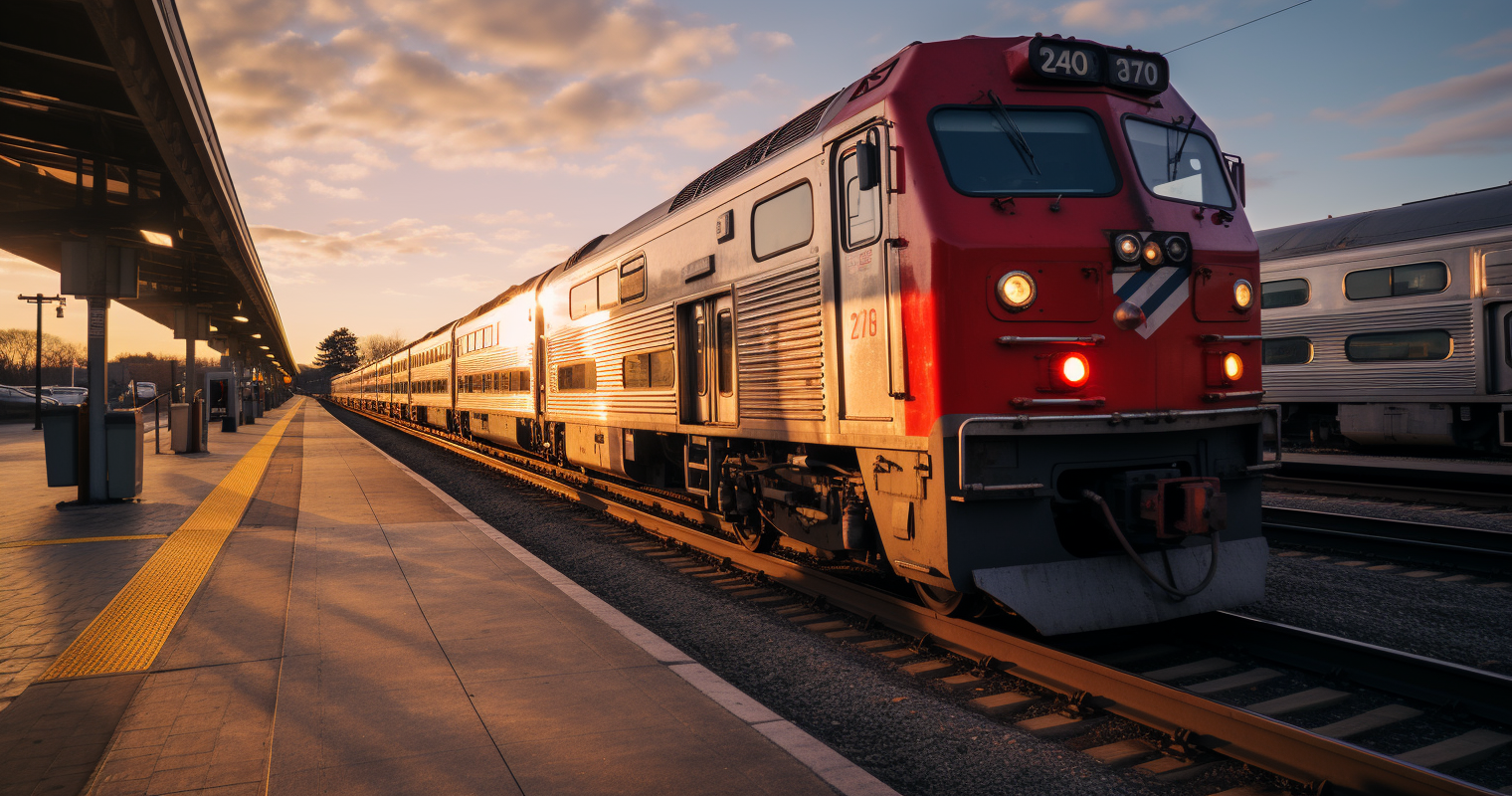
Gibraltar does not have a railway of its own. The territory covers a mere 6.7 square kilometres — far too little land to justify a rail network — and residents get around by walking, taking buses, using taxis, or cycling. Anyone wishing to travel by train must cross the border into Spain, where services run from Algeciras and San Roque–La Línea into the wider RENFE national network.
| Item | Details |
|---|---|
| Rail network in Gibraltar | None — Gibraltar has no passenger railway of its own |
| Nearest train station | San Roque–La Línea (Spain), approx. 16 km from Gibraltar border |
| Main rail connection hub | Algeciras station (Spain), served by RENFE |
| Bus fare to Algeciras (as of 2025) | Approx. €2.50 (M-120 bus from La Línea) |
| Local bus single fare in Gibraltar (as of 2025) | £1.60 / €2.40 adult (Citibus) |
| Primary transport within Gibraltar | Walking (48% of all trips), buses, taxis |
What is the overall standard of rail travel in Gibraltar?
Gibraltar’s transport options span roads, buses, air links, a cable car, and sea connections — but a passenger railway is not among them. The territory has no train stations and no rail infrastructure whatsoever, setting it apart from most of continental Europe, where national rail systems form a central pillar of public transport. Compared to the extensive, high-frequency networks of countries like Germany (Deutsche Bahn), Japan (JR), or neighbouring Spain (RENFE), Gibraltar simply has no counterpart.
Given how densely built and compact the territory is, walking accounts for 48% of all journeys made, while private cars represent around 30% of trips and motorcycles or mopeds a further 15%. These figures reflect the practical reality of a landmass so tiny that a railway would be entirely unworkable — Gibraltar as a whole is smaller in area than many individual stations in major European cities.
Historically, an extensive rail network did operate within the Gibraltar Dockyard and its adjoining facilities, including tunnels — one of which bored through the Rock of Gibraltar and survives today as a road tunnel. Around the turn of the twentieth century, a temporary industrial railway also existed on the territory. However, these were working railways rather than public passenger services, and none remain in any operational form today.
Although track was laid towards the outskirts of La Línea as part of an abandoned San Roque–La Línea railway expansion project in the 1970s, the closest functioning station to Gibraltar is “San Roque–La Línea” on the ADIF Algeciras–Bobadilla line in Spain. This means that for any rail journey, Gibraltar residents must first cross into Spain — a trip that can itself take considerable time, particularly when queues at the border are long.
What classes of rail travel are available, and what are the differences?
Since Gibraltar itself operates no trains, this question is really about the Spanish RENFE services that residents access after crossing into Spain. The classes on offer depend on which specific service departs from Algeciras or San Roque–La Línea.
RENFE operates a wide variety of train types, including the flagship high-speed AVE, the low-cost high-speed Avlo, and services such as Alvia, Euromed, Altaria, Avant (medium-distance high-speed), Media Distancia (regional), and Cercanías (suburban commuter) trains. Trains operating out of Algeciras are chiefly Alvia and regional Media Distancia services rather than the fastest AVE options.
Alvia trains are split into two seating classes — Estándar and Confort. Estándar Class provides comfortable seating with fold-down tables, generous legroom, the ability to recline on longer journeys, and Wi-Fi access. Confort (First) Class includes everything found in Estándar, along with leather reclining seats, power sockets, complimentary refreshments served throughout the journey, and extras such as daily newspapers and headphones for onboard entertainment.
On higher-end AVE services — which come into play on connecting routes beyond Algeciras, such as those heading towards Madrid or Barcelona — the fare and class structure is more elaborate. The Prémium fare, available exclusively in Confort (First Class), is the most expensive option but delivers the greatest flexibility: changing to a different service carries no charge, and missing your scheduled train does not incur a penalty for boarding the next available one. Prémium also includes free seat selection and access to the Club Lounge at the departure station from two hours before your journey begins.
A cafeteria car serving drinks, snacks, and hot food is available on board; at-seat service is built into the Preferente (First) class experience and available as an optional paid extra for Turista (Second) class passengers. Small pets in appropriate carriers may travel free of charge. Whether upgrading to a higher class is worthwhile depends largely on journey length — for a short hop into Algeciras, the difference between classes is hardly noticeable, but on longer trips to Madrid, Confort seating delivers a meaningfully more comfortable ride.
Where can you find rail timetables and ticket prices?
The definitive source for RENFE timetables and current fares is the official RENFE website at www.renfe.com. This covers all train services throughout Spain, including the Algeciras–Bobadilla line and its connections. RENFE uses dynamic pricing, which means fares shift constantly — always check the official site for up-to-date figures before you travel.
Several third-party booking and comparison platforms are also available and can simplify the process of planning longer or multi-leg journeys. Rail Europe (raileurope.com) allows you to compare ticketing options across Spain and the rest of Europe, and can handle itineraries spanning multiple operators without requiring you to search each one independently. The Trainline (www.thetrainline.com) is another well-established platform covering RENFE routes and offering tickets to destinations across Andalucía and beyond, including high-speed AVE services.
The independently written travel resource Seat 61 (seat61.com) offers thorough, practical guidance on travelling to and from Gibraltar by train, complete with step-by-step route descriptions and contextual fare information. For timetable details on the cross-border bus connection between La Línea and Algeciras, the Consorcio de Transporte Metropolitano del Campo de Gibraltar runs a useful information portal at siu.ctmcg.es.
Because RENFE fares and schedules change frequently — and discount schemes are periodically revised — treat any figures from third-party sources as a guide only and always confirm current pricing directly at renfe.com before booking.
How do you buy rail tickets, and can you book in advance?
Purchasing RENFE tickets from Gibraltar follows the same process as booking from anywhere else in Spain or Europe. The most practical approach for residents is to book online in advance. Tickets are available through renfe.com, the official RENFE app (downloadable on Android and iOS), or via third-party services such as Rail Europe or Trainline. E-tickets can be saved directly to a smartphone, removing the need for a printed copy on most services.
For conventional Media Distancia trains, passengers must specify the origin and destination at the time of purchase and can pre-register individual journeys — including the date, time, and specific service — through the Renfe App, the website, self-service machines at stations, or staffed ticket offices.
- Visit renfe.com or open the Renfe app and input your journey details (departing from Algeciras or San Roque–La Línea, arriving at your chosen destination).
- Choose your preferred departure time, travel class (Estándar or Confort), and fare type (Básico, Elige, or Prémium).
- Complete the payment process online. Your e-ticket will be sent by email and can be accessed through the app at any time.
- To reach the station from Gibraltar, walk or catch a bus to the Spanish border crossing at La Línea, then take the M-120 bus to Algeciras or a taxi. The M-120 runs every 30 minutes on weekdays at the hour and half-hour, and every 45 minutes on weekends, with a journey time of roughly 45 minutes and a fare of around €2.50.
- At the station, scan your ticket at the gate or present your mobile e-ticket to a member of staff.
Tickets may also be bought in person at staffed counters and self-service machines at both Algeciras and San Roque–La Línea stations. RENFE fares tend to be lowest mid-week and outside peak travel periods; flexibility with departure and arrival times frequently leads to better prices and quieter, more comfortable trains.
If you are travelling through Spain with a Eurail or Interrail Pass, RENFE trains are covered, but you will still need to make advance seat reservations. Most high-speed and long-distance RENFE services require passholders to pay a reservation fee, the amount of which varies by train type and class. Seats available to passholders can be limited on busy routes, especially in peak seasons, so reserving early is advisable.
What types of rail tickets are available, and are there discount schemes?
RENFE operates a tiered pricing structure, and which ticket types are available depends on the service you are boarding. On Alvia and AVE trains, the principal fare categories are Básico, Elige, and Prémium. Básico is the entry-level option, giving access to all standard on-board amenities — ample legroom, Wi-Fi, luggage storage, and power sockets — at the lowest price. However, Básico tickets cannot be changed or refunded once purchased.
The Elige (“choose”) fare introduces greater flexibility and a wider range of optional add-ons, and is available for both Estándar Class (Standard) and Confort Class (First). The Prémium fare, restricted to Confort Class, is the priciest tier but offers the most freedom — you can switch to a different service at no charge, and boarding the next train if you miss yours carries no penalty either.
For those who travel regularly within Spain, RENFE offers multi-journey cards and season passes. As of 2025, RENFE was maintaining free travel on Cercanías, Rodalies, and conventional Media Distancia services for regular passengers throughout the first half of the year, along with a 50% discount on Avant tickets throughout 2025. These represent substantial savings for Gibraltar residents who travel by rail into the Spanish border region regularly — though as these schemes are subject to change, current terms should be verified at renfe.com.
For medium-distance high-speed Avant journeys, multi-journey passes including the Tarjeta Plus Pass (covering between 30 and 50 trips), the Tarjeta Plus 10, and the Tarjeta Plus 10-45 can be purchased on the renfe.com website, at station ticket offices, by telephone, or through travel agencies.
Flexible RENFE tickets can be refunded subject to a fee, while non-flexible fares are non-refundable. Refunds are typically processed within 2–3 weeks. Always review the conditions attached to your specific fare at the time of booking, as RENFE’s policies are updated periodically. For the most accurate and current pricing, consult renfe.com directly.
How accessible is the rail network for disabled passengers?
For Gibraltar residents with disabilities or reduced mobility who need to use the RENFE network, Spain’s rail operator provides a dedicated support service. Known as Renfe Atendo, this free service is designed specifically for passengers with mobility limitations or other disabilities, offering guidance, information, and practical assistance at stations — including help accessing platforms and getting on and off trains.
RENFE trains are designed with accessibility in mind, featuring designated wheelchair spaces, accessible toilet facilities, and a range of assistance options. Wheelchairs with maximum dimensions of 70 cm wide × 130 cm long × 140 cm high are permitted on board. Ramps are fitted on all AVE trains to assist with boarding and alighting. For travellers with visual or hearing impairments, most major RENFE stations provide audio announcements and visual display boards, though the level of provision may differ between large interchange hubs and smaller regional stops.
Passengers with accessibility requirements are strongly encouraged to contact Renfe Atendo ahead of their journey. You can reach the service at [email protected] or by calling +34 917 744 040. Advance booking is particularly important for station transfers and onboard wheelchair spaces, to ensure appropriate arrangements are made before you travel.
It is also worth bearing in mind that the journey from Gibraltar to the nearest Spanish stations involves steps beyond the train itself — most notably the border crossing at La Línea and the subsequent bus or taxi transfer to Algeciras. If you have specific accessibility needs, this portion of the journey deserves careful advance planning. Within Gibraltar, Citibus operates low-floor buses that are accessible to passengers with disabilities.
Are there metro or urban rail systems in Gibraltar?
Gibraltar’s transport network encompasses roads, buses, air services, a cable car, and sea links — but there is no metro, underground railway, light rail, or urban commuter rail system anywhere in the territory. The Rock is simply too small for such infrastructure. At just 6.7 square kilometres, Gibraltar’s entire landmass is smaller than the catchment area of many individual metro stations in cities such as Madrid, Paris, or London.
The backbone of urban transport within Gibraltar is the bus network, which is run by two separate operators. A total of eight bus routes serve the territory: the Government-owned Gibraltar Bus Company operates routes 1, 2, 3, 4, 7, 8, and 9, deploying a fleet of 21 buses across these services.
Citibus, the trading name for Calypso Transport’s main service, is a private urban bus company that has been running in Gibraltar since 1970. It operates the important Route 5 corridor linking the Spanish frontier, the airport, and the city centre, along with several other routes. Timetables and route maps are published at www.citibus.gi, and further bus service information is available through the Government of Gibraltar at gibraltar.gov.gi.
An Adult Hopper ticket — covering unlimited travel on all Gibraltar bus routes on the day of purchase — costs £8 (€11), while a Child Hopper is priced at £6 (€8) (as of 2025). A standard single journey ticket, valid for one trip on any Citibus route on the date of purchase, costs £1.60 / €2.40 for adults (as of 2025). Frequent travellers can purchase multi-journey Smartcards valid across all Citibus routes — for example, a block of 10 adult trips costs £10.00 / €15.00 (as of 2025). Always check current fares at citibus.gi/tickets-and-fares.
Unlike systems such as the London Underground or Madrid Metro, there is no contactless card payment or integrated travel card scheme across Gibraltar’s bus network beyond the existing Smartcard arrangement. There is no dedicated Gibraltar transit app; the Citibus website remains the primary digital resource for journey planning.
What should expats know about using the rail network day-to-day?
The single most important thing for new arrivals to understand is that there are no trains inside Gibraltar — so accessing the rail network always means planning a cross-border trip into Spain. This is entirely feasible but demands time and forward planning. The road crossing from Gibraltar into Spain can be subject to significant delays, so build in extra time at the border whenever you are trying to catch a specific train, particularly during morning and evening peaks, public holidays, and the busy summer tourist season.
You can reach the Spanish border on foot (around 15 minutes from the town centre), by taxi (approximately £4–£6), or by one of the frequent local buses (£1). Once through British and then Spanish passport control into La Línea, the M-120 bus runs to Algeciras bus station, which sits just 50 metres from the railway station. The bus fare is €2.50 (as of 2025).
At Algeciras station, all signage and departure boards are in Spanish. Staff at larger RENFE stations frequently have some English, but a working knowledge of basic Spanish phrases will help when navigating the station, using ticket machines, or asking about platforms. On-board train announcements are delivered in Spanish, though some high-speed services also include English language versions on certain routes.
RENFE allows passengers to bring up to three pieces of luggage on board. The combined dimensions of all three items must not exceed 290 cm (the sum of height, length, and width), and the total weight may not surpass 25 kg. Seat reservations are compulsory on long-distance services. There is no formal check-in process — a valid ticket is all that is needed to board.
For everyday life within Gibraltar itself, getting around on foot or using the bus network is the standard approach. The bus routes cover most of the Rock and are well suited to daily use. Discounted travel is available for certain groups including senior citizens and non-residents employed in Gibraltar, and children travel at reduced fares. Free travel may be available to eligible residents — check the current qualifying criteria with the Government of Gibraltar transport authority.
One final note on local culture: Gibraltar is a close-knit and informal community, and bus travel reflects this — there are no quiet carriages or assigned seats on local services. Queuing politely at stops is the expected norm. Conveniently for residents who regularly move between Gibraltar and Spain, both pounds sterling (GBP) and euros are accepted on Gibraltar’s buses and by taxis.
Frequently asked questions
Does Gibraltar have any trains or a train station?
No. Gibraltar has no passenger rail service and no train station. At just 6.7 square kilometres, the territory is far too small to sustain a rail network. Residents wishing to travel by train must cross into Spain, where the closest stations — San Roque–La Línea and Algeciras — are both served by RENFE, Spain’s national rail operator.
How do I get from Gibraltar to the nearest train station?
Make your way to the Spanish border at La Línea — around 15 minutes on foot from the city centre — and pass through British and then Spanish passport control. From La Línea, board the M-120 bus to Algeciras, where the fare is approximately €2.50 (as of 2025) and the journey lasts roughly 45 minutes. Algeciras station connects to RENFE services heading to Madrid and other Spanish cities. San Roque–La Línea station, approximately 16 km from the border, is most easily reached by taxi.
Can I commute from Gibraltar to a Spanish city by train?
It is technically possible but not straightforward. Every journey requires crossing the border, then taking a bus or taxi to either Algeciras or San Roque–La Línea before boarding a RENFE train. Border queues can add unpredictable amounts of time, especially at peak hours. In practice, most Gibraltar residents who travel regularly rely on driving, walking, or local buses rather than cross-border rail connections.
What is the RENFE Atendo service and how do I use it?
Renfe Atendo is a free assistance service provided by RENFE for passengers with disabilities or reduced mobility travelling on the Spanish rail network. It offers support at stations and on board trains, covering boarding and alighting assistance, wheelchair handling, and guidance through station facilities. To arrange assistance, contact Renfe Atendo at +34 912 140 505 or through renfe.com. Booking in advance is strongly advised.
Are there any rail passes or discount tickets useful for Gibraltar residents?
RENFE offers a range of multi-journey cards and season passes for regular travellers in Spain, which can be of real benefit to Gibraltar residents who frequently travel to Spanish cities by rail. As of 2025, RENFE was offering free travel on Cercanías and Media Distancia commuter services and a 50% discount on Avant tickets throughout the year. These arrangements are subject to periodic change, so always verify what is currently available at renfe.com. Eurail and Interrail passes are also valid on RENFE services, though seat reservations remain compulsory on most trains.
What is the cheapest way to get from Gibraltar to Madrid by train?
The most cost-effective route is to take the M-120 bus from La Línea to Algeciras (approximately €2.50), then book a Básico fare on the RENFE Algeciras–Madrid service. Básico tickets are the cheapest available, but they are non-refundable and cannot be changed. Booking as far ahead as possible generally secures the lowest price. As of 2025, the Algeciras to Madrid journey takes around 6–7 hours including a change at Antequera-Santa Ana. Check renfe.com for current fares.
Is there a bus service within Gibraltar for daily use, and how does ticketing work?
Yes. Two operators — the Gibraltar Bus Company and Citibus — between them run eight bus routes covering the territory. A single adult journey on Citibus costs £1.60 / €2.40, while a daily Hopper ticket providing unlimited travel costs £8 / €11 for adults (as of 2025). Multi-journey Smartcards are also on offer for regular travellers. Full timetables and fare details are available at citibus.gi. Check the official website for the latest prices, as these may be updated.
Will I need to speak Spanish to use trains near Gibraltar?
A basic command of Spanish is useful but not absolutely essential. Ticket machines and the RENFE website support multiple languages including English. That said, station signage in Algeciras and on regional trains is predominantly in Spanish, and not all station staff will speak English confidently. Announcements on board are in Spanish as standard. Preparing your itinerary ahead of time and keeping your e-ticket readily accessible on your phone will make navigating the journey considerably easier.