
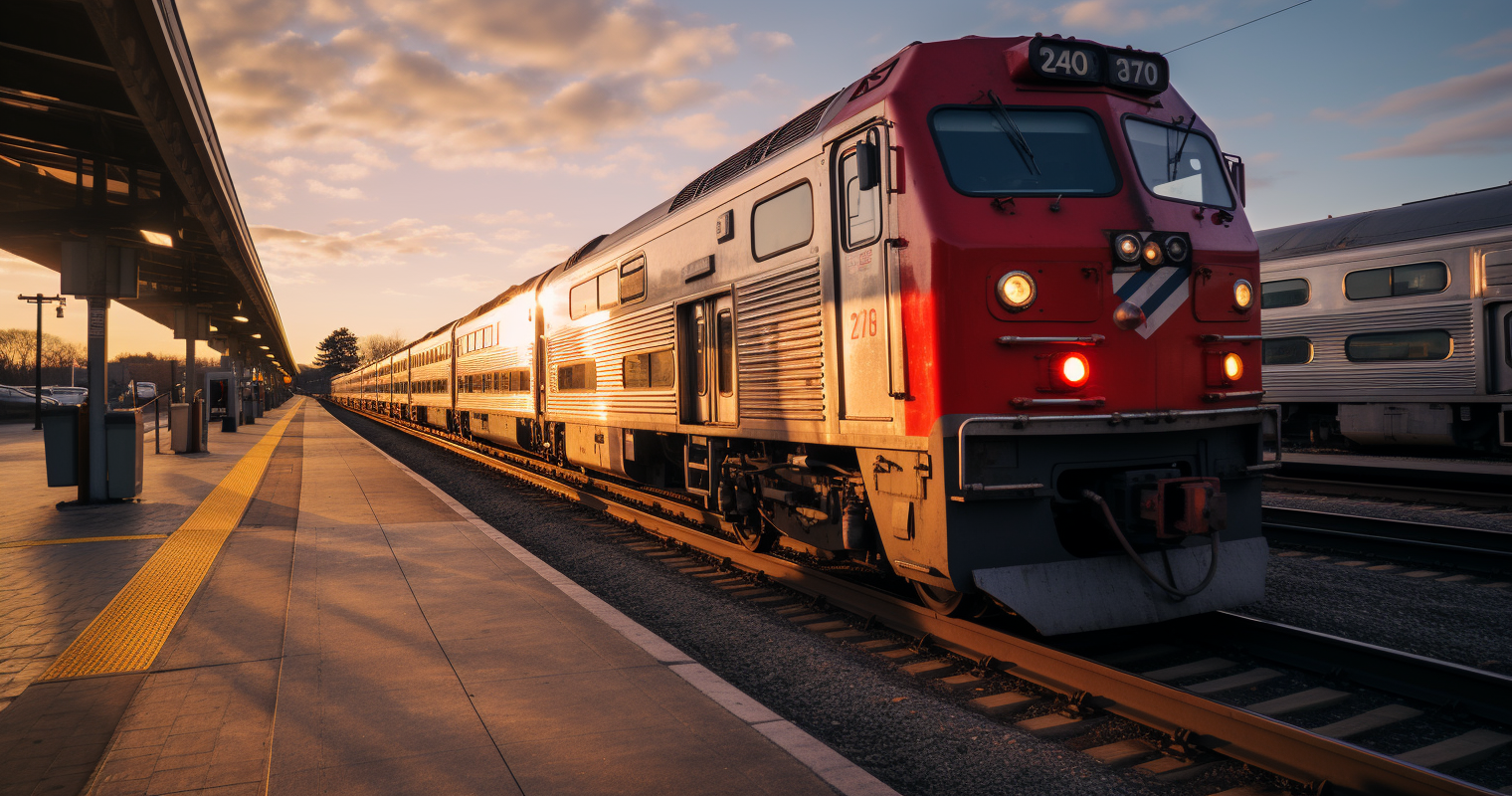
Malaysia’s rail network is expanding steadily, with Peninsular Malaysia at its core, served chiefly by the state-owned KTM and Prasarana. Major cities are reliably linked by intercity services, and electrified higher-speed trains operate along the West Coast Line. The Klang Valley boasts a wide-reaching and affordable urban rail system. By contrast, rural regions and the East Coast remain comparatively poorly served. On balance, rail travel offers a sensible and cost-effective option for city residents and those journeying between urban centres.
| Item | Details |
|---|---|
| Main national operator | Keretapi Tanah Melayu Berhad (KTMB) — intercity & commuter rail |
| Urban rail operator | Prasarana Malaysia Berhad (Rapid KL) — LRT, MRT, Monorail |
| ETS top speed | Up to 140 km/h on electrified West Coast Line (as of 2025) |
| Klang Valley urban rail network | 528.4 km of grade-separated railway; 197 operational stations (as of 2025) |
| My50 monthly pass (urban rail & bus) | RM50/month for Malaysians; Rapid Bulanan RM150/month for non-citizens (as of 2026) |
| Annual rail passengers | 305 million across all services in 2024 |
What is the standard of rail travel in Malaysia?
Keretapi Tanah Melayu (KTM), a government-owned corporation, is the country’s principal intercity passenger rail operator. It runs diesel-hauled KTM Intercity trains along the East Coast Line and the southern portion of the West Coast Line, while electrified KTM ETS trains serve the remaining stretch of the West Coast Line between Padang Besar and Gemas. Falling under the Ministry of Finance, KTM functions as the key provider of both long-distance and suburban commuter rail across major population centres.
Rail services recorded a combined 305 million passengers in 2024, underscoring the enduring appetite for train travel. Yet the network has persistently grappled with issues of punctuality, capacity constraints, and ageing infrastructure that collectively hold back its full potential. In contrast to more centralised national systems — such as Germany’s — Malaysia’s rail operations are divided among several government-backed operators with separate ticketing frameworks, although efforts to unify the experience are gaining momentum.
The rollout of electrified ETS services has brought meaningful journey time reductions compared to the old diesel-hauled timetables, and intercity ridership has more than doubled over the past decade, surpassing 8.75 million passengers in 2024. A persistent obstacle is the age of much of the existing infrastructure — vast stretches of track have been in continuous operation for decades, demanding ongoing maintenance attention. Single-track segments are a particular bottleneck, contributing to delays and constraining the overall throughput of the network.
The East Coast Rail Link (ECRL) between Kota Bharu and Gombak is scheduled for completion by the end of 2026, promising to reduce the journey from Kelantan to the Klang Valley to roughly four hours. This development will substantially improve access to the relatively neglected east coast of Peninsular Malaysia. East Malaysia — encompassing Sabah and Sarawak — has minimal rail infrastructure by comparison, and residents there depend overwhelmingly on road and air connections.
Are there different classes of rail travel in Malaysia, and what are the differences?
KTMB’s Electric Train Service (ETS) is Malaysia’s fastest metre-gauge intercity train, operating on the electrified double-track West Coast Line between Gemas and Padang Besar. With a top speed of up to 140 km/h, ETS ranks as a higher-speed rail service and stands among the select few worldwide operating at such velocities on metre-gauge track.
The ETS network is structured around three service tiers. Platinum Class trains are the fastest, calling only at principal stations and running at the busiest times of day. Gold services take slightly longer owing to a greater number of intermediate stops. ETS Silver provides an almost all-stations service between KL Sentral and Ipoh and carries the lowest fares of the three tiers. Business Class seating is also offered on all Platinum ETS2 services, delivering a premium travel experience at a correspondingly higher fare.
KTM Intercity trains on diesel-operated routes present a broader range of accommodation choices, including private Comfort Second Plus Cabins with twin beds, Sleeping Koc Class Superior coaches accommodating 40 berths, and conventional Seats Prima Class, Seats Superior Class, and Seats Economy Class carriages. These overnight services are particularly well suited to longer hauls, such as journeys to Wakaf Bharu on the East Coast Line.
Onboard ETS trains, passengers can make use of an F&B area, LED screens, luggage racks, facilities for passengers with disabilities, toilets, and CCTV cameras. KTM Komuter trains are more utilitarian by design, catering to shorter suburban trips without any class distinctions. Selected carriages on KTM trains are reserved exclusively for female travellers, and dedicated ladies’ waiting areas are clearly signposted at major stations including KL Sentral.
Where can I find rail timetables and ticket prices for Malaysia?
The definitive source for official intercity timetables and fares is the KTMB official website (www.ktmb.com.my). Fare details can also be obtained through the KTMB mobile app, station ticket counters, on-site ticket kiosks, or by contacting the Customer Service Unit via email at [email protected] or by telephone on +603-2267 1200.
Determining ETS fares has grown more involved in recent years. Since March 2020, KTM has operated a Flexi Fare system (Tambang Flexi ETS), under which prices fluctuate according to demand and how far in advance a booking is made rather than following a fixed tariff. It is always advisable to consult the KTMB website directly for up-to-date pricing, as fare tables on third-party platforms may not reflect current rates.
For urban rail services operated by Prasarana, timetables, fare information, and service details are published at the MyRapid official website (myrapid.com.my). This portal covers LRT, MRT, and Monorail rail schedules, bus timetables, and travel pass options including the My50 and MyCity Pass. Third-party booking platforms such as Easybook and BusOnlineTicket also list KTM schedules and fares, but passengers should cross-check with the official source before travelling, as these sites do not always reflect real-time changes.
KTMB’s MyRailtime app supports live train tracking, while Prasarana’s MyRapid app is the most reliable tool for urban rail users, providing real-time arrival information, service disruption alerts, and journey planning functionality. Both apps are freely available on Android and iOS. Given that prices and timetables are subject to frequent revision, always confirm the latest details with the relevant operator before purchasing a ticket.
How and where can I buy rail tickets in Malaysia?
Tickets for all KTMB services — including KTM Komuter, ETS, and Intercity trains — can be purchased online through KTMB’s ticketing platform. This is generally the most straightforward route and enables seat selection ahead of travel. Booking well in advance is strongly recommended, especially around public holidays and major festive periods, when trains fill rapidly.
- Visit online.ktmb.com.my or download the KTMB Mobile app from the Google Play Store or Apple App Store.
- Enter your departure station, destination, travel date, and number of passengers.
- Review the available trains, schedule, seat availability, and fare, then pay by debit/credit card or online wallet. You will receive an email confirmation of your ticket.
- You can print the ticket at home or collect it at the ticket counter at the train station.
- KTMB uses a QR code ticketing system, which speeds up the boarding process significantly.
- For urban Rapid KL services, tap in and out using a Touch ‘n Go card or the MyRapid app at station gates — no advance booking is required.
Departure gates for ETS and KTM Intercity trains close five minutes before departure — latecomers are not permitted to board after the gate has shut, and no refund is issued for missed trains. As ETS tickets are tied to a named service, advance booking is effectively mandatory. KTM Komuter and urban rapid transit fares are settled on a pay-as-you-go basis using stored-value cards.
Cash is not accepted on urban rapid transit services or at most station machines — only Touch ‘n Go, the MyRapid app, or NFC-enabled payment cards are valid. Ensure your Touch ‘n Go card has sufficient credit before travelling on the urban network. Cards can be purchased and topped up at all major stations.
What types of rail tickets are available in Malaysia, and are discounts available?
For KTM intercity services, travellers can choose between single and return tickets, and group booking arrangements are available subject to applicable conditions. Group reservations require a minimum of nine tickets and a maximum of 80 tickets per train, and applications must be lodged at least 30 days before the intended travel date.
The most significant pass for regular urban rail users is the My50. This pass grants unlimited travel on Rapid KL’s LRT, MRT, Monorail, and BRT services, together with Rapid KL bus and MRT feeder bus routes throughout the Klang Valley, for a subsidised RM50 per month (as of 2025). The My50 is reserved for Malaysian citizens, while a Rapid Bulanan pass is available to non-citizens at RM150 per month — a material consideration for expatriates who have not yet obtained permanent residency. Always confirm current pass conditions at myrapid.com.my.
Various concession arrangements exist for particular categories of traveller. Prasarana provides the Rapid Emas concession card, which offers a 50% discount for Malaysians aged 60 and above, and the Rapid Mesra concession card, which enables free travel for registered Malaysian persons with disabilities (as of 2026). Senior citizens are similarly entitled to a 50% discount on all KTMB services through the Senior Citizen Card, including KTM Intercity trains (as of 2023 — check current terms directly with KTMB).
Students and persons with disabilities in Malaysia may travel free of charge using the MyRailLife pass issued by KTM. The scheme covers eligible individuals across the network, with validity extended to 31 December 2025 and open to students from Year 1 through to Form 6 as well as persons with disabilities. Consult the KTMB website for the latest status of the programme beyond that date. Children aged between 4 and 12 receive a discounted ETS adult fare, and children under 4 may travel free on a parent’s seat. All discount rates and eligibility conditions are subject to revision — verify current terms directly with KTMB at www.ktmb.com.my or Prasarana at myrapid.com.my.
How suitable is the rail network in Malaysia for disabled passengers?
Accessibility across Malaysia’s rail network is on an upward trajectory but remains inconsistent from line to line. The contrast is particularly stark between newer urban rapid transit lines — which tend to be well equipped for passengers with mobility needs — and older intercity or commuter stations, where step-free access may be limited or entirely absent.
Prasarana is actively investing in passenger experience improvements, with ongoing upgrades at rail and bus stations aimed at raising accessibility, safety, and comfort standards for all users. In January 2024, Prasarana launched the OKU SMILE Pass, granting registered persons with disabilities free travel on Prasarana-operated services from February 2024. Applications can be submitted at myrapid.com.my or by calling the Rapid KL hotline on 03-7885 2585.
The Transport Ministry and KTMB have also introduced the MyRailLife free-ride scheme for persons with disabilities travelling on KTM-operated services. Dedicated seating for registered disabled passengers is provided in ETS and KTM Intercity coaches. While such provisions echo the priority seating arrangements common to rail networks elsewhere, the broader accessibility infrastructure — encompassing ramps, lifts, and platform gaps — is less reliably maintained outside the Klang Valley.
Malaysia’s railway system is generally regarded as one of the country’s safer transport modes, with KTMB and Rapid Rail having deployed automatic train control systems and CCTV cameras throughout the network. Nevertheless, a 2025 incident involving a visually impaired passenger at Titiwangsa Station prompted Prasarana to move quickly on enhanced safety measures for persons with disabilities, including deploying additional auxiliary police officers at stations lacking automatic platform screen doors. This episode illustrates that while accessibility is improving, it remains an active area of development. For the most current information, contact Prasarana at myrapid.com.my or KTMB at www.ktmb.com.my.
Are there metros, underground trains, or urban rail systems in Malaysia?
Kuala Lumpur is home to one of the most comprehensive urban rail networks in Southeast Asia. The Klang Valley integrated system currently encompasses 11 fully operational rail lines — among them two commuter rail lines, six rapid transit lines, one bus rapid transit line, and two airport rail links — spanning 528.4 kilometres of grade-separated railway with 197 stations in service (as of 2025).
Prasarana Malaysia Berhad, a government-owned entity, is responsible for operating the LRT, MRT, and monorail systems serving the Kuala Lumpur metropolitan area. Key lines include the Kelana Jaya LRT, the Kajang MRT, the Putrajaya MRT, the Sri Petaling LRT, and the KL Monorail. The Kajang MRT line overtook the Kelana Jaya line as the nation’s busiest urban rail line in June 2024.
On the question of reliability, Transport Minister Anthony Loke has cited the Mean Kilometres Between Failure (MKBF) metric as a principal indicator of service dependability. The Putrajaya MRT line recorded the highest reliability among Prasarana’s lines, achieving an MKBF score of 1.35 million kilometres (as of 2024–2025) — comparable to highly regarded metro systems elsewhere in the region. The stated objective is for all lines to exceed the one-million-kilometre benchmark by the second quarter of 2026.
Unlike numerous Southeast Asian cities where urban transit systems remain fragmented, Malaysia has made considerable progress in weaving its various rail services together. The LRT, MRT, Monorail, and KTM Komuter lines now share a unified fare and payment framework through the Touch ‘n Go card and the MyRapid app, enabling smooth transfers between services. Urban rail fares are calculated on a distance basis and integrated across all Rapid KL-operated lines, with single journeys ranging from approximately RM1.80 to RM7.50 (as of 2024). Always verify current fares at myrapid.com.my.
Beyond Kuala Lumpur, urban rail options are scarce. Penang presently has no metro system, though Prime Minister Anwar Ibrahim officially inaugurated construction of the Penang LRT Mutiara Line in January 2025, with the first phase covering 23.7 km across Penang Island. Meanwhile, the Johor Bahru–Singapore Rapid Transit System (RTS) is another significant project in the pipeline, set to deliver a swift cross-border commuting link between the two countries, with completion anticipated by 2026.
What practical tips should expats know about using the rail network in Malaysia?
A little preparation goes a long way when using Malaysia’s rail network. The following points cover what you most need to know before stepping onto a train:
- Obtain a Touch ‘n Go card without delay. A Touch ‘n Go card can be purchased at any station for a RM10 refundable deposit. It is the essential payment tool for all Rapid KL services, and cash is not accepted on urban rail lines.
- Reserve ETS intercity tickets well ahead of time. ETS trains operate on a reserved-seating basis and sell out quickly — particularly during festive periods such as Hari Raya and Chinese New Year. Note that special group bookings are not permitted during peak festive seasons.
- Steer clear of rush-hour services on urban rail where possible. Carriages become extremely congested during the morning peak (7:30–9:30 AM) and evening peak (5:30–7:30 PM). Travelling outside these windows makes for a noticeably more comfortable experience if your schedule permits.
- Take advantage of the women-only carriage if relevant. Female passengers may use the women-only carriage — the first carriage on each Rapid KL train — which is clearly marked and typically less crowded.
- Keep track of service disruptions in real time. Rapid KL frequently announces service interruptions on its official social media channels before they appear through other channels, so following these accounts is a practical way to stay informed.
- Familiarise yourself with the cancellation policy before booking. Cancellations made between two and 72 hours prior to departure attract a 50% refund, which is credited to a KTM Wallet rather than returned to the original payment method.
- ETS tickets cannot be modified — only cancelled. Once booked, ETS tickets cannot be changed; only cancellation with a partial refund is possible. Plan journeys with care, particularly during busy travel periods.
- Non-Malaysian expats should consider the Rapid Bulanan pass. Introduced from January 2026 at RM150 per month, the Rapid Bulanan monthly pass is open to both citizens and non-citizens alike and covers unlimited Rapid KL rail and bus travel. It is a practical choice for expats commuting regularly within the Klang Valley. Always check current pricing at myrapid.com.my.
- Tipping is not part of the culture. There is no expectation of gratuities on Malaysia’s rail network. Staff assistance is generally on hand at larger stations, particularly for passengers with reduced mobility.
- Industrial action affecting rail services is uncommon. As both KTM and Prasarana are government-owned, strikes are a rare occurrence. Service disruptions are far more likely to stem from technical issues or severe weather than from labour disputes.
Frequently Asked Questions
Is the Rapid Bulanan monthly pass worth it for expats living in Kuala Lumpur?
The Rapid Bulanan is a 30-day unlimited travel pass covering Rapid KL rail and bus services, available to non-citizens at RM150 per month (as of 2026). For expats commuting daily by LRT, MRT, or Monorail, the pass will generally prove more economical than purchasing individual fares. With single journeys ranging from approximately RM1.80 to RM7.50 (as of 2024), regular commuters can expect to recoup the cost of the pass within the opening days of the month. Confirm current terms at myrapid.com.my.
How do I get a refund if my KTM train is significantly delayed?
Where a train departs more than two hours late, passengers become eligible for a ticket refund. The refund is credited to a KTM Wallet rather than returned to the original payment method, so you will need to hold a KTMB account in order to receive it. For assistance, reach the KTMB Customer Service Unit at +603-2267 1200 or via email at [email protected].
Are trains in Malaysia safe to use at night?
Malaysia’s rail network is widely regarded as one of the country’s safer modes of transport. Automatic train control systems and CCTV cameras are in place across the network, and urban Rapid KL lines typically run until around midnight. As with any public transport system, standard precautions — such as keeping valuables out of sight and staying alert to your surroundings — are sensible, especially at quieter stations during late hours.
Can I travel by train to East Malaysia (Sabah and Sarawak)?
No — there is no rail link between Peninsular Malaysia and East Malaysia (Sabah and Sarawak). Reaching Borneo requires either a flight or a ferry crossing. East Malaysia has negligible rail infrastructure, and travellers there rely primarily on road and air transport. Malaysia’s entire passenger rail network is confined to Peninsular Malaysia.
Does rail travel connect Malaysia to Thailand or Singapore?
The West Coast Line extends from the Malaysia–Thailand border, where it connects with the State Railway of Thailand, southward all the way to Singapore. The Johor Bahru–Singapore Rapid Transit System (RTS), a cross-border metro link currently under development, is expected to be operational by 2026, offering a rapid commuting alternative that should help ease traffic congestion at the Causeway.
Are there luggage storage facilities at Malaysian train stations?
Left-luggage facilities are available at certain larger KTM stations, including KL Sentral, which serves as Malaysia’s principal transport hub. That said, provision is far from uniform across the network, and storage options at smaller stations are frequently non-existent. If you are travelling with bulky luggage on intercity ETS services, dedicated luggage racks are available onboard. It is worth contacting the relevant station directly in advance of your journey, as arrangements can vary.
How do I report a problem or complaint about a rail service in Malaysia?
The KTMB Customer Service Unit is reachable by email at [email protected] or by telephone on +603-2267 1200. For Rapid KL urban services, the MyRapid customer service team can be contacted by email at [email protected] or by calling 03-7885 2585, with the hotline available Monday to Sunday from 6:00am to midnight. Complaints may also be submitted through the respective official apps or via the operators’ social media channels.
Is the rail network in Malaysia subject to strikes or major disruptions?
Industrial action disrupting Malaysia’s rail services is exceptionally uncommon. Both KTMB and Prasarana are government-owned enterprises with no meaningful track record of strikes. The more frequent sources of service disruption are technical failures, track intrusions, and adverse weather conditions. Checking the official operator apps and social media channels before setting out is the most reliable way to stay across any issues on the day of travel.