
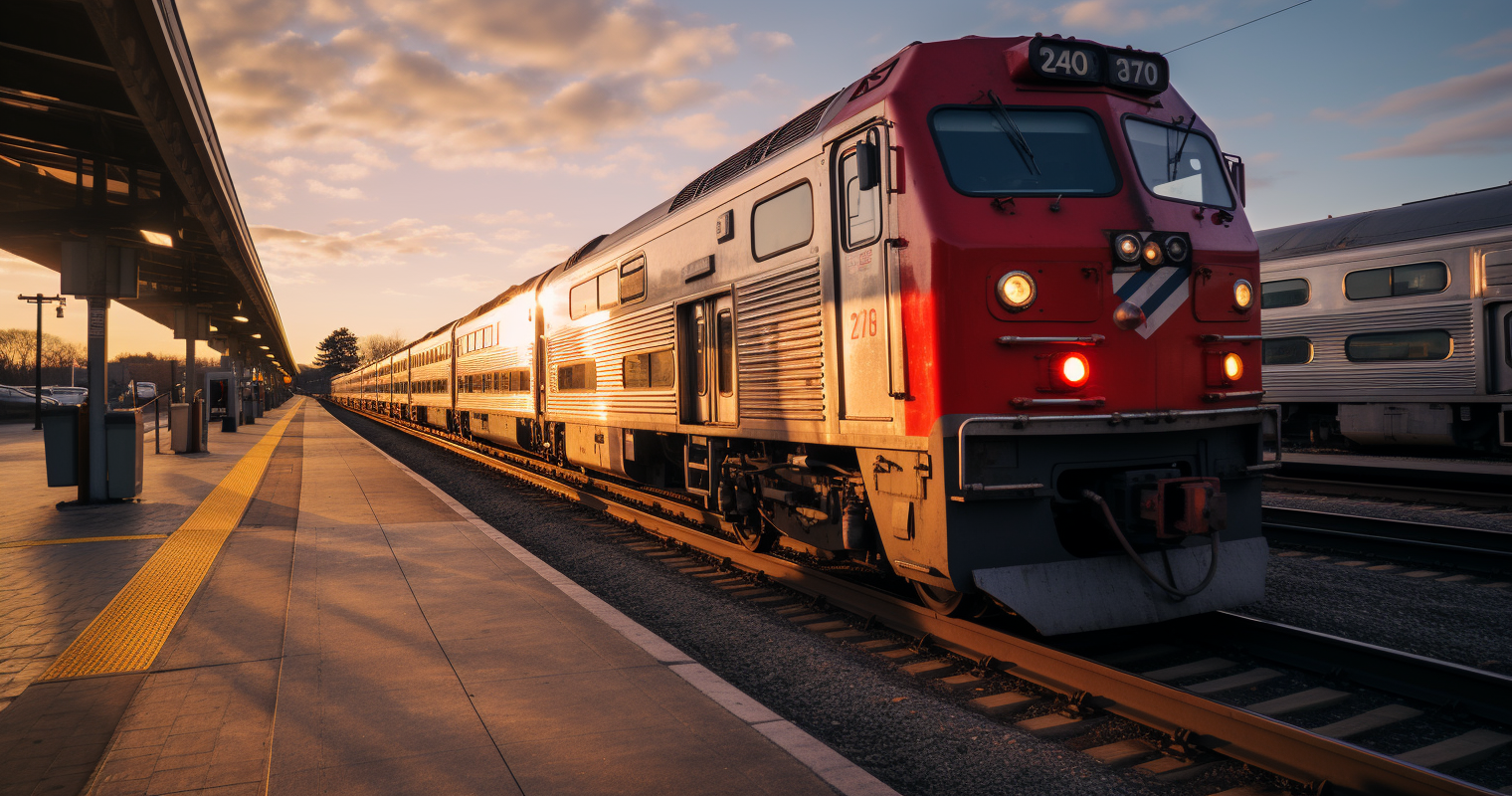
Luxembourg is home to one of the most remarkable rail networks in Europe: since March 2020, travel throughout the country has been entirely free of charge, with services run by the national operator CFL (Chemins de Fer Luxembourgeois) serving all major towns and cities. Though compact, the network is thoroughly modern and works in seamless conjunction with bus and tram services, while also offering direct international connections to France, Germany, and Belgium — a combination that makes it equally useful for daily commuters and those travelling across borders.
| Item | Details |
|---|---|
| National rail operator | CFL (Chemins de Fer Luxembourgeois) — cfl.lu |
| Standard class fares (within Luxembourg) | Free for all passengers (as of 2020) |
| First class fare (within Luxembourg) | 2-hour ticket: €3 / Day ticket: €6 (as of 2024 — verify at cfl.lu) |
| Cross-border travel | Paid tickets required; prices vary by route and operator |
| Network length | Approximately 274 km of operational track (as of 2024) |
| Timetable and journey planner | mobiliteit.lu and the CFL app |
What is the overall standard of rail travel in Luxembourg?
Luxembourg’s rail network, operated by CFL (Chemins de Fer Luxembourgeois), forms the central pillar of the country’s public transport infrastructure, linking all key towns and population centres. The system has benefited from consistent investment in recent years and features a predominantly modern fleet with double-decker carriages on many routes, almost all of which are electrically operated.
The network currently runs across approximately 274 km of standard-gauge track — a significant reduction from the roughly 550 km that existed at the end of the Second World War. By comparison with major European systems such as Deutsche Bahn or SNCF, the Luxembourg network is naturally much smaller, but relative to the country’s geographical footprint, coverage is substantial. Trains maintain solid punctuality by European standards and the rolling stock is kept in good condition throughout.
CFL operates two categories of service: RegionalBahn trains, which stop at all stations along a given route, and Regional Express trains, which cover the same corridors but skip certain intermediate stops. This structure serves both daily commuters and leisure travellers well. Key domestic routes connect Luxembourg City with Ettelbruck, Esch-sur-Alzette, Wasserbillig, and Kleinbettingen, while international services extend to destinations including Trier, Koblenz, Brussels, Liège, Metz, and Nancy.
The country’s position at the heart of western Europe makes for excellent cross-border rail links, with both the German ICE and French TGV high-speed services calling at Luxembourg City station. A fast connection to Paris via the LGV Est high-speed line has been running since 2007. For residents commuting within Luxembourg, the rail system dovetails effectively with bus services and the Luxembourg City tram, making it genuinely possible to live without a car across much of the country.
Major urban centres — Luxembourg City, the southern agglomeration, and northern hubs — enjoy frequent and reliable connections. More rural areas are also served during weekdays and weekends, though these regions sometimes rely on a rail-and-bus partnership rather than train services alone reaching every community.
What classes of rail travel are available in Luxembourg?
Since the nationwide free public transport policy took effect in 2020, all standard class travel on CFL trains — along with buses and trams — has been available without charge. In practical terms, this renders ordinary travel within Luxembourg entirely classless from a fare perspective: no ticket, pass, or registration is required to board a standard carriage.
First class is the sole exception to this arrangement, and passengers who wish to travel in it must purchase the appropriate ticket at the applicable rate. Within Luxembourg, a first class ticket valid for two hours costs €3, while a full-day first class ticket costs €6 (as of 2024 — current prices should be confirmed at cfl.lu/ticket). Measured against first class surcharges on networks such as Eurostar or Deutsche Bahn intercity services, these rates are quite affordable.
One practical benefit of choosing first class is access to a reserved seat — something that standard class passengers cannot secure. A valid first class ticket must be produced on request to confirm entitlement to that seat. For the majority of short domestic journeys, however, most regular travellers find that standard class meets their needs without any difficulty.
When travelling across borders on international services operated by partners such as SNCF (France), NMBS/SNCB (Belgium), or DB (Germany), the fare structures and class systems of those operators come into effect. Some cross-border routes are run by CFL itself, while others fall under the remit of the partner carrier. Passengers should consult the relevant operator’s website when planning international journeys.
Where can you find rail timetables and ticket prices in Luxembourg?
The main official resource for timetables, journey planning, and ticketing details is the CFL website (cfl.lu), which provides a thorough timetable search tool covering both domestic and international routes. The CFL portal functions as a comprehensive travel resource, encompassing timetables, ticket purchasing, mobility information, city trip packages, and promotional offers.
For an integrated view of all public transport in Luxembourg, Mobiliteit.lu is the go-to platform. Operated by the Public Transport Administration (Verkéiersverbond), it brings together bus, tram, and train services in a single interface. The accompanying app — available on both the App Store and Google Play — delivers real-time departure information, interactive maps, and a comprehensive journey planner, making it an indispensable tool for navigating the network and keeping track of any delays or service changes.
For travel extending beyond Luxembourg’s borders, Mobiregio is the Greater Region’s dedicated platform for coordinating cross-border journeys. The websites of international carriers — including SNCF Connect (France), Belgian Rail (SNCB), and Deutsche Bahn — are similarly useful when planning and booking travel beyond the Luxembourgish network.
Given that standard travel within Luxembourg costs nothing, “ticket prices” are a relevant concept only for first class and cross-border journeys. No ticket of any kind is needed to ride a tram, bus, or train within the country in standard class. Cross-border fares have been reduced in recent years, with improved rates for regular commuters travelling to neighbouring countries. Always check the latest figures on the official CFL or Mobiliteit.lu platforms, as fares on international routes can be subject to change.
How do you buy rail tickets in Luxembourg, and can you book in advance?
For standard class travel within Luxembourg, no purchase is necessary — passengers may simply board any train, tram, or bus without any prior action. There is no need to validate, scan, or show anything. It is worth noting, however, that all travellers are expected to carry a personal identity document at all times and must produce it if a conductor requests it.
For first class journeys and cross-border travel, tickets can be obtained through the following channels:
- CFL website: Visit cfl.lu/ticket to purchase first class and international tickets online. Tickets can be stored digitally on your device.
- CFL national app: The CFL app allows you to plan trips and manage tickets from your phone. CFL offers a national app, an international app, and a Park + Ride app.
- Ticket machines at stations: Available at major stations for first class and cross-border tickets.
- Station ticket offices: Staff at key stations — including Luxembourg City, Ettelbruck, Esch-sur-Alzette, and others — can assist with ticket purchases.
- CFL Call Centre: Reachable by phone at +352 2489 2489 or by email at [email protected], the call centre can assist with bookings. The hotline is available in Luxembourgish, French, German, and English.
- Mobiliteit.lu: Passes and individual tickets can be purchased online and at the Mobility Centre.
Advance booking plays no role in domestic standard class travel, since boarding is both free and unreserved. For international high-speed services such as the TGV or ICE, however, booking ahead is strongly advisable and often yields better fares. On domestic trains, passengers may board and take any available seat without prior arrangement, though first class travellers should keep their ticket accessible for inspection if required.
What types of rail tickets are available, and are there discount schemes?
The free-travel policy simplifies Luxembourg’s ticketing landscape considerably compared to most other countries. The products that remain relevant are those covering first class, cross-border routes, and subscription options aimed at regular international commuters.
First class tickets (within Luxembourg): A first class ticket valid for two hours is priced at €3, while a whole-day first class ticket costs €6 (as of 2024 — confirm current prices at cfl.lu). Subscription-based first class products are also on offer for those who travel frequently and prefer consistent access to a reserved seat. Details on current subscription rates are available via the CFL website.
Cross-border tickets: Fares for international journeys are calculated according to distance and destination. These tickets have been reduced in recent years, with cross-border commuters able to access more competitive rates than were previously available. A valid ticket is required from the final Luxembourgish station before the border. Always verify current fares at mobiliteit.lu/fares ahead of travel.
Bike carriage: Passengers may bring their bicycles on board at no additional cost, provided space is available. No separate ticket is required.
Pets and luggage: Neither luggage nor pets incur any charge on trains within Luxembourg, making the system refreshingly straightforward for everyday use.
Discount schemes: Because travel within Luxembourg is already free, the discount card systems common in other countries — such as Germany’s BahnCard or France’s Carte Avantage — have no direct equivalent for domestic journeys. Reduced fares are primarily available in the context of cross-border commuter tickets. Holders of disability cards issued by the Luxembourgish Ministry of the Interior are exempt from service fees when purchasing train tickets through the CFL Call Centre. For international rail travel, CFL participates in Interrail and Eurail pass schemes — check the CFL website and eurail.com for details on current pass validity and conditions.
How accessible is the rail network for disabled passengers?
CFL adheres to European Commission Regulation 1300/2014 concerning technical specifications for interoperability (TSIs) as they relate to the accessibility of the EU rail system for passengers with disabilities and those with reduced mobility. This positions Luxembourg’s network within the same EU-wide accessibility framework that applies across member states, comparable in scope to obligations on national networks in countries such as the Netherlands or Austria.
Infrastructure to support those with limited mobility — including ramps, lifts, and widened doors — is provided for wheelchair users, passengers with bulky items, parents with pushchairs, young children, and cyclists bringing bikes on board. An expanding number of stations have been brought up to full accessibility standards. Stations such as Bascharage-Sanem, Belval-University, Dommeldange, Luxembourg, Mersch, and Pétange are among those that meet EureWelcome standards, with Howald, Pfaffenthal-Kirchberg, Cents-Hamm, and Sandweiler-Contern among more recent additions to this list.
For visually impaired passengers, podotactile guidance lines on the ground lead to entrances, platforms, staircases, lifts, and display steles equipped with an acoustic announcement function. Pictogram signage at platforms and throughout station areas directs wheelchair users to accessible ramps, lifts, and adapted parking bays.
Assistance can be arranged in advance by contacting CFL. For domestic journeys, passengers should give at least 1 hour’s notice before departure; for international travel, at least 24 hours’ advance notice is required. Wheelchairs are available on site at Luxembourg City station, Esch/Alzette, and Bettembourg upon request — passengers may ask station inspectors directly, or reach CFL by email or by calling +352 2489 2489.
The Adapto service, a door-to-door taxi-bus arrangement, is available to people with disabilities and complements the rail network where station access presents difficulties. Further information on network accessibility can be found via the EureWelcome.lu website and the EureWelcome app. Accessibility conditions can vary between major urban stations and smaller rural stops where older infrastructure remains in place, so it is advisable to check details for your specific journey at cfl.lu/withoutbarrier before setting out.
Are there metro or urban rail systems in Luxembourg’s cities?
Luxembourg has no underground metro system. Given the country’s size and population, a full metro network has never been developed, in contrast to larger European capitals. Urban mobility in Luxembourg City is instead provided by the tram network and CFL rail services, which in practice serve as a form of urban commuter rail within and around the city.
Luxembourg City’s original tramway system ceased operations in 1964, a casualty of the broad decline of trams across Europe in the post-war decades. However, the city reversed course and reintroduced trams at the close of 2017, with a new tram line (T1) opening in stages. The single operational tram line currently runs between the Central Train Station (Gare Centrale) and Kirchberg — the city’s principal European quarter and financial hub — making it a well-travelled commuter corridor.
Between one and four further tram lines are in planning for completion before 2035. There are also proposals to extend the tram service as far as the French border, which would considerably enhance rail-based access for cross-border commuters.
The tram operates under the same free public transport policy that covers trains and buses throughout Luxembourg. Since 2020, no fare is charged for tram travel as part of the nationwide scheme. Tram and rail services are fully integrated for journey planning purposes — passengers can use Mobiliteit.lu or the CFL app to map out combined journeys across both modes. Tram services run from early morning through to late evening, with strong frequency along the main corridor at peak times.
The tram network is administered under the Verkéiersverbond umbrella alongside all bus and train services. All transport companies cooperate within this framework to provide a unified public transport offering. For those accustomed to expansive metro systems in other European cities, Luxembourg’s tram may seem limited in reach — but together with the CFL rail network and the extensive bus service, it constitutes a coherent and functional transport system for city life.
What should expats know about using the rail network day-to-day?
For anyone newly arrived in Luxembourg, the most striking feature of the rail system is the absence of any ticketing requirement for standard class travel. All public transport within the country — trains, buses, trams, and even the funicular railway — is free of charge. There are no barriers to pass, no validators to tap, and no penalty for simply walking on board, so long as you are not in first class or travelling internationally.
Languages and signage: Luxembourg’s multilingual character is evident throughout the rail network. At Luxembourg City’s main station and other large hubs, announcements and signage typically appear in Luxembourgish, French, German, and English. Smaller stations may use primarily French and Luxembourgish. Staff at major stations can generally communicate in several languages, and both the CFL app and Mobiliteit.lu are available in English.
Seat reservations: No reservation is available or necessary for standard class on domestic trains. Passengers board and choose any free seat. During very busy periods, trains may occasionally fill up, in which case waiting for the next service or standing may be the only options — unless you hold a first class ticket, which entitles you to occupy your reserved seat.
Luggage: No charge is applied to luggage or pets on domestic trains within Luxembourg. There are no formal restrictions on luggage for standard travel, though oversized items should be managed thoughtfully during busy commuter services.
Bikes on trains: Bicycles travel free of charge on CFL trains, subject to space being available. No advance reservation is typically needed. For those who prefer to leave their bike at the station, the bikebox network offers secure parking facilities, making a combined rail-and-cycle approach to daily travel highly practical.
Cross-border travel — a common pitfall: If your journey takes you beyond Luxembourg’s borders, a valid ticket is compulsory. Penalties for travelling without a ticket on international trains can run into several thousand euros, making this a rule worth taking seriously. Ensure you have purchased a cross-border ticket before your train reaches the final Luxembourgish station on your route.
Cultural norms: Train etiquette in Luxembourg is broadly consistent with that found across western and central Europe. Quiet behaviour is the general expectation, particularly on commuter services. Phone calls are not prohibited but keeping your voice down is considered courteous. Priority seating for elderly passengers, those with reduced mobility, or pregnant travellers is clearly marked and expected to be offered without hesitation when needed.
Frequently asked questions about rail travel in Luxembourg
Is public transport really free in Luxembourg?
Since 29 February 2020, public transport has been free for everybody — residents as well as tourists. This covers all trains, trams, and buses within the country’s borders. The only exception is first class on trains, which still requires a paid ticket.
Do I need to carry a ticket or pass to use the trains?
No ticket or pass is required for standard class travel on trains, trams, or buses within Luxembourg. However, all passengers must be able to show a personal identity document at any time if requested by the conductor, so carry your passport, national ID card, or residence permit when travelling.
How do I plan a train journey in Luxembourg?
Downloading the Mobiliteit.lu app is highly recommended. This free app provides real-time schedules, interactive maps, and a journey planner for all public transport in Luxembourg, and helps you stay informed about delays or changes. The CFL website at cfl.lu/timetable also offers a full timetable search for both domestic and international routes.
What do I need to buy a ticket for in Luxembourg?
Passengers only need to buy a ticket if they want to travel in first class or board a cross-border train. First class tickets can be purchased via the CFL app, ticket machines, station offices, or the CFL call centre. Cross-border tickets must be purchased before the last Luxembourgish stop on your route.
Can I bring my bicycle on the train?
You can take your bicycle on trains free of charge, subject to the availability of spaces. No advance booking is typically required, but space is not guaranteed on busy services. Secure bike parking is also available at stations via the bikebox scheme.
How do I get assistance as a disabled passenger on CFL trains?
You should inform CFL at least 1 hour before departure for national journeys and at least 24 hours in advance for international journeys. You can contact CFL’s assistance team by phone on +352 2489 2489 or by email at [email protected]. More information is available at cfl.lu/withoutbarrier.
Can I travel by train from Luxembourg to Paris, Brussels, or other European cities?
The French TGV and German ICE high-speed trains call at Luxembourg City, allowing comfortable transit to major European destinations. A frequent high-speed connection to Paris via the LGV Est has been in operation since 2007. These international journeys require paid tickets, which can be booked via cfl.lu, the CFL app, or the relevant operator’s website.
Is there a metro in Luxembourg City?
Luxembourg City does not have an underground metro. Urban rail mobility is provided by the tram network and CFL suburban rail services. There is currently one tram line, connecting the Central Train Station to Kirchberg. Between one and four additional tram lines are planned to open before 2035, which will extend urban rail coverage significantly across the city.