
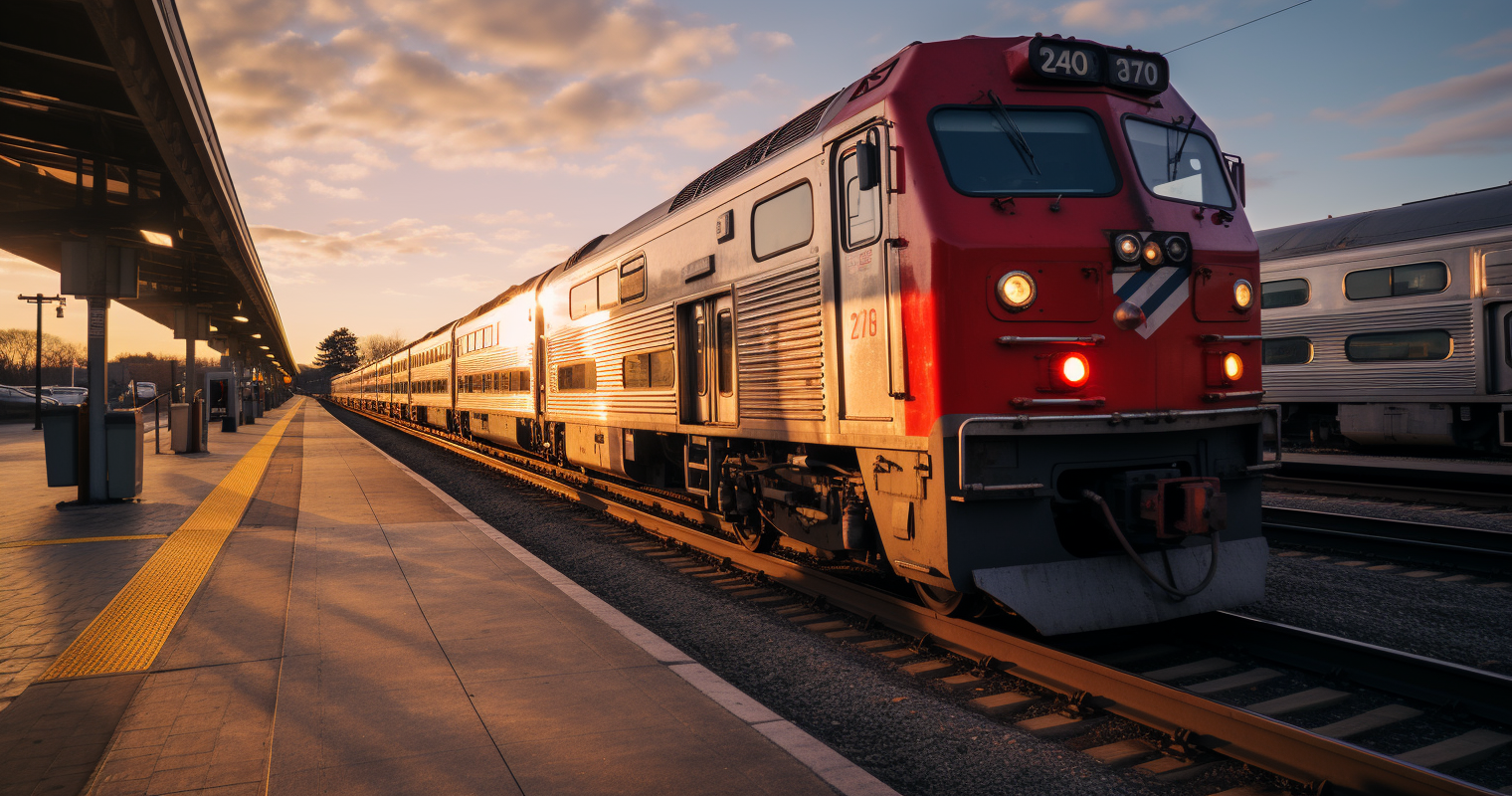
New Zealand’s rail network is far more modest in scale than the extensive systems found across Europe or Japan. Long-distance scenic services are run by Great Journeys New Zealand — a brand operating under KiwiRail — across a handful of routes, while Auckland and Wellington each maintain their own commuter rail systems. Though rail plays no dominant role in everyday intercity travel, it provides a genuinely useful commuting solution in both major cities and some truly breathtaking journeys for those travelling longer distances.
| Item | Details |
|---|---|
| National rail operator | KiwiRail / Great Journeys New Zealand (scenic routes) |
| Long-distance passenger routes (as of 2025) | 6 routes: Northern Explorer, TranzAlpine, Coastal Pacific, Capital Connection, Te Huia, Southerner |
| Total track length | Approx. 4,375 km nationwide |
| Travel classes available | Scenic Class and Scenic Plus (premium) on Great Journeys routes |
| Urban commuter rail cities | Auckland and Wellington |
| Key upcoming project | Auckland City Rail Link — scheduled to open for passengers in second half of 2026 |
What is the overall standard of rail travel in New Zealand?
New Zealand’s rail infrastructure spans roughly 4,375 km of track, threading through the North and South Islands with inter-island road and rail ferry connections bridging the gap between them. Even so, the passenger rail experience here differs substantially from what people accustomed to the dense, high-frequency networks of Germany, Japan, or Switzerland might expect.
Freight is the commercial backbone of New Zealand’s rail system. Around 19 million net tonnes of goods move by rail each year, generating more than half of all rail revenue. Passenger services therefore occupy a secondary position in terms of commercial priority, and the network cannot match the rapid, frequent intercity connections that integrated European rail systems deliver as a matter of course.
As of 2025, six long-distance passenger services are in operation: the Northern Explorer (Auckland to Wellington), the TranzAlpine (Christchurch to Greymouth), the Southerner (Christchurch to Dunedin), Te Huia (Hamilton to Auckland), the Coastal Pacific (Picton to Christchurch), and the Capital Connection (Wellington to Palmerston North). Most of these services run only a few days per week, which makes them wholly impractical for routine intercity travel.
For daily commuters, the urban rail networks in Auckland and Wellington are the most relevant option. Both cities are actively investing in rail improvement and expansion. The government’s Rail Network Investment Programme is designed to restore the national network to a reliable and resilient condition, while also supporting freight operations and improving metropolitan rail capacity in New Zealand’s largest cities.
From 2026, a seventh long-distance service — ‘The Mainlander’ — is expected to commence between Christchurch and Invercargill. This represents a gradual but encouraging broadening of long-distance passenger rail, though the overall network remains limited by international comparison. New arrivals should expect to rely on private vehicles or coaches for most intercity travel, with rail reserved for urban commuting or leisurely scenic trips.
What classes of rail travel are available in New Zealand, and what are the differences between them?
On New Zealand’s long-distance scenic services, passengers choose between two travel options: standard Scenic Class and the elevated Scenic Plus class. Rather than the complex multi-tier systems common on European high-speed networks, the difference here is clear-cut — Scenic Plus centres on enhanced dining, attentive service, and greater onboard comfort, not a separate speed tier or entirely different carriage configuration.
Scenic Plus is offered on the TranzAlpine and was reintroduced on the Coastal Pacific from December 2023 and the Northern Explorer from May 2024. Those travelling in Scenic Plus are accommodated in a dedicated carriage and enjoy a premium dining experience, with freshly prepared hot and cold dishes produced in the kitchen carriage. Seasonal, locally inspired food is served directly at your seat, accompanied by a complimentary drinks selection that includes New Zealand wines.
Scenic Plus passengers also benefit from dedicated onboard hosts who provide local commentary, answer questions, and work to make the journey as enjoyable as possible. Passengers in standard Scenic Class still travel in panoramic carriages engineered to frame New Zealand’s landscapes through large windows, and have access to a café-buffet car for snacks and refreshments — though without the table service and inclusions that define Scenic Plus.
Urban commuter trains in both Auckland and Wellington carry all passengers in identical standard carriages, comparable to the commuter rail found in Australian cities like Sydney or Melbourne. No seat reservations exist for urban services, and there is no class distinction whatsoever.
For most travellers, standard Scenic Class delivers outstanding value given the remarkable landscapes these routes traverse. Scenic Plus suits those wanting a special occasion or a more indulgent travel experience, with pricing that reflects the comprehensive dining and service package. Always consult the Great Journeys New Zealand website for the latest class availability by route, as offerings can shift between seasons.
Where can you find rail timetables and ticket prices in New Zealand?
The definitive source for long-distance rail timetables and fares is the Great Journeys New Zealand website, which is KiwiRail’s passenger-facing brand. The site lets you search by date, check seat availability, compare Scenic Class and Scenic Plus pricing, and complete your booking in one place. Both schedules and prices shift seasonally, so this site should always be your first point of reference rather than secondary sources.
Booking windows have been extended and seats can currently be reserved through to June 2027, giving travellers considerable scope for forward planning. That said, it is important to check for scheduled maintenance closures and service gaps when planning travel, as certain routes operate on a seasonal basis. The Coastal Pacific, for instance, runs seven days a week from 1 September 2025 to 26 April 2026, then suspends operations from 27 April to 30 August 2026.
Auckland’s commuter rail timetables, fares, and live service alerts are published by Auckland Transport (AT). Wellington’s commuter network is administered by Metlink, the Greater Wellington Regional Council’s public transport body. Both platforms feature journey planners, fare calculators, and real-time updates.
For an overview of government policy and rail investment at a national level, the Ministry of Transport website is the appropriate reference. Waka Kotahi NZ Transport Agency (nzta.govt.nz) also covers relevant transport matters. Given that fares and timetables are subject to change, always verify details through these official channels rather than trusting third-party travel blogs or aggregator sites.
How do you buy rail tickets in New Zealand, and can you book in advance?
Advance booking is not just recommended for long-distance scenic journeys — on busy routes it is often essential. Trains carry limited passengers, and services like the TranzAlpine frequently sell out well before departure, particularly throughout summer. Fortunately, the booking process is uncomplicated, with multiple ways to secure a seat.
- Book online: The Great Journeys New Zealand website allows you to search routes, select dates, choose your preferred class, and pay securely by credit or debit card. This method is the most convenient and makes it straightforward to view or amend your booking later.
- Book by phone: To make a reservation with payment within New Zealand, call 0800-143-669. For general travel planning enquiries, call +64 7 575 5049. Callers from Australia can reach the team toll-free on +61 1800 359 729.
- Book through a travel agent: Accredited agents in New Zealand and abroad are able to book Great Journeys tickets, which can be particularly useful for those wishing to package rail travel alongside accommodation or ferry crossings.
- Collect or use tickets digitally: After booking, your ticket or confirmation is typically sent by email and can be displayed on a smartphone at the station. Check the Great Journeys website at the time of booking for the most current delivery options.
- Urban commuter rail (Auckland and Wellington): City commuter services operate on a tap-on, tap-off basis using an AT HOP card in Auckland or a Snapper card in Wellington, rather than conventional point-to-point tickets. Both cards can be topped up online, through dedicated apps, or at retail locations across each city.
No advance booking is needed for urban rail — simply make sure your travel card holds sufficient credit before you board. Top-up facilities and customer service desks are available at key stations in both Auckland and Wellington.
What types of rail tickets are available in New Zealand, and are there discount schemes?
New Zealand’s rail fare system is relatively uncomplicated alongside the layered structures found on larger national networks. Long-distance scenic routes sell one-way tickets with prices that fluctuate based on the route, travel class, and how far ahead you purchase. Booking early generally unlocks cheaper fares, and promotional offers appear periodically. Visit the Great Journeys New Zealand website for current deals, as these change throughout the year.
Rail and coach combination passes are also on offer for those wanting to explore New Zealand more extensively. Pairing rail and bus travel enables visitors and recently arrived residents to make the most of the country’s scenic routes. While these passes may appeal to newcomers still finding their feet in New Zealand, those commuting daily in the cities will find the urban card systems far more practical.
On urban commuter networks, several concession fare categories apply:
- Auckland (AT HOP card): Reduced fares are available for children, tertiary students, and SuperGold cardholders — a New Zealand government scheme for qualifying older residents. Travelling with an AT HOP card already delivers a meaningful discount over paying on the spot. Visit Auckland Transport’s fares page for current rates, which are reviewed from time to time.
- Wellington (Metlink/Snapper): Comparable concession fares exist for children, students, and SuperGold cardholders. Current pricing can be found on Metlink’s tickets and fares page.
The SuperGold Card is a particularly valuable benefit for eligible New Zealand residents aged 65 and over, granting free off-peak public transport — including urban rail — right across the country. Eligibility is tied to New Zealand Superannuation or the Veteran’s Pension. Full eligibility criteria are available at Work and Income NZ. As with all fare structures, verify the latest thresholds and entitlements through official sources, since these may be updated.
How accessible is the rail network in New Zealand for disabled passengers?
The level of accessibility across New Zealand’s rail network varies considerably depending on whether you are using an urban commuter service or a long-distance scenic train, and whether the infrastructure in question is newly built or part of an older system. Stations constructed or modernised under recent investment programmes tend to offer step-free access, tactile paving, audible announcements, and accessible toilet facilities. Smaller or older stations on scenic or regional routes are often more limited in what they can provide.
On long-distance scenic trains, wheelchair spaces and an accessible toilet are available onboard. Wheelchair hoists allow access to the café carriage from track level, which is a meaningful provision. However, the overall accessibility experience on these routes is not fully seamless, and passengers with mobility requirements should contact Great Journeys New Zealand before travelling to confirm specific arrangements — especially at smaller stations with limited staffing.
Auckland Transport provides detailed accessibility guidance on its website, covering the upgrades delivered as part of the Rail Network Rebuild programme. Many of Auckland’s newer or recently refurbished stations now feature accessible platforms, hearing loops, and visual information displays. Wellington’s Metlink network similarly incorporates accessibility provisions at major stations, with full details on the Metlink accessibility page.
When measured against comprehensively standardised frameworks — such as the Persons with Reduced Mobility Technical Specification for Interoperability (PRM TSI) that governs UK rail accessibility — New Zealand’s approach is improving but lacks the same uniformity. Passengers with specific access needs are advised to plan trips carefully, contact operators directly in advance, and check the most recent accessibility information on the relevant operator’s website. Great Journeys New Zealand can be reached on 0800-143-669 within New Zealand.
Are there metro or urban rail systems in New Zealand’s cities?
Two New Zealand cities — Auckland and Wellington — operate commuter rail networks. Neither runs a conventional underground metro in the manner of London’s Tube or Tokyo’s subway, but both cities have electrified rail systems, including tunnelled sections, that serve everyday commuters. Cities such as Christchurch, Dunedin, and Hamilton have no regular urban rail services for residents.
Auckland: Auckland’s commuter rail is coordinated by Auckland Transport (AT) and operates across several lines — the Western, Southern, Eastern, and Onehunga lines among them. The network runs electric trains and will see a transformative increase in capacity and service frequency when the City Rail Link opens, currently scheduled for the second half of 2026. The Rail Network Rebuild is tackling the most pressing infrastructure issues and is essential groundwork for the higher train frequencies that the City Rail Link will enable.
Auckland commuters travel using the AT HOP card, which works across rail, bus, and ferry services throughout the region. The AT Mobile app, available for both iOS and Android, brings together real-time service information, journey planning tools, and AT HOP card management. On weekdays, trains generally operate from around 5am through to midnight, with a reduced schedule on weekends.
Wellington: Wellington’s commuter rail network is administered by Metlink and radiates outward from Wellington station to destinations including Paraparaumu, Masterton on the Wairarapa line, and communities throughout the Hutt Valley. The Greater Wellington Regional Council has signed a NZ$1.066 billion contract with Alstom to supply and maintain 18 battery-electric multiple-units for the Wairarapa and Manawatū lines under the Lower North Island Rail Integrated Mobility programme — a clear signal of sustained long-term investment in the Wellington network. Commuters pay using a Snapper card or Metlink’s contactless payment options.
Te Huia (Hamilton–Auckland): Te Huia provides a weekday rail connection between Hamilton and Auckland, giving Waikato residents a genuine alternative to driving on one of the country’s busiest road corridors. Current timetables and fares are published on the Waikato Regional Council’s Te Huia page.
What should expats know about using the rail network day-to-day in New Zealand?
Day-to-day rail travel in New Zealand is an unhurried and uncomplicated affair compared to the tightly choreographed boarding processes common on certain international networks. Major urban stations are well maintained, with clear English-language signage and digital departure boards showing platform and timing information. Announcements are made in English; te reo Māori is also used at a number of stations and on some services, reflecting New Zealand’s bicultural identity.
One of the first practical matters to address after arriving in either Auckland or Wellington is getting your travel card sorted. In Auckland, the AT HOP card is the key to the system — pick one up at an AT Customer Service Centre, at many convenience stores and Countdown/Woolworths supermarkets, or order one online. In Wellington, the Snapper card performs the same role. Boarding without a valid card or ticket can result in an infringement notice, and paying cash on urban rail is not a standard option.
Long-distance scenic train tickets include your seat reservation, so there is nothing extra to arrange once you have booked. To access the onboard audio commentary, passengers are encouraged to download the Great Journeys New Zealand app before departure — full content only becomes accessible once connected to the train’s onboard Wi-Fi, so installing the app ahead of time is a worthwhile tip.
Great Journeys trains accommodate a reasonable quantity of personal luggage. Any oversized or bulky items should be discussed with the operator before travel. On urban services, everyday items such as backpacks and standard-sized suitcases can generally be brought onboard, and bicycles are allowed on certain services. There is no formal left-luggage facility at most stations, so carrying large bags during peak commuter periods is best avoided when carriages are at their busiest.
The social norms on New Zealand trains are broadly similar to those found elsewhere — keep noise to a considerate level, give up your seat to someone who needs it more, and avoid bringing strongly scented food into enclosed spaces. Headphones are the expected standard for personal audio, and mobile phone conversations, while not prohibited, are generally kept brief and quiet. The overall atmosphere on board is relaxed and welcoming, very much in keeping with New Zealand’s broader social character.
Frequently Asked Questions
Is rail a practical way to commute to work in New Zealand?
Rail is a viable commuting option in Auckland and Wellington, both of which have functioning commuter rail networks. Elsewhere in New Zealand, urban rail simply does not exist, leaving residents dependent on buses or cars. Long-distance trains operate too infrequently to serve as a daily intercity commuter option.
Do I need to book long-distance train tickets in advance in New Zealand?
Yes — securing your seat well ahead of travel is strongly advised for long-distance scenic trains operated by Great Journeys New Zealand. High-demand routes such as the TranzAlpine can sell out weeks or even months before departure, especially over summer and school holiday periods. Book through the Great Journeys New Zealand website or by phoning 0800-143-669 within New Zealand.
What travel card do I need for train travel in Auckland and Wellington?
Auckland commuters need an AT HOP card, obtainable from convenience stores, AT service centres, and the Auckland Transport website. In Wellington, a Snapper card or Metlink’s contactless payment system is used. Both cards work across rail, bus, and ferry services in their respective cities.
Are there senior or student rail discounts in New Zealand?
Yes. Qualifying residents aged 65 and over can obtain a SuperGold Card, which entitles them to free off-peak public transport — urban rail included — throughout New Zealand. Discounted fares for students and children are also available on commuter networks in Auckland and Wellington. Consult the Auckland Transport and Metlink websites for current rates and eligibility criteria, as these are subject to change.
Is the TranzAlpine train worth taking as a resident, not just a tourist?
Without question. The TranzAlpine, running between Christchurch and Greymouth, ranks among the world’s finest scenic rail experiences and draws locals and visitors in equal measure. The route crosses the dramatic Southern Alps and delivers breathtaking alpine scenery throughout. While it is not designed for commuting, it makes a superb day trip or weekend getaway from Christchurch.
When will Auckland’s City Rail Link open?
The City Rail Link is scheduled to open to passengers in the second half of 2026. Its completion will substantially increase the capacity and frequency of Auckland’s urban rail network, broadening its appeal and usefulness for everyday commuters across the city. The latest updates are available through Auckland Transport.
Can I take my bicycle on New Zealand trains?
Bicycles are permitted on certain Auckland and Wellington urban services, though peak-hour restrictions apply on both networks. On Great Journeys long-distance trains, bikes can typically travel as luggage subject to available space and prior arrangement. Always confirm bicycle policies with the relevant operator before travelling, as rules can differ between routes and times of day.
Are there any direct rail connections between the North and South Islands?
No direct rail link exists between the two islands — there is no bridge or undersea tunnel. Travellers combining rail journeys across both islands must cross Cook Strait by ferry, either the Interislander or Bluebridge service, between Wellington and Picton, then connect with the appropriate train at either end. On the South Island side, the Coastal Pacific links Picton with Christchurch.