
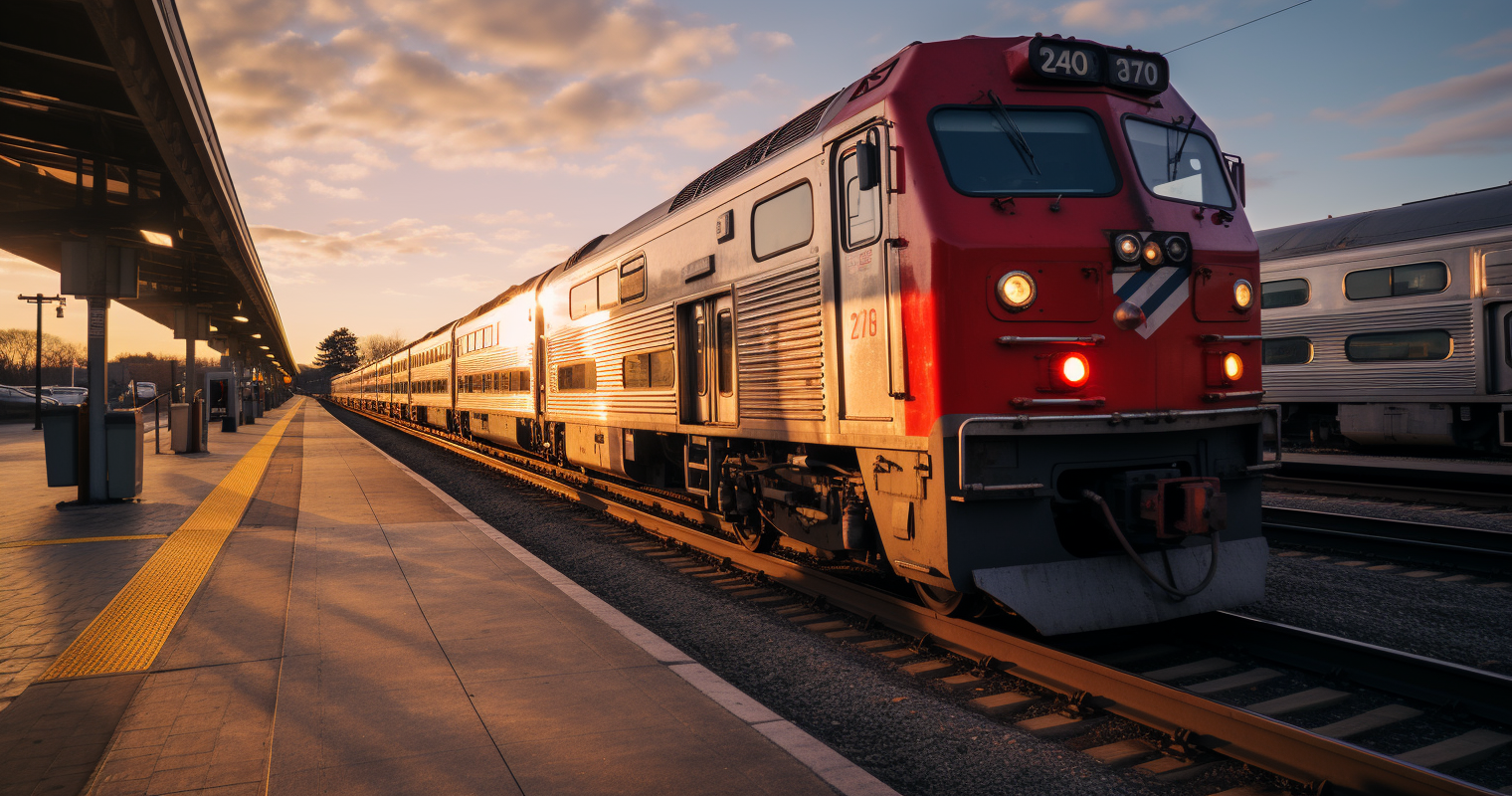
Norway’s railway system blends spectacular long-distance scenic routes with urban commuter services, delivered by multiple competing operators running trains on infrastructure overseen by the state enterprise Bane NOR. Though the journeys themselves can be breathtaking and comfortable, consistent punctuality remains elusive — roughly 87–88% of services run to schedule — and large swathes of rural Norway remain poorly served. The main cities are linked, but the network continues to require substantial investment.
| Item | Details |
|---|---|
| Main national operator | Vy (formerly NSB); also SJ Nord, Go-Ahead Nordic |
| Infrastructure manager | Bane NOR (state enterprise) |
| Punctuality (as of 2025) | ~88.5% of Vy passenger trains on time (Q1 2025) |
| Travel classes | Standard class and Komfort (first class equivalent) on long-distance; standard only on most regional and commuter services |
| Advance booking savings | Significant — “minipris” fares on Oslo–Bergen can drop from ~964 NOK to ~299–500 NOK when booked at least 24 hours ahead (as of 2024) |
| Senior discount (Vy) | 50% off for passengers aged 67 and over (as of 2024); verify current terms with Vy |
| Oslo metro (T-bane) | 5 lines, 101 stations, 85 km; operated by Sporveien/Ruter; fully integrated with bus, tram, and ferry ticketing |
| Central booking portal | entur.no (all operators) and vy.no |
What is the standard of rail travel in Norway?
Norway operates its railways according to a model that keeps infrastructure separate from train operations — an approach mirrored across much of Europe. The Norwegian Railway Directorate (Jernbanedirektoratet) oversees the network on behalf of the Ministry of Transportation, while Bane NOR, as the state enterprise, is responsible for constructing and maintaining all track. A range of private and public operators then provides passenger and freight services on that foundation.
Current operators include Vy along with its subsidiaries Vy Gjøvikbanen and CargoNet, plus Flytoget, Go-Ahead Nordic, and SJ Nord. Rather than a single centralised operator along the lines of Germany’s Deutsche Bahn, different companies serve different routes — yet ticketing is largely unified. In practice, passengers are mostly shielded from this complexity: tickets covering all lines can be purchased through the Entur website or at staffed stations, with Flytoget (the Airport Express Train) being a notable exception that operates outside this shared system.
For anyone relying on trains for a daily commute, punctuality is worth keeping in mind. In 2023, 85.8% of Vy’s passenger services arrived on time — defined as within three minutes of schedule for regional trains and five minutes for long-distance — while cancellations affected 2.5% of all planned departures. By the first quarter of 2025, on-time performance for Vy passenger trains had climbed to 88.5%, reflecting improvements that included expanded rolling stock capacity.
The root causes of delays lean heavily on infrastructure, with signalling failures and track maintenance work responsible for over 40% of incidents in recent years, according to Norwegian Railway Directorate data. Winter conditions — snow, ice, and freezing temperatures — compound these problems seasonally. Norway’s national rail infrastructure manager has set a target of nine in every ten trains running on time, a benchmark that has not yet been reliably achieved.
The government is channelling significant resources into tackling this. The 2025 state budget included an allocation of more than 12 billion kroner directed at rail improvements, with a particular focus on clearing a long-standing maintenance backlog. Norway’s National Transport Plan has set an objective of cutting delays and cancellations by 30% by 2036 — progress is anticipated to be incremental rather than rapid.
In terms of geographic reach, trains link Norway’s main urban centres — Oslo, Bergen, Trondheim, Stavanger, and Kristiansand — but rural communities and the far north depend far more heavily on buses or private vehicles. A combination of ageing lines, natural hazards, and the absence of electrification north of Stjørdal has deepened service gaps in the 2020s, with some northern routes having faced extended closures or reduced operations in recent years.
Are there different classes of rail travel in Norway, and what are the differences?
On Norway’s long-distance Regiontog services, passengers can choose between standard class and “Komfort” class. Komfort is broadly equivalent to first class — the coaches themselves are even marked with a “1” on the doors — and it merits consideration, as standard class seating can feel tight relative to similar services elsewhere in Europe.
Komfort class passengers enjoy complimentary hot and cold drinks. All long-distance trains are fitted with power outlets, a dining car, and free Wi-Fi. Be aware that Wi-Fi signal can drop when the train passes through remote terrain, and card payment in the dining car may not always be possible during these periods.
Standard class on long-distance services offers comfortable 2+2 seating arrangements along with power outlets and free Wi-Fi. Commuter trains serving cities such as Oslo, Trondheim, Stavanger, and Bergen generally feature 2+3 seating but typically also provide power outlets and Wi-Fi. On shorter regional and commuter routes, Komfort class is not ordinarily available — the two-tier class distinction applies only on longer intercity services.
Certain Vy trains include a dedicated family coach, a useful feature for those travelling with young children. These coaches are purpose-designed for family travel and come with extra amenities including playrooms, baby changing facilities in the bathrooms, and entertainment such as books and films.
On overnight sleeper services, the accommodation hierarchy extends beyond the standard seating options. All sleeper routes in Norway feature soft-sleeper cabins — more comfortable and correspondingly more expensive than standard seats or couchette berths. Cabins accommodate a maximum of two people, include bedding as standard, and each cabin has its own private washbasin.
Where can I find rail timetables and ticket prices for Norway?
The central hub for timetable information and ticket bookings across all Norwegian train operators is Entur (entur.no), the country’s national transport booking service. While tickets for Vy trains can also be purchased directly through the Vy website, Entur is the most reliable first port of call for newcomers as it brings all operators together on a single platform.
Entur is particularly important when booking travel with SJ Nord or Go-Ahead, since the SJ Nord website does not always process bookings originating from outside Norway, and Go-Ahead only sells tickets through its own app. International third-party platforms such as Omio and Rail Europe also handle Norwegian rail bookings, though they may add service fees.
Key official websites and contact details for Norway’s main rail operators:
- Vy (main national operator): vy.no/en
- Entur (national booking portal, all operators): entur.no — call centre at +47 61 27 90 88 (press 9 for service in languages other than Norwegian); open Monday to Friday 07:00–23:00, Saturday 08:00–21:00, Sunday 08:00–23:00 (shorter hours on bank holidays).
- Bane NOR (infrastructure and network information): banenor.no/en
- Norwegian Railway Directorate: jernbanedirektoratet.no/en
Fares and timetables are updated regularly — most notably around the twice-yearly schedule changes in June and December. Always confirm current details through the official sources listed above before making travel arrangements or purchasing any pass.
How and where can I buy rail tickets in Norway?
For long-distance travel in Norway, purchasing tickets in advance online is strongly advisable — both to secure a better price and to guarantee a reserved seat. The following steps outline the process for buying a train ticket:
- Visit Entur (entur.no) or the Vy website (vy.no/en). Both platforms are available in Norwegian and English. Enter your departure point, destination, and travel date to view available services and fare options across all operators.
- Choose your fare type. Typical options include non-flexible tickets (the cheapest, but with no changes or refunds permitted), semi-flexible, and fully flexible fares. Consider your travel needs carefully before committing to a ticket type.
- Select your seat. For Regiontog journeys booked online or at a station, a seat will be assigned to you. Booking online gives you the opportunity to pick your own preferred seat. If you are dissatisfied with your assigned seat once aboard, the conductor can advise on which other seats are free.
- Pay and receive your ticket. After purchase, tickets can be printed, downloaded to a smartphone app, or collected at the station. Conductors routinely accept both mobile and electronic tickets.
- Alternatively, buy at the station. Larger stations have staffed ticket windows and self-service kiosks. Be aware that walk-up fares are substantially higher than those available when booking in advance.
- Use the Vy app for commuter routes. For residents making regular journeys, the app is the most convenient purchase method and is also the only way to access the “Smartprice” commuter discount scheme.
Long-distance daytime trains in Norway run infrequently, and departures on popular corridors can sell out entirely several days before travel — this is especially true on the Oslo–Bergen and Oslo–Trondheim routes. Book as far ahead as possible, and particularly so during summer months.
Seat reservations are compulsory on certain routes. Reservations are mandatory on some long-distance services and are advisable for all intercity travel. For overnight sleeper trains, a reservation is required regardless of the operator.
What types of rail tickets are available in Norway, and are discounts available?
Norwegian rail ticketing offers a range of fare structures to match different travel habits. Standard single tickets are the default for one-off trips. Flexible tickets permit changes and cancellations at extra cost. The cheapest option is the non-refundable, non-changeable “minipris” fare, which goes on sale up to 90 days before departure.
Booking ahead can result in significant savings. As a general rule, buying in advance is the single most effective way to reduce the cost of regional train travel. A walk-up single fare on the Oslo–Bergen route is around 964 NOK (as of 2024). Purchase at least 24 hours before travel and you become eligible for minipris pricing, which can be as low as 299 NOK — though 400–500 NOK is a more common outcome. Even leaving it until the day before can still shave several hundred kroner off the cost.
For commuters making repeated journeys, Vy operates a “Smartprice” scheme. This is available for travel within Eastern Norway, purchasable only through the Vy app for adult and student fare categories, and is designed for people who regularly commute between the same two stations. Once you activate Smartprice, you receive discounts on individual tickets bought within any 30-day window, with a built-in guarantee that your total spending will never exceed the cost of an ordinary monthly season ticket.
Various groups are eligible for fare reductions (always verify current terms and figures directly with the relevant operator, as these may change):
- Children (Vy, as of 2024): Children aged 0–5 travel free in standard class; children aged 6 to 17 receive a 50% reduction on flexible and single tickets.
- Seniors (Vy, as of 2024): Passengers aged 67 and over qualify for half-price travel on most trains within Norway; no separate card or application is required.
- Disabled passengers and companions: Passengers with a valid companion card for people with disabilities, issued by their municipality, are entitled to a 50% discount on single tickets. Wheelchair users travel free on trains that do not require seat reservations within Oslo and Akershus (Ruter-operated services), and only need to purchase a ticket for any part of their journey that falls outside those zones.
- Groups: For groups of ten or more passengers travelling together — for instance to a conference or training event — Vy may offer a group discount fare.
For visitors or expats undertaking extended leisure travel, international rail passes such as the Eurail Pass are accepted on most Norwegian train services. Eurail passes are valid across all long-distance train operators in the country. These passes can represent strong value in Norway, where point-to-point fares tend to be high, and they offer the flexibility to board trains without pre-purchasing individual tickets — though seat reservations are either mandatory or strongly recommended on longer routes. For residents making regular commuter trips, however, a monthly season ticket or the Smartprice arrangement will generally prove more economical than a pass. Check the latest pass prices and conditions at eurail.com or directly with train operators.
How suitable is the rail network in Norway for disabled passengers?
Norway has invested considerably in making rail travel more accessible, although the quality of provision varies between operators, individual routes, and stations — particularly on the older parts of the network. Broadly speaking, accessibility standards are comparable to those found across Northern Europe, though they are less uniform than in countries with more recently constructed rail infrastructure.
Standard class coaches on Vy trains include dedicated facilities for passengers with special requirements, along with provision for transporting bicycles and ski gear. Long-distance services generally offer accessible toilets and designated spaces for wheelchair users. Staff assistance is provided at larger stations, and passengers with accessibility needs are encouraged to inform the operator prior to travel.
Within Oslo’s urban transit network, accessibility provision is strong. Every T-bane (metro) station offers step-free access through at least one entrance — the sole exception being the inbound platform at Frøen — and platform heights are level with the train floors. The majority of T-bane stations are fitted with lifts and ramps to accommodate wheelchair users and passengers with mobility impairments, and many bus services feature low-floor vehicles with designated wheelchair spaces.
All new trams and buses introduced in Oslo meet wheelchair accessibility standards, and audio-visual announcements support passengers with hearing or visual impairments. The Ruter system provides detailed accessibility information through both its website and app, enabling passengers to check which stations and vehicles meet their needs before setting out.
For passengers accompanying a disabled traveller, companions travel free on Vy trains and Ruter services within the Ruter area upon presentation of a valid companion card issued by the municipality; in certain cases where stated on the card, two companions may travel. For the most up-to-date accessibility guidance, contact Vy directly at vy.no/en or visit the Norwegian Railway Directorate website. Ruter’s accessibility information for Oslo urban transport is available at ruter.no/en.
Are there metros, underground trains, or urban rail systems in Norway?
Oslo is home to a rapid transit network known as the T-bane, but beyond the capital, Norway has no nationwide underground or metro system. The T-bane is unique within the country. Other major cities — Bergen, Stavanger, and Trondheim — manage urban mobility through combinations of buses, trams, and regional rail connections rather than dedicated metro infrastructure.
Oslo’s T-bane is operated by Sporveien T-banen under contract from the regional transit authority Ruter. The network comprises five lines, all of which pass through the city centre, covering a total distance of 85 km and serving 101 stations, 17 of which are located underground or indoors. Beyond serving 14 of Oslo’s 15 districts, two lines extend into the neighbouring municipality of Bærum.
The system is both rapid and frequent. All five lines share a common central section running between Majorstuen and Tøyen, creating an intensively used core where trains follow one another every 2–3 minutes. On individual lines, services run every 8 to 15 minutes. The T-bane operates from early morning through to late at night. A 2024 assessment of 23 European rapid transit networks ranked the Oslo Metro as the most efficient of all those examined.
For newcomers to Oslo, one of the T-bane’s most practical features is its full integration with other transport modes under the Ruter ticketing framework. The metro sits within Oslo and Akershus’s unified public transport system, meaning the same ticket covers the Oslo Tramway, city buses, local ferries, and Vy-operated commuter rail services. A single Ruter Zone 1 ticket therefore provides access to the entire metro, tram, bus, and local ferry network without any additional purchases.
Getting around the T-bane is made easy by clear bilingual signage and onboard announcements, as well as electronic departure boards at stations showing real-time train arrivals. For journey planning, timetables, and tickets, the Ruter app and website are the recommended tools: ruter.no/en. Residents of Bergen should also be aware of the city’s light rail line, Bybanen, which connects the city centre with the airport and southern suburbs — details are available via Skyss (skyss.no/en).
What practical tips should expats know about using the rail network in Norway?
Norway’s railways have their own characteristics that can catch first-time users off guard. The guidance below covers the most useful things to know before you travel.
- Book long-distance tickets as early as possible. The cheapest “minipris” fares are available in limited quantities and are snapped up quickly during the peak summer months from June to August. The sooner you book, the better your prospects of securing a low fare.
- Use Entur or the Vy app for the full picture. When booking on the Vy website, Komfort (Plus) class is available as an optional upgrade on top of the standard fare, and the site also sells tickets for Go-Ahead and SJ Nord routes. Entur consolidates everything in one place for convenience.
- Expect rail replacement buses during disruptions. When planned engineering works or unexpected incidents prevent normal train operation, Vy arranges substitute bus services on the affected corridors. Check travel updates before you leave, particularly during winter.
- Understand your rights if a train is delayed. Vy’s conditions of carriage set out what compensation or refund you are entitled to following a delay or cancellation. Note that if a service change was pre-announced — such as scheduled engineering works — your entitlement to reimbursement may be reduced or not apply at all.
- Build in extra time for winter journeys. Snow, ice, and freezing conditions worsen delays between December and March, triggering temporary speed reductions and equipment thawing requirements. Avoid tight connections during January and February in particular.
- Tipping is not customary. There is no expectation of tipping train staff or conductors in Norway. Railway employees are salaried professionals and gratuities are not part of the culture.
- Observe quiet carriage norms. Norwegians generally prefer a calm atmosphere on public transport — speaking loudly on the phone is considered inconsiderate, and most long-distance trains have designated quiet zones. Follow any posted signage and take your cues from other passengers.
- Always purchase your T-bane ticket before boarding. On Oslo’s metro, failing to hold a valid ticket before boarding can result in a substantial on-the-spot fine. Inspectors operate regularly and the penalty for fare evasion is not trivial.
- Bicycles are permitted outside rush hours. Bikes are allowed on all T-bane lines except during morning (7–9 AM) and evening (4–6 PM) peak periods on weekdays. Folding bikes may be carried at any time. Rules for mainline intercity trains differ — confirm with the operator before travelling.
- Take time to appreciate the scenery — it is genuinely extraordinary. Some Norwegian train routes traverse lush valleys and wild mountain plateaus that are virtually inaccessible by any other means. The Oslo–Bergen line is widely considered one of the most visually stunning railway journeys in Europe.
Frequently asked questions about rail travel in Norway
Is a rail pass worth it if I’m living in Norway rather than just visiting?
For the majority of residents, a monthly season ticket or the Vy Smartprice commuter arrangement will prove more economical than a rail pass, which is primarily designed for flexible, multi-journey touring. That said, if you intend to make frequent long-distance leisure trips around the country, a Eurail Pass covering Norway could still work out cheaper than buying individual point-to-point tickets. Compare current pass pricing against your anticipated journeys at eurail.com before committing.
How do I get a refund if my train is cancelled or significantly delayed?
Your entitlements in the event of a cancellation or delay are detailed in Vy’s conditions of carriage. Refunds and compensation claims can generally be submitted through the Vy website or app. Bear in mind that if the disruption was communicated in advance — for example, as part of scheduled engineering works — you may not qualify for a full refund. Full details are available at vy.no/en, or you can contact Entur on +47 61 27 90 88.
Are trains in Norway safe to travel on at night?
Norway’s public transport network has a strong reputation for cleanliness and safety. CCTV coverage and periodic patrols maintain a secure environment even during late-night hours. Long-distance overnight sleeper trains are both widely used and considered safe. As with public transport anywhere, basic common sense is advisable, but serious incidents on Norwegian trains are exceptionally rare.
What happens during strikes or major rail disruptions in Norway?
Industrial action within the Norwegian rail sector is uncommon, but it does take place from time to time. When services are affected, Vy generally deploys rail replacement buses on disrupted routes. For real-time updates during any disruption, monitor the Vy and Entur apps, and consider setting up journey alerts if you travel on a regular schedule.
Can I use the same ticket across trains, metro, bus, and tram in Oslo?
Yes — within Oslo’s designated fare zones. Ruter administers a unified ticketing scheme covering the T-bane (metro), trams, buses, local ferries, and local commuter trains, meaning one ticket serves all these modes. The key exception is Flytoget, the Airport Express Train, which runs on a completely separate ticketing system and is not included in Ruter tickets.
How do I get to Oslo Airport by train without paying for Flytoget?
As Flytoget operates independently of Ruter, its fares are not covered by Ruter tickets. To travel to or from Oslo Airport (OSL) using a Ruter ticket, board a Vy regional or local train instead, or use airport bus services that accept Ruter tickets within the applicable fare zones. The Vy train journey to the airport takes a few minutes longer than Flytoget but is considerably cheaper when using a Ruter period or multi-ride ticket.
Do trains run to Bergen, Trondheim, and Stavanger from Oslo?
Yes. Direct rail services connect Oslo with all three cities. The Oslo–Bergen route ranks among Europe’s most celebrated scenic rail journeys, crossing the vast Hardangervidda mountain plateau. Oslo–Trondheim services are provided by SJ Nord, while Oslo–Stavanger is operated by Go-Ahead Nordic. All three corridors have limited daily departures and frequently sell out well in advance, so early booking is essential — especially during summer and around public holidays.
Is there anywhere I can get help planning a rail journey in Norway in a language other than Norwegian?
Conductors on Regiontog trains speak fluent English and move regularly through the train to check tickets and assist passengers — onboard announcements are also delivered in English. The Entur and Vy websites both offer full English-language versions. For telephone assistance, the Entur call centre (+47 61 27 90 88) can help in languages other than Norwegian — press 9 when the options are presented. The Entur journey planner is freely available online with no registration required.