

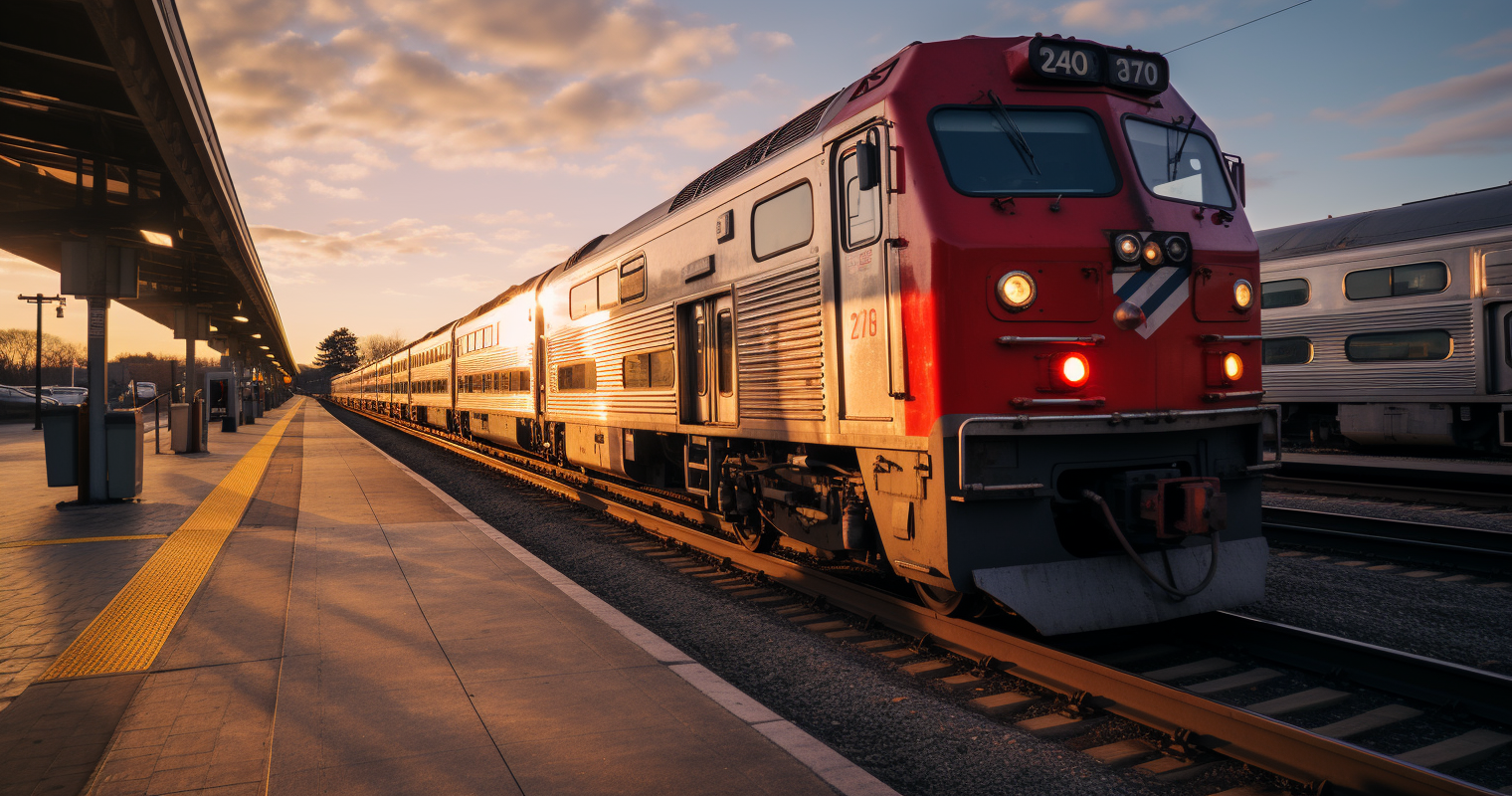
Panama’s rail offerings are limited in scope but encompass two genuinely useful and distinct services for residents: the Panama Metro, a modern rapid transit system operating within Panama City, and the Panama Canal Railway, a historic trans-isthmian line connecting Panama City to Colón. No national passenger rail network links the country’s interior regions, meaning that for most purposes, rail travel in Panama is concentrated in and around the capital.
| Item | Details |
|---|---|
| Panama Metro fare (as of 2024) | $0.35 per ride (flat fare) |
| Panama Canal Railway passenger fare (as of 2024) | Approx. $25 one-way; verify at panarail.com |
| Panama Metro operating hours | Approx. 5:00 AM – 11:30 PM daily (weekday); reduced hours on weekends |
| Metro lines currently in service | Line 1 (18.1 km, 15 stations) and Line 2 (24 km, 19 stations incl. airport branch) |
| Metro Line 3 (monorail, under construction) | 34 km across the Panama Canal; 82% complete as of January 2026 |
| Panama Canal Railway route | 76.6 km, Colón (Atlantic) to Balboa/Panama City (Pacific), ~60 minutes one way |
What is the overall standard of rail travel in Panama?
By international comparison, Panama’s rail infrastructure is modest in scale. Countries such as Germany, Japan, and Spain maintain comprehensive national passenger networks where intercity and regional rail services form an integral part of everyday life. Panama has no equivalent — there is no nationwide passenger rail system connecting its various provinces, and for residents living outside the capital, intercity buses remain the standard mode of travel.
Prior to 2014, only a single operational railroad existed in Panama: the Panama Canal Railway. That year, the opening of the Panama Metro brought the total to two. The Panama Canal Railway, operated by the Panama Canal Railway Company, provides both passenger and freight services along a route connecting Panama City on the Pacific coast with Colón on the Atlantic coast.
The Panama Canal Railway (PCR) spans the Isthmus of Panama, covering 47.6 miles (76.6 km) from Colón to Balboa near Panama City. Although the line’s infrastructure has been substantially modernised, passenger services are offered primarily for tourists and cruise ship visitors, running as an approximately three-hour round trip. This is not a commuter service suited to the daily routines of working residents.
The Panama Metro, on the other hand, functions as a genuine everyday transit solution. It holds the distinction of being Central America’s first modern metro system and has served as the cornerstone of urban public transportation in Panama City since it inaugurated in 2014. Line 1 alone carries between 240,000 and 280,000 passengers each day and has been in continuous operation since April 2014. For anyone living and working within Panama City, the Metro offers a dependable, affordable, and well-maintained commuting option.
No regular passenger train services connect Panama City to cities such as David, Santiago, or the Azuero Peninsula. A high-speed railway between Panama City and David was at one point pursued through collaboration between the Panamanian government and China Tiesiju Civil Engineering Group, but the project was cancelled in September 2019 by President Laurentino Cortizo. The proposal was raised again by president-elect José Raúl Mulino in 2024, though the Panama–David railway remains firmly in the planning stages with no passenger service expected in the foreseeable future.
What classes of rail travel are available in Panama, and what are the differences between them?
Panama’s two active rail services differ considerably in character, and neither operates a conventional multi-tier class system of the kind familiar on European intercity trains — such as the standard and first-class options offered by Deutsche Bahn or SNCF.
Panama Metro: The Metro offers a single, undifferentiated class of travel with no tiered pricing. Every passenger pays the same flat fare regardless of distance travelled or time of day. The system is recognised for its cleanliness, modernity, and operational efficiency. Trains throughout the network are air-conditioned, and stations are designed to be bright, spacious, and inclusive, incorporating accessibility features for passengers with mobility requirements. Free Wi-Fi is available on the network, enabling passengers to remain connected during their journey. The experience is uniform across all stations and lines.
Panama Canal Railway: The passenger carriages on this historic route are notably well-appointed, a reflection of both its heritage and its orientation towards leisure travellers. Passengers ride in well-maintained, comfortable cars featuring woodwork reminiscent of an earlier era, large windows framing views of the surrounding landscape, and onboard bar service. One carriage is a vintage dome car originally constructed for the Southern Pacific Railroad in 1938. There is no surcharge to ride in this car, though it is frequently occupied by tour groups. Outdoor viewing platforms are accessible at the ends of the carriages, and a souvenir snack box is included in the ticket price; bar and snack service is available throughout all passenger cars.
There is no formal first-class or business-class distinction on the Panama Canal Railway in the conventional sense. The service is directed primarily at leisure travellers and cruise ship excursion groups rather than daily commuters, and there is no advance seat reservation based on class category. Since operator details and rolling stock configurations are subject to change — particularly following the railway’s 2025 acquisition by APM Terminals — always consult the official website at panarail.com for the most up-to-date onboard information.
Where can you find rail timetables and ticket prices in Panama?
Accurate timetable and fare information is available through a small number of official and reputable sources. It is always advisable to consult the primary operator websites directly, as schedules and prices are liable to change.
- Panama Canal Railway (intercity/tourist service): The official operator website is panarail.com, which is the authoritative source for current passenger departure times, fare levels, and any schedule amendments. Note that the site has occasionally been reported as inconsistently updated; when in doubt, contact the operator directly. Third-party tour platforms such as GetYourGuide also list available departures.
- Panama Metro (urban rapid transit): The official Metro de Panamá website is metrodepanama.com.pa, where timetable and fare details are published. Line schedules, route maps, and service hours are also updated in real time through the Moovit app.
- Real-time journey planning: Apps including MiBus and the dedicated Panama Metro app deliver live information on bus and train schedules, routes, and fares, making it straightforward to plan journeys on the go. Both are widely used by residents and are available for Android and iOS devices.
The Panama Canal Railway passenger train departs every morning at 7:15 AM from Panama City towards Colón, running Monday to Friday. The return service from Colón to Panama City also operates Monday to Friday, departing at 17:15. This schedule has been subject to changes in the past, including the suspension of Saturday services during certain periods, so always confirm the current timetable with the operator before travelling.
How do you buy rail tickets in Panama, and can you book in advance?
The purchasing process differs between the two rail services. Below is a step-by-step guide to obtaining tickets for each.
- For the Panama Metro: No advance booking is required or available — simply purchase or top up a reloadable Metro Card (Tarjeta Metro) at the station. This rechargeable card is used to pay for Metro rides and is also accepted on the city’s public bus network, making transfers straightforward. Cards can be bought and recharged at customer service centres within Metro stations, with a minimum top-up amount of $2.
- Load funds onto your Metro Card: Cards can be purchased and reloaded at any Metro station using cash or a credit/debit card. Tap the card against the entry barrier to deduct the fare automatically.
- For the Panama Canal Railway (tourist/passenger service): Advance booking is strongly recommended, as seats can sell out — especially during the cruise ship season. The operator’s official ticketing platform is accessible via panarail.com. Tickets have also been sold through a third-party platform called Passline; check the official site for the current booking route.
- Tour operator bookings: Many passengers book the Canal Railway as part of a guided excursion through platforms such as GetYourGuide or through Panama City-based tour operators. This can simplify logistics considerably, as transfers between the railway stations and the city centre are not always easy to arrange independently.
- At the station: Walk-up tickets for the Panama Canal Railway may occasionally be available at the Corozal passenger station near Panama City, though availability cannot be guaranteed. For the Metro, walk-up paper tickets are not offered — the card system is the only accepted payment method.
It is worth noting that the railway’s terminal on the Caribbean side is not a conventional station but simply a platform, and the Panama City-end station is situated outside the city proper, near Miraflores Locks. Local buses pass nearby, but taking an Uber or taxi is advisable, particularly since the station is easy to overlook. New residents should account for these onward connections when planning their journey.
What types of rail tickets are available in Panama, and are there discount schemes?
Rail ticketing in Panama is relatively uncomplicated, lacking the elaborate range of advance purchase fares, flexible tickets, and railcard structures that characterise countries with large national rail networks.
Panama Metro ticketing: The Metro operates a flat fare system, with each trip costing $0.35 (as of 2024). There are no return tickets, weekly passes, or zone-based pricing — every card tap deducts the same fixed amount. The rechargeable Metro Card functions similarly to London’s Oyster Card or Barcelona’s T-Casual, and is accepted across both the metro network and the city’s MiBus bus services.
Reduced fares are available on the Panama City Metro for senior citizens, students, and persons with disabilities. Those who qualify may apply for a special discount card entitling them to lower fares. The specific discount amounts and eligibility criteria should be confirmed directly with Metro de Panamá, as these may be updated. Consult the official website at metrodepanama.com.pa for current details.
Panama Canal Railway ticketing: The Panama Canal Railway Company has historically charged one-way fares of US$25 (as of 2024), though prices should always be verified at the official site — particularly in light of the railway’s 2025 acquisition by APM Terminals, which may lead to fare revisions. No multi-journey passes, commuter season tickets, or railcard discounts exist for this service. Given its primary function as a leisure and tourist excursion, the commercial discount structures common on national rail networks do not apply.
There are currently no nationwide rail passes covering Panama in a manner comparable to the Interrail pass in Europe or the Japan Rail Pass. For everyday commuters in Panama City, the Metro Card remains the sole rail pass product on offer. Always consult official sources for the most current fares and any newly introduced discount programmes, as these are subject to change.
How accessible is the rail network in Panama for disabled passengers?
Accessibility provision varies considerably between the Panama Metro and the Panama Canal Railway, and between newer and older infrastructure across the network.
Panama Metro: The Metro was built to contemporary accessibility standards. Stations are spacious and well-illuminated, incorporating features designed to support passengers with mobility challenges. These include lifts at stations, tactile paving along platform edges, and designated wheelchair spaces within train carriages. The scale of the commitment to accessibility is further illustrated by the fact that Otis, a specialist elevator and escalator manufacturer, was contracted to supply 127 elevators and escalators for the Metro Line 3 project, demonstrating that the newest expansion continues to uphold these standards. Passengers familiar with modern accessible metro systems — such as those in Singapore, Madrid, or Seoul — will find the physical access provisions in Panama’s Metro broadly comparable.
It is worth noting that while the Metro and some city buses are wheelchair accessible, the picture is considerably less consistent beyond Panama City. Residents who depend on reliable accessible transport outside the capital should bear this in mind.
Panama Canal Railway: The vintage carriages and rudimentary platform arrangements on the Canal Railway present greater challenges for passengers with reduced mobility. The Atlantic-side terminal is not a proper station but a basic platform, which limits accessible boarding options. Anyone with specific accessibility requirements should contact the operator well in advance via panarail.com to establish what assistance can be arranged.
On the Metro, security staff are stationed at every station throughout operating hours and can assist passengers who need help boarding or navigating the system. There is no formal advance passenger assistance booking scheme comparable to, for example, Great Britain’s Passenger Assist programme, so queries should be directed to Metro station staff or the operator’s customer service channels directly.
Are there metro or urban rail systems in Panama’s cities?
Urban rapid transit rail is currently available only within Panama City. No other city in Panama presently operates a metro, tram, or light rail system.
The Panama Metro was developed to relieve severe road congestion between Panama City and the San Miguelito District, offering an alternative to car and bus travel. It complements the MiBus network and runs every day throughout the year.
Line 1 opened on 6 April 2014, covering 18.1 kilometres across 15 stations. Line 2 followed and entered regular service on 25 April 2019, extending 24 kilometres with 19 stations. A branch from Line 2 to Tocumen International Airport opened in 2023, giving residents a highly affordable rail link to the airport. San Miguelito station serves as the interchange point between the two lines.
A major expansion is now under construction. Panama Metro Line 3 is being developed as a direct response to persistent road congestion across the wider metropolitan area. The 34-km route will cross the Panama Canal, linking the eastern and western sides of the country, and will use a monorail system to traverse terrain with extreme elevation variations. By January 2026, overall construction was 82% complete, with the underground section 47.05% finished.
The Panama Metro system is ultimately planned to grow into a ten-line network by 2035–2040, encompassing four rapid transit lines, three tram lines, two monorail lines in Panama Pacifico, and an aerial lift line in the San Miguelito District. For new residents settling in Panama City, this represents a transit network in active expansion, one that will offer considerably greater coverage over the coming decade.
Key ticketing details for the Metro:
- Flat fare of $0.35 per ride (as of 2024) — verify current fares at metrodepanama.com.pa
- The rechargeable Metro Card (Tarjeta Metro) is also accepted on the city’s MiBus public bus network, facilitating seamless multimodal journeys.
- The Metro generally operates from 5:00 AM to 11:30 PM daily. Check the official site for weekend and public holiday hours, as these may differ.
- Real-time journey planning is available through the Moovit app and the dedicated Panama Metro app.
The official Metro de Panamá website is metrodepanama.com.pa. The Moovit app at moovitapp.com is widely relied upon by residents for real-time service updates.
What should expats know about using the rail network day-to-day in Panama?
Day-to-day use of Panama’s rail services is generally uncomplicated, but there are several practical points that will help new residents navigate the system with confidence from the outset.
Language of signage and announcements: All station signage, platform information, and onboard announcements on the Panama Metro are in Spanish. Unlike metro systems in major international hubs such as Dubai or Singapore, English translations are not standard. That said, the system is easy to navigate visually — stations are clearly identified by line colour and station name — but audio announcements will be in Spanish only. Picking up a handful of basic transit-related Spanish vocabulary will make the experience noticeably smoother for newcomers.
Getting your Metro Card: One of the first practical tasks for a new resident using the Metro should be to obtain a Tarjeta Metro (Metro Card). This rechargeable card is accepted on both the Metro network and MiBus city buses, and can be purchased and topped up at customer service centres inside Metro stations. The minimum top-up amount is $2. Keeping the card sufficiently loaded will prevent unnecessary delays at the entry barrier.
Peak-hour crowding: With Line 1 carrying between 240,000 and 280,000 passengers daily, carriages can become extremely crowded during morning and evening rush hours — comparable to peak-hour conditions on metro systems in any large city. Where possible, travelling slightly outside peak times or building extra time into your journey is advisable while you are still getting your bearings as a new resident.
Integration with buses: Line 1 terminates at Albrook, which connects directly to Panama City’s main bus terminal and Albrook Mall. This interchange is essential for residents needing to travel beyond the Metro network — including those taking intercity buses to David, Chitré, or Santiago. The Metro Card used for rail travel functions equally on MiBus city buses, making multi-modal journeys both simple and inexpensive.
Luggage: There are no published restrictions on standard commuter bags or day packs on the Panama Metro, though large suitcases can cause disruption in crowded carriages during peak hours. The Panama Canal Railway, as a tourist-focused service, generally accommodates standard travel luggage without issue, but it is worth confirming with the operator for current guidance as no formal luggage policy is publicly listed.
Cultural norms: Priority seating for elderly passengers, pregnant women, and people with disabilities is clearly marked within Metro carriages and is broadly respected by other passengers. Eating and drinking are prohibited on the Metro, and security personnel along with surveillance cameras are present at every station. The overall atmosphere is orderly and safe. Payment must be made by tapping the Metro Card at the entry barrier — there is no facility for cash payment at the gate.
Panama Canal Railway practicalities: Residents who wish to experience the historic Canal Railway should be aware that the 76-kilometre crossing takes just under ninety minutes. The Panama City-end station sits outside the city centre, near Miraflores Locks. While local buses do pass nearby, taking an Uber or taxi is advisable as the station is not prominently sign-posted and can be easy to miss. Onward travel connections should be planned carefully, and those heading to or from Colón should exercise standard personal safety awareness in certain parts of that city.
Frequently asked questions about rail travel in Panama
Is there a national passenger train network in Panama linking different provinces?
No. Panama does not currently have a national passenger rail network. The only inter-city rail service is the Panama Canal Railway, which runs between Panama City and Colón. For travel to other provinces such as Chiriquí, Veraguas, or Coclé, intercity buses are the standard option. A Panama City–David railway has been discussed at government level but remains in early planning stages.
How much does the Panama Metro cost, and how do I pay?
The Panama City Metro uses a flat fare system, with a single trip costing $0.35 (as of 2024). Payment is made using a reloadable Metro Card (Tarjeta Metro), which can be bought and topped up at any Metro station. The same card works on MiBus city buses. Always check the official Metro de Panamá website for any fare updates.
Can I get a discount on the Metro as a senior, student, or person with a disability?
The Panama City Metro offers discounted fares for seniors, students, and persons with disabilities. Eligible individuals can apply for a special discount card to enjoy reduced fares. Contact Metro de Panamá directly at metrodepanama.com.pa or visit a customer service centre at any Metro station to apply.
Does the Metro connect to Tocumen International Airport?
Line 2 includes a branch to Tocumen International Airport that opened in 2023. This makes it possible to travel from the airport into Panama City for just $0.35 (as of 2024), making it one of the most affordable airport rail connections in the Americas. The branch connects at Corredor Sur station on the main Line 2 route.
How do I book tickets for the Panama Canal Railway?
Tickets for the Panama Canal Railway can be booked through the official operator website at panarail.com. Third-party platforms such as GetYourGuide and local tour operators also offer bookings, often bundled with guided excursions. Advance booking is strongly recommended, particularly during cruise season, as seats are limited. Walk-up availability is not guaranteed.
Is the Panama Metro safe to use?
Safety measures are well-implemented on the Metro, with security personnel and surveillance cameras at every station to ensure passenger safety. The Metro is widely regarded as one of the safest public spaces in Panama City. As with any urban transit system, standard precautions around personal belongings apply, particularly during busy peak hours.
When will Panama Metro Line 3 open?
By January 2026, overall construction of Line 3 was 82% complete, with the underground section 47.05% finished. The elevated segment is scheduled for completion in April 2027, while the underground section extending to Albrook is expected to be completed in October 2028, at which point the line is planned to enter service. Line 3 will cross the Panama Canal and serve Panama Oeste province. Check Metro de Panamá’s official channels for the latest updates.
Are there any rail passes or monthly commuter tickets available in Panama?
There are currently no monthly passes, season tickets, or rail passes available for either the Panama Metro or the Panama Canal Railway. The Metro uses a pay-as-you-go flat fare of $0.35 per journey (as of 2024), and frequent users simply keep their Metro Card loaded with sufficient credit. There is no equivalent of a monthly travelcard as found in some other transit systems. Verify current ticketing options at metrodepanama.com.pa.