

Panama operates a government-supported National Palliative Care Program, an expanding private sector, and NGO-backed hospice services to care for people approaching the end of life. Expats need to familiarise themselves with the local healthcare landscape, the process for registering a death with the Electoral Tribunal, key legal instruments such as advance directives, and the practical steps involved in managing an estate and repatriating remains.
| Item | Details |
|---|---|
| National Palliative Care Programme | Formally established 2010; national policy launched 2011 — the first in Latin America |
| Death registration authority | Electoral Tribunal of Panama (Tribunal Electoral) — Civil Registry (Registro Civil) |
| Advance directive signing | Can be signed in front of a witness at any location (as of 2016 research data) |
| Death certificate copies | Available from any Electoral Tribunal office; fees vary by number of copies (check official source for current fees) |
| Repatriation of ashes | Mortuary certificate not required for ashes, only for a body (as of 2025, per U.S. Embassy Panama) |
| Palliative care NGOs | HOSPES, Fundacáncer, ANCEC — active at community level |
What palliative and end of life care services are available in Panama?
Panama holds the distinction of being the first nation in Latin America to introduce a national palliative care policy, achieving this milestone in 2011. This makes the country something of a trailblazer in the region, and the foundations of its system are more robust than those of many neighbouring states. Even so, expats should be aware that the quality and availability of services can differ considerably depending on where in Panama they reside.
The National Palliative Care Program enjoys backing from the highest levels of government, including the Presidency of the Republic, the Office of the First Lady, and the Ministry of Health (Ministerio de Salud, or MINSA). This senior-level endorsement has helped embed palliative care more deeply within Panama’s public health infrastructure than is the case in most other countries across the region.
A national coordinator sits within the Ministry of Health and Social Security, and each of Panama’s 14 health regions has its own palliative care programme coordinator, along with healthcare workers trained in the essential criteria for managing hospice and home care patients and those living with advanced illness. This regional framework means that, at least in principle, palliative services are not confined solely to Panama City, though access levels do vary considerably across the country.
Across Latin America as a whole, only roughly 7% of patients who need palliative care actually receive it, with services concentrated predominantly on cancer patients in larger urban centres; smaller cities and rural communities remain chronically underserved. Panama fares better than most of its neighbours, yet expats based outside the capital or major population centres should investigate local provision thoroughly. There is some capacity to offer palliative care to patients without cancer diagnoses, including elderly frail individuals and those living with conditions such as Alzheimer’s disease or kidney failure.
The Dr. Arnulfo Arias Madrid Hospital Complex in Panama City delivers palliative care for patients with life-limiting conditions. As the country’s principal public hospital, it represents one of the most accessible entry points into the public palliative care system. Private hospitals and specialist clinics also offer palliative services, typically with shorter waiting times and broader pain management options.
Among the services offered by private palliative care teams in Panama — such as the Palcare programme at the Panama Cancer Clinic — are home consultations, home hospitalisation, procedures including paracentesis and analgesia pumps for symptom control, palliative sedation, and both outpatient and inpatient care. This kind of integrated, patient-centred approach — delivering care in the home or a clinical environment depending on need — broadly mirrors how specialist palliative teams function in countries such as Canada or Australia, though availability in Panama depends heavily on whether patients are accessing public or private services.
NGOs such as HOSPES, Fundacáncer, and ANCEC have for many years delivered high-quality palliative care and professional training at community level, working alongside the University of Panama and other academic bodies engaged in palliative care research and education. These organisations frequently bridge gaps where public provision falls short, and they can serve as invaluable points of contact for expats navigating an unfamiliar system.
How does hospice care work in Panama?
Hospices in Panama concentrate on delivering palliative care to patients with life-limiting illnesses, with the primary goal of enhancing quality of life and managing symptoms. They provide an array of services encompassing medical treatment, pain relief, and emotional support for both patients and their families. The system operates as a mixed model: some provision flows through the public health network, some through private facilities, and a significant share through NGOs and charitable bodies.
Several types of hospice care are available in Panama. Inpatient hospice care is provided within a dedicated facility for patients who require round-the-clock medical supervision and support. Home-based hospice care is also an option, and is frequently the preferred choice for those who wish to remain in familiar surroundings during the final stage of life. Unlike the NHS in the United Kingdom — where hospice care is largely charity-funded and free at the point of use — or the Medicare framework in the United States, Panama does not have a single, overarching funding mechanism for hospice services. Access and cost therefore depend substantially on a patient’s insurance status and the type of provider selected.
Across the Americas, palliative care is generally provided free of charge in hospitals and certain primary care settings. For expats enrolled in Panama’s public social security system (Caja de Seguro Social, or CSS) or those using public MINSA facilities, some end of life care may be covered at little or no cost. However, in some countries in the region, palliative care is covered through private health insurance, and end-of-life hospice provision, while available, is rarely free. Expats depending on private healthcare should scrutinise their insurance policy carefully to understand what is included.
Referrals to hospice care are ordinarily initiated by the treating physician. The care team typically includes doctors, nurses, social workers, psychologists, and chaplains. At the primary care level, palliative support should be provided by staff with foundational palliative care knowledge; in more complex situations, the team may be expanded to include a psychologist, social worker, and chaplain. For up-to-date eligibility criteria and funding arrangements, contact the Ministerio de Salud (MINSA) or the Caja de Seguro Social (CSS) directly.
What are the cultural and religious customs around death and dying in Panama?
Panama is an overwhelmingly Roman Catholic country, and Catholic traditions profoundly shape the customs observed around death and dying, though Protestant and other Christian denominations are also well represented. Expats from countries with more secular attitudes may find Panamanian customs around death notably more religious and community-centred than what they are accustomed to.
It is customary for death announcements to appear in local newspapers, informing the wider community of the bereavement and providing details of the funeral arrangements. This is a firmly rooted social tradition in Panama — public notification is regarded as both a mark of respect and a social duty, and family members typically make these arrangements without delay following a death.
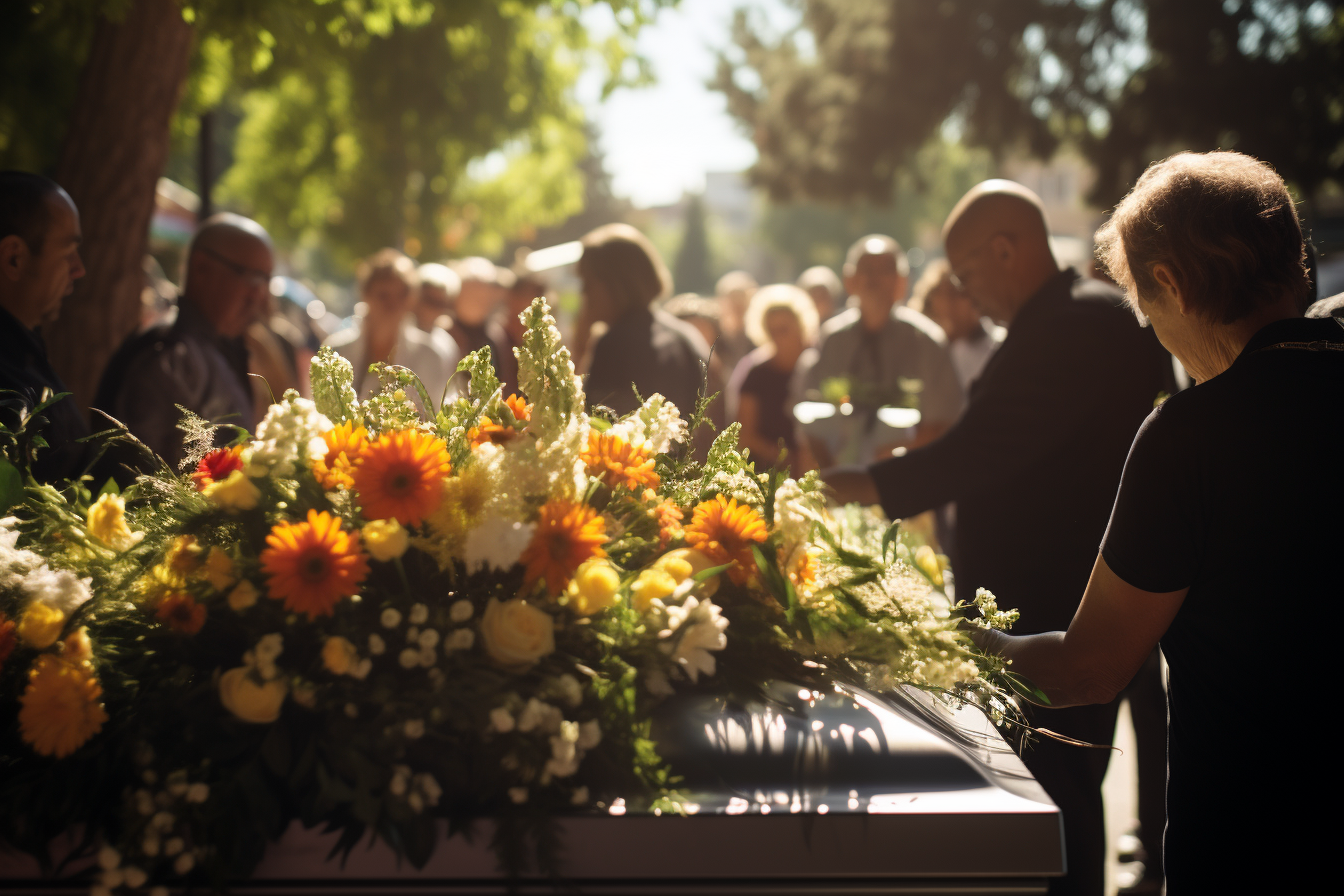
Funerals in Panama are usually held within a few days of a person’s passing. They tend to be significant occasions, drawing extended family and the wider circle of friends. A velorio, or wake, is commonly held in the family home or a funeral chapel in the hours or days preceding the burial, often continuing through the night with prayers, candles, and communal gathering. For expats, attending a Panamanian funeral is generally welcomed, and simply being present is regarded as a meaningful expression of solidarity and respect.
The dress code at Panamanian funerals is typically formal, with black attire being the expectation. This is consistent with the conventions observed in many other countries with strong Catholic traditions, such as Italy, Mexico, or the Philippines. Modest, dark-coloured clothing is the appropriate choice for any attendee, regardless of their own cultural background.
Burial remains the predominant form of interment in Panama. Cremation has grown in acceptance over recent decades, especially in urban areas, but burial in a cemetery continues to be the cultural and religious preference for most Panamanian Catholic families. Catholic rites — including a funeral Mass and graveside prayers — are central to many services.
While certain customs and practices are widely observed when someone dies in Panama, these can vary by region and according to the family’s own cultural and religious convictions. Indigenous communities — particularly those in the Darién, Bocas del Toro, and the comarca regions — maintain their own distinct traditions and ceremonies around death, which can differ markedly from mainstream Catholic practice. Expats living in or near these communities should be respectful of local customs and seek guidance from community members when in doubt.
What legal and medical documents should expats prepare in advance in Panama?
Putting legal documents in place before they are needed is among the most important actions any expat can take, especially when living at a distance from family. Panama has a legal framework covering advance directives, powers of attorney, and related instruments, but there are meaningful differences from the frameworks in other countries that expats should understand fully.
In Panama, advance directives (ADs) can be executed by signing them before a witness at any location of the patient’s choosing. This is considerably more straightforward than in some other countries — in Argentina, for instance, such documents must be signed before a notary public or a judge. This relative simplicity means that expats in Panama can put an advance directive in place without necessarily engaging a notary, though doing so adds an extra layer of legal certainty.
An advance directive (directiva anticipada in Spanish) enables a person to record their wishes regarding medical treatment in the event they become unable to express them. Panama’s national palliative care law, enacted in 2011, provides a legal foundation for these documents within the healthcare system. However, expats should be aware that the practical application of advance directives — and whether they will be honoured in every clinical environment — can be inconsistent. It is strongly advisable to discuss your wishes openly with your treating physician and to ensure a copy of the document is kept with your medical records.
A healthcare power of attorney (poder notarial) allows you to designate a trusted individual to make medical decisions on your behalf should you lose capacity. A separate financial power of attorney covers decisions relating to assets, bank accounts, and property. Both types of document must be prepared by a Notary Public (Notaría Pública) in Panama. Notarial fees vary; consult a local notary or the Órgano Judicial (Judicial Branch) for current fee schedules. As of 2025, always verify current costs directly with a notary or a qualified Panamanian lawyer, as rates are subject to change.
If you have legal documents — such as a will, power of attorney, or advance directive — prepared in another country and wish to rely on them in Panama, they will generally need to be apostilled (provided the originating country is a signatory to the 1961 Hague Convention) and translated into Spanish by an authorised public translator in Panama. This mirrors the treatment of foreign legal instruments in many civil law jurisdictions. The recognition of foreign legal documents is not automatic, and it is strongly recommended that you seek advice from a Panamanian lawyer specialising in international or estate law before depending on documents issued overseas.
A Panamanian will (testamento) drawn up locally before a notary is the most dependable means of ensuring that your estate is administered in accordance with your wishes within Panama. Intestacy rules in Panama follow civil law principles — meaning the law dictates who inherits in the absence of a valid will — so having one is particularly important for expats whose family arrangements or intentions may not align with those default provisions.
What should you do immediately when someone dies in Panama?
The immediate priority following a death in Panama is registering it with the Civil Registry, a department of Panama’s Electoral Tribunal. This registration is a legal requirement and must take place without delay. The following step-by-step guide outlines the process to follow in the immediate aftermath of a death in Panama.
- Obtain a medical death certificate. A physician must produce a medical death certificate confirming the cause and time of death. This document underpins every subsequent step. Where a death occurs in a hospital, the attending doctor will ordinarily issue it. If the death takes place at home, a doctor must attend to certify it officially.
- Register the death with the Electoral Tribunal (Civil Registry). Proceed to the nearest Electoral Tribunal branch and supply the deceased’s full name, identification number, and date of death. Death registration is a legal obligation in Panama and must be completed promptly — it is a prerequisite for any funeral arrangements, including burial or cremation, to proceed lawfully.
- Obtain the official death certificate. Following registration, you may request an original copy of the death certificate from any Electoral Tribunal office or through an authorised agent anywhere in the country. Fees may vary according to the number of copies requested — confirm current charges directly with the Electoral Tribunal. An apostilled version incorporating the cause of death is issued by the Civil Registry Office and may be required for legal purposes. An apostilled clinical death certificate authenticated by the Ministry of Health is also obtainable.
- Notify the relevant embassy or consulate. If the deceased was a foreign national, inform their embassy or consulate of the death as soon as possible. The embassy can help with repatriation of the body and other related matters. The U.S. Embassy in Panama, for example, will prepare a Consular Report of Death of a U.S. Citizen Abroad (CRODA) for use in settling legal and estate matters in the home country. Other national embassies have equivalent procedures — contact yours without delay.
- Notify next of kin and family members. Where next of kin are present in Panama, local authorities will endeavour to reach them directly. If next of kin are overseas and no family members or friends are present in Panama, Panamanian authorities will often approach the relevant embassy for assistance with notification.
- Notify relevant institutions. Cancel any services or subscriptions held in the deceased’s name, such as utility accounts or insurance policies. Inform any bank where the deceased held an account — the bank will place a hold on the account until the estate has been formally settled.
- Appoint a funeral director. A licensed funeral director (funeraria) can assist with many practical and administrative tasks, including liaising with the Civil Registry and ensuring the body is handled in accordance with Panamanian law. In some cases, a funeral director can also assist with registering the death on behalf of the family.
- Arrange translations if documents are to be used abroad. Should you intend to present the Panamanian death certificate in another country, a sworn translation by an authorised public translator in Panama will generally be required to ensure its acceptance by foreign authorities.
Note that if a death occurs over a weekend, relevant offices may be closed, which could delay official updates until the next business day. Plan for this possibility and retain copies of every document obtained throughout this process.
How are burials, cremations, and funerals handled in Panama?
Panama has a well-established funeral industry, with licensed funeral homes (funerarias) operating throughout the country, particularly in Panama City, Colón, David, and other urban centres. Providers in Panama City include Funeraria Alvarado, Funeraria Da Silva S.A. (Olivierre) in Colón Province, and Funerales Panameños La Auxiliadora, among others. The U.S. Embassy in Panama maintains a directory of funeral agencies that can serve as a useful starting point for expats seeking professional assistance.
Burial is the most widespread form of interment in Panama. Principal cemeteries in Panama City include Jardín de Paz and Jardín de Recuerdos (Garden of Memories), both modern non-denominational memorial parks. Older municipal cemeteries and church-affiliated burial grounds are also found across the country. Non-citizens and non-residents have the legal right to be buried in Panama, though documentation requirements — particularly proof of identity and of lawful status in the country — must be satisfied. Funeral directors experienced in handling cases involving foreign nationals can guide families through these requirements.
Cremation is available in Panama, particularly in Panama City, and is increasingly accepted as an option. It is generally less costly than burial. A mortuary certificate is not required for the repatriation of ashes — only for the repatriation of a body (as of 2025, per U.S. Embassy Panama guidance) — making the logistics of returning cremated remains to another country somewhat more straightforward. Repatriating a body, by contrast, requires embalming, a sealed casket, and a range of documentation — including an apostilled death certificate, a mortuary certificate, and usually consular approval from the destination country. The costs involved can be considerable; always verify current requirements with your embassy and the appropriate Panamanian authorities.
Funeral costs in Panama vary widely according to the type of service, its location, and whether burial or cremation is chosen. Basic funeral services — including preparation, a simple casket, and a local burial — may range from approximately $2,000 to $5,000 USD, while more elaborate services, imported caskets, or repatriation of remains can be substantially more expensive. Costs change over time, so always obtain written quotations from funeral directors and verify current pricing before committing. Expats holding pre-paid funeral plans or burial insurance should confirm whether those arrangements extend to services in Panama.
How do expats handle estate and inheritance matters after a death in Panama?
Settling an estate in Panama following a death involves a series of legal and administrative steps, and the process can be considerably more complex for expats who hold assets across more than one country. Retaining a qualified Panamanian lawyer (abogado) who specialises in succession and estate matters is strongly advisable from the outset.
The estate of the deceased must be formally administered. This typically involves designating an executor, discharging any outstanding debts or taxes, and distributing assets to the rightful beneficiaries. In Panama, the probate process (sucesión) is conducted through the civil court system (the Órgano Judicial). Where the deceased left a valid Panamanian will, the executor named within it initiates proceedings. In the absence of a will, Panama’s intestacy laws — rooted in the civil law tradition — govern how the estate is divided, generally giving priority to the surviving spouse and direct descendants.
Panama does not currently impose a general inheritance or estate tax on assets passing between close family members (as of 2025). However, tax regulations are subject to revision, and transfer taxes, registration fees, or other charges may apply to specific assets such as real property. The Dirección General de Ingresos (DGI), Panama’s tax authority, is the relevant body for enquiries about current tax obligations on inherited assets. Always confirm the current position with a Panamanian tax lawyer or accountant rather than relying on assumptions.
For expats with assets spread across multiple countries, cross-border legal advice is essential. Panama’s civil law system is fundamentally distinct from common law systems such as those in the United Kingdom, Australia, or Canada, and legal principles — including forced heirship rules that require a prescribed share of an estate to pass to certain heirs regardless of the contents of a will — may operate quite differently from what expats expect. Assets situated in Panama, such as real estate, bank accounts, or shares in Panamanian companies, will generally be governed by Panamanian law, while assets in other jurisdictions will be subject to the laws of those respective countries.
Where the deceased held assets through a Panamanian private interest foundation (Fundación de Interés Privado) or a Panamanian corporation (Sociedad Anónima) — both structures commonly used by expats for asset holding — the transfer of those assets may follow different rules from standard succession law. A lawyer with expertise in both Panamanian corporate law and international estate planning is indispensable in such cases.
What should expats consider about health insurance and end of life costs in Panama?
End of life care frequently represents one of the largest healthcare expenditures a person will ever face, and expats in Panama need a clear understanding of what the public system covers and what private insurance typically provides.
Panama operates a dual public health structure: the Ministry of Health (MINSA) provides care to the general population, while the Caja de Seguro Social (CSS) — the Social Security Fund — serves formal employees and their dependants. Some expats, particularly those in salaried employment under a local contract, contribute to the CSS and are entitled to its benefits, which can include access to palliative care in CSS-affiliated hospitals. However, many retired expats and those on pensionado or other non-employment visas are not automatically enrolled in CSS and must depend on private insurance or MINSA facilities for their healthcare needs.
Across the region, palliative care is generally provided at no charge in hospitals and certain primary care facilities, and in some countries it is also covered by private health insurance. For expats using the public system, basic palliative care in a MINSA hospital may be accessible at low or no cost, though the breadth and quality of provision — including access to appropriate pain medication and specialist staff — can be uneven. Private hospitals and specialist palliative care providers deliver a more consistently high standard of care, but at significantly greater expense.
Private international health insurance is the option most commonly chosen by expats living in Panama. Policies differ enormously in their coverage for end of life care. Some plans include inpatient palliative care, pain management, and hospice support; others contain explicit exclusions for terminal diagnoses or impose benefit caps that may not meet the full cost of care. Expats should review their policy’s provisions for palliative care, hospice, and terminal illness specifically — and should do so well before a health crisis arises. Local insurers such as ASSA Compañía de Seguros and international providers including Bupa Global and AXA are all active in Panama; consult your insurer directly for current coverage details.
Out-of-pocket costs for end of life care in Panama’s private facilities can accumulate rapidly. Private hospital stays, specialist consultations, medications, and home care services all carry fees that mount quickly. This reality reinforces the case for ensuring adequate insurance coverage and, wherever possible, planning end of life care preferences and financial arrangements well in advance of any serious illness. The Panama Cancer Clinic’s Palcare programme and comparable private providers can offer indicative costs for palliative care packages, though these should always be confirmed directly with the provider as pricing evolves over time.
Frequently Asked Questions
Can expats access Panama’s public palliative care system?
Whether an expat can access public palliative care in Panama depends on their health coverage status. Those enrolled in the Caja de Seguro Social (CSS) through formal employment may be entitled to CSS-funded palliative services. Expats not enrolled in CSS can seek care at MINSA public hospitals, though the scope and quality of palliative provision varies by location. Many expats choose private healthcare to ensure more comprehensive end of life support. Consult MINSA or CSS directly for up-to-date eligibility information.
How do I register a death in Panama as a foreign national?
The first requirement is registering the death with the Civil Registry, a division of Panama’s Electoral Tribunal — a legal obligation that must be fulfilled promptly. Before this can happen, a physician must issue a medical death certificate confirming the cause and time of death. You then attend the nearest Electoral Tribunal office and supply the deceased’s full name, identification number, and date of death. Foreign nationals and their families follow the same registration process as Panamanian nationals. A local funeral director can often assist the family with this procedure.
Does Panama recognise advance directives signed in another country?
Foreign advance directives do not enjoy automatic recognition in Panama. Documents originating abroad will typically need to be apostilled and translated into Spanish by an authorised public translator in Panama to carry legal weight. Even after this process, actual recognition in a clinical setting may vary. The most reliable course of action is to have a fresh advance directive drawn up in Panama — which may be signed before a witness at any location, without requiring a notary — and to ensure it is kept with your medical records while informing your doctor of its existence.
How do I repatriate the remains of a loved one from Panama?
Returning a body from Panama to another country requires an apostilled death certificate, a mortuary certificate, embalming of the remains, and a sealed casket, together with approvals from both Panamanian authorities and the authorities of the receiving country. For cremated remains, a mortuary certificate is not required — only for a full body. Your country’s embassy in Panama can advise on the specific requirements applicable to your destination country. An international funeral director with experience in Panama — several operate in Panama City — can manage the majority of the logistics and documentation involved.
Is there an inheritance tax in Panama?
As of 2025, Panama does not impose a general inheritance tax on assets transferred between close family members. However, registration fees, transfer taxes on real property, and other charges may be applicable depending on the nature of the assets in question. Tax rules are subject to amendment, and the rules governing assets held through corporations or foundations may differ from those applying to personal estates. Always seek current, personalised guidance from the Dirección General de Ingresos (DGI) and a qualified Panamanian lawyer or tax adviser.
What NGOs provide palliative and hospice support in Panama?
NGOs including HOSPES, Fundacáncer, and ANCEC have long delivered palliative care services and professional training at the community level throughout Panama. These organisations frequently complement public health services and can be especially valuable in areas where state provision is limited. They may also be able to direct patients and families toward specialist services and offer emotional or psychosocial support. Contact details for these organisations can generally be obtained through MINSA’s National Palliative Care Programme.
What happens if someone dies at home in Panama?
When a death occurs at home in Panama, a doctor must attend and issue a medical death certificate confirming the cause and time of death before any other arrangements can be made. If no doctor is present at the time of death, local health authorities or emergency services should be contacted immediately. Once the medical certificate has been issued, the death must be registered with the Electoral Tribunal and a funeral director contacted to take responsibility for the body. Where a death is sudden or the cause is uncertain, Panamanian authorities may order an autopsy. Autopsies are performed by certified pathologists in Panama; during the procedure, organs may be removed for testing, including toxicological analysis, at the pathologist’s discretion and without requiring consent from the next of kin.
What cultural considerations should expats keep in mind when attending a funeral in Panama?
Funerals in Panama are characteristically Catholic in tone and strongly community-oriented. They are typically held within a few days of the death and are often elaborate events attended by extended family and the wider social circle. Formal attire is expected, with black clothing being the convention. A velorio (wake) is a common feature and may extend through the night before the burial. Simply attending — even briefly — is understood as a sincere gesture of respect and support. Expats should take their cues from the bereaved family regarding prayers, religious rites, and any particular community customs. Individual families and communities may observe their own distinct traditions, so seeking guidance from those closest to the deceased is always advisable.